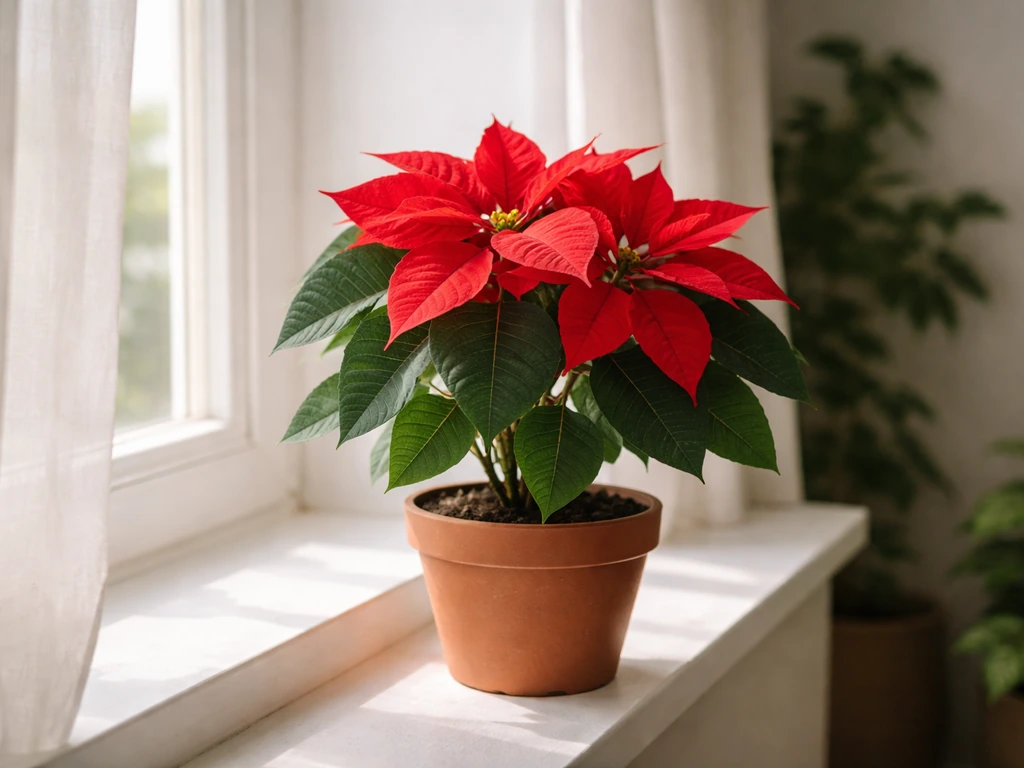
Start with the right setup: soil, pot, and watering basics

The single most common way people kill poinsettias is overwatering combined with poor drainage. These plants do not like wet feet at all. Water sitting around the roots will cause them to rot, and once that starts, the plant declines fast. So before anything else, make sure your pot has drainage holes that actually work.
If your poinsettia came wrapped in decorative foil (and most holiday ones do), either punch holes in the bottom of that foil or remove the plant from it entirely before watering. What often happens is people water generously, the foil traps the excess, and the roots sit in standing water for days.
Kansas State University Extension notes that poinsettia roots can rot if they sit in standing water, such as when the plant is left in a saucer or the plastic sleeve used when sold standing water for days.
A good method is to take the plant out of its decorative cover, [water it thoroughly in the sink, let it drain completely, and then set it back in the cover. ](https://yardandgarden. extension. iastate.
edu/faq/how-often-should-i-water-my-poinsettia) That one habit alone prevents a lot of grief.
For soil, a well-draining mix is key. A blend of roughly equal parts garden soil, peat moss or leaf mold, and perlite or coarse sand gives you the structure and drainage poinsettias need. Standard potting mix works too, but avoid anything that stays soggy. When repotting (more on that in the rebloom section), choose a pot only slightly larger than the root ball. Going too big increases the risk of waterlogged soil since the roots cannot absorb moisture fast enough from a large volume.
Light, temperature, and feeding during the growing season
During the active growth phase (roughly late spring through early fall), poinsettias want as much bright light as you can give them. A south, east, or west-facing window is ideal indoors. Higher light levels produce stockier growth and richer bract color later, so this is not the time to tuck the plant in a dim corner. That said, if you are keeping it as a purely indoor houseplant, avoid harsh direct afternoon sun through glass, which can scorch the leaves.
Temperature-wise, poinsettias are comfortable in the same range most people keep their homes: roughly 65 to 75 degrees Fahrenheit during the day. They will tolerate a few degrees cooler at night, but cold drafts from windows, doors, or air conditioning vents are a real problem. Keep them away from those spots. Anything below about 50°F will stress the plant noticeably.
For fertilizing, use a balanced liquid fertilizer every two to four weeks during the growing season (spring through early fall). You do not need anything exotic. A general-purpose fertilizer used at the recommended label rate is fine. Stop fertilizing once you begin the dark treatment in fall to encourage flowering. Overfeeding at that stage pushes leafy growth at the expense of bract development.
How poinsettias actually grow and what triggers those red bracts
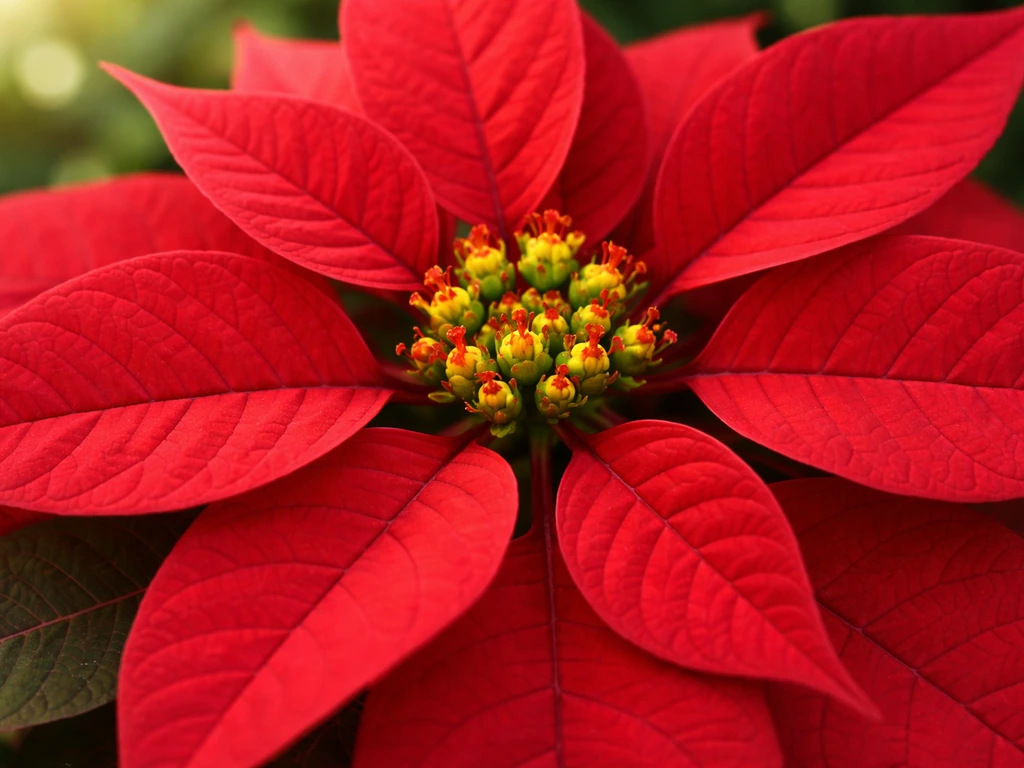
The colorful parts of a poinsettia that most people call flowers are actually modified leaves called bracts. The true flowers are the tiny yellow-green clusters in the center. Understanding this helps explain why getting a poinsettia to 'bloom' is really about triggering bract color change, and that change is controlled entirely by day length.
Poinsettias are what botanists call short-day plants, but a more accurate label is long-night plants. They need blank" rel="noopener noreferrer">long, uninterrupted periods of darkness to begin coloring up. With the same long-night timing, you can also learn how to grow poinsettias in the ground when your climate and sunlight match their needs long, uninterrupted periods of darkness. Specifically, they need about 14 hours of continuous darkness and no more than 10 hours of daylight each day.
If any light hits the plant during that dark window, even briefly, it resets the clock and delays or prevents flowering. A hallway light flicking on, a streetlight through the window, someone checking on the plant with a flashlight: all of these can disrupt the process. This is not an exaggeration. It really does make a difference.
During the rest of the year, the plant is in vegetative mode, putting out stems and leaves. That phase is straightforward to manage. The photoperiod requirement only kicks in when you want color, and that typically means starting the darkness treatment in late September or October.
Step-by-step indoor care through the year
Here is how I break down the indoor poinsettia calendar, from holiday plant through to the next bloom. This is the practical routine that ties everything together.
- January to March (post-holiday): Keep the plant in a bright window. Water when the top inch of soil feels dry. The bracts will eventually fade and drop, which is normal. Cut the stems back to about 6 inches in late February or early March to encourage new growth.
- April to May (early growth): Repot if needed into a slightly larger container with fresh, well-draining mix. Resume regular watering and begin fertilizing every two to four weeks. Move outdoors once nighttime temperatures stay reliably above 55°F if you can.
- June to August (active growth): This is when the plant puts on the most growth. Keep it in bright light, water regularly without letting it sit in water, and continue feeding. Pinch stem tips in early to mid-summer if you want a bushier plant (more on pinching in the tree section). Stop pinching by late August so the plant has time to mature new growth before dark treatment begins.
- September (transition): Ease off fertilizing. Bring outdoor plants back inside before nighttime temps drop below 55°F. Start thinking about your darkness setup.
- October 1 through late November (dark treatment): This is the critical window. Starting around October 1, give the plant a strict schedule: 6 to 10 hours of bright daylight (in a sunny window), then complete, uninterrupted darkness from about 5 p.m. to 8 a.m. A closet, a cardboard box, or a dark room with no light leaks all work. Stick to this every single day. Continue light watering but hold off on fertilizer.
- December onward (enjoy): After 8 to 10 weeks of consistent dark treatment, the bracts should be coloring up nicely. Once the color is fully developed, you can stop the forced darkness routine and just enjoy the plant in your window through the holidays.
Training a poinsettia into a tree: shaping timeline and how-to
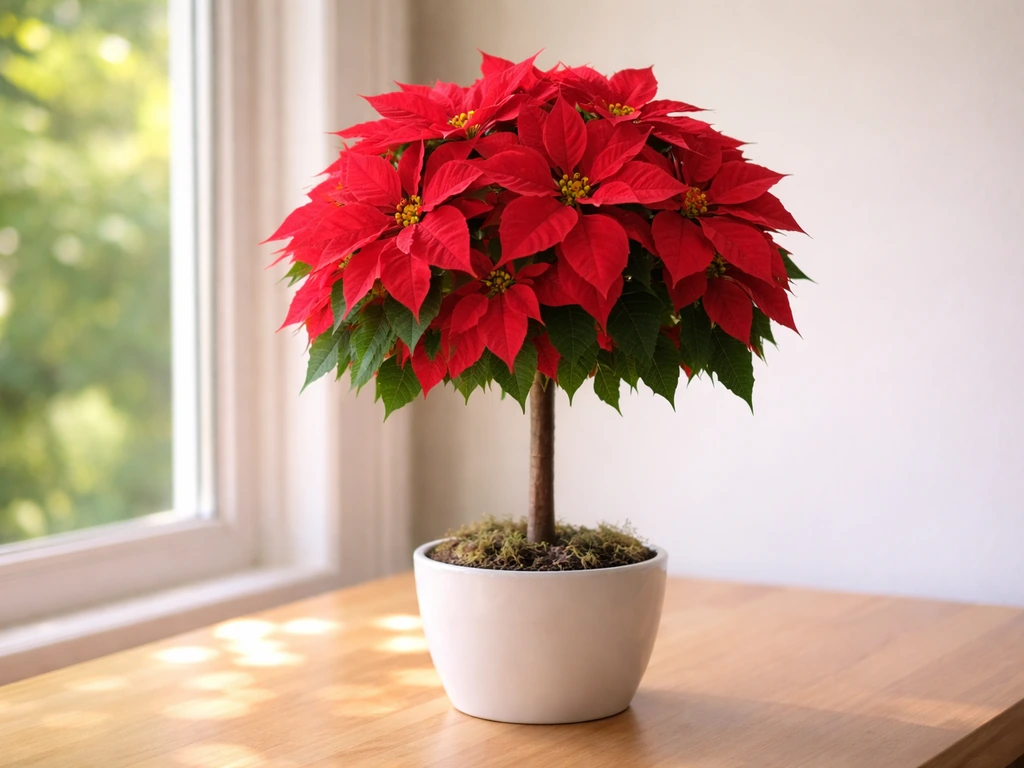
A poinsettia tree, with one central trunk topped by a full rounded head of bracts, is genuinely impressive and not as complicated as it looks. The goal is to develop a single strong trunk, remove all side branching along that trunk, and then let the top branch out and fill in. It takes patience but the result can be a plant with a trunk up to about 3 feet tall crowned with a lush display.
Start with a young, vigorous cutting or a newly rooted plant, not a multi-stemmed holiday plant. Select the single strongest, most upright stem as your future trunk. Stake it with a thin bamboo cane tied loosely with soft ties to keep it vertical as it grows. As the plant grows, remove any side shoots that sprout along the lower portion of the trunk, but let the top continue to grow freely. You are essentially forcing all the plant's energy upward.
Once the trunk reaches the height you want (give yourself at least one full growing season for a modest tree, longer for a tall one), pinch out the growing tip. This forces the plant to branch at the top, creating the canopy effect. You can then pinch those new branches once or twice more over the following weeks to increase density. A useful rule of thumb: make your final pinch about six to eight weeks before you begin the short-day treatment, so new growth has time to harden off and mature before flowering is induced.
The same photoperiod rules apply to a tree-form poinsettia as to any other poinsettia. It still needs those 14 hours of uninterrupted darkness starting in October. The size of the plant does not change the light sensitivity at all.
Troubleshooting the most common indoor problems
Leaves dropping
Leaf drop is almost always a water or light issue. Overwatering is the top culprit: soggy soil causes root rot, the roots can no longer function, and the plant drops leaves as a stress response. Underwatering can also trigger leaf drop if the soil dries out completely. Check your watering routine first. If the soil has been consistently wet and the lower stems look soft or discolored at the base, you may be dealing with Phytophthora root and stem rot, which is difficult to reverse once established. Prevention through good drainage is much better than trying to cure it. Low light is another cause: when light levels are insufficient, leaves often drop before the bracts do.
Leggy, stretched growth
If your poinsettia is getting long, spindly stems with widely spaced leaves, it is reaching for more light. Move it to a brighter window. Pinching the stem tips back in early summer helps encourage bushier growth the following season. Once growth gets leggy, cutting back in late winter and starting fresh with better light placement for the new season is the most practical fix.
No color change or late flowering
This is almost always caused by interrupted dark periods. Go through your darkness setup critically. Is there a gap under the closet door? A digital clock display? A window in the room with a streetlight outside? Any consistent light source during those 14 dark hours will stall or prevent bract coloring. Also check your start date: beginning the dark treatment significantly later than October 1 will push the color display past the holidays. Starting on time and staying consistent is the whole game.
Pests

Poinsettias indoors can attract whiteflies, mealybugs, spider mites, and thrips. Check the undersides of leaves regularly. Whiteflies are easy to spot when you disturb the plant and a cloud of tiny white insects lifts off. Mealybugs look like small cottony patches. For most indoor infestations, insecticidal soap or neem oil applied consistently will handle early-stage problems. Catching them early matters a lot.
The rebloom checklist: what to do after the holidays
Keeping a poinsettia through to the next bloom is a satisfying project once you have done it once. Here is a straightforward checklist that covers the whole post-holiday process. If you want a full guide on how to grow poinsettia after Christmas, follow the rebloom checklist and stay strict about the light schedule next bloom. Pyrostegia venusta has a different flowering trigger, but you can still learn the key steps and timing for success by following a dedicated how-to guide for this vine how to grow poinsettia after Christmas.
| Timing | Task | Notes |
|---|
| January to February | Reduce watering as bracts fade | Let soil dry slightly more between waterings |
| Late February to March | Cut stems back to 6 inches | Encourages vigorous new growth; use clean, sharp scissors |
| April to May | Repot if rootbound, resume fertilizing | Fresh well-draining mix; balanced fertilizer every 2 to 4 weeks |
| June to August | Maintain bright light, continue feeding, pinch tips for bushiness | Final pinch no later than late August |
| September | Stop fertilizing, bring indoors if outside | Acclimate to indoor light gradually |
| October 1 | Begin strict dark treatment: 14 hours darkness, 6 to 10 hours bright daylight | No light breaks during dark period; any interruption delays color |
| October through late November | Maintain dark schedule daily without exception | Closet, dark room, or cardboard box all work if light-tight |
| December | Stop forced darkness once bracts are fully colored | Place in a bright window and enjoy |
The rebloom process is honestly more about consistency than horticultural skill. If you stick to the light schedule and do not let the plant dry out completely or sit in water, the odds are very much in your favor. Pyrostegia venusta is grown very similarly in the sense that consistent light and avoiding root stress are key to healthy growth and reliable flowering. Most indoor failures come from starting the dark treatment too late or letting light slip in during the overnight period.
One more thing worth knowing: if you are growing poinsettias in a warmer climate outdoors year-round or in a greenhouse, the timeline and conditions shift considerably. If you want the best results, use this same light-and-timing approach, but adapt it to Australia’s warmer conditions and seasonal daylight how to grow poinsettia in australia.
Growing poinsettias in the ground in Florida or similar climates, in a greenhouse environment, or in subtropical climates like the Philippines or Australia each involves its own set of variables around natural day length and temperature. If you are growing poinsettias outdoors in the ground, focus on matching the right soil, drainage, and timing for the dark period how to grow poinsettias in the ground.
For specifics on light timing, temperature, and seasonal care in the Philippines, see how to grow poinsettia in the philippines. The core photoperiod biology stays the same, but how you manage it changes based on your environment. For now, if you are working with an indoor plant in a temperate home, the guide above gives you everything you need to get started and to succeed.