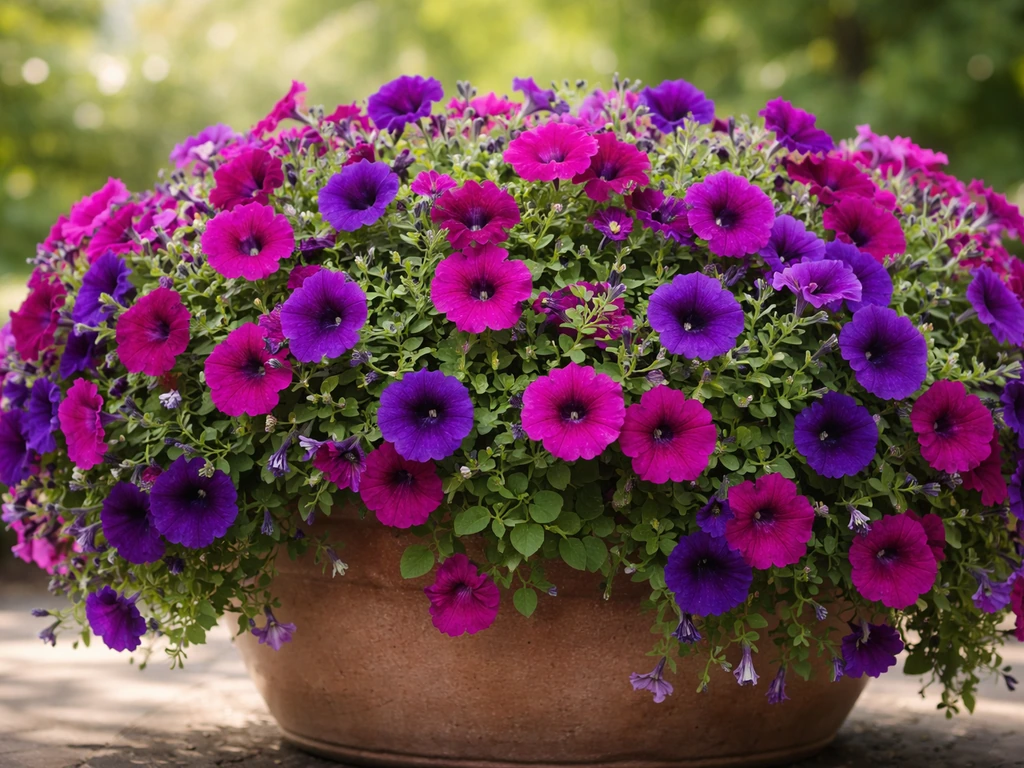
Petunias are one of the most rewarding flowering plants you can grow at home, but they do have a few specific needs that make all the difference between a plant that sulks and one that's covered in blooms from late spring to frost. The short answer: give them full sun, well-draining soil with a slightly acidic pH, consistent feeding, and regular deadheading, and they'll perform beautifully. If you want how to grow petunia fast, focus on full sun, warm planting conditions, and aggressive regular deadheading plus consistent feeding. Everything below breaks that down into exactly what to do and when.
How to Grow Petunias Step by Step for Best Blooms

Harriet Whitmore
22 Apr 2026
What petunias need to grow well
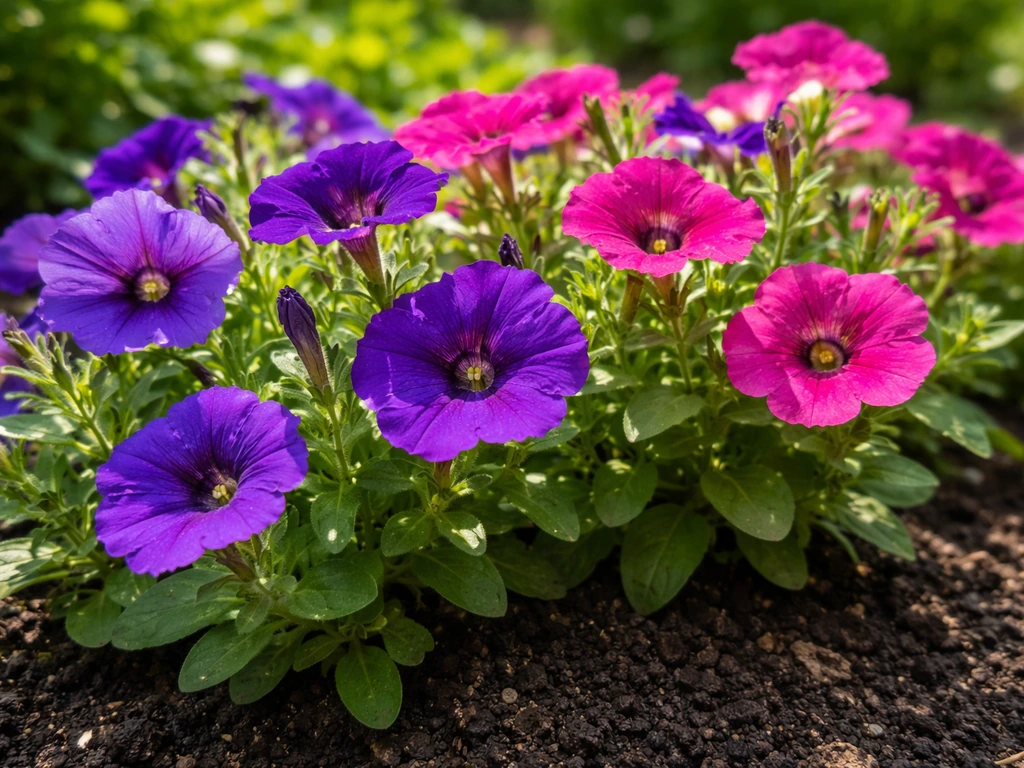
Before you plant anything, it helps to know what petunias are actually asking for. They're not fussy, but they do have non-negotiable preferences around light, soil, and temperature.
Light
Petunias want sun, and plenty of it. The minimum is 5 to 6 hours of direct sunlight per day, but honestly, full sun all day gives you the best flowering. If you're planting in a spot that only gets partial sun, you'll still get growth, but expect fewer flowers and a leggier plant. When in doubt, pick the sunniest spot in your garden or patio.
Soil and pH
Petunias need well-draining soil. Soggy or waterlogged roots are a fast path to root rot and plant death. For in-ground planting, aim for a soil pH between 6.0 and 7.5 for general garden conditions. For containers and production settings, a slightly tighter range of 5.5 to 6.0 is the sweet spot that keeps nutrients available without triggering deficiencies. If you're growing in pots, use a quality potting mix rather than garden soil, which tends to compact and drain poorly in containers.
Temperature
Petunias are warm-season annuals. Don't rush them into the ground. Wait until your soil has warmed to around 60°F and there's no more frost in the forecast. Planting too early stresses the plants and can actually prevent them from establishing properly. In most of the US, that means waiting until mid to late spring, though your exact timing will depend on your climate zone.
How petunias actually grow: what to expect from seed to bloom
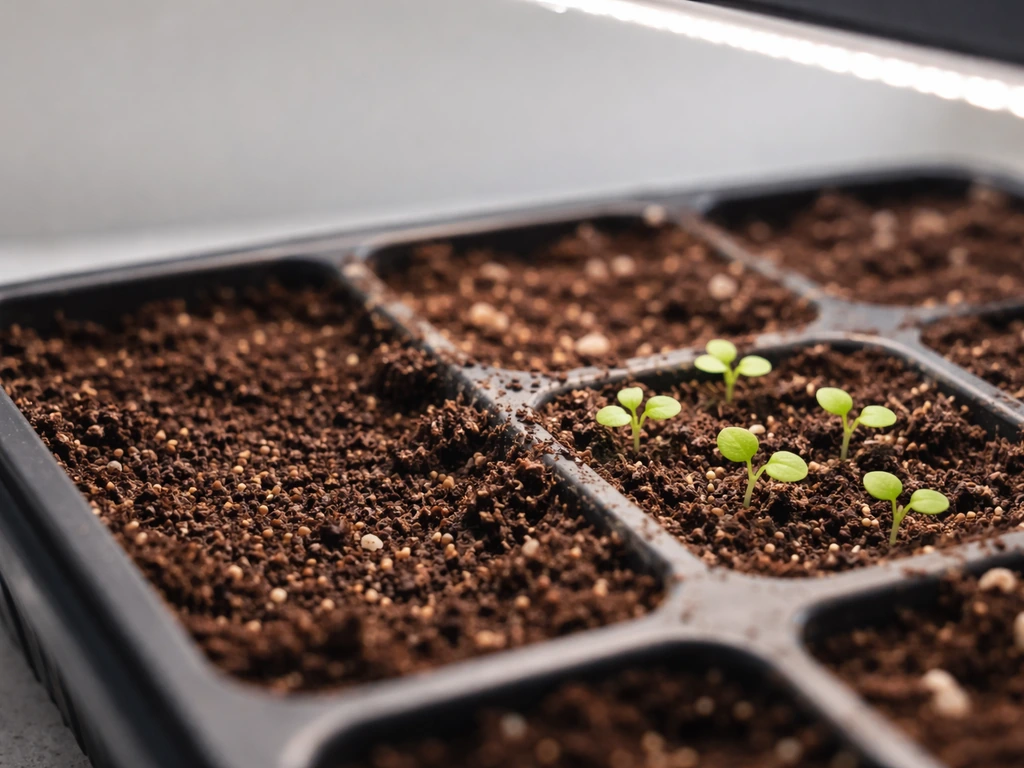
If you're starting from seed, set realistic expectations early. Petunia seeds are tiny, slow to start, and require a bit of patience. Germination typically happens within 7 to 10 days after planting indoors. From there, it takes about 10 to 12 weeks before seedlings are large enough to transplant outside. That means if your last frost date is in mid-May, you should be starting seeds indoors around late February or early March.
The growth stages look roughly like this: germination in the first week or two, followed by the seedling developing its first true leaves (the real leaves that come after the initial seed leaves), then steady growth through the indoor period, and finally transplanting outdoors once conditions are right. Once in the ground and established, petunias typically begin flowering within a few weeks, and with proper care they'll bloom continuously until frost.
Honestly, if you're a beginner, buying transplants from a nursery in spring is the easier and more reliable route. UMN Extension notes that many gardeners find starting from transplants much simpler than growing from seed, and there's no shame in that. You skip the tricky indoor seed-starting phase entirely and still get a full season of blooms.
Step-by-step: how to grow petunias from seed or transplants
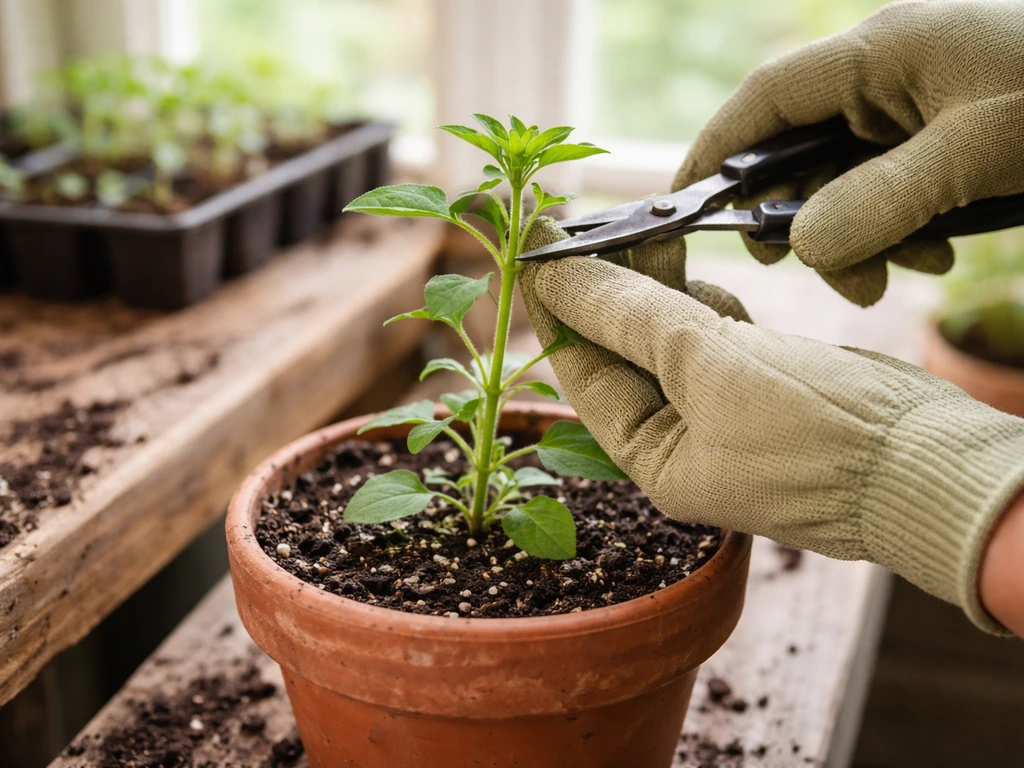
Starting from seed indoors
- Start seeds 10 to 12 weeks before your last expected frost date, indoors under grow lights or in a very bright window.
- Sow seeds on the surface of moist seed-starting mix. Don't cover them — petunia seeds need light to germinate.
- Keep the medium consistently moist and the temperature around 70 to 75°F. Expect germination in 7 to 10 days.
- Once seedlings have 3 true leaves, transplant them into individual peat pots or cell packs to give each plant room to develop.
- About 1 to 2 weeks before your outdoor planting date, begin hardening off: set plants outside in a sheltered spot for a few hours a day, gradually increasing exposure to sun, wind, and temperature changes over 7 to 10 days. Skipping this step can cause serious transplant shock.
- Transplant outdoors after your last frost date once soil has reached at least 60°F.
Planting transplants (purchased or home-grown)
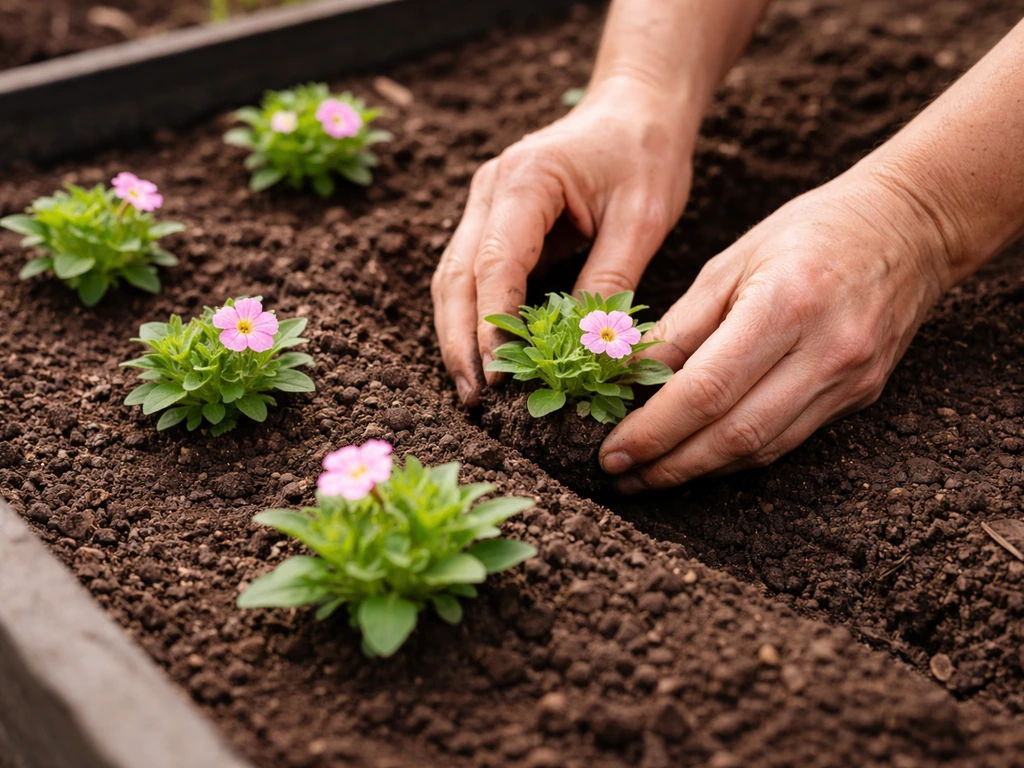
- Choose a site with at least 5 to 6 hours of direct sun and well-draining soil.
- Amend the soil if needed to improve drainage. Mix in compost to boost fertility.
- Space grandiflora and multiflora types about 12 inches apart. Compact milliflora types can be planted a bit closer. Spreading and trailing types need more room to spread — check the label.
- Plant at the same depth the seedling was growing in its pot. Firm the soil around the roots and water in well.
- Add a slow-release fertilizer to the planting hole or top-dress at planting to give plants an early boost.
How to get petunias to keep flowering: watering, feeding, and deadheading
This is where most people either unlock great petunias or wonder why their plants stopped blooming by midsummer. The three things that drive continuous flowering are watering done right, consistent feeding, and regular deadheading.
Watering
For most petunia types (grandiflora, multiflora, milliflora), a thorough watering once a week is sufficient in normal conditions. 'Thorough' means watering deeply so moisture reaches the root zone, not just wetting the surface. Spreading and trailing types like Wave petunias are more vigorous and actively growing, so they need more frequent watering than other groups. In containers, you'll always need to water more often than in-ground plants since pots dry out much faster. Always check the soil before watering: if the top inch is still moist, hold off.
Feeding
Petunias are heavy feeders, especially in containers. A practical routine that works well is feeding with a water-soluble, balanced fertilizer every third watering or once per week, whichever fits your schedule. This keeps nutrients consistently available without burning the roots. If you're growing in-ground, a slow-release fertilizer at planting combined with occasional liquid feeding through the season covers most situations. Look for balanced formulas; extremely high phosphorus isn't necessary and can even interfere with nutrient uptake.
Deadheading
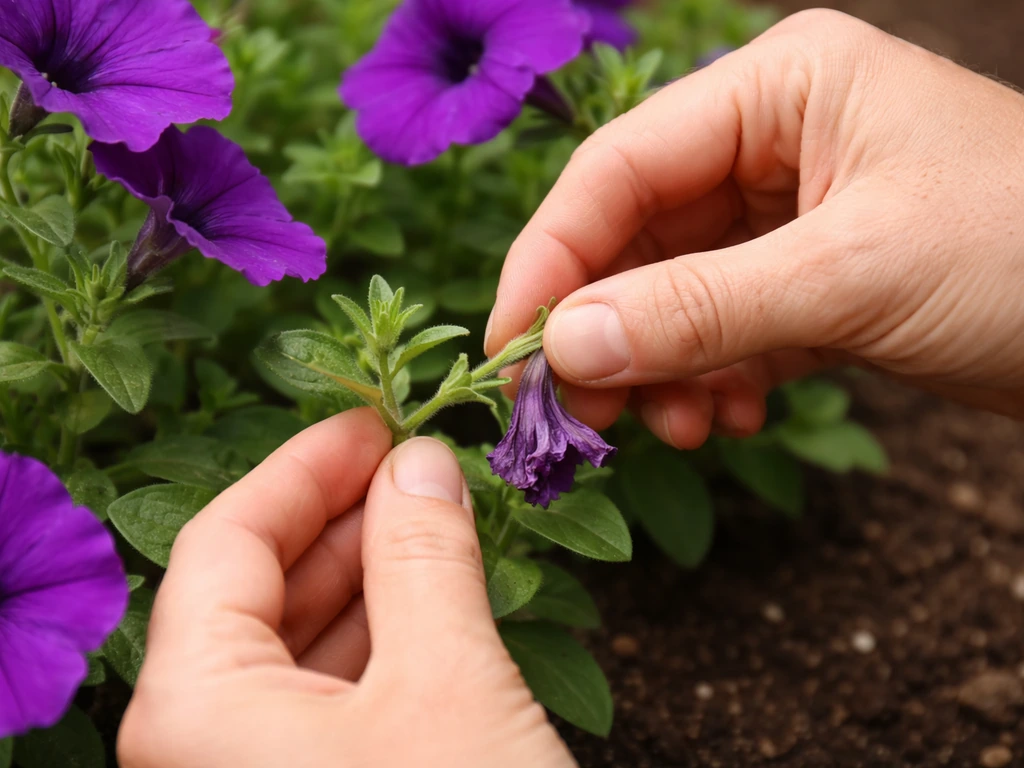
Deadheading is the single most impactful thing you can do to keep petunias blooming. When a flower fades, droops, or browns, don't just pull off the petals. You need to remove the entire spent bloom including the small swelling below it where the seed pod forms. If that seed pod is left on the plant, the petunia shifts energy into seed production and slows flowering significantly. Pinch or snip right where the blossom stem meets the main stem. Do this every few days and you'll see a noticeable improvement in bloom output. Illinois Extension notes that occasional pinching late in the season can help keep petunias compact and blooming well.
How to grow full, bushy, and bigger petunias
If your petunias look stretched out, thin, or are producing long bare stems with just a few flowers at the tips, they need to be pinched back. This is probably the most underused technique for getting lush, full plants.
Pinching and cutting back
Pinching means removing the growing tip of a stem, which forces the plant to push out two or more new branches from below the cut. Do this at planting time or when plants are young to encourage branching from the start. For hanging baskets and larger containers, pinching at planting is especially valuable for getting that full, trailing look quickly.
If plants get leggy mid-season, don't panic. Cut the top couple of inches off each stem, cutting back to a set of leaves. New side branches will emerge from that point within a few weeks. Yes, you'll temporarily lose some flowers, but the resulting plant will be fuller, bushier, and produce more blooms over the rest of the season. It feels drastic the first time you do it, but it works.
Spacing and container density
Crowding petunias doesn't make them fuller. Plants need adequate spacing for airflow and root development. In ground beds, 12 inches between grandiflora and multiflora types is the standard. In containers, resist the urge to cram too many plants in. Overcrowding leads to competition for nutrients, poor air circulation, and disease problems, and the plants actually end up looking worse. Give each plant room and then use pinching and feeding to build density.
Troubleshooting: keeping petunias healthy and fixing common problems
Even with good care, petunias can run into problems. Here are the most common issues and what to do about them.
| Problem | Likely Cause | Fix |
|---|---|---|
| Wilting and dying despite watering | Root rot from overwatering or poor drainage | Improve drainage, reduce watering frequency, allow soil to dry slightly between waterings |
| White or gray powdery patches on leaves | Powdery mildew (fungal) | Improve air circulation by spacing plants further apart, avoid wetting foliage, remove affected leaves |
| Gray-brown fuzzy mold on flowers or stems | Botrytis (gray mold) | Remove infected plant parts, improve airflow, avoid overhead watering |
| Yellowing new leaves, especially at growing tips | Iron deficiency (chlorosis) | Check and lower soil pH if too high; use acidifying fertilizer or chelated iron |
| Rapid crown wilting and plant collapse | Phytophthora crown rot | Remove and discard affected plants, improve drainage, do not replant petunias in the same spot |
| Distorted or sticky foliage | Aphids, spider mites, or whitefly | Inspect undersides of leaves, treat with insecticidal soap or neem oil, remove heavily infested growth |
The common thread in most petunia health problems is moisture management. Wet soil, wet foliage, and crowded plants create the conditions fungal diseases love. Water at the base of the plant, not overhead, and make sure your containers or beds drain freely. That one habit prevents a surprising number of issues.
Growing climbing petunias: support, training, and what's different

Here's something worth clarifying: petunias are not true climbers. They don't have tendrils or any self-supporting mechanism to grab onto a trellis or fence on their own. What people usually mean by 'climbing petunias' are the vigorous trailing and spreading varieties, like Surfinia or Supertunia types, which produce long cascading stems that can be trained upward on a support with a little help. Surfinia petunias are essentially the same culture as other petunias, but they grow fast and need full sun, consistent feeding, and regular deadheading for nonstop blooms. If you want a night-sky look, night-sky petunias follow the same core care, but the flower color stands out even more with full sun and steady feeding.
For example, varieties like Supertunia Vista Bubblegum are described as vigorous enough that they can continue pushing growth when they encounter a vertical surface, but they're not truly climbing in the botanical sense. You need to actively tie or weave the stems onto the support yourself.
How to train trailing petunias vertically
- Choose a vigorous trailing variety (Surfinia, Supertunia, or Wave types work well for this).
- Set up your support structure at planting time: a trellis, wire frame, or garden obelisk works well.
- As stems lengthen, loosely tie them to the support using soft garden ties or twine. Avoid constricting the stems.
- Continue redirecting new growth upward as the plant develops, tying every few inches of new stem.
- Deadhead regularly to keep energy going into new growth and flowering rather than seed set.
- Water more frequently than you would for standard petunias — trailing types are vigorous and dry out faster, especially in containers or against warm walls.
The care for trained trailing petunias is largely the same as for standard types, but expect to water more often and feed consistently since these varieties grow quickly and are heavy feeders. Pinching early encourages more branching stems, which gives you more material to train and ultimately a denser, more dramatic display on your support structure.
If you want to explore specific trailing and spreading petunia types in more depth, varieties like Wave petunias, Surfinias, and Supertunias each have their own growing nuances and performance characteristics that are worth knowing before you choose a variety for a particular spot in your garden. If you specifically want supertunias to burst with blooms, follow the same petunia basics and adjust for their faster growth and frequent feeding needs sуетtunias.
Your week-by-week petunia care routine
Pull this together into a simple weekly rhythm and growing petunias stops feeling complicated. Here's what the routine actually looks like once plants are in the ground:
- Every 2 to 3 days: Check soil moisture and water if the top inch is dry. For spreading and trailing types in containers, this may mean daily watering in hot weather.
- Every week: Feed with a water-soluble balanced fertilizer, or every third watering if you prefer that cadence.
- Every few days: Walk the bed or container and deadhead any spent, faded, or browning flowers. Remove the whole bloom plus the seed structure below it.
- Every 3 to 4 weeks: Assess plant shape. If stems are getting leggy, pinch or cut back by a couple of inches to promote fresh branching.
- As needed: Watch for pests on leaf undersides and signs of powdery mildew or gray mold, especially in humid weather or crowded plantings.
That's genuinely all it takes. Petunias reward consistent attention far more than any special treatment. Get the basics right, sun, good drainage, regular feeding, and deadheading, and you'll have plants that bloom heavily from planting time right through to the first frost.
FAQ
Can I transplant petunias after they’ve started flowering? What should I watch for?
Yes, but only if you do it after the plant is established and the weather is still warm. If you move petunias to a new pot or spot while they are flowering heavily, expect a brief slowdown, and then they usually catch up once the light level and watering schedule stay consistent. Handle by the root ball, keep the same depth, and do the transplant on an overcast day to reduce stress.
What should I do if my petunias are growing but not blooming by early summer?
In many cases, it’s a sign they are either too wet or not feeding enough. Check the soil first, if the top inch is moist, wait before watering. If the soil feels dry and you still get weak blooms or pale growth, switch to a regular balanced feeding schedule (especially in containers), and consider slightly tightening the fertilizer frequency rather than increasing phosphorus.
How can I tell whether I’m watering petunias too much or too little?
Do not let petunias dry out completely, but also don’t keep the root zone constantly wet. A good practical method is to water until excess drains, then wait until the top inch of soil is dry before watering again. In containers, this often ends up being more like every few days during hot spells, even if it’s only once per week in-ground.
Can over-fertilizing prevent petunias from blooming, and how do I fix it?
Petunias generally don’t like to be “forced” with extra fertilizer. If leaves look dark green but flowering drops, that can be a nitrogen-heavy imbalance, or you may be overfeeding. Use a balanced fertilizer and stick to the routine frequency, if you suspect overfeeding, flush the container with plain water once (let it drain fully) and resume feeding at the normal interval.
Will cutting back a leggy petunia remove too many flowers, or will it recover?
Yes. If you keep stems productive by pinching and deadheading, you can remove leggy or spent growth and still keep the plant blooming. The fresh growth will come from where you cut back to healthy leaves, but expect a short-term reduction in open flowers, usually followed by more branching and new buds within a few weeks.
What’s the best way to protect petunias from late frost or cold nights?
Petunias are relatively sensitive to cold snaps, even though they tolerate mild cool weather. If you get a late frost after planting, protect plants overnight with a frost cloth or cloche and uncover in the morning. Don’t rely on warm-season plants “toughing it out” when temperatures are near freezing.
How often should I pinch petunias to keep them from getting leggy?
If you want more compact growth, pinch early, and avoid letting plants sit too shaded. Start pinching when plants are young, for many growers that means doing it around transplant time, then again if new growth gets long. For hanging baskets, early pinching improves branching so the trailing display fills in faster.
Can I grow petunias on a trellis, and do they attach themselves?
Choose a support strategy based on how you’re using the variety. Trailing petunias can be trained upward, but they need you to tie, weave, or guide the stems, they do not cling on their own. Expect to water more often because vertical training increases airflow and heat around the foliage and can speed drying.
Should I mulch petunias to reduce watering, and how close should it be to the plant crown?
Not usually. Mulch can be helpful for moisture retention in-ground, but thick mulch can keep crowns too cool or too wet and may encourage issues if airflow is limited. If you mulch, use a light layer and keep it pulled back from the crown area, and still follow your soil-checking method before watering.
Why do my petunias keep making seed pods even though I deadhead?
A common mistake is removing only the petals and leaving the seed pod. For nonstop blooms, remove the entire spent bloom down to the swelling where the pod forms. If you regularly see seed pods developing, increase how often you deadhead (often every few days during peak bloom).
Next Article
When Do Begonias Start to Grow? Timing, Types & Planting Calendar
When do begonias start to grow: clear planting dates, timelines by type, and quick care fixes for reliable starts.