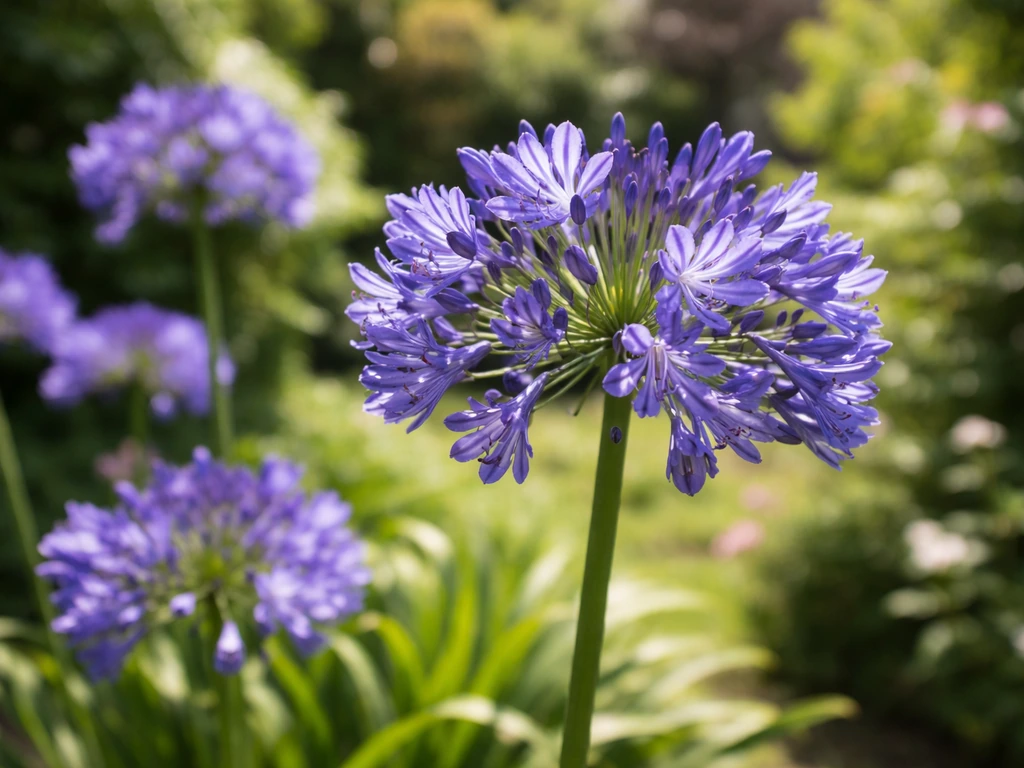
Agapanthus is one of the most rewarding plants you can grow in a garden or container, delivering those iconic blue or white globe-shaped flower heads all summer long. Plant it in full sun, give it well-drained soil, water it consistently through spring and summer, and feed it during the growing season. That's the core of it.
How to Grow Agapanthus: Step-by-Step Planting to Blooms

Harriet Whitmore
3 May 2026
If you're also wondering how to grow primulas, focus on matching the right variety to your conditions and giving them the right light and moisture so they establish well. The details, especially around variety choice, winter protection in the UK, and understanding why pot-bound plants actually bloom better, are what separate gardeners who get flowers every year from those who end up with a big leafy clump and nothing else.
Quick check: your climate, variety, and planting location
Before you buy a single plant, work out which type of agapanthus suits your conditions. There are two main categories: deciduous (hardy) varieties and evergreen (tender) varieties. Deciduous types die back in winter and are much more cold-tolerant, making them the sensible choice if you're gardening in the UK or anywhere that sees regular frost. Evergreen varieties are striking and often have richer leaf colour, but they're genuinely tender and usually need to spend winter in a greenhouse or conservatory in cooler climates.
If you're in the UK, hardiness ratings matter a lot here. The RHS uses a scale, and many popular cultivars, including 'Snowdrops', are rated H3, meaning they'll cope with temperatures down to around -5°C but only in relatively mild, coastal, or sheltered spots. If you're in the north of England, Scotland, or anywhere with cold, wet winters, a deciduous hardy variety grown in a container gives you the most control. Milder, southern UK gardens can often get away with in-ground planting of hardier deciduous types.
- Deciduous agapanthus: hardier, dies back in winter, better choice for UK gardens and colder climates
- Evergreen agapanthus: more tender, needs frost-free shelter in winter, suits mild climates or indoor overwintering
- UK gardeners in colder regions: container growing gives you flexibility to bring plants in
- Mild coastal UK gardens: in-ground planting of hardy deciduous types is usually fine with some fleece protection
- Warmer climates (USDA zones 8 and above): most varieties thrive in the ground year-round
When and where to plant agapanthus
The RHS recommends planting agapanthus in spring, from the end of March through April. That timing gives roots a chance to establish before the main growing season kicks in, and it avoids the risk of cold soil and frost setting back a newly planted root system. If you're in the UK and reading this in early May, you're right on the edge of the ideal window but still fine to plant now. Avoid planting in late autumn or winter into cold ground, particularly in the UK, where wet, cold soil is one of the fastest ways to rot the fleshy roots.
For gardeners in warmer climates, such as the southern US, Mediterranean Europe, or similar zones, spring planting still makes sense, but you have more flexibility. Plants can also be established in early autumn where winters are mild. The key rule applies everywhere: don't plant into waterlogged or frost-cold soil.
Choosing the right spot
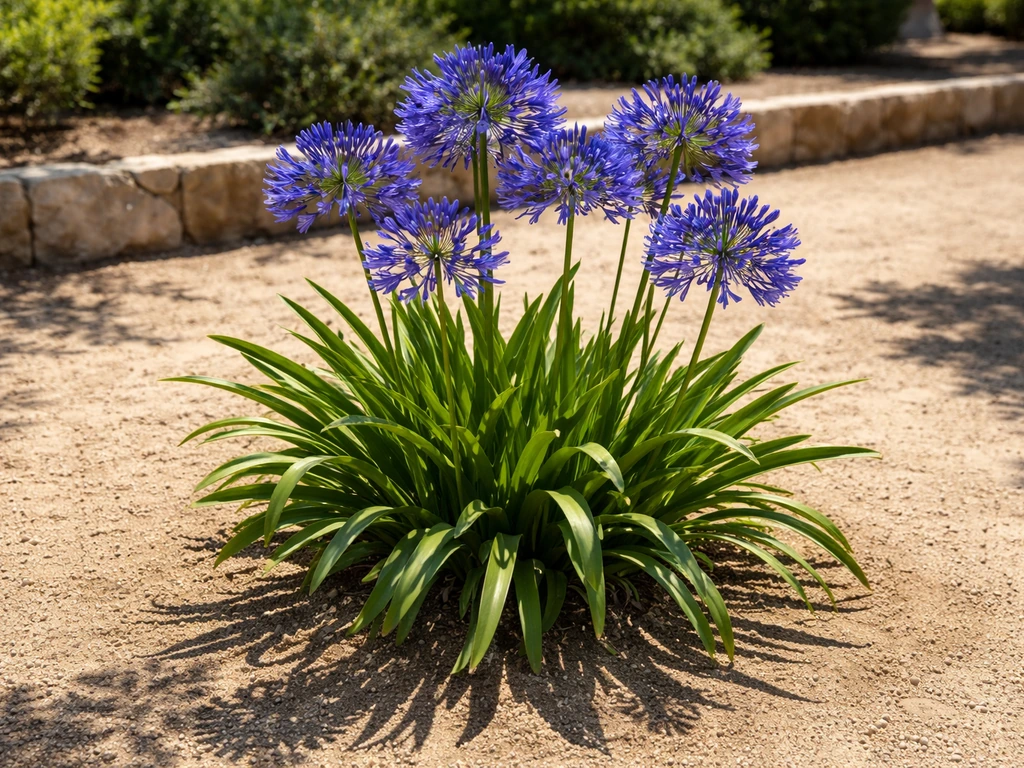
Agapanthus absolutely needs full sun, meaning at least six hours of direct sunlight per day. This isn't a plant that tolerates a shady border and still flowers for you. I've seen people tuck them along a fence or under a tree and wonder why they get nothing but leaves. Shade is the single most common reason agapanthus refuses to bloom. South or southwest-facing borders are ideal in UK gardens. In hotter climates, a little afternoon shade is tolerable, but full sun still gives the best flowers.
Soil, drainage, and sun requirements
Drainage is non-negotiable. Agapanthus has fleshy, water-storing roots that will rot in waterlogged conditions, especially over winter. The RHS is very clear on this: grow in well-drained soil in full sun. If your soil sits wet after rain, or if you're in a cold part of the UK where wet winters are the norm, container growing is genuinely the smarter option rather than a compromise.
For in-ground planting, improve heavy clay soil by working in plenty of grit or horticultural sand before planting. If you want to grow Pieris japonica well, you’ll need to match its acidic soil and consistent moisture needs, and protect it from harsh cold and drying winds For in-ground planting, improve heavy clay soil. Sandy soils that drain freely are closer to ideal but may need some organic matter to help retain a little moisture during the growing season. A slightly sheltered position, such as near a south-facing wall, adds warmth that UK plants in particular will appreciate.
For containers, use a loam-based compost (John Innes No. 2 or 3 works well) mixed with grit or perlite to keep drainage sharp. Free-draining containers with holes at the base are essential. Terracotta pots are great because they breathe and dry out between waterings, though they do need more frequent watering in summer.
Step-by-step planting guide
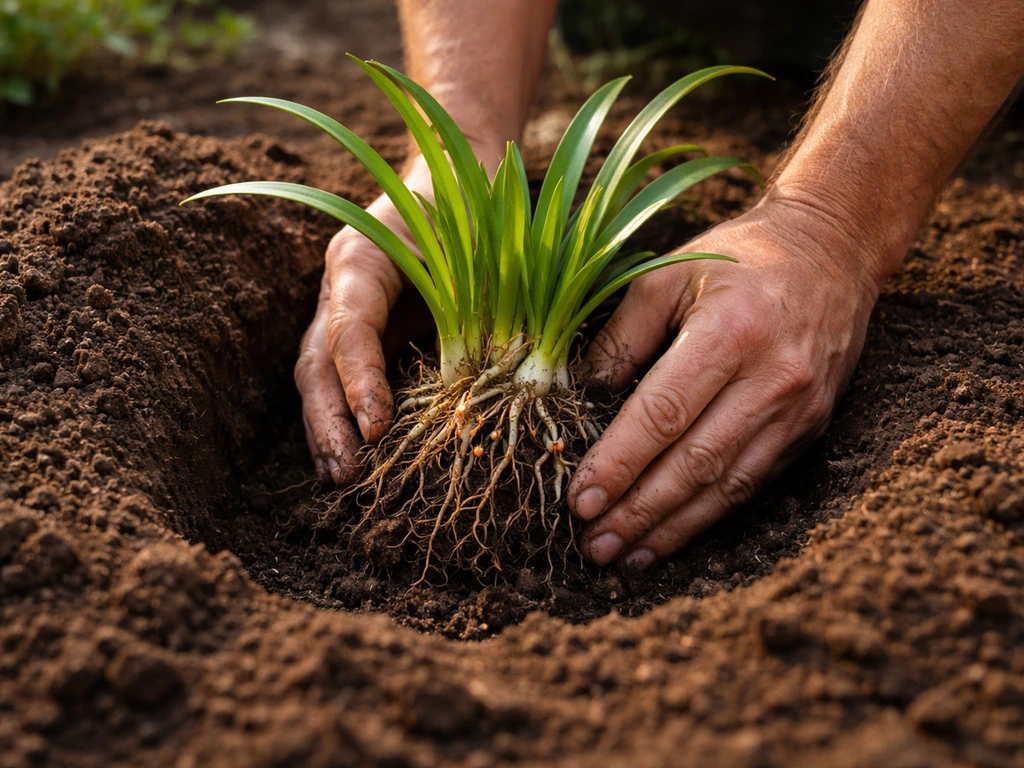
Planting in the ground
- Choose a sunny, south or southwest-facing spot with naturally well-draining soil. If drainage is poor, improve it with grit before planting.
- Dig a hole roughly twice the width of the root ball and deep enough so that the crown (where the roots meet the stems or growth point) sits just at or slightly below soil level. Don't bury it deeply.
- Place the plant in the hole, backfill with the improved soil, and firm gently to remove air pockets.
- Space plants about 30 to 60 cm apart depending on the variety, with larger varieties needing more room.
- Water in thoroughly after planting to settle the soil around the roots.
- Mulch lightly around (not over) the crown to help retain moisture and suppress weeds, but keep the mulch clear of the base to avoid rot.
Planting in containers
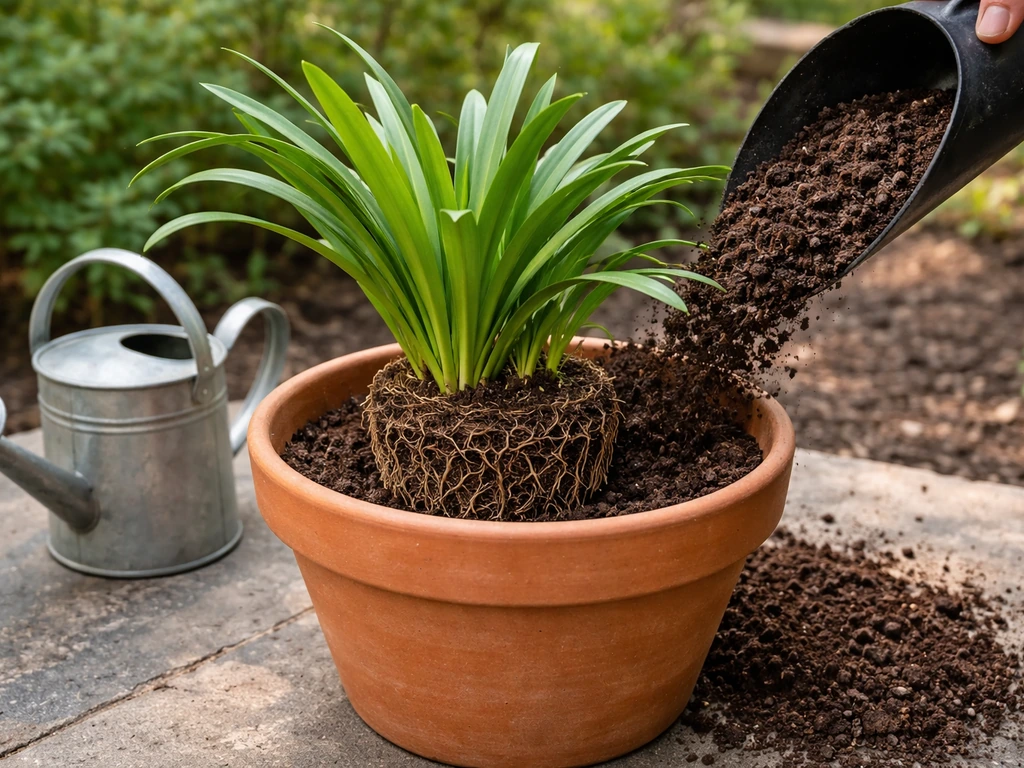
- Choose a container that's only slightly larger than the root system. A single plant typically fills a 30 cm (12-inch) pot well. Agapanthus genuinely blooms better when it's slightly pot-bound, so resist the urge to give it too much space early on.
- Add a layer of crocks or gravel to the base to assist drainage, then fill with loam-based compost mixed with grit or perlite.
- Plant so the crown sits just at or slightly below the compost surface, just enough to cover the roots.
- Firm in gently, water thoroughly, and place in the sunniest spot you have.
- Allow the plant to become established in its pot before considering repotting. Moving it into a much larger pot too soon can delay flowering.
Watering and feeding schedule for strong flowering
From spring through summer, agapanthus needs consistent moisture while it's actively growing and forming flower buds. Water regularly, allowing the soil or compost to dry slightly between waterings rather than keeping it constantly soggy. Container plants dry out faster and need checking more often, especially in warm weather. Established in-ground plants are more drought-tolerant once their root systems are settled, but consistent moisture during bud formation in early summer gives you more and better flowers.
Keep the soil moist going into autumn too, even as the plant starts to wind down. This supports root health and helps set the plant up for next year. Once winter arrives, established outdoor plants need little to no supplemental watering, and overwintered container plants brought indoors should be kept barely moist.
Feeding makes a real difference to flower number and quality. Start applying a balanced liquid fertiliser (or a slow-release granular feed) in spring as growth begins. Through the flowering season, switch to or supplement with a high-potassium feed (like tomato fertiliser) to encourage blooming rather than just leafy growth. The RHS specifically frames feeding as something that supports longer, better flowering rather than just overall plant size. Stop feeding in late summer as the plant starts to slow down.
| Season | Watering | Feeding |
|---|---|---|
| Spring (March–May) | Moderate, increase as growth picks up | Balanced fertiliser to get the plant going |
| Summer (June–August) | Regular, don't let it dry out during budding | High-potassium feed to support flowers |
| Autumn (September–October) | Keep moist, begin reducing | Stop feeding by end of summer |
| Winter (November–February) | Minimal for outdoor plants, barely moist for overwintered containers | None |
Ongoing care, overwintering, and division basics
Deadheading and general tidying
Cut back spent flower stems at the base once blooms have faded. For deciduous varieties, the leaves will die back naturally in autumn. You can tidy these away once they've died down fully. For evergreen types, remove any tatty or damaged leaves in spring. There's no need for heavy pruning with agapanthus.
Overwintering in the UK
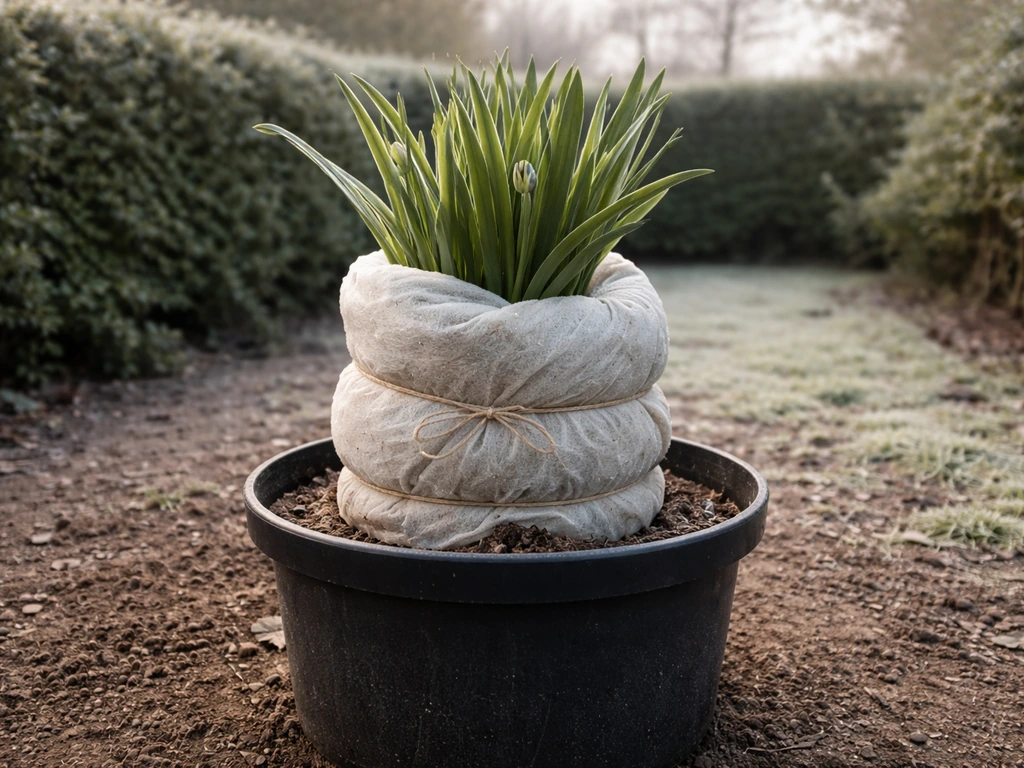
Winter protection is where UK gardeners need to pay close attention. The RHS recommends wrapping agapanthus in two to three layers of biodegradable fleece from November through to early April. This applies even to hardier deciduous types in colder UK gardens, not just tender evergreens. Fleece protects the crown from frost damage without smothering the plant.
For container-grown plants, the RHS advises moving them to a light, frost-free location in autumn, ideally somewhere sheltered from the worst winter rain as well as frost. A cool greenhouse, cold frame, or even an unheated garage with a window can work for hardier types. Evergreen varieties really do need a frost-free greenhouse or conservatory through winter. If you're bringing plants inside, stop watering heavily and just keep the compost barely moist until spring.
Division and repotting
Here's something that catches a lot of gardeners out: agapanthus flowers best when its roots are slightly crowded. BBC Gardeners’ World notes agapanthus can take up to four years to flower if grown from seed, and some plants may take a couple of years to flower after planting take up to four years to flower from seed.
Don't divide or repot until the plant is genuinely bursting out of its container or has formed a very congested clump in the ground. For container plants, this is typically every four to five years. When you do divide, split the clump in spring using a sharp spade or two garden forks back to back.
Be aware that divisions often skip flowering for a season while they re-establish, so don't divide and then wonder why there are no flowers that year. It's normal.
Troubleshooting: why agapanthus won't bloom or struggles to establish
If your agapanthus is producing healthy leaves but no flowers, or if it looks miserable and isn't growing well at all, one of a handful of things is usually to blame. The good news is that most of these problems are fixable once you identify them. If you are specifically working out how to grow polyanthus, the best approach is to start with the right site, soil, and consistent care for the whole season.
| Problem | Likely Cause | What to Do |
|---|---|---|
| No flowers, lots of leaves | Not enough sun (fewer than 6 hours daily) | Move to a sunnier spot or remove shade sources |
| No flowers after division or repotting | Plant re-establishing, not yet root-bound again | Wait a season, don't divide again |
| No flowers in a large pot | Too much root space, not pot-bound enough | Move to a smaller container or wait for roots to fill the space |
| Yellowing or rotting roots | Waterlogged or poorly draining soil | Improve drainage, consider moving to a container with grit-amended compost |
| Plant survives but doesn't grow much | Planted in cold, wet conditions or wrong season | Ensure spring planting in well-drained soil; add winter fleece protection |
| Tender/evergreen variety looks damaged in spring | Frost damage during winter | Switch to a hardier deciduous variety or overwinter under glass |
| Weak, few, or very late flowers | Underfeeding during the growing season | Start high-potassium liquid feed from late spring through summer |
The most common issue by far is insufficient light. I've spoken to so many gardeners who planted agapanthus in a partially shaded border and waited years for flowers that never came. Move it to full sun and the transformation can be dramatic, sometimes within a single season. The second most common mistake is dividing or repotting too soon, which essentially resets the clock on flowering. If you recently divided your plant, give it a full growing season to settle before expecting blooms.
For UK gardeners specifically, winter wet combined with cold is the other major culprit for plants that fail to thrive. If you've had an agapanthus struggle through a wet UK winter and come back looking half-dead, the plant's roots may have partially rotted. Next time, either improve drainage dramatically before planting or switch to container growing so you can control where the plant sits in winter. Agapanthus rewards the gardeners who pay attention to drainage and sun above almost everything else.
If you enjoy growing structural, bold flowering plants and want to explore other options alongside your agapanthus, plants like pieris japonica and plumeria pudica offer similarly striking effects in different seasons and conditions, each with their own specific care requirements worth reading up on separately. For a different look, learn how to grow pincushion protea and match its needs to your climate.
FAQ
Can I transplant an agapanthus after it has been growing for a while?
Yes. If you need to move an established clump, do it in spring when growth is starting, and keep as much of the root mass as possible. Plan on reduced or no flowering for the next season because the roots must re-settle, especially if you plant into a different sun exposure or worse drainage.
What should I do if my garden has winter flooding or waterlogged soil?
Aim for a spot where the crown and surrounding soil stay on the dry side in winter. If rain pools around the base, either improve drainage heavily before planting or grow in a container that can be sheltered. Consistently wet, cold winters are more damaging than brief cold snaps.
How can I tell whether I’m watering too much or too little for flowers?
Generally, avoid waiting too long to water before the buds form. The key is to keep the compost or soil evenly moist during active growth, then let the surface dry slightly between waterings. If pots dry out fully during flowering, flower stalks can weaken and you may see fewer blooms.
My agapanthus has lots of leaves but no blooms, what’s the most likely fix?
Start by checking light first, then drainage. Overfeeding high nitrogen can lead to lush leaves with fewer stems, even in full sun. If you want to “rescue” leaf growth, switch to a high-potassium feed during flowering and pause any nitrogen-heavy products.
Is it better to grow agapanthus from seed or by dividing the clumps?
Yes, but it can be slow and often produces less predictable flowering. Division is more reliable for getting the same flowering type and for reaching blooms sooner, while seed may take multiple seasons and may not match the parent plant exactly.
How do I recognize root rot and what can I do if it happens?
If you see soft, smelly roots or a collapsed base, it may be crown or root rot, usually from winter wet plus poor drainage. The practical move is to improve drainage immediately and remove any obviously rotten tissue, then repot or replant into a free-draining mix. If it is heavily rotted, take a healthy section for replanting rather than trying to recover the damaged plant.
For container agapanthus, how should I water during winter indoors?
You can keep the soil just barely moist, but don’t leave pots sitting in a saucer of water. Use a light frost-free area, bright if possible, and reduce watering enough that the compost does not stay wet all winter.
Should I cut back agapanthus after flowering, and when is the best time?
If you do not prune hard, it is still useful to remove spent flower stems at the base as soon as flowering ends (once the stem is clearly faded). This can reduce seed formation and helps the plant conserve energy, while leaving foliage intact until it naturally dies back for deciduous types.
How do I decide when it is time to repot or divide my agapanthus?
Don’t divide just because you want a new plant. If your goal is blooms, wait until the clump is truly crowded, since divisions commonly skip flowering for a season while roots recover.
Are hardier varieties enough for very cold, wet UK winters, or should I grow in containers?
In very cold, wet climates, the safest approach is to use a hardier deciduous type plus container growing (or very strong winter protection) rather than relying on in-ground survival. In-ground plants can work in milder regions, but heavy clay and winter rain make containers easier to control.
Next Article
When Do Begonias Start to Grow? Timing, Types & Planting Calendar
When do begonias start to grow: clear planting dates, timelines by type, and quick care fixes for reliable starts.