Periwinkle is genuinely one of the more rewarding flowering plants you can grow, but it has a few specific needs that trip up a lot of gardeners. To learn how to grow geraniums in Texas with the right sun, watering, and soil, follow a Texas-focused geranium care checklist. Get the light, drainage, and temperature right, and you'll have cascading blooms from early summer until frost. Get them wrong, and you'll be staring at a leggy, flowerless plant wondering what went wrong. This guide covers everything from seed to bloom, including fixes for the most common failures. If you also want to know how to grow perennials effectively, focus on choosing the right plants for your climate and nailing soil and light conditions.
How to Grow Periwinkle: Pots, Seeds, and Flowering Tips

Harriet Whitmore
2 May 2026
Periwinkle basics and varieties worth knowing
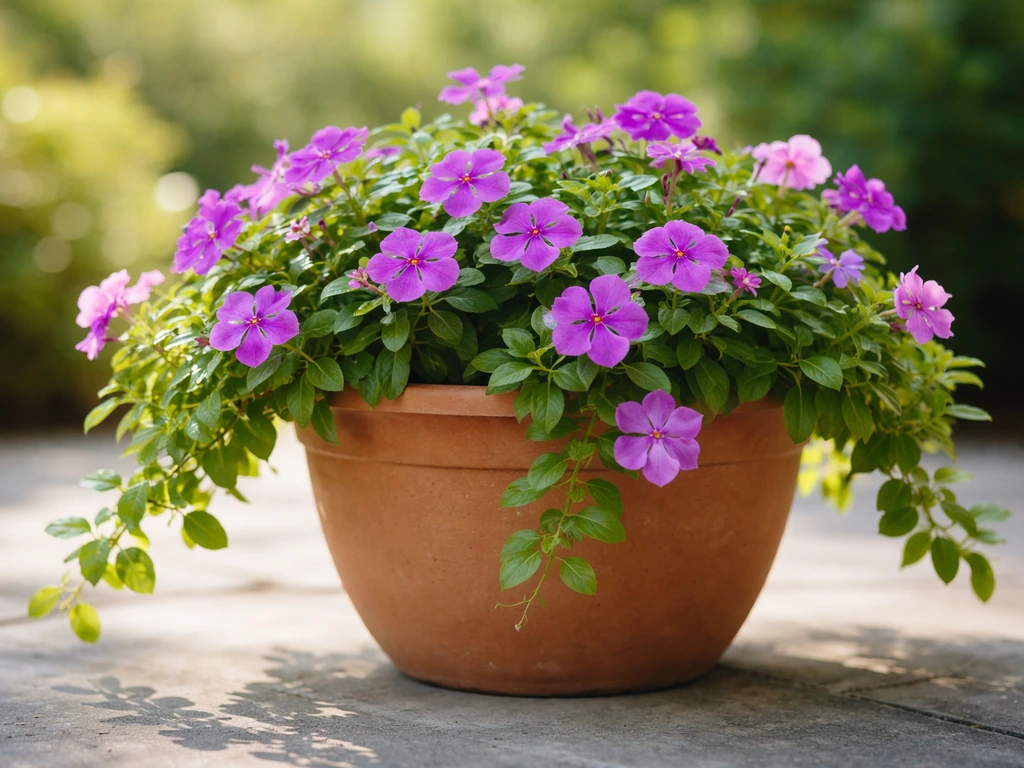
The word 'periwinkle' actually covers a few different plants, and knowing which one you're growing matters because their care differs in some important ways. The two you'll most commonly encounter are Vinca minor (lesser periwinkle), Vinca major (greater periwinkle), and Catharanthus roseus (Madagascar periwinkle or annual vinca). The first two are evergreen ground covers that spread by rooting at their nodes. Catharanthus roseus is the one you'll find at garden centers in flats every spring, treated as an annual in most climates, and it's the one most people picture when they think of flowering periwinkle.
Vinca minor is cold-tough, rated for USDA hardiness zones 3 through 8, which makes it one of the most cold-tolerant ground cover options out there. Vinca major is less cold-hardy, suited to zones 6 through 9. Catharanthus roseus is a true tropical, damaged by cold and best treated as an annual outside of frost-free climates. It's the star bloomer of the group, producing cheerful flowers in shades of pink, white, red, lavender, and bicolor from summer through fall.
One thing to be aware of: Vinca minor and Vinca major can become aggressively weedy, spreading far beyond where you planted them and potentially invading natural areas. If you're near woodlands or natural spaces, Catharanthus roseus is a more garden-contained choice. Several invasive plant councils now flag Vinca minor and Vinca major as plants to manage carefully, so plant them with that in mind.
Ground cover vs. containers: choosing the right setup
Yes, you can absolutely grow periwinkle in pots, and for Catharanthus roseus in particular, containers are a fantastic option. Annual vinca thrives in hot, dry conditions and does beautifully in terracotta or ceramic pots on a sunny patio. The key in containers is drainage: make sure your pot has generous drainage holes and use a quality potting mix rather than garden soil, which compacts badly in containers. A pot that stays waterlogged will kill your periwinkle quickly through root rot.
For Vinca minor and Vinca major as ground covers, in-ground planting is the better long-term choice. They spread via rooting stems to form a dense weed-suppressing mat, which is their main appeal. Soil prep here does matter: they'll tolerate a wide pH range (slightly acidic through neutral to quite alkaline) and grow in clay, chalk, or sandy soils, but the drainage and structure need to work. On heavy clay, mix your excavated soil with compost and some grit before backfilling. On very light sandy soil, add extra organic matter to help retain moisture between rain or watering.
| Feature | Ground planting | Container growing |
|---|---|---|
| Best for | Vinca minor / Vinca major ground covers | Catharanthus roseus (annual vinca) |
| Spreading habit | Spreads freely, fills area over time | Contained, stays in pot |
| Drainage control | Depends on soil prep | Easy to control with good mix and pots |
| Overwintering | Vinca minor hardy to zone 3 | Bring indoors or treat as annual |
| Bloom focus | Modest spring flowers | Heavy bloom all summer to frost |
| Maintenance | Can become weedy, needs edging | Regular watering and feeding needed |
Starting periwinkle from seed
Timing: start earlier than you think
For Catharanthus roseus (annual vinca), start seeds indoors 10 to 12 weeks before your last expected frost date. This plant needs a long head start because it takes time to reach blooming size. One important caution that Illinois Extension specifically flags: don't be tempted to plant out too early. Annual vinca hates cold soil, and transplanting while temperatures are still cool sets plants back badly. Wait until nighttime temperatures are reliably above 60°F before moving them outside.
For Vinca minor from seed, the process is significantly more involved. Lab studies show that 70% germination requires acid scarification followed by 90 days of cold stratification (a period of cool, moist chilling that mimics winter). Without this pretreatment, germination rates drop sharply. Most home gardeners skip the seed route for Vinca minor and buy rooted cuttings or plugs instead, which is honestly a lot easier and more reliable. If you want an easier route for growing geraniums, learn how to grow geraniums from plugs for fast, reliable starts.
How to sow Catharanthus roseus seeds
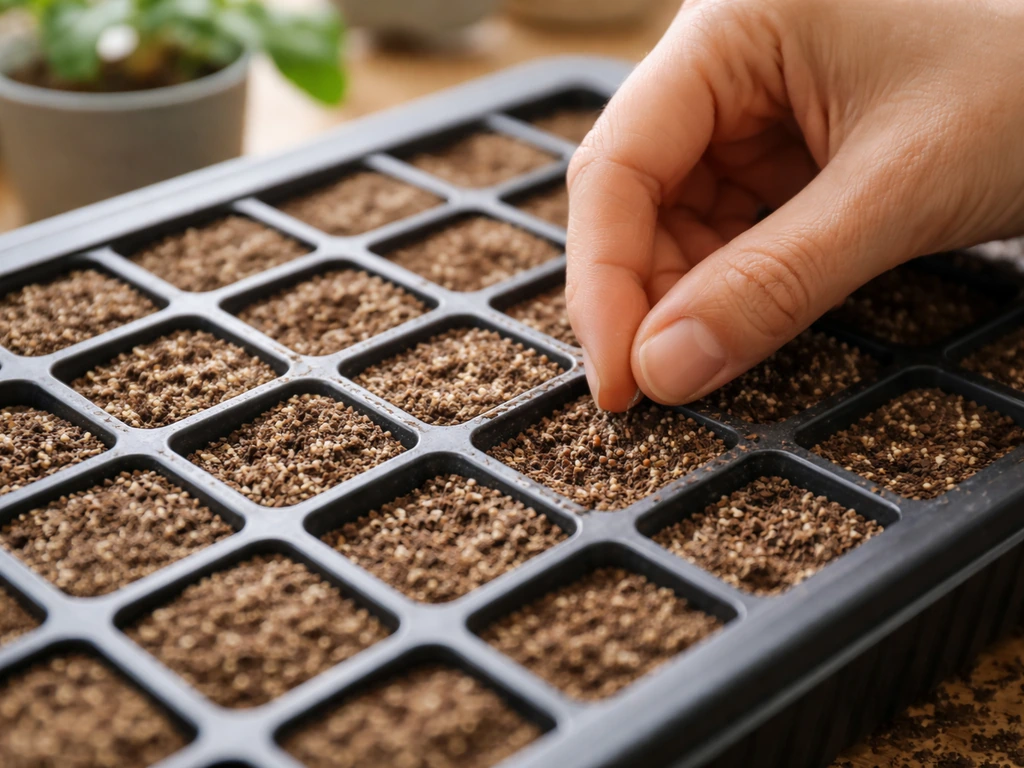
- Fill small cells or a seed tray with a sterile, fine-textured seed-starting mix. Plug trays (like 288-cell trays) work well because smaller volumes help you manage moisture more precisely.
- Sow one seed per cell, pressing it lightly into the surface. Catharanthus roseus germinates fine in either light or darkness, so a thin covering of mix (about 1/8 inch) is fine.
- Keep the mix at 70 to 78°F. Bottom heat from a seedling heat mat is genuinely useful here and speeds things up considerably.
- Keep the mix moist but not wet. This is the most critical point: vinca seedlings are very susceptible to damping off (a fungal collapse at the base of the stem), and the main cause is excess moisture. Let the surface dry slightly between waterings.
- Expect germination in 7 to 14 days at the right temperature. Some sources cite as fast as 3 to 5 days under ideal commercial greenhouse conditions, but at home, 10 to 14 days is a realistic expectation.
- Once seedlings emerge, give them as much light as possible. A south-facing window works, but a grow light positioned close to the seedlings produces much stronger transplants.
Getting seedlings ready to go outside
Before moving seedlings outdoors, harden them off over 7 to 10 days by setting them outside in a sheltered spot for a few hours each day, gradually increasing exposure to sun and wind. Skipping this step causes leaf scorch and transplant shock. Once hardened off, space plants 12 to 20 inches apart in the garden. Closer spacing fills in faster but can reduce airflow, which matters for disease prevention.
Planting out and ongoing care
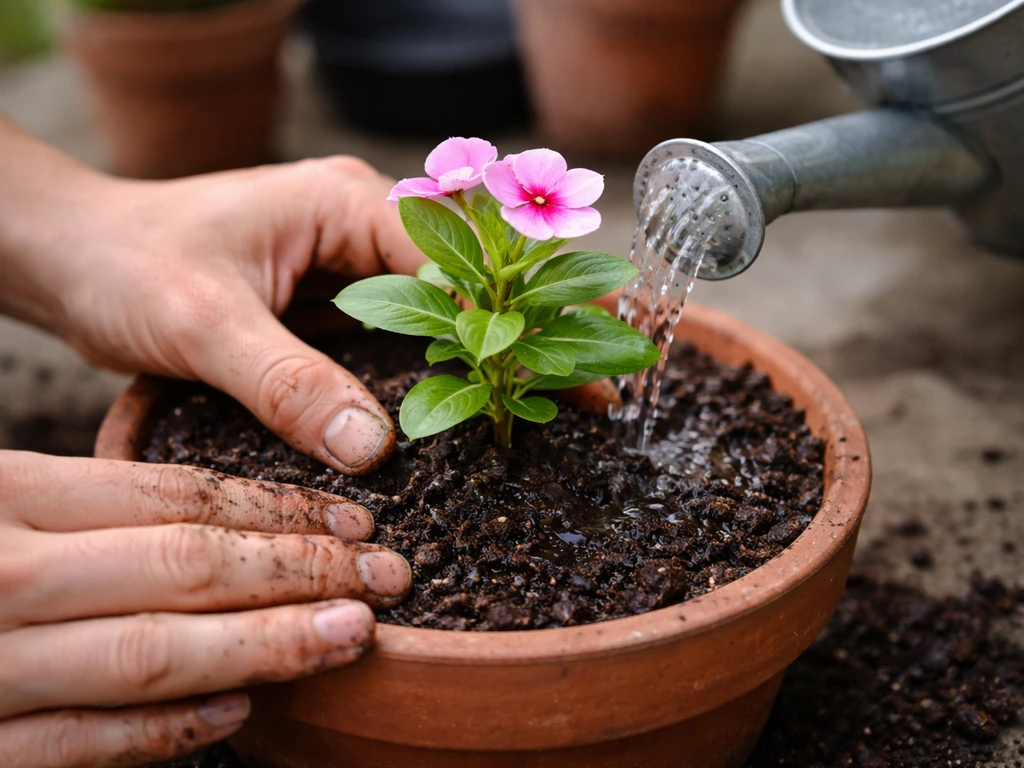
When planting Catharanthus roseus in the garden or into containers, work a general-purpose balanced fertilizer (equal N-P-K numbers, like 10-10-10) into the soil at planting time. This gives roots something to grow into from the start and reduces the lag before flowering kicks in. For ground-cover vincas, the same principle applies: amend the planting area with compost and a balanced fertilizer before you plant.
Water transplants in well, then pull back. Catharanthus roseus genuinely prefers to dry out a little between waterings once established. It's more drought-tolerant than many annuals, and consistent overwatering is one of the fastest ways to invite root rot and branch blight. For Vinca minor in the ground, it's similarly forgiving of dry spells once its root system is established, though it prefers consistently moist, well-drained soil during the establishment period. Clemson Extension’s HGIC notes that annual vinca performs best in well-drained soils and prefers a soil pH of about 5.5 to 6.0, with tolerance for somewhat higher pH.
Getting periwinkle to actually flower
Annual vinca can flower as soon as 6 to 8 weeks after sowing seed, but only when the key conditions are in place. If your plant isn't blooming, one of the following is almost always the reason.
Light
Catharanthus roseus wants full sun, ideally 6 or more hours of direct sun per day. It's actually one of the best heat-loving annuals you can grow, thriving in conditions that wilt other plants. Illinois Extension notes that vinca performs best in full sun with well-drained soils, and it can handle stressful heat conditions well best heat-loving annuals you can grow. The more sun it gets, the better it blooms. Vinca minor is more flexible and will flower in partial shade, but its bloom quantity goes up in brighter conditions. If your periwinkle is in deep shade and not flowering, that's your first thing to change.
Watering
Annual vinca is unusual among flowering annuals in that it blooms best when watered lightly rather than consistently. UF/IFAS specifically notes that plants fertilized and watered lightly (or even not at all) after establishment can flower well within 6 to 8 weeks of sowing. Heavy, frequent watering not only risks root rot but also pushes vegetative growth over flowering. Water when the top inch of soil is dry, and avoid wetting the foliage, which reduces fungal disease risk.
Soil and pH
For annual vinca in containers, keep the growing media pH below 6.0. UGA Extension research links pH above 6.0 to black root rot, a serious disease that shows up as yellowing and decline. In the ground, periwinkle tolerates a wide range, but very compacted or waterlogged soil will prevent flowering by stressing the root system.
Feeding
Regular feeding encourages continuous bloom in Catharanthus roseus. A balanced liquid fertilizer every 2 to 3 weeks through the growing season keeps plants flowering strongly. If you use slow-release granular fertilizer, be careful with the dosage: excess slow-release fertilizer can cause root burn, which ironically sets plants back and reduces flowering rather than improving it. When in doubt, go slightly under the recommended rate and supplement with occasional liquid feeding.
Troubleshooting the most common periwinkle problems
Seeds won't sprout
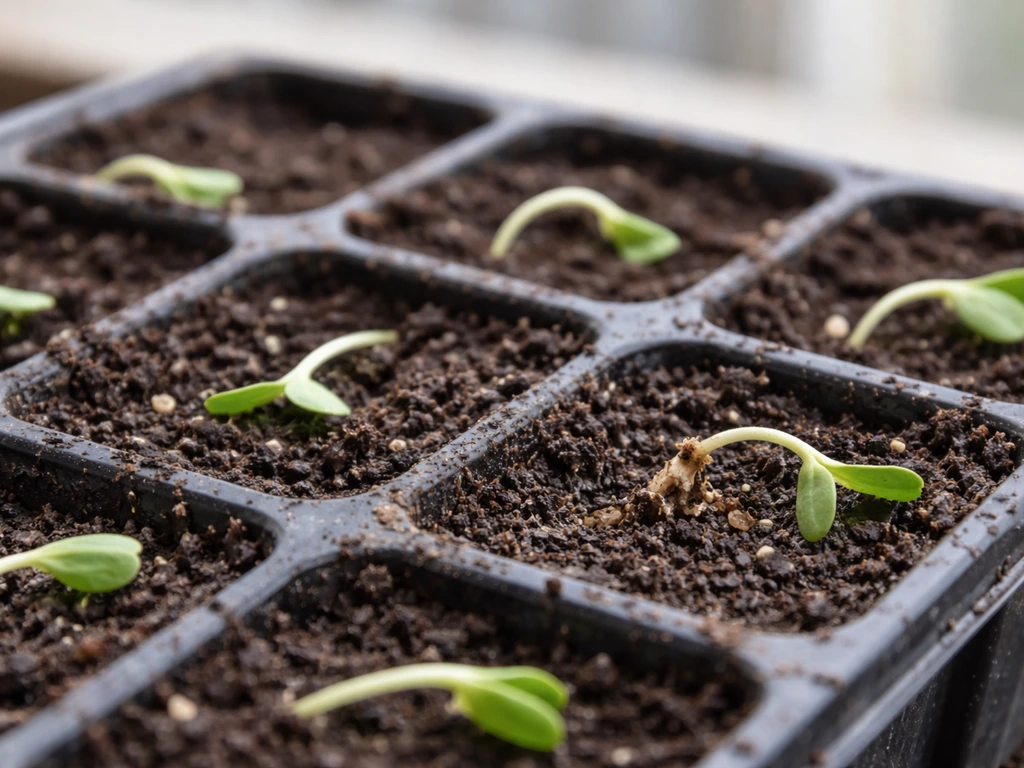
For Catharanthus roseus, the most common cause of germination failure is temperature. If your seed-starting area is below 70°F, germination will be slow and patchy. Get a seedling heat mat and check the actual temperature of your growing medium with a cheap thermometer. Also check seed age: vinca seed doesn't store well, and older seed has noticeably lower germination rates. For Vinca minor from seed, expect very poor results without acid scarification and cold stratification. It's a genuine pretreatment requirement, not just a nice-to-have.
Seedlings collapsing (damping off)
If seedlings emerge and then suddenly keel over at the soil line, that's damping off, a fungal disease that's almost always triggered by overwatering and poor airflow. Once it starts in a tray, it spreads fast. Prevention is the only real answer: use sterile seed-starting mix, water from the bottom when possible, and let the surface of the mix dry slightly between waterings. A small fan running nearby to improve airflow makes a real difference. Unfortunately, once damping off takes hold in a tray, affected seedlings are usually lost.
Plant won't bloom
If your periwinkle is growing but not flowering, run through this checklist: Is it getting at least 6 hours of direct sun? Is it being overwatered? Was it planted out when soil was still cool? Did you plant very recently (it may just need more time)? Annual vinca planted in a partly shaded spot, kept consistently moist, and given no fertilizer will produce a lot of foliage and very few flowers. Move it to full sun, cut back on watering, and start a regular feeding schedule.
Yellowing leaves
Yellowing on periwinkle can mean several things depending on the pattern. If younger leaves are yellowing between the veins while the veins stay green, that's a classic iron chlorosis pattern, often linked to high soil pH, poor drainage, or compacted soil restricting root function. If entire leaves turn yellow, check for overwatering and root rot. A distinct pattern where the veins themselves turn bright yellow while the leaf tissue between stays green can indicate a nutrient or root problem that needs prompt attention. Fix drainage first, then address pH if the problem persists.
Root rot and fungal diseases
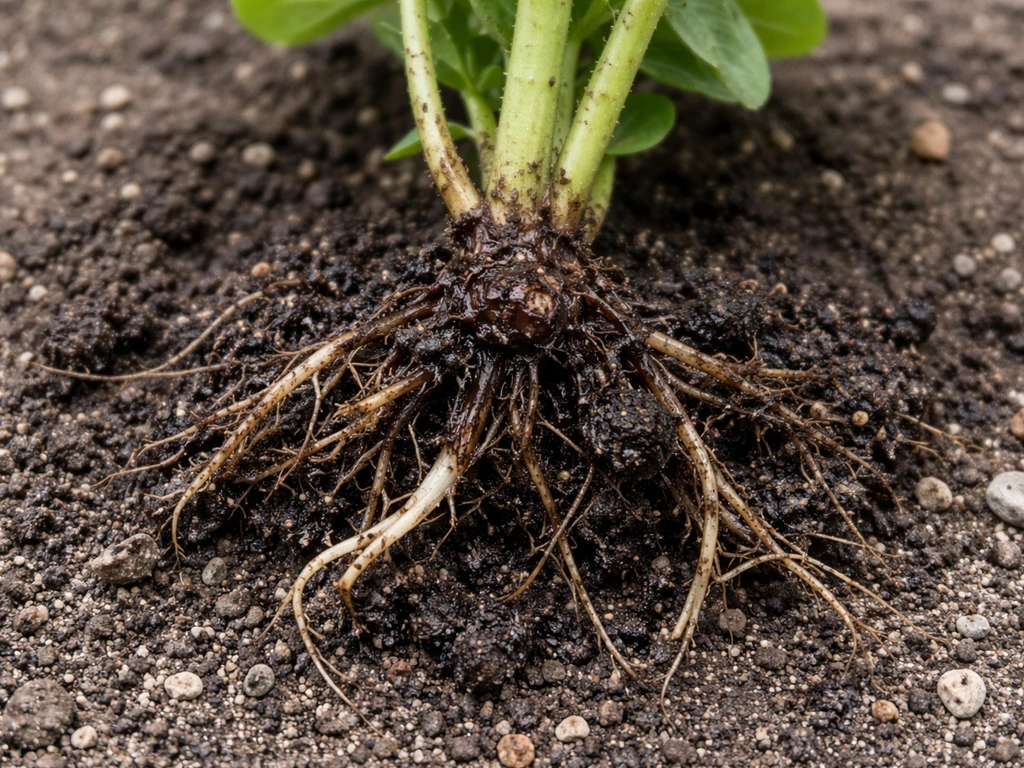
Vinca is prone to several fungal root and stem diseases, including Rhizoctonia root rot and branch blight. The common thread in almost all of them is excess moisture, particularly wet foliage and waterlogged soil. Water at the base of plants rather than overhead, improve drainage if soil stays wet, and avoid crowding plants in ways that trap humidity. Clemson and Connecticut Extension both emphasize reducing the time foliage stays wet as the core cultural prevention step. Fungicide treatments can help in early stages, but fixing the cultural conditions is always the priority.
Spread getting out of control (Vinca minor/major)
If you're growing Vinca minor or Vinca major as ground cover, be ready to manage their spread. They root wherever their stems touch soil and can cover a large area quickly. Edge beds regularly and remove plants from areas where you don't want them before they get established. If you're near natural areas or woodland edges, this is something to take seriously: both species are flagged as invasive in many regions and can displace native plants if allowed to escape into wild areas.
Growing periwinkle successfully really does come down to matching the right species to your situation, getting the moisture balance right (especially at the seedling stage), and giving annual vinca the heat and sun it craves. how to grow perennial geraniums. If you’re specifically aiming to grow Martha Washington geraniums, you’ll want to focus on their light, soil, and watering needs to keep them blooming how to grow martha washington geraniums. It's a forgiving plant in good conditions and a frustrating one in the wrong ones. Once you nail the basics, it rewards you with months of color and almost no fussing.
FAQ
Which type of “periwinkle” should I grow, Vinca minor, Vinca major, or annual vinca?
Choose based on how you want it to behave. If you need a spreading evergreen ground cover, grow Vinca minor or Vinca major, but plan for containment because both can root into nearby beds and unwanted areas. If you want reliable flowers that act more like a seasonal patio plant, grow Catharanthus roseus as an annual (or keep it as a warm-weather plant indoors if you can).
When is it safe to transplant periwinkle outdoors? My seedlings are ready but nights are still cool.
For Catharanthus roseus, move it only after nighttime temperatures stay consistently above about 60°F, and for best results transplant on a mild, cloudy day. Cool nights after transplanting can slow blooming even if daytime temperatures seem fine.
Why did my Vinca minor seeds not sprout even though I kept them warm and watered?
Not all “periwinkle” seed requirements are the same. Vinca minor typically needs acid scarification plus about 90 days of cold stratification to germinate well. If you skip these steps, you may get few seedlings and assume the rest of your setup is wrong.
My periwinkle seedlings emerged, then suddenly collapsed. Is it something I can save?
If seedlings keel over at the soil line, treat it as damping off. Switch to sterile seed-starting mix, improve airflow, and water from the bottom if possible so the surface does not stay constantly wet. If most seedlings are already collapsed, it is usually faster to discard and restart with drier conditions.
My periwinkle looks healthy but won’t flower. What should I adjust first?
Start with light and spacing. Place periwinkle where it receives at least 6 hours of direct sun for annual vinca, and avoid overcrowding in containers or in beds because trapped humidity encourages stem and root problems that can also reduce flowering.
How do I know if I’m watering my periwinkle too much, especially in containers?
For annual vinca, aim for “light watering” after establishment, meaning water when the top inch of soil is dry, and avoid wetting leaves. Overly wet media often causes root rot and branch blight that show up as decline or poor flowering even when the plant is otherwise green.
What potting mistakes most commonly kill periwinkle in containers?
In pots, use a quality potting mix and make sure excess water can drain freely. If you see water pooling on the surface or the plant wilts right after heavy watering, your mix may be too dense or the pot may not drain well, both of which can lead to root rot and eventual yellowing.
My periwinkle leaves are yellowing. Is it a nutrient problem or something else?
Yellowing between veins with green veins often points to iron chlorosis related to pH or root stress from poor drainage or compaction. Improve drainage and consider correcting pH for potted plants, because untreated pH issues can keep the plant from absorbing iron even if you add fertilizer.
Should I deadhead periwinkle to get more blooms, and does it replace fertilizing?
Remove flower heads only if you want a tidier look, but for many gardeners the bigger lever is nutrition and watering rhythm. For Catharanthus roseus, use balanced liquid fertilizer at intervals through the season and keep watering on the lighter side rather than consistently wet.
How can I keep Vinca from taking over my yard?
For Vinca minor and Vinca major, the most practical containment method is physical edging and regular removal of rooted runners at the boundary before they establish deeply. Don’t wait until it’s “too far gone,” because nodes can root quickly once stems touch moist soil.
I’m growing annual vinca in a pot, and it’s declining. How do I prevent black root rot?
If black root rot is suspected in annual vinca, check pH of the container mix and avoid growing media above about pH 6.0. Also ensure the media drains well and avoid heavy, frequent watering that keeps roots in low-oxygen conditions.
My annual vinca seeds germinated poorly. What specific checks should I do first?
If germination is patchy for Catharanthus roseus, verify the actual growing-medium temperature is at least around 70°F, not just the room temperature. Seed freshness matters, so use newer seed and consider using a heat mat plus a cheap thermometer to confirm conditions.
Next Article
When Do Begonias Start to Grow? Timing, Types & Planting Calendar
When do begonias start to grow: clear planting dates, timelines by type, and quick care fixes for reliable starts.