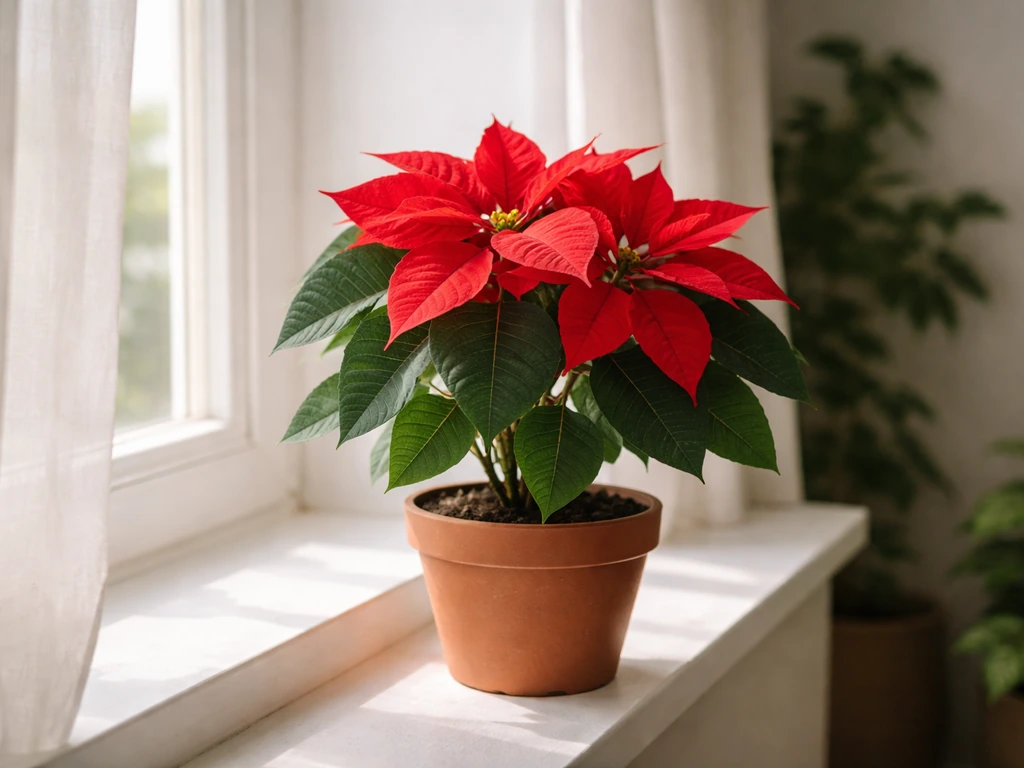
Keep your post-Christmas poinsettia alive by cutting it back hard in spring, giving it a summer of bright light and regular feeding outdoors, then starting a strict 15-hour darkness routine in late September. Do all of that consistently and you'll have red bracts again by December. It takes commitment, but it genuinely works, and once you understand the photoperiod trick, the whole process clicks into place.
How to Grow Poinsettia After Christmas: Step by Step

Harriet Whitmore
15 May 2026
What "after Christmas" actually means for your plant
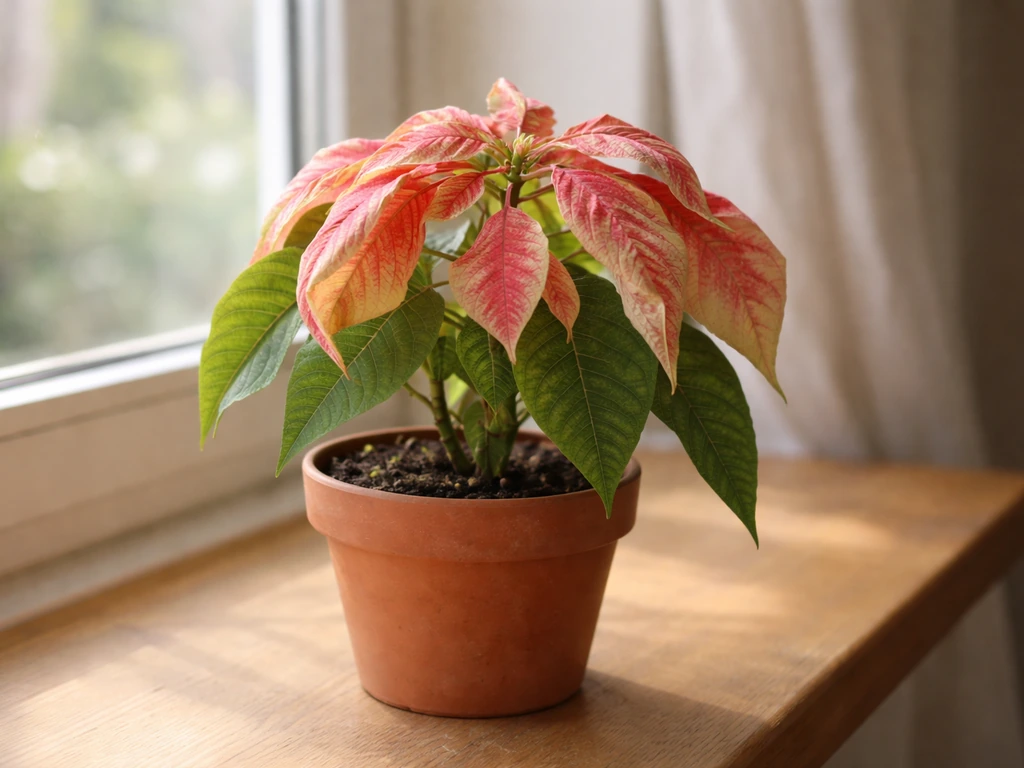
When the bracts (those colorful leaf-like structures most people call petals) start dropping and fading in January, the plant isn't dying, it's just finishing its display. What you're looking at is a woody tropical shrub that's been forced into bloom under artificial conditions. Your job now is to reset it back into normal vegetative growth so it can build the energy it needs to bloom again. Think of the post-holiday period as the beginning of a new growing cycle, not a rescue operation.
The key insight is this: poinsettias bloom in response to long nights, not cold temperatures or a particular calendar date. Commercial growers control the light to hit Christmas exactly. You're going to do the same thing at home, just on a slightly rougher schedule. The steps between now and next December are manageable, they just need to happen in the right order.
Light, temperature, and watering through the winter and spring
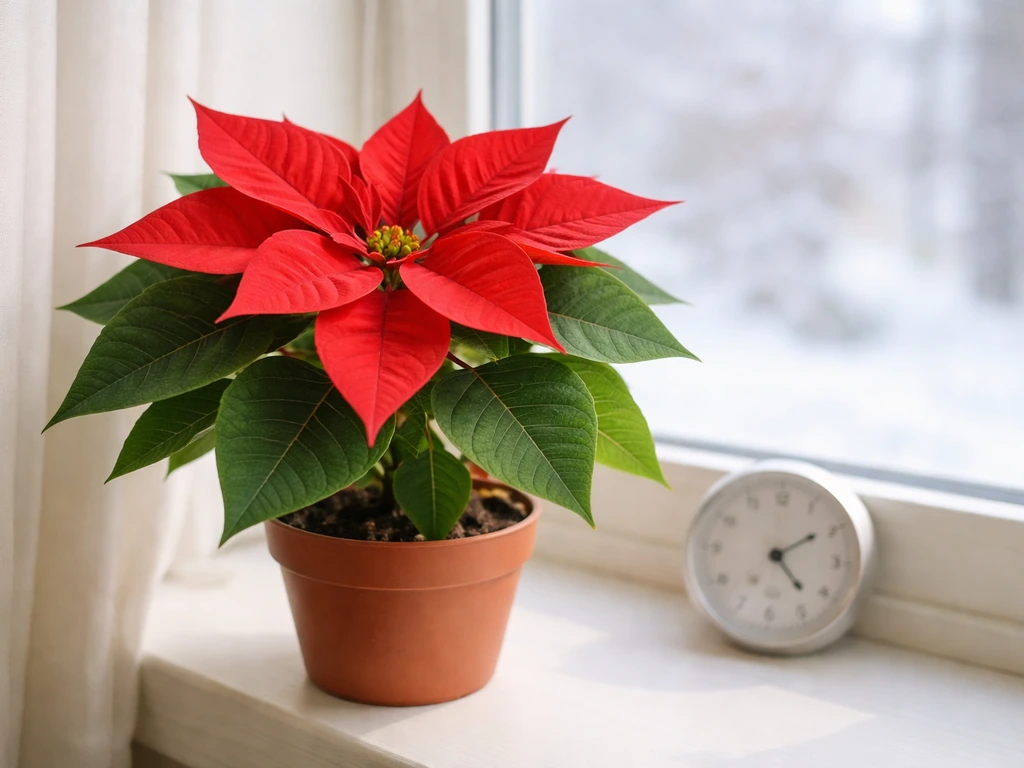
Right after Christmas, keep the plant in the brightest spot you have, a south, east, or west-facing window works well. Avoid harsh direct midday sun through glass, which can scorch the remaining leaves, but don't let it sit in a dim corner either. Poinsettias are light-hungry, and low light is one of the main reasons people lose them in January and February.
Temperature-wise, aim for somewhere between 65 and 75°F during the day. Keep it away from cold drafts, heating vents, and single-pane windows where nighttime temperatures drop sharply. Anything below 50°F will damage or kill the plant quickly.
Watering is where most people go wrong in both directions. The right approach: check the soil by pushing your finger about an inch deep (some sources say 2 to 3 inches). When that feels dry, water thoroughly until it drains freely from the bottom. Then stop and don't water again until it dries out again. Never let it sit in a saucer full of water, root rot is one of the fastest ways to lose a poinsettia, and it often looks like sudden collapse with no warning. If the pot came wrapped in decorative foil, either remove it or poke holes in the bottom so water actually drains.
In early April, before you do the big spring cutback, give the plant a brief rest period. Move it somewhere slightly cooler, around 60°F, with indirect light, and ease up on watering a little. This transition period helps the plant shift gears before you start pushing new growth.
How and when to prune for strong new growth
The hard cutback is the step most beginners skip because it feels brutal, but it's essential. A leggy, stretched-out post-holiday poinsettia will never become a compact, floriferous plant without it.
Timing depends slightly on your climate. For most of the US, cut the plant back in late March through early May, after the rest period but before you push it into full active growth. Cut the stems back to about 4 to 6 inches above the soil surface. Some sources say 3 to 4 inches, others say 6 to 8 inches; anywhere in that range is fine. What you're going for is a short, stubby plant with several nodes (those little bumps on the stem) left to sprout from. This is also the right moment to repot into fresh soilless potting mix if the plant has been in the same container for a while, more on that below.
After the cutback, new shoots will emerge within a few weeks. Once those new shoots reach about 4 to 5 inches long, pinch off just the top inch of each stem. This encourages branching and gives you a bushier plant rather than a few tall, bare stalks. Do a second pinch when the new growth from those pinched stems reaches another 2 to 3 inches. Stop all pinching by September 1 at the absolute latest, pinching after that point can delay or prevent flowering.
The first week of July is a good target for your first pinch if you're working on a standard calendar. Leave about 4 to 5 leaves per stem after each pinch. By late summer, you should have a much fuller, branched plant that's ready to set flower buds.
The photoperiod plan: how to actually get it to bloom again
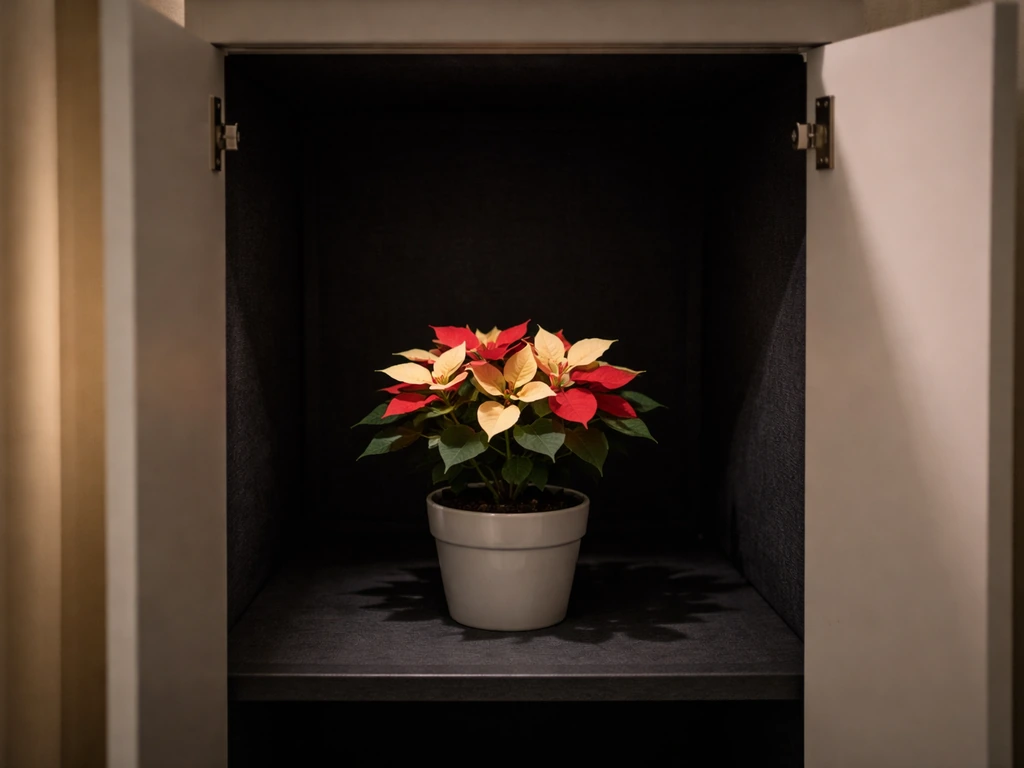
This is the part that makes or breaks the whole project. Poinsettias are short-day plants, meaning they flower when nights are long and uninterrupted. In nature, this happens in late fall in Mexico. If you want to know how do you grow a poinsettia from start to finish, focus first on the spring reset, then the light and photoperiod schedule in late September. In your house, you have to recreate it artificially starting in late September.
Starting around September 20 to October 1, put the plant in complete, uninterrupted darkness for 15 hours every single night, from around 5 p.m. to 8 a.m. works well. During the day, bring it back to its brightest window. Do this every day without exception. The usual approach is to put the plant in a closet or cover it with a lightproof box. The critical word is complete: even opening a closet door briefly to grab something, or a sliver of light from under the door, can interrupt the dark period enough to delay flowering. Purdue Extension researchers have specifically flagged this light-leak problem as a common reason home attempts fail.
Temperature during the dark period matters too. Flower initiation is most rapid at 60 to 70°F. If your closet gets warmer than that overnight, bract development will slow down. A garage or basement that stays in that range can work well, as long as it stays completely dark.
Keep the darkness treatment going until the bracts are showing good color, usually by early to mid-December. At that point you can discontinue the treatment and just enjoy the plant in normal indoor light. Iowa State University Extension notes that most cultivars respond well with this protocol starting in early October, with color showing by early December.
Feeding, soil, and when to repot
During the post-holiday resting period (January through early spring), hold off on fertilizer. The plant isn't growing actively, so feeding it won't help and can stress roots.
Once you do the spring cutback and new growth starts appearing, that's when feeding begins. Use a balanced complete fertilizer, something like a 10-5-10 formula works well, every 3 to 4 weeks through the active growing season. Keep feeding through the summer right up until you start the darkness treatment in late September. After that, ease off fertilizing while the plant is in its photoperiod induction phase.
Repotting is worth doing at the same time as the spring cutback, especially if the plant has been in the same container for more than a year. Move it up just one pot size, going too large leads to wet soil that roots can't dry out fast enough, which invites rot. Use a light, well-draining soilless potting mix. University of Maryland Extension specifically recommends commercially available soilless media for this step. Make sure the new pot has drainage holes.
Month-by-month calendar from now to next bloom
Here's how the whole year maps out from this point in mid-May 2026 through blooming in December 2026.
| Month / Period | What to Do |
|---|---|
| January – March (post-holiday) | Keep in bright light, water when top inch of soil dries, no fertilizer, keep warm (65–75°F), rest in ~60°F in early April |
| Late March – Early May | Hard cutback to 4–6 inches above soil; repot into fresh soilless mix; resume bright light |
| May (now, mid-May 2026) | Begin light feeding every 3–4 weeks; move outdoors to partial shade once nights stay above 50–55°F |
| June | Continue feeding; monitor for new shoot growth; keep watering consistently |
| First week of July | First pinch: trim top inch off each new shoot, leaving 4–5 leaves per stem |
| July – August | Continue feeding and watering; second pinch when new growth hits 2–3 inches; keep outdoors if temps allow |
| September 1 | Stop all pinching — this is the hard deadline |
| Late September – Early October | Start 15-hour dark period nightly (5 p.m. to 8 a.m.); bring back to bright light each day; continue watering, ease off fertilizer |
| October – November | Maintain strict darkness schedule every night without interruption; watch for bract color to develop |
| Early to Mid-December | Bracts should show full color; discontinue darkness treatment; enjoy the bloom in normal indoor light |
Since today is May 15, 2026, you're right at the point where the spring cutback should either be done or happening this week. If you haven't cut it back yet, do it now. Get the plant into fresh soil and start feeding. You have good timing to catch up with the calendar.
Troubleshooting the most common problems
Leggy, stretched-out growth
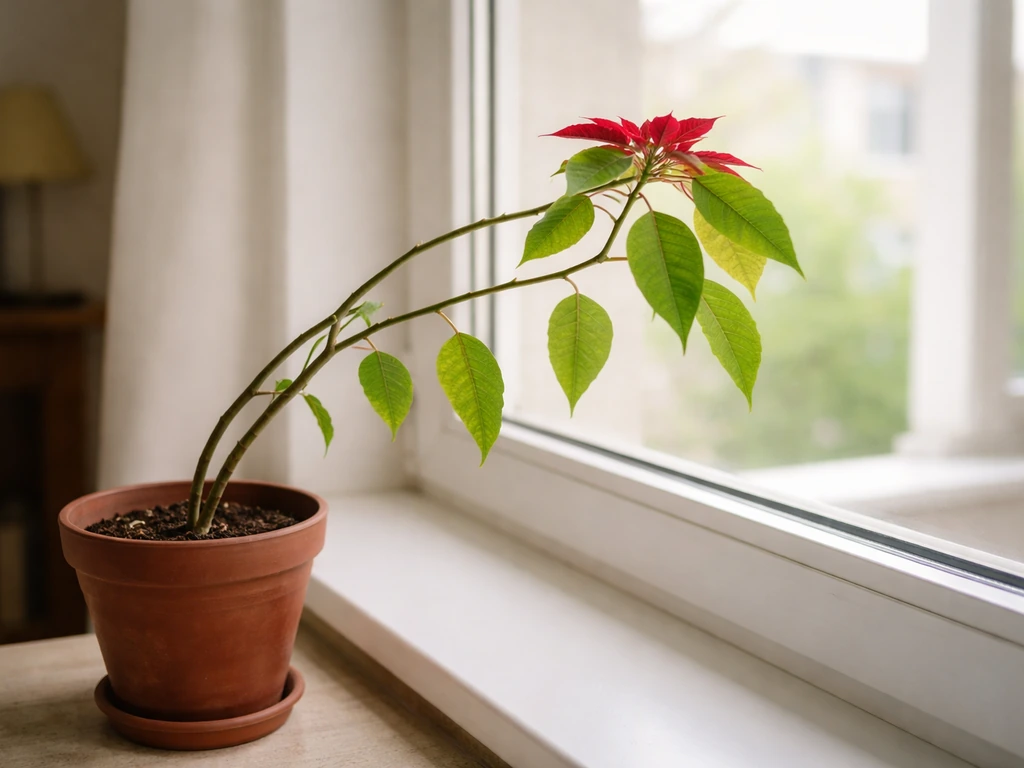
This almost always comes down to insufficient light. Poinsettias stretch toward light when they're not getting enough. Move the plant to your brightest window or, when temperatures allow, put it outside in a spot with morning sun and afternoon shade. The spring cutback also resets a leggy plant, don't skip it.
Leaf drop after the holidays
Some leaf drop after Christmas is completely normal as the plant transitions out of its flowering phase. But sudden, dramatic leaf drop, especially on a plant that still looks otherwise healthy, usually points to temperature stress (cold draft, heating vent), overwatering, or root rot. Check the roots: healthy roots are white or tan; rotted roots are brown, mushy, and smell bad. If root rot has set in badly, the plant may not be salvageable.
Not blooming after doing the darkness treatment
The number one culprit is light interruption during the dark period. Even a few seconds of light can reset the plant's internal clock. Use a truly dark space, not a room with a gap under the door or a closet with a light inside. The second most common issue is starting the darkness treatment too late. If you haven't started by early October, you're pushing the timeline past Christmas. A third issue: pinching too late in the season. If you pinched after September 1, the plant may not have had enough time to set flower buds.
Whiteflies and fungus gnats
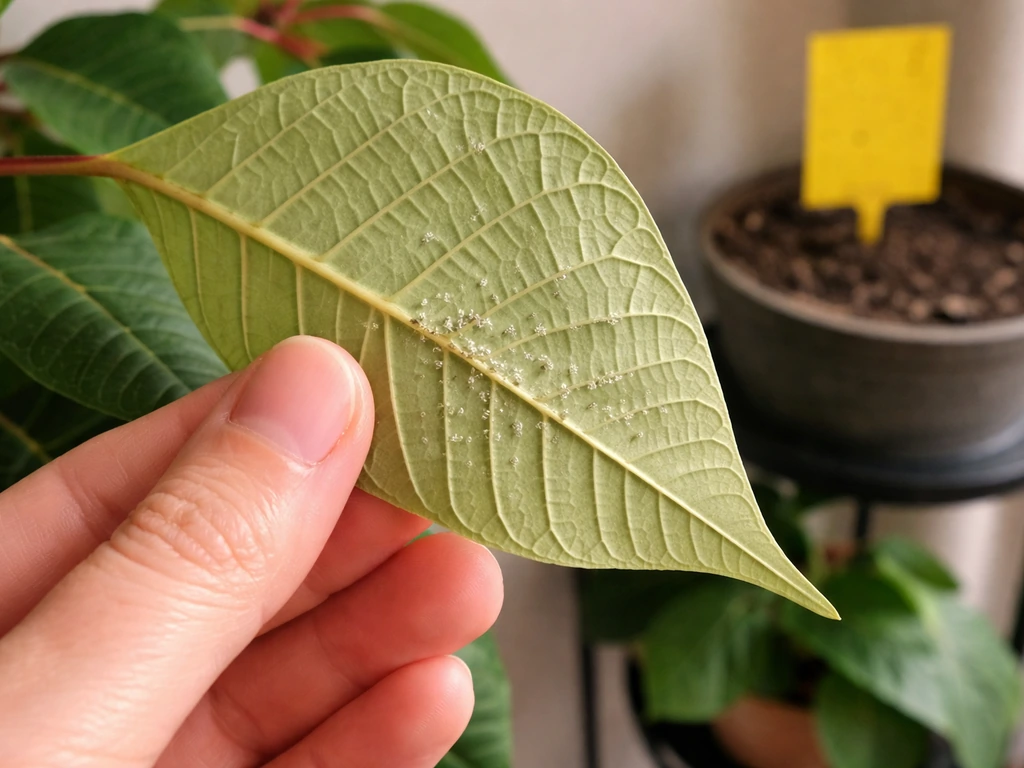
Whiteflies are the most common poinsettia pest, they feed on the undersides of leaves and cause yellowing and leaf drop. If you bring a plant that spent summer outdoors back inside in fall, inspect it carefully first. Treat whiteflies with insecticidal soap or neem oil, making sure to coat the undersides of leaves. Fungus gnats are mostly an annoyance (adults fly around; larvae live in soil) and are usually a sign of consistently overwatered soil. Letting the soil dry out more between waterings usually takes care of them.
Yellowing leaves during active growth
Yellowing during the summer growing phase often means the plant needs feeding, or the soil is staying too wet. Make sure you're fertilizing every 3 to 4 weeks and that the pot drains freely. If lower leaves are yellowing while new growth at the top looks fine, that's usually a nutrient issue. If the whole plant looks pale and tired, check drainage first.
Adapting care for your climate and indoor vs. outdoor conditions
If you're in a warm climate, Florida, the Gulf Coast, Southern California, or similar zones, you have the option of growing your poinsettia in the ground or in a large container outdoors year-round, which can result in a much larger, more vigorous plant. If you're growing poinsettias in the ground or in warm outdoor conditions, the care calendar shifts somewhat because the plant can stay outside longer and may need less fussing over winter cold. If you're in the Philippines, you'll also need to adjust the timing around your warmer, more humid conditions while keeping the same key light and photoperiod steps how to grow poinsettia in the philippines. Gardeners in frost-free zones can also take cuttings more easily to propagate new plants. If you want more plants beyond one cycle, learning how to grow poinsettias from plugs can help you think about propagation options like cuttings alongside the photoperiod and pruning steps take cuttings. In Australia, you can follow the same after-Christmas reset and then start the darkness routine in late September or early October to line up with local conditions how to grow poinsettia in australia.
For most US gardeners growing poinsettias as houseplants or as container plants that go outside for the summer, the calendar above applies well. If you’re aiming to grow Pyrostegia venusta instead, focus on its sunlight, warmth, and regular watering to get strong, flowering vines. The key outdoor window is after night temperatures reliably stay above 50 to 55°F (usually mid-May in many regions, which is right now) through early to mid-September before you bring the plant back inside for the darkness treatment. A partially shaded outdoor spot works better than full sun, which can bleach and stress the plant in summer.
If you're in a colder climate with short growing seasons (think the upper Midwest or New England), you'll have a narrower outdoor window and may need to do more of the summer growing phase on a sunny porch or under grow lights indoors. The darkness treatment works the same regardless of where you live, what changes is when you can safely move the plant outside and when you need to bring it back in. If you are growing poinsettias in a greenhouse, keep that same 15-hour uninterrupted darkness schedule in place so the plants still bloom on time the darkness treatment works the same.
As for realistic expectations: with consistent care and a strict darkness schedule, most gardeners who follow through see colored bracts developing by late November to mid-December. The bracts won't always be as perfectly uniform as a commercially grown plant, but they'll be yours, from a plant you kept alive and guided through an entire year. That's genuinely satisfying, and it gets easier once you've done it once.
FAQ
Can I keep my poinsettia in the same pot all year, or is repotting after Christmas really necessary?
You can keep it in the same container, but repotting at the spring cutback is the safer choice when the mix is old or compacted. If you skip repotting, be extra strict about letting the soil dry evenly between waterings, and check that the pot drains freely because reduced airflow in older mixes increases root rot risk.
My plant gets dark at night, but I do not strictly control the light. Will that still work?
Partial control usually leads to weak or late bract color because poinsettias need uninterrupted darkness. If you cannot guarantee zero light leakage, use an opaque, lightproof box with a solid lid and avoid any placement that could be hit by streetlights, TV reflections, or headlights through nearby windows.
What if I accidentally interrupt the 15-hour dark period once?
A single brief interruption can reset the schedule for at least that night, pushing blooming later. The practical fix is to restart the countdown with complete darkness every night thereafter, keep the timing consistent, and expect bracts to show color slightly later if interruptions happen repeatedly.
Should I water more during the dark period to help it bloom faster?
No, watering should follow the same “check the soil and water thoroughly only when the mix dries” rule. Overwatering during induction slows bract development indirectly by stressing roots, and cold, wet soil is especially risky during the dark treatment.
How warm or cool can the closet or box be during the dark nights?
Aim for roughly 60 to 70°F during the dark hours for fastest initiation. If your space drops near the low end of your house temperatures, bracts may still form, but they often color later and unevenly, so use insulation or a steadier room if possible.
My poinsettia is leggy after Christmas. Does that mean something went wrong, and will pinching fix it?
Leggy growth is usually a light-availability issue after the holiday display and improves with the spring cutback plus timely pinching. If stems are very long and nodes look sparse, pinching helps branching, but skipping the hard cutback will still leave you with a taller, less floriferous plant.
When is the latest I should pinch to avoid delaying blooms?
Stop pinching by September 1 at the latest, because late pinching can delay bud set. If you miss the date, prioritize perfect darkness control starting around late September to early October, and accept that bract timing may shift rather than trying to “catch up” with extra pinching.
Do I need to fertilize during the January to spring resting period?
No. Holding fertilizer during dormancy or reduced growth prevents unnecessary salt buildup and root stress. Resume feeding only after you see active new shoots following the spring cutback, then continue at about every 3 to 4 weeks through summer.
How do I tell the difference between normal leaf drop and leaf drop from a problem?
Normal post-holiday leaf drop happens gradually as the plant transitions, while sudden dramatic drop plus limp stems often signals stress like cold drafts, heating vents, or root issues. If you suspect overwatering, check roots early, healthy roots should be firm and light-colored, rotten roots are soft and foul.
My bracts are not coloring by early December. What is the most likely cause?
Most delays come from insufficient or interrupted darkness, starting late, or pinching too late. First confirm your dark period is truly uninterrupted, then verify you started around September 20 to October 1 and stopped pinching by September 1, because each factor can shift bract timing.
Are whiteflies and fungus gnats tied to specific care mistakes?
Whiteflies are more about exposure and movement, especially if you moved the plant outdoors and bring it back inside. Fungus gnats usually indicate consistently wet soil, so let the top portion of the mix dry more between waterings and ensure drainage is unobstructed before you treat.
Can I propagate a second poinsettia during this cycle without ruining my flowering plant?
Yes, but be careful with timing. The best window is typically after the spring cutback when new growth is vigorous, take cuttings for new plants while keeping your main plant on schedule for pinching and photoperiod induction, so you do not delay the mother plant’s required steps.
Next Article
How Do You Grow a Poinsettia Indoors Step by Step
Step-by-step indoor poinsettia care, from setup to rebloom, plus training into a poinsettia tree and fixes for common is