Rex begonias thrive in bright indirect light, high humidity around 50% or more, temperatures between 60°F and 80°F, a fast-draining potting mix, and careful watering that lets the top inch of soil dry out before you water again. Get those five things right and you'll have some of the most dramatic, colorful foliage in your home. Get them wrong and you'll deal with root rot, faded leaves, and powdery mildew before you know it. This guide walks you through exactly what to do, from choosing a pot to propagating new plants.
How to Grow Rex Begonias: Care, Propagation, Troubleshooting

Harriet Whitmore
21 May 2026
What makes rex begonias different from other begonias
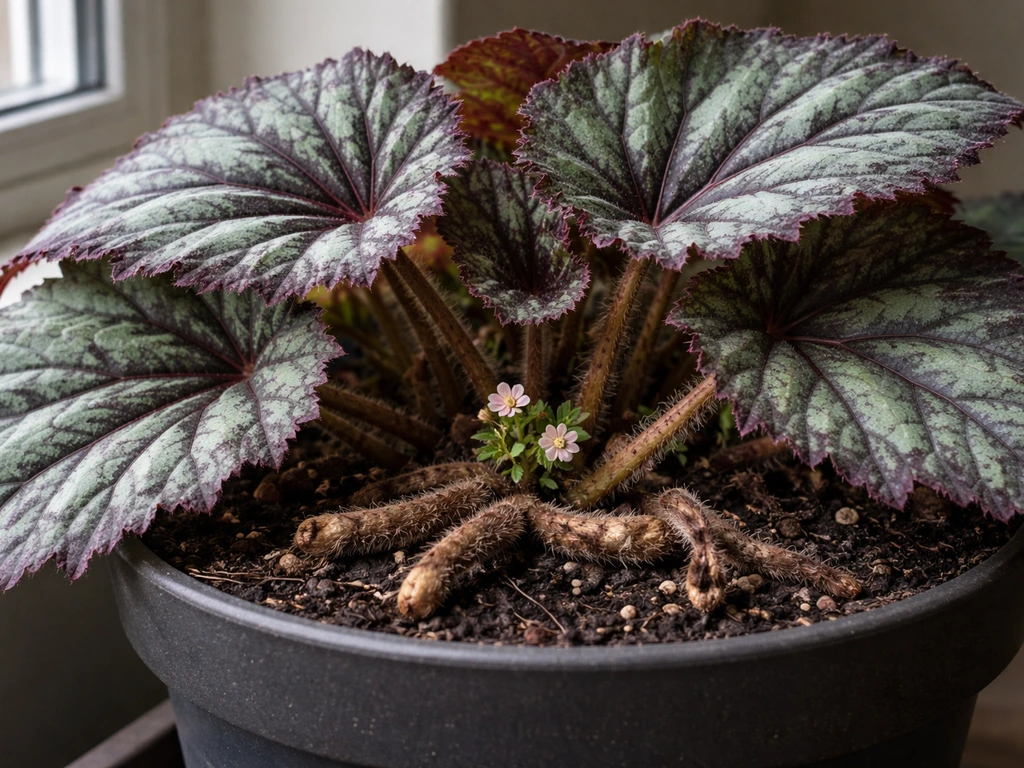
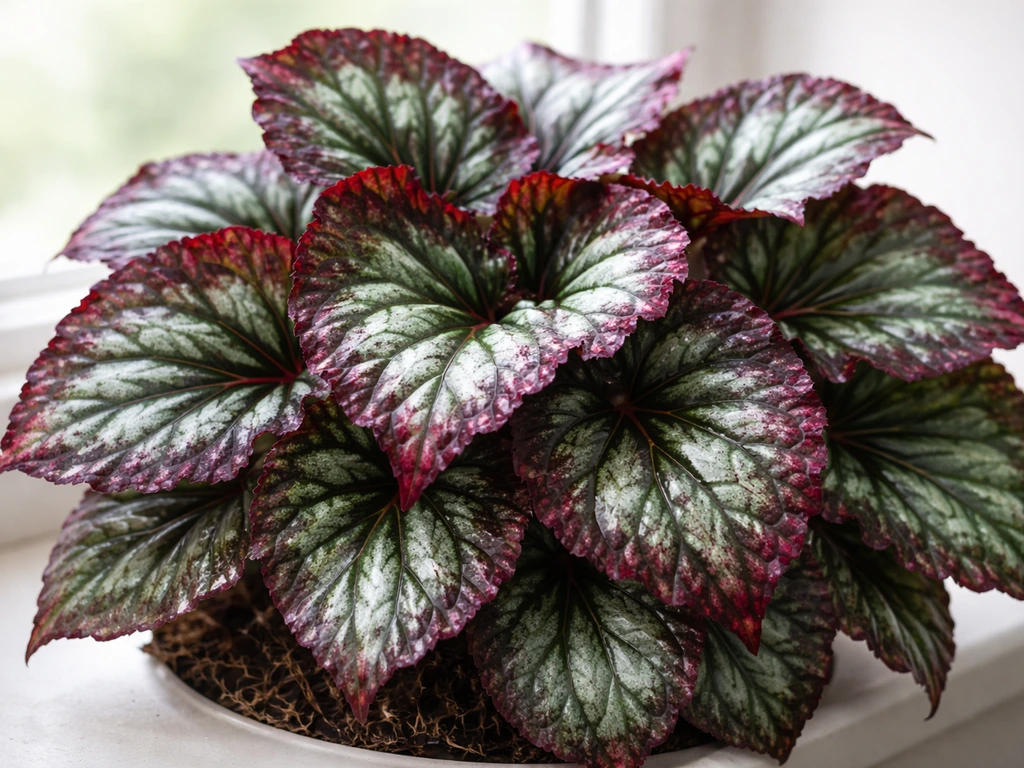
Rex begonias (Begonia rex-cultorum) are grown almost entirely for their leaves, not their flowers. The blooms are small and honestly a bit underwhelming compared to the foliage, which can be swirled with silver, burgundy, deep green, pink, and nearly black all on the same leaf. They're rhizomatous, meaning they grow from a thick, horizontal stem that creeps along or just below the soil surface rather than producing a traditional upright trunk or growing from a corm like tuberous types.
That rhizomatous growth habit matters for how you care for them. The rhizome stores water and nutrients, which is part of why overwatering is such a common killer: the plant already has reserves, and a constantly wet rhizome rots fast. Rex types also go through a semi-dormant period in winter when growth slows noticeably, which affects your watering and fertilizing schedule. If you've grown begonia maculata or semperflorens before, set those routines aside, because rex begonias have their own specific requirements. If you specifically want to grow begonia maculata, you will need to adjust the care routine to match its lighter needs and different watering habits.
Light, temperature, humidity, and airflow
Getting the light right
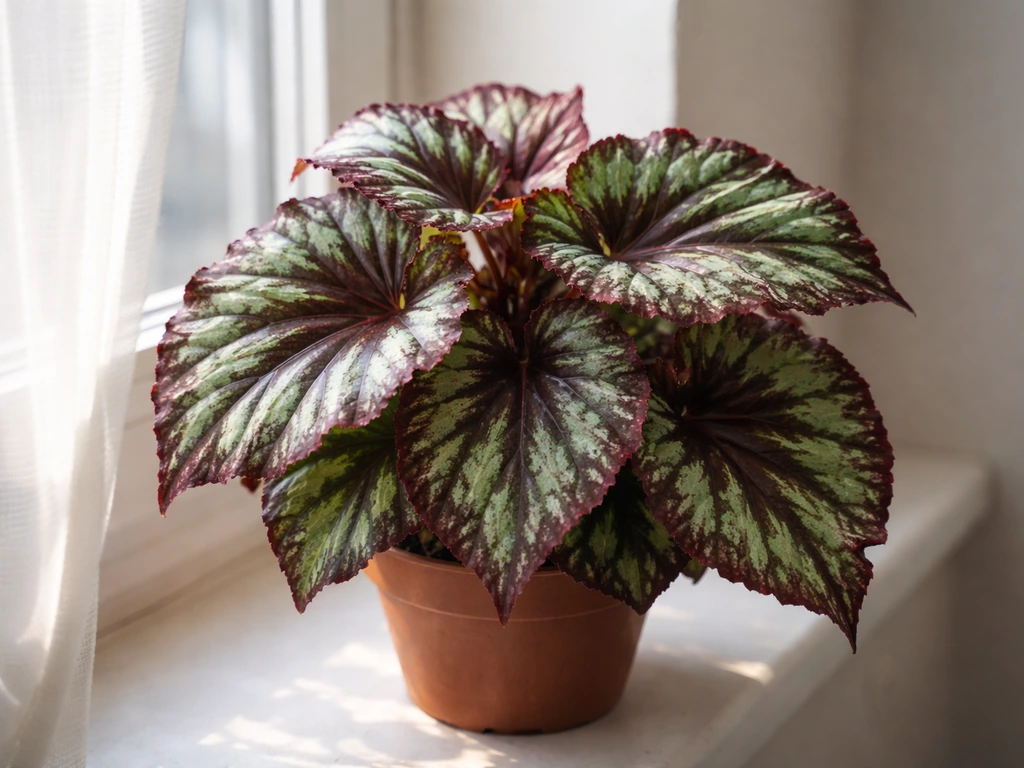
Rex begonias want bright indirect light, and that distinction is important. Direct sun scorches their leaves quickly, leaving papery brown patches that don't recover. Indoors, an east-facing window is ideal because it delivers gentle morning sun without the intense afternoon heat. West-facing windows can work, but hang a sheer curtain to diffuse the light. A south-facing window without a curtain is usually too intense, especially in summer. North-facing windows often don't give enough light and the colors will fade and the plant will stretch toward whatever light it can find.
If you want to move your rex begonia outside in warmer months, find a shaded patio spot or somewhere under a tree canopy. Even morning sun for more than an hour or two can cause scorching outdoors. Dappled shade is the sweet spot. Bring them back inside before nighttime temperatures drop below 60°F, which in most of the US means sometime in September.
Temperature and humidity
Keep rex begonias between 60°F and 80°F. They don't tolerate frost at all, and temperatures below 55°F can cause serious stress or damage. On the upper end, hot and dry conditions above 85°F will invite spider mites and cause leaf curl. Most homes are fine temperature-wise, but humidity is where people run into trouble. Rex begonias want humidity at 50% or higher, which is often significantly more than what most indoor environments provide, especially in winter when heating systems dry out the air.
The tricky part is that you cannot just mist the leaves to raise humidity. Wet foliage left sitting on the plant is a direct invitation to powdery mildew and botrytis (gray mold), both of which are serious problems for rex begonias. Instead, run a humidifier nearby, place the pot on a tray filled with pebbles and water (with the bottom of the pot sitting above the water line, not in it), or group your rex begonia with other plants. Good air circulation is just as important as humidity: stagnant moist air is where fungal problems develop. A small fan on low, pointed away from the plant to keep air moving in the room, makes a real difference.
Potting mix and containers
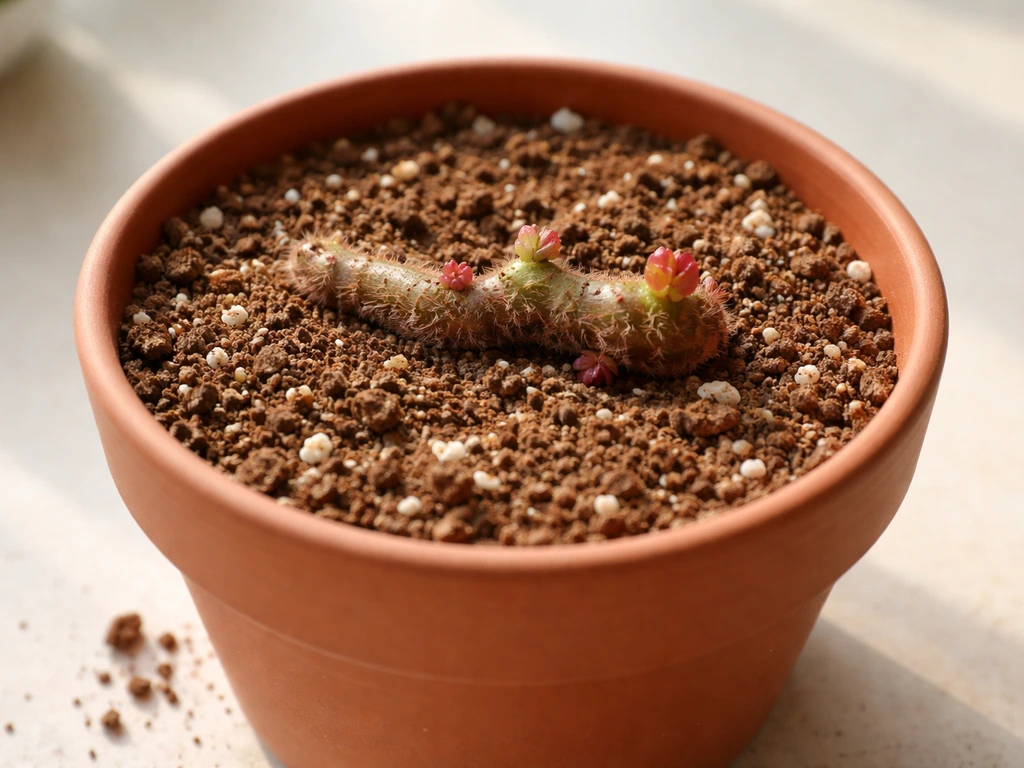
Rex begonias need a potting mix that drains fast and stays airy. A standard all-purpose potting soil is usually too dense and holds too much moisture for the rhizome. A good starting mix is two parts perlite or coarse sand to three parts peat-based potting mix, or you can use a pre-made mix labeled for African violets, which has a similar texture and pH. The soil pH should be slightly acidic, around 5.7 to 6.5, which is where rex begonias take up nutrients most efficiently.
For containers, clay or terracotta pots are genuinely better for rex begonias than plastic. Clay is porous and lets the soil dry out faster between waterings, which dramatically reduces the risk of root and rhizome rot. Whatever container you choose, it must have drainage holes. No exceptions. The pot size should be just slightly larger than the root mass: rex begonias actually prefer being a little snug in their containers and tend to struggle in pots that are too large because excess soil stays wet for too long.
How to plant and propagate rex begonias
Planting from a nursery purchase or rhizome
If you're starting with a nursery plant, move it into fresh well-draining mix as soon as you get it home. Don't bury the rhizome deeply: it should sit at or just barely below the soil surface. Burying it too deep is one of the most common beginner mistakes and leads directly to rot. If you're starting from a purchased rhizome or offset, lay it horizontally on top of the mix and press it in gently so just the bottom half is in contact with the soil. To get started with how to grow begonia corms, plant the corms in well-draining mix and keep them consistently warm until they sprout.
Leaf propagation: the easiest way to get new plants
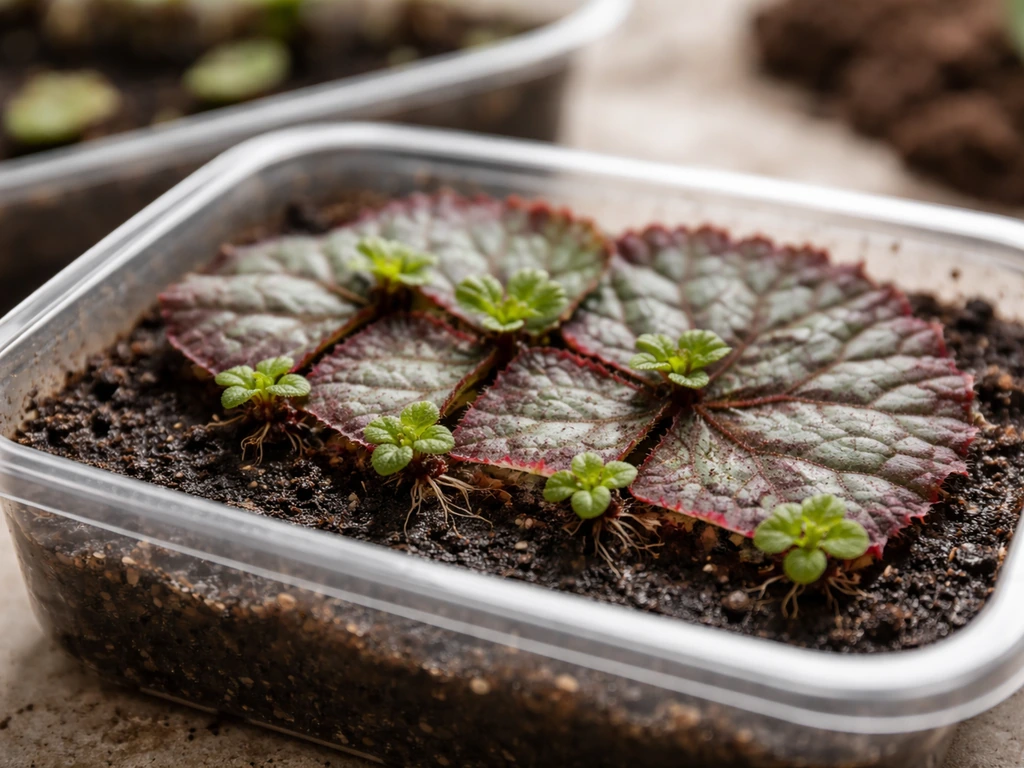
Leaf propagation is the most popular method for rex begonias and it's genuinely satisfying once you get the hang of it. There are two main approaches: whole leaf cuttings and leaf wedges.
For a whole leaf cutting, take a healthy medium-sized leaf and cut the main veins on the underside with a sharp, clean blade, making cuts every half inch or so. Then lay the leaf face-up on moist rooting mix (a mix of perlite and peat works well) and use small stones or bent wire to hold the leaf flat against the surface so the cut veins stay in contact with the mix. Tiny plantlets will sprout from each cut within a few weeks.
For leaf wedges, cut a healthy leaf into triangular sections, each with a piece of the central vein included. Press each wedge vein-side down into moist rooting mix. At around 70°F (21°C), wedge cuttings typically root in three to six weeks. Cover the tray loosely with clear plastic to hold humidity, but lift the cover daily for a few minutes to let air circulate and prevent mold.
Propagating from rhizome sections
If your rex begonia has a long rhizome with a bare section (which happens as it ages), you can cut that section into pieces, each about 2 to 3 inches long, and press them horizontally into moist rooting mix. Keep them warm and covered lightly to retain humidity. This method is also useful when you're repotting and find that the rhizome has spread beyond the pot: just pot up the pieces separately. Spring is the best time for rhizome propagation since the plant is putting out new growth and has energy to root quickly.
Watering and fertilizing
How and when to water
Water rex begonias when the top inch of potting mix feels dry to the touch. Stick your finger in: if there's any moisture at that depth, wait another day or two. When you do water, water thoroughly until it drains freely from the bottom, then empty the saucer so the pot isn't sitting in standing water. Some growers prefer bottom watering, where you set the pot in a shallow dish of water for 20 to 30 minutes and let the soil draw moisture up from below, which keeps the surface and rhizome drier. Logee’s Rex care sheet advises letting the soil reach a state of visual dryness between waterings and notes that watering associated with the pot’s bottom can help keep the rhizome drier blank" rel="noopener noreferrer">Begonia Rex Care PDF. If you want to grow a begonia in water, start by taking a healthy cutting and keeping it clean in a jar until roots form. Either method works well as long as you let the soil approach dryness between sessions.
In winter, when growth slows down, you'll water much less frequently, sometimes only every two to three weeks. The plant isn't actively growing and the soil dries out more slowly. Overwatering in winter is probably the single most common way people lose a rex begonia.
Fertilizing for vibrant color
During the growing season (roughly spring through early fall), feed your rex begonia with a balanced, water-soluble fertilizer diluted to about a quarter of the recommended strength. A fertilizer in the range of 23-19-14 or a balanced 20-20-20 works well. Apply it every two weeks at quarter strength rather than hitting the plant with full-strength fertilizer less often: rex begonias are sensitive to fertilizer burn and the dilute approach keeps feeding consistent without shocking the roots. In late fall and winter, stop fertilizing entirely and let the plant rest.
Ongoing care through the seasons
Pruning and tidying
Rex begonias don't need much pruning in the traditional sense. Most of the maintenance is grooming: removing dead or yellowing leaves as soon as you spot them, and clearing any fallen debris from the surface of the potting mix. This isn't just aesthetic. Dead leaves sitting on the soil are a breeding ground for fungus gnats, botrytis, and other problems. The American Begonia Society specifically recommends removing all surface debris as a basic disease-prevention step, and it really does make a difference.
If your rex has grown upright stems (some varieties are more upright than others) or if the rhizome has stretched long with bare sections and few leaves, you can cut it back. Use clean, sharp scissors or pruning shears and cut the rhizome back to a section that still has healthy growth. The cut rhizome section can itself be used to propagate a new plant.
When and how to repot
Repot rex begonias in spring when you see new growth starting. Signs that it's time: roots circling the bottom of the pot or pushing out the drainage holes, the rhizome pressing against the pot walls, or the plant drying out much faster than usual between waterings. Move up only one pot size at a time. When you repot, take the opportunity to inspect the rhizome: trim off any soft, mushy, or black sections with a clean blade and let the cut surfaces dry for 30 minutes before potting into fresh mix.
Troubleshooting common problems
| Problem | Likely Cause | What to Do |
|---|---|---|
| Leggy, stretched growth | Not enough light | Move to a brighter spot with more indirect light; east or west window is ideal |
| Faded or dull leaf color | Too much direct sun or insufficient light | Check light levels; indirect bright light brings out the best color |
| Crispy leaf edges | Low humidity or hot dry air | Increase humidity with a pebble tray or humidifier; keep away from heating vents |
| Yellowing leaves | Overwatering or nutrient deficiency | Let soil dry more between waterings; resume quarter-strength fertilizer in growing season |
| Soft, mushy stem or rhizome | Root or stem rot (Pythium or Rhizoctonia) | Remove affected sections, repot in fresh dry mix, reduce watering frequency |
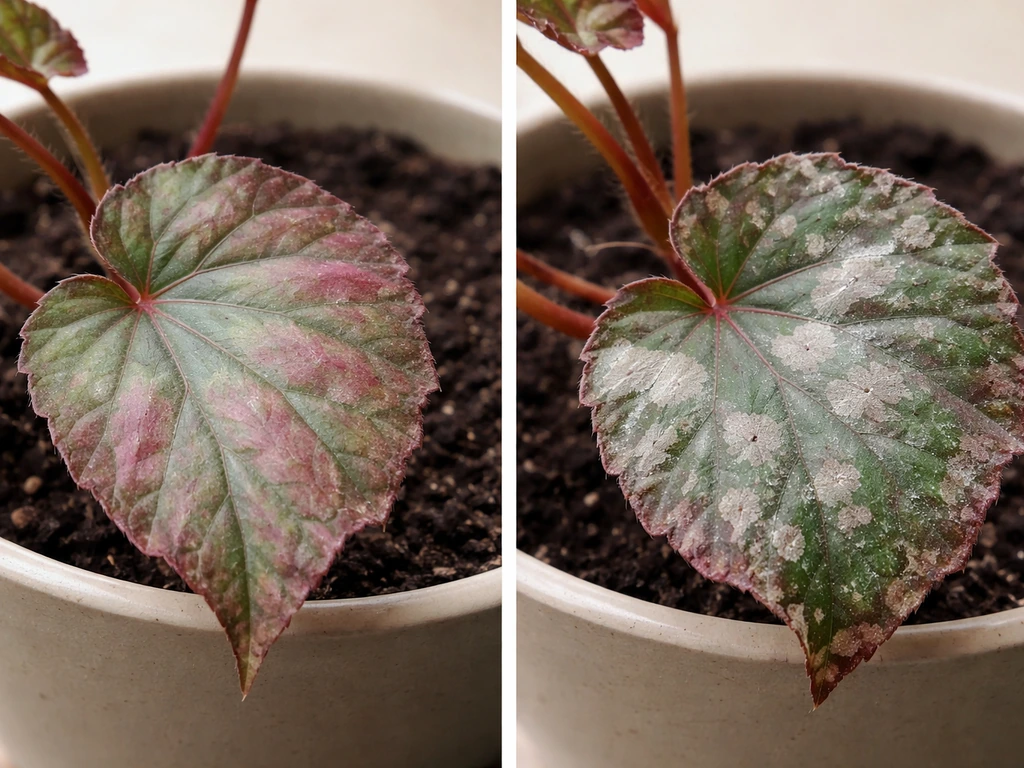
| White fuzzy patches on leaves | Powdery mildew | Improve air circulation, keep foliage dry, remove affected leaves |
| Gray fuzzy mold on leaves or stems | Botrytis (gray mold) | Improve ventilation, avoid wetting leaves, remove affected plant parts |
| Tiny webs on leaf undersides | Spider mites (often in hot dry conditions) | Increase humidity, wash plant with water, use insecticidal soap |
| White cottony clusters at leaf joints | Mealybugs | Dab with rubbing alcohol on a cotton swab, treat with insecticidal soap |
Powdery mildew deserves a special mention because it shows up so often with rex begonias. The white powdery patches are actually fungal growth on the leaf surface, and the spores spread easily through air currents to infect nearby leaves and plants. The best defense is keeping foliage dry (never mist the leaves), maintaining good airflow around the plant, and removing any infected leaves immediately. Once it's widespread, it's very hard to reverse without a fungicide, so catching it early is key.
Root and stem rot from Pythium and Rhizoctonia fungi look like wilting that doesn't respond to watering, browning at the soil line, or a rhizome that feels soft and smells unpleasant when you dig it out. If you catch it early, cut back to healthy tissue, dust the cuts with powdered cinnamon (a mild natural antifungal), let the cuts dry, and repot into fresh dry mix. Adjust your watering habits immediately: the rot almost always starts from consistently wet soil.
Quick-reference care summary
| Care Factor | Recommendation |
|---|---|
| Light | Bright indirect light; east or west window; sheer curtain on south-facing windows |
| Temperature | 60°F to 80°F; no frost, no drafts |
| Humidity | 50% or higher; use pebble tray or humidifier, never mist leaves |
| Airflow | Good circulation at all times; a gentle fan helps prevent fungal disease |
| Potting mix | Fast-draining, peat-based with extra perlite; pH 5.7 to 6.5 |
| Container | Clay or terracotta with drainage holes; snug fit preferred |
| Watering | When top inch of soil is dry; water thoroughly, drain saucer |
| Fertilizing | Quarter-strength balanced fertilizer every two weeks, spring through early fall only |
| Propagation | Leaf wedges or whole leaf cuttings; rhizome sections in spring |
| Repotting | Spring, one pot size up, inspect and trim rhizome |
Rex begonias have a reputation for being fussy, and honestly there is a learning curve. But most of the problems that kill them trace back to just two things: too much water and not enough humidity with too much stagnant air. To get better results, follow a clear weeping begonia routine for light, watering, and humidity similar to what you use for rex begonias, but adjust for its trailing growth habit but most of the problems that kill them trace back to just two things: too much water and not enough humidity. Nail those two, and the rest of the care is pretty manageable. If you are wondering how to grow polka dot begonia, the same focus on bright light and humidity helps you get strong, healthy foliage. If you enjoy growing other begonia types, the rex's needs are quite specific compared to, say, begonia semperflorens or cane types, so treat this as its own plant rather than adapting a general begonia routine. Once you get a healthy rex going, you'll find it's genuinely one of the most rewarding foliage plants you can grow indoors. If you want to apply the same approach outdoors, learn how to grow montbretia in your garden so you can match its light and soil needs. If you're also wondering how to grow a begonia in general, the basics of light, watering, and humidity still matter, but rex begonias need a more specific setup.
FAQ
Can I grow a rex begonia in a self-watering pot or wick system?
It usually backfires because the rhizome stays too wet longer than rex begonias like. If you use a reservoir system, make sure the watering is very infrequent and the bottom of the pot is not sitting in water, then rely on the “top inch dry” check before refilling. For most people, a standard pot with drainage holes and manual watering is safer.
How can I tell if the problem is underwatering versus root or rhizome rot?
Underwatering typically shows droopy leaves that recover after watering and the rhizome remains firm. Rot more often causes browning at the soil line, persistent wilting even after watering, soft or mushy rhizome tissue, and sometimes an unpleasant odor when you remove the plant. If wilting persists after you water, unpot and inspect quickly.
Why are my rex begonia leaves turning brown and crispy, even though I water correctly?
The most common cause is leaf scorching from direct sun. Even an “almost sunny” window can burn rex leaves, especially near midday. Another possibility is uneven salt buildup from fertilizer or hard water, which can also brown leaf edges. Flush the pot occasionally with room-temperature water and pause fertilizer until new growth looks healthy.
What humidity level should I target if I do not use a humidifier?
Aim for at least 50% and create “micro-humidity” around the plant. Grouping plants helps, and a pebble tray works only if the pot sits above the water line. Avoid misting the foliage, because wet leaves increase powdery mildew and gray mold risk.
Should I rotate my rex begonia toward the light?
Yes, but do it gradually. Rex leaves can lean toward brighter areas, and small, slow rotations (for example, every week) help keep the plant balanced without stressing the plant. Avoid frequent day-to-day movement, which can coincide with watering and trigger further decline.
Is it okay to remove the powdery mildew leaves immediately, or should I wait?
Remove affected leaves as soon as you spot early spots, and isolate the plant if mildew is spreading. Don’t compost the leaves, bag them for disposal. Early removal plus better airflow and no misting often controls it, while delaying tends to let it spread across the canopy.
Do rex begonias like to be top watered, or is bottom watering better?
Bottom watering can help keep the rhizome and leaf surfaces drier, which reduces mildew risk. If top watering, pour gently around the soil, not onto the leaves or rhizome. Whichever method you use, never leave the pot in standing water, and always empty the saucer.
How do I avoid fertilizer burn if my rex is sensitive?
Stick to the diluted schedule and never “feed to fix” yellowing that is caused by too much water, low light, or cold stress. If you suspect burn, stop fertilizing and flush the pot with water to reduce accumulated salts, then resume with quarter-strength only when the plant is actively producing new leaves.
My rex begonia is growing slowly in winter, what should I change?
In most homes, winter needs less water and no fertilizer. Let the mix dry longer between waterings, and watch for cold drafts, which can stall growth and worsen stress. Keep humidity up with airflow and a humidifier if needed, since dry air can trigger leaf edge issues even when watering is reduced.
What’s the best potting mix if I cannot find African violet mix?
Use a fast, airy blend. A common substitute is peat-based potting mix plus a lot of aeration (perlite or coarse sand) to prevent water from lingering around the rhizome. If your mix stays wet for days, it is too dense for rex begonias, and you should increase the perlite/sand portion.
Can I propagate a rex begonia leaf cutting in water?
Leaf cuttings root best on moist rooting mix rather than in water. Water rooting can encourage rot and often leads to weaker, slower plantlet establishment. For best results, use the moist perlite-and-peat rooting mix and keep it lightly covered with breathable humidity (especially for wedge cuttings) while ensuring daily air exchange.
Why does my leaf propagation fail after the first couple of weeks?
Two frequent causes are cut veins not staying in contact with the mix and overly wet conditions that promote mold. Make sure the leaf wedges or cut veins press firmly into the rooting medium, then keep moisture consistent without soaking. If you see fuzzy mold, increase fresh air and reduce humidity slightly.
When should I repot, and how do I know I’m not potting too early?
Repot in spring when new growth starts, but you can inspect earlier if the plant is showing stress from overcrowding. Signs include roots circling the bottom, the rhizome pushing against the pot wall, or the plant drying out much faster than before. When you do repot, only move up one pot size to avoid excess wet soil.
My rex begonia looks fine at the top but the base smells bad, what should I do?
That strongly suggests rot. Remove the plant from the pot, discard the affected soil, cut away soft or black rhizome sections, and let the remaining cuts dry briefly before repotting into fresh dry, well-draining mix. Then change your watering routine immediately, using the top-inch dryness check.
Is it normal for rex begonia rhizomes to creep above the soil line?
Some creeping is normal, and it can even look tidy in mature plants. The key is not burying it too deeply. If only a portion is exposed, you can gently press it back into the mix, or leave it depending on how the plant is behaving, but avoid packing it down so far that moisture stays trapped and encourages rot.
Next Article
How to Grow a Begonia: Step by Step Care to Bloom
Step-by-step begonia care for flowers: choose tuberous, fibrous or rhizomatous, then start, water, fertilize, and troubl