The plants that work best alongside geraniums (meaning bedding pelargoniums, the classic summer container and border staple) are ones that share their love of full sun, moist but well-drained soil, and moderate watering. Top picks include lobelia, sweet alyssum, petunias, bacopa, calibrachoa, and marigolds. These all thrive in the same conditions, won't compete aggressively for root space, and give you continuous colour from late spring right through to the first frost.
What to Grow With Geraniums: Companion Plants and Tips
Harriet Whitmore
30 Apr 2026
A quick note on which geraniums we're talking about
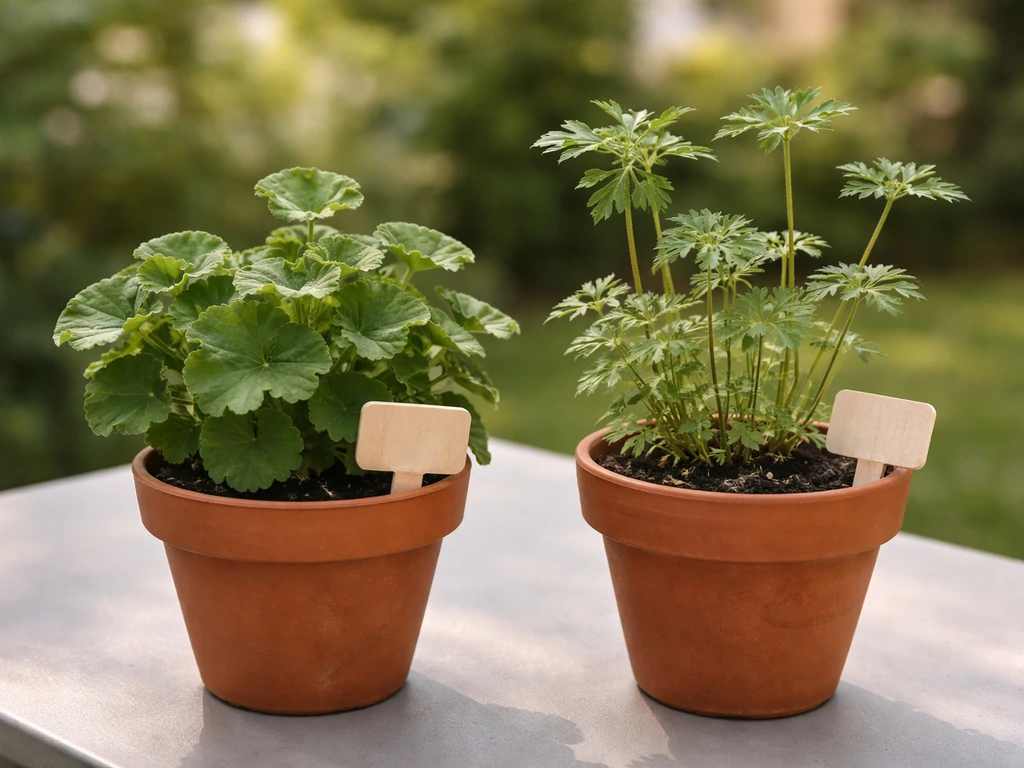
Before diving into companions, it's worth clearing up the name confusion because it affects everything. When most gardeners say 'geranium,' they usually mean Pelargonium (zonal geraniums, ivy geraniums, scented geraniums), which are tender plants commonly used as summer bedding and container annuals. True hardy Geranium species are a completely different plant, perennial in most climates, and their companion needs differ. This guide focuses on Pelargonium-type bedding geraniums, the ones you buy in spring, fill containers with, and either overwinter indoors or treat as annuals. If you're growing hardy geraniums, the companion logic changes somewhat because those plants tolerate more shade and cooler, moister conditions.
Best companion plants for geraniums
The plants listed below have proven themselves as reliable companions through repeated use in mixed borders and containers. They match pelargonium's core growing conditions and look genuinely good together rather than just coexisting.
Classic low-maintenance companions
- Sweet alyssum: Low-growing, honey-scented, and drought-tolerant once established. White varieties are the classic partner for red or pink geraniums. It fills gaps without competing aggressively and its fine texture contrasts nicely with geranium's bold flower heads.
- Lobelia (trailing or compact): One of the most popular geranium partners for a reason. Trailing lobelia spills over pot edges while geraniums hold the centre. Both need full sun and similar watering. Blue lobelia with red geraniums is a traditional municipal bedding combination that still works beautifully.
- Petunias: Match pelargoniums almost perfectly in sun and soil requirements. Wave types spread as groundcover around upright geraniums in borders; trailing types work in containers. Avoid overcrowding: petunias can sprawl and restrict airflow if not managed.
- Bacopa (Sutera): A delicate trailing filler with tiny white or pink flowers. It handles full sun, drains well, and never bullies neighbouring plants. Works especially well in window boxes and hanging baskets where you want something soft around geranium's bolder blooms.
- Calibrachoa (million bells): Nearly identical watering and sun needs to pelargoniums. The small, prolific flowers provide continuous colour and the trailing habit naturally spills without competing for the same root zone as upright geraniums.
- Marigolds: Full-sun annuals that match geranium conditions closely. French marigold varieties (Tagetes patula) stay compact enough not to crowd. As a bonus, marigolds are sometimes credited with deterring certain pests, though I'd treat that as a useful extra rather than a guarantee.
- Salvia (annual bedding types): Upright salvias like Salvia splendens thrive in full sun and well-drained soil. Red salvia with white geraniums is a classic combination, and they rarely share serious pest problems.
Plants to approach with caution
- Begonias: Wax begonias can work in partial shade but prefer more moisture than pelargoniums really want. In full sun they can stress before geraniums do, and in a container this creates a watering conflict.
- Impatiens: Love shade and consistent moisture, which is almost the opposite of what pelargoniums want. They'll both survive if conditions are moderate, but neither will perform at its best.
- Ferns and moisture-loving foliage plants: These tend to create humidity around the base of geraniums, which raises disease risk. Skip them as direct companions in containers.
How to match sunlight, soil, and watering needs
Pelargoniums perform best in full sun, at least six hours of direct sun daily, and they want moist but genuinely well-drained soil. To get the best results, make sure you provide the growing basics of what do geraniums need to grow, including the right light, soil, and watering routine. Soggy soil is one of the most common reasons geraniums struggle, so any companion you choose must be equally comfortable draining between waterings. If you're building a container mix, aim for a pH around 6.2 to 6.6, which most quality potting mixes land in naturally. For border beds, improving drainage with grit or compost before planting makes a real difference.
The matching rule I use is simple: before buying a companion plant, check that it specifically wants full sun and tolerates moderate, infrequent watering rather than constant moisture. Lobelia, alyssum, petunias, and calibrachoa all fit this description. What you want to avoid is pairing geraniums with plants that need daily watering or heavy mulch to stay moist, because if you water to keep that companion happy you'll almost certainly overwater the geraniums and invite root rot or botrytis.
When it comes to mulch, a light layer around the base of geraniums in beds can help cool the root zone during summer heat, but keep mulch away from the stems themselves and never pile it high enough to trap moisture against the plant. Companions that spread as living groundcover (like alyssum) serve a similar root-cooling function naturally.
| Companion Plant | Sun Needs | Watering Needs | Soil Drainage | Best Use |
|---|---|---|---|---|
| Sweet alyssum | Full sun to part shade | Low to moderate | Well-drained | Border edging, container filler |
| Lobelia (trailing) | Full sun to part shade | Moderate | Well-drained | Container spiller, hanging baskets |
| Petunias | Full sun | Moderate | Well-drained | Borders, large containers |
| Bacopa | Full sun to part shade | Moderate | Well-drained | Window boxes, basket spiller |
| Calibrachoa | Full sun | Moderate | Well-drained | Containers, hanging baskets |
| French marigolds | Full sun | Low to moderate | Well-drained | Border companion, pest deterrent |
| Annual salvia | Full sun | Low to moderate | Well-drained | Border upright companion |
Container and balcony pairings for geraniums
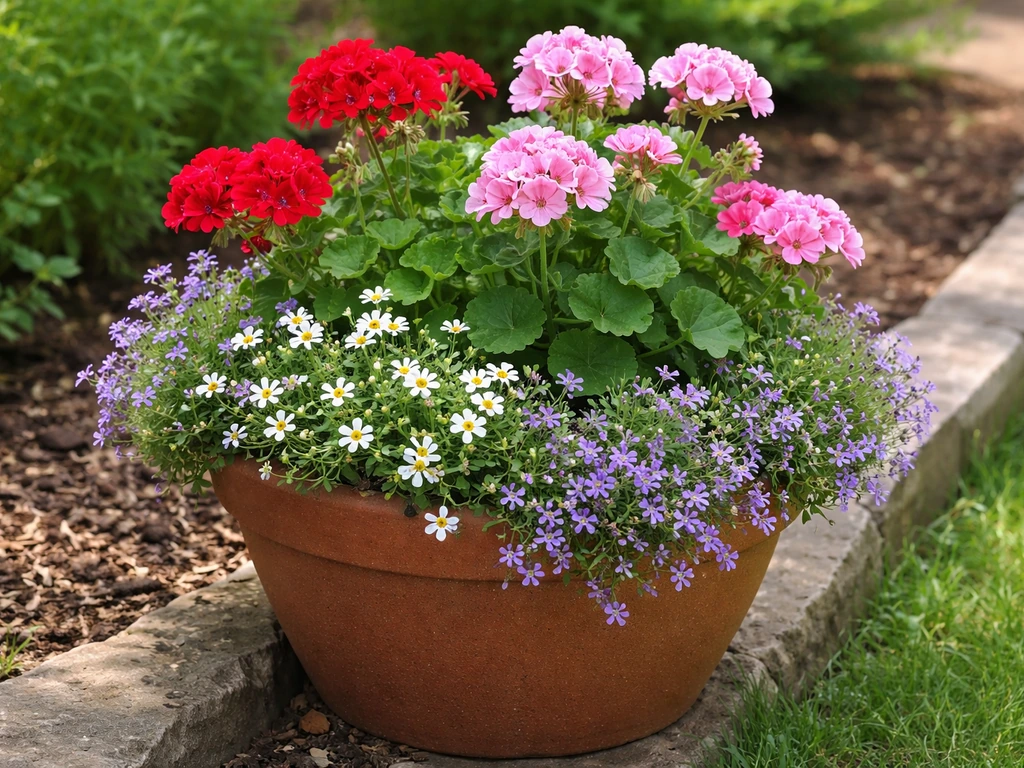
Containers are where geranium companion planting really shines, and the thriller/filler/spiller framework is the most practical approach I know. The geranium itself is usually the thriller, the tall, bold centrepiece. Then you add fillers (compact mounding plants that fill horizontal space without blocking the geranium) and spillers (trailing plants that drape over the pot edge). The classic trio is geranium as thriller, alyssum or compact marigolds as filler, and lobelia or bacopa as spiller.
Pot size matters more than most people realise. Small pots dry out fast, which stresses all the plants, not just the geraniums, and it means you end up watering so frequently that disease risk climbs. Aim for at least a 12-inch diameter container if you're combining geraniums with companions. For hanging baskets, a 10-inch basket can fit about four plants comfortably, and a 12-inch premium basket works well with four to five plants. Going beyond that creates competition for nutrients and restricts airflow in the root zone.
Always make sure the container has adequate drainage holes and that it's not sitting in a saucer of standing water. This is the single most important step for container geraniums and their companions alike. On a balcony in full sun the pot will dry out more quickly than in a sheltered garden, so check the soil moisture by pushing your finger an inch into the mix every couple of days rather than watering on a fixed schedule.
A few proven balcony container combinations
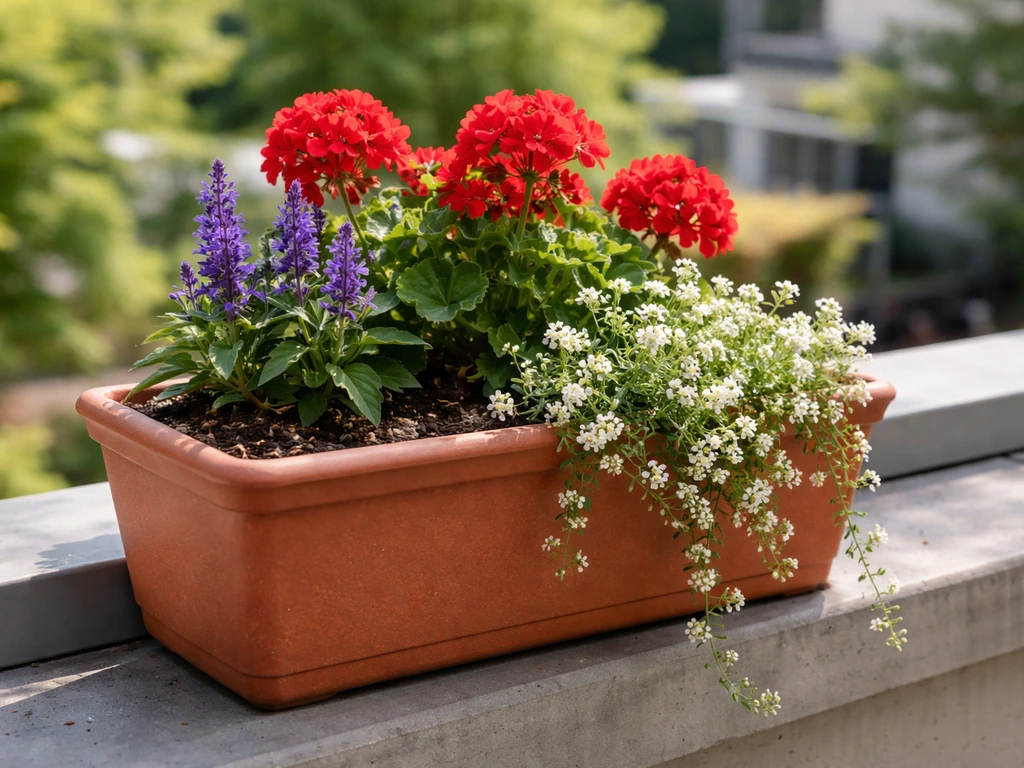
- Red zonal geranium + trailing white lobelia + white bacopa: Clean, high-contrast look that lasts all summer. The lobelia and bacopa have similar water needs to the geranium and neither will swamp the root zone.
- Pink geranium + French marigold (yellow) + sweet alyssum (white): A warm, cottage-style mix that works well in a 12-inch pot or a window box. The alyssum edges forward naturally.
- Coral geranium + calibrachoa (purple) + trailing petunia (white): Bold and continuous. The calibrachoa and petunia both self-clean reasonably well so less deadheading needed.
- Ivy-leaf geranium (trailing type) + upright salvia + alyssum: Works well in a long rectangular balcony planter. The ivy geranium trails over the front edge while the salvia gives height at the back.
Garden border combinations by season and bloom time
In beds and borders, geraniums bloom continuously from planting time right through to the first frost, which makes them an excellent anchor around which you can plan seasonal waves of colour. The key is choosing companions that either bloom at the same time or pick up after a lull.
Late spring into early summer
This is when geraniums are hitting their stride after transplanting. Pair them with sweet alyssum (which flowers almost immediately from transplant) and early-season salvias. Lobelia also peaks in late spring and early summer before it sometimes takes a brief break in peak heat. If you're in a warmer zone, the lobelia break isn't a big issue because the geraniums will carry the display on their own until temperatures ease in late summer and lobelia rebounds.
Midsummer
Petunias and calibrachoa are at their peak now and complement geraniums brilliantly through July and August. Marigolds are also in full flower and their warm orange and yellow tones work especially well with red and coral geraniums. This is the season where deadheading matters most: remove faded geranium flower heads regularly to keep the continuous bloom cycle going, and pinch back petunias if they get leggy to maintain a fuller, better-looking combination.
Late summer into autumn
Geraniums keep going long after many summer annuals start to fade, especially in mild autumns. Annual salvias also carry on well into autumn. This is a good season to let the geraniums become more of a focal point and simply keep companions tidy rather than adding new plants. In warmer climates (Zone 9 and above), pelargoniums may continue almost year-round outdoors.
Troubleshooting compatibility: pests, diseases, spacing, and airflow
Most companion problems with geraniums come down to three things: too much moisture held around foliage, insufficient airflow between plants, or choosing companions that share the same pest vulnerabilities. Here's how to diagnose and fix the most common issues.
Gray mold (Botrytis)
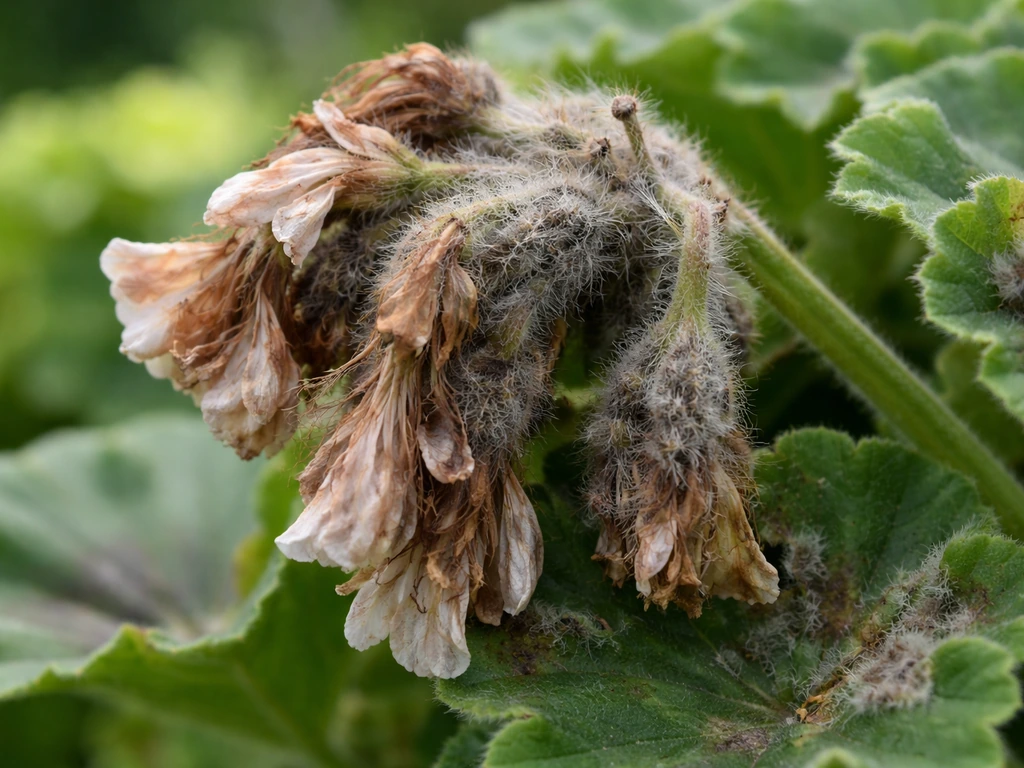
Botrytis is the most frequently encountered disease problem in geraniums and their companions, appearing as gray-brown fuzzy patches, usually starting on older or spent flower heads and damaged leaves. It thrives in conditions where foliage stays wet, airflow is poor, and temperatures are cool and humid. If you see it, the first steps are removing affected material immediately, increasing spacing between plants, and switching from overhead watering to soaker or drip irrigation. Avoid watering in the evening when foliage can't dry before nightfall. Companions like petunias and bacopa can also develop botrytis in the same conditions, so if one plant shows it, check all of them.
Powdery mildew
Unlike botrytis, powdery mildew doesn't need free water on leaves to develop. It shows up as a white powdery coating, usually in late summer or early autumn when temperatures swing between warm days and cool nights. Overcrowded companions restrict airflow and create exactly the microclimate mildew loves. If you're seeing it on geraniums or neighbouring plants, thin out the combination by removing a plant or cutting back the most crowded companion to open up airspace.
Aphids
Several aphid species attack pelargoniums, feeding on stems, foliage, and flower buds. The problem with companion planting is that aphid colonies can spread from one plant to another, and some companions (petunias, for example) also attract aphids. Check under leaves regularly when you're deadheading. Early intervention with a strong water spray or insecticidal soap keeps populations manageable. Also note that aphids can vector bacterial diseases, so controlling them is doubly important in geranium beds.
Alternaria leaf spot
This appears as small brown or tan spots with yellow halos, usually spread by water splash. It's one of the reasons OSU extension specifically recommends avoiding splashing foliage when irrigating geraniums. If you're using overhead sprinklers in a bed, consider switching to soaker hoses. Water spread bacteria can also move between companions, so leaf-spot on one plant is a signal to check all of them and adjust your irrigation method.
Overcrowding in containers
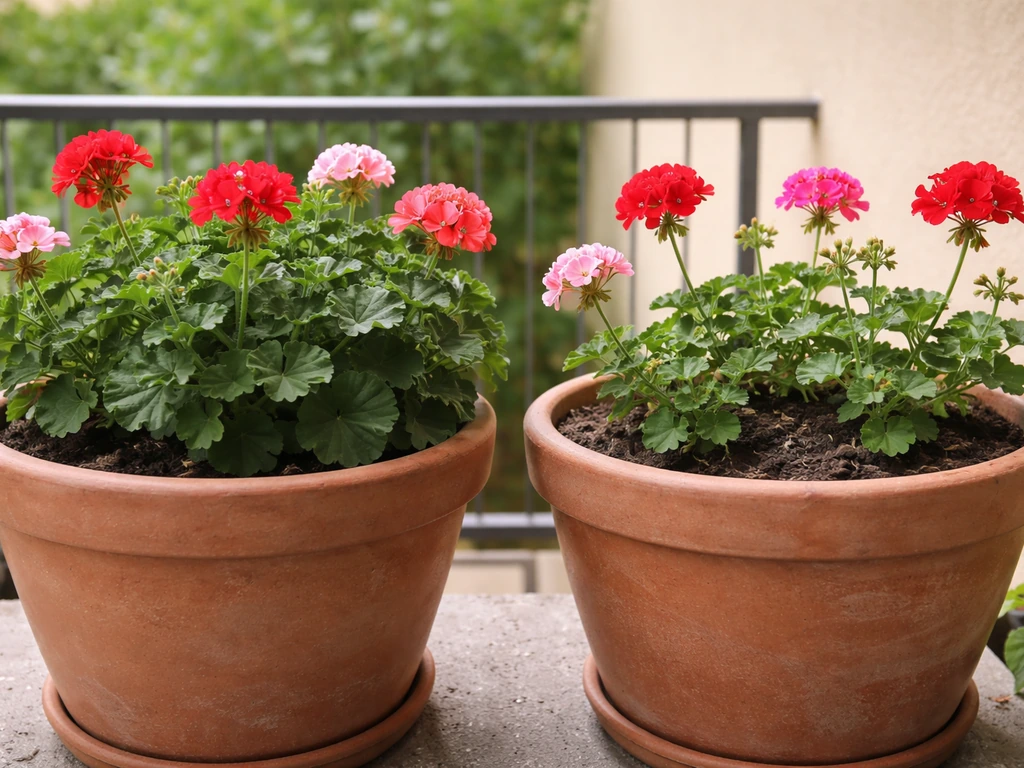
The most common container mistake I see is fitting too many plants into a pot that's too small. It looks great for the first few weeks, then airflow drops, root competition kicks in, and the whole combination starts to look ragged. If your geraniums are losing lower leaves and blooming poorly while companions look fine, suspect root competition. Either repot into a larger container or remove one of the companion plants and give the geranium room to breathe.
Planting and care tips for successful companion beds
Spacing
In garden beds, space zonal geraniums about 8 to 12 inches apart from each other and from their companions. This gives each plant enough root space and keeps airflow moving through the planting. Compact companions like alyssum or French marigolds can sit at the closer end of that range (8 inches), while more vigorous companions like petunias need to be kept toward 12 inches or beyond to prevent them from swallowing the geraniums.
Watering technique
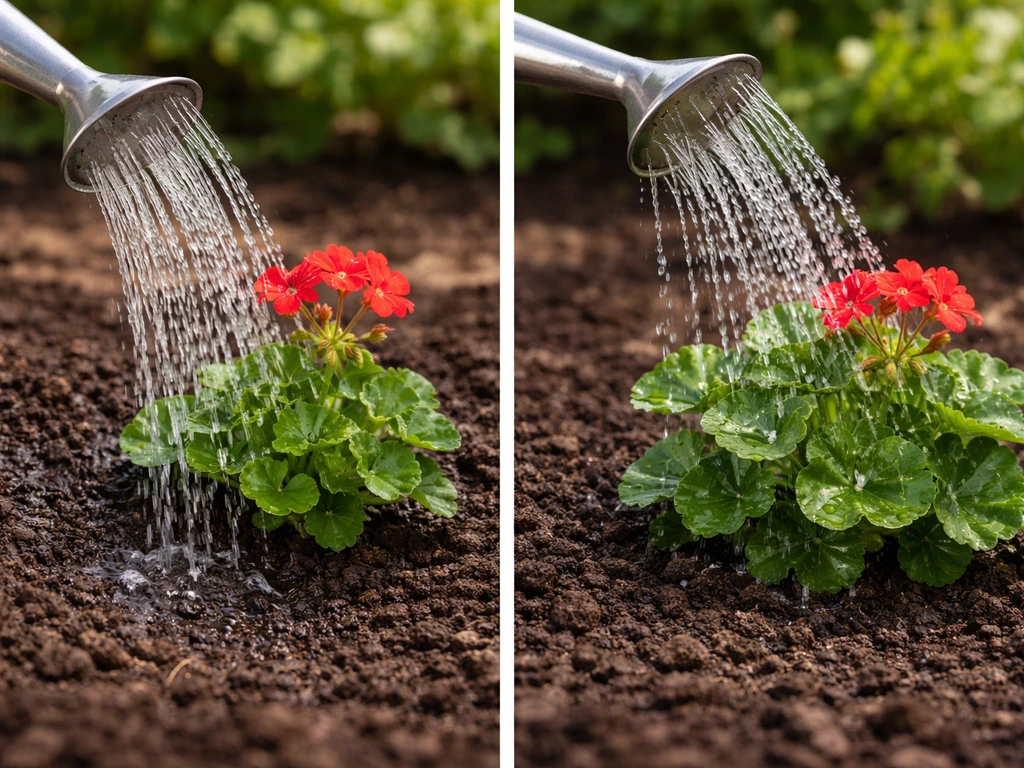
Water at the base of plants, not over the top. This single habit eliminates a huge proportion of disease risk in mixed beds. In containers, water until it runs freely out the drainage holes, then wait until the top inch of soil feels dry before watering again. Don't leave the pot sitting in a saucer of water. In beds, a soaker hose or drip line is the best long-term investment for keeping geranium companion beds healthy.
Feeding
Geraniums are moderate feeders and most of their good companions are similar. A balanced slow-release granular fertiliser worked into the soil at planting time keeps things simple and avoids the over-feeding that can produce lots of foliage at the expense of flowers. If your companions are more vigorous feeders (petunias benefit from regular liquid feeding), do a light targeted feed rather than drenching the whole container, which can push geraniums toward leafy growth.
Deadheading and tidying
Remove faded geranium flower heads as they go over. This encourages continuous blooming and, importantly, removes the spent material that botrytis loves to start on. Do the same for lobelia, petunias, and alyssum. A quick pass through the container or bed every week or so, removing dead flowers and any yellowing leaves, keeps the whole combination looking good and cuts disease risk significantly.
Step-by-step for planting a companion bed or container
- Choose a site with at least six hours of direct sun daily. This is non-negotiable for pelargoniums and most of their best companions.
- Prepare the soil or container mix: improve drainage in beds with added grit or perlite, and use a quality well-draining potting mix for containers. Aim for a pH of around 6.2 to 6.6.
- Select companions that match full-sun, well-drained, moderate-watering conditions. Lobelia, alyssum, calibrachoa, bacopa, petunias, marigolds, and annual salvia are all reliable choices.
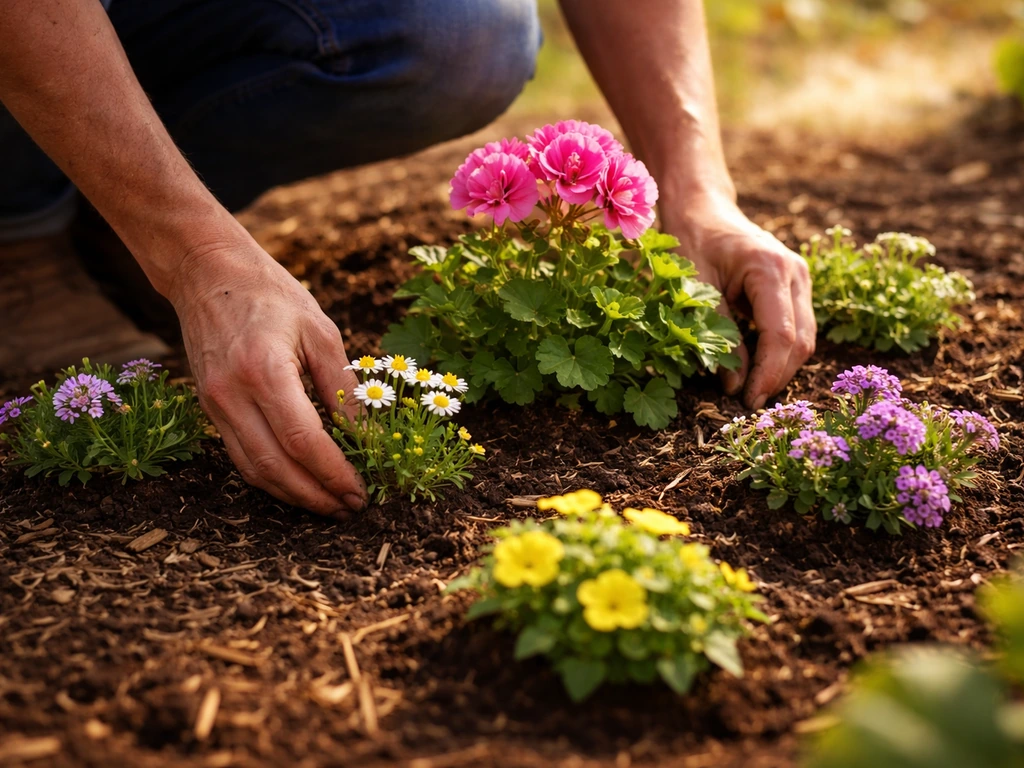
- Plant geraniums 8 to 12 inches apart from each other and from companions. In containers, limit total plant count to four in a 10-inch basket or four to five in a 12-inch basket.
- Water in well at planting using base-directed watering, then let the soil partially dry before the next watering.
- Apply a light mulch around base of plants in beds to cool roots, keeping mulch away from stems.
- Deadhead weekly, removing spent flowers from geraniums and companions to encourage reblooming and reduce botrytis risk.
- Check for aphids and leaf spot weekly during the season. Intervene early: a water blast or insecticidal soap for aphids, improved airflow and adjusted watering for disease.
Once you've got the basics of companion selection and spacing right, geranium combinations are genuinely low-fuss. The most experienced growers I know spend less time fussing over elaborate combos and more time simply keeping the planting tidy and well-aired. Get the light, drainage, and spacing right from the start and the rest largely takes care of itself. If you're also thinking about where to position your geranium plantings in the garden or how to keep plants going from one season to the next, those are separate decisions worth thinking through alongside companion choice. If you're also thinking about where to position your geranium plantings in the garden, see where to grow geraniums as a related guide so you can choose the best spot for full sun and drainage. If you're wondering how to grow geraniums from clippings, the same focus on light, drainage, and clean handling will help your new plants root and settle in fast. If you’re wondering what to do with your geraniums once autumn arrives, check how to grow geraniums over winter for the right indoor care and timing.
FAQ
Are companion plant tips the same for hardy geraniums and bedding geraniums?
For “what to grow with geraniums” you first need to confirm you mean Pelargonium bedding geraniums (tender annuals in most places). If you instead have hardy Geranium species, they usually want cooler conditions and more moisture than pelargoniums, so many of the best companions listed (like petunias, calibrachoa, and lobelia) may be a mismatch.
How do I know when to water geranium companions in a pot?
In containers, don’t base watering on the calendar. Push two to three centimeters (about 1 inch) into the mix, if it feels dry then water thoroughly until it drains, then stop. Frequent “quick top-ups” keep the surface wet, which can encourage leaf diseases and rot in the lower root zone.
What should I do if the geranium looks worse than the companion plants?
If your geraniums bloom well but the companions look fine while geraniums lose lower leaves or slow down, the cause is often root competition from an undersized pot or overcrowding. Increase container diameter, remove one companion, or reduce plant count, and keep spacing airy to restore airflow.
What companion plants should I avoid with geraniums?
Avoid companions that require consistently moist soil or heavy mulch, because you’ll end up watering more than pelargoniums can tolerate. A good screening test is this, check the companion’s stated light and irrigation needs first, if they require daily watering or “never let it dry,” skip it.
Can I use mulch when I’m growing geranium companions in the bed?
Yes, but focus on gentle use: keep the mulch thin, never piled against stems, and avoid materials that stay soggy. In humid weather, too much mulch increases the chance of botrytis, so consider pulling mulch back slightly if you see gray-brown fuzzy patches.
Why do I keep getting leaf spot or botrytis even when I water “carefully”?
Overhead sprinklers are a common culprit for leaf spot and botrytis because water lands on foliage. For best results in mixed plantings, use drip or soaker irrigation and water early enough that plants can dry before nightfall.
How should I fertilize geraniums when companions have different feeding needs?
Feed geranium companions lightly and strategically. If your companions are hungry feeders (notably petunias), use targeted feeding or dilute liquid feed, rather than drenching the whole container, because excess nitrogen can push geraniums into more leaves and fewer blooms.
How often should I deadhead when I have multiple geranium companions?
Deadheading should include the geranium and the companion that’s fading most. If you only deadhead geraniums, spent flowers and damaged foliage in nearby plants can still become infection starting points. Do a quick weekly check for spent blooms and remove them promptly.
What’s the fastest fix if powdery mildew shows up on geranium companions?
If powdery mildew appears, don’t just treat the leaves. Improve airflow by thinning the crowded companion, spacing plants a bit more, and removing the most affected foliage. Powdery mildew thrives when microclimates are trapped by dense, closely packed growth.
Can I mix geranium companions that have different drought tolerance?
A practical rule is to choose companions that tolerate dry down between waterings, so geraniums remain the “limiting” plant that sets the irrigation standard. For the most reliable mixes, stick with sun-loving companions that don’t require daily moisture, then adjust plant number based on pot size.
Next Article
How to Grow a Butterfly Bush: Step-by-Step Guide
Step-by-step guide to grow butterfly bush from planting to pruning, blooms, propagation, pests, and winter care.