
New Guinea impatiens grow best when you start seeds indoors 10 to 12 weeks before your last frost date, keep the germination media at 70 to 75°F, and cover the seeds lightly without exposing them to light until they sprout (usually within 6 to 20 days). New Guinea impatiens seeds typically take about 15 to 20 days to germinate when kept at a consistent media temperature of blank" rel="noopener noreferrer">70 to 75°F. After that it's about giving seedlings warm temperatures, consistent moisture, and enough light to build strong stems before you move them outside into partial sun once all frost risk is gone. If you want the full step-by-step plan for how to grow impatiens from seed through bloom, follow the rest of the guide.
How to Grow New Guinea Impatiens From Seed to Bloom

Harriet Whitmore
12 May 2026

What New Guinea impatiens actually need
Before you start, it helps to understand that New Guinea impatiens (Impatiens hawkeri) are a different plant from the common busy lizzie (Impatiens walleriana) you might be used to growing in deep shade. New Guineas are more sun tolerant, handle partial sun quite well, and have better natural resistance to powdery mildew. That changes where you plant them and how you manage light during the seedling phase.
Here are the non-negotiable basics to keep in mind from day one through bloom:
- Light: Partial sun to partial shade once planted out. They tolerate more sun than common impatiens but still appreciate protection from harsh afternoon sun in hot climates.
- Temperature: Germination at 70–75°F media temperature. Growing-on temperatures of around 76–78°F days and 70–72°F nights keep plants happy and actively growing.
- Water: These plants need consistent moisture. Soil must hold water well but also drain properly. Sitting in soggy media causes root rot fast.
- Soil pH: Aim for 6.0 to 6.5 with high organic matter for garden beds, and 6.0 to 6.2 for seed-starting and container media.
- Feeding: Light feeding early on, around 100–200 ppm nitrogen from a balanced fertilizer during the first 6 to 8 weeks. They are sensitive to high soluble salts.
- Containers or beds: Both work well. New Guineas are excellent in pots, hanging baskets, and garden borders.
Picking seeds and getting your supplies together
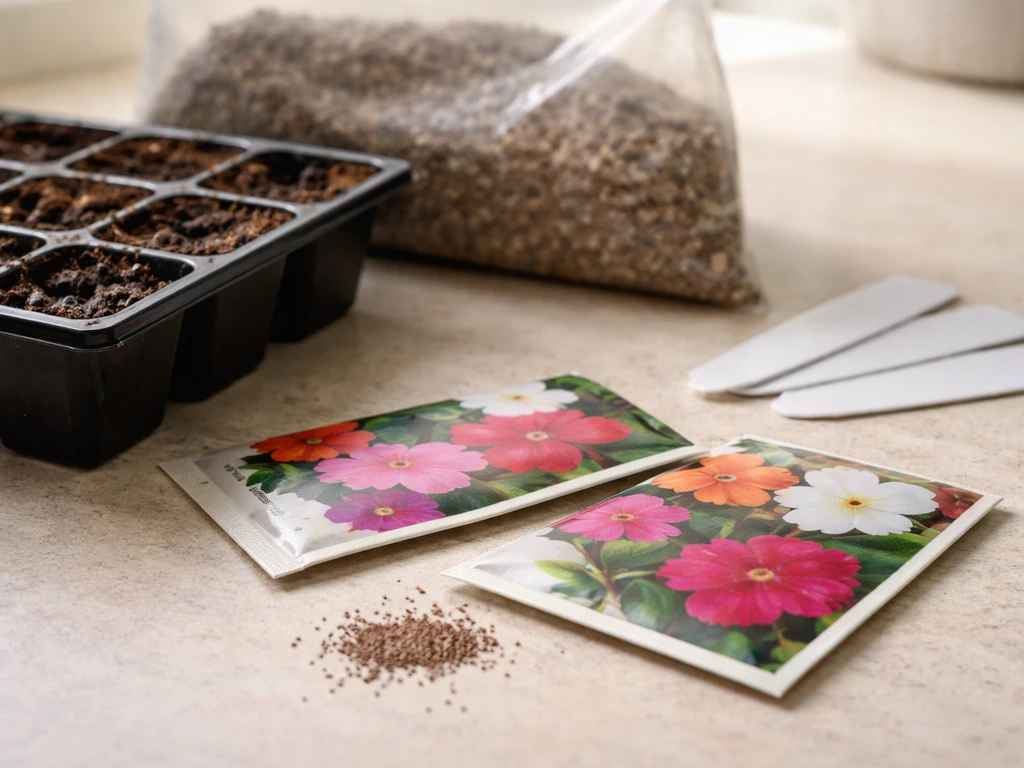
New Guinea impatiens seeds are available from most seed companies, though the selection is narrower than for common impatiens. Look for named series like Florific or similar modern cultivars bred for free branching and compact growth. These varieties typically don't need pinching to bush out, which makes your life easier as a home grower.
For supplies, here's what you actually need:
- Seed-starting trays or small cells with drainage holes. Sterilized or brand-new containers are important here. Reused pots can harbor the pathogens that cause damping-off, which will wipe out young seedlings.
- Fresh, sterile seed-starting mix. Never use garden soil for starting seeds indoors. It compacts, drains poorly, and introduces disease in warm, wet conditions.
- A seed-starting heat mat to hold media temperature at 70–75°F consistently.
- Plastic dome or humidity cover to keep moisture around the seeds during germination.
- Grow lights or a very bright south-facing window for after germination.
- A balanced water-soluble fertilizer (look for one labeled for seedlings or with an NPK ratio like 20-10-20).
Sowing seeds and getting them to germinate
Timing your sow date
Count back 10 to 12 weeks from your anticipated outdoor planting date. That planting date is typically 1 to 2 weeks after your area's average last frost. So if your last frost is mid-May, you're planting out around late May, which means you should be sowing seeds in late February to early March. Since today is May 12, 2026, if you're in a zone that still has cold nights, you might be starting your seeds right now for a late May or early June transplant. If your area is already frost-free, you're close to transplant timing and will want to move quickly.
How to sow
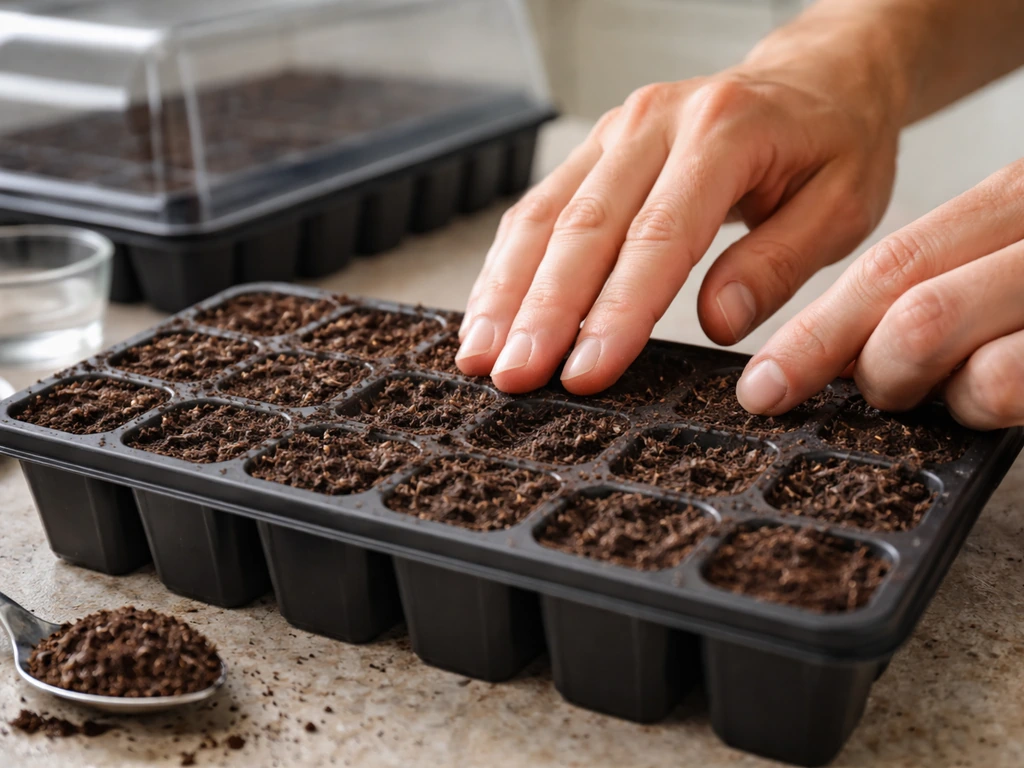
- Fill your seed-starting cells with moistened sterile seed-starting mix. The medium should feel damp like a wrung-out sponge, not soggy.
- Press the surface lightly to level it, then place one or two seeds per cell on top of the mix.
- Cover seeds with a very thin layer of seed-starting mix, just enough to barely conceal them. Depth of about 1/16 inch is ideal. Do not bury them deep.
- Critically: New Guinea impatiens do not need light to germinate. Cover your tray with the plastic dome and place it somewhere dark and warm on your heat mat at 70–75°F.
- Check daily. The goal is to keep media consistently moist without waterlogging. Mist lightly if the surface starts to dry.
- Once you see sprouts (typically 6 to 20 days depending on seed freshness and conditions), remove the dome and move the tray immediately to bright light.
The no-light requirement during germination trips up a lot of gardeners who are used to keeping trays near a window from day one. Keep them covered and in the dark until sprouting begins.
Caring for seedlings until they're ready to go outside
Light
As soon as germination happens, New Guinea impatiens seedlings need strong light immediately. A south-facing window can work if it gets genuine direct sun for most of the day, but grow lights are much more reliable. Keep fluorescent or LED grow lights 2 to 4 inches above the seedlings for 14 to 16 hours a day. Insufficient light at this stage is the number one cause of leggy, weak seedlings that struggle after transplanting.
Temperature
Keep the room warm. Daytime temperatures of 76–78°F and nights around 70–72°F give you the best growth rate. Most homes run cooler than this, especially at night. If your seedlings seem to be growing very slowly, low temperature is often the culprit.
Watering
Water seedlings when the top of the media starts to feel barely dry. Water thoroughly until it drains from the bottom, then wait again. The mistake most beginners make is keeping the mix constantly saturated. Consistent moisture is not the same as constant wetness. Bottom watering, where you set the tray in a shallow dish of water and let it absorb from below, can help reduce fungal issues on the soil surface.
Feeding seedlings
Start feeding lightly once seedlings have their first set of true leaves (the second pair of leaves, not the initial seed leaves). Use a balanced water-soluble fertilizer at about half the recommended label rate, targeting around 100 ppm nitrogen. New Guinea impatiens are sensitive to salt buildup from overfeeding, so restraint matters more than aggression here. Feed every 7 to 10 days as seedlings grow.
Preventing damping-off
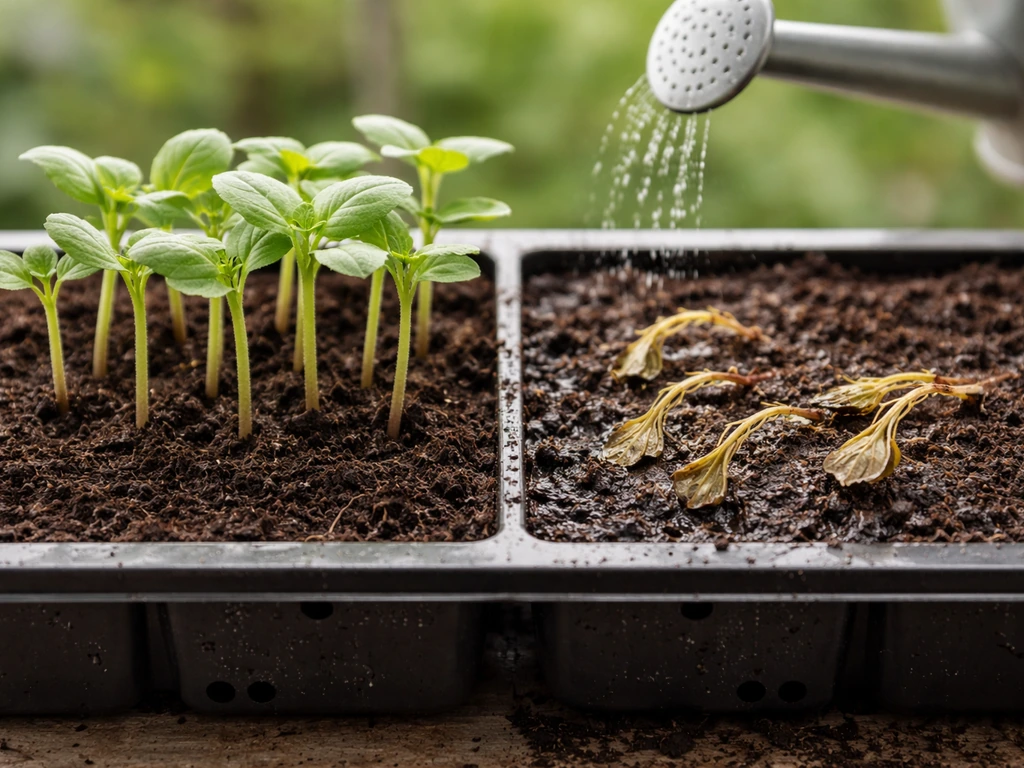
Damping-off is a fungal problem where seedlings suddenly collapse at the soil line. It's almost always caused by a combination of overwatering, poor drainage, non-sterile growing media, or reused unsterilized containers. Using fresh sterile mix and clean new trays, along with careful watering, is your best defense. Good air circulation around the tray helps too.
Moving plants outside: timing and how to do it right
New Guinea impatiens are frost-sensitive. Don't move them outside until all danger of frost has passed and nighttime temperatures are reliably staying above 50°F. Even a light frost will damage or kill them.
Before transplanting, spend 7 to 10 days hardening off your seedlings. This means gradually introducing them to outdoor conditions. Start by setting them outside in a sheltered, shaded spot for just an hour or two, then bring them back in. Each day, increase the time outside and slowly expose them to more light and outdoor temperatures. Skipping this step causes transplant shock, which shows up as wilting, leaf drop, and stunted growth that can set plants back by weeks.
For spacing in garden beds, plant 8 to 10 inches apart. New Guineas have a naturally bushy growth habit and need that space to fill out properly. In containers, use a good quality potting mix (not garden soil) and make sure pots have drainage holes. For hanging baskets, keep the container well-drained and use a potting mix that holds moisture but doesn't stay soggy. A mix with compost works well, as it holds moisture while still draining. The soil pH in beds should be around 6.0 to 6.5.
Site selection matters: choose partial sun to partial shade. Morning sun with afternoon shade is ideal in warmer regions. Unlike common impatiens, New Guineas can handle a few hours of direct sun, which actually tends to produce more flowers. If you're growing them in containers, you have the flexibility to move them around to find the sweet spot, which is one of the big advantages of pots over ground planting. If you want to grow impatiens in hanging baskets, the same partial sun and flexible container setup helps you keep them blooming well.
Keeping them blooming all season
Watering
In garden beds, water deeply once a week during dry weather, more frequently during heat waves. Containers dry out faster than beds, sometimes needing water every day in summer heat. Check the top inch of soil: if it's dry, water thoroughly. New Guineas are not drought tolerant, and wilting from water stress repeatedly will reduce flowering significantly.
Feeding
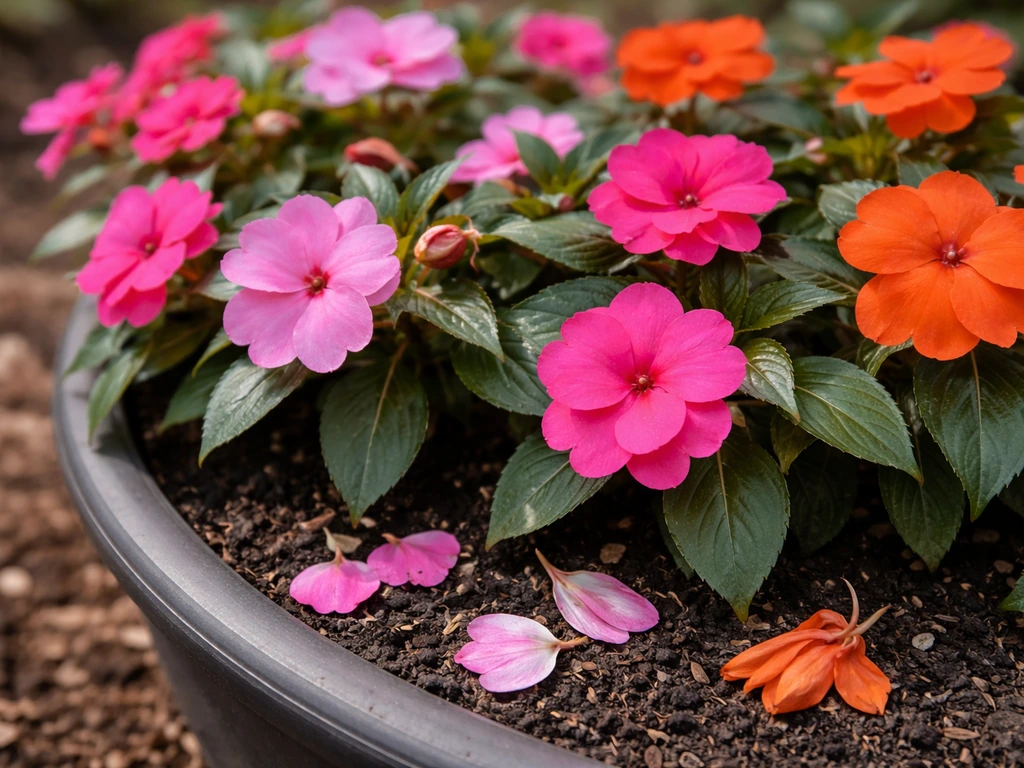
Once plants are established outdoors (about 2 to 3 weeks after transplanting), ramp up feeding gradually. A balanced slow-release granular fertilizer worked into the soil at planting, plus a liquid feed every 2 weeks through the growing season, keeps plants vigorous and flowering. Avoid high-salt or very high-nitrogen fertilizers, which can cause leaf tip burn and inhibit blooming. A fertilizer with moderate nitrogen and decent phosphorus and potassium supports both growth and flower production.
Deadheading and maintenance
Here's some genuinely good news: New Guinea impatiens are mostly self-cleaning. Spent flowers drop on their own, so you don't need to deadhead religiously the way you do with some annuals. Modern cultivars are bred to branch freely without pinching, so you generally don't need to cut them back to encourage bushiness. That said, if plants start to look straggly in midsummer, a light trim (cutting back by about one-third) will rejuvenate them and prompt a new flush of flowers.
Troubleshooting when things go wrong
| Problem | Likely Cause | Fix |
|---|---|---|
| No germination after 3+ weeks | Temperature too low, seeds buried too deep, or old/poor-quality seeds | Use a heat mat to hold media at 70–75°F. Sow fresh seeds at 1/16 inch depth. Don't cover tray with opaque lid that blocks heat circulation. |
| Leggy, stretched seedlings | Insufficient light after germination | Move seedlings to grow lights immediately at sprouting. Keep lights 2–4 inches above plants for 14–16 hours a day. |
| Seedlings collapsing at soil line (damping-off) | Overwatering combined with fungal pathogens in non-sterile media or reused containers | Use fresh sterile seed-starting mix and clean trays. Water only when media starts to dry slightly. Improve air circulation. |
| Transplant shock: wilting and leaf drop after moving outside | Insufficient hardening off, root disturbance, or sudden temperature/light change | Harden off for 7–10 days before final transplant. Transplant on a calm, overcast day and water in well. |
| No blooms or sparse blooming | Too much shade, over-fertilizing with nitrogen, or plants stressed by drought or heat | Move containers to a spot with more morning sun. Reduce nitrogen and ensure phosphorus/potassium are present. Water consistently. |
| Yellow leaves | Overwatering, root rot, or pH out of range affecting nutrient uptake | Check drainage and reduce watering frequency. Test soil pH and adjust to 6.0–6.5 if needed. |
Your seed-to-bloom checklist and what to do right now
If you're starting today (May 12), quickly figure out your local last frost date and whether you're in time to start seeds for a late May or June transplant, or whether you'd be better off buying transplants this season and starting seeds next year in February or March for your zone. Either way, here's the full checklist:
- Calculate your sow date: 10 to 12 weeks before last frost date (or last frost date plus 1 to 2 weeks for transplant date, then count back).
- Gather sterile seed-starting trays, fresh seed-starting mix, a heat mat, and a humidity dome.
- Moisten your mix, fill trays, and sow seeds at about 1/16 inch depth.
- Cover trays with a dome and place in a dark spot on a heat mat at 70–75°F.
- Check daily for moisture. Expect sprouts in 6 to 20 days.
- The moment seedlings emerge: remove the dome and place under grow lights for 14–16 hours a day.
- Begin light feeding at the first true leaf stage using diluted balanced fertilizer (around 100 ppm N).
- Continue caring for seedlings indoors until outdoor nights are reliably above 50°F.
- Harden off plants over 7 to 10 days before transplanting.
- Plant out at 8 to 10 inch spacing in partial sun, in well-draining soil at pH 6.0–6.5.
- Water deeply and consistently. Feed every 2 weeks with balanced fertilizer.
- Enjoy blooms from mid to late summer through first frost.
If you've grown common impatiens before and want to branch out, New Guineas are a satisfying step up. They're more versatile with light, work beautifully in hanging baskets and containers as well as garden beds, and the seed-starting process is very manageable once you nail the temperature and light requirements. The learning curve is short, and the payoff of those bold, large-flowered plants blooming from summer into fall is well worth a little extra planning in late winter.
FAQ
Do New Guinea impatiens seeds need to be completely covered, or just lightly covered?
Light coverage is best. The goal is to contact the seed with moisture without burying it deeply, because thick burial slows sprouting and can increase mold risk. After sowing, mist or water in gently so the media is evenly moist, then keep the tray in the dark until you see sprouts.
What if my seedlings are sprouting but are pale or stretching upward quickly?
That usually means they are not getting enough light fast enough. Move them to strong light immediately once the first sprouts appear, and use grow lights with consistent distance (about 2 to 4 inches). Also make sure temperatures are in the recommended warm range, because cool nights can worsen slow, weak growth.
Can I start New Guinea impatiens seeds in a windowsill instead of using grow lights?
It can work only if the window provides real direct sun for most of the day. Most windows are too dim or too uneven, which leads to leggy seedlings. If you see seedlings leaning toward the glass, that is a sign you need supplemental light or more consistent placement.
How do I avoid damping-off if my home is dry or I tend to water often?
Use a sterile, fresh seed-starting mix and new or properly sanitized trays, then water based on the surface feel rather than a schedule. Keep the media evenly moist but never saturated, improve air movement around the tray (gentle fan, not blasting), and ensure the container has drainage so water does not pool.
Should I bottom-water the seedlings in every case?
Bottom-watering is helpful if you tend to overwater or if the top of your mix stays wet for long periods. If the top dries quickly and you are consistently watering correctly from the top, you may not need it. The key is to avoid keeping the soil surface continuously wet.
When do I switch from “no light” to “strong light,” and what counts as the sprouting stage?
Start strong light as soon as you see sprouts emerge. At that point, the seedlings need energy to build sturdy stems, so delaying light by even a few days often shows up later as flimsiness. Remove any covering dome or plastic once you have active sprouts, so airflow improves.
Do New Guinea impatiens need pinching or pruning while they’re still indoors?
Many modern named series are bred to branch and stay compact without pinching, so an aggressive early pinch is usually unnecessary. If plants look straggly before transplant, you can do a light trim once they have enough true leaves, but avoid frequent heavy cutting because it can slow establishment outdoors.
How can I tell when it is safe to transplant if my nights are still cool?
Wait until nighttime temperatures reliably stay above 50°F, not just daytime warmth. If you transplant early and nights dip, growth can stall and plants may drop leaves. For marginal situations, you can use protection like row cover overnight, but remove it during warmer daytime periods to prevent overheating.
My seedlings look fine indoors, but they wilt after outdoor transplant. What should I do?
That is often transplant shock from skipping hardening off or exposing them too quickly to sun and wind. Use 7 to 10 days of gradual outdoor acclimation, start in sheltered shade, then increase both time outdoors and light level. If wilting happens, shade them temporarily and resume gentle watering while they recover.
What spacing should I use in beds versus containers if I want full coverage?
In beds, space plants about 8 to 10 inches apart to let them fill in without crowding. In containers, keep plants dense but still allow airflow, and choose pot sizes that prevent rapid drying. A common mistake is using too-small pots, which increases heat stress and can reduce flowering quickly.
Do New Guinea impatiens need frequent fertilizing once they start blooming?
They benefit from feeding, but overfeeding can reduce flowering through salt buildup or overly lush foliage. After establishment, use a moderate approach, such as liquid fertilizer every 2 weeks plus slow-release nutrition at planting. If you notice leaf tip burn or a lot of dark, soft growth with fewer flowers, reduce fertilizer strength or frequency.
Why are my plants flowering early indoors but stop blooming after I plant them outside?
That often happens when light is reduced after transplant, or when watering becomes inconsistent during the transition. Confirm they receive partial sun to partial shade, and water thoroughly when the top inch is dry in containers (and less often in beds). Also avoid moving plants from dim indoor light directly into intense afternoon sun without hardening.
How much sun is “too much” for New Guinea impatiens?
They handle partial sun well, and morning sun with afternoon shade is a good target in warm regions. In very hot climates, intense afternoon sun plus drying winds can lead to stress. If leaves look scorched or plants droop despite adequate watering, relocate to lighter afternoon shade or use a bit more morning-only exposure.
Can I save seed from my New Guinea impatiens to grow next year?
You can save seed, but named cultivars may not produce the same flower traits reliably because many New Guinea impatiens are hybrids. If you want the same look, buy seed again or start with known cultivars. Also note that plants typically self-clean, so seed may not be obvious unless you inspect pods once they mature.
Next Article
How to Grow Impatiens: Thick Growth and Lots of Blooms
Learn how to grow impatiens with bushy growth, fast establishment, and nonstop blooms, including double impatiens care
