
You can absolutely grow mums as long-lived perennials, but there's a catch most people run into: the mum you grabbed at the grocery store last September was almost certainly bred for one spectacular fall show, not a decade of garden life. The good news is that with the right variety, a well-prepared planting site, spring timing, and a few simple seasonal habits, mums can and do come back year after year. I've learned most of this the hard way, and I want to save you the frustration of replanting every fall.
How to Grow Mums as Perennials: Step-by-Step Guide

Harriet Whitmore
24 Mar 2026

Are mums actually perennial in your climate?
Chrysanthemum × morifolium is officially hardy in USDA zones 5 through 9, though certain cultivars push that range. The University of Minnesota has even developed mum hybrids specifically engineered to survive zone 3 and 4 winters, so if you're gardening in the northern half of the country, there are real options for you. That said, just because a tag says 'perennial' doesn't guarantee survival in your yard. Hardiness is zone-wide in theory but microclimate-specific in practice. A spot that gets howling north winds all winter or sits in a low frost pocket is going to challenge even the toughest cultivar.
The single biggest killer in cold climates isn't actually the cold itself. It's freeze-thaw cycling. When soil repeatedly freezes and thaws through late winter, the physical heaving can literally push shallow-rooted mums right out of the ground, breaking roots and exposing the crown to lethal temperatures. That mechanism explains most of the 'my mums died over winter' stories I hear. Zones 7, 8, and 9 mostly sidestep this problem, but gardeners in zones 5 and 6 need to plan around it. If you're in zone 4 or colder, you'll want both the hardiest cultivars you can find and a solid mulching strategy.
Choosing the right perennial mum varieties and plant sources

This is probably the most important decision you'll make. 'Garden mums' sold at big-box stores and garden centers each fall are typically florist-type chrysanthemums optimized for dense, showy fall display. They're not selected for root hardiness or perennial vigor. If you plant one of those in October and expect it back in April, you'll probably be disappointed.
What you want instead are cultivars specifically labeled 'garden hardy' or 'hardy mum.' These are varieties selected for root establishment and winter survival, not just bloom density. The University of Minnesota's breeding program has produced some of the most rigorously tested cold-hardy mums available, and those specific varieties are worth seeking out if you're in zones 3 through 5. For zones 6 and warmer, the selection opens up considerably, but I still recommend buying from a reputable perennial nursery rather than a fall display pile.
Buy plants in spring if you can find them, or order from a specialty perennial mail-order nursery. Spring availability for mums is limited at most local nurseries because retail demand is almost entirely fall-driven, but the effort to track down spring stock is worth it. A spring-planted mum has the entire growing season to build the root system it needs to survive its first winter. A fall-planted mum is starting from scratch with almost no time to root in before cold hits.
Setting up the right spot: soil, sun, drainage, and spacing
Mums are not forgiving about site conditions, and most perennial failures trace back to a site problem rather than bad luck. Get this part right and everything else becomes much easier.
Sunlight

Full sun is non-negotiable for perennial success. That means at least 6 hours of direct sun per day, and honestly, more is better. Mums grown in partial shade get leggy, produce fewer blooms, and tend to have weaker root systems that struggle through winter. If your only available spot gets afternoon shade, that's workable in zones 7 and warmer, but in cold-climate zones I'd keep looking for a sunnier location.
Soil and drainage
Well-drained soil is the other non-negotiable. Mums sitting in wet or waterlogged soil are prime candidates for Pythium root rot and crown rot, both of which can kill a plant in a single season, and both of which are nearly impossible to fix once they take hold. Before planting, dig down about 12 inches and check what you're working with. If water pools and stays after rain, you need to either amend heavily with compost and coarse material to improve drainage, build a raised planting area, or choose a different spot. I've had the best long-term results in loamy soil amended with generous compost before planting. Aim for a slightly acidic to neutral pH, roughly 6.0 to 7.0.
Spacing

Give plants room to breathe. Crowded mums are an invitation to disease, particularly bacterial leaf spot and powdery mildew, both of which spread quickly when foliage stays wet and air circulation is poor. Space plants 18 to 24 inches apart, which feels generous when they're small in spring but will look right by midsummer. Good spacing also makes pinching easier and reduces the risk of problems spreading plant to plant.
When and how to plant for the best perennial results
Spring is consistently the recommendation from extension programs across the country, and I agree completely. Iowa State, Illinois Extension, and HGTV all point to spring planting as the path to 'a strong color show in years to come,' and that's because root establishment is everything for perennial mums. The growing season gives the plant time to develop the robust root system that actually survives winter. Fall planting is better than nothing if you're working with a particularly hardy cultivar and get it in the ground as early as possible, but spring is always the better bet.
- Choose your planting site with full sun and confirmed good drainage.
- Amend the planting area with 2 to 3 inches of compost worked into the top 12 inches of soil.
- Plant after your last frost date once soil has warmed, typically mid-spring in most zones.
- Dig a hole slightly wider than the root ball and no deeper, keeping the crown at or just above soil level.
- Set the plant in, firm the soil gently around the roots, and water in thoroughly.
- Apply a light layer of mulch (1 to 2 inches) around the plant, keeping it a few inches away from the crown to prevent rot.
- Water regularly for the first two to three weeks while roots establish.
One thing I want to emphasize: do not plant mums deep. The crown should sit at or slightly above ground level. Deep planting in mums leads to crown rot far more often than it leads to better establishment. When in doubt, plant shallow.
Seasonal care: watering, feeding, and mulching through the year
Watering
Mums need consistent moisture but never soggy conditions. During the active growing season, water deeply once or twice a week depending on heat and rainfall, letting the top inch of soil dry slightly between waterings. Water at the base of the plant rather than overhead whenever possible. Overhead watering keeps foliage wet, which is exactly the condition that triggers bacterial leaf spot and powdery mildew. In late summer as bloom time approaches, keep up with watering because drought stress at bud set will reduce both bloom size and count. Continue watering right up until the ground freezes in fall.
Feeding
Start feeding with a balanced slow-release granular fertilizer at planting in spring. Through the growing season, a monthly liquid feed with a balanced formula works well. Stop fertilizing by late July or early August. Late-season nitrogen pushes soft, lush new growth that won't harden off before frost, and that tender growth is vulnerable to cold damage. You want the plant putting energy into root reserves and hardening off, not throwing up new green shoots heading into September.
Mulching through the growing season
A light layer of mulch (2 inches max) around the base of established mums helps conserve soil moisture and moderate soil temperature through summer. Keep mulch away from the crown itself. This is different from winter mulching, which I'll cover separately, but both matter for perennial success.
The techniques that turn a one-season mum into a long-lived plant
Pinching
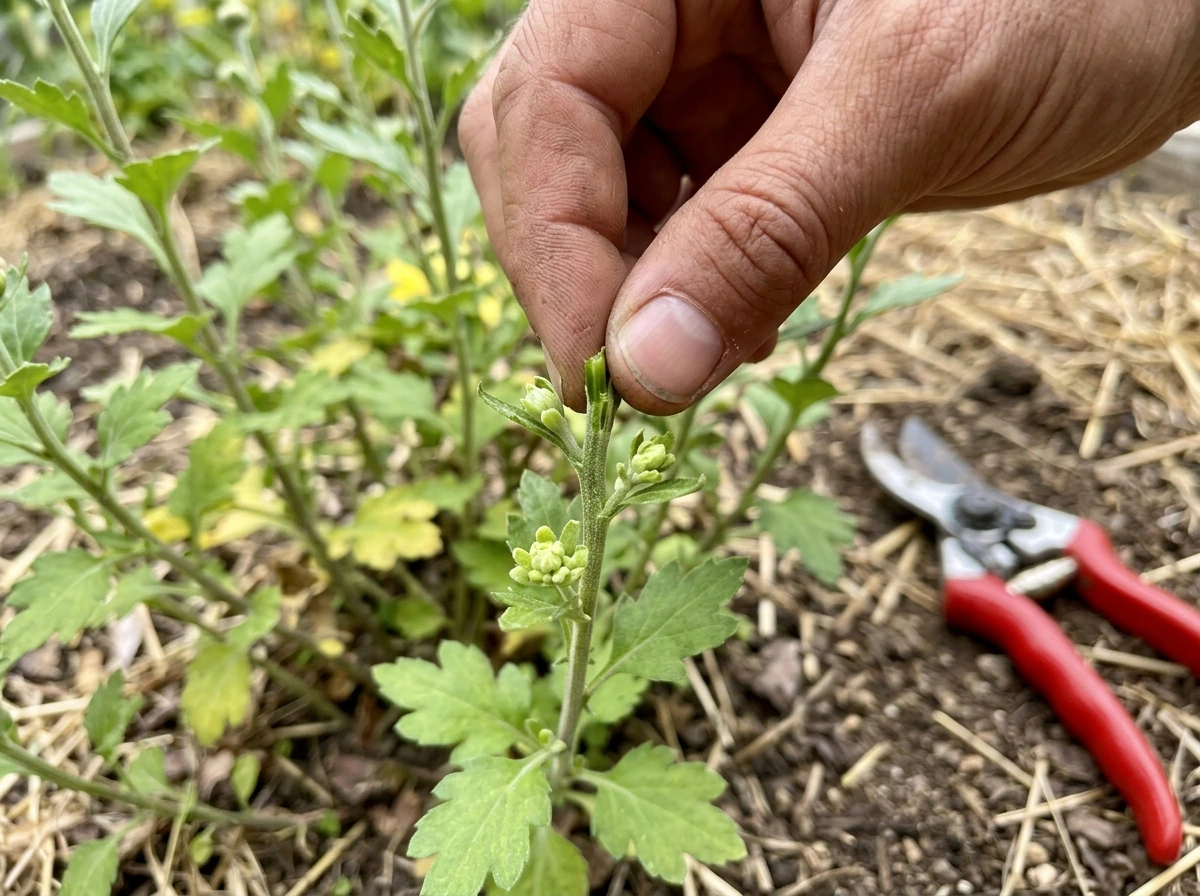
Pinching is probably the single most transformative thing you can do for a perennial mum's long-term shape, bloom quality, and structural health. When you pinch, you remove the growing tip of each stem, which forces the plant to branch out instead of growing straight up. The result is a denser, more compact plant with many more bloom sites instead of a few tall, floppy stems. Iowa State Extension recommends pinching 2 to 3 times from spring through mid-summer, stopping around early July. That timing is critical: pinching after mid-July delays bloom set and can result in frost catching your buds before they open, especially in zones 5 and 6.
Here's how to do it: when new spring growth reaches about 4 to 6 inches tall, pinch or snip off the top inch or so of each stem just above a leaf node. Repeat when stems have grown another 4 to 6 inches. After your final pinch in early July, let the plant grow undisturbed toward fall bloom. It sounds aggressive but mums respond to it extremely well, and the difference in plant structure between a pinched and unpinched mum is dramatic.
Division
Dividing mums every two to three years keeps them vigorous and prevents the classic problem where the center of the clump dies out while the outer edges keep growing. Mums tend to exhaust the soil at their center and develop a woody, unproductive core if left undivided too long. Division also gives you free new plants to expand your planting or share.
The best time to divide is spring, just as new growth starts to emerge. Dig up the entire clump, pull or cut it apart into sections with healthy roots and shoots, discard the woody central portion, and replant the outer sections in freshly amended soil. The University of Minnesota Extension notes that dividing when plants are small and just leafing out lets them use the entire growing season to re-establish, which is exactly what you want for perennial longevity.
Cutting back after bloom
Once blooms are spent in fall, you have a choice. In mild climates (zones 7 and warmer), you can cut plants back to about 4 to 6 inches and they'll be fine. In colder zones, many gardeners leave the top growth intact through winter and cut it back in spring instead. The dead stems provide a small amount of insulation and, more importantly, they trap snow and fallen leaves that act as natural winter protection for the crown. I tend to leave stems standing through winter in my colder clients' gardens and do the cleanup in March or early April before new growth emerges.
Overwintering mums and getting them going again in spring
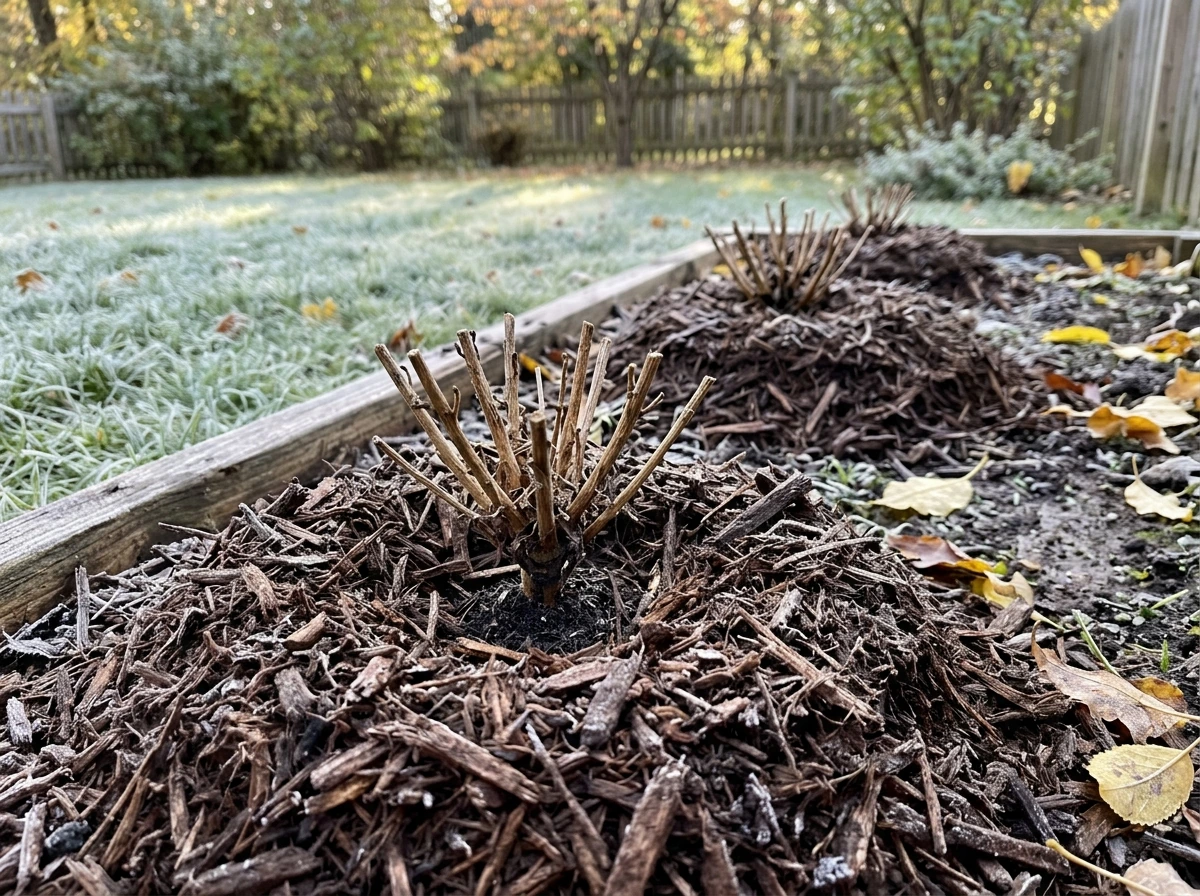
This is where most perennial mum attempts succeed or fail. The goal over winter is simple: keep the crown protected from freeze-thaw heaving, prevent standing moisture around the crown, and avoid stimulating any new growth until spring arrives properly.
After a hard frost has knocked the plant back in fall, apply 3 to 4 inches of mulch over and around the crown. Straw, shredded leaves, and pine needles all work well. Fallen leaves are a perfectly good option as the University of Minnesota Extension suggests, and they're free. The point of the mulch is not to keep the ground warm, it's to keep the ground temperature stable and prevent those repeated freeze-thaw cycles that cause heaving. In zone 5 and colder, this mulch layer is not optional; it's the difference between success and failure.
Also do not cut back plants severely right before winter in cold zones. Pruning in fall can stimulate late growth that won't harden before frost, and fresh cuts are entry points for disease. If you missed the early-fall cutback window, leave the stems until spring.
In spring, once you see new growth emerging from the base, rake back the winter mulch gradually. Don't pull it all at once if late frosts are still possible. Cut away any dead stems at this point. If growth seems slow to emerge, be patient: mums can be late risers, especially after a hard winter. Give them until late April or even early May before worrying. Once you see green growth, apply a light balanced fertilizer to kick the season off, water well, and get ready to start pinching again.
Why your mums might not be coming back: common problems and fixes
| Problem | Likely Cause | What to Do |
|---|---|---|
| Winter kill | Freeze-thaw heaving, no mulch protection, or wrong zone/variety | Apply 3-4 inches of mulch after first hard frost; choose zone-appropriate hardy cultivars; plant in spring next time |
| Legginess / floppy stems | Skipped pinching, too much shade, or over-fertilizing with nitrogen | Start pinching early in spring; move plants to full sun; reduce or stop late-season fertilizing |
| Poor or no bloom | Pinching too late (past early July), low light, or late planting with no root establishment | Stop pinching by early July; ensure 6+ hours sun; plant in spring for better bloom next year |
| Powdery mildew | Crowded plants, poor air circulation, overhead watering | Improve spacing to 18-24 inches; switch to base watering; remove affected foliage |
| Root / crown rot | Waterlogged soil, Pythium or crown rot disease favored by wet conditions | Improve drainage before replanting; avoid deep planting; do not over-mulch crowns |
| Bacterial leaf spot | Overhead watering, crowded plants, wet foliage conditions | Water at the base; space plants generously; remove infected leaves promptly and don't compost them |
| Woody, dying center | Plant not divided in too many years | Dig and divide every 2-3 years in spring; discard the woody center and replant healthy outer sections |
| Aphids or spider mites | Heat stress, dry conditions, or weakened plants | Blast off with water, apply insecticidal soap, ensure consistent watering to reduce plant stress |
A few of these deserve extra attention. Root rot caused by Pythium and related soilborne pathogens is almost impossible to reverse once it's established in a plant. The real solution is prevention: good drainage, clean planting material from reputable sources, and avoiding the temptation to overwater. UC IPM and Penn State Extension both emphasize sanitation and site management over any after-the-fact treatment, and that matches my experience completely. If a plant has rotted at the crown, dig it out, improve the drainage situation, and start fresh with a new plant in a better location.
Legginess is fixable almost entirely through pinching, and it's the most common issue I see in beginner perennial mum beds. If you've ever wondered why your neighbor's mums are dense and round and yours are tall and floppy, pinching is almost certainly the answer. Starting the pinching routine the first spring after planting makes a huge visual difference by fall bloom time.
If you're finding that your mums consistently fail to return after winter despite good mulching and site prep, the variety is probably the issue. A lot of garden center fall mums simply aren't bred for perennial hardiness, regardless of what the zone sticker says. Tracking down genuinely hardy varieties, especially those from the University of Minnesota's program, and Tracking down genuinely hardy varieties, especially those from the University of Minnesota's program, and If you're finding that your mums consistently fail to return after winter despite good mulching and site prep, the variety is probably the issue. A lot of garden center fall mums simply aren't bred for perennial hardiness, regardless of what the zone sticker says. Tracking down genuinely hardy varieties, especially those from the University of Minnesota's program, and Tracking down genuinely hardy varieties, especially those from the University of Minnesota's program, and spring instead of fall solves most of the persistent winter-kill problems I've seen home gardeners struggle with. If you’re wondering where to grow mums, start by matching hardy varieties to your climate and choosing the right sun and drainage conditions spring instead of fall. solves most of the persistent winter-kill problems I've seen home gardeners struggle with. It's worth the extra effort. The payoff is years of reliable fall color from plants you don't have to replant every season. If your goal is how to grow mums for profit, focus on choosing hardy perennial varieties and buying spring stock whenever possible to avoid replanting every year. mimosa evo grow tips solves most of the persistent winter-kill problems I've seen home gardeners struggle with. solves most of the persistent winter-kill problems I've seen home gardeners struggle with. It's worth the extra effort. The payoff is years of reliable fall color from plants you don't have to replant every season. mimosa evo grow tips
FAQ
How can I tell if a mum I bought in fall is actually likely to survive as a perennial?
Look beyond the zone sticker. Check whether it is specifically labeled as a hardy garden mum, not a florist type, and avoid plants described mainly for dense fall blooms or “cut flower” use. If the tag only lists general chrysanthemum info with no hardy wording, assume it is more likely to be a one-season performer.
What should I do if my mum is slow to come up in spring after winter?
Wait longer than you think before replacing it. Mums can be late risers, especially after a hard winter, so give it until late April to early May before judging failure. When you see green growth, resume watering and then restart light feeding, but do not dig it up early.
Is it better to mulch in winter or leave the plant unmulched?
In colder zones, winter mulch is a core part of preventing freeze-thaw heaving, not just insulation. Apply about 3 to 4 inches over the crown after a hard frost, using materials like straw, shredded leaves, or pine needles. Skip the urge to add mulch too early in fall because it can keep the crown wetter for longer.
Can I prevent freeze-thaw heaving with extra watering or more fertilizer in fall?
No, extra fertilizer and late-season nitrogen usually make the problem worse by promoting soft growth that does not harden off. For moisture, keep watering regular through the fall so the plant enters winter with consistent moisture, then stop adding nutrients by early August as recommended. The key protection for heaving is stable crown temperature, achieved with correct mulching and good drainage.
How do I avoid crown rot if my soil drains poorly?
Start by checking for water pooling after rain and fix drainage before planting. For consistently wet areas, choose a raised planting area or amend with compost plus coarse material so water moves through quickly. Also follow the planting-depth rule, crown at or slightly above soil level, because deep planting raises crown-rotting risk.
Should I cut back my mums in fall or leave stems over winter?
In colder climates, leaving stems until spring can help trap snow and protect the crown, then you can do cleanup after new basal growth begins. If you cut hard right before winter in cold zones, you may stimulate late growth and create disease entry points. In mild zones, you can cut back earlier since winter protection needs are lower.
What’s the right way to water mums so I do not encourage disease?
Water deeply but avoid overhead watering whenever possible. Wet foliage promotes bacterial leaf spot and powdery mildew, so aim the water at the base and let the top inch of soil dry slightly between watering sessions during active growth. Keep watering steady through bud set so drought stress does not reduce bloom size and count.
Why are my mums tall and floppy even though they bloom?
Most of the time the fix is pinching timing and repetition. Begin when new growth is about 4 to 6 inches tall, pinch off the top portion just above a leaf node, and repeat after the next growth flush. Stop pinching around early July so buds set on time, otherwise tall, less-branching growth often results.
How far apart should I plant mums to reduce mildew and leaf spot?
Space them about 18 to 24 inches apart. This spacing improves airflow so leaves dry faster, which reduces the conditions mildew and leaf spot need. It also makes future pinching and dividing easier, and it helps prevent the overcrowded center decline that leads to clump dieback.
When should I divide mums, and do I need to divide them even if they look fine?
Divide every two to three years to keep plants vigorous and prevent the woody, unproductive center from taking over. The best time is spring when new shoots emerge, so divisions can use the full growing season to re-establish roots before winter.
My mums flower but do not return next year. Could it be the variety or my winter care?
Often it is the variety, especially if the plant came from a fall display pile and was not bred for perennial survival. If you already have good drainage, correct crown depth, and winter mulching, then switching to a labeled hardy garden mum, particularly cold-hardy cultivars suited to your region, is the most direct next step.
What is the safest fertilizer approach if I want perennial mums, not big soft growth?
Use a balanced slow-release fertilizer at planting, then add a monthly liquid balanced feed during the growing season. Stop fertilizing by late July or early August to prevent soft late growth that cannot harden off before frost. If blooms and foliage look lush late in the season, withhold additional nitrogen rather than “boosting” growth.
Next Article
Are Begonias Easy to Grow From Seed? A Practical Guide
See if begonias are easy to grow, with step-by-step seed starting, germination tips, troubleshooting, and a bloom timeli