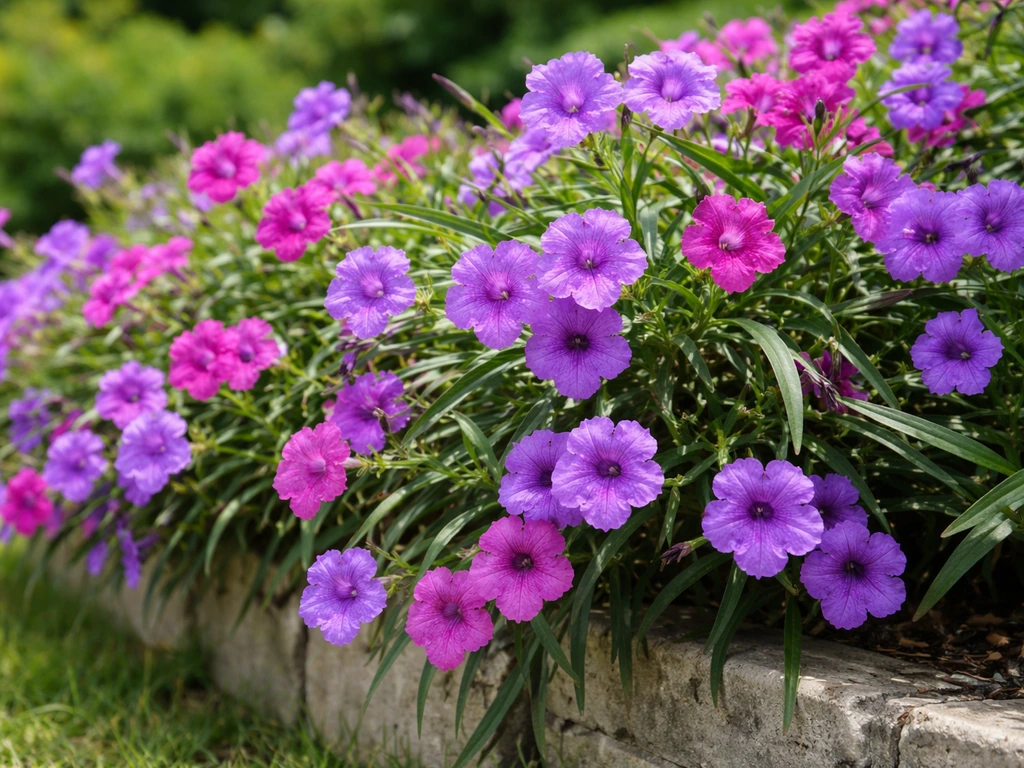
Petunias are one of the best plants you can grow in a hanging basket. They love the heat, they bloom for months, and trailing varieties are practically designed to spill over the sides of a basket in a waterfall of color. The key is picking the right type, setting the basket up properly, and keeping up with watering and feeding through the season. Get those things right and you'll have a showstopper from late spring right through to the first frost.
How to Grow Petunias in a Hanging Basket From Seed to Bloom

Harriet Whitmore
14 May 2026
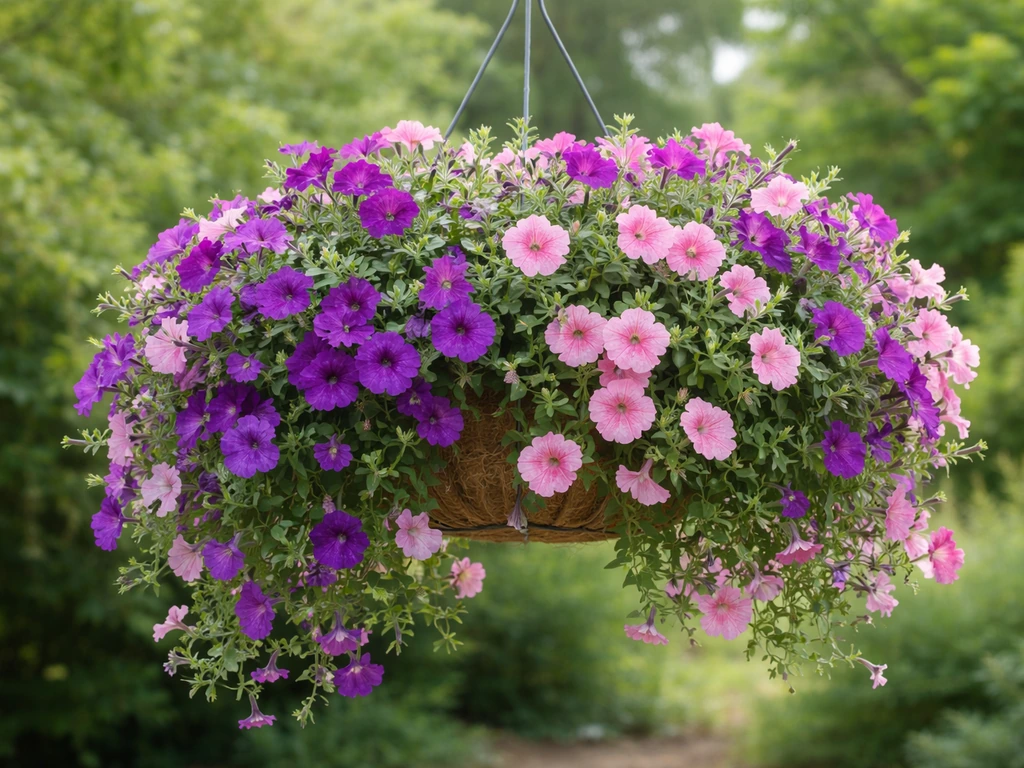
Can you grow petunias in hanging baskets (and which types work best)
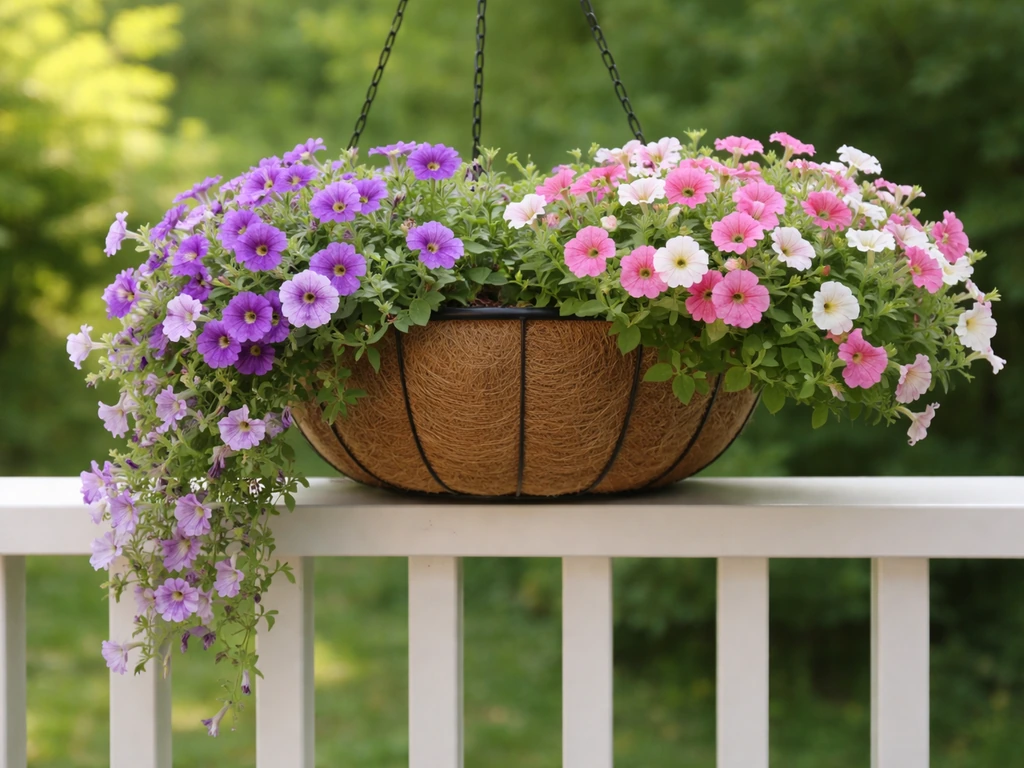
Yes, absolutely. Petunias thrive in hanging baskets, and for many gardeners they're the go-to choice for exactly that purpose. But not all petunias behave the same way in a basket, so picking the right growth habit matters a lot.
Trailing and spreading types are what you want for a true hanging basket effect. Wave petunias are probably the most well-known in this category. They spread aggressively, some varieties reaching up to 4 feet across, which means they'll cascade beautifully over basket edges and fill in fast. Surfinia types are similar in habit and equally popular for baskets. These spreading varieties are built for hanging displays and they rarely disappoint.
Mounding or grandiflora types can work in baskets too, but they tend to grow upright rather than trailing, so the basket won't have that lush, overflowing look. They're better suited for planting in the ground or a wide patio container. When you transplant to the ground, give petunias the same full-sun conditions and good drainage they need in containers planting in the ground. If the hanging cascade effect is what you're after, stick with trailing or spreading series like Wave, Supertunia, Easy Wave, or Surfinia.
One thing worth knowing: petunia spread varies wildly by variety. Some compact types spread only about 18 inches, while vigorous trailing types can reach 4 feet. That difference directly affects how many plants you need per basket and how quickly it fills out, so always check the label before you buy.
Choosing the right hanging basket, soil, and potting mix
Basket size matters more than people think. For trailing petunias, a 10 to 12-inch basket is the standard starting point, and it works well for most home gardeners. Go smaller and the roots run out of room fast, which means more watering stress and weaker growth. If you can, go up to a 14 or 16-inch basket. More volume means more root space, more soil to buffer moisture, and a longer time between waterings.
Wire baskets lined with coir fiber look great and have excellent airflow, but they dry out very quickly. Plastic hanging pots retain moisture longer and tend to be more forgiving, especially if you're not home every day to water. If you love the look of a wire basket, consider lining it with both coir and a layer of plastic sheeting (with drainage holes punched in the bottom) to slow moisture loss.
Whatever basket you choose, drainage holes are non-negotiable. Petunias hate sitting in waterlogged soil and will develop root rot fast if water can't escape. Some baskets come with a built-in water reservoir at the base, which can actually be helpful for managing moisture levels in hot weather.
For the potting mix, use a quality soilless mix designed for containers rather than garden soil. Garden soil compacts, drains poorly in pots, and brings disease risk with it. Look for a mix that contains perlite or vermiculite for drainage, and some organic matter like compost or bark to hold a bit of moisture without going soggy. This balance is exactly what petunias need: enough drainage so roots don't rot, but enough moisture retention so the basket doesn't dry out bone dry every afternoon. Avoid the old myth of layering gravel at the bottom of the pot. It actually disrupts drainage rather than improving it.
Planting setup: seeds vs plugs, spacing, and timing
Seeds vs plugs
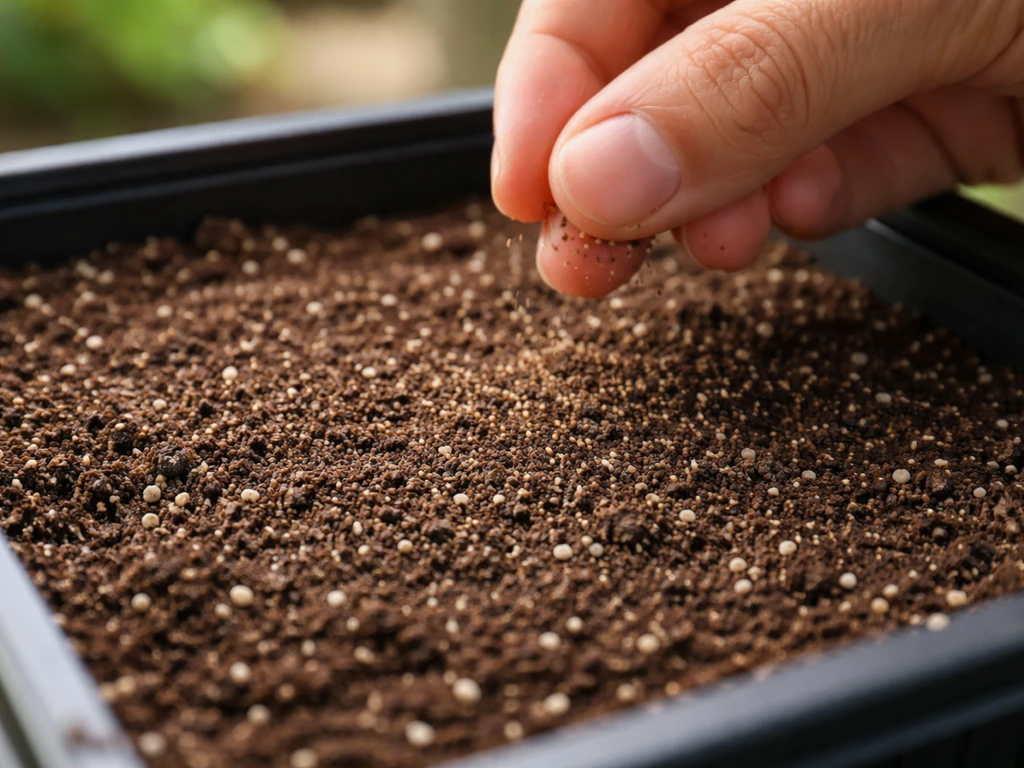
Starting petunias from seed is doable but genuinely more challenging than with most annuals. The seeds are tiny, they need light to germinate (don't cover them with soil), and they want soil temperatures around 68 to 70°F to sprout reliably. Under good conditions, germination takes 7 to 10 days. From there, you need to grow on the seedlings carefully, keeping them moist but not soggy, until they develop 3 true leaves. That's your cue to pot them up individually. The whole seed-to-basket-ready process typically takes 10 to 12 weeks indoors, which means starting in late winter if you want to hang your basket out after the last frost.
For most home gardeners, plugs or transplants from a garden center are the smarter starting point. You skip the most fiddly stage, and you can see exactly what variety and habit you're getting. If you're using plugs, handle the roots gently and get them into the basket without delay.
Spacing and timing
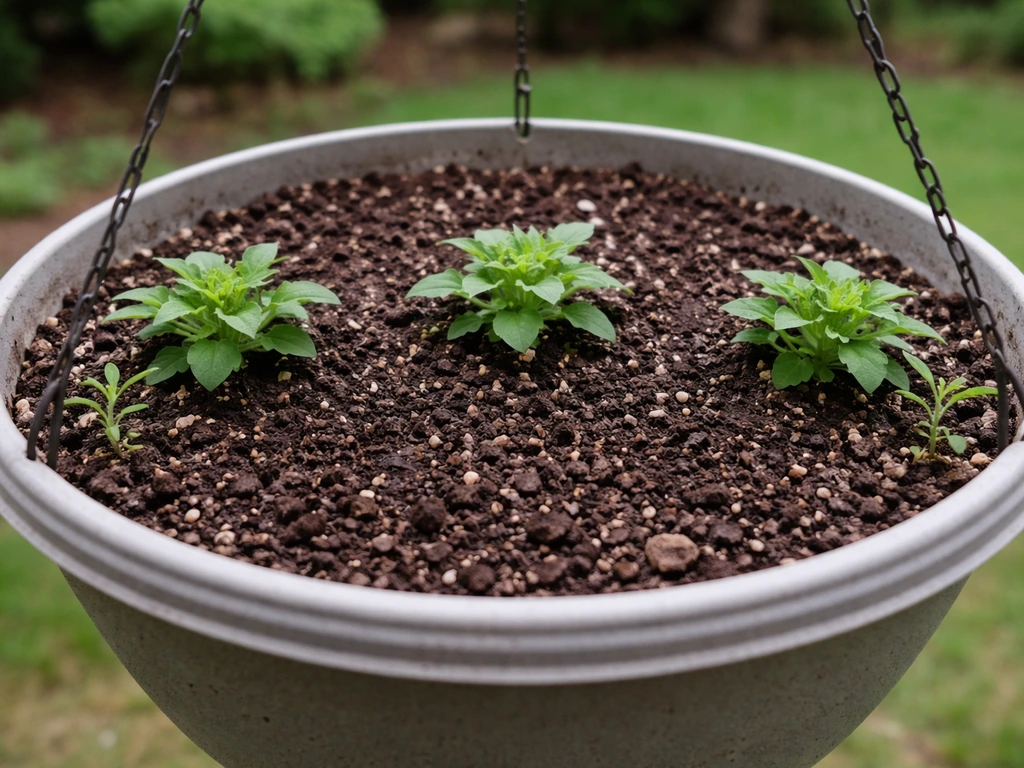
For a 10 to 12-inch basket, three trailing petunia plants is the standard recommendation for a full, lush look. Spacing them evenly gives each plant room to establish while still allowing the basket to fill in nicely within a few weeks. Resist the temptation to cram in more plants hoping for instant fullness. Overcrowding leads to competition for water and nutrients, and the result is usually weaker plants that bloom less.
Timing depends on your last frost date. Petunias go out after frost risk has passed. In most of the US, that means late April to mid-May. In warmer zones (Zone 9 and above), you can often get baskets established even earlier. If you're in a cooler region, don't rush it. A frost-damaged petunia basket is a demoralizing way to start the season.
Light, watering, and feeding schedule in a hanging basket
Light
Petunias need at least 5 to 6 hours of direct sunlight daily, and they genuinely perform best in full sun all day. A shady spot will give you leggy, sparse-flowering plants pretty quickly. If you're hanging your basket somewhere that gets only dappled or partial light, temper your expectations, or swap to a more shade-tolerant annual. For hanging baskets specifically, south or west-facing spots tend to give the strongest bloom performance.
One trade-off: full sun in a hanging basket means faster water evaporation, especially on hot or windy days. The more sun your basket gets, the more closely you'll need to monitor moisture levels.
Watering
Hanging baskets dry out fast. In summer heat, a well-established petunia basket may need watering every single day, sometimes twice if temperatures are extreme. Check the moisture level by sticking your finger an inch into the soil. If it feels dry at that depth, water thoroughly.
When you water, go slowly and water until it flows freely out of the drainage holes at the bottom. This ensures the whole root zone gets wet, not just the surface. One common mistake is watering quickly from above. The water often runs down the sides between the soil ball and the container wall without soaking in evenly. Take your time, and if the soil has dried to the point where it's pulling away from the basket edges, set the basket in a tray of water for 20 to 30 minutes to rehydrate it fully.
Feeding
Petunias in hanging baskets are heavy feeders. Every time you water, nutrients leach out through those drainage holes, so you need to replenish them regularly. You have two solid options: mix a slow-release granular fertilizer like Osmocote into the potting mix at planting time, then supplement with a liquid balanced fertilizer every two to four weeks through the season, or skip the slow-release and use a liquid balanced fertilizer (something like 10-10-10 or a bloom-boosting formula) every one to two weeks.
Either approach works. The risk to watch for is salt buildup in the potting medium from too much fertilizer over time. If you overfeed container-grown plants, UF/IFAS warns that excess fertilizer can build salt in the potting media and cause stunted growth, leaf browning, or death salt buildup in the potting medium from too much fertilizer. Signs include leaf tip browning, stunted growth, or a crusty white residue on the soil surface. If you see that, flush the basket thoroughly with plain water two or three times in a row to push out excess salts, then scale back your feeding rate.
Ongoing care: pruning, deadheading, and preventing leggy growth
Most modern trailing petunia varieties are marketed as low-maintenance or self-cleaning, meaning spent flowers drop on their own without needing hand-deadheading. That said, regularly removing spent blooms (pinching or snipping them off at the base, including the small green seed pod behind the petals) does encourage the plant to keep flowering rather than putting energy into seed production. Use clean snips and wipe them down between plants to avoid spreading any disease.
The bigger maintenance issue in a hanging basket is legginess. By midsummer, even healthy trailing petunias can develop long bare stems with flowers only at the tips. The fix is a hard cutback. Trim stems back to around 3 to 5 inches, making sure you're cutting above a leaf node (a point where a leaf meets the stem). Penn State Extension notes that annual plants may benefit from cutting back leggy stems, leaving about 3, 5 inches with nodes, and that many petunias respond well to this approach petunias respond well to this hard cutback. It looks brutal, but petunias bounce back fast. Within 2 to 3 weeks you'll see fresh growth and a flush of new blooms. Many experienced gardeners do this once in July to revive their baskets for the rest of the season.
To delay legginess in the first place, pinch back the growing tips early in the season when plants are young. Pinching encourages branching, which means more stems and more flowers rather than a few long trailing arms. It's a small effort at the start that pays off for months.
Troubleshooting common problems
| Problem | Likely Cause | Fix |
|---|---|---|
| Wilting despite moist soil | Root rot from overwatering or poor drainage | Check roots for brown, mushy tissue. Improve drainage, reduce watering frequency, allow soil to partially dry between waterings. |
| Wilting on hot afternoons | Heat and moisture stress from drying out | Water more frequently, move basket to a spot with afternoon shade, check soil moisture daily. |
| Yellow leaves with green veins | Iron deficiency (chlorosis) | Apply chelated iron as a soil drench for fast uptake. Common in petunias, especially in high pH or overwatered conditions. |
| Pale, washed-out leaves overall | General nutrient deficiency | Resume or increase regular feeding with a balanced liquid fertilizer. |
| Few flowers, lots of green growth | Too much shade or too much nitrogen | Move to a sunnier spot. Switch to a bloom-focused fertilizer lower in nitrogen. |
| Long bare stems, flowers only at tips | Leggy growth from age or low light | Cut stems back hard to 3–5 inches above a leaf node. Plants recover quickly. |
| Sticky residue on leaves, tiny white insects | Whiteflies | Inspect the undersides of leaves. Use insecticidal soap or neem oil spray, targeting the undersides. Repeat weekly. |
| Fine webbing, stippled or bronzed leaves | Spider mites (worse in hot, dry weather) | Increase humidity around the basket, spray with neem oil or miticide. Spider mites thrive when conditions are hot and dry. |
| Mushy stem base, plant collapses | Crown or stem rot from overwatering | Remove affected plants immediately. Improve drainage and avoid splashing water on stems when watering. |
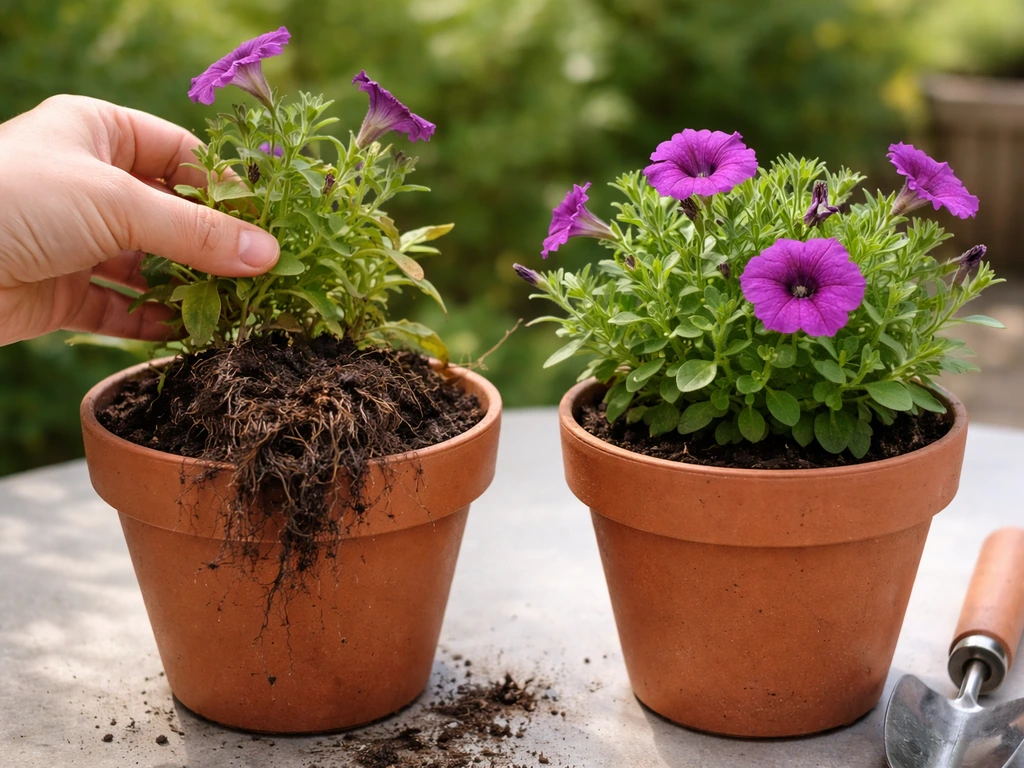
Iron deficiency deserves a special mention because it's surprisingly common in petunias and is often mistaken for a general feeding problem. The telltale sign is yellowing between the leaf veins while the veins themselves stay green, especially on younger leaves near the top of the plant. A chelated iron drench corrects it quickly because chelated iron stays available to plant roots even in imperfect soil pH conditions. If you're seeing this regularly, it's worth checking whether your water or potting mix has a high pH, as that's often the underlying cause.
Overwatering is probably the most common way people lose a petunia basket, and it's sneaky because the symptoms look a lot like underwatering. Both cause wilting. The difference is the soil: if it's wet or soggy and the plant is still wilting, you're looking at root damage from too much water rather than drought stress. Let the basket dry out properly between waterings and make sure nothing is blocking the drainage holes.
If you're planning out your petunia season more broadly, the timing of when you start and plant out petunias makes a real difference to how well your basket performs all season. If you want the full guide beyond timing, see petunias how to grow for a step-by-step walk through starting, planting, and ongoing care. If you want to decide what to grow alongside petunias, you can match them with other sun-lovers that have similar watering needs what to grow with petunias. If you want a fuller walkthrough, this guide on how to grow petunia baskets covers the key choices and care steps from start to finish petunia season. If you want the best timing, aim to plant out your baskets after frost risk, then work backward from your last frost date for earlier starts when to start and plant out petunias. Getting plugs established at the right moment gives trailing types the longest possible window to do what they do best. If you’re specifically growing Mexican petunias, you’ll want to prioritize the brightest sun and a slightly faster-draining soil mix so they don’t stay wet.
FAQ
How can I tell if my hanging basket petunias are overwatered or just underwatered?
If your petunias look wet but keep wilting, check the drainage first. Soggy soil plus wilting is often root suffocation, not drought. Tip the basket slightly and confirm water runs out freely from the holes, then let the top inch dry before watering again.
How much potting mix should I use in a larger hanging basket?
Plan for a second potting mix purchase if you fill larger baskets. For a 14 to 16 inch basket, the extra volume matters for moisture buffering and fertilizer dilution, so topping off with random leftover soil can throw off drainage and feeding.
Can I use both slow-release fertilizer and liquid fertilizer in the same hanging basket?
Yes, but only in moderation and with the right product type. Use a slow-release fertilizer labeled for containers and mix it into the top portion of the mix so it releases where roots actively feed. If you rely mainly on liquid fertilizer, skip granules or you will increase the chance of salt buildup.
What should I do if my basket gets intense afternoon heat?
In many climates, a quick way to manage temperature stress is to use morning sun and partial afternoon shade during heat waves, not deep shade all day. Even with 5 to 6 hours of light, reducing brutal afternoon exposure can cut water demand and limit stress droop.
Why does watering sometimes seem to only wet the surface?
Yes, but choose the right option: sink the basket so water can fully soak through, or water in stages. If you see water running down the sides and out the bottom immediately, pause, let it soak for a few minutes, then resume until runoff is steady from the whole basket.
My petunias are growing but not blooming well, what are the most common causes?
If growth is strong but blooms are weak, it is usually light, fertilizer balance, or both. Make sure it is truly in full sun for at least 5 to 6 hours, then back off nitrogen-heavy mixes. A bloom-focused or balanced fertilizer schedule with consistent feeding often fixes it.
My petunias keep getting yellow between the veins, how do I fix it long term?
Use a simple pH check if chlorosis keeps returning. High pH in water or potting mix can lock out iron and cause repeated yellowing between veins. In that case, correct the iron with a chelated product and also consider adjusting your water source or repotting with fresh container mix.
How often should I water my hanging basket petunias in summer?
It depends on how fast the soil dries. In most hot, sunny setups, daily checks are normal, but you can often stretch to every other day by adding a moisture-stable mix, using a larger basket, and avoiding wire that dries too quickly. Always water based on the finger test at about 1 inch depth.
When is the best time to pinch or prune petunias in a hanging basket?
You will get a stronger cascade by pinching early, before the plants become long and woody. After midsummer hard pruning, allow recovery but avoid repeated frequent trims that remove the flower buds just as they are forming.
What should I do if I notice white crust on the soil surface from fertilizer salts?
If you see a crusty white layer, stop fertilizing immediately and flush thoroughly with plain water. For ongoing correction, switch to a lighter feed schedule and use a fertilizer intended for flowering containers, then ensure you fully drain after watering so salts do not concentrate.
Can I rescue petunias if I used the wrong potting mix?
Often, yes, especially if you used garden soil or a heavy mix. Petunias need a soilless container mix that drains and holds moisture in a balanced way. If you suspect compaction, replacing the mix is usually more reliable than trying to amend an already packed basket.
Next Article
How to Grow Mexican Petunias from Seed to Bloom
Step-by-step guide to grow Mexican petunias from seed to bloom, including timing, indoor start, care, and troubleshootin