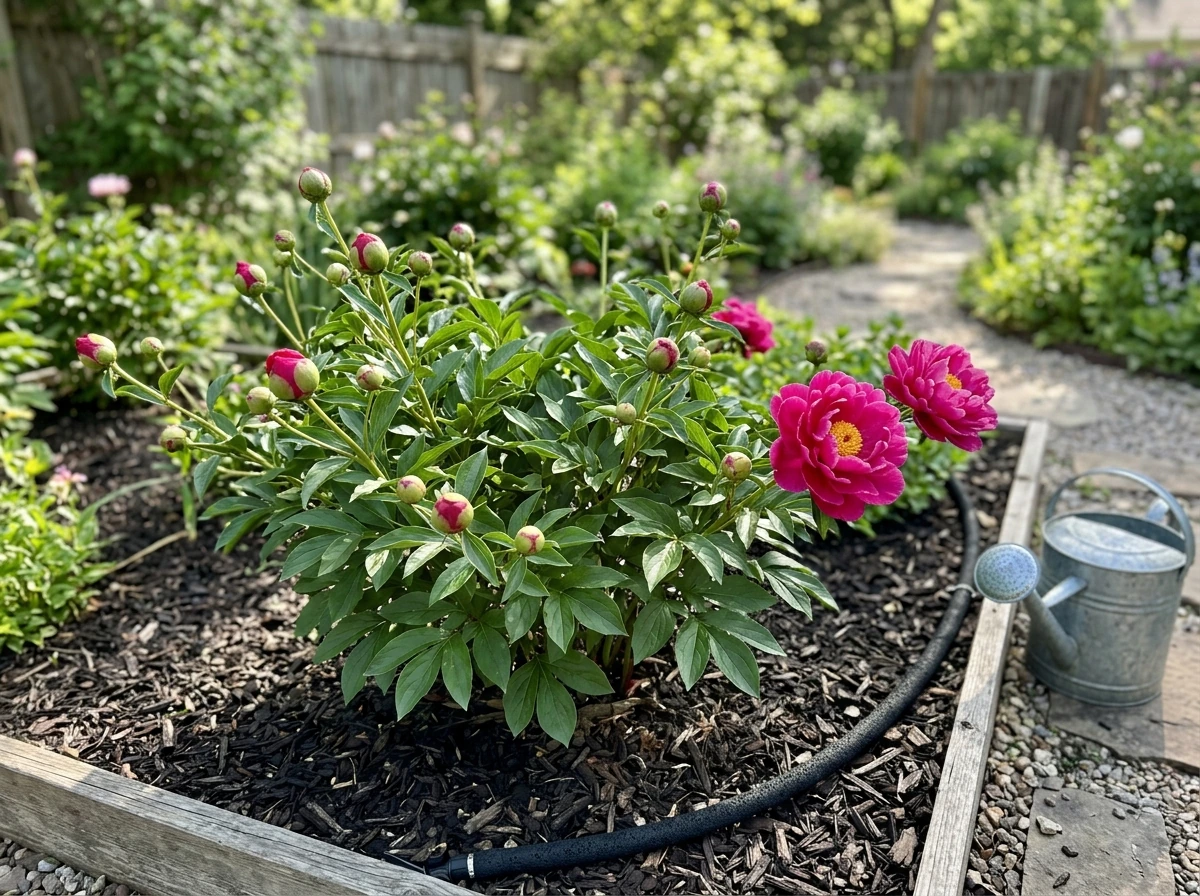
If you've been searching for how to grow peonies from stem, here's the honest answer upfront: it depends entirely on what type of peony you have. If you want a step-by-step plan for the basics, follow this guide on how to grow peonies. For herbaceous peonies (the classic garden kind that dies back every winter), "from stem" actually means crown division, where you include roots and eyes in each piece. For tree peonies (the woody shrub type), true stem cuttings are possible but tricky and require specific hormone treatment and timing to work. Either way, this guide walks you through both approaches so you can figure out exactly what you're working with and what to do next
How to Grow Peonies From Stem: Step-by-Step Guide

Harriet Whitmore
24 Mar 2026
What "growing peonies from stem" really means
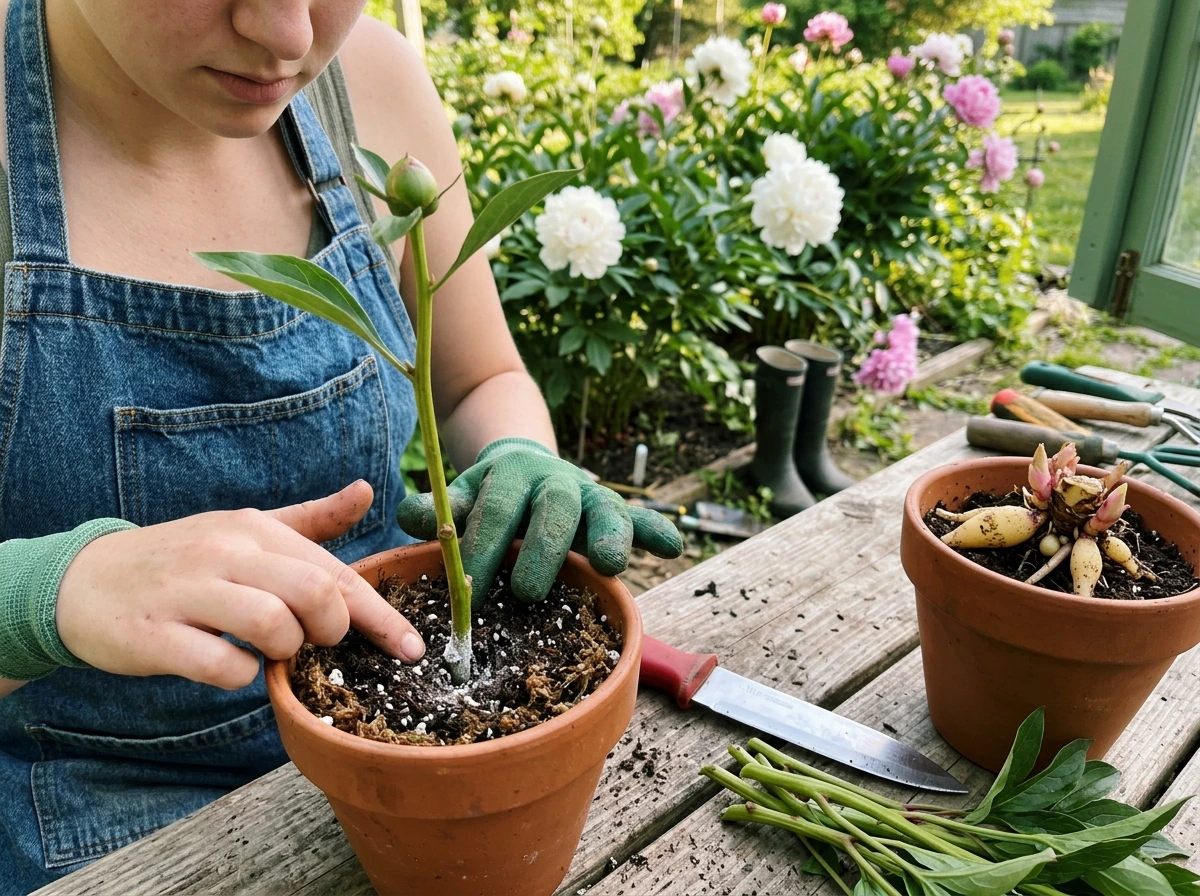
A bare stem clipping from a peony plant, stuck in a pot of soil, is almost certainly going to fail. I know that's not what you want to hear, but it's worth understanding why before you spend a season wondering what went wrong. Peonies don't root readily from stem tissue alone the way roses or hydrangeas do. They need something more.
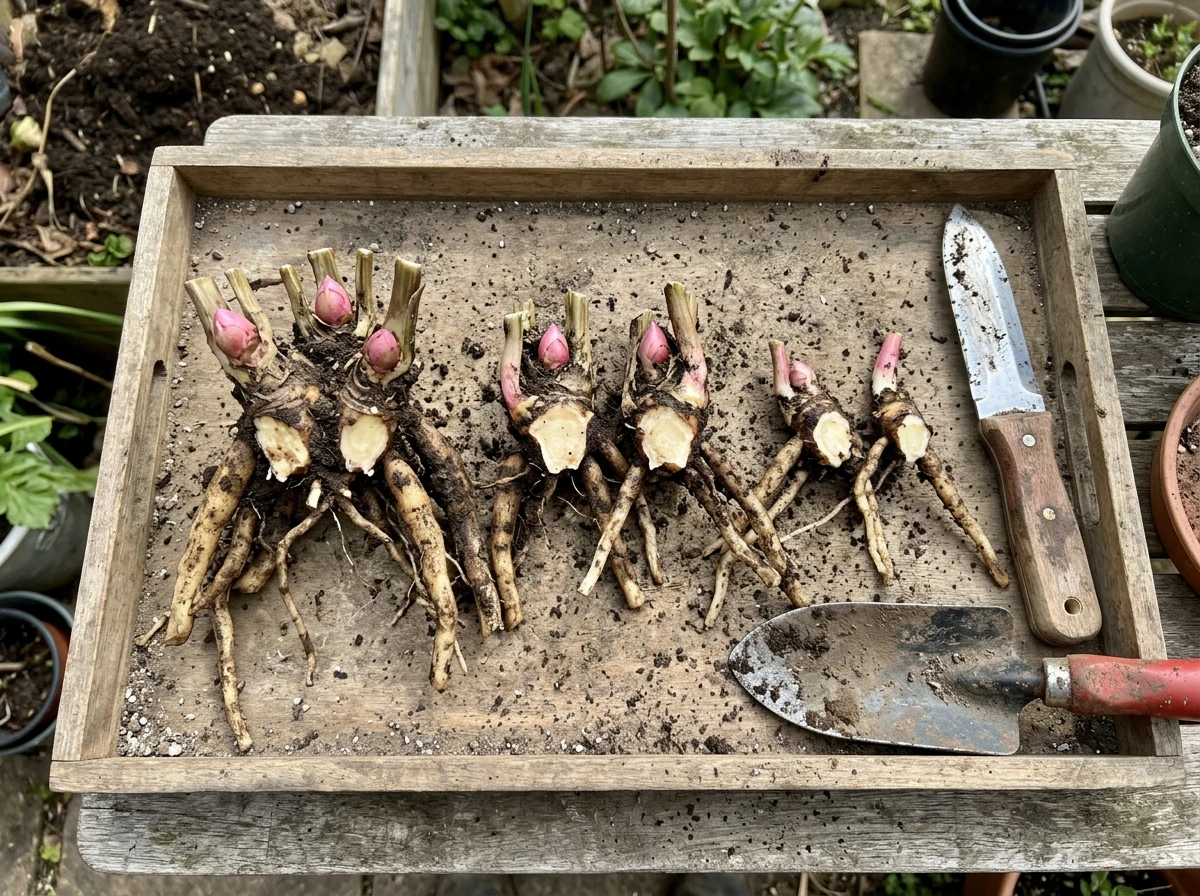
For herbaceous peonies, "stem" propagation is really crown division. The American Peony Society is clear that crown and root division is the standard, reliable method for this type. Each piece you divide off needs to include a section of the fleshy root system plus at least one or two crown buds, called eyes. The American Peony Society explains that crown division, including crown buds or eyes, is preferred over “root division” alone because most roots cannot produce vegetative buds. Those eyes look like small reddish or pink nubs at the base of the plant right where the stems meet the roots. Without eyes and attached root material, you don't have a viable cutting, you just have a piece of stem that will wither and die.
For tree peonies, the situation is different. These are woody, shrubby plants and they do have some capacity to root from actual stem material under the right conditions. Research into tree peony propagation has shown that softwood stem cuttings, treated properly with rooting hormone and placed in a controlled environment, can develop callus tissue at the base and eventually root. It's not guaranteed, it takes patience, and the conditions have to be right, but it is genuinely possible in a way that it simply isn't for herbaceous types.
So before anything else, know your peony. If it's the fluffy-flowered type that goes dormant every winter and comes back from the ground, you're doing division. If it has woody, persistent stems that stay above ground year-round, you may be able to attempt real stem cuttings. Both methods are covered here.
Best peony types and timing for stem starts (zone-aware)
Timing is one of the biggest variables when propagating peonies, and it shifts depending on both the peony type and where you garden.
Herbaceous peonies: divide in late summer to fall
The ideal window for dividing herbaceous peonies is late summer through fall, typically late August into October depending on your zone. In colder zones (Zones 3 to 5), aim for early to mid-September so the divisions have a few weeks of mild soil temperature to settle in before hard frost. In warmer zones (Zones 6 to 8), you have more flexibility and can divide as late as November. The American Peony Society explicitly warns against spring planting because plants put in the ground in spring make little to no root growth that season, setting them back significantly. Fall timing gives divisions the best chance to establish root contact with surrounding soil before dormancy.
Tree peonies: take softwood cuttings in early summer
Tree peony stem cuttings work best when taken from softwood or early semi-hardwood growth, which typically means June through July in most temperate zones. The general guidance from propagation research is that softwood cuttings should be taken when growth is young but not completely tender, roughly when new shoots have firmed up slightly but haven't yet become fully woody. In Zone 5 and colder, that window might open a bit later, closer to mid-June. In Zone 7 and warmer, it can be as early as late May. If you miss the softwood window and the stems have hardened off completely, your chances drop considerably.
Intersectional (Itoh) peonies
Intersectional peonies, the Itoh hybrids, are a cross between tree and herbaceous types. For propagation purposes, treat them like herbaceous peonies and use crown division in fall. Stem-only cuttings are not reliably successful with this type.
Choosing stems and prepping cuttings (what to cut and avoid)
For herbaceous peonies: selecting division material
Start with a plant that's at least 3 years old. Younger plants don't have enough crown material to divide without risking the mother plant's health or producing divisions too weak to establish. When you lift the clump, wash the roots gently so you can see what you're working with. Each division needs at minimum one fleshy root section and one or two eyes. Reddit gardeners in /r/peonies share practical guidance and concerns about how to place peony roots or crowns, including eye or bud placement and how shallow to cover them eyes per division. Three to five eyes per division is a more comfortable target that gives each piece the energy reserves to push through establishment. Avoid divisions that have no roots attached, sections that are entirely mushy or rotted, and pieces smaller than a fist that don't have visible eyes.
Use a clean, sharp knife or spade. Dull tools crush tissue and create entry points for fungal disease, which is a real concern with peonies. Botrytis, the most common peony fungal pathogen, can move in through damaged tissue surprisingly fast. After cutting, dust the cut surfaces lightly with sulfur powder or a fungicide dust before planting or potting.
For tree peonies: taking stem cuttings
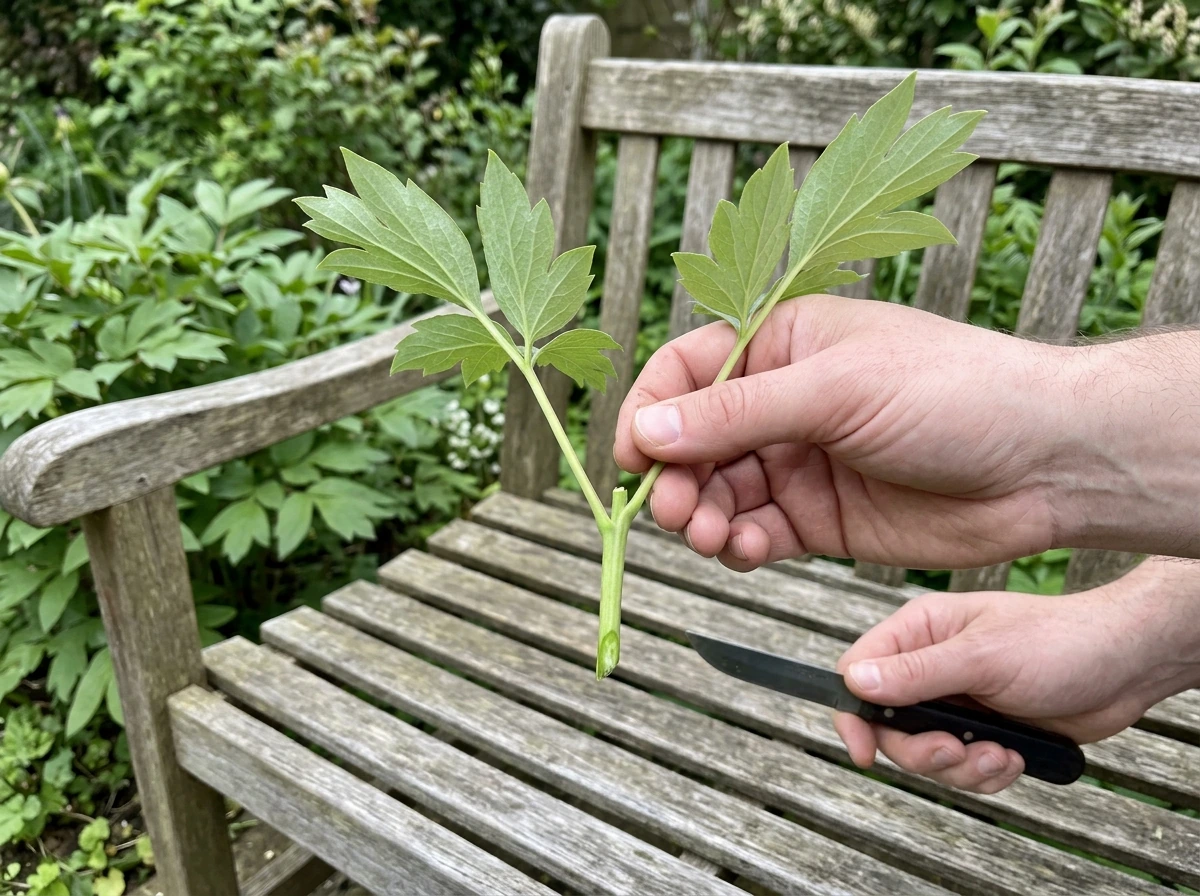
Choose a healthy current-season shoot that has firmed up slightly but isn't yet fully woody. Look for stems about 4 to 6 inches long with two to three leaf nodes. A cutting with one leaf pair left at the top (after removing lower leaves) and a node at the base is the classic setup. Cut just below a node at the base at roughly a 45-degree angle. Remove all leaves except the top pair, and if those remaining leaves are large, cut them in half to reduce moisture loss. Avoid stems that are diseased, damaged, from the very tips of fast-growing shoots (too soft), or from old woody growth (too hard).
The cutting condition matters as much as the timing. I've seen gardeners take technically "correct" cuttings from stressed or waterlogged plants and get zero results. Start with a healthy mother plant and give yourself the best odds.
Rooting setup: containers, media, hormones, and planting depth
Containers and rooting media
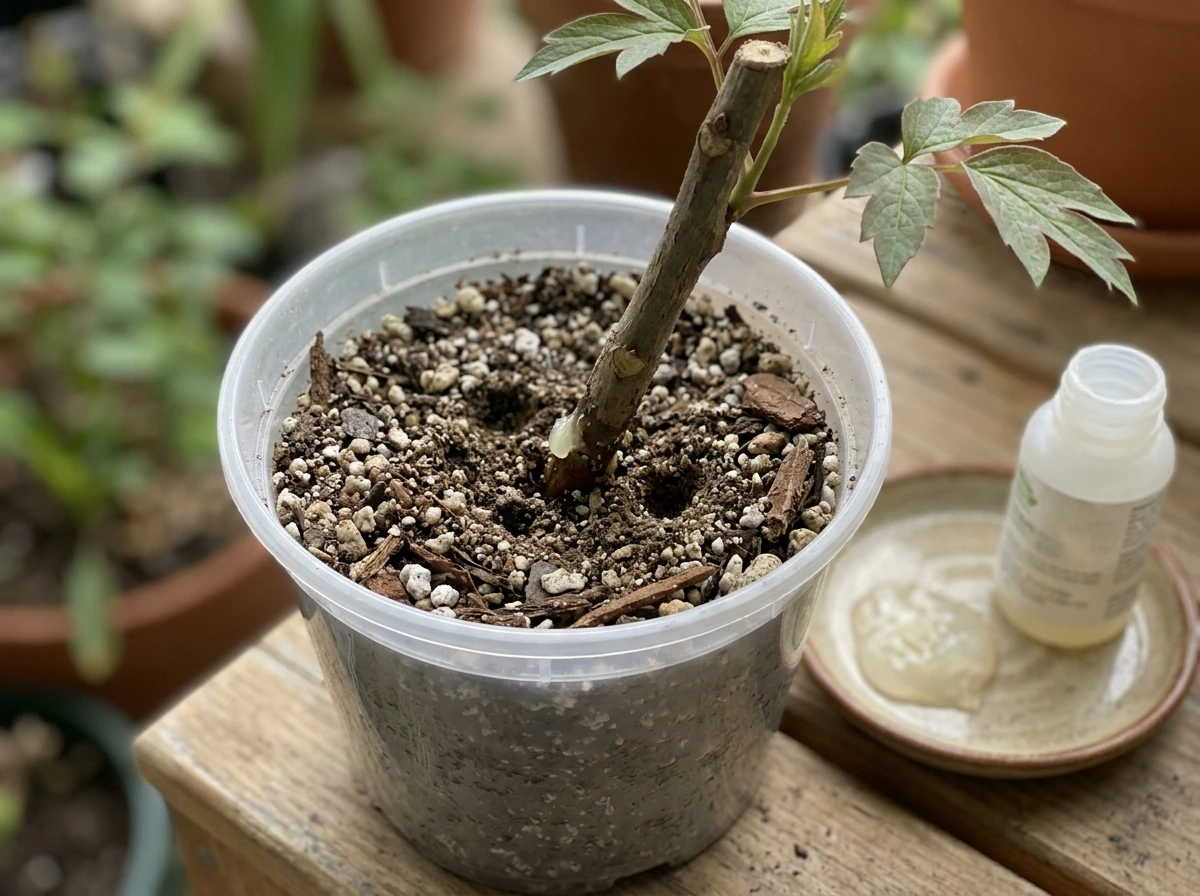
For both division sections and tree peony cuttings, drainage is non-negotiable. Use a pot or flat with drainage holes and a rooting medium that holds some moisture but never stays soggy. A mix of 50% perlite and 50% coarse horticultural grit works well, or a standard propagation mix (half perlite, half peat or coconut coir). Avoid heavy garden soil or rich potting mixes, which stay too wet and encourage rot. For herbaceous peony divisions being potted temporarily before garden planting, a slightly more substantial mix is fine since they don't need to root from scratch the same way.
Rooting hormone for tree peony cuttings
This is where tree peony cuttings really differ from most common garden plants. Research has shown that IBA (indole-3-butyric acid), a synthetic auxin rooting hormone, makes a significant difference in rooting success. In controlled studies, IBA treatments produced rooting rates as high as 93% in tree peony cuttings. Two practical approaches have been documented: a quick-dip method using a concentrated IBA solution around 2000 mg/L, or a longer soak (16 hours) at a lower concentration around 150 mg/L. For most home gardeners, the easiest practical option is a quality commercial rooting powder or gel containing IBA, applied to the base of the cutting before insertion. Coat about half an inch of the stem base thoroughly, tap off excess powder if using the dry form, and insert into the rooting medium. Don't skip this step with tree peonies.
Planting depth
For tree peony cuttings, insert the stem so that one to two nodes are buried, with the node at the base of the cutting sitting just below the surface. This is where callus and root development will originate. For herbaceous peony divisions going directly into the garden, eyes should be placed at 1.5 to 2 inches below the soil surface in warmer zones (Zone 6 and above) and no more than 2 to 3 inches deep in colder zones. Too deep and they may not bloom. Too shallow and cold damage becomes a risk. The American Peony Society recommends eyes at 2 to 3 inches deep as a general standard. For grafted tree peonies specifically, the graft union should be planted at least 4 inches below the surface so the scion can develop its own root system over time.
Aftercare for rooting: light, moisture, temperature, and protection
Light
Keep rooting tree peony cuttings out of direct sun during the rooting phase. Bright, indirect light is ideal. A north-facing windowsill, a cold frame with shade cloth, or a spot under the benches in a greenhouse all work. Too much direct sun when there's no root system yet will desiccate the cutting before roots can form.
Moisture and humidity
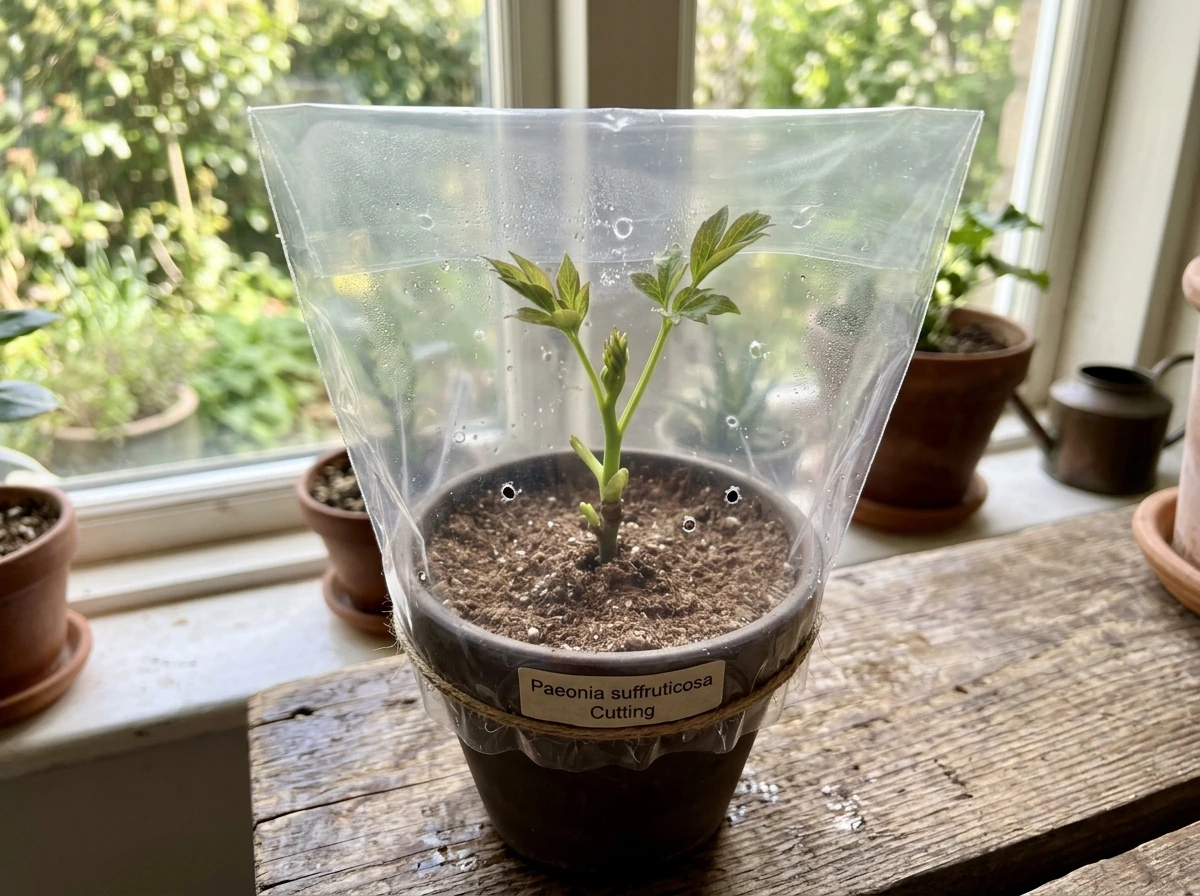
Moisture management during rooting is a balancing act. The medium should stay consistently moist but never wet. For tree peony cuttings, enclosing the pot in a clear plastic bag or placing a humidity dome over it helps maintain the high humidity that reduces moisture loss through the leaves. Vent the bag or dome briefly every few days to prevent fungal buildup. Check the medium every two to three days and mist if the surface has dried out, but never let the medium become waterlogged.
Temperature
Peonies are cool-season plants and rooting happens best at moderate temperatures. For tree peony cuttings, aim for air temperatures between 65 and 75 degrees Fahrenheit. Bottom heat can help initiate callus formation at the cutting base, so a seedling heat mat set to around 70F beneath the pot is a worthwhile tool if you have one. For herbaceous divisions planted in fall, the goal is to get them into the ground while soil temperatures are still above 40F, giving roots a chance to begin knitting into the surrounding soil before hard freeze.
Protection during establishment
For outdoor divisions planted in fall, a light mulch layer of 2 to 3 inches of straw or shredded leaves helps moderate soil temperature swings without smothering the eyes. Remove it in early spring once new growth is pushing up. For potted tree peony cuttings being overwintered, keep them in a cold but frost-free space like an unheated garage or cold frame. They need a cold period but shouldn't be frozen solid in a small container with no insulating soil mass around the roots.
How long does rooting actually take?
Tree peony cuttings typically develop callus at the base within a few weeks, but visible roots can take roughly two months under good conditions. That two-month timeline comes from research on leaf-bud cuttings in controlled environments, and it's a realistic minimum for home gardeners too. Don't yank the cutting out to check repeatedly. The best sign that roots are forming is when the cutting shows new top growth or resists a very gentle tug upward. If it stays firm in the medium after 8 to 10 weeks, roots are likely there.
For herbaceous peony divisions planted in fall, root establishment happens underground over fall and winter, and you typically won't see visible signs of success until spring when eyes push new shoots. That's normal. Patience here is not optional.
Troubleshooting common failures
Rot at the base of cuttings or on divisions
This is the most common problem and it almost always comes down to two things: overly wet medium and poor airflow. Peonies are highly susceptible to botrytis and other fungal rots, especially on damaged cut surfaces. If you see the base of a tree peony cutting turning black or a division going mushy, remove the affected material immediately. Cut back to clean tissue, dust again with sulfur or a fungicide powder, let the surface air-dry for an hour or two, and reinsert into fresh, dry medium. Also check that your pot drains freely and that you're not misting too heavily or too often.
No roots forming after two or three months
If a tree peony cutting hasn't shown any root development after 10 to 12 weeks, the most likely culprits are: no rooting hormone used, cutting taken at the wrong phenological stage (too woody or too soft), temperatures too cool or too variable, or a stem that was already stressed or diseased when taken. Unfortunately, by this point, recovery is unlikely. Note what you did and adjust for your next attempt. The research is clear that phenological stage (when in the season you cut), hormone treatment, and substrate all interact to determine success, so if one factor was off, it likely affected the outcome.
Buds dying back or no new shoots from divisions
If you planted herbaceous divisions in fall and see no shoots emerging by mid-spring, first check planting depth. Eyes planted more than 3 inches deep often fail to push through, especially in heavy clay soils. Dig carefully and check whether eyes are present but seem stalled. If the soil is compacted or waterlogged, drainage is the culprit and you'll need to improve it before replanting. If eyes are sitting very shallow and the crown is exposed, the division may have heaved out over winter, something a light mulch layer prevents.
Fungal issues on leaves or stems
Gray mold (botrytis) is the number one disease threat to peonies at any stage. It appears as a grayish-brown fuzzy mold on stems, buds, or base tissue. Prevention is genuinely easier than cure: ensure good airflow around plants, avoid overhead watering, remove any dead or damaged tissue promptly, and don't leave mulch piled against the crown. If you spot it early, remove affected tissue, apply a copper-based fungicide, and improve air circulation.
Dieback on tree peony cuttings after they seemed to root
Sometimes a cutting shows top growth, then dies back suddenly. This is often because the root system is still too small and fragile to support rapid shoot growth, especially if the cutting was moved into a brighter or drier environment too quickly. Move new tree peony cuttings into more light gradually over a week or two, and keep the medium consistently moist during this transition. Don't fertilize yet. Let the root system bulk up before asking the plant to put on a lot of new growth.
Transplanting to the garden and long-term care to bloom
Choosing the right site
Peonies are long-lived plants that resent being moved once established, so choosing the right spot matters more than almost anything else. They need at least 6 hours of direct sun per day, well-drained soil, and space away from competing tree and shrub roots, which the American Peony Society specifically flags as a cause of poor performance. Avoid planting under or near large trees. A spot with morning sun and some afternoon shade is fine in hot climates (Zone 7 and warmer), but in cooler zones, full sun is better.
Soil prep and spacing
Before transplanting, work the planting area to about 12 to 18 inches deep and incorporate compost to improve both fertility and drainage. Peonies don't do well in compacted or waterlogged soil. Space plants at least 3 to 4 feet apart to allow for airflow, which also helps prevent the fungal issues they're prone to. For tree peonies, 4 to 5 feet of spacing is more appropriate given their eventual size.
Hardening off potted cuttings before planting
Tree peony cuttings that have rooted in pots indoors or in a greenhouse need to be hardened off before going into the garden. This means moving them to a sheltered outdoor spot for increasing amounts of time each day over one to two weeks, gradually exposing them to wind and outdoor light levels. Skipping this step causes rapid wilting and sometimes collapse of stems that developed in protected conditions. Take your time here. A week of hardening off is worth far more than the rush to plant.
Watering, fertilizing, and first-year expectations
Water newly transplanted peonies consistently through their first season, especially during dry spells. They're not drought-tolerant until fully established, which takes two to three years. Don't over-fertilize in year one. A light application of a balanced granular fertilizer in early spring is enough. High-nitrogen fertilizers push leafy growth at the expense of root development and can worsen disease issues.
On blooms: be patient. Herbaceous peony divisions typically take two to three years to produce their first proper bloom. Tree peony cuttings can take even longer, sometimes three to five years from a rooted cutting. The first year's job is root establishment, not flowering. If you see buds forming on a very young division, it's actually worth pinching them off to redirect energy into root growth. I know that feels counterintuitive, but the plants that skip early blooming almost always outperform those that flower too soon.
A quick-reference summary for each propagation method
| Factor | Herbaceous Peony (Crown Division) | Tree Peony (Stem Cutting) |
|---|---|---|
| Best timing | Late August to October (fall) | June to July (early summer) |
| What you need | Crown section with eyes and roots | 4 to 6 inch softwood stem with nodes |
| Rooting hormone | Not needed | IBA rooting powder or gel (essential) |
| Planting depth | Eyes 2 to 3 inches below surface | 1 to 2 nodes below surface of medium |
| Rooting time | Establishes over fall/winter | Callus and roots in roughly 2 months |
| First bloom | Year 2 to 3 | Year 3 to 5 |
| Biggest failure risk | Eyes too deep or too shallow | No hormone use, wrong timing, rot |
| Zone timing note | Colder zones: divide by mid-September | Colder zones: cut mid-June or later |
Growing peonies from stem material is genuinely achievable, this section shows how to grow peonies from stem material, but it asks for realistic expectations and attention to the specific needs of each peony type. If you're working with herbaceous peonies, crown division in fall with well-chosen sections gives you very good odds. If you're tackling tree peony cuttings, the right timing, a quality rooting hormone, and a well-drained rooting medium are your three non-negotiables. Either way, the payoff is a plant that's entirely yours from the start, and a peony that can outlive you if you get the establishment right. how to grow peonies from roots
FAQ
Can I root peonies from a stem clipping in a pot and then plant it later?
Yes, you can start in a pot, but only as a temporary holding step. For herbaceous peonies, divisions typically establish better when planted out in fall rather than staying in a container long term. If you must pot temporarily, use a mix with excellent drainage and keep the pot outdoors or in an unheated area so it still gets winter cold; bring-in or warming the container often leads to weak, non-rooting growth.
What happens if I accidentally take a stem-only cutting from an herbaceous peony?
If you try to propagate herbaceous peonies with stem-only cuttings, you should expect near-zero success because peonies need crown eyes and attached root tissue to resume growth. The “stem” parts that sometimes survive are usually attached to a small crown section without you noticing. Double-check that your division includes visible eyes and at least a fleshy root section.
How can I tell if my division has viable eyes before planting?
For herbaceous divisions, look for eyes that are visibly present when you rinse and separate the clump, the small reddish or pink nubs at the crown where stems emerge. Planting depth is usually more forgiving than people think, but if those eyes are buried too deep (especially in heavy soils) they may not push through the following spring. Recheck depth before you mulch, and avoid adding thick organic layers over the crown.
When should I fertilize peony divisions or rooted cuttings?
For herbaceous peonies, fertilizer timing matters. Avoid feeding the division right after fall planting, and don’t use high nitrogen in the first growing season. If you want to feed, wait until early spring after growth begins, then apply a light, balanced dose. For tree peony cuttings, skip fertilizer until the rooted cutting has stable new growth, otherwise you risk encouraging rot or top dieback.
Does planting depth change for grafted tree peonies?
Yes, but it changes the “stem” concept. If your peony is grafted (common for some tree peonies), you must plant the graft union deeper so the scion can eventually build its own roots. Keep the graft area from sitting at the surface, because that increases the chance the graft fails or produces uneven growth.
Do I need to sanitize my tools between peony divisions or cuttings?
It’s usually better to treat tools and wounds as part of disease prevention. Clean your knife or spade between cuts, because multiple pieces can carry botrytis spores from one plant to another. After dividing, let cut surfaces air briefly if they look wet, then re-dust, especially if you handled roots in humid conditions.
How do I choose the right stem stage for tree peony cuttings if I’m unsure of softwood?
Not exactly, because “softwood” stage and weather-based growth aren’t identical. If the stems are too soft, they may collapse before callus forms, and if too woody, they may refuse to root. Aim for shoots that bend slightly but still have some firmness, and check that nodes are present and the base tissue looks healthy rather than waterlogged or damaged.
How humid should the rooting setup be, and how often should I mist?
Overmist is a common failure mode for tree cuttings, because soggy media removes oxygen at the base and boosts rot. Instead of frequent misting, rely on humidity protection (bag or dome) plus a well-draining medium. Vent regularly, and mist only if the surface is drying out, not when it already looks wet.
What rooting mix texture should I aim for to prevent rot?
For potting medium, the key is moisture without waterlogging, not just “light soil.” Avoid garden soil and heavy potting mixes that stay saturated after watering. If you squeeze a handful, it should crumble rather than release a steady stream of water. That texture helps prevent blackening at the cutting base and mushy divisions.
Do I really need to harden off rooted tree peony cuttings before planting outside?
Hardening off is especially important for tree peony cuttings that rooted in protected indoor or greenhouse conditions. Move them to outdoor shade first, then gradually increase light and add wind exposure over 7 to 14 days. Do not fertilize during hardening off, and keep the rooting medium evenly moist so the plant doesn’t die back from stress.
My herbaceous division started with leaves but stalled, what should I check first?
If your division produces leaves but no strong growth the first year, that can happen when the eyes were shallow, crown was disturbed, or roots were damaged during lifting. Check that the eyes are not exposed or heaved, improve drainage if the site stays wet, and resist the urge to dig and replant again immediately. Peonies often correct themselves in the next season once root establishment catches up.
Next Article
What Do Peonies Need to Grow Well: A Step-by-Step Guide
Step-by-step peony growth needs: sun, soil drainage, watering, feeding, chill, planting depth and a seasonal care calend