Peonies need six things to grow and bloom reliably: at least 6 hours of direct sun daily, well-drained soil, consistent but moderate moisture, a cold winter with at least 6 weeks below 40°F, correct planting depth (blank" rel="noopener noreferrer">eyes just 1 to 2 inches below the surface), and very little nitrogen fertilizer. Get those six things right and peonies are genuinely low-maintenance, long-lived plants. Get even one of them wrong and you can end up with a plant that looks healthy but refuses to bloom for years. This guide walks through each requirement in detail so you know exactly what to do and why.
What Do Peonies Need to Grow Well: A Step-by-Step Guide

Harriet Whitmore
24 Mar 2026
The basics: what peonies actually need
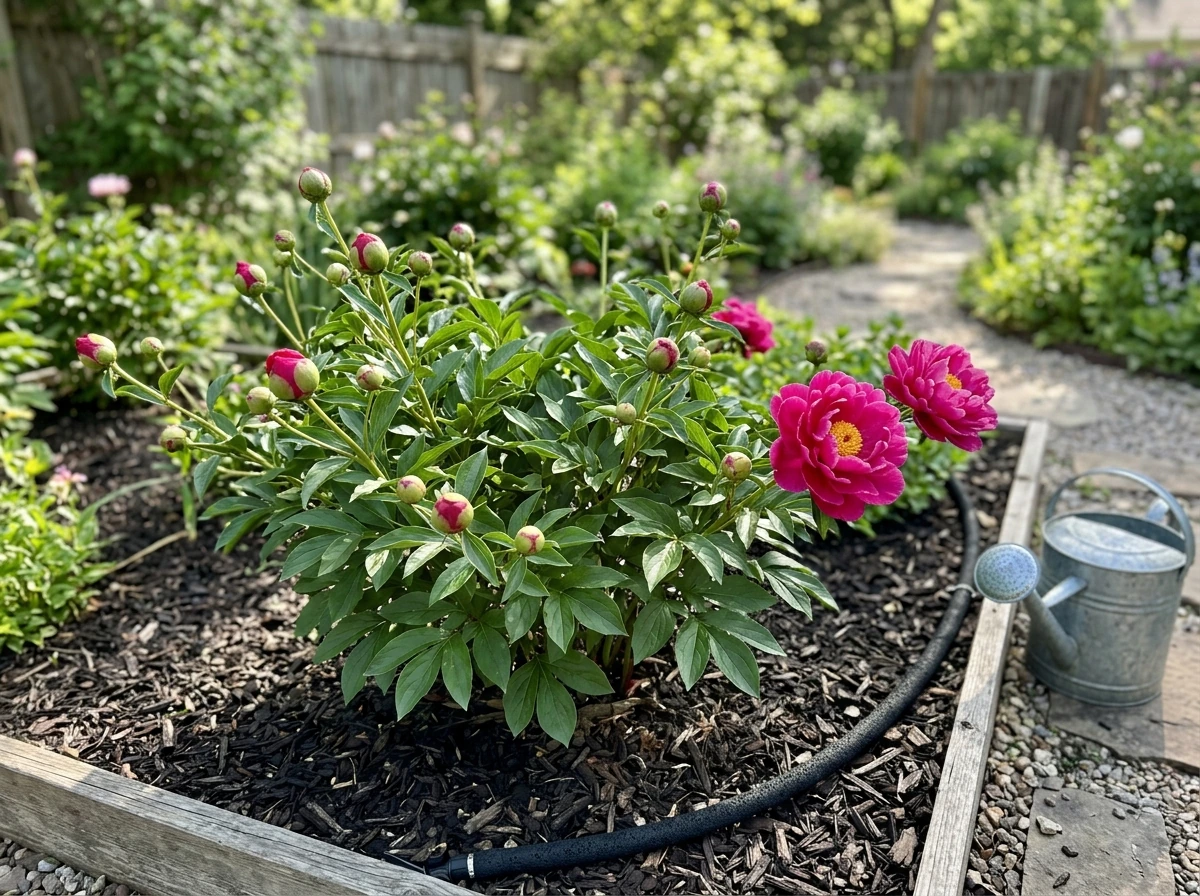
Peonies are not difficult plants, but they are specific plants. They evolved in climates with cold winters and warm summers, so they have built-in requirements that you can not work around by being enthusiastic or generous with water and fertilizer. In fact, over-watering and over-fertilizing are two of the most common ways gardeners accidentally prevent their peonies from blooming. The plant puts on fine foliage and looks great going into summer, then delivers nothing in spring. The fix is almost always one of those six fundamentals listed above.
There are three main types of peonies home gardeners grow: herbaceous peonies (which die back to the ground each winter), tree peonies (woody shrubs that keep their stems), and Itoh or intersectional hybrids (a cross between the two). Their requirements are similar in most ways, but there is one important difference when it comes to light. This guide focuses primarily on herbaceous peonies since they are what most home gardeners are planting, but the light distinction is worth knowing upfront.
Light and soil: the two things that matter most
Getting the light right
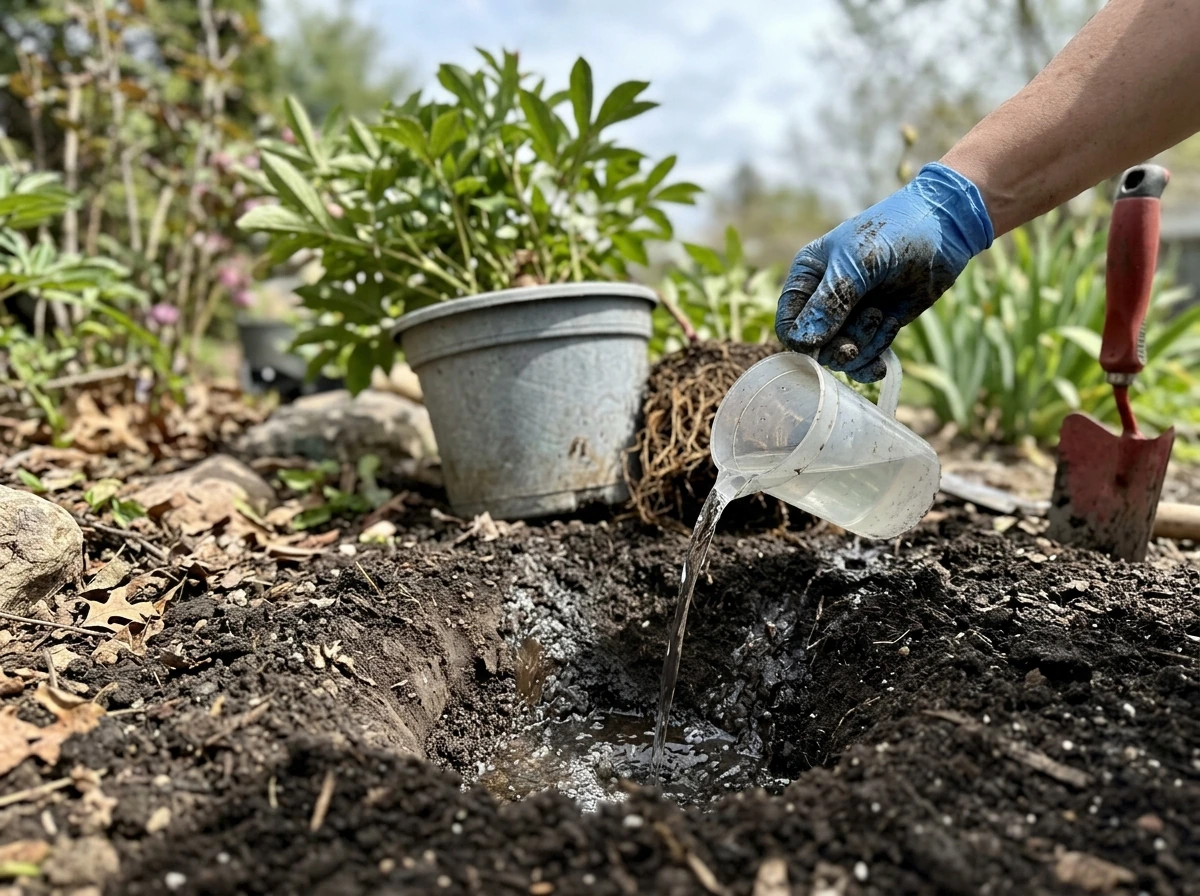
Herbaceous peonies and intersectional hybrids want a sunny location with good air movement. Full sun is ideal, meaning 6 to 8 or more hours of direct sunlight per day. They will tolerate part shade, somewhere around 5 to 6 hours, but you will get noticeably fewer blooms. If your peony is sitting in a spot that gets 3 to 4 hours or less, do not expect flowers. Tree peonies are the exception: they can handle light shade or a spot that does not get a full day of sun, which makes them useful under the canopy of a high-branched tree.
Good air circulation around the plant is not just a bonus, it actively reduces the risk of fungal disease. Avoid planting peonies in tight corners, right against fences, or crowded by other shrubs. A little breathing room goes a long way.
Soil structure and drainage
Drainage is non-negotiable. Peony roots sitting in wet soil, at any time of year, is a recipe for rot and disease. The soil must drain freely after rain or irrigation. Clay soils can actually be quite fertile and peonies can do well in them, but compacted clay that holds water is a serious problem. If your yard has clay soil, loosen it deeply, work in organic matter like compost to improve structure, and make sure water can actually move through before you plant.
If you have genuinely poorly drained soil, consider raising the bed by 6 to 8 inches so roots sit above the waterlogged zone. Planting in a low spot that collects rain or near a downspout is one of the fastest ways to lose a peony to Phytophthora blight, a water-mold disease that thrives in exactly those conditions.
Watering, drainage, and feeding
How much water peonies actually need
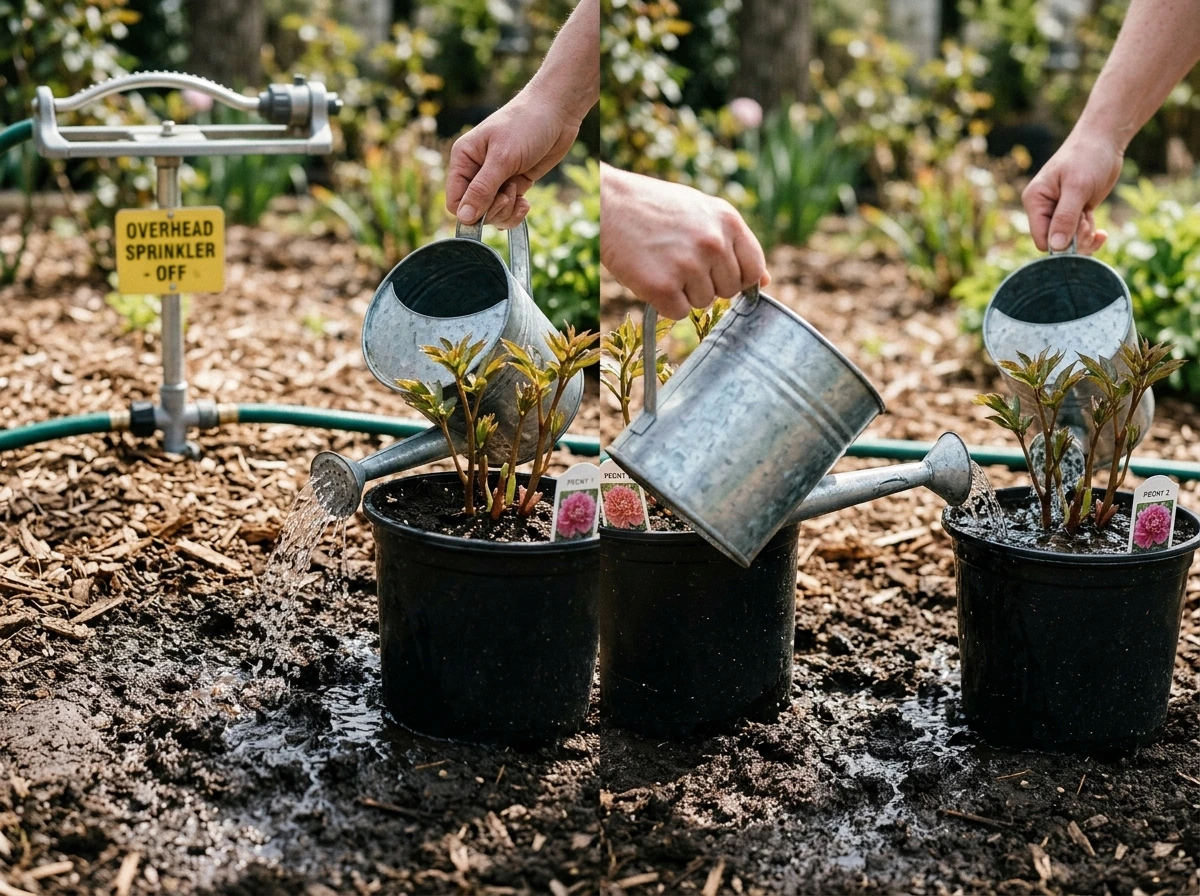
Peonies do not want a lot of water. What they want is even, consistent moisture rather than swinging between bone dry and waterlogged. A good rule of thumb once they are established: water thoroughly and deeply once every 10 to 14 days. Once a peony has been in the ground for two or three years and developed a deep root system, it becomes quite drought-tolerant and really does not need much supplemental watering except during prolonged dry spells.
Always water at soil level, around the drip line of the plant. Never use overhead irrigation or a sprinkler that wets the foliage. Wet leaves are an invitation to botrytis (gray mold) and other fungal problems. A drip line or soaker hose is ideal.
Fertilizing without overdoing it
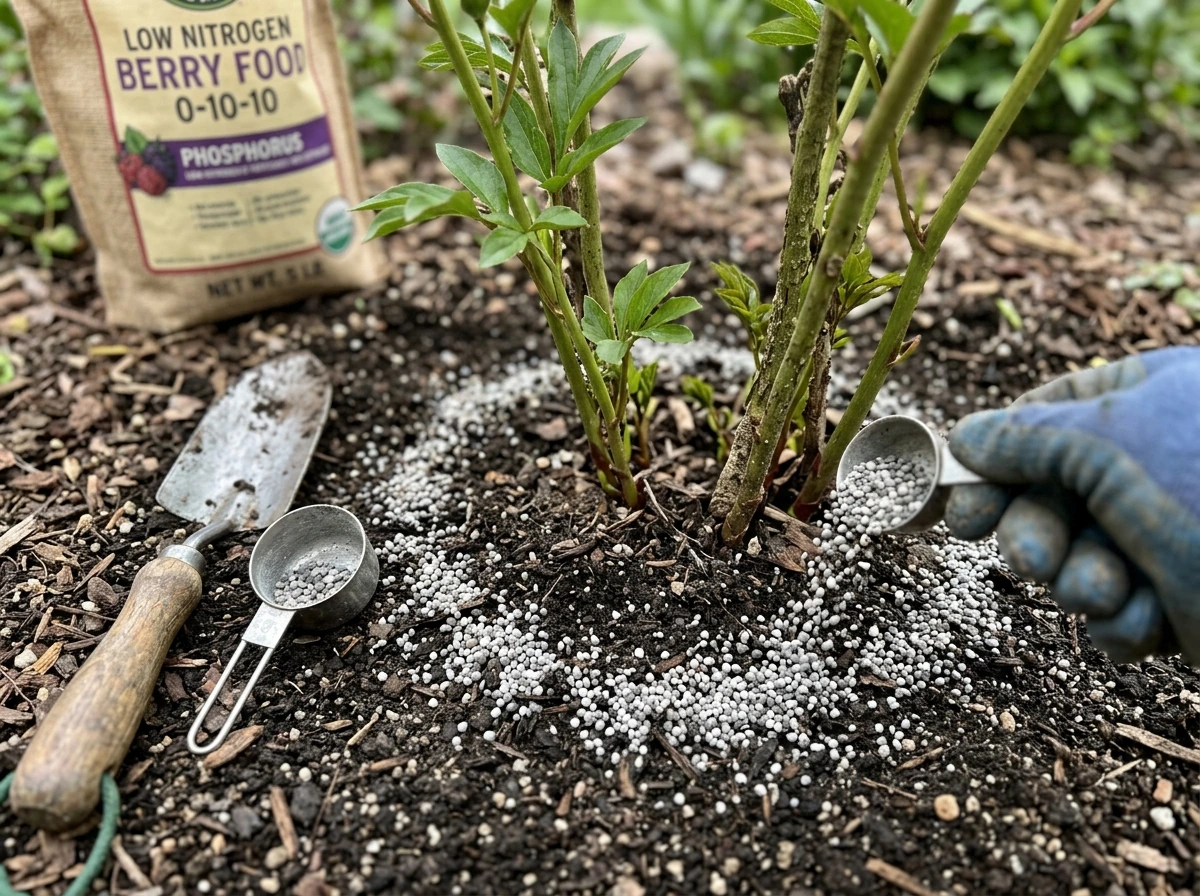
This is where a lot of well-meaning gardeners go wrong. Peonies do not need much fertilizer, and too much nitrogen is actually one of the main reasons they fail to bloom. Excess nitrogen pushes lush leafy growth at the expense of flowers. If you have been piling on a balanced fertilizer or using a high-nitrogen lawn fertilizer anywhere near your peonies, that is likely the culprit.
When you do fertilize, use a low-nitrogen, phosphorus-forward formula (something like a 5-10-10 or similar) and apply it in early spring as shoots emerge, and optionally again after blooming. Critically, do not dump fertilizer right on top of the crown or around the roots. Work amendments into the soil a few inches below where the tubers sit, so the deep roots grow into that nutrient zone over time rather than the crown getting a chemical hit right at the surface.
Cold winters, chill hours, and seasonal timing
If there is one thing that surprises new peony growers, it is how much peonies depend on cold. They need a genuine winter with at least 6 weeks of temperatures below 40°F to trigger the dormancy cycle that sets them up to bloom in spring. That translates to roughly 500 to 1,000 hours below about 45°F, depending on the source and variety. This is why peonies thrive in USDA zones 3 through 7 and struggle in zones 8 and warmer.
If you want the best chance of success, follow a step-by-step approach to how to grow peonies in your own yard peonies thrive in USDA zones. The warmer your winters, the less reliably they bloom, and in frost-free climates they often will not bloom at all.
If you are gardening in a borderline climate like zone 8, you are not completely out of luck, but you need to choose varieties specifically bred or selected for low-chill tolerance, and even then results can be inconsistent. For most gardeners in the northern two-thirds of the US and similar temperate climates, this is not a concern at all because winters naturally provide what peonies need.
Timing your planting also matters. The best time to plant or divide peonies is late summer to early fall, typically late August through September in most of the US. This gives roots several weeks to establish before the ground freezes, which helps the plant get off to a strong start the following spring. Spring planting is possible but generally produces slower establishment and often no blooms in year one. The American Peony Society notes that spring planting is not recommended for peonies and that fall planting is preferred as long as the soil is not unfrozen Spring planting is possible but generally produces slower establishment and often no blooms in year one.
Planting depth, spacing, and handling the roots
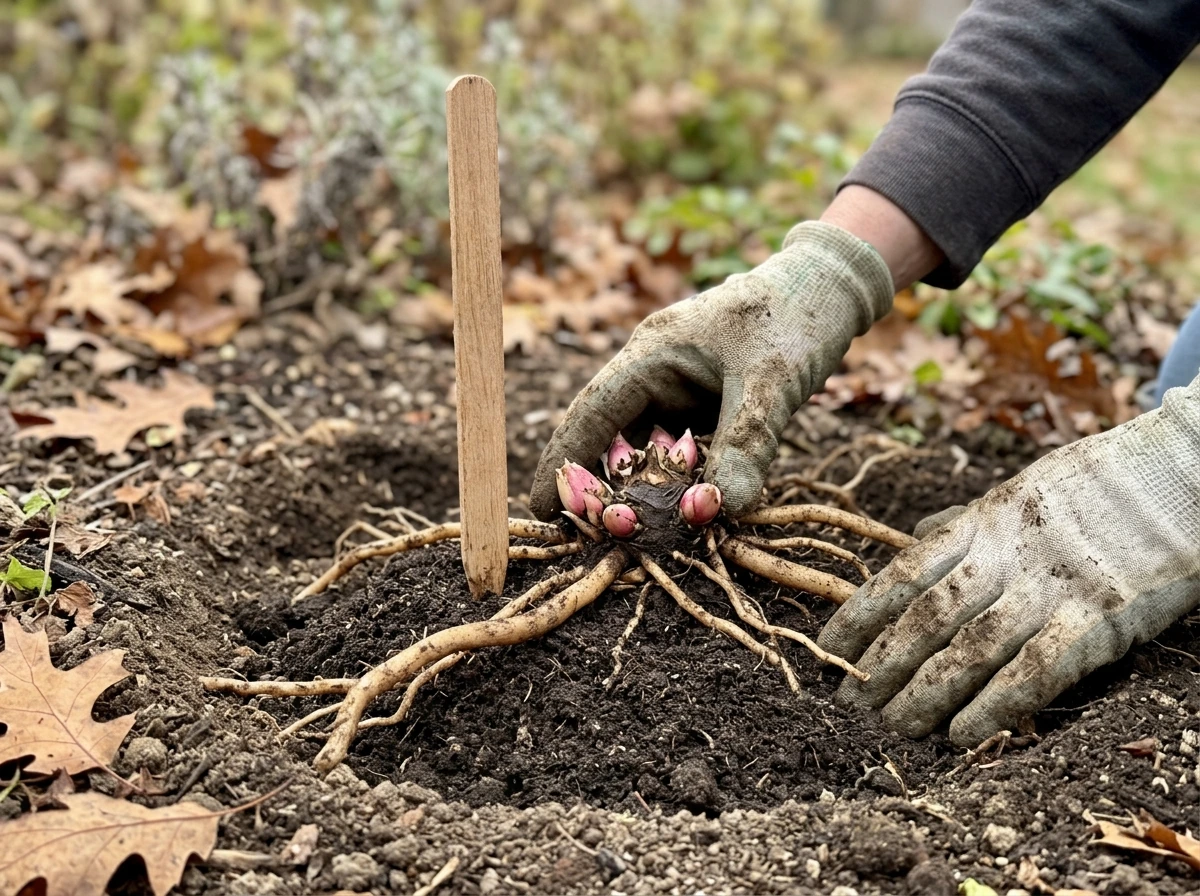
Planting depth is probably the single most important thing to get right with peonies, and it is where even experienced gardeners sometimes make a costly mistake. Plant herbaceous peony eyes (the reddish buds on the root) 1 to 2 inches below the soil surface. That is it. Not 4 inches, not 6 inches. Just 1 to 2 inches. In warmer climates in the South, aim for just 1 inch under the surface. In colder northern zones, 1.5 to 2 inches is appropriate.
Why does this matter so much? Because eyes that are buried too deep do not bloom. It is that direct. The plant will grow, look healthy, produce foliage, and just sit there for years without a single flower. If you have a peony that has not bloomed in three or four years and you planted it yourself, go back and check the depth before doing anything else. Gently dig down to confirm where the eyes actually are. If they are more than 2 inches down, replanting at the correct depth in early fall is usually the fix.
For spacing, give herbaceous peonies at least 3 feet of space between plants, and 4 feet is better. Crowded plants have poor air circulation (which invites disease) and compete for light and nutrients. Peonies planted with enough room around them outperform crowded plants significantly.
When handling bare-root divisions, keep the roots moist and cool until planting. Once you have the bare-root peony roots ready, you can follow this guide on how to grow peonies from roots to plant them at the right depth and timing. Do not let them dry out, and do not soak them in water for extended periods either. Plant them promptly. A division with 3 to 5 eyes will typically bloom within 2 to 3 years. Smaller divisions with only 1 to 2 eyes may take an extra year.
Why peonies struggle: the most common problems and fixes
Most peony problems come back to the fundamentals above. Here are the most common failure patterns and what to do about them.
| Problem | Most Likely Cause | Fix |
|---|---|---|
| Plant grows well but never blooms | Eyes planted too deep (more than 2 inches) | Dig and replant at correct depth (1–2 inches) in early fall |
| Buds form but turn brown and blast before opening | Botrytis gray mold, often from wet or humid conditions | Improve air circulation, stop overhead watering, remove affected buds and stems |
| Fewer blooms every year despite good growth | Too much nitrogen fertilizer, or increasing shade from nearby trees | Switch to low-nitrogen fertilizer; evaluate and improve sun exposure |
| Stems wilt and collapse at the base | Phytophthora blight from poor drainage or waterlogged soil | Improve drainage immediately; avoid overwatering; remove and destroy affected material |
| No blooms after moving or dividing the plant | Plant too young or too small (fewer than 3 eyes), or planted too recently | Wait 2–3 years post-division; ensure division had at least 3 eyes |
| Crown rot or mushy roots | Wet site or soil that stays saturated | Relocate to a well-drained site or raise the bed; do not plant in low spots |
| Healthy plant, warm climate, still no blooms | Insufficient winter chill hours | Choose low-chill varieties; accept limitations in zone 8+ |
Botrytis is the most common disease issue, and it shows up as grayish fuzzy spores on browning buds and blighted leaves, usually in cool, wet spring weather. The best management is preventive: good air circulation, no overhead irrigation, and cutting back and removing all plant debris in the fall so the fungal spores do not overwinter in the garden bed.
A simple care calendar from planting to first bloom
This calendar is built around herbaceous peonies planted as bare-root divisions in fall, which is the ideal scenario. If you are working with an established plant, just pick up from the relevant season.
| Season / Timing | What to Do |
|---|---|
| Late August – September (Year 1) | Plant bare-root divisions with eyes 1–2 inches below soil surface. Choose a full-sun site with excellent drainage. Water in well and allow to establish before frost. |
| October – November (Year 1) | Mulch lightly (2–3 inches) after the ground cools to protect from frost heaving, but do not pile mulch over the crown. Remove mulch in early spring. |
| Winter (Year 1) | No action needed. Cold temperatures are doing the essential work of chilling the plant and setting it up for bloom. |
| Early Spring (Year 2) | Remove winter mulch as shoots emerge. Apply a low-nitrogen fertilizer (5-10-10 or similar) worked into the soil a few inches away from the crown, not directly on it. |
| Spring (Year 2) | Water at soil level if dry. Watch for botrytis on emerging buds. Do not water overhead. Stake tall varieties if needed before they flop. |
| Late Spring / Early Summer (Year 2) | Most plants will not bloom in year 1 or 2. Do not be discouraged. Enjoy the foliage and let the plant build energy. Remove any faded blooms if they do appear to prevent seed set. |
| Summer (Year 2 onward) | Water every 10–14 days during dry spells. No heavy fertilizing. Keep the area free of weeds that compete for nutrients and crowd airflow. |
| Fall (Year 2 onward) | After the first frost blackens the stems, cut herbaceous peonies back to just above soil level. Remove all debris from the garden bed to reduce disease carryover. Do not compost diseased material. |
| Year 3 – 4 | This is when most plants hit their stride. Expect significantly more blooms. Flower count continues to increase through years 3 and 4 as the root system matures. |
| Ongoing (every 10–15 years) | Divide congested clumps in late August or September if bloom quality declines. Replant divisions at correct depth in refreshed soil. |
One thing worth saying plainly: peonies are slow to reward you, and that catches a lot of new growers off guard. A freshly planted division that produces no blooms in year one or two is completely normal. The plant is building roots, and the payoff is a long-lived perennial that can bloom reliably for decades once established. I have seen peonies thriving in the same spot for 50 years or more. Getting the fundamentals right in the beginning is the whole game.
A quick comparison: herbaceous vs. tree peonies for home gardens
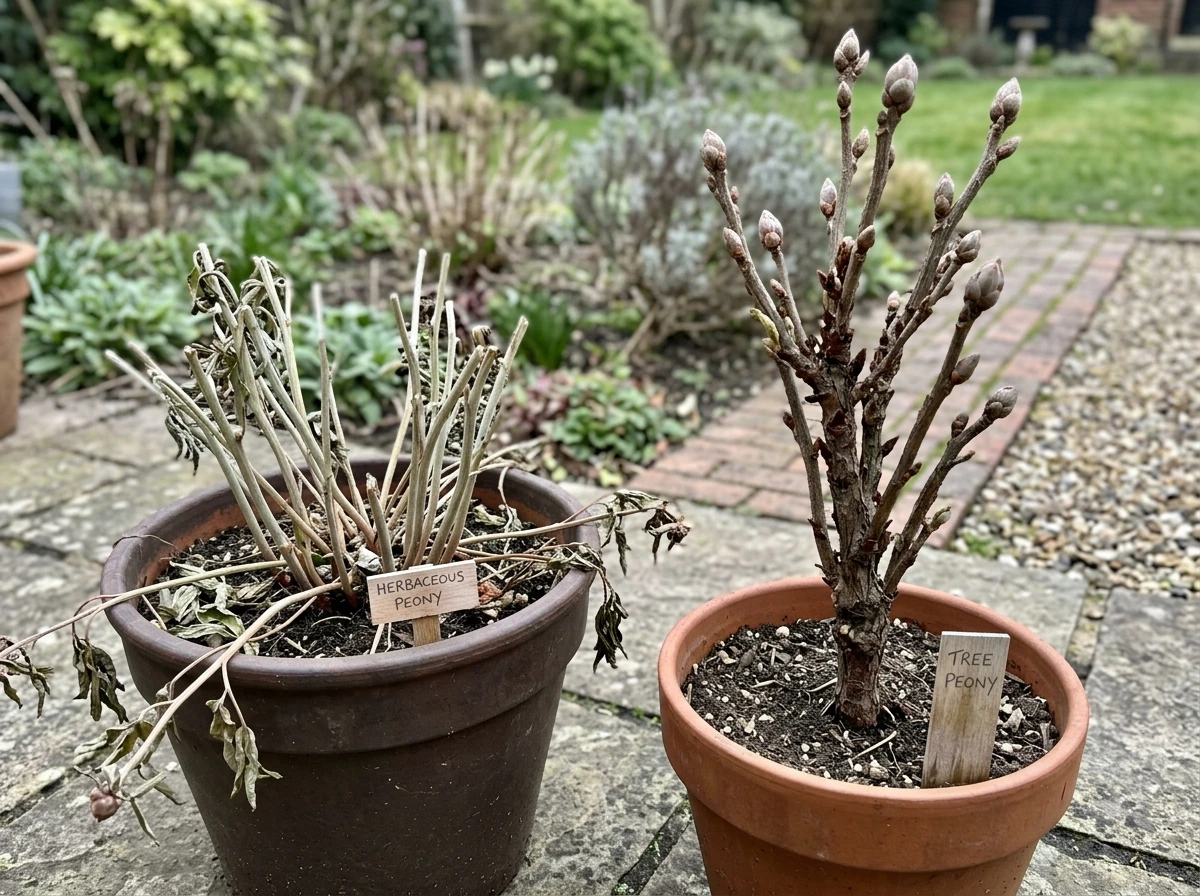
If you are deciding which type of peony to grow, here is a straightforward breakdown of how they compare on the needs covered in this guide.
| Requirement | Herbaceous Peony | Tree Peony |
|---|---|---|
| Sun needs | Full sun preferred (6–8+ hrs) | Full sun to light shade (4–6 hrs acceptable) |
| Winter hardiness | Zones 3–7 reliably; zone 8 with challenges | Zones 4–9 depending on variety |
| Chill requirement | High (6+ weeks below 40°F) | Moderate (less demanding than herbaceous) |
| Planting depth | Eyes 1–2 inches below soil surface | Graft union 4–6 inches below surface |
| Die-back in winter | Completely (re-emerges from roots) | No (keeps woody stems year-round) |
| Time to first bloom | 2–3 years from bare root | 2–4 years; slower to establish |
| Soil/drainage needs | Excellent drainage essential | Excellent drainage essential |
| Maintenance level | Low once established | Low, but more care during establishment |
For most home gardeners, herbaceous peonies are the easier and more forgiving starting point. They are widely available as bare-root divisions, establish reliably, and deliver spectacular spring blooms once they hit their stride in years three and four. Tree peonies are worth exploring once you have a feel for peony care generally, or if you specifically need a plant for a partially shaded spot. For a deeper look at the hands-on planting process, check out the guides on how to grow peonies from roots and how to grow peonies from stem cuttings.
FAQ
What happens if my peony gets less than 6 hours of sun?
Yes, they can, but only up to a point. If the peony gets fewer than about 5 to 6 hours of direct sun, expect reduced flowering. Under 3 to 4 hours, flowers are unlikely even if the plant looks healthy.
How do I know if my soil is too wet for peonies?
Overwatering is most likely when soil stays wet, not when you water occasionally. Check drainage by digging a hole and refilling it, if it drains very slowly after rain, you may need to amend or raise the bed before planting.
Should I water peonies daily or only during dry spells?
Peonies generally want a “less often, more deeply” approach once established. Water thoroughly at soil level, then wait until the next deep watering window (often every 10 to 14 days, depending on heat and rainfall) instead of frequent light watering.
Can I use sprinklers or overhead watering on peonies?
Avoid soaking the crown. Use drip irrigation or a soaker hose aimed at the drip line, and keep leaves dry. Overhead watering can increase botrytis risk, especially in cool, wet spring weather.
My peony has foliage but no flowers, what should I check first?
If they are in the ground, recheck planting depth first. For herbaceous peonies, eyes that sit more than about 2 inches below the surface often leads to years of foliage without blooms. Replant in late summer to early fall to correct depth.
Why do peonies grow leaves in warm climates but do not bloom?
Skipping winter chill is a common reason peonies fail to bloom in warmer regions. Peonies need a true cold period (roughly 6 weeks below 40°F) to break dormancy, so in zone 8 results can be inconsistent unless you choose low-chill selections.
When is the best time to fertilize peonies, and when should I stop?
Fertilizer timing matters. If you use a low-nitrogen, phosphorus-forward fertilizer, apply when shoots emerge in early spring, and only consider a second feeding after bloom. Avoid late-season high nitrogen because it can encourage soft growth.
Will compost or manure help peonies bloom better?
Yes, but be careful with nitrogen sources near peonies. Lawn fertilizers, composted chicken manure, and rich feeds can be too nitrogen-heavy for peony flowering, especially if they are applied close to the crown.
Is it normal for peonies to look dead after planting?
It depends on the type. Herbaceous peonies are die-back plants and may not show above-ground growth until spring, so absence of shoots right after planting can be normal. Tree peonies keep woody stems, so prolonged dormancy with no new growth may indicate an issue like poor light or damage.
How do I measure correct planting depth for peony eyes?
Go by the eyes, not the whole tuber. For herbaceous peonies, plant with eyes 1 to 2 inches below the soil surface (about 1 inch in warmer southern conditions, closer to 1.5 to 2 inches in colder northern areas). If you planted too deep, correcting depth in early fall is usually the practical fix.
Can I divide peonies in spring instead of fall?
Wait until late summer to early fall for divisions if you want the best chance at blooms. Spring divisions can work, but they typically establish slower and may not flower in year one.
How much spacing do peonies need to bloom well?
Yes, and it is often the difference between flowers and failure. Target at least about 3 feet between herbaceous peonies, with 4 feet being better for airflow and light competition. Crowding can suppress blooms even when fundamentals are otherwise fine.
Next Article
When Do Begonias Start to Grow? Timing, Types & Planting Calendar
When do begonias start to grow: clear planting dates, timelines by type, and quick care fixes for reliable starts.