Chinese peony (Paeonia lactiflora) is one of the most rewarding perennials you can grow, but it does have a reputation for being fussy. Most of that reputation comes from one thing: gardeners planting it wrong and then waiting years for blooms that never come. Get the basics right from the start and this plant will outlive you, producing armloads of fragrant flowers every late spring with very little fuss. Here is exactly how to do it.
How to Grow Chinese Peony: Step-by-Step Planting Guide

Harriet Whitmore
24 Mar 2026
What Chinese peony needs to bloom
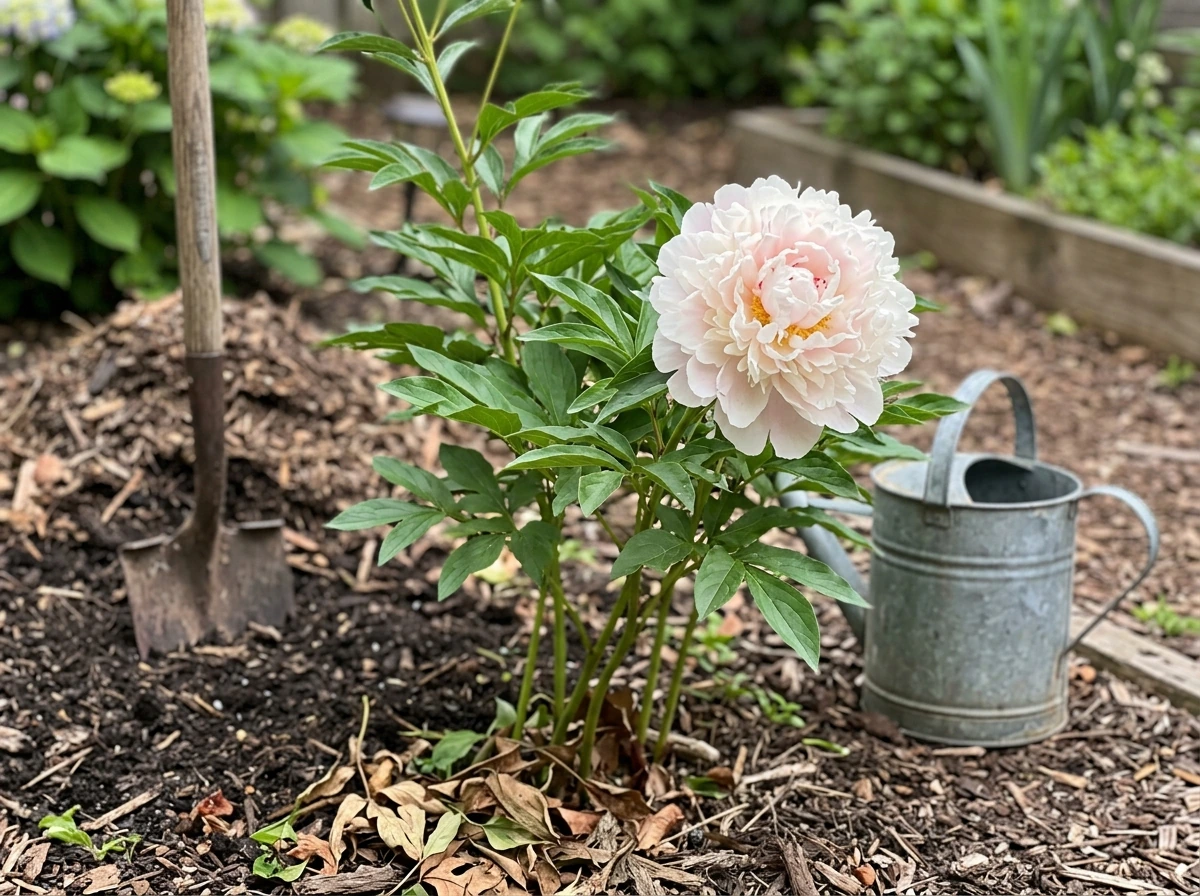
Paeonia lactiflora is a herbaceous perennial, meaning it dies completely back to the ground each fall and re-emerges from its root system in spring. That die-back is not a problem, it is part of the plant's design. The whole aboveground plant, stems and foliage included, goes away every year. What stays is a clump of thick, fleshy roots with buds (called "eyes") that store the energy for next year's growth.
The single most important thing Chinese peony needs in order to bloom is a genuine cold winter. This process is called vernalization, and it is non-negotiable. Without a sufficient cold period, the plant simply will not form flower buds in spring. This is why Chinese peony thrives in USDA Zones 3 through 8. Some cultivars are rated as cold-hardy as Zone 2a, surviving temperatures around -50°F (-45°C). The flip side: if you garden in a warm climate (Zone 9 and warmer), reliable blooming becomes very difficult because winters are not cold enough to trigger the dormancy cycle properly.
Beyond cold winters, Chinese peony needs full sun (at least 6 hours of direct sunlight per day), excellent drainage, and correct planting depth. Follow the tips in this peony planting guide for the best results when you start your plants correct planting depth. Those three factors, combined with the cold requirement, cover the vast majority of why peonies fail. Bloom time is late spring to early summer, typically May in most of the Northern Hemisphere, when buds swell and open into those big, lush flowers the plant is known for.
Choosing planting material and where to buy
You have three realistic ways to start Chinese peony: planting bare-root divisions, buying a container-grown plant, or growing from seed. Each has a different timeline and difficulty level.
| Method | Time to First Bloom | Difficulty | Best For |
|---|---|---|---|
| Bare-root division | 2–3 years | Easy | Most home gardeners; widely available in fall |
| Container-grown plant | 1–2 years | Easiest | Gardeners who want a head start; spring availability |
| Growing from seed | 4–5+ years | Hard | Patient enthusiasts; results vary widely from named cultivars |
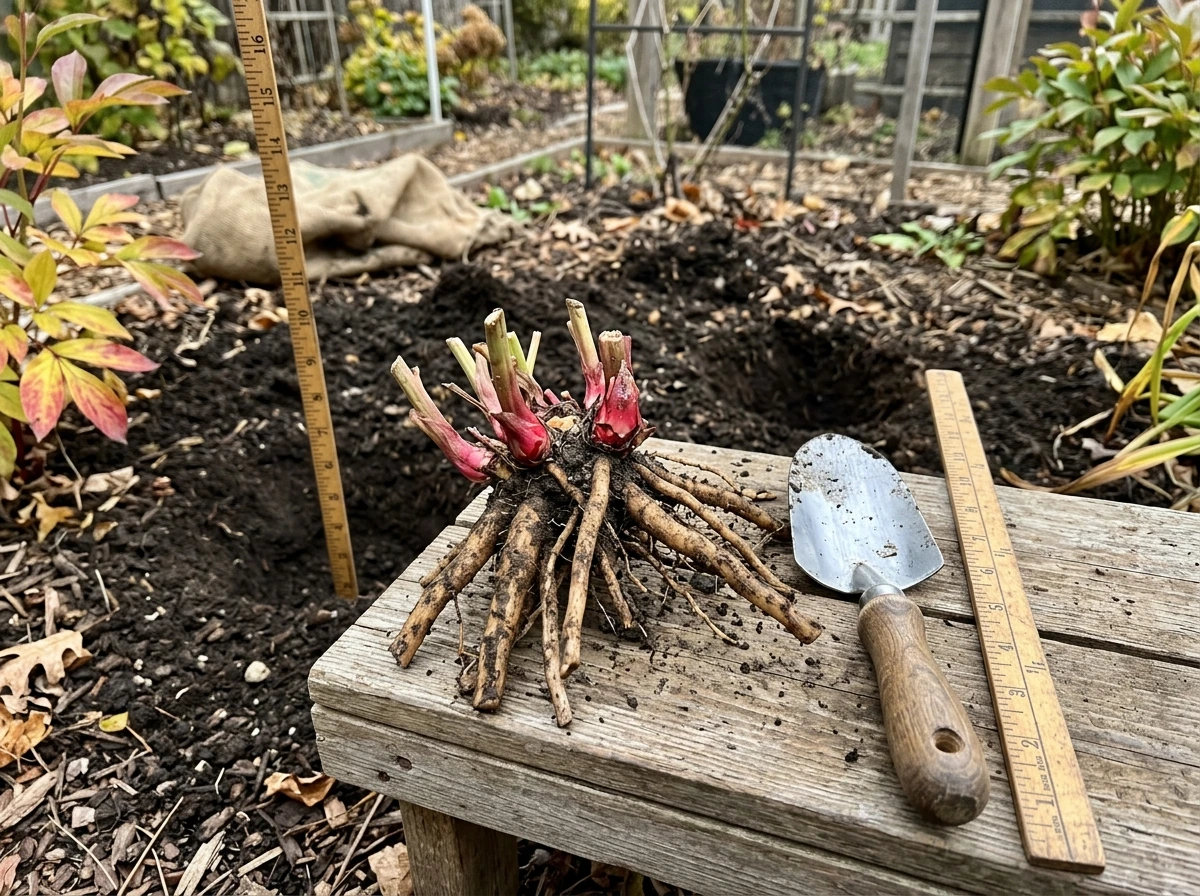
Bare-root divisions are the most common way to plant Chinese peony and what most online nurseries and garden centers sell in fall. A good division should have at least 3 to 5 healthy eyes (the pinkish-red buds on the root crown) and firm, fleshy roots with no soft or rotted sections. Avoid anything with mushy roots, shriveled tissue, or fewer than 3 eyes, those divisions take much longer to establish and often struggle.
Container-grown plants give you an established root system and sometimes a year or two of head start on blooming. They are a great option if you are buying in spring and want to plant immediately. The trade-off is cost: container plants are typically pricier than bare-root divisions.
Growing from seed is genuinely a long game. Seeds need a warm period followed by cold stratification, and even then germination is slow and unreliable. Seedlings from named cultivars will not come true to type, meaning you will not necessarily get the same flower form or color as the parent plant. For most gardeners, seed-starting is not worth the wait. Stick with divisions or container plants.
For sourcing, reputable mail-order perennial nurseries and the American Peony Society's member nursery list are good places to find named cultivars. Local garden centers often carry popular varieties in spring as container plants. If a friend or neighbor has an established clump, dividing it in early fall is a great (and free) way to get started.
When to plant and how deep to set it
The best time to plant Chinese peony is in early fall, roughly September through October in most of the Northern Hemisphere. Fall planting gives the roots time to settle in before the ground freezes, and the plant gets the cold period it needs right away. Spring planting works too, especially for container-grown plants, but fall-planted divisions generally establish more reliably and bloom sooner.
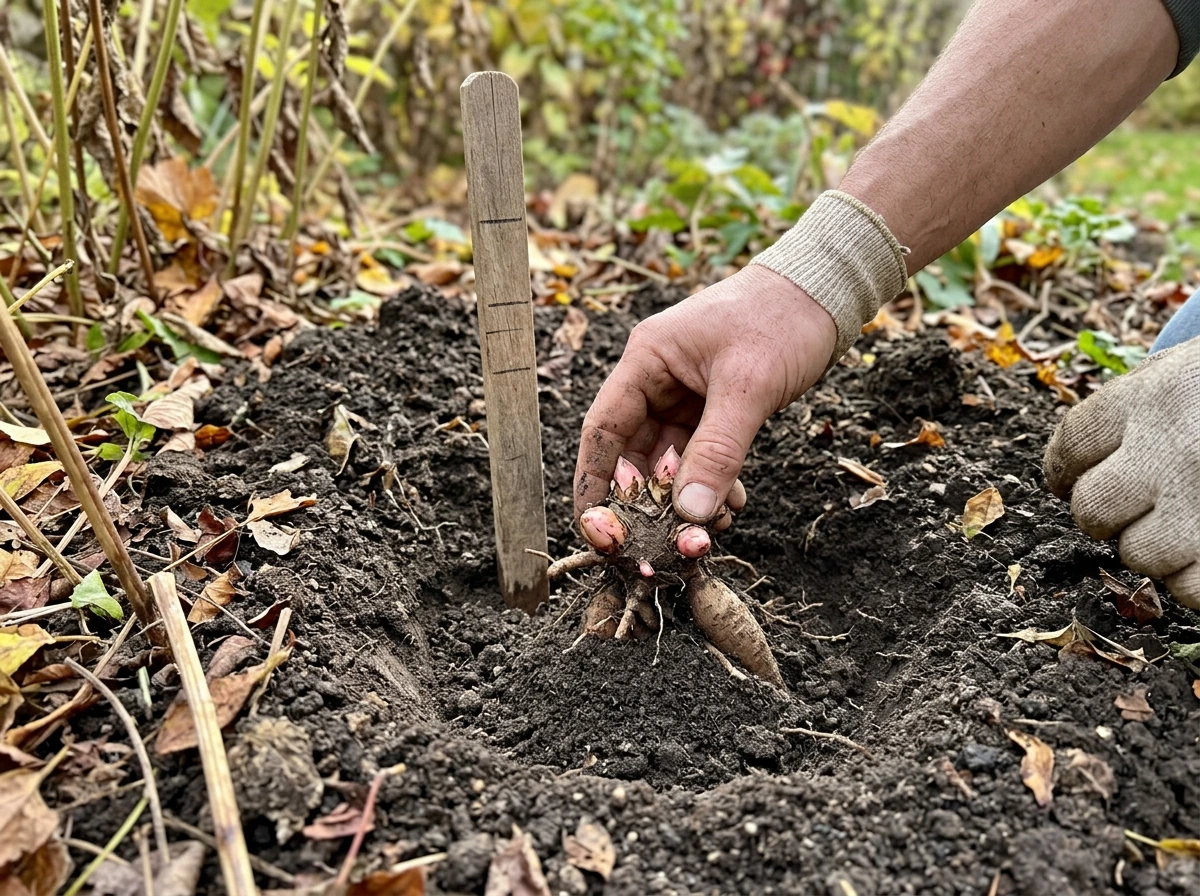
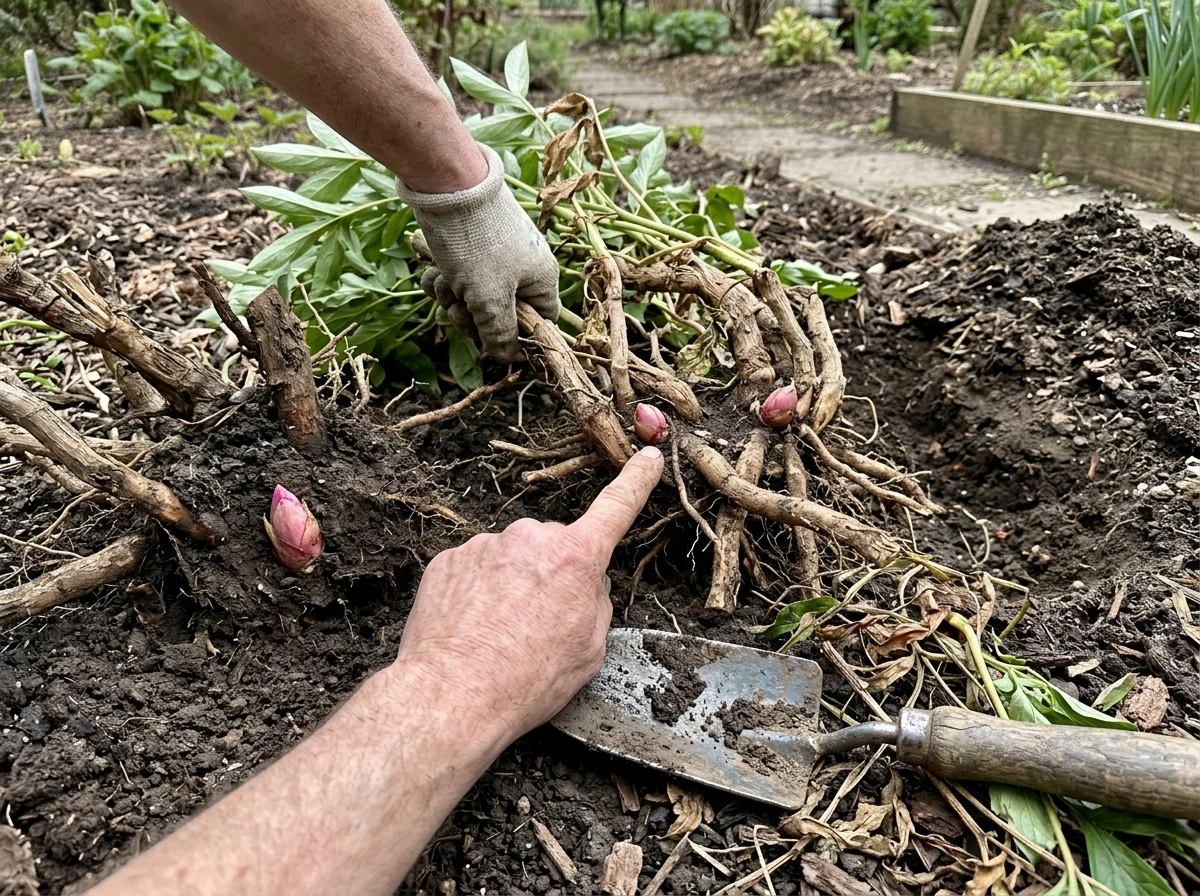
Planting depth is the single most common reason Chinese peony refuses to bloom. The eyes (buds) on the root crown need to be set just 1 to 2 inches below the soil surface. That is it. No deeper. Many gardeners instinctively plant deeper, thinking it protects the plant, but planting too deep reliably prevents flowering. The eyes need to be close enough to the surface to experience the cold and respond to warming temperatures in spring. how to grow peonies from stem
Here is how to plant a bare-root division step by step:
- Dig a hole about 12 to 18 inches wide and 12 inches deep to loosen the soil and allow roots to spread.
- Work in compost or other organic matter to improve soil structure, especially in heavy clay.
- Build a small mound of soil in the center of the hole to set the division on, so the roots drape naturally downward.
- Position the division so the topmost eyes sit exactly 1 to 2 inches below the surrounding soil level.
- Backfill gently, firm the soil to remove air pockets, and water thoroughly.
- If planting multiple plants, space them 2 to 3 feet apart to allow good air circulation and room for mature growth.
For container-grown plants, plant at the same depth the plant was growing in the pot, making sure the crown is not buried deeper than it was. Gently loosen circling roots before setting the plant in the hole.
Soil, sun, watering, and fertilizing routine
Soil and sun
Chinese peony wants full sun, at least 6 hours daily, in a spot with excellent drainage. Standing water around the roots is one of the fastest ways to kill this plant, as it suffocates the fleshy roots and invites rot. If your soil stays wet after rain, either amend it heavily with organic matter, raise the bed, or choose a different location.
For soil pH, aim for 6.5 to 7.0 (slightly acidic to neutral). A simple soil test from your local extension office will tell you where you stand and what amendments to add. Clay soils can work, but they need organic matter worked in to improve drainage and structure. Sandy soils drain well but may need organic matter to hold moisture and nutrients through the growing season.
Watering
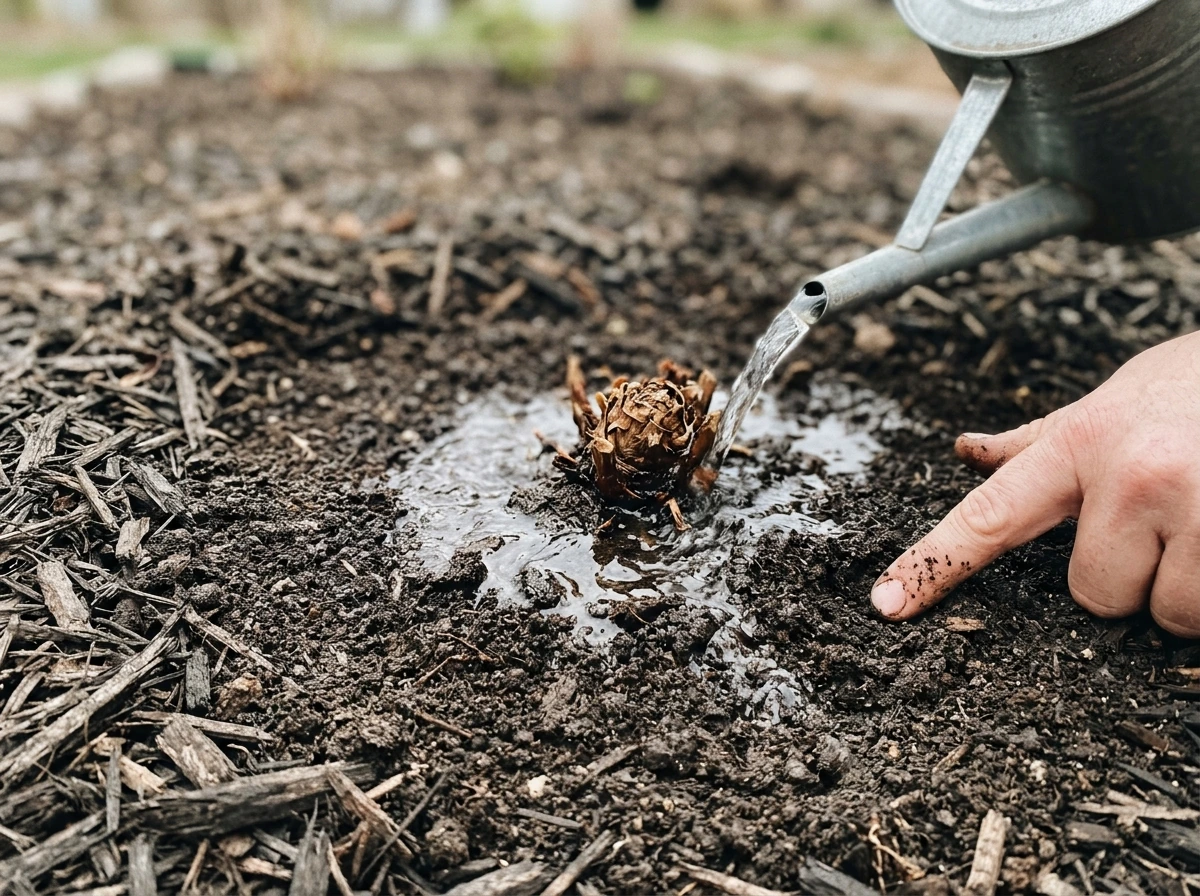
Water deeply after planting and keep the soil consistently moist (not soggy) through the first growing season while the plant establishes. Once established, Chinese peony is fairly drought-tolerant but appreciates regular water during dry spells, especially when buds are forming in spring. Always water at the soil level around the root zone, not overhead. Wet foliage is one of the main triggers for Botrytis gray mold, the most common disease problem with peonies. A drip line or soaker hose is ideal.
Fertilizing
Less is more with fertilizer, especially nitrogen. Too much nitrogen pushes leafy vegetative growth at the expense of flowers, this is a very common mistake. Use a low-nitrogen, balanced or phosphorus-forward fertilizer (something like a 5-10-10 or similar ratio) applied in spring when new stems are about 2 to 3 inches tall. One application per season is usually sufficient. Avoid applying fertilizer in summer or fall, and never pile on more thinking it will speed things up, it will backfire.
Mulch
A 2-inch layer of mulch around the plant (not over it) helps retain soil moisture and moderate temperature. The key word is "around", keep mulch pulled back from the crown and away from the eyes. Burying the crown with mulch is the same as planting too deep, and it will prevent blooming. In colder climates, a light layer of mulch applied after the ground freezes in fall can help protect the roots from freeze-thaw cycles, but remove it in early spring before growth begins.
Ongoing care through seasons
Spring: supporting stems and watching buds
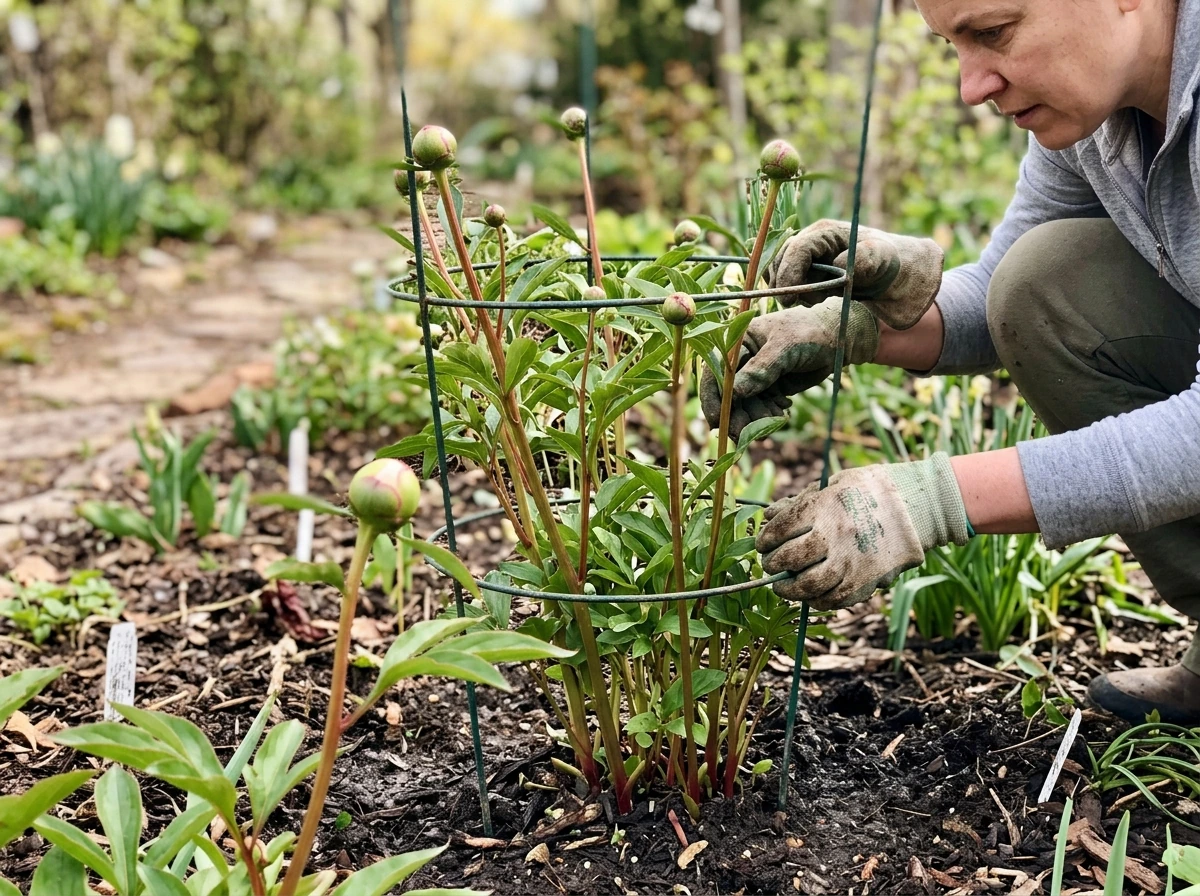
As new stems push up in spring and grow quickly toward bloom time, you may need to stake or cage the plant. Chinese peony typically reaches 2.5 to 3 feet tall, and those big blooms are heavy. A peony ring (a wire support ring on legs) placed over the emerging clump in early spring is the easiest solution, the foliage grows up through it and hides the support naturally. Install it early so stems grow into it rather than trying to retrofit it around a flopped plant.
After bloom: deadheading and summer care
Once flowers fade, deadhead them promptly, remove the spent blooms before they set seed. This keeps the plant looking tidy and redirects energy back into the roots rather than seed production. Do not cut back the foliage after deadheading. The leaves continue photosynthesizing all summer, storing energy in the roots for next year's growth. Removing foliage too early is one of the reasons plants bloom poorly the following year. Let it be and just tidy up around it.
Fall: the important cleanup
In fall, after the foliage has died back naturally (it will yellow and collapse on its own), cut all stems and leaves down to 2 to 3 inches above ground level. Remove every bit of the cut material from the garden entirely, do not compost it, especially if there has been any sign of disease. Leaving infected debris in the garden over winter is the main way Botrytis and other fungal problems carry over to the next season. Clean fall cleanup is one of the most impactful things you can do for long-term plant health.
Winter: dormancy and cold protection
In most of Chinese peony's hardiness range (Zones 3–8), no special winter protection is needed. The plant is built for cold winters and actually requires them. In Zones 3 and 4 where temperatures get extreme, a light layer of straw or shredded leaves applied after the ground freezes can help prevent heaving from freeze-thaw cycles. Remove it in early spring before growth starts. In mild-winter areas (Zone 8 and warmer), the plant may still grow but will often bloom unreliably or not at all due to insufficient cold hours.
Troubleshooting: why peonies won't bloom or struggle
This is the section most gardeners need. Chinese peony problems almost always come down to a handful of fixable causes.
| Problem | Most Likely Cause | Fix |
|---|---|---|
| Plant never blooms | Planted too deep; eyes more than 2 inches below soil | Carefully dig and replant at correct 1–2 inch depth in fall |
| Plant never blooms | Climate too warm; insufficient cold hours | Consider moving to a cooler spot or accept it may not bloom reliably in Zone 9+ |
| Buds form but don't open | Late frost damage; Botrytis infection; excessive heat or drought at bud stage | Protect from late frosts; improve air circulation; water at root level |
| Bloomed first year, not since | Divided or transplanted recently; plant needs time to re-establish | Be patient — transplanted peonies often skip 1–2 bloom cycles |
| Spindly growth, few stems | Too much shade; root competition from nearby trees/shrubs | Move to a sunnier location with at least 6 hours of direct sun |
| Leaves yellowing in summer | Normal late-season decline; or waterlogged soil causing root rot | Improve drainage; do not overwater; check roots for rot if persistent |
| No growth in spring | Planted too recently; normal slow start; or crown planted too deep | Wait — new divisions are slow starters. Check planting depth if no growth by late spring |
One thing worth repeating: newly planted peonies, especially bare-root divisions, are slow starters. It is completely normal for a division to produce only a few stems and no flowers in its first year. Year two is often better, and by year three most well-sited plants are performing reliably. If you are in year one and seeing modest growth with no blooms, do not panic and do not dig it up. Just give it time and good basic care. UMN Extension’s peony diagnosis resources list typical symptom categories, such as flower buds or petals turning black or brown, to help troubleshoot bud and crown problems good basic care.
Pests, diseases, and prevention basics
Chinese peony does not have many serious pest issues, but fungal diseases are the main threat, with Botrytis gray mold at the top of the list. Understanding the two or three most common problems and how to prevent them makes a big difference.
Botrytis gray mold
Botrytis is the most important disease of Chinese peony. It appears as blackened, wilted stems and buds in cool, wet spring weather, and in severe cases you will see the grayish fuzzy mold on infected tissue. It thrives when foliage stays wet. Prevention is the best approach: water only at soil level (never overhead), space plants so air moves freely through the clump, and do thorough fall cleanup removing all stems and leaves from the garden. If you catch Botrytis early, remove and dispose of infected tissue immediately and do not compost it. Improving air circulation around the plant is the most lasting fix.
Powdery mildew and leaf blotch
Powdery mildew has been appearing more frequently on peony foliage in recent years, showing up as a white powdery coating on leaves, usually in summer. Leaf blotch (also called peony measles) causes reddish-purple spots and blotches on foliage. Neither is usually fatal to the plant, but both are unsightly and indicate poor air circulation or persistent leaf wetness. Good sanitation practices, removing infected material promptly and doing thorough fall cleanup, keep these in check. Avoid wetting foliage when watering.
Root rot
Root rot is almost always caused by poorly drained soil or overwatering. Affected plants will be stunted, produce yellowing foliage, and eventually collapse. The fix is drainage: amend the soil before planting, raise the bed if necessary, and resist the urge to keep the soil constantly wet. Once root rot sets in severely, the plant usually needs to be dug, any rotted roots removed, and the division replanted in a better-draining spot.
Insect pests
Ants on peony buds are extremely common and cause a lot of alarm among new gardeners, but they are not a real problem. Ants are attracted to nectar secreted by the buds and do not harm the plant or the flowers. They do not need to be treated. True insect pest pressure on Chinese peony is generally low. Keep an eye out for thrips in dry conditions (they cause distorted buds and petals), but serious infestations are uncommon in well-maintained garden settings.
Long-term maintenance and dividing your plant
One of the great things about Chinese peony is that an established plant does not need much intervention year to year. Repeat the same routine: spring fertilizer application when stems emerge, support before blooms open, deadhead after flowering, leave foliage until fall, do a thorough cleanup after die-back, and repeat. A well-sited plant can thrive and bloom for decades without being divided.
That said, dividing is worth considering eventually, for two reasons. First, a very large, crowded clump can start to produce smaller flowers and fewer blooms over time as the root mass competes with itself. Second, dividing is the best way to share or propagate the plant. The right time to divide is early fall, typically September in most climates, the same window as planting.
To divide, dig the entire clump carefully with a garden fork to minimize root damage. Wash the roots so you can see what you are working with. Using a sharp, clean knife, cut the clump into sections, each with 3 to 5 healthy eyes and a good portion of fleshy root. Discard any soft, rotted, or damaged root sections. Replant each division immediately at the correct 1 to 2 inch depth and water well. Expect divisions to take 2 to 3 years to return to full bloom, the same timeline as a new plant.
If you are not dividing, the main long-term maintenance tasks are simply the seasonal routine described above, plus occasional soil pH checks every few years to make sure you are still in the 6.5 to 7.0 range. If the plant starts blooming less vigorously after many years of strong performance, division or a light top-dressing of compost around (not over) the crown may help.
Do this now based on your current season
Since we are in late March 2026, most gardeners in the Northern Hemisphere are heading into early spring. Here is what to do right now depending on where you are in the process:
- If you have an established Chinese peony in the ground: watch for red-pink shoots emerging from the soil, install a peony ring or stake support now before stems get tall, and apply a low-nitrogen fertilizer once stems reach 2 to 3 inches tall.
- If you are planning to plant this year: container-grown plants become available at garden centers this spring — go ahead and plant once your soil is workable, setting the crown at the same depth it was in the pot. For bare-root divisions, fall is the better window, but if you find divisions now, plant them promptly at 1 to 2 inches deep.
- If your plant did not bloom last year: check your planting depth before growth gets going — gently brush soil away from the crown to confirm eyes are no more than 2 inches below the surface. Also evaluate sun exposure now that trees are leafing out, since shade from nearby trees is a common culprit that is easier to assess in spring.
- If you want to divide an existing clump: wait until early fall (September) for the best results. Make a note now so you are ready with fresh divisions to replant or share.
Chinese peony rewards patience and correct fundamentals more than any fancy technique. Get the planting depth right, give it full sun and good drainage, and let cold winters do their job. If you are also curious about starting peonies from roots or cuttings, those propagation approaches are worth exploring in more detail in this guide on how to grow peonies
FAQ
My Chinese peony has been in the ground for years but still won’t bloom, what should I check first?
Peonies can bloom poorly if the plant is too old, too crowded, or stressed, but the most common non-bloom cause is incorrect depth of the eyes, planting deeper than 1 to 2 inches. Check that first before troubleshooting everything else, because no amount of fertilizer will fix buried crowns.
What should I do if my Chinese peony growth looks damaged in spring (after a frost or cold snap)?
Don’t assume a late frost is always the culprit. If new growth comes up and then stalls or turns black, that can point to damage or Botrytis infection. Remove any visibly infected stems and improve airflow, but avoid heavy pruning back into healthy foliage during spring, since leaves feed the roots for next year’s flowers.
Can I grow Chinese peony in a container, and will it bloom as reliably as in the ground?
Container growing is possible, but blooming is less reliable because containers dry out faster and may not provide consistent winter cold at the right depth. If you try it, use a large container with excellent drainage, plant at the same crown depth as outside, and plan for winter cold exposure in a way that keeps the crown from freezing solid in an exposed, dry way.
How much fertilizer should I use, and what if my plant is growing a lot of leaves but no blooms?
For the best odds, fertilize only in spring when stems are about 2 to 3 inches tall, and use a low-nitrogen or phosphorus-forward product. If your soil already tests rich, you may need no fertilizer at all, and overfeeding nitrogen is a common reason for lots of leaves with few or no flowers.
Why are my peony buds failing, turning brown, or staying closed, is it pests or disease?
Yes, birds can peck and buds may also be disturbed by insects, but many “bud problems” are actually fungal or moisture-related. If buds turn brown or fail to open after cool, wet weather, look for Botrytis and remove infected tissue. If buds look healthy but deform in dry conditions, then check for thrips.
My plant looks weak and the soil stays wet after rain, how can I tell if it’s heading toward root rot?
If the soil stays wet, chinese peony can decline quickly even if it survives the first season. Look for yellowing foliage plus stunted growth. The fix is drainage: amend for structure and, if needed, raise the planting bed or relocate to a drier spot. Avoid “rescuing” with extra watering or late-season fertilizing.
Should I prune the leaves in summer if the plant looks messy or yellowing?
You generally should not cut foliage back early just because the plant looks tired or untidy. Leaves keep producing food for the roots all summer. Remove only spent flowers when deadheading, then let foliage die back naturally in fall before cutting stems down to 2 to 3 inches.
Can I transplant a mature Chinese peony, and when is the safest time?
Yes, but only in very controlled, practical ways. If you must move it, do it in early fall so roots can recover and the plant can still experience the winter cold it needs. When transplanting, keep the crown at the correct shallow depth, disturb as little of the fleshy roots as possible, and expect slower recovery and delayed bloom compared with planting a new division.
There are ants all over my peony buds, do I need to treat the plant?
Ants are usually harmless because they feed on nectar from the buds. The key is what the buds are doing. If buds open normally, ignore the ants. If buds distort, refuse to open, or petals look damaged, then investigate insects or moisture-triggered issues instead of treating for ants.
I live in a warm-winter region, what can I do to improve the chances of blooming?
It depends on the climate and the particular cultivar, but if you live in a warm-winter area, reliably blooming can be hard because vernalization fails. The practical option is to choose the most cold-rated cultivar you can find and ensure it gets enough real cold exposure. If winters are mild, even perfect planting may still lead to few or no blooms.
How do I evaluate a bare-root Chinese peony division so I don’t waste a year on a poor start?
When buying bare-root divisions, a “good” division is firm with multiple eyes, and it should not feel mushy at the crown. If you receive a division with rotted or collapsed sections, discard the problem parts or return it, because weak starts often drag out for years and may never recover fully.
Next Article
How to Grow Peonies From Roots: Planting and Care Guide
Learn how to grow peonies from roots with bare-root planting depth, care steps, bloom timing, and fixes for failures.