Begonias are genuinely rewarding to grow once you match the right type to your conditions and nail a few basics: bright indirect light, well-draining soil, consistent moisture without waterlogging, and regular deadheading. Get those four things right and begonias will bloom generously from late spring through first frost. If you are wondering are begonias easy to grow, get those fundamentals right first, and then compare wax types, which are the easiest entry point.
Begonias How to Grow From Seed to Bloom

Harriet Whitmore
28 May 2026
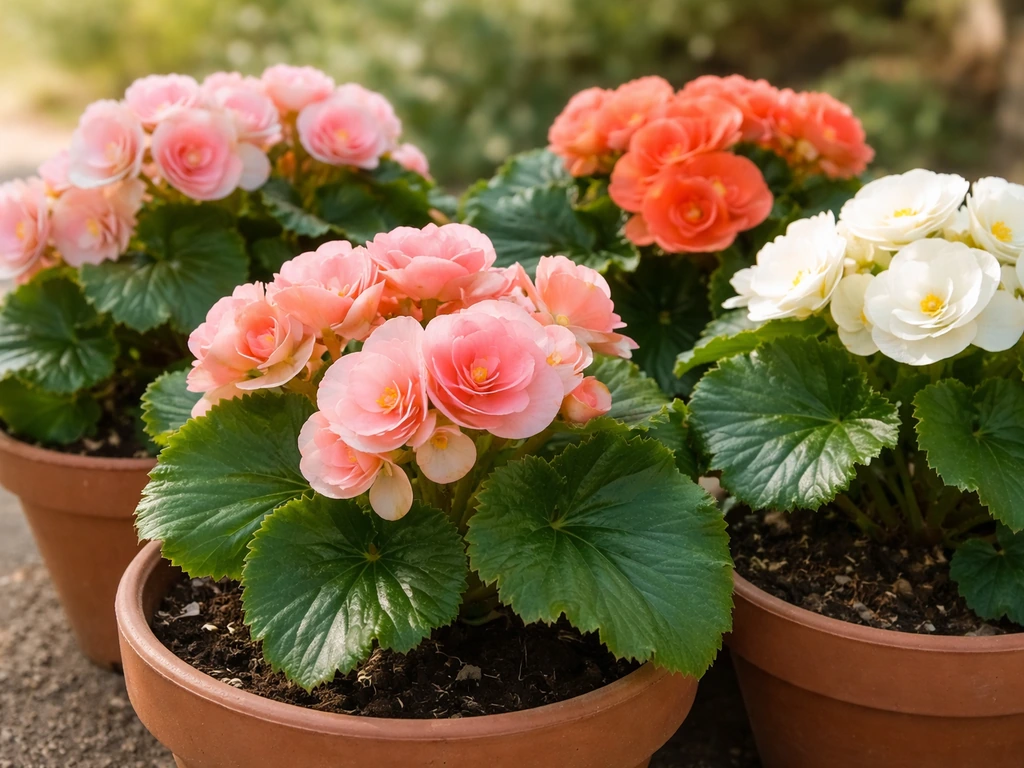
Begonia types and what to choose
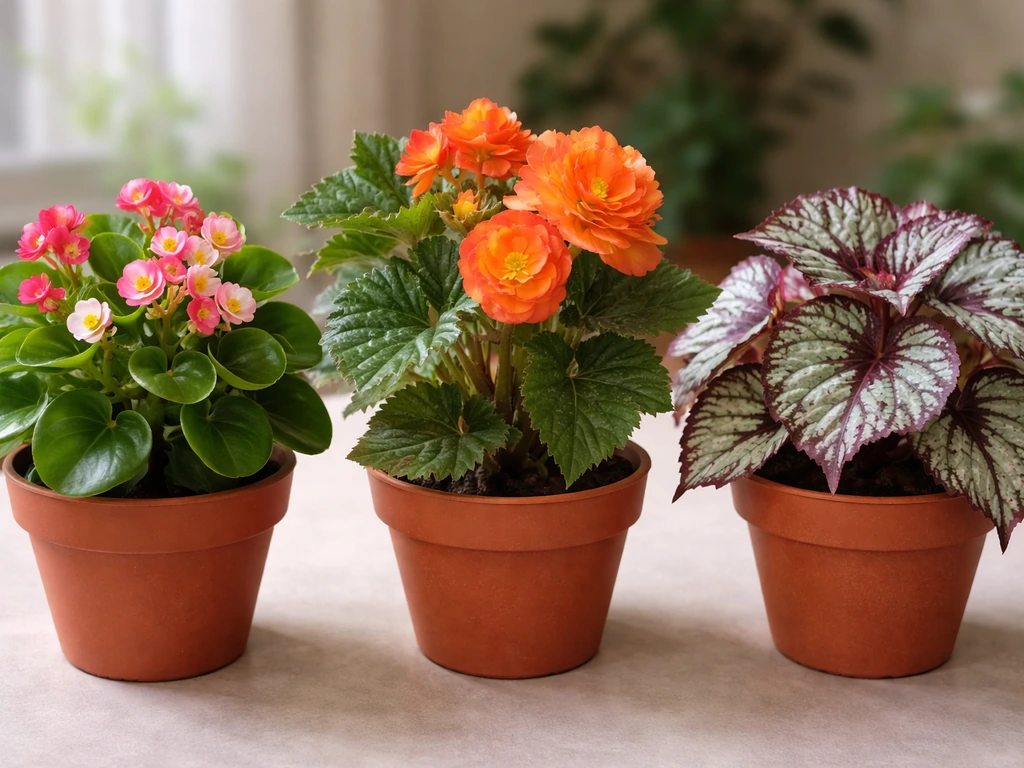
The word 'begonias' covers a surprisingly wide range of plants, and what works brilliantly for one type can really set back another. Before you buy a bag of seeds or a tray of transplants, it helps to know which group you're working with.
| Type | Best use | Light preference | Key trait |
|---|---|---|---|
| Wax/fibrous (Begonia semperflorens) | Beds, borders, containers | Full sun to part shade | Heat-tolerant, compact, continuous bloomer |
| Tuberous | Containers, shady beds | Partial shade (morning sun ideal) | Large showy flowers, needs dry winter dormancy |
| Rhizomatous/Rex | Houseplants, shaded patios | Bright indirect light | Grown mainly for foliage; flowers are a bonus |
| Angel wing (cane-type) | Containers, indoor/outdoor | Bright indirect light | Tall, arching stems; dislikes heavy soil or overwatering |
For most first-time gardeners wanting outdoor color, wax begonias are the easiest entry point. They tolerate heat, they bloom without much fussing, and they're widely available as transplants. Tuberous begonias are worth the extra effort if you want dramatic blooms in a shaded spot. Rex and angel wing types are better suited to containers and indoor growing, where you can control conditions more precisely.
Light, temperature, humidity, and soil
Light is the variable that trips up most beginners. Wax begonias handle full sun fairly well, but tuberous and rhizomatous types genuinely struggle in direct afternoon sun. For tuberous begonias, morning sun with afternoon shade is often the sweet spot. Angel wing and rex types do best in bright, indirect light with good airflow around the leaves. When light is insufficient, you'll see elongated stems and poor flowering, which is the plant stretching toward the source.
Temperature-wise, begonias are happiest between 60 and 75°F. Tuberous types specifically need long days of at least 12 hours of light for proper flower development. They won't do well in cool, cloudy conditions for extended periods. Wax begonias are a little more forgiving but still stall when temperatures drop below 50°F.
Humidity matters more for germination and indoor growing than for established outdoor plants. Wax begonia seeds germinate best at very high relative humidity (around 95%) and warm temperatures of 75 to 80°F. For established plants outside, good airflow is more important than chasing a specific humidity level. Still air and wet foliage together are a recipe for fungal problems.
All begonias share one non-negotiable soil requirement: excellent drainage. For containers, a peat-based potting mix with added perlite or orchid bark works well. Avoid heavy garden soil around the roots, especially for angel wing types, which are prone to root rot in waterlogged conditions. For rex and rhizomatous types, aim for a soil pH between about 5.7 and 6.4. For wax and tuberous begonias, a slightly acidic mix in the 5.5 to 6.0 range is ideal.
Starting begonias: seed vs cuttings and when to do it
Starting from seed
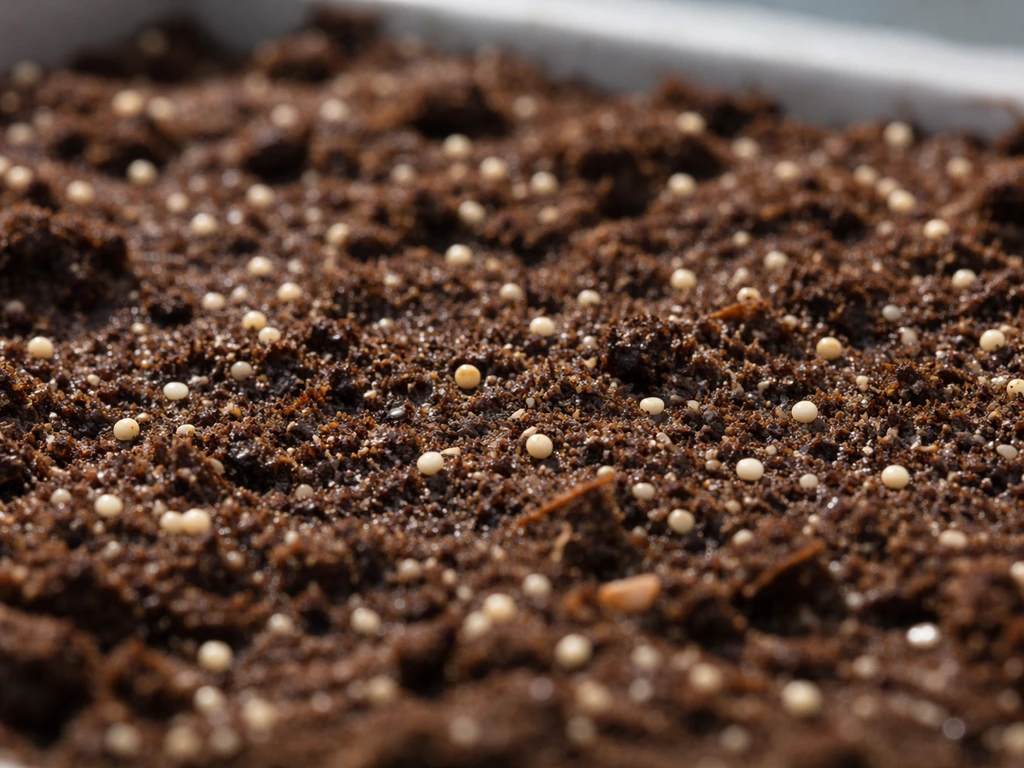
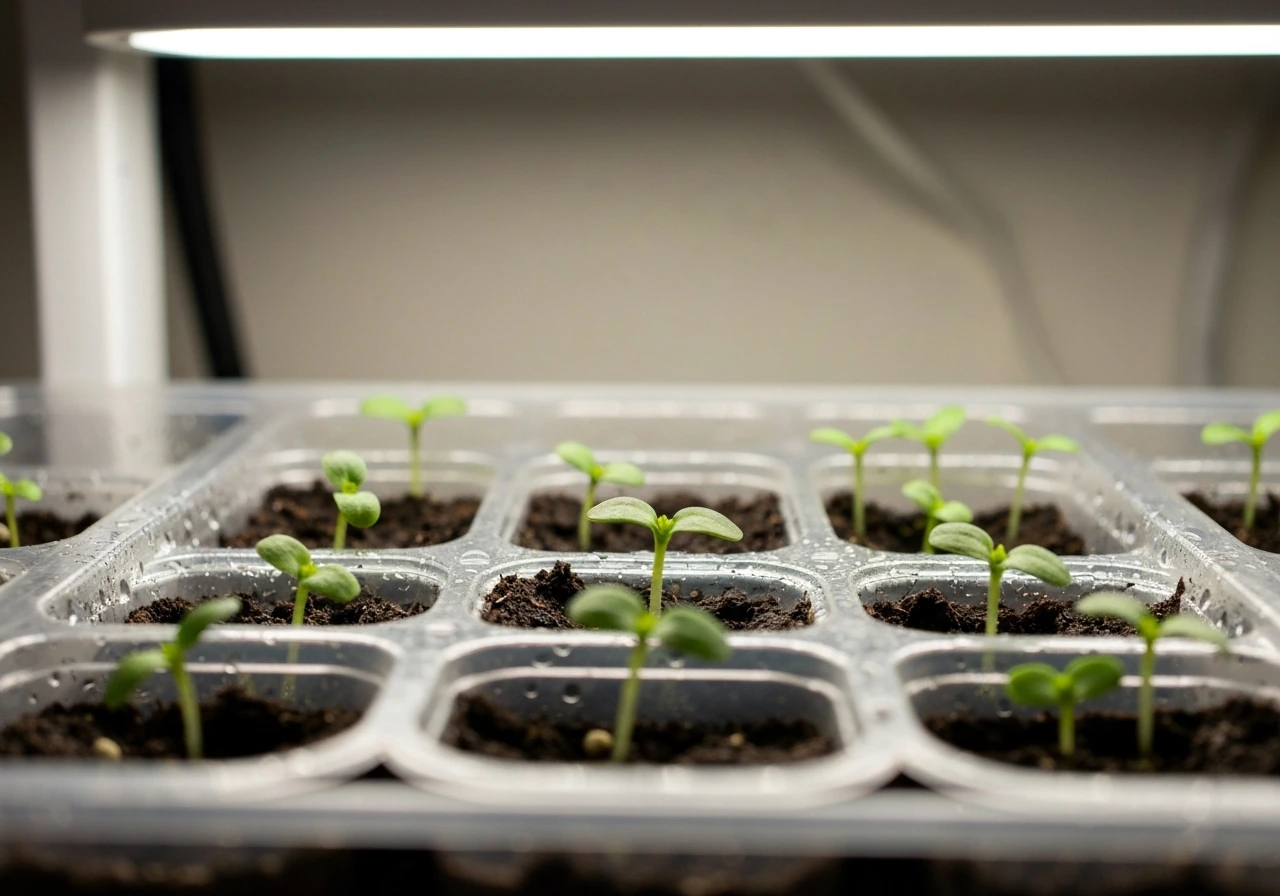
Begonia seeds are tiny, and wax begonias in particular are often sold as pelleted seed to make handling easier. The critical rule: do not bury begonia seeds. They need light to germinate, so press them onto the surface of moist growing media and cover the tray with a clear dome or plastic wrap to hold humidity up. At 75 to 80°F, you can expect germination in roughly 5 to 10 days for wax begonias. Fibrous types can take 10 to 12 days at cooler temperatures around 60°F. From germination to a transplant-ready plant is typically about 16 weeks, which means starting indoors in late December or January for a late spring planting date in most zones.
Starting from tubers
For tuberous begonias, start tubers indoors 8 to 12 weeks before your last frost date. Place them depression-side up on damp peat moss or vermiculite in a tray, keep the environment around 70°F in indirect light, and wait for sprouts. Don't bury them at first. Once shoots appear and roots develop, you can pot them up properly. Harden them off for about two weeks before moving outside permanently.
Propagating from cuttings
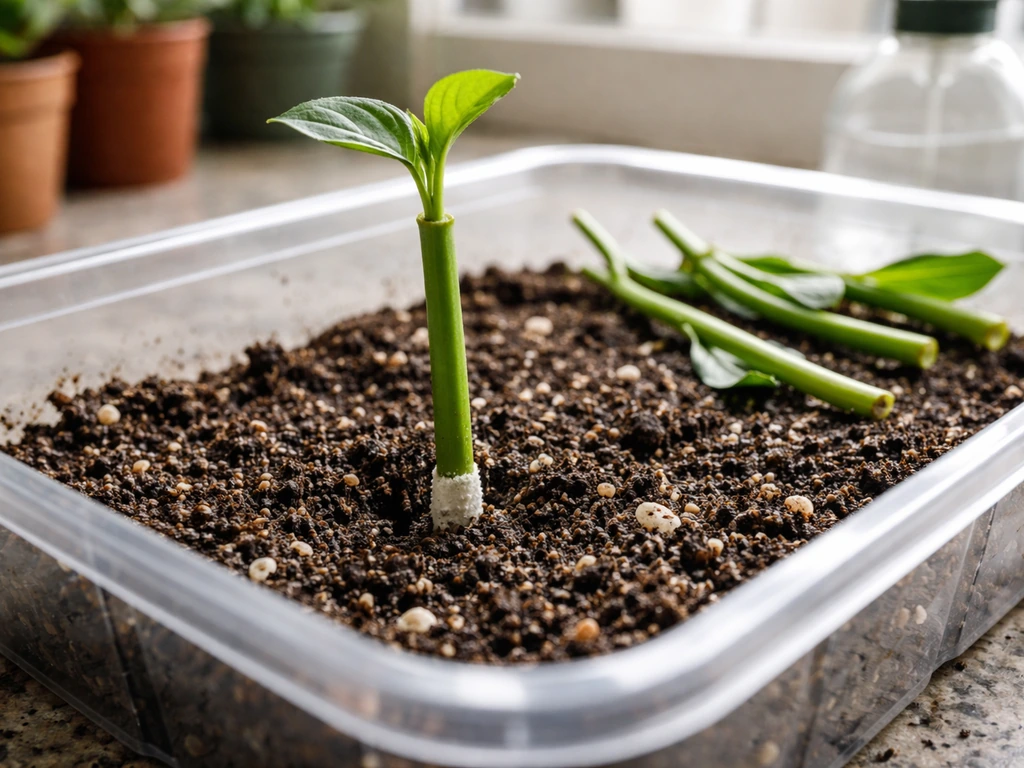
Cuttings are honestly the easier route for many types, especially if you already have a plant or can get a cutting from someone. The American Begonia Society recognizes stem cuttings, leaf cuttings, and division as the three main vegetative propagation methods. For tuberous and angel wing types, stem cuttings root reliably in warm, humid conditions around 65 to 70°F. Rex begonias can be propagated from a single leaf wedge. Rooting is fairly quick when you keep the medium consistently moist but not soggy and protect cuttings from direct sun while they establish.
Planting setup: containers vs in-ground and spacing
Containers give you the most control, and for tuberous, rex, and angel wing begonias I'd almost always recommend going that route. You control the soil mix, drainage, and can move plants out of harsh weather quickly. Use pots with drainage holes, keep pot size proportionate to the plant (too much soil around small root systems holds excess moisture), and use a lightweight soilless mix. For angel wing types in particular, too much soil volume around the roots increases rot risk significantly.
Wax begonias are excellent in-ground plants for beds and borders. They transplant well after the last frost date when night temperatures stay reliably above 50°F. Space them about 8 to 12 inches apart depending on the variety. Compact types can go closer; spreading varieties need room to breathe. Tuberous begonias can go in-ground in shaded beds, but they'll need to be dug up before the first hard frost and stored dry over winter.
Watering and fertilizing for nonstop blooms
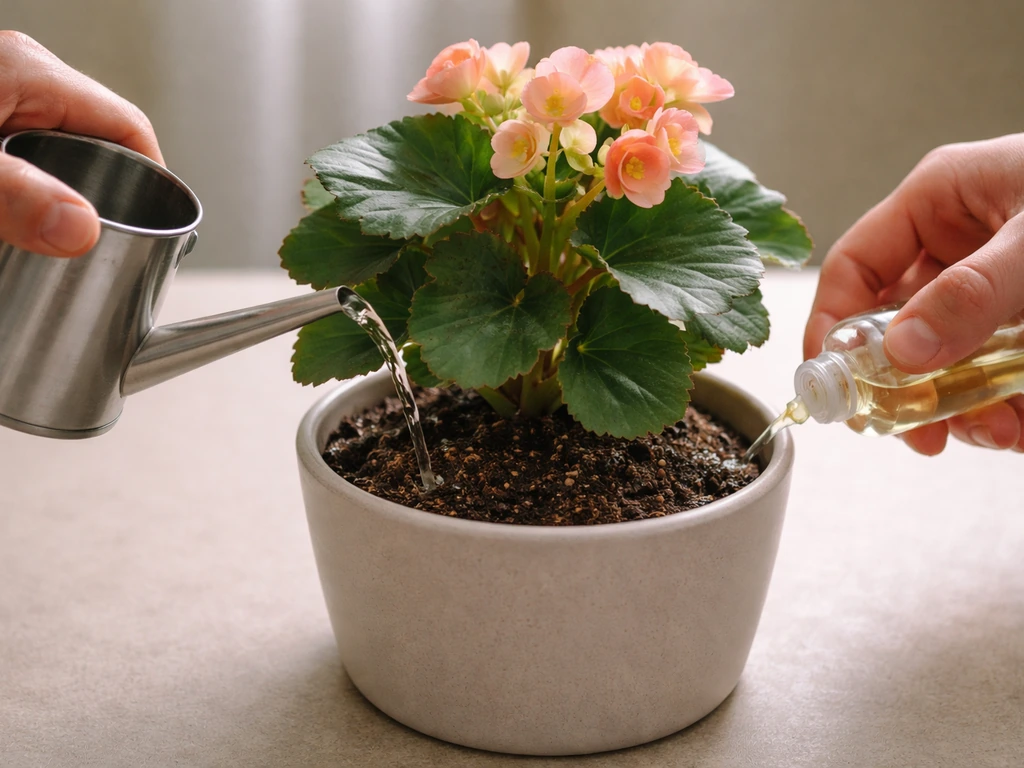
The watering principle for begonias is consistent moisture without saturation. Water thoroughly when the top inch of soil feels dry, then let it drain completely. Never let begonias sit in standing water. In containers, empty saucers after watering. In-ground plants in heavy clay soil will need amendments to improve drainage before planting. For non-stop begonias, keep up with consistent moisture and deadheading so the plants keep redirecting energy into fresh blooms. During hot spells, containers may need watering every day or two; in cooler or cloudy stretches, back off and check before watering.
For feeding, begonias respond well to a balanced liquid fertilizer every two to three weeks during the growing season. If you want to push flower production specifically, switch to a higher-phosphorus formula. The American Begonia Society recommends a 15-30-15 ratio for flower boosting, where that middle phosphorus number is the one doing the work. Avoid heavy nitrogen-only fertilizers, which push leafy growth at the expense of flowers. Always water the soil before applying liquid fertilizer to avoid root burn.
How to get more flowers: pruning, pinching, and deadheading
This is the step most beginners skip, and it makes a noticeable difference. Pinching is simply removing the growing tip of each stem, right where the next leaf would emerge. The American Begonia Society recommends pinching after a stem has developed three nodes (the joints where leaves attach). This forces the plant to branch rather than keep growing in one direction, resulting in a fuller plant with far more blooming stems.
Deadheading (removing spent flowers) keeps the plant redirecting energy into new blooms rather than into producing seeds. For tuberous begonias with multiple faded flowers at a stem tip, pinch or snip the entire tip just above the first set of healthy leaves rather than picking off flowers one by one. For wax begonias, regular deadheading combined with light pinching every few weeks through summer keeps them compact and covered in flowers all season.
Troubleshooting yellow leaves, leggy growth, and weak blooms
Yellow leaves are the most common complaint and have three usual causes: overwatering, underwatering, or nutrient deficiency. Check the soil moisture first. If it's been consistently soggy, you're likely dealing with root stress or early root rot. Let it dry out between waterings and check that drainage is functioning. If the soil is bone dry and the leaves are yellowing and crispy at the edges, the plant is drought-stressed. A more generalized yellow (especially on older leaves) combined with slow growth often points to nitrogen deficiency, which is easily corrected with a balanced feed.
Leggy, stretched growth almost always comes down to insufficient light. The plant is reaching. Move it to a brighter spot, or if you're growing indoors, add a grow light. This is especially common with rhizomatous types, which will produce elongated leaf stems and get sparse when light levels are too low. Pinching helps reshape leggy plants but won't fix the underlying light issue on its own.
Weak or absent blooms usually trace back to one of three things: too much shade, not enough phosphorus, or the plant spending energy on seed production from spent flowers. Tuberous begonias also require long days of 12 or more hours to flower properly, so if you're growing them in an unusually shaded spot or in a short-day environment, they'll stall. Bump up light if possible, switch to a high-phosphorus fertilizer, and deadhead consistently.
Common pests and diseases and how to handle them
Pests to watch for
- Mealybugs: white cottony clusters in leaf joints and on stems. Wipe off with a cotton swab dipped in rubbing alcohol, then treat with insecticidal soap or neem oil.
- Aphids: clusters of soft-bodied insects (often green or black) under leaves and on new growth. Knock off with a strong water spray, follow up with insecticidal soap.
- Fungus gnats: small flies near soil surface, larvae damage roots. Allow soil to dry slightly between waterings to disrupt their lifecycle; sticky traps catch adults.
- Spider mites: fine webbing under leaves, stippled or bronzed foliage. Increase humidity slightly, spray with neem oil or miticide.
Disease problems and prevention
- Powdery mildew: white powdery coating on leaves, most common in humid, still air. Improve airflow, avoid wetting foliage when watering, treat with a baking soda solution or sulfur-based fungicide.
- Botrytis (gray mold): fuzzy gray mold on flowers and leaves in cool, wet conditions. Remove affected parts immediately, improve ventilation, and avoid overhead watering.
- Root rot (Pythium or Rhizoctonia): soft, brown roots, wilting despite moist soil. Usually caused by overwatering or poor drainage. Let soil dry, repot into fresh well-draining mix, and trim affected roots before repotting.
- Bacterial leaf spot: water-soaked spots that turn brown with yellow halos. Remove affected leaves, avoid overhead watering, and space plants for airflow.
Prevention beats treatment every time with begonias. Most disease issues are triggered by still, humid air and wet foliage at night. Water in the morning so leaves dry quickly, keep plants spaced for airflow, and don't overwater. For indoor begonias especially, a small fan on a low setting does a lot of work keeping fungal problems away.
Your action plan right now
If you're starting today in late May, wax begonia transplants can go outside now in most zones once nights are reliably above 50°F. Tuberous begonias started indoors should be hardened off this week if you haven't already. If you're troubleshooting an existing plant, start with light and watering before changing anything else. Those two variables fix the majority of begonia problems.
- Identify your begonia type so you're giving it the right conditions rather than generic advice.
- Check light first: most problems (leggy growth, weak blooms, poor color) trace back to insufficient brightness.
- Check drainage and watering habits second: feel the soil before watering, never let plants sit wet.
- Begin deadheading and pinching immediately on any plant that's actively growing, to redirect energy into new flowers.
- Feed with a 15-30-15 formula every two to three weeks through the growing season for strong bloom production.
- Watch for pests weekly, especially under leaves, and address them early before populations build.
Once you've got the basics dialed in, you'll find begonias are genuinely forgiving plants that reward attention. To understand how to help begonias grow, focus first on light, soil drainage, and consistent moisture so the plant can bloom and thrive. If you're curious about how much effort begonias actually require relative to other flowers, or want more detail on specific timing for when different begonia types start growing, those are worth digging into once you've got your current setup running well. For a direct answer, check when do begonias start to grow based on your specific type and whether you started from seed, tubers, or cuttings when different begonia types start growing.
FAQ
Can I grow begonias from seed outdoors instead of starting indoors?
In most zones, direct outdoor seed is risky because wax begonia germination needs warm conditions and high humidity, and the full seed-to-bloom timeline is usually long. If you want to try outdoors, start the seeds only when nights stay warm (around the 60s and up), and be prepared to use a humidity cover until seedlings emerge.
How do I know if my begonia is getting too much light or too little light?
Too little light commonly shows leggy growth and fewer blooms. Too much light, especially for tuberous and rhizomatous types, often shows scorched or bleached leaf patches and faster soil drying. For outdoor sun testing, shift gradually over a week rather than moving from shade to full sun overnight.
What watering schedule should I follow if I’m unsure how often to water?
Use a trigger, not a calendar: water when the top inch is dry, then water thoroughly and allow complete drainage. In containers, also check a finger test daily during hot weather, but in cooler or cloudy stretches check less often since evaporation slows.
My begonia leaves are drooping, but the soil isn’t wet. What’s going on?
Drooping with dry soil usually means drought stress, even if the plant looks “not that thirsty.” Water thoroughly and then ensure the pot drains freely. If drooping happens with consistently wet soil, suspect root stress, and consider improving drainage or letting the mix dry more between waterings.
Do begonias need deadheading if they flower nonstop varieties?
Nonstop types still benefit from removing spent blooms, especially on wax begonias, because dead flowers can divert energy into seed. If you notice fewer new buds after a flush, increase deadheading and light pinching to keep the plant producing.
Why are my wax begonia flowers forming but then fading quickly?
Rapid bud or flower drop is often linked to temperature swings or inconsistent moisture, especially in containers. Keep nights above about 50°F outdoors, avoid letting pots fully dry out, and water in the morning so foliage isn’t staying wet overnight.
Should I pinch begonias at the same time for all types?
Pinching timing is usually based on node development, not the calendar. Wait until stems have formed about three nodes, then pinch the growing tip to encourage branching. For tuberous begonias, aggressive pinching can reduce early bloom, so do it lightly and only after the plant has established.
Can I fertilize begonias during transplanting or right after potting?
Wait until the plant is actively growing, and do not fertilize dry soil. After repotting, water first, then start feeding only when you see new growth. If you use high-phosphorus bloom fertilizer, switch gradually and avoid frequent nitrogen-heavy feeding that can trade flowers for leaves.
What’s the best soil pH approach if I’m not measuring pH?
If you do not want to test, use a reliable quality soilless mix and lean slightly acidic rather than neutral. If your begonias repeatedly show yellowing with slow growth, it may indicate nutrient imbalance, and adjusting with a balanced fertilizer can help while you consider a pH test for long-term accuracy.
How do I prevent fungal issues indoors without overwatering?
Improve airflow and reduce leaf wetness, water at the soil level, and avoid leaving water on saucers. A small low fan helps dry the air around plants, and morning watering lets leaves dry sooner. Also space plants to avoid stagnant humidity between leaves.
Can I overwinter tuberous begonias without digging them immediately?
Most tuberous begonias need to be lifted before hard frost, then stored dry for winter storage to prevent rot. If your first frost is light, you can delay lifting slightly, but plan to move them before temperatures drop hard and repeatedly.
Why do my tuberous begonias fail to sprout from tubers?
Common culprits are burying them too deep, keeping them too wet early, or starting too early in cold conditions. Place the tuber with the correct orientation in a lightly moist medium, keep the environment warm (around 70°F), and make sure it gets indirect light while you wait for sprouts.
Are begonias safe to grow if I have pets or small children?
Begonias are often listed as potentially irritating or toxic if ingested, so it’s smart to place plants out of reach and discourage chewing. If ingestion is suspected, contact a local poison control service or veterinarian for guidance.
Next Article
Are Begonias Easy to Grow From Seed? A Practical Guide
See if begonias are easy to grow, with step-by-step seed starting, germination tips, troubleshooting, and a bloom timeli