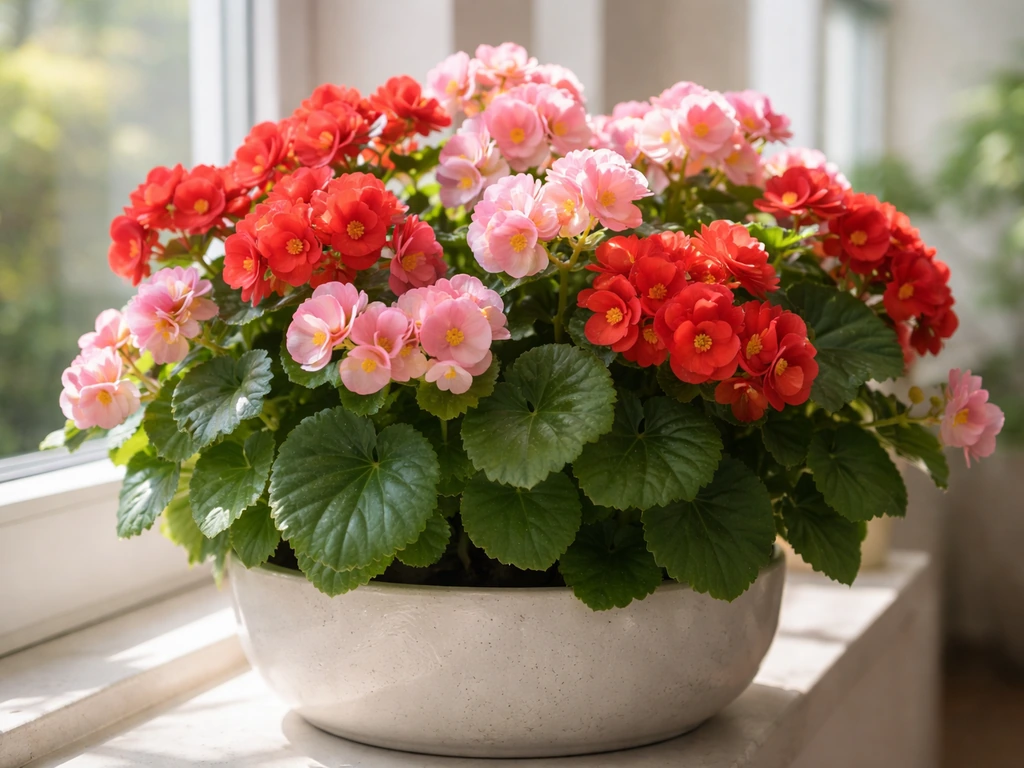
Begonias grow best when you give them bright indirect light, well-draining soil, and water only when the top of the mix feels dry. Keep temperatures between 60°F and 85°F, feed with a dilute balanced fertilizer every two weeks during active growth, and never let them sit in soggy soil. That combination handles the majority of begonia struggles right there.
How to Help Begonias Grow Bigger: Care Guide

Harriet Whitmore
30 Jun 2026
Begonia types and what to match your care to
Before you change a single thing about how you're growing your begonias, know what type you have. Different begonia groups have genuinely different needs, and giving rhizomatous begonia care to a tuberous one (or vice versa) is one of the most common reasons things go wrong. Here are the four groups most home gardeners deal with:
- Wax begonias (semperflorens): The toughest of the bunch. These fibrous-rooted plants are what you typically see in garden centers as bedding plants. They tolerate a range of conditions, can handle more sun than most begonias, and have no special soil requirements. Great starting point if you're new to the genus.
- Tuberous begonias: The show-offs with big, dramatic blooms. They need filtered light (no intense direct sun), consistently moist but well-drained soil, and they go fully dormant in winter. You have to adjust your entire care routine seasonally with these.
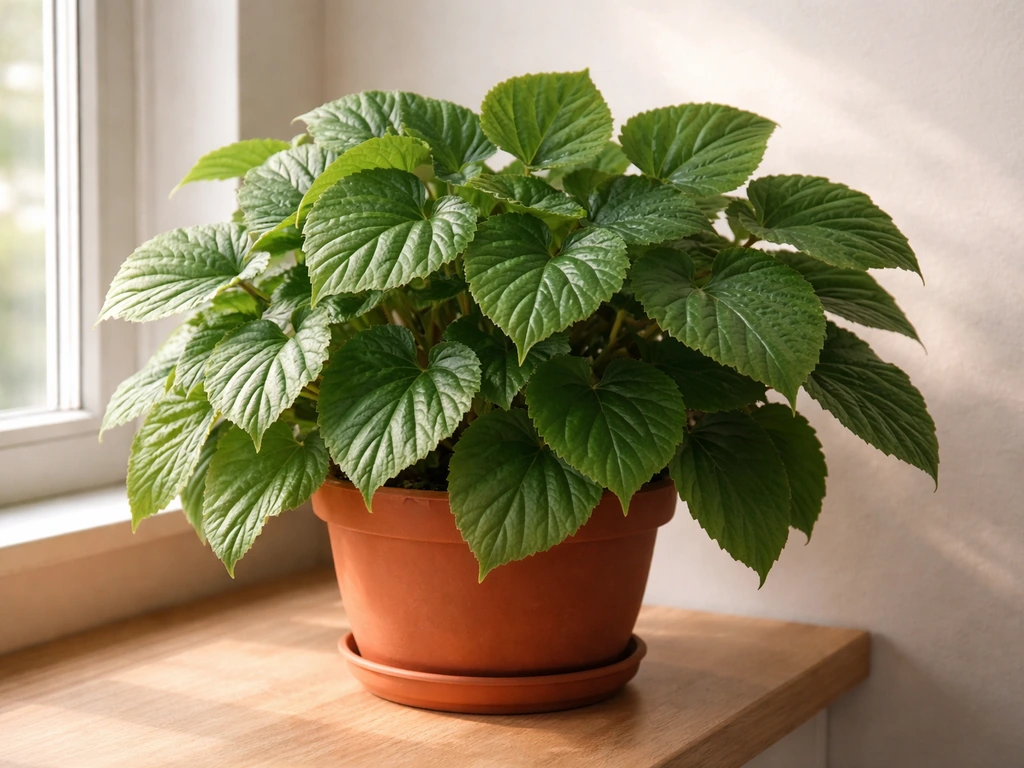
- Rhizomatous begonias (including rex): Grown mostly for spectacular foliage. Their rhizome (a thick, fleshy stem that grows horizontally) stores water and nutrients, so they're more forgiving of missed waterings than tuberous types, but they're also very sensitive to overwatering and poor drainage. Rex begonias fall into this broader group.
- Cane-like begonias (angel wings and similar): Upright, bamboo-jointed stems with attractive foliage and clusters of flowers. They love bright light and grow quite large when happy. Similar core care to other begonias but appreciate a sunny spot more than most.
Throughout this guide, I'll flag where the advice differs by type. If you know what you're growing, you can skip straight to what applies. If you bought something labeled just 'begonia' at a nursery, check the tag or do a quick image search. Getting the type right makes everything else click into place.
Light requirements to get steady growth
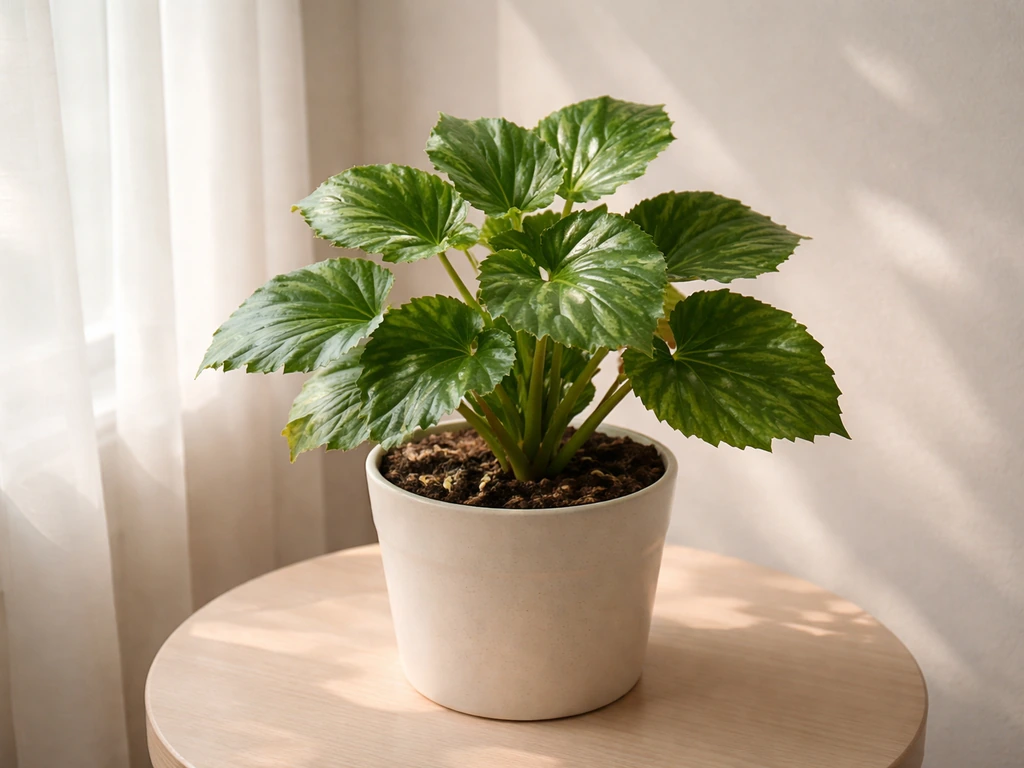
Here's the tension with begonias: they're classified as shade plants, but too little light causes weak, spindly growth. I've made this mistake myself, tucking begonias into a dim corner because I thought they preferred shade, then wondering why they got leggy and stopped blooming. The sweet spot is bright indirect light, not shade.
Outdoors, dappled light under a tree canopy, a north or east-facing porch, or a spot that gets morning sun and afternoon shade works well for most types. Tuberous begonias especially need plenty of filtered light but little or no direct hot afternoon sun. Leaf scorch is a real risk in harsh midsummer sun. Wax begonias are the exception: they can take full sun in mild climates, though in hot, dry regions they prefer some afternoon shade.
Indoors, an east or west-facing window is usually ideal. South-facing windows work if you filter the light with a sheer curtain. Cane-like begonias can tolerate a genuinely sunny windowsill as long as the glass isn't concentrating intense heat. Rex begonias are the most demanding about even light distribution: if light only comes from one direction, rotate the pot a quarter turn every week to keep growth balanced and prevent one side from stretching toward the light source.
If you're starting seedlings from seed indoors, University of Minnesota Extension recommends 14 hours of light per day for germinated seedlings. A grow light on a timer is the practical answer here, since window light alone rarely delivers that consistently.
Soil, drainage, and planting setup
Begonias need soil that drains fast. This is non-negotiable. A soggy root zone is the single fastest way to kill a begonia, and it's completely preventable with the right setup. What 'well-draining' actually means in practice is a mix that holds some moisture but doesn't compact or stay waterlogged after you water.
For most begonias in containers, a standard coarse potting mix works well. You can improve drainage further by mixing in perlite at roughly a 3:1 ratio (potting mix to perlite). For rhizomatous begonias, I prefer a shallow clay pot over a deep plastic one. Clay pots breathe and dry out more evenly, which suits the rhizome's preference for dry periods between waterings. The American Begonia Society specifically recommends a shallow pot with a coarse, fast-draining mix for rhizomatous types.
Tuberous begonias are particularly specific: their planting medium should be loose, well-drained, and not contain added fertilizer or manure when you're first starting tubers. You want clean, neutral-ish soil so you control exactly what goes in. They're not drought-tolerant at all, so the goal is consistent moisture without waterlogging. A raised bed or a container with excellent drainage holes accomplishes both.
Wax begonias are the least fussy about soil. They'll grow in average garden soil as long as it doesn't stay wet. If you're planting directly in the ground, work in some compost to improve both drainage and moisture retention, and avoid low spots where water pools after rain.
Whatever type you're growing, always use a container with drainage holes. No exceptions. A saucer is fine but empty it after watering so roots aren't sitting in standing water.
Watering and humidity: the 'don't rot me' routine
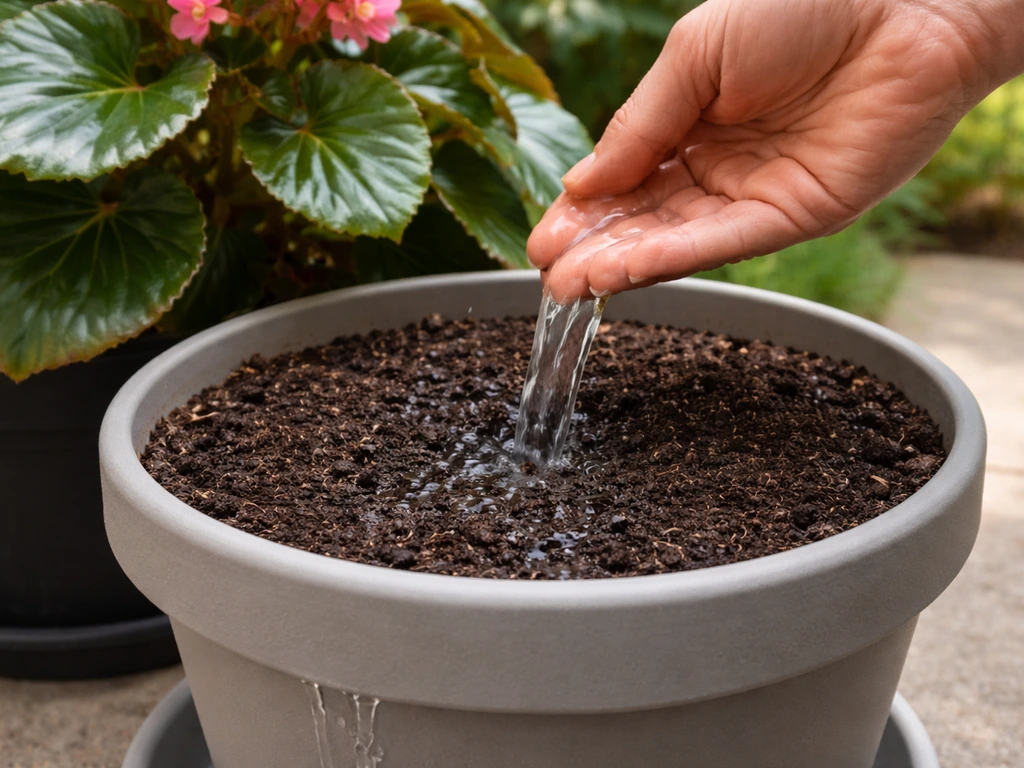
The golden rule for watering begonias: water thoroughly when the top of the soil feels dry to the touch, then don't water again until it dries out again. That's it. The mistake most people make isn't forgetting to water, it's watering on a fixed schedule without checking what the plant actually needs.
For wax and cane-like begonias, check the surface of the soil and water when it's dry. For rhizomatous begonias, the American Begonia Society suggests lifting the pot and assessing its weight. A light pot means dry soil; a heavy pot means it still has moisture. This is surprisingly useful because soil dries at different rates depending on pot size, material, humidity, and season. Rex begonias specifically do best when the soil surface gets almost dry between waterings.
Tuberous begonias need a slightly different approach. They're not drought-tolerant, so you can't let them go fully dry, but container soil should become slightly dry on the surface before you water again. In a garden bed, water whenever it hasn't rained recently enough to keep the soil evenly moist. During dormancy in fall and winter, reduce watering significantly as the plant signals it's shutting down (yellowing leaves, dying back).
Humidity matters, especially for indoor begonias. Most begonias appreciate moderate to higher humidity, but the method you use to deliver it matters. Don't mist the leaves directly: that creates exactly the damp surface conditions that favor gray mold (Botrytis) and powdery mildew. A Reddit user reported better rex begonia results by avoiding misting and using humidity support like an expanded clay or rocks tray, along with bottom or indirect watering [avoid misting leaves directly](https://www.
reddit. com/r/plants/comments/idycje). Instead, place pots on a tray filled with gravel or expanded clay granules with a little water just below the surface of the stones. As the water evaporates, it raises humidity immediately around the plant without wetting the foliage.
Keep airflow decent in the room too. Good air circulation is one of the most overlooked ways to prevent fungal issues indoors.
Fertilizing and feeding schedule for bigger plants
If you want bigger, healthier begonias, consistent light feeding during the growing season is one of the highest-return adjustments you can make. The key word is 'consistent and dilute,' not heavy and infrequent.
The American Begonia Society recommends applying fertilizer at one-quarter the recommended strength at every or every other watering, rather than a full dose on a monthly schedule. This delivers a steady supply of nutrients without the risk of salt buildup in the soil, which can actually burn roots and slow growth. A balanced complete fertilizer (something like a 10-10-10 or similar) handles the basics: nitrogen for leaves and stems, phosphorus for roots and flowers, potassium for overall vigor.
For rex begonias, start feeding in spring once you see new growth, using a balanced fertilizer at quarter strength every two weeks. Growth slows significantly when temperatures drop below 60°F, so there's no point feeding through cool winter months. For tuberous begonias, start with a low-nitrogen fertilizer early in the season (fish emulsion at 5-1-1 is a good early-growth option) and switch to a balanced dilute feed throughout the growing season for best blooms. Stop fertilizing entirely as fall approaches and the plant starts to yellow. Rhizomatous begonias grown in the ground can be fed monthly at half strength. Wax begonias respond well to regular dilute feeding but aren't heavy feeders.
One important temperature rule: begonias don't grow or use fertilizer when temperatures are below 60°F. Feeding a cold, dormant plant just leaves nutrients sitting in the soil, potentially causing problems when growth resumes. Match your feeding schedule to active growth periods, not the calendar.
| Begonia Type | Fertilizer Strength | Frequency | When to Stop |
|---|---|---|---|
| Wax (semperflorens) | Quarter to half strength balanced | Every 2–3 weeks during growing season | Late fall when growth slows |
| Tuberous | Low-N early (e.g. 5-1-1), then balanced dilute | Throughout growing season | When leaves yellow; approaching dormancy |
| Rhizomatous (in ground) | Half strength balanced | Monthly | When temps drop below 60°F |
| Rex | Quarter strength balanced (e.g. 23-19-14) | Every 2 weeks in spring/summer | When growth slows in cool months |
| Cane-like | Quarter to half strength balanced | Every 2 weeks during active growth | Late fall/winter |
Temperature, seasonal timing, and container vs ground differences
Begonias like warmth. The American Begonia Society gives an optimal range of 55°F at night to 85°F during the day. Indoors, that translates to typical comfortable home temperatures: 70–80°F during the day and 60–68°F at night. Push outside those ranges and growth slows or stops. Below 60°F at night, begonias essentially pause. Above 85°F for extended periods, they can stress, drop flowers, and become more vulnerable to pests.
Outdoors timing depends on your region, but for wax begonias, wait until soil temperature reaches at least 60°F before transplanting. For tuberous begonias, the seasonal cycle is more structured: plant tubers in spring after frost risk passes, grow and enjoy through summer, then as fall frosts arrive or foliage begins yellowing, reduce watering and let the plant die back naturally. Dig the tubers after the first killing frost (or when foliage yellows), and store them at 40–50°F over winter. This dormancy cycle is driven by day length and temperature, not just your calendar.
Container vs. ground planting affects two things most: moisture and temperature. Containers dry out faster than garden soil, so potted begonias generally need more frequent watering checks. On the upside, containers let you move plants to better light or bring them indoors ahead of frost, which is a real advantage with temperature-sensitive types like tuberous begonias. In the ground, begonias benefit from more stable moisture but are more exposed to temperature swings and harder to rescue if conditions turn.
For indoor begonias year-round, the seasonal shift matters even inside: as days shorten in fall and winter, light levels drop and growth naturally slows. Cut back on feeding and watering to match. Trying to push active growth through a dark, cold winter indoors usually leads to weak leggy plants and rot. Work with the season, not against it.
Troubleshooting: why yours won't grow (or won't get big)
If your begonia is alive but not really growing, or growing weakly and staying small, one of these is almost certainly the cause. Go through them in order.
Not enough light
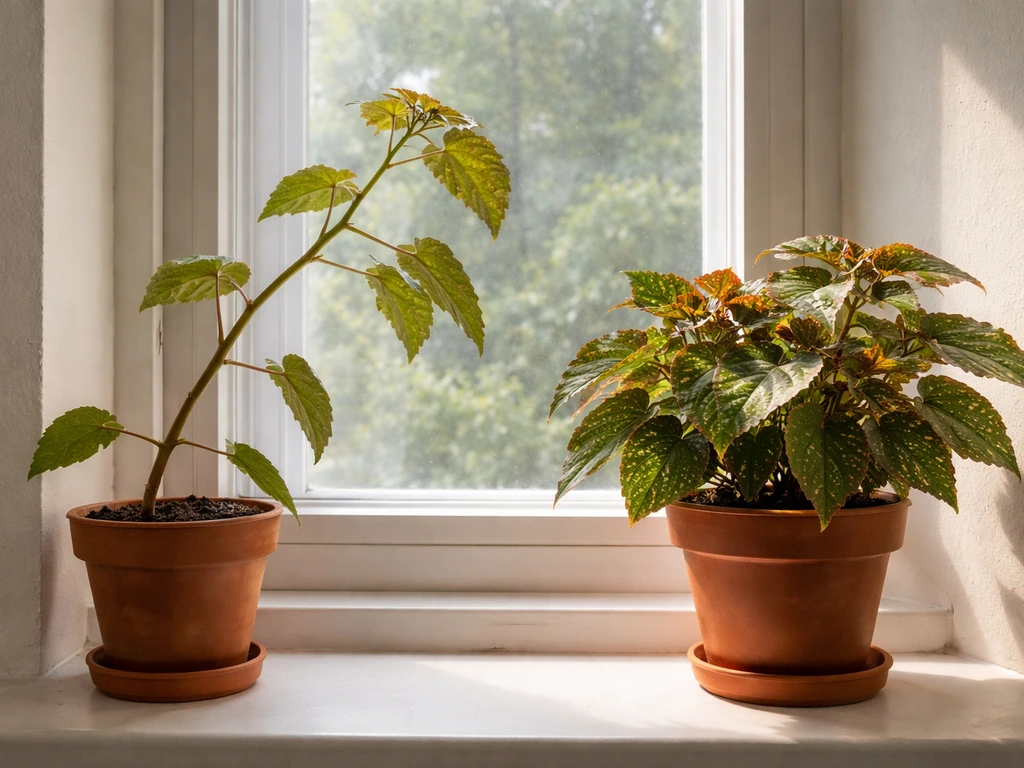
This is the most common culprit by far. Spindly stems, long gaps between leaves, and a plant that leans dramatically toward a window are all signs of insufficient light. People hear 'shade plant' and go too far. Move the plant to a brighter spot with indirect light and watch for new compact growth within a few weeks.
Overwatering and root rot
If the plant looks wilted but the soil is wet, or if you're pulling it from the pot and smelling something musty, root rot is likely already happening. Stop watering, let the mix dry out, and check the roots. Healthy roots are white or tan and firm; rotted roots are brown, mushy, and may smell. Remove the damaged roots, repot into fresh dry mix, and adjust your watering routine to the 'surface dry before you water' method.
Wrong soil texture or pot choice
Dense, compacting potting mix holds too much moisture and suffocates roots. If your soil clumps heavily or stays wet for more than 3–4 days after watering, it's too dense. Add perlite to lighten it, or repot into a coarser mix. For rhizomatous types especially, a shallow clay pot makes a significant difference.
Temperature too low
A begonia on a cold windowsill in winter, or near an air conditioning vent in summer, can stall completely. Growth below 60°F is minimal to none. Check where your plant is sitting and whether drafts or temperature fluctuations are affecting it. This is especially easy to miss with indoor begonias in winter.
Nutrient deficiency (or never feeding at all)
Pale, yellowish leaves with slow growth often point to a lack of nitrogen. If you've never fed your begonia, or haven't fed it since you bought it, a dilute balanced fertilizer every two weeks during active growth will make a noticeable difference. Don't overdo it: salt buildup from heavy feeding causes its own problems (leaf tip burn, slow growth). Dilute and consistent beats heavy and sporadic.
Fungal disease: gray mold or powdery mildew
Fuzzy white patches on leaves or flowers are powdery mildew. Gray-brown fuzzy patches, especially on damaged or old growth, are Botrytis (gray mold). Both thrive in humid, low-airflow conditions. Remove affected leaves immediately, improve air circulation, stop misting, switch to the gravel-tray humidity method, and make sure you're not watering overhead. If the problem persists, treat with an appropriate fungicide.
Pot is too large or the plant is pot-bound
Ironically, both extremes cause problems. An oversized pot holds too much moisture around roots that can't absorb it quickly, leading to rot. A heavily pot-bound plant (roots circling the bottom and coming out of drainage holes) runs out of nutrients and space to expand. Check the roots annually and repot up one size when the plant is actively growing, not mid-winter.
Missing the dormancy window for tuberous types
Tuberous begonias that don't get a proper dormancy period often come back weaker the next season. The American Begonia Society notes that tuberous begonias have a winter dormant period determined by day length, which is why you should adjust feeding and watering for seasonal changes proper dormancy period.
If you're continuing to water and feed a tuberous begonia through fall and winter when it's signaling shutdown (yellowing leaves, withering), you're working against the plant's natural cycle. Let it go dormant, store the tubers properly at 40–50°F, and it'll come back stronger in spring. In general, begonias start showing new growth in spring as temperatures rise, so timing matters for when you’ll see them wake up when do begonias start to grow.
Quick action checklist and next steps to take today
Rather than trying to change everything at once, work through this list and fix what applies to your situation right now.
- Identify your begonia type (wax, tuberous, rhizomatous/rex, or cane-like) so you know which specific adjustments apply.
- Check your light situation: is the plant getting bright indirect light for most of the day, or is it sitting in actual shade? If it looks leggy or pale, move it somewhere brighter.
- Test the soil before watering: press a finger into the top of the mix. If it feels damp, wait. Water thoroughly only when the surface is dry to the touch.
- Check your pot and soil: does water drain freely from the holes? Is the mix light and airy or dense and compacting? Add perlite or repot if needed.
- Check the temperature around your plant: is it consistently above 60°F? Move it away from cold windows, drafts, or AC vents if not.
- Start a dilute feeding routine if you haven't already: use a balanced fertilizer at quarter strength every two weeks during active growth. Stop when temps drop below 60°F.
- If you're growing rex begonias indoors, rotate the pot a quarter turn each week for even growth.
- If you're growing tuberous begonias and it's currently late summer or fall, watch for yellowing as a signal to taper watering and stop feeding. Plan for dormancy storage at 40–50°F.
- For indoor begonias, set up a humidity tray with gravel and water, and make sure the room has decent airflow to prevent mold.
- Inspect leaves for signs of pests or disease (white powder, gray fuzz, stippled or yellowed patches) and treat promptly if you find anything.
Most begonia problems are fixable once you nail down the type and match your care to what that plant actually needs. The core requirements don't change much across types: good indirect light, fast-draining soil, water only when dry, dilute consistent feeding, and warmth during active growth. Get those foundations right and begonias are genuinely rewarding plants to grow. If you follow these basics, begonias are easy to grow for most home gardeners, even if you are new to them. If you want to go deeper on individual types, it's worth looking into the specific needs of non-stop begonias for container performance, or exploring the full begonias growing guide for variety selection and starting from seed.
FAQ
Can I repot my begonia to help it grow bigger?
Yes, but only if you manage the moisture carefully. You can repot any begonia during active growth, but avoid disturbing tubers or buying new soil for a plant that is actively yellowing and preparing to go dormant. Use fresh, fast-draining mix, keep it in bright indirect light after repotting, and for the first 1 to 2 weeks water slightly less than usual while the roots settle.
Should I prune begonias to make them grow larger and fuller?
For begonias, pruning is mainly about removing the parts that are stealing energy and improving light access, not about heavy cutting. Pinch back leggy tips on cane-like or wax types to encourage branching, and remove yellowing or damaged leaves. For rhizomatous types, avoid cutting into the rhizome, just tidy leaves and stems.
How do I know if my begonia pot size is the reason it stays small?
If you see leggy growth plus fewer blooms, it is usually light level or fertilizer timing, not pot size. A full-size pot that is too large can hold excess moisture and slow growth, while a pot that is too small can stress the plant. As a rule, repot only one size up when actively growing, and confirm the soil dries in a predictable window between waterings.
When is the best time to start feeding, especially if my begonia seems stuck?
Start using fertilizer only when growth is underway, meaning new leaves or shoots are visibly expanding. If the plant looks stalled but temperatures are above 60°F, do a quick light check first, then begin dilute feeding. Avoid fertilizing right after repotting, and never fertilize when the plant is clearly entering dormancy or temperatures are below 60°F.
What should I do if my begonia keeps getting mildew or spots despite good watering?
Most begonias do better with dry, even air rather than continuously wet air on the leaves. If you are getting recurring leaf spots or mildew, reduce humidity by improving airflow and using the gravel-tray method instead of misting, then water at the soil level only. Also check that plants are not overcrowded, since shared airflow problems worsen fungal pressure.
Can I propagate begonias to get more plants, or to fix a weak one?
Yes, but choose the method to match the plant type and timing. From seed is slower and depends on enough consistent light, but division works well for rhizomatous begonias when you have an established rhizome section with roots. Cane-like and wax types can also root stem cuttings, while tuberous begonias are best handled through tubers and dormancy cycles.
How can I tell if fertilizer salts are building up, and how do I fix it?
Flushes are different from normal watering. If you suspect fertilizer salt buildup, do a deep watering until a good amount runs out of the drainage holes, then empty the saucer. Repeat this every few weeks if you regularly feed in the quarter-strength way, and always use a fresh, fast-draining mix if you repot.
My indoor begonia is near a window, so why is it still not growing well?
For indoor placement, avoid windows that trap heat against the glass. Even bright indirect locations can be too hot in summer or too cold at night, which can stall growth. If your room drops below 60°F at night or you feel draftiness from the window, move the plant slightly back from the glass or insulate the area.
How should I water a tuberous begonia during fall and winter dormancy?
Your watering method should be adjusted for tuberous begonias during dormancy. Once foliage yellows and the plant signals shutdown, reduce watering so the mix stays lightly moist at most, not wet. In storage, keep tubers dry enough to prevent rot at 40 to 50°F, and restart when new growth appears in spring.
If my begonia leaves are yellow, how do I tell nutrient deficiency from watering or light problems?
Look at the growth pattern: pale yellow leaves can reflect nutrient issues, but they can also appear from stress that limits nutrient uptake. First confirm the basics (light is bright indirect, soil drains fast, and fertilizer is dilute and consistent when warm enough). If everything matches and leaves remain pale, consider adjusting nitrogen slightly by switching to a balanced feed rather than a low-nitrogen one.
Next Article
How to Grow Non-Stop Begonias: Care, Water, Bloom Tips
Practical guide to nonstop blooming begonias: light, watering, soil, fertilizing, troubleshooting, and overwintering tip