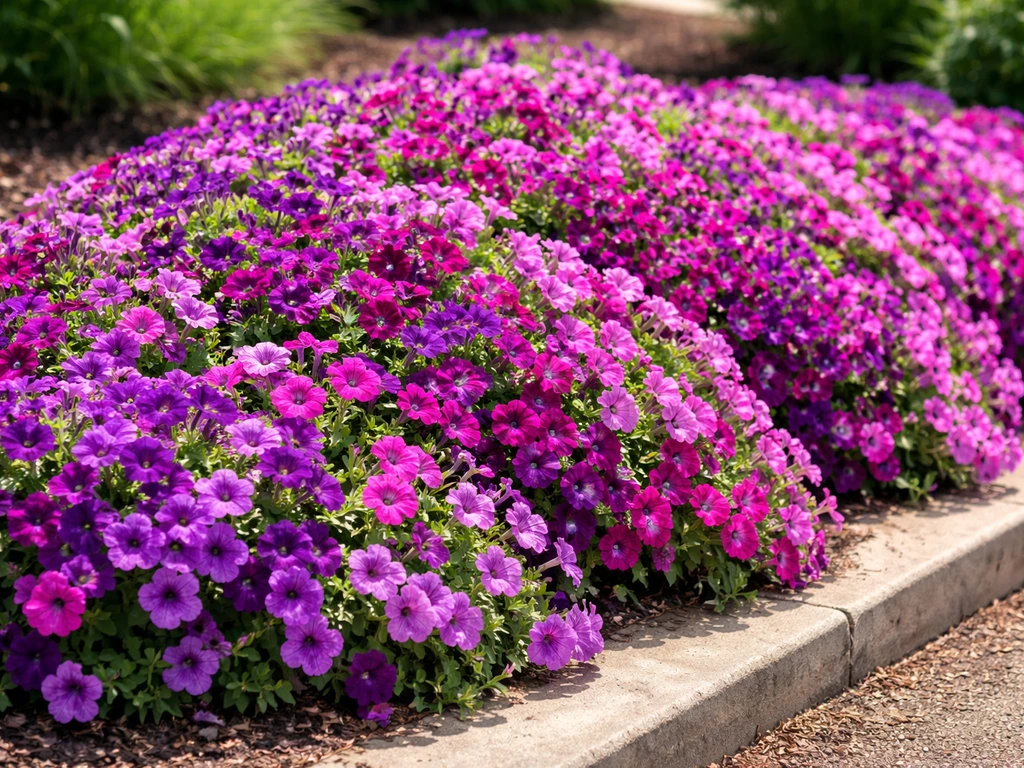
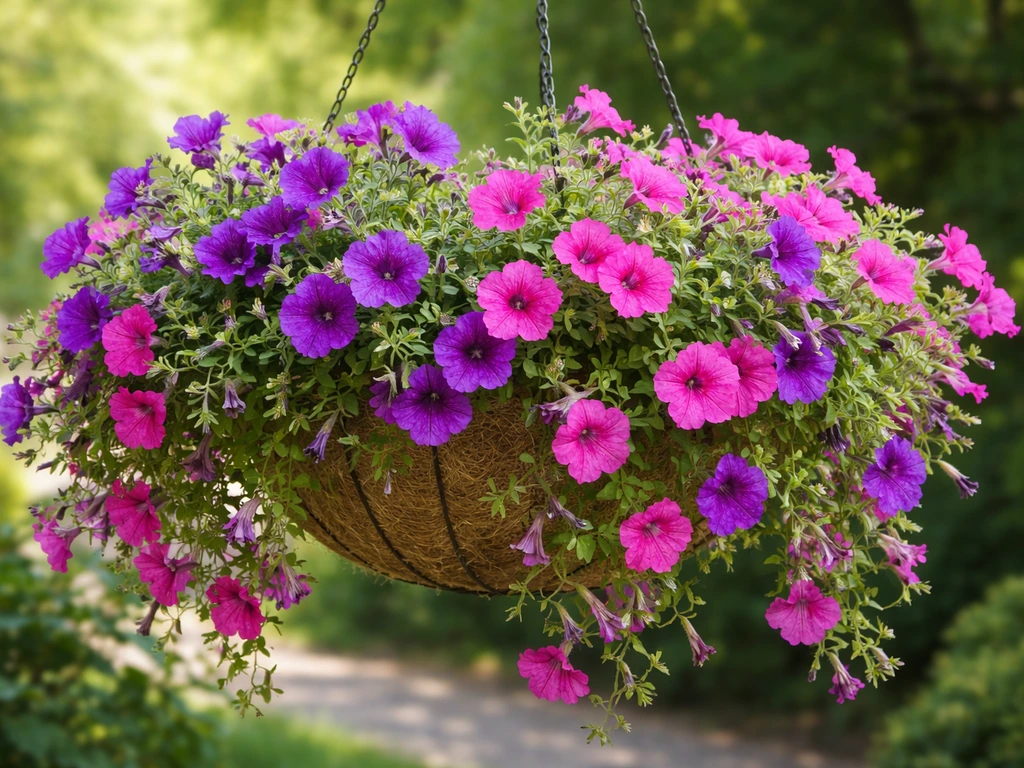
Surfinia petunias are trailing, heat-tolerant annuals that will cascade 2 to 3 feet out of a hanging basket or container and bloom nonstop from late spring through first frost, as long as you give them full sun, a consistent feed, and the right watering rhythm. They're a step up from basic petunias in vigor and trailing habit, but they're not difficult once you understand what drives their performance. If you're wondering how to grow petunia at home, start by matching their sun, feeding, and watering needs to what this article describes for Surfinia basic petunias.
How to Grow Surfinia Petunias From Seed to Bloom

Harriet Whitmore
22 Jun 2026
What Surfinia petunias are and what they actually need
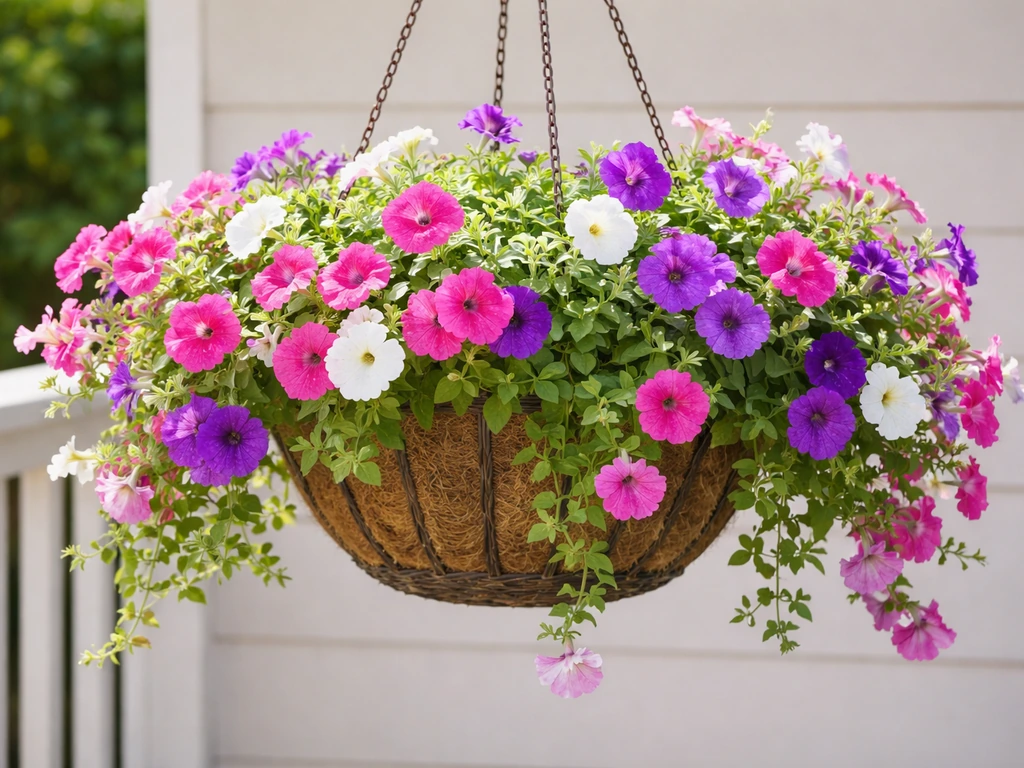
Surfinia is a branded series of trailing petunia developed by Suntory Flowers, and it's one of the most recognized names in the hanging basket world. Unlike upright or compact bedding petunias, Surfinia varieties have a naturally pendulous, spreading growth habit, which is why they're so popular for baskets, window boxes, and container edges. They're treated as annuals in most climates, meaning you plant them after frost, enjoy them all season, and start fresh the following year.
To thrive, Surfinias need a few non-negotiables: at least 6 hours of direct sun per day (they'll tolerate 4 to 6 hours but bloom less freely), consistently moist but well-draining soil, and regular feeding. They're not drought-tolerant the way some perennials are, especially in containers, and they respond to neglect pretty fast. Get those three things right and they almost look after themselves.
Compared to wave petunias or supertunias, Surfinias are very similar in care needs, though they carry a strong reputation for particularly vigorous trailing growth and good heat tolerance. If you've grown wave petunias before, the transition to Surfinias will feel familiar.
Starts vs seeds: which one makes sense for you
Here's something worth knowing upfront: most Surfinia varieties on the market are vegetatively propagated, meaning they're grown from cuttings rather than seeds. You'll see them sold as rooted liners or finished transplants at garden centers. These are the easiest route, especially for beginners, and they're what the majority of commercial growers use.
If you do find Surfinia-style trailing petunia seeds (some seed companies sell trailing petunia mixes with similar habits), you can absolutely start them indoors. Plan on 10 to 12 weeks before your last frost date to get transplant-ready plants, which puts most northern gardeners at a late January to early March start. Germination temperature should be 70 to 75°F, and seeds need light to germinate, so don't cover them. Just press them onto the surface of moistened seed-starting mix and keep it consistently damp but not soggy. Expect germination in 10 to 21 days.
The honest reality of starting from seed is that it requires some patience and good setup. You'll need supplemental lighting (up to 14 hours per day during the seedling stage if natural light is limited), and post-germination, keep temperatures around 75°F for the best early growth. If you're new to starting petunias from seed, it helps to read up on the general process in a guide dedicated to growing petunias or growing petunias fast, since the early-stage care is essentially the same. If your goal is to grow petunias fast, focus on getting strong light and steady moisture during the early stage.
| Method | Start Time | Difficulty | Best For |
|---|---|---|---|
| Rooted liner / transplant from nursery | After last frost | Easy | Most home gardeners |
| Seed started indoors | 10–12 weeks before last frost | Moderate | Gardeners with grow lights and time |
Light, soil, containers, and spacing
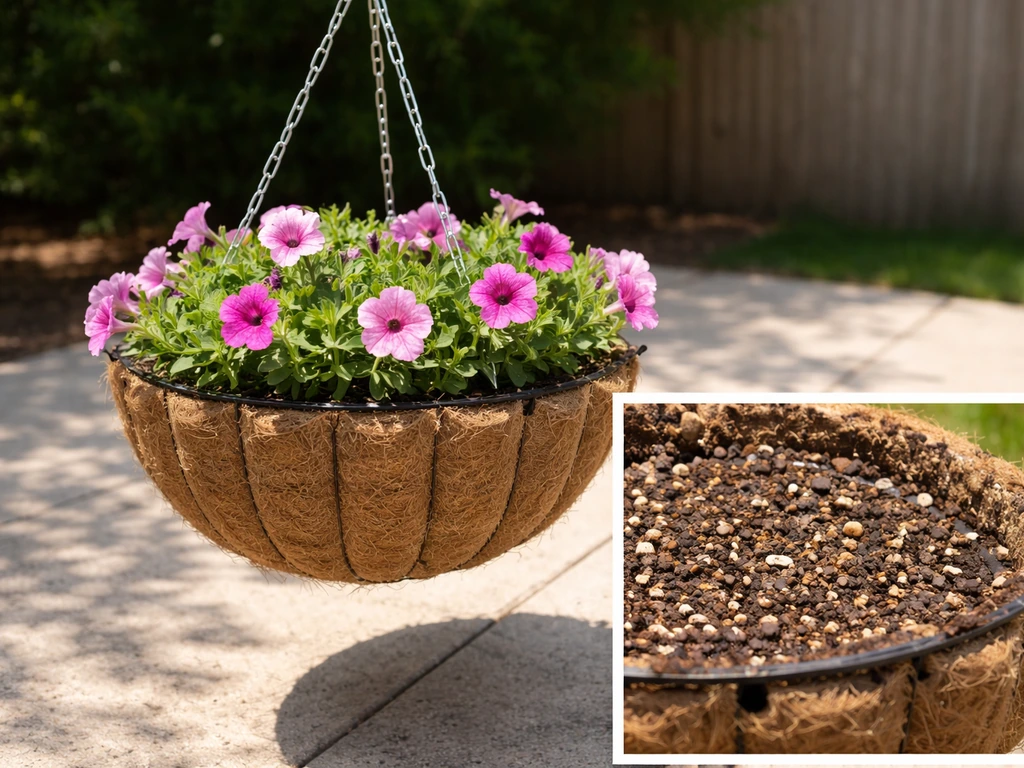
Full sun is where Surfinias perform best. That means a minimum of 6 hours of direct sun, and they'll reward you with more flowers the more light they get. Part sun (4 to 6 hours) works but expect slightly fewer blooms and potentially leggier stems. If you're placing baskets on a covered porch or in a north-facing spot, pick a different plant.
For containers, drainage is critical. Root rot is one of the most common killers of container petunias, and it comes from sitting water, not just overwatering. Whatever pot or basket you use, it needs drainage holes, full stop. A peat-based or coir-based potting mix with good aeration is ideal. Avoid heavy garden soil in containers as it compacts and holds too much moisture.
On sizing: a single Surfinia in a 10 to 12-inch hanging basket is the sweet spot for a full, cascading display. You can plant two liners in a larger 14 to 16-inch basket for faster fill. In window boxes or mixed containers, space plants about 12 inches apart to give trailing stems room to develop without crowding.
If you're planting in the ground, choose a well-draining raised bed or slightly elevated spot. Surfinias can spread impressively in the garden, so give each plant 18 to 24 inches of space to trail outward. Amending heavy clay soil with compost and coarse grit helps drainage considerably.
Watering and feeding: the schedule that keeps them blooming
Consistent moisture is the goal, not wet feet. Water deeply each time, until water runs freely from the drainage holes, then allow the top inch of soil to dry slightly before watering again. In hot, dry weather, containers can need watering once or even twice daily. This sounds like a lot, but Surfinias in full bloom in a small basket are pulling a lot of water through on warm days.
One practical tip: stick your finger an inch into the soil. If it feels dry, water. If it's still moist, wait. Don't rely on a schedule alone because a cloudy week will change things fast.
Feeding is just as important as watering for continuous flowering. At planting time, mix a slow-release granular fertilizer into your potting mix or apply it to the surface. This gives the plant a sustained baseline of nutrition. Then, starting about 2 to 6 weeks after planting (once the plant is actively growing and the initial charge from the potting mix fades), supplement with a liquid fertilizer every one to two weeks.
Choose a formula higher in phosphorus or potassium relative to nitrogen to encourage flowering rather than leafy growth. During the main growing season, aim to keep nitrogen around 75 to 125 ppm if you're using a water-soluble feed. The key is regularity: irregular or skipped feedings are one of the most common reasons Surfinias stop producing flowers mid-summer.
If you want a stronger, healthier display all season, mastering how to grow supertunias comes down to nailing light, watering, and feeding consistently Surfinias stop producing flowers mid-summer.
Pinching, pruning, and deadheading
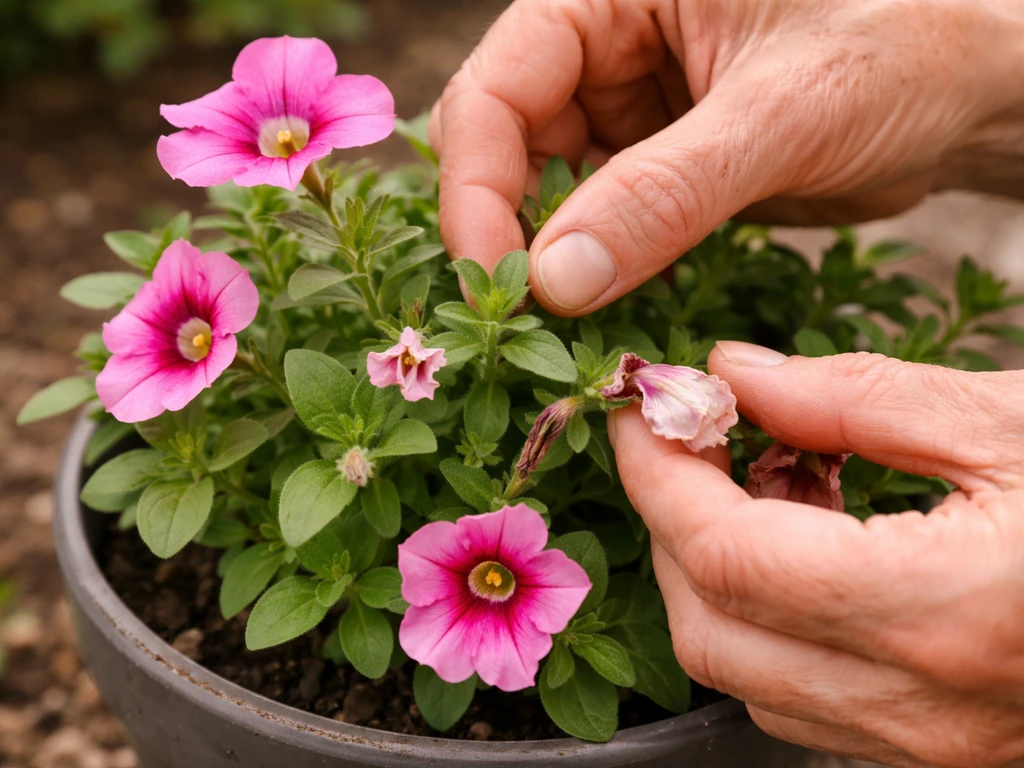
Many newer Surfinia varieties are marketed as self-cleaning, meaning spent blooms fall away on their own and you don't need to deadhead. That's largely true, and it's one of the reasons they're so popular for low-maintenance displays. That said, a light deadheading pass every week or two doesn't hurt if you see spent blooms collecting and potentially harboring moisture.
What matters more than deadheading is pinching, especially early on. Pinching means trimming the growing tips back to encourage branching. More branches means more flowers. Suntory's own guidance for Surfinias recommends one pinch for a 4-inch pot, two pinches for a 6-inch pot, and two to three pinches for a 10-inch basket. Do this in the first few weeks after planting. Pinch each stem back to around 4 inches, and the plant will respond by pushing multiple new shoots from that point.
Mid-season, if your Surfinia starts looking straggly or the trailing stems are long but sparse, don't be afraid to cut it back hard, by up to a third to a half of the stem length. It feels brutal but the plant almost always bounces back within two to three weeks, looking fuller and flowering more heavily than before. This is one of the best tricks for keeping Surfinias performing into late summer when many other annuals are looking tired.
Moving outdoors: transplanting and hardening off
Surfinia petunias are frost-sensitive, so don't rush them outside. Wait until nighttime temperatures are reliably above 50°F and the danger of frost has passed. In most of the northern US and UK, that's somewhere between late April and late May depending on your zone.
If you've started seedlings or purchased young plants that have been growing indoors or in a greenhouse, harden them off before leaving them outside permanently. This means gradually exposing them to outdoor conditions over about two weeks. blank" rel="noopener noreferrer">The Penn State Extension describes it well: you're acclimatizing the plant to direct sun, wind, and cooler night temperatures it hasn't experienced yet, and skipping this step can cause leaf scorch, wilting, or a serious setback in growth. If you want to help your night sky petunias settle in quickly, keep them sheltered from wind and temperature swings during hardening off.
- Start by placing plants outside in a sheltered, partly shaded spot for 2 to 3 hours on day one.
- Gradually increase outdoor time each day, moving to more sun over the first week.
- By the end of week two, the plant can stay outside in a sunny spot, as long as no frost is forecast.
- After hardening off is complete, transplant into their final container or garden position.
When transplanting, water the rootball well before removing from its nursery pot and again after settling it into its new home. This reduces transplant shock significantly.
Troubleshooting the most common Surfinia problems
Seeds won't germinate
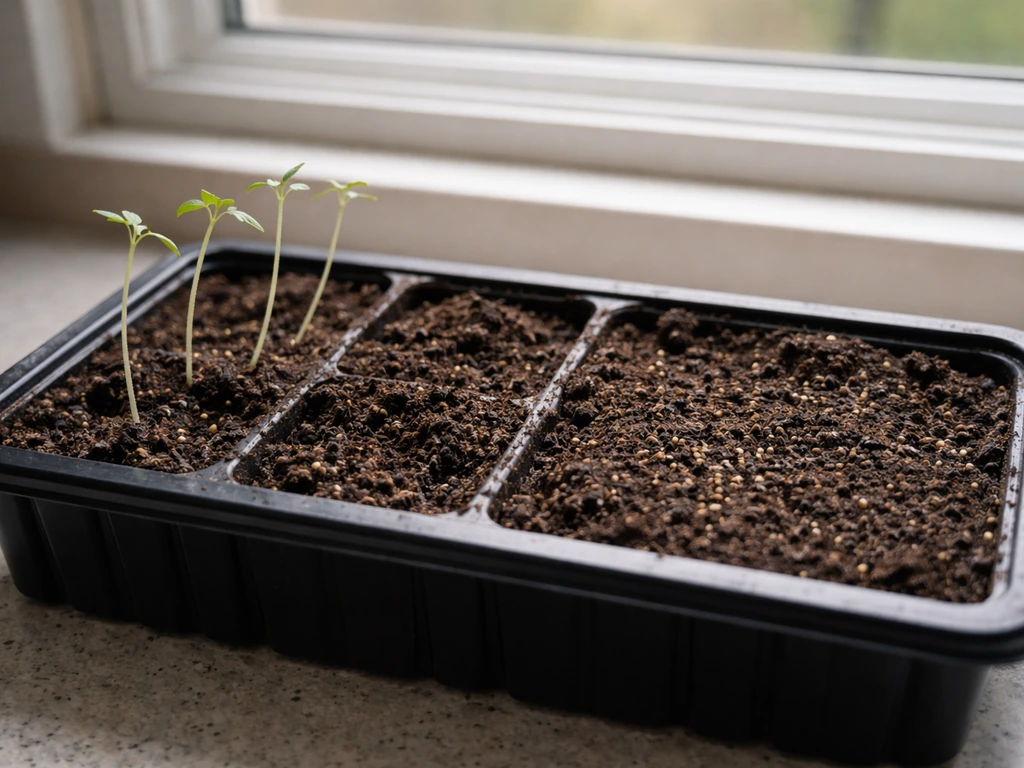
The two most common causes are seeds buried too deep (petunia seeds need light, so surface-sow only) and temperature too low (keep the medium at 70 to 75°F consistently). If your setup is cool, a seedling heat mat helps a lot. Also check that your seed mix stays moist but not soaking. Waterlogged conditions will rot seeds before they sprout.
Leggy, stretched plants
Legginess almost always comes down to insufficient light. If seedlings are stretching toward a window or growing tall and floppy, they need more light immediately. Move them closer to your grow light (aim for 4,000 to 6,000 foot-candles during the seedling stage) or to a sunnier window. Pinching the tips back also helps redirect energy into bushier side growth rather than continued vertical stretching.
Poor or stopped blooming
If a Surfinia that was flowering well suddenly stops or barely produces blooms, run through this checklist: Is it getting enough sun? Has feeding been skipped or inconsistent? Is it root-bound in too small a container? Or has it been in bloom a long time without a cutback? Often a hard prune combined with a dose of liquid fertilizer will kick it back into flower within two to three weeks. Plants that have gone too long without food often lose color and bloom density before stopping entirely.
Fungal diseases: powdery mildew and botrytis
Powdery mildew appears as white or gray powdery patches on leaves, usually when plants are crowded and air circulation is poor. Botrytis (gray mold) shows up as brown, blighted tissue, often after cool wet spells. Both are more common when plants are stressed by overwatering or poor drainage. Prevention is easier than cure: space plants well, water at the base rather than overhead, and don't let water sit on foliage overnight. If you catch it early, removing affected growth and improving air circulation usually stops the spread.
Pests: aphids, thrips, and budworms
Aphids cluster on new growth and can be knocked off with a strong spray of water or treated with insecticidal soap. Thrips cause silvery, distorted petals and are trickier to manage since they hide inside flower buds. Remove heavily infested flowers and treat with a systemic insecticide if the problem persists. Petunia budworm (also called tobacco budworm) is a caterpillar that eats flower buds before they open. You'll notice small holes in buds and no flowers opening. Bacillus thuringiensis (Bt), an organic caterpillar control, is effective if applied when larvae are young.
Yellowing leaves
Yellow leaves can mean a few different things. Lower leaves yellowing in an otherwise healthy plant is often normal aging. Widespread yellowing, especially on newer growth, usually points to nitrogen deficiency from insufficient feeding. If leaves yellow but the veins stay green (interveinal chlorosis), that can indicate iron or magnesium deficiency, often made worse by overwatering or very alkaline soil. A balanced fertilizer with micronutrients usually corrects this within a week or two.
End-of-season care and what to do next year
As temperatures drop in autumn and nights consistently dip below 50°F, Surfinia petunias will start to decline. You can extend their season by moving containers under cover on cold nights, but once heavy frosts arrive, the plants are done outdoors.
If you want to try overwintering a Surfinia, it's possible but requires commitment. Cut the plant back hard, bring it indoors to a bright, frost-free spot with at least a few hours of direct light, and keep watering it lightly through winter. Some gardeners have good success with this, keeping their favorite variety alive to replant the following spring. But it's not guaranteed, and honestly many gardeners find it easier to buy fresh plants or start from seed each year.
An easier approach if you want to preserve a particular variety is to take cuttings in late summer before the first frost. Root them in a glass of water or moist perlite on a bright windowsill. Once rooted, pot them into small containers and keep them growing indoors through winter under a grow light. By late winter you'll have healthy young plants ready to harden off and go outside again, essentially giving you a free head start on next season.
At the end of the season, clean up any spent plants and discard potting mix that had disease issues. A fresh start with new mix each year gives your Surfinias the best possible growing medium without carryover pathogens or depleted nutrients. If the season went well and the soil looks clean, you can refresh with compost and a new round of slow-release fertilizer and reuse it, but don't skimp on this step if you had fungal problems.
FAQ
Should I treat Surfinia petunias as perennials or annuals?
In most regions, Surfinia is sold as an annual because it cannot handle cold snaps. Even if it survives indoors, plants tend to lose vigor over winter, so the most reliable approach is to keep it as a season-long display and plan to buy new liners or take cuttings in late summer.
What’s the smallest container size where Surfinia still performs well?
Choose a pot size that matches the feeding and watering reality. If a container is much smaller than about 10 to 12 inches, it dries too fast, nutrients wash out quickly, and you can get mid-summer bloom drop even with good care.
Can I grow Surfinia petunias in pots using compost or garden soil?
Yes, but it must be a container with excellent airflow and drainage. Use a peat or coir-based potting mix, avoid compost-heavy “garden” blends that stay wet, and water early in the day so foliage dries quickly.
How do I know if my feeding routine is falling short?
Add a balanced slow-release fertilizer at planting, then switch to frequent liquid feeding, because the potting mix runs out of usable nutrients as soon as the plant gets established. If you see flowering slow down after mid-summer heat, resume the liquid feed every 7 to 14 days at the label rate rather than increasing watering alone.
What’s the best way to avoid uneven watering in hanging baskets?
Surfinia can look healthy and still bloom less if watering is inconsistent. The practical check is the top inch, water deeply when it’s drying slightly, and avoid letting containers sit in runoff trays.
When should I pinch versus prune to maximize blooms?
If you want more flowers than trail, pinch early and then do only selective trimming later. During the first few weeks, pinching redirects energy into branching, while later heavy pruning (up to a third to half) is the better tool if it gets leggy or sparse.
My Surfinia droops, is it under water or over water?
Overwatering can cause root problems that look like “droopy but not thirsty” plants. Make sure drainage holes are clear, use an airy mix, and water only after the top inch dries slightly.
Do I really need to deadhead Surfinia petunias?
Most people should not deadhead aggressively because many Surfinia types are marketed as self-cleaning. Still, do a quick pass every week or two if spent blooms are piling up in cool, humid weather, since that can hold moisture and look messy even if it does not fully stop flowering.
How can I prevent mildew without changing my whole watering schedule?
Powdery mildew often worsens when leaves stay wet and plants are crowded. Water at the base, keep spacing reasonable, and remove the worst affected leaves early, then improve airflow rather than relying on repeated overhead misting.
What’s the fastest way to respond to aphids, thrips, or budworm?
For aphids, a steady blast of water knocks them off, but check again after 2 to 3 days because new growth can re-attract pests. For thrips and budworm, you often need targeted treatment timing, especially for budworm before flowers open.
How do I troubleshoot a Surfinia that is getting leggy mid-summer?
Legginess is usually light-related during seedling growth, but in containers it can also be a sign the plant outgrew its space. Confirm you are not overcrowding window boxes (about 12 inches apart is a good rule) and that baskets are receiving at least 6 hours of direct sun.
Is it safe to do a hard cutback during heat waves?
A hard prune can restart flowering, but the timing matters. Plan a cutback on a mild stretch when the plant will get full sun and you can maintain regular feeding afterward, because the regrowth needs consistent nutrition to refill flowers quickly.
Why did my Surfinia seedlings stretch even though I used grow lights?
If you start from seed, don’t bury them and keep temperatures steady at germination range (about 70 to 75°F). If seedlings still stretch, you likely need stronger light intensity or to raise the light closer, since petunias are very sensitive to weak lighting.
If Surfinia can be grown from seed, why don’t all “trailing mix” results look like the same plant?
Many Surfinia are vegetatively propagated, so seed you find may not match the exact plant traits you expect. If your priority is a reliable basket look, buying rooted liners or taking cuttings gives the closest match to the parent plant.
How late in the fall can I keep Surfinia blooming?
When nights begin dipping near 50°F, protect containers under cover on cold nights, but do not fully rely on it during prolonged cold snaps. Heavy frosts end the outdoor season quickly, and damage can reduce bloom even if the plant looks okay temporarily.
Next Article
How to Grow Wave Petunias: Tidal Wave Seed to Bloom Guide
Step-by-step seed to bloom guide for growing wave and Tidal Wave petunias, with light, soil, watering, feeding, and fixe