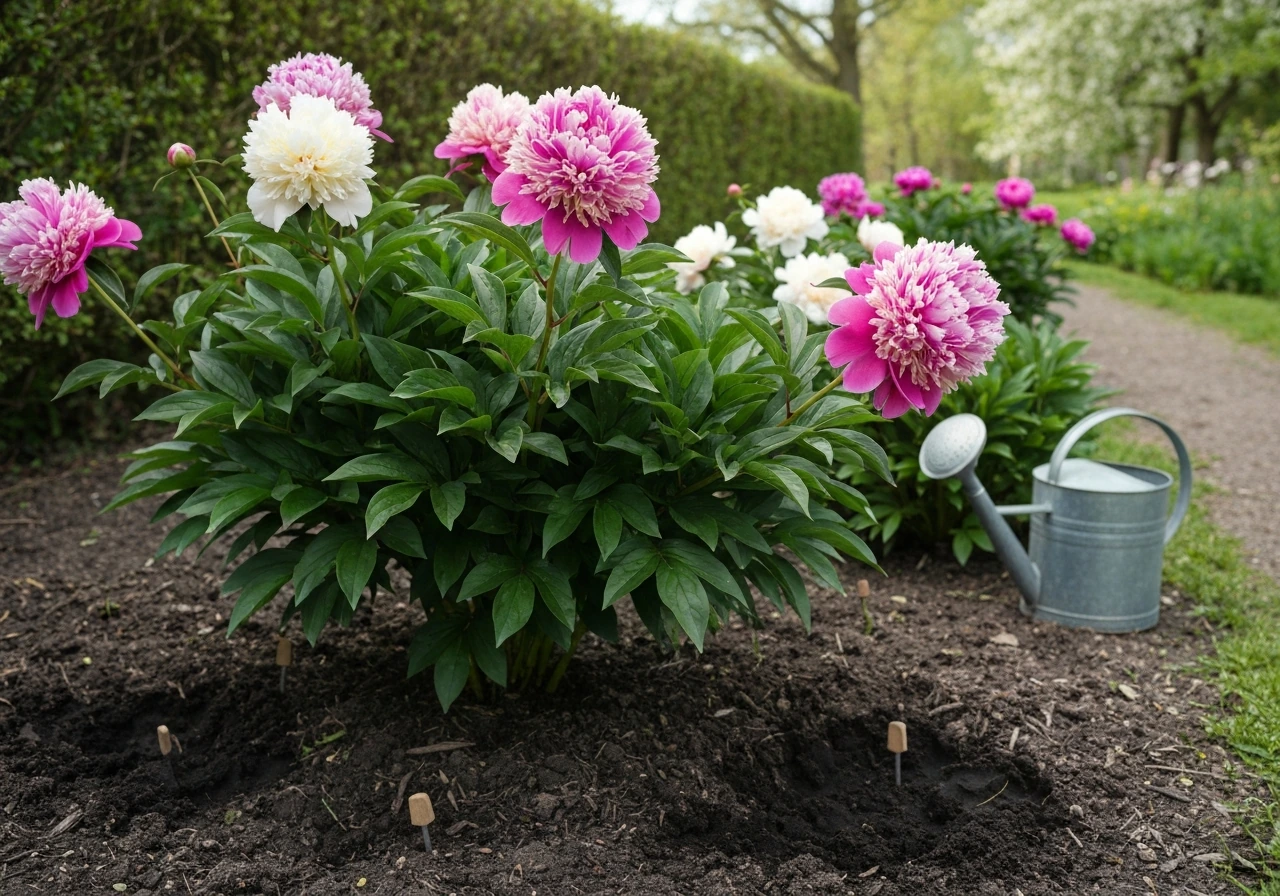
Yes, peonies absolutely grow in Seattle, and they can be spectacular here. The Pacific Northwest climate actually suits herbaceous and Itoh peonies well because the cool, wet winters deliver the chilling hours they need, and our mild summers spare blooms from the scorching heat that shortens the show in hotter regions. The main things working against you are Seattle's famously soggy soils, overcast springs that encourage Botrytis fungus, and the tricky question of planting depth. Get those three things right and you'll have peonies that outlive you.
How to Grow Peonies in Seattle: Complete PNW Planting Guide

Harriet Whitmore
20 Jul 2026
What Seattle's climate actually means for your peonies
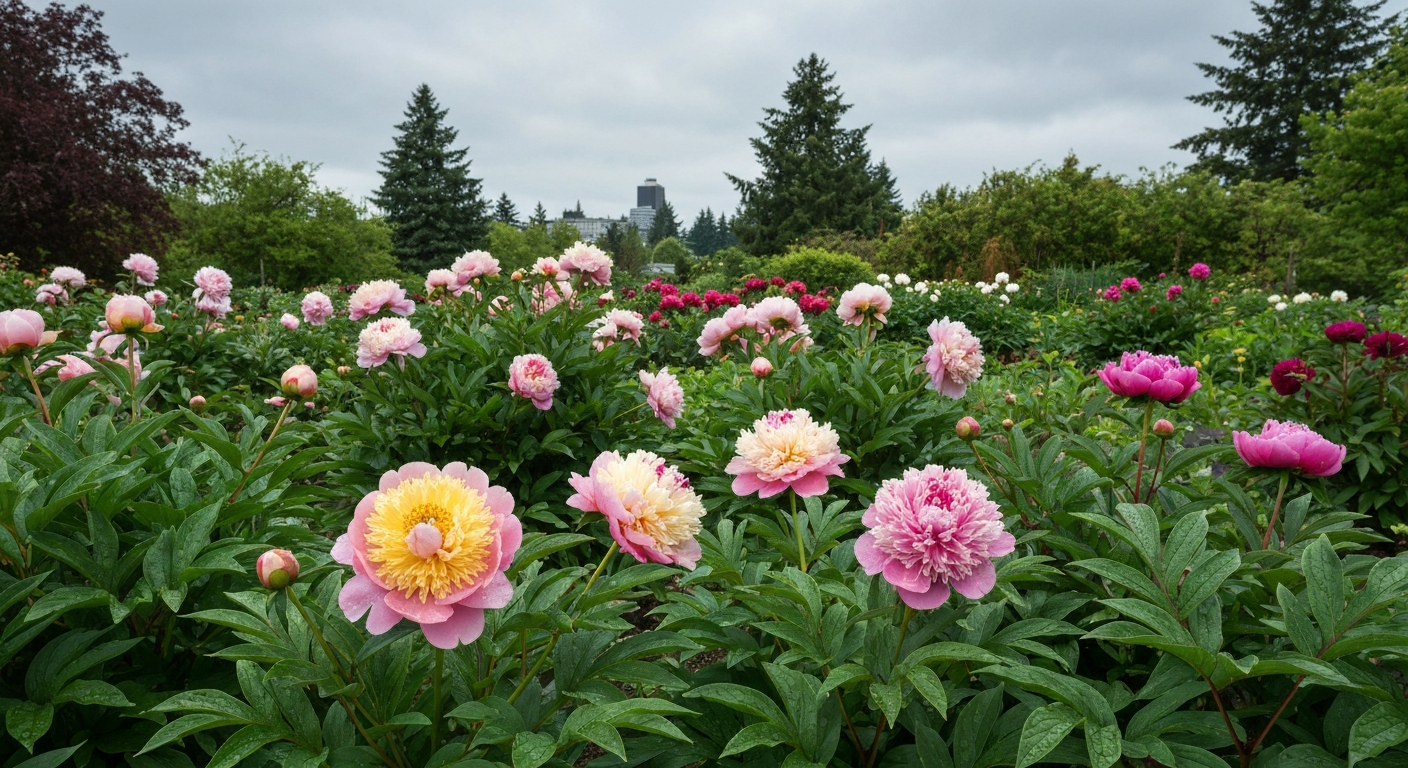
Seattle's climate runs on a marine west coast pattern: mild, wet winters from October through April, and relatively dry, temperate summers from June through September. According to NOAA's 1991–2020 climate normals for Seattle-Tacoma International Airport, mean January temperatures sit around 40–41°F, and July averages a comfortable 65–66°F. We rarely dip below 20°F in winter, and summer highs above 85°F are uncommon. For peonies, this translates to reliable but not extreme chilling in winter (most herbaceous peonies need at least 500–1,000 hours below 40°F, which Seattle delivers), and summers that are cool enough to extend bloom time without baking the flowers.
The real challenge is moisture. Seattle averages about 37–38 inches of precipitation annually, with the bulk falling as persistent drizzle and rain between November and March. That prolonged wetness is exactly what the fungal disease Botrytis paeoniae loves, and it also means our native soils tend to stay saturated into spring planting season. Poor drainage is the number one killer of peonies in western Washington, full stop.
Seattle also has pronounced microclimates. University of Washington and King County urban heat research documents neighborhood-level temperature swings of several degrees, driven by the urban heat island effect, elevation changes, proximity to Puget Sound, and tree canopy coverage. See Urban Heat Island Analysis, City/King County (Green Seattle Partnership) for neighborhood‑level hotspot and canopy maps to locate warmer microclimates for early‑blooming or marginal peony cultivars and cooler sites for varieties that require stronger winter chill Urban Heat Island Analysis — City/King County (Green Seattle Partnership). A garden in Capitol Hill or Beacon Hill with a south-facing slope and pavement nearby can run a half-zone warmer than a north-facing, heavily shaded lot in Wedgwood or Maple Leaf. This matters when you're choosing varieties: warmer urban microclimates can push more marginally zone-hardy tree peonies through winter, while cooler spots with less urban heat provide stronger chilling and sometimes better bloom set for standard herbaceous types.
USDA zones, Seattle neighborhoods, and what zone means for peony shopping
The 2023 USDA Plant Hardiness Zone Map places most Seattle ZIP codes in zones 8b to 9a, reflecting minimum winter temperatures in the range of 15–25°F. This is important when you're buying peonies, because most catalog descriptions label herbaceous peonies as hardy to zones 3–8, which sometimes makes Seattle gardeners nervous. In practice, herbaceous peonies are extremely winter-hardy and won't be killed by our winters. The zone range on the catalog tag is really about summer heat: zones 8 and above can sometimes lack the dramatic hot summer that triggers robust re-bloom and sets energy for next year's flowers. Gardeners in warmer southern climates can consult a separate guide on how to grow peonies in the South for zone-specific planting and care advice. Seattle's mild summers mean your first year or two can feel slow, but established plants catch up.
Gardeners outside Seattle proper should also note the nearby zone variation. Much of the immediate Eastside (Bellevue, Kirkland, Redmond) falls in similar 8b territory. Gardeners further out toward the foothills, or those gardening at higher elevations east of the Cascades, may find themselves in zone 7, which actually gives more classic peony chilling. For gardeners in cooler spots, see our guide on how to grow peonies in zone 7 for zone-specific planting and care advice (internal resource: 42ef589e-e778-4bc8-8847-2163a5bb86ef). If you're gardening in warmer South Sound areas or sheltered spots on the Olympic Peninsula, you may be nudging into zone 9a conditions, where tree peonies and Itoh types tend to perform better than standard herbaceous varieties. Readers gardening in broader zone 7 or zone 8 conditions across western Washington will find much of this guide directly applicable, and those in the warmer zones can check zone-specific peony advice for zone 8 and zone 9 growing. For gardeners in warmer conditions, see guidance on how to grow peonies in zone 9 (reference 80542c2d-e6de-459b-8f36-e58bbaf5f372) for specific tips tuned to those climates. For detailed, zone-specific guidance, see how to grow peonies in zone 8.
The best peony types and top varieties for Seattle
There are three main groups to choose from: herbaceous peonies, Itoh (intersectional) peonies, and tree peonies. All three can work in Seattle, but they have different strengths in our climate. Here's how I think about them.
Herbaceous peonies
These are the classic garden peonies (Paeonia lactiflora and hybrids) that die back to the ground each fall and re-emerge in spring. They're the most reliable performers in Seattle because they handle zone 8 winters without complaint, tolerate our wet springs better than tree peonies (as long as drainage is adequate), and bloom prolifically once established. Look for varieties with good disease resistance, since Botrytis is a persistent challenge in our overcast springs.
- 'Sarah Bernhardt': classic soft pink, very reliable bloomer in western Washington, widely available
- 'Festiva Maxima': white with crimson flecks, early-mid season, excellent disease tolerance
- 'Karl Rosenfield': deep red double, strong stems that resist flopping in our damp conditions
- 'Duchesse de Nemours': creamy white, fragrant, one of the most consistent bloomers in cooler maritime climates
- 'Bowl of Beauty': pink guard petals with cream center, single-form that handles Seattle's overcast conditions better than fully double types (doubles trap moisture and can rot)
- 'Coral Charm': coral-to-peach color shift, semi-double, excellent for cutting, performs well in PNW trials
Itoh (intersectional) peonies
Itohs are hybrids between herbaceous and tree peonies. They die back to the ground like herbaceous types but produce the large, often yellow and orange flowers associated with tree peonies. In my experience and from what I've seen in PNW gardens, Itohs tend to be more disease-resistant than herbaceous types, which is a real advantage here. They bloom a bit later (often late May to June in Seattle), which means they sometimes miss the worst of the Botrytis window. The only drawback is price: divisions run $25–60 each, significantly more than herbaceous bare roots.
- 'Bartzella': large yellow, semi-double, extremely disease-resistant, worth every penny
- 'Cora Louise': white with lavender-purple flares, stunning in person, strong in maritime climates
- 'Hillary': warm salmon-pink, later blooming which suits Seattle's cool spring calendar
- 'Keiko' (Adored): rose-pink, reliable and compact at about 24 inches, good for smaller Seattle gardens
Tree peonies
Tree peonies (Paeonia suffruticosa and related hybrids) are woody shrubs that keep their stems year-round. They can be spectacular in Seattle because our mild winters rarely kill the wood, and the early blooms (often April to early May) coincide with some of our best dry spells. The catch is that a late frost event, which we occasionally get in April, can kill an entire year's flower buds overnight. Siting these in a sheltered location, away from frost pockets, is non-negotiable. Japanese tree peony varieties tend to be more vigorous and disease-tolerant in our climate than Chinese or European types.
- 'Shimane Chojuraku': deep rose-pink, Japanese type, excellent vigor in PNW conditions
- 'Godaishu': pure white, large blooms, very cold-hardy woody stems
- 'High Noon': bright yellow (Daphnis hybrid), semi-double, one of the best yellow tree peonies for western Washington
- 'Renkaku': white, Japanese, extremely vigorous and relatively disease-tolerant
Choosing the right spot in your Seattle garden
Sun
Peonies need a minimum of 6 hours of direct sun daily to bloom reliably. In Seattle, where cloud cover is common through late April and into May, I'd aim for 6–8 hours when possible. A south or west-facing exposure works well. Avoid planting under or near large conifers or maples: the root competition and dense shade will suppress flowering quickly, and the dripping foliage overhead keeps the crown perpetually damp.
Drainage
This is the make-or-break factor in Seattle. Peonies cannot tolerate standing water around their crowns, especially in winter. Before you plant, do a simple drainage test: dig a 12-inch deep hole, fill it with water, and see how fast it drains. If water is still sitting after 3–4 hours, you have a drainage problem that needs addressing before you put a peony in that spot. Raised beds or mounded planting areas are your best friends in Seattle's heavier soils.
Wind and shelter
Heavy double-flowering peonies have large, water-heavy blooms that snap off in wind. Seattle isn't particularly windy in most neighborhoods, but south and southwest exposures near Puget Sound can get gusty in spring. A light windbreak (a fence, hedge, or neighboring shrub) on the windward side helps keep blooms intact without blocking sun.
Spacing and companion plants
Space herbaceous peonies 3 feet (about 90 cm) apart to allow air circulation, which is genuinely important in Seattle's damp spring climate. Itohs and tree peonies need 4 feet minimum, as they spread wider over time. Good companion plants for Seattle peony beds include late-blooming alliums (which fill in after the peony foliage dominates), salvias, and hardy geraniums (Geranium 'Rozanne' is a PNW favorite). Avoid planting aggressive spreaders like mint or lamium right against the peony crown.
Getting Seattle's soils right before you plant
Seattle's urban soils are all over the map. Older neighborhoods often have heavily amended garden beds, while new construction lots frequently have compacted subsoil scraped to within inches of the surface and then covered with a thin layer of fill. The common native soils in King County range from sandy loams near the water to heavy glacial till that behaves more like clay. Before planting, it's worth doing a soil test. WSU Extension and the Washington State Department of Agriculture can connect you with testing labs, and basic tests run $20–40 for pH, phosphorus, potassium, and organic matter.
Peonies prefer a soil pH of 6.0 to 7.0, slightly acidic to neutral. Seattle's soils often run slightly acidic (pH 5.5–6.2) due to rainfall leaching, which is usually close to ideal. If your test comes back below 6.0, add agricultural lime at the rate your lab recommends. If it's above 7.0 (less common here, but possible near old concrete foundations), incorporate sulfur. Don't guess at quantities: over-liming is a real problem and can lock out micronutrients.
For soil structure, WSU Extension recommends incorporating approximately 2 inches of well-matured compost into the top 6–8 inches of your planting area. Work this in across the whole bed, not just the planting hole. For heavy clay or compacted spots, you have two practical options: build a raised bed at least 12 inches deep using a mix of native soil and compost, or mound the planting area 6–8 inches above grade and taper it out over several feet. Either approach lifts the crown above the seasonally saturated zone that plagues Seattle gardens from November through March.
When to plant peonies in Seattle
The optimal planting window for bare-root peonies in Seattle is mid-September through early November. This gives roots 6–8 weeks to establish in still-warm soil before winter shuts things down, which translates directly to more reliable flowering in the first or second spring. If you miss the fall window, you can plant dormant bare roots in very early spring (late February to mid-March in Seattle) as soon as the soil is workable, though spring-planted bare roots sometimes take an extra year to hit their stride.
Container-grown peonies are more forgiving on timing. You can plant them from April through September in Seattle, though planting in the heat of July or August requires diligent watering through our dry summer period. Fall container planting (September to October) is still the easiest path because the plant handles transplant stress much better when it's heading into dormancy than when it's actively growing.
| Planting type | Best window for Seattle | Notes |
|---|---|---|
| Bare-root herbaceous/Itoh | Mid-Sept to early Nov | Preferred: roots establish in warm soil before winter |
| Bare-root herbaceous (spring) | Late Feb to mid-March | Acceptable but may delay first bloom by a year |
| Container herbaceous/Itoh | April to October | Water consistently if planting June–Aug |
| Tree peony (bare root) | Mid-Sept to early Nov | Fall planting strongly preferred; avoid spring |
| Tree peony (container) | April to May or Sept to Oct | Avoid summer transplanting |
Step-by-step planting instructions
Planting bare-root herbaceous or Itoh peonies
- Prepare the bed first: incorporate 2 inches of mature compost into the top 6–8 inches of soil across the entire planting area, not just the hole.
- Dig a hole 12–18 inches (30–45 cm) wide and about 12 inches (30 cm) deep. In Seattle's clay soils, roughen the sidewalls of the hole with a fork so roots aren't restricted by a glazed surface.
- Form a small firm mound of native soil in the center of the hole, roughly 8–10 inches high. This mound will support the crown at the correct depth.
- Set the bare root on the mound with the pink or red eyes (buds) facing up. Drape the roots down the sides of the mound naturally without cramping or bending them.
- Check your depth: the topmost eyes should sit 1–2 inches (2.5–5 cm) below the final soil surface. This is the single most important step. Too deep is the most common reason peonies fail to bloom. If in doubt, go shallower rather than deeper.
- Backfill with the native soil and compost mix. Do not pack in heavy fresh amendments directly against the roots; a modest mix is fine, but straight compost against roots can cause burning and rot.
- Firm the soil gently with your hands to eliminate large air pockets, then water thoroughly. Use roughly 1–2 gallons of water to settle the soil around the roots.
- Mark the location clearly. Bare roots show no sign above ground until March or April in Seattle, and it is very easy to accidentally dig them up over winter.
Planting container-grown peonies
- Water the container thoroughly the day before planting so the root ball holds together when removed.
- Dig a hole roughly twice as wide as the container and slightly shallower than the container depth.
- Remove the plant from its pot and check where the crown (the point where stems meet roots) sits. Note this level carefully.
- Set the plant in the hole so the crown sits at exactly the same depth it was growing in the container, with the topmost buds 1–2 inches below the soil surface. Do not plant deeper.
- Backfill with native soil mixed with a modest amount of compost, firm gently, and water in with 1–2 gallons.
- If your container plant has been growing in a very peat-heavy potting mix, gently tease away some of the outer root ball material and replace with your native soil mix before backfilling, so the root zone transitions smoothly into your garden soil rather than sitting in a water-retaining peat plug.
Planting tree peonies
- Identify whether your tree peony is grafted (most commercially sold specimens are). Grafted plants have a visible graft union: a knobby joint low on the stem where the scion was attached to a rootstock.
- Dig a hole 18 inches (45 cm) wide and 12–14 inches (30–35 cm) deep.
- For grafted tree peonies, plant with the graft union 2–4 inches (5–10 cm) below the soil surface. This encourages the scion to develop its own roots over time and prevents the rootstock from dominating. Check your supplier's specific recommendation, as depths vary from 1–2 inches to 4–6 inches depending on the source stock.
- For own-rooted (non-grafted) tree peonies, plant at the same depth as the container or at the natural crown level.
- Backfill, firm gently, and water in thoroughly. Tree peonies prefer slightly more depth in their planting hole than herbaceous types but the same excellent drainage.
- Stake the plant lightly in the first season if the site gets any wind, to prevent the stem from rocking and breaking the new feeder roots.
Year-round care in Seattle's Pacific Northwest climate
Watering
Seattle's rainy season usually covers peony water needs from October through May without any help from you. The critical period is June through September, when our dry summer kicks in. Established peonies (3 years or older) need about 1 inch of water per week during summer, either from rainfall or supplemental irrigation. First- and second-year plants need more consistent watering because their root systems aren't deep enough yet to access soil moisture reserves. A deep soak once or twice a week during dry summer periods is better than light daily watering, which encourages shallow roots.
Feeding
Peonies in Seattle don't need heavy fertilizing. I apply a balanced low-nitrogen fertilizer (something like 5-10-10 or a bone meal/compost combination) once in early spring just as the red shoots emerge from the ground, and again right after blooming finishes in late May or June. The early feeding supports stem and bud development; the post-bloom feeding helps the plant set energy for next year. Avoid high-nitrogen fertilizers: they push lush, floppy foliage at the expense of flowers. If your soil test showed adequate phosphorus (common in older, well-amended Seattle garden beds), you may not need to fertilize much at all.
Staking
Double-flowered herbaceous peonies in Seattle often need staking because the blooms get heavy, especially after our spring rains. Peony rings or hoop supports placed over the plant in early April, before stems reach 12 inches, are the cleanest solution: the plant grows up through the ring and the stems are supported invisibly. Single and semi-double varieties (like 'Bowl of Beauty' or 'Coral Charm') rarely need staking.
Mulching
Apply a 2-inch layer of bark mulch or composted wood chips around the plant, keeping it at least 3–4 inches away from the crown itself. Mulch helps conserve summer moisture (useful during Seattle's dry season) and suppresses weeds. Do not mulch over the crown in fall or spring: burying the crown even slightly with decomposing mulch can push it too deep over time and will suppress flowering. In Seattle's mild winters, peonies do not need winter mulching for cold protection the way they would in zone 4 or 5.
Deadheading and fall cutback
Remove spent flowers promptly after blooming, cutting the stem back to a set of leaves. This redirects the plant's energy away from seed development and back into root building. In fall, after the first hard frost blackens the foliage (usually November in Seattle), cut herbaceous peonies to 2–3 inches above the soil surface and remove all the cut material from the garden. Don't compost it: diseased stems carry Botrytis spores that will reinfect next year if left in the bed. Bag and bin the material instead.
Botrytis and other common Seattle peony problems
Botrytis blight (Botrytis paeoniae) is by far the most common problem in Seattle peony gardens. It thrives in cool, humid, overcast conditions, exactly what we have in April and May when peonies are putting on their big show. You'll recognize it by wilting, blackening stems and buds that collapse before opening, often with a fuzzy gray mold. WSU's Puyallup research program has done extensive work on peony diseases in the Pacific Northwest, and their guidance consistently points to the same set of preventive practices.
- Space plants at least 3 feet apart for good air circulation
- Remove and dispose of (do not compost) all infected stems immediately
- Cut back and remove all foliage in fall, every year without exception
- Avoid wetting foliage when irrigating; use drip or soaker hose rather than overhead sprinklers
- Apply a preventive copper-based or sulfur-based fungicide spray in early spring when stems are 4–6 inches tall if Botrytis has been a recurring problem in your bed
- Plant in full sun with good drainage; shade and wet crowns dramatically increase Botrytis pressure
Crown and root rot (caused by several soil-borne pathogens) is the second major problem in Seattle and is almost always a drainage issue at its root. If a plant collapses suddenly in spring or fall, often with brown, soft tissue at the crown, suspect crown rot. The fix is almost always improving drainage before replanting: raised beds, mounded soil, or relocating to a better-draining spot. There's no effective soil drench that compensates for saturated conditions long-term.
Tobacco Rattle Virus (TRV) has been documented in Pacific Northwest peony plantings by WSU's Chastagner research group. It shows up as mottled, distorted, or ring-spotted foliage and can cause poor bloom quality. TRV is transmitted by nematodes in the soil. There's no cure for infected plants; they should be removed. If you suspect TRV, contact WSU Extension or your county Master Gardener program for diagnosis help before pulling perfectly good plants.
Troubleshooting: why your Seattle peony won't bloom
Non-blooming is the single most common frustration I hear about from Pacific Northwest peony growers. Almost all cases come down to a small list of fixable causes.
| Problem | Likely cause | Fix |
|---|---|---|
| No blooms, healthy foliage | Crown planted too deep | Carefully dig and re-set so eyes are 1–2 inches below surface |
| Buds form but blast (dry up without opening) | Late frost, drought stress, or Botrytis early in bud development | Protect from late frosts; improve drainage; apply preventive fungicide |
| Weak or no growth after first year | Crown too deep, poor drainage, or root competition from nearby trees | Check depth; improve drainage; relocate if competition is severe |
| Plant bloomed once then stopped | Moved to a shadier spot; root competition increased; crown gradually deepened by mulch accumulation | Check sun hours; pull mulch back from crown; divide if very old |
| Foliage distorted or mottled | Tobacco Rattle Virus or aster yellows | Contact WSU Extension for diagnosis; remove confirmed TRV plants |
| Crown rot, plant collapses | Waterlogged soil, poor drainage | Improve drainage; consider raised bed; replant in a new location |
Dividing and transplanting peonies in Seattle
Herbaceous peonies in Seattle can go 10–15 years before they truly need dividing, and many gardeners never divide at all unless they want more plants. If a plant is declining in bloom quality after many years, or if you simply want to expand your collection, late September to early October is the best window in Seattle. The soil is still warm enough for roots to re-establish before winter, and the plant is heading into dormancy, which reduces transplant stress.
To divide, dig up the entire crown, shake or wash off as much soil as possible, and use a sharp clean knife to cut the crown into sections, each with 3–5 eyes (buds) and a substantial root system. Divisions with fewer than 3 eyes are slow to re-establish. Let cut surfaces dry in the shade for a few hours before replanting, and dust them with powdered sulfur if you've had any disease issues in the bed. Replant at the same 1–2 inch depth and water in well. Expect little or no bloom the first spring after division.
Seattle peony seasonal calendar
| Month(s) | Task |
|---|---|
| Sept to early Nov | Plant or divide bare-root peonies; prepare new beds with compost; soil test if planting new areas |
| Nov to Dec | Cut back herbaceous peonies after frost; remove and bin all foliage; apply bark mulch around (not on) crown |
| Jan to Feb | No action needed; check that mulch hasn't migrated onto crowns after winter storms |
| March | Pull mulch back from crowns; watch for emerging red shoots; apply balanced fertilizer as shoots hit 3–4 inches |
| April | Place peony rings or hoop supports over emerging stems; apply preventive fungicide if Botrytis has been a problem; watch for late frost (cover tree peony buds if below 28°F is forecast) |
| May | Peak bloom for herbaceous types; deadhead spent flowers; avoid overhead watering; enjoy! |
| Late May to June | Itoh peonies bloom; apply post-bloom fertilizer; check for crown rot symptoms |
| June to Sept | Water during dry spells (1 inch per week); weed; monitor foliage; no other action needed for established plants |
| Aug to Sept | Order bare-root peonies for fall planting; source new varieties from specialty nurseries |
Where to buy peonies in Seattle and western Washington
For local sourcing, Sky Nursery in Shoreline typically carries a solid selection of container peonies in spring, and Swansons Nursery in Crown Hill often stocks both herbaceous and Itoh varieties. Bellevue Nursery and Molbak's have also historically carried peonies in the spring season. For the widest variety selection, especially for Itohs, named herbaceous cultivars, and tree peonies, mail-order is usually the better route. Cricket Hill Garden, Peony's Envy, and A&D Peony and Iris Nursery (located in Snohomish County, Washington, making it a regional option) are all well-regarded specialty sources. White Flower Farm offers reliable bare-root stock with detailed growing information.
When ordering bare roots, aim to receive them in September or October so you can plant into still-warm fall soil. Most reputable mail-order nurseries ship on a schedule timed to your region, but it's worth confirming fall delivery when you order. Look for roots with at least 3–5 eyes and a firm, healthy root system with no mushy or blackened areas.
Quick-reference maintenance checklist
- Plant with eyes exactly 1–2 inches below the soil surface, no deeper
- Choose a spot with 6–8 hours of direct sun and excellent drainage
- Improve clay or compacted soils with compost before planting; use raised beds if drainage is persistently poor
- Plant bare roots in mid-September to early November for best results in Seattle
- Space plants at least 3 feet apart for air circulation (4 feet for Itohs and tree peonies)
- Apply a balanced low-nitrogen fertilizer in early spring and again after bloom
- Use peony rings for double-flowered varieties before stems exceed 12 inches
- Never mulch over the crown; keep mulch 3–4 inches back from stems
- Cut back herbaceous types fully in fall and remove all material from the garden
- Watch for Botrytis in cool, wet springs; respond immediately with removal of infected material
- Check annually that mulch accumulation hasn't gradually deepened the crown
Growing peonies in Seattle requires a little more attention to drainage and fungal disease than gardening in drier climates, but these are solvable problems. The reward is a plant that, once established in a well-prepared spot, blooms reliably for decades with minimal intervention. I've seen Seattle garden peonies that were planted decades ago and are still going strong. Pick the right spot, nail the planting depth, and keep those fallen stems cleaned up in fall. That's most of the battle.
FAQ
Will peonies grow well in Seattle and western Washington?
Yes. Seattle’s maritime climate (cool, wet winters and mild summers) is well suited to herbaceous, Itoh (intersectional), and tree peonies. Most Seattle neighborhoods fall in USDA zones 8b–9a, with local microclimates that can shift half‑zones. Peonies need a cold dormant period but not extreme lows, so choose cultivars rated for zones 7–9 and place them in protected microclimates if your site is colder or more exposed.
Which peony types and specific varieties work best for Seattle?
Top types: herbaceous (Paeonia lactiflora) — reliable, long‑flowering; Itoh (intersectional) — sturdy, repeatable blooms; tree (woody) — earlier bloom and different form. Seattle‑friendly varieties: 'Sarah Bernhardt', 'Festiva Maxima', 'Bowl of Beauty' (herbaceous); 'Bartzella', 'Julia Rose' (Itoh); for tree peonies choose locally tested cultivars from Pacific Northwest nurseries. Prefer disease‑resistant or well‑drained tolerant cultivars if your yard is wet.
How does Seattle’s climate affect planting decisions?
Seattle’s cool, wet winters mean soils stay moist and drainage is critical; excessive winter wet contributes to crown rot and Botrytis. Mild summers reduce heat stress but also limit rapid drying. Plant in fall (September–October) so roots establish before winter, check local microclimate (sheltered vs exposed) and use raised beds or improved drainage on clay sites.
What site selection and soil preparation do Seattle gardeners need?
Choose a sunny to part‑sun location with at least 4–6 hours of morning sun; avoid low, waterlogged hollows. Test soil pH (ideal 6.0–7.0). For heavy or compacted Seattle soils, incorporate 2 in of well‑aged compost into the top 6–8 in, or build a 12–18 in raised bed of well‑draining mix. Ensure the planting spot has good drainage; if seasonal saturation occurs, mound or install subsurface drainage before planting.
When and how deep should I plant peonies (bare‑root vs potted) in Seattle?
Timing: Plant bare‑root crowns in fall (September–October) to allow root growth before winter. Potted plants can be planted in fall or spring but fall is preferred. Depth: Follow the critical rule — set herbaceous and Itoh crowns so the eyes (buds) are 1–2 inches (2.5–5 cm) below the finished soil surface. Container plants should sit at the same depth they were grown in the pot. Planting too deep is the most common cause of non‑flowering.
Step‑by‑step planting instructions for Seattle soils
1) Test soil and amend per results; correct pH if needed. 2) Dig a hole ~12–18 in (30–45 cm) wide and deep enough to set crown on a small mound so eyes are 1–2 in below soil surface. 3) For heavy soils, add a handful of compost or grit to improve drainage but avoid fresh manure or strong fertilizer in the planting pit. 4) Spread roots over the mound, set crown depth, backfill, firm gently to remove air pockets. 5) Water thoroughly (1–2 gallons for adult bare‑root). 6) Mulch 2–3 in after soil has settled, but keep mulch away from crowns in spring to avoid deepening. 7) Label and leave undisturbed; avoid heavy feeding first season.
Next Article
How to Grow Peonies in Zone 7: Planting to First Blooms
Step-by-step how to grow peonies in Zone 7 with planting, cold care, feeding, and troubleshooting for first blooms