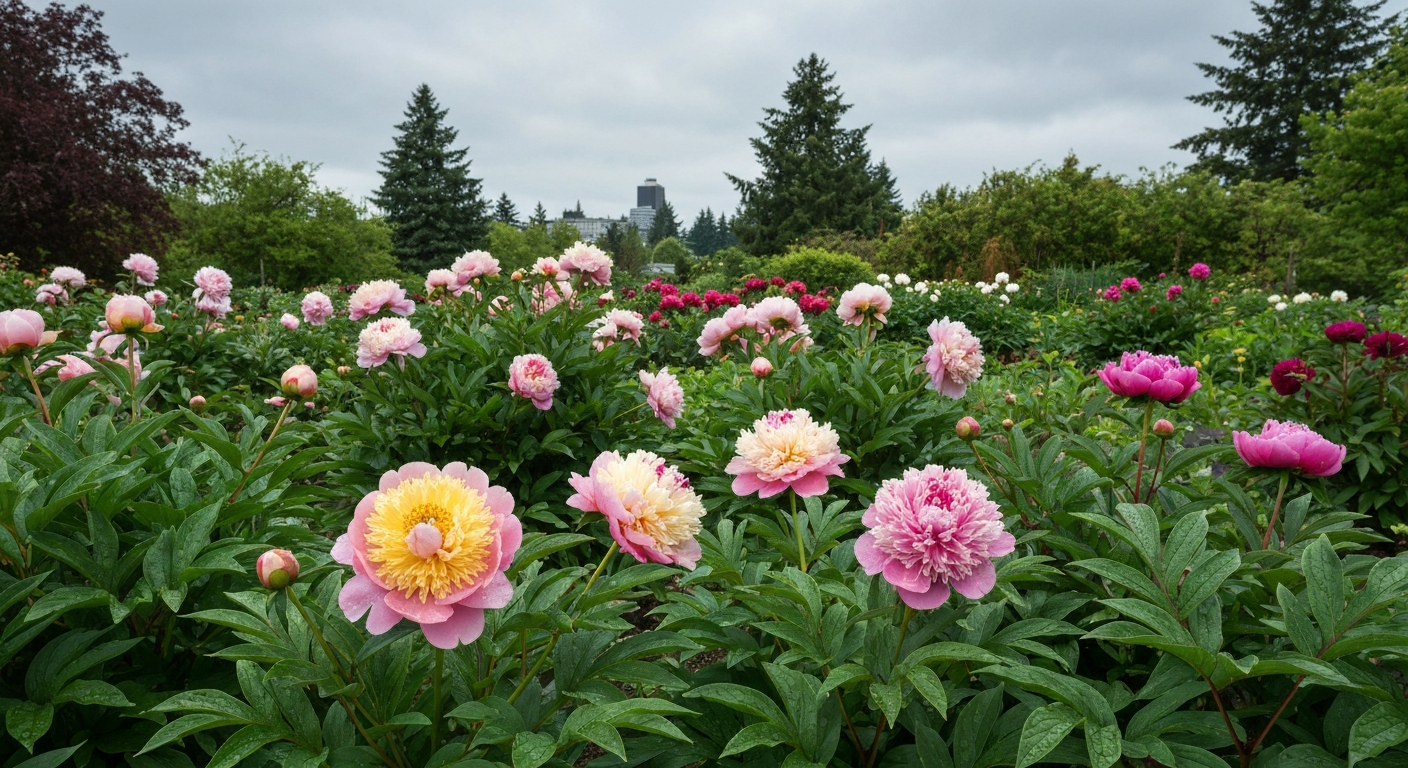
Yes, you can grow peonies in Zone 9, but you have to work with the climate rather than against it. Most classic herbaceous peonies (Paeonia lactiflora) need 500 to 1,000 hours of chilling below 45°F to flower reliably, and Zone 9 winters often fall well short of that. The good news is that Itoh (intersectional) hybrids, tree peonies, and a handful of low-chill herbaceous cultivars are genuinely workable in Zone 9 with the right site, the right variety, and a few smart compensating strategies. I won't pretend it's as effortless as growing peonies in Seattle or the Pacific Northwest, but with realistic expectations and the guidance below, you can get these gorgeous blooms in your warm-climate garden.
How to Grow Peonies in Zone 9: Practical Step-by-Step Guide

Harriet Whitmore
29 Jul 2026
Which peony types actually work in warm climates
Not all peonies are created equal when it comes to heat and low chill. Before you buy anything, it helps to understand the three main types and how they stack up in Zone 9.
Itoh (intersectional) hybrids
Itoh hybrids are the best starting point for Zone 9 gardeners. These are crosses between herbaceous and tree peonies, and they combine the best traits of both: they die back to the ground like herbaceous types (so the crown gets exposed to what little chill your winters offer), yet they carry the heat tolerance and lower chilling requirement closer to tree peonies. They tend to be vigorous, disease-resistant, and they bloom heavily even in marginal chill conditions. If I were starting fresh in Zone 9, I'd plant Itohs first.
Tree peonies
Tree peonies (Paeonia suffruticosa and related species) have woody stems that persist through winter, and they generally need less chilling than most herbaceous varieties. Extension trial work from WSU and Clemson specifically identifies tree peonies as more reliable than most P. lactiflora in Zone 9 and southern U.S. microclimates. They're slower to establish and cost more upfront, but a well-sited tree peony can thrive and bloom for decades with minimal fuss in a warm garden.
Herbaceous peonies
Standard herbaceous peonies (P. lactiflora) are the trickiest in Zone 9. Most cultivars were bred for cool-climate gardens and carry high chilling requirements. That said, there are documented low-chill exceptions. Research out of China has specifically characterized 'Hang Baishao' as a low-chill cultivar, and selecting for this trait is the key to success with herbaceous types in warm zones. A ScienceDirect study quantified chilling requirements for Paeonia cultivars and evaluated chill‑models for low‑latitude winters A ScienceDirect study quantified chilling requirements for Paeonia cultivars and evaluated chill‑models for low‑latitude winters.. Without a low-chill cultivar, you'll likely get foliage but no flowers, or weak, blasted buds.
| Peony Type | Chilling Requirement | Heat Tolerance | Viability in Zone 9 | Notes |
|---|---|---|---|---|
| Itoh (intersectional) hybrid | Moderate-low | Good | Best option | Dies back to ground; strong bloomers in warm zones |
| Tree peony | Low-moderate | Good | Very good | Woody stems persist; slower to establish but reliable |
| Herbaceous (low-chill cultivars) | Low | Moderate | Good with care | Must select specifically for low-chill trait |
| Herbaceous (standard P. lactiflora) | High | Poor | Generally not recommended | Often blooms sporadically or not at all in Zone 9 |
How to choose low-chill and heat-tolerant varieties
Shopping for peonies at a big-box store in Zone 9 is a recipe for disappointment. Most of what you'll find on those shelves was selected for Zone 4 to 7 gardens. Here's what I look for when evaluating a variety for warm-climate performance.
- Low chilling requirement: Look for cultivars specifically described as low-chill or suitable for USDA Zones 8 to 9. Published research has identified 'Hang Baishao' as a low-chill P. lactiflora cultivar with documented performance at low latitudes.
- Itoh or tree peony lineage: These types inherit reduced chilling needs from their parentage, so the starting point is already better for Zone 9.
- Early-season bloom habit: Early-blooming varieties tend to complete their dormancy and bud development before heat stress peaks in late spring.
- Heat tolerance notes: Some specialty nurseries now label cultivars with zone suitability up to Zone 9; always check the upper zone limit, not just the lower.
- Source from reputable peony specialists: Specialty nurseries that trial their own plants in comparable climates give you far more reliable zone data than generic labels.
- Avoid double-flowered forms with very heavy bloom weight for your first planting: They demand more energy reserves to open fully, which is harder to sustain in warm-climate conditions.
Recommended cultivars for Zone 9
This is not an exhaustive list, but these are varieties that have shown up repeatedly in extension trial work, warm-climate grower reports, and published research as legitimate Zone 9 candidates.
| Cultivar | Type | Bloom Color | Zone 9 Notes |
|---|---|---|---|
| 'Bartzella' | Itoh hybrid | Yellow | One of the most widely recommended Itohs for warm zones; vigorous, prolific bloomer with strong heat tolerance |
| 'Cora Louise' | Itoh hybrid | White with lavender flares | Good heat performance; semi-double flowers, relatively early bloom |
| 'Julia Rose' | Itoh hybrid | Peach-orange-pink blend | Excellent disease resistance; handles warm winters better than most herbaceous types |
| 'Garden Treasure' | Itoh hybrid | Yellow | Early bloomer; one of the original Itoh releases and still highly rated for warm zones |
| 'Hang Baishao' | Herbaceous (P. lactiflora) | White | Specifically documented in peer-reviewed research as a low-chill cultivar; a strong herbaceous candidate for Zone 9 |
| 'Renkaku' (Flight of Cranes) | Tree peony | White | Classic Japanese tree peony with reliable performance in southern U.S. trials |
| 'High Noon' | Tree peony | Yellow | Semi-double yellow; widely grown in warm climates, excellent heat and drought tolerance once established |
| 'Shimane Chojuraku' | Tree peony | Pink | Proven warm-climate performer; later bloom extends the season |
Picking the right spot in your Zone 9 garden
Site selection in Zone 9 is honestly more important than anywhere else. A poor site choice can doom even the most heat-tolerant cultivar. Here's how I think through it.
Sunlight and afternoon heat
Peonies need at least 6 hours of direct sun to bloom well, but in Zone 9 that afternoon sun can be brutal from late April onward. The sweet spot is morning sun with dappled shade or a structure blocking the harshest west-facing afternoon exposure. An east-facing bed that gets strong morning light but is protected by a fence, tree canopy, or wall from 2 PM onwards is close to ideal. I've seen Zone 9 gardeners with a north-facing wall on the west side of their peony bed have noticeably better results than those in full open sun.
Microclimates and chill accumulation
Every Zone 9 property has microclimates, and for peonies you want the coldest one available. Low spots where cold air pools on winter nights, north-facing slopes, or areas shaded from the south in winter all accumulate more chill hours than exposed south-facing beds. Avoid planting near heat-absorbing masonry walls or under roof overhangs that shed radiant heat at night. This microclimate hunting can make a real difference in whether your crown gets the 200 to 400 chill hours that even low-chill varieties need.
Drainage
Crown rot is the single most common way to kill a peony in Zone 9, and standing water is the cause. Never plant peonies in a low-lying area where water collects after rain. If your best microclimate spot has even moderate drainage concerns, build a raised bed or berm rather than planting at grade. A well-drained site with even moderate sun will outperform a cool, shaded site with wet feet every time.
Wind exposure
Some wind circulation is good for drying foliage and reducing fungal disease, but heavy prevailing winds will desiccate blooms quickly in the warm season. A site with moderate air movement but protection from strong, dry wind is ideal. If your yard is very exposed, a loose hedge or open fence upwind can buffer without trapping humid air around the plants.
Soil preparation before you plant
Peonies are long-lived plants. A crown planted today could be feeding your grandchildren's garden 50 years from now. Getting the soil right at planting time is worth the effort because you won't get another easy chance to fix it. Extension guidelines consistently point to the same targets: well-drained loam, pH between 6.5 and 7.0, and good organic matter content.
Testing and adjusting pH
Don't guess at pH. A $15 soil test from your county extension office tells you exactly what you're working with. If your soil is too acidic (below 6.5, common in parts of Zone 9 with high rainfall), work agricultural lime into the bed according to the test recommendation. If it's alkaline (above 7.0, common in drier Zone 9 regions), elemental sulfur or an acidifying fertilizer can bring it down. Adding lime or sulfur without a test is just as likely to make things worse.
Improving soil structure
Work 3 to 4 inches of compost into the top 12 to 18 inches of the planting bed. In Zone 9 clay soils, which are common across California, Texas, and the Gulf Coast, this step is non-negotiable for drainage. In sandy soils typical of parts of southern California and the Southwest, the compost improves water and nutrient retention. Either way, you're building toward that well-drained loam that peonies thrive in.
Raised beds and berms
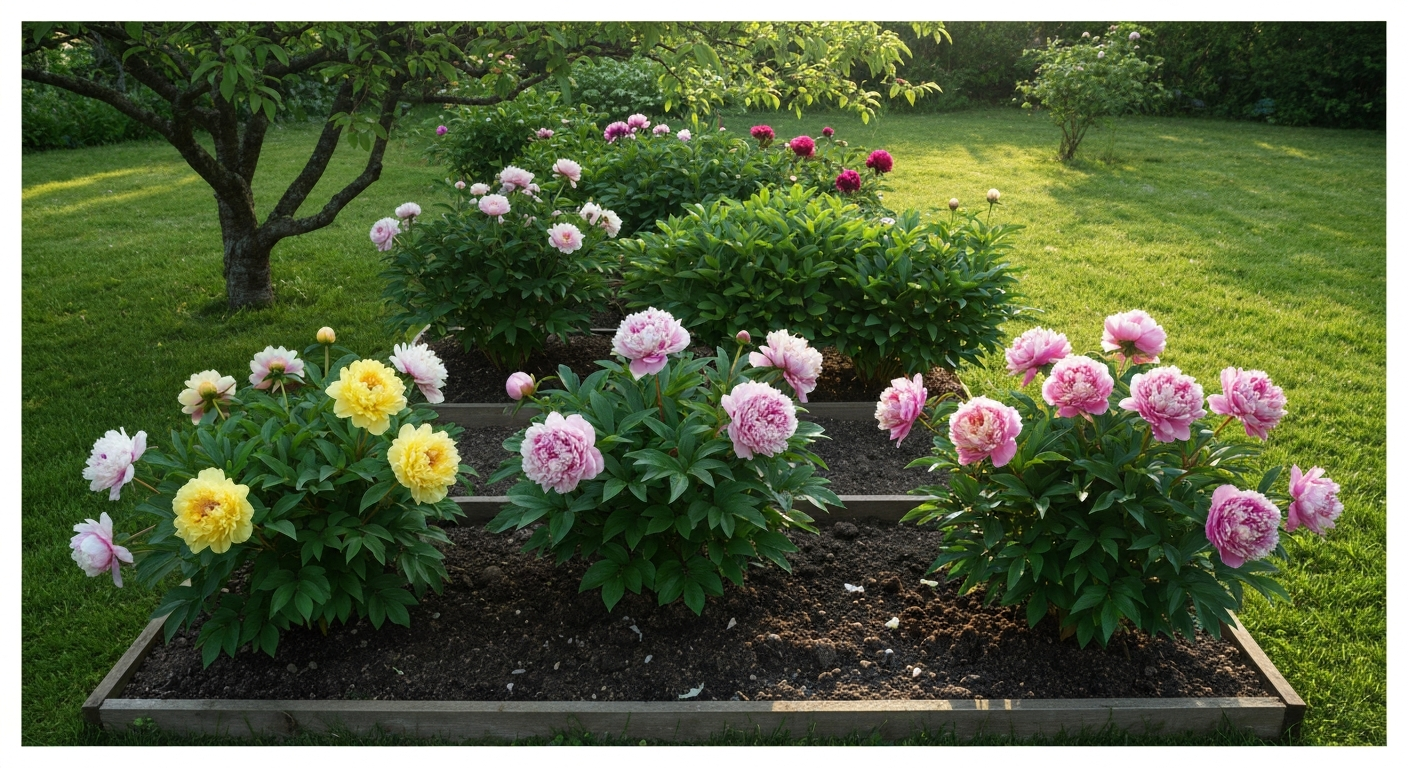
If your native soil drains poorly or you're uncertain, a raised bed or berm built 10 to 12 inches above grade is far superior to amending in place. Fill with a blend of native topsoil, coarse perlite or horticultural grit, and compost (roughly 50/30/20 by volume). This guarantees the fast drainage that Zone 9's warm, wet winters (or irrigation-heavy summers) demand.
Planting timing, depth, and chilling methods
When to plant in Zone 9
In cooler zones, peonies go in the ground in September or October. In Zone 9, the heat lingers well into fall, so I recommend waiting until November or even early December to plant. Soil temperatures below about 60°F give newly planted roots a better chance to settle in before attempting dormancy. Planting too early in warm fall soil invites rot and poor establishment.
| Task | Zone 9 Timing | Notes |
|---|---|---|
| Refrigerator chilling (pre-conditioning) | October: begin 4–6 weeks before planting | Store bare-root crowns at 35–40°F (~2–4°C) in barely moist peat or sawdust |
| Plant bare-root crowns in ground | November to early December | After soil cools below ~60°F |
| First growth emerges | Late January to February | Timing varies by cultivar and winter chill received |
| Bloom period | March to April (most Zone 9 sites) | Tree peonies often bloom earlier than herbaceous or Itoh types |
| Post-bloom fertilizing | April to May (after petals drop) | Low-nitrogen balanced fertilizer |
| Summer dormancy care | June to August | Reduce watering; maintain light mulch ring |
| Cut back herbaceous and Itoh tops | October to November (after frost or full senescence) | Remove all debris; do not leave stems as overwintering habitat for Botrytis |
| Divide or transplant (if needed) | November | Only when dormant; replant immediately |
Planting depth, this is where most Zone 9 gardeners go wrong
Planting depth is critical and counterintuitive. For herbaceous peonies in Zone 9, the top bud (eye) on the crown should sit no more than 1 inch below the soil surface, and many extension sources recommend just 0.5 to 1 inch (1.3 to 2.5 cm) for warm climates. Planting deeper actually inhibits flowering, partly by further insulating the crown from the cold air it needs to accumulate chill. NC State Extension explicitly warns that too-deep planting in warm areas is a primary reason plants fail to bloom. For tree peonies, the guidance flips: if you have a grafted plant, the graft union should go 4 to 6 inches below grade so the scion develops its own roots and doesn't get overtaken by rootstock suckers.
Artificial chilling (pre-conditioning) for bare-root crowns
This is one of the most effective tools Zone 9 gardeners have. If you're buying bare-root crowns in late summer or early fall, you can pre-condition them in your refrigerator before planting to supplement whatever natural chill your winter delivers. Here's the protocol based on research and postharvest trial data:
- Inspect the bare-root crown: trim any rotted or damaged roots back to healthy tissue.
- Wrap the crown in barely moist (not wet) sphagnum peat moss or coarse sawdust. The material should feel slightly damp when squeezed but release no water.
- Place in a breathable bag or open cardboard box with ventilation holes. Avoid airtight plastic, which traps moisture and promotes rot.
- Store at 35 to 40°F (2 to 4°C) — a standard refrigerator vegetable drawer works. Keep away from ethylene-producing fruit like apples and pears, which can damage dormant buds.
- Chill for 4 to 6 weeks. Research trials using artificial chilling at approximately 4°C have demonstrated shoot emergence and bud development in cultivars adapted to warm climates.
- Check weekly for mold. If any appears, remove the affected material, dust lightly with sulfur powder, and re-wrap with fresh peat.
- Plant out after the chilling period once your soil has cooled to below 60°F, typically November to early December in Zone 9.
This pre-conditioning approach won't fully replace a naturally cold winter, but it meaningfully improves establishment and first-year bloom chances, especially when combined with a naturally cool planting microclimate on your property.
Growing peonies in containers in Zone 9
Container growing is actually a smart strategy for Zone 9 because it gives you control over two variables that field planting doesn't: you can move the pot to a cooler spot in winter to maximize chill accumulation, and you can dial in the soil mix for perfect drainage. I've heard from Zone 9 gardeners who routinely wheel their potted peonies into an unheated garage or under a covered patio during the coldest weeks to protect them from sporadic warm snaps that rob chill hours.
Container size and setup
Go big. WSU Extension recommends 18 to 24 inch diameter containers (roughly 45 to 60 cm), and I wouldn't go smaller than that. Peonies have substantial root systems and need both depth and volume to develop properly. Terracotta and unglazed ceramic work well because they breathe and allow some evaporative cooling of the rootzone in summer, but they're heavy. Large food-grade nursery containers or half-barrels are practical alternatives. Whatever you use, make sure there are multiple large drainage holes.
Soil mix for containers
Standard potting mix alone is too water-retentive for peonies in Zone 9. I blend approximately 50% high-quality potting mix with 30% coarse perlite and 20% fine pine bark fines. This gives excellent drainage while retaining enough moisture and nutrients. Top-dress with a thin layer of compost each spring rather than trying to completely replace the mix. WSU Extension notes that repotting every few years keeps root development healthy; when you do repot, refresh the entire mix.
Watering container peonies
Container peonies dry out faster than ground-planted ones, especially in Zone 9's warm summers. During the growing season, check soil moisture every two to three days. The goal is consistently moist but never waterlogged. In summer dormancy, back off significantly but don't let the mix go completely bone dry, which can desiccate roots and kill dormant buds. Aim for about 1 inch of water equivalent per week during active growth, adjusted for temperature and evaporation rate.
Chilling and winter care for containers
This is where containers earn their keep in Zone 9. In November, move pots to the coldest, most exposed spot on your property where they'll accumulate maximum natural chill without being in standing water. An open north-facing patio, a spot against a north wall, or an unheated shade structure all work well. If a warm spell arrives (temperatures above 50°F for several consecutive days), you can move the pot into an unheated garage or shed temporarily to pause premature growth. Don't bring pots into a heated space, as this will end dormancy prematurely and eliminate any accumulated chill benefit. Avoid heavy mulching over the crown in containers for the same reason you avoid it in the ground: it insulates the crown and reduces effective chill.
Season-by-season care calendar
Winter (December to February): maximize chill, minimize disturbance
During winter, your main job is to stay out of the way and let your plants accumulate whatever chill the season provides. Keep the area around crowns clear of leaf litter and debris (which can harbor Botrytis fungal spores). NC State Extension and other sources specifically advise against piling heavy winter mulch over peony crowns in warm climates, because it acts as insulation and reduces crown exposure to cold night temperatures. A light, loose mulch ring kept several inches away from the crown itself is fine for moisture retention, but keep it thin.
Spring (February to April): the critical growth window
As shoots emerge in late winter, install supports early. Peony rings, wire hoops, or spiral stakes placed over emerging shoots when they're just a few inches tall are far easier to manage than trying to support flopped stems after the fact. Iowa State University Extension recommends this early installation approach specifically to prevent damage to the heavy blooms that come later. Once buds are visible, begin watering consistently if rainfall is insufficient, targeting about 1 inch per week at the rootzone. Use drip irrigation or soaker hoses rather than overhead sprinklers to keep foliage dry and reduce fungal disease risk.
Post-bloom (April to June): feed and protect
After petals drop, apply a low-nitrogen balanced fertilizer. Extension recommendations consistently point to formulations like 5-10-10 or 3-5-5 (low N, higher P and K) to support root and bud development for next year's bloom without pushing excessive leafy growth that high-nitrogen fertilizers cause. Avoid fertilizing after mid-June in Zone 9; you want the plant to slow down and harden before summer heat peaks rather than pushing new growth into hot weather. Deadhead spent blooms by cutting the stem back to the first healthy leaf.
Summer (June to September): heat stress management
Zone 9 summers are the hardest stretch for peonies. The foliage may look stressed and tattered by August, and that's largely normal. Keep a light mulch ring (2 to 3 inches of wood chips or shredded bark, pulled back from the crown itself) to moderate soil temperature and reduce moisture loss. Water deeply but less frequently than in spring, and stop fertilizing entirely. If you're seeing leaf scorch on your peonies in July and August, add temporary shade cloth (30 to 40% shade) over the plants during the hottest weeks. This is especially helpful for herbaceous types, which are more heat-sensitive than tree peonies.
Fall (October to November): cut back, clean up, divide
As temperatures cool and foliage yellows and collapses, cut herbaceous and Itoh peonies back to just above ground level. Remove all cut material from the bed entirely. Don't compost it unless your compost pile gets genuinely hot, because Botrytis spores overwinter in debris and reinfect plants the following spring. NC State Extension is emphatic about this sanitation step in warm, humid climates where Botrytis blight is a persistent problem. Tree peonies are the exception: never cut them to the ground. Prune only to remove clearly dead or diseased wood. Fall is also the right time to divide overcrowded clumps or transplant peonies that have outgrown their spot.
Propagating peonies by division
Division is the standard way home gardeners propagate peonies, and it's straightforward once you know the timing and technique. Divide in fall (October to November in Zone 9) when plants are dormant. Dig up the entire clump, taking care not to break the brittle roots. Wash off soil so you can see the crown clearly, then use a sharp, clean knife to cut it into sections, each with three to five buds (eyes) and a healthy portion of root. Fewer eyes per division means smaller plants and fewer first-year blooms, but the divisions establish more vigorously. Dust cut surfaces with powdered sulfur or a general-purpose fungicide to reduce rot entry points, then replant immediately at the correct shallow depth. Divisions rarely bloom the first season after division, which is completely normal. Patience is the main requirement.
Troubleshooting common Zone 9 problems
Plant grows well but won't bloom
This is the most common complaint from Zone 9 peony growers, and it almost always comes down to insufficient chill accumulation. First, confirm you're growing a low-chill cultivar or an Itoh or tree peony. If you've been growing a high-chill herbaceous cultivar, switching varieties is the simplest fix. Other causes of non-blooming include planting too deep (eyes more than 1 to 2 inches below grade), too much shade, too much nitrogen fertilizer (which pushes foliage at the expense of flowers), and plants that are simply too young (newly planted peonies often take two to three years to bloom consistently).
Bud blast or bud drop
Buds form but fail to open, turning brown and papery before they develop. In Zone 9, this is often heat stress: a sudden warm spell in late winter or early spring causes buds to initiate before they're ready, and then they stall. It can also be caused by Botrytis blight (see below), erratic watering (letting the soil swing between very dry and very wet during bud development), or phosphorus deficiency. Consistent watering, adequate phosphorus in your fertilizer program, and choosing an earlier-blooming cultivar that finishes before peak heat all help.
Crown rot and root rot
Phytophthora and related crown/root rots are serious in Zone 9's combination of warm temperatures and wet soil. The plant may emerge in spring then suddenly wilt and collapse. Prevention is the only real strategy: perfect drainage, shallow crown placement, and avoiding any overhead irrigation. If you catch it early, you may be able to dig the plant, cut away all rotted tissue back to healthy growth, dust with fungicide, and replant in a different, better-drained spot. A badly rotted crown rarely recovers.
Botrytis blight
Botrytis paeoniae causes dark, water-soaked spots on stems and buds, often with a fuzzy gray mold coating in humid conditions. UC IPM lists it as a principal peony disease in warm, humid climates. The management approach is preventive: remove and dispose of all plant debris in fall, space plants for good air circulation, use drip rather than overhead irrigation, and avoid working around plants when foliage is wet. If blight appears despite these measures, labeled copper-based or other fungicide applications can reduce spread, but sanitation is far more effective long-term than spraying.
Powdery mildew and leaf blotch
Powdery mildew shows as white powdery patches on leaves, usually in late summer as temperatures fluctuate. Leaf blotch (Cladosporium paeoniae) causes purple-red to dark brown spots on foliage. Neither is usually fatal, but both weaken the plant and look unsightly. Good air circulation, avoiding overhead water, and thorough fall sanitation reduce incidence significantly. For persistent powdery mildew, neem oil or potassium bicarbonate sprays applied early and regularly can help.
Ants on buds
Ants are attracted to the sugary nectar that peony buds naturally secrete and do not damage the plant or prevent blooming. No control is needed. This is one of the most common beginner worries, and it's a non-issue.
How Zone 9 compares to other peony-growing regions
Understanding where Zone 9 sits in the wider peony landscape helps calibrate your expectations and clarify which challenges are unique to your situation. If you're also curious about growing peonies in the US South (hot and humid rather than hot and dry), the challenges overlap but the specific disease pressures and humidity management differ. Similarly, gardeners in Zone 7 and Zone 8 face more manageable chill accumulation and have a broader cultivar palette available to them. For a detailed guide tailored to slightly cooler winters, see how to grow peonies in Zone 8 for planting times, chill requirements, and cultivar recommendations. For detailed, step-by-step guidance specific to cooler climates, see how to grow peonies in Zone 7. And cool-summer sites like Seattle operate in near-ideal peony conditions, which is why you'll see enormous, effortless peony displays there that simply aren't replicable in most Zone 9 gardens.
| Region / Zone | Main Challenge | Best Peony Types | Key Difference vs. Zone 9 |
|---|---|---|---|
| Zone 9 (this guide) | Insufficient winter chill + summer heat | Itoh hybrids, tree peonies, low-chill herbaceous | Baseline; requires most active management |
| Zone 8 | Mild chill shortfall; manageable | Wider herbaceous range + Itoh + tree peonies | More cultivars viable; less pre-conditioning needed |
| Zone 7 | Mostly adequate chill; occasional late frost | Most herbaceous cultivars, Itoh, tree peonies | Standard planting guidelines mostly apply |
| US South (hot + humid) | Chill deficit + high humidity + disease pressure | Itoh hybrids, tree peonies | Greater Botrytis and fungal disease challenge than dry Zone 9 |
| Seattle / Pacific Northwest | Near-ideal chill; cool summers | All peony types; widest cultivar range | Minimal chill management; opposite challenge to Zone 9 |
A quick Zone 9 peony checklist
Before you plant, run through this list. It covers the highest-leverage decisions that separate successful Zone 9 peony growers from frustrated ones.
- Chosen an Itoh hybrid, tree peony, or documented low-chill herbaceous cultivar
- Selected the coldest microclimate on my property (north-facing, shaded from south sun in winter, away from heat-absorbing walls)
- Confirmed soil drains well or built a raised bed or berm
- Tested soil pH and corrected to 6.5–7.0
- Incorporated 3–4 inches of compost into the top 12–18 inches of planting bed
- Planned to plant in November to early December (not late summer or early fall)
- Pre-conditioned bare-root crowns with 4–6 weeks refrigerator chilling at 35–40°F if planting in Zone 9
- Committed to planting herbaceous crown eyes no deeper than 1 inch below soil surface
- Set up drip or soaker irrigation rather than overhead watering
- Purchased or built supports (peony rings or hoops) to install at shoot emergence
- Planned fall cleanup to remove all above-ground debris entirely and dispose of it
FAQ
What cultivar‑level chilling requirements (CR) are known for Paeonia species and named cultivars recommended for Zone 9, and what studies measure these values?
Identify peer‑reviewed and trial studies that quantify chill hours/chill portions for P. lactiflora, Itoh (intersectional) hybrids, tree peonies, and known low‑chill cultivars (e.g., 'Hang Baishao'). Source types: peer‑reviewed articles that report CR measurements or models (chill hours, Utah Model, dynamic/chill portions), cultivar trial reports, and molecular studies linking genes to CR. Use these to build an evidence table of cultivar CRs and experimental chill thresholds.
Which peony types (herbaceous, Itoh/intersectional, tree peony) perform best in warm/marginal winters and what empirical trial data support those conclusions?
Consult university extension trial reports, regionally focused cultivar trials (WSU, Clemson, NC State), and published subtropical/low‑latitude experiments comparing survival, flowering, and longevity by type. Prioritize replicated field trials and long‑term observation studies that document flowering success rates in warm zones.
What refrigerated/preconditioning/chilling protocols (temperature, duration, humidity, packaging) have been tested experimentally to substitute for natural winter chill for potted or bare‑root peonies?
Use controlled studies and postharvest/forcing research (horticultural science journals, university trials) that report refrigeration temperatures (commonly 0–4°C / 32–39°F), durations (commonly 2–8+ weeks), and best practices to avoid rot (humidity control, ventilation). Translate protocols into practical stepwise treatments for Zone 9 home gardeners, noting cultivar variability and experimental evidence limits.
What is the scientifically supported planting depth and timing guidance for peony crowns, graft unions, and bare roots in warm climates?
Rely on extension fact sheets and experimental recommendations that specify shallow planting of herbaceous crowns (≈0.5–1.0 in / 1.3–2.5 cm to top eye), deeper placement of tree‑peony graft unions (4–6 in / 10–15 cm), and timing rules for fall planting or chilled spring planting. Use multiple extension sources (Iowa State, NC State, WSU) to derive a consensus protocol tailored to Zone 9.
How should soils be tested and amended for optimal peony establishment in Zone 9 (drainage, texture, pH, organic matter rates)?
Consult extension soil preparation guidelines and peer‑reviewed studies on root rot risk vs drainage. Include recommended soil test parameters, amendment rates (compost incorporation volumes), recommended pH targets (~6.5–7.0), and specific modifications for heavy clays or sandy soils in Zone 9 microclimates.
What container sizes, media mixes, and cultural practices enable successful container peony culture in warm climates, and what repotting intervals are recommended?
Reference extension recommendations (WSU, regional trials) and nursery technical sheets specifying container diameters (commonly 18–24 in / 45–60 cm), deep well‑draining mixes, perlite/stone drainage, and repotting frequency. Include evidence for root temperature mitigation and best irrigation/drainage practices from horticultural studies.
Next Article
How to Grow Peonies in Seattle: Complete PNW Planting Guide
How to grow peonies in Seattle: step-by-step planting, seasonal calendar, best varieties, care, pests, and where to buy