Yes, you can grow peonies in the south, but you have to work with the climate rather than against it. The biggest challenge is not the heat itself but the lack of enough winter cold. Peonies need a certain number of chilling hours (temperatures below 40°F) to break dormancy and set flower buds.
How to Grow Peonies in the South: Varieties, Care, and Tips

Harriet Whitmore
24 Jun 2026
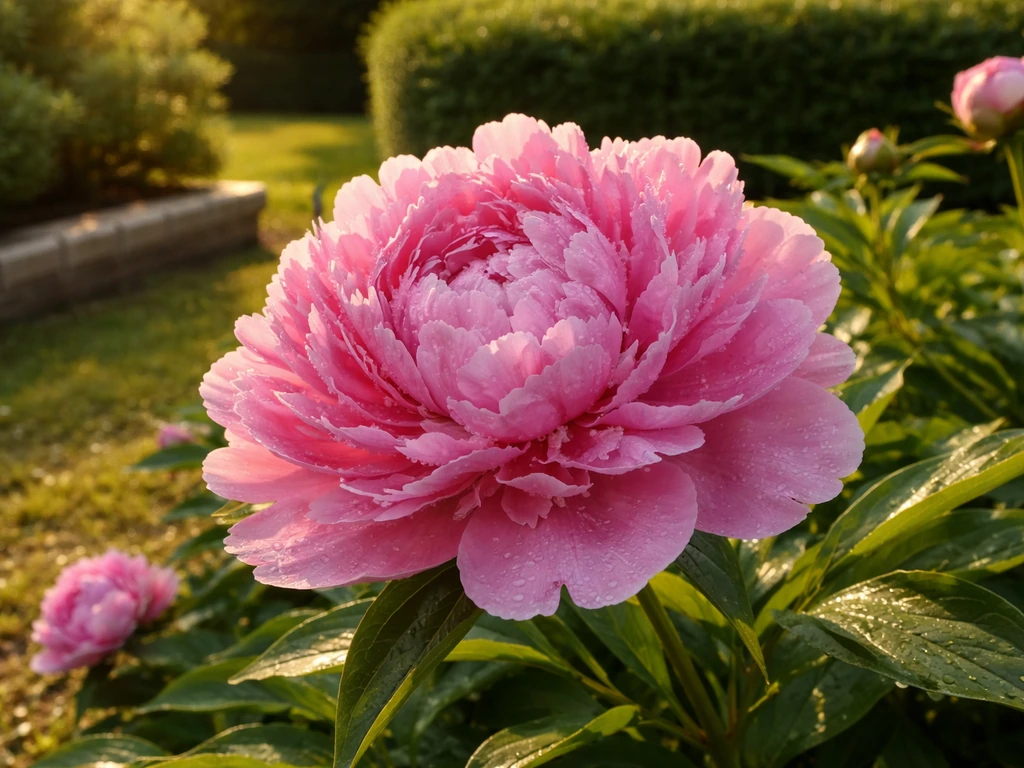
In the lower South, that chilling bank often comes up short, which is why so many southern gardeners end up with beautiful foliage and zero blooms year after year. The fix is choosing varieties bred for low-chill conditions, planting at exactly the right depth, and giving plants a site that mimics cooler conditions as much as possible. Get those three things right and peonies are absolutely doable across much of the South.
Do peonies actually grow in the south, and where?

The short version is that peonies perform best in USDA zones 3 through 7, and the South spans roughly zones 7 through 10 depending on exactly where you are. Zone 7 states like Virginia, North Carolina, Tennessee, Arkansas, and northern Georgia sit right at the edge of reliable peony territory. Gardeners there can grow herbaceous peonies reasonably well with variety selection and smart siting.
For a step-by-step guide, see how to grow peonies in zone 7, including variety choices, planting depth, and winter cold planning. Zones 8 through 9, covering most of South Carolina, Georgia, Alabama, Mississippi, Louisiana, and Texas, are trickier but not impossible. The lower South, roughly zone 9 and warmer, is the hardest because winters rarely deliver enough cold for most traditional varieties.
Itoh peonies (also called intersectional peonies) and certain herbaceous varieties bred for the South have changed what is possible in zones 8 and 9. Tree peonies are also worth considering in the middle South because they require fewer chilling hours than herbaceous types. The rule of thumb I use: if your winters reliably drop below 40°F for at least 6 to 8 weeks, you have a real shot with the right varieties. If you rarely see freezing temperatures, manage expectations and focus on tree peonies or the lowest-chill herbaceous selections.
Chilling requirements and why they matter so much in the south
Peonies use winter cold the way a lock uses a key. Without enough chilling hours, the plant cannot properly exit dormancy, and flower buds simply never form. Most traditional herbaceous peonies need somewhere between 500 and 1,000 chilling hours, which is easy in Minnesota and virtually impossible in South Florida. The middle South typically accumulates 300 to 700 chilling hours depending on the year, which is why results can vary so much from one season to the next. You might get a good bloom year after a cold winter and nothing the following mild year.
Clemson University's home garden specialists are direct about this: peonies often do not perform well in the lower South precisely because of insufficient winter chilling. That is not a death sentence for your peony ambitions, but it does mean you cannot simply order the same variety your grandmother grew in Ohio and expect it to bloom in Atlanta. Understanding chilling is the single most useful thing you can know before you spend money on roots.
Tree peonies (Paeonia suffruticosa and its hybrids) are the exception worth knowing about. They require far fewer chilling hours than herbaceous types, sometimes as few as 100 to 200 hours, making them genuinely viable into zone 9. They are slower to establish and more expensive, but if you are in the deep South, they are often your most reliable path to actual blooms.
Choosing the right peony varieties for southern conditions
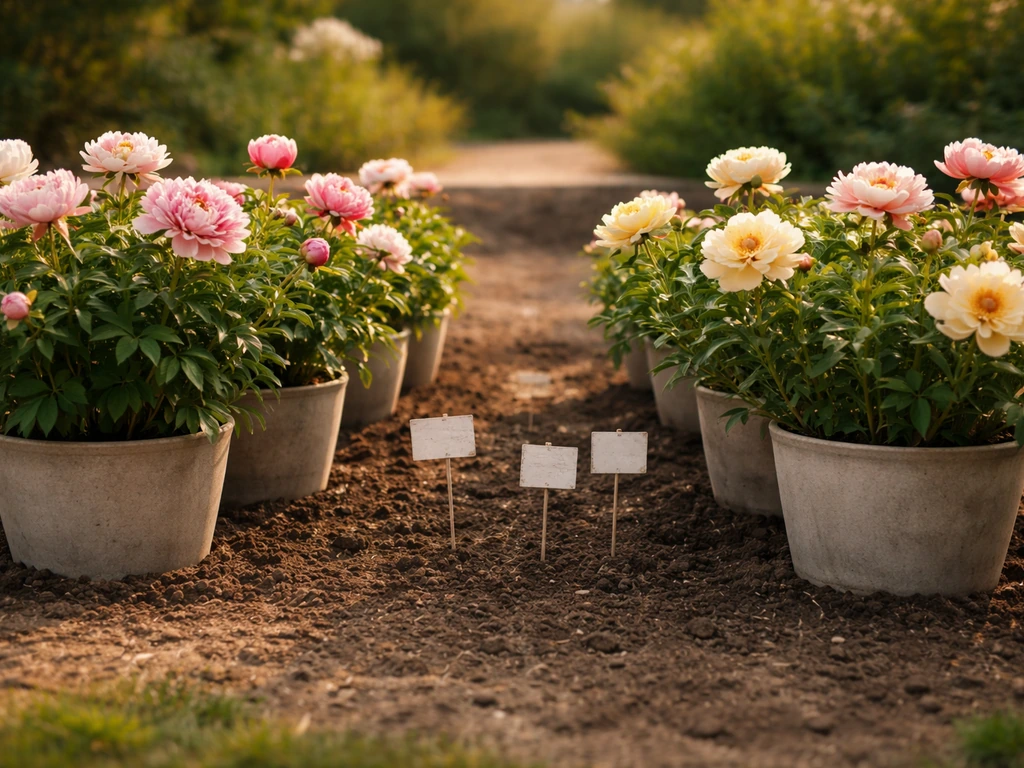
Variety selection is where you win or lose the southern peony game before you ever dig a hole. The varieties that work in warmer zones share a few traits: they require fewer chilling hours, they tend to be early-blooming (finishing before the worst heat arrives), and many have stronger stems that hold up in humidity.
| Variety / Type | Type | Zones | Chilling Need | Notes |
|---|---|---|---|---|
| 'Festiva Maxima' | Herbaceous | 5-8 | Moderate | Classic white double, reliable in upper South |
| 'Sarah Bernhardt' | Herbaceous | 4-8 | Moderate | Pink double, one of the most heat-tolerant classics |
| 'Coral Charm' | Herbaceous | 4-8 | Moderate | Semi-double coral, early bloomer, great in zone 7-8 |
| 'Paula Fay' | Herbaceous | 4-9 | Low-moderate | Hot-pink single, performs well in zone 8 with good siting |
| Itoh 'Bartzella' | Intersectional | 4-9 | Low-moderate | Yellow blooms, extremely vigorous, tolerates more heat |
| Itoh 'Garden Treasure' | Intersectional | 4-9 | Low-moderate | Yellow semi-double, APS Award winner, good in zone 8-9 |
| Tree peony (various) | Tree | 4-9 | Very low | Best deep South option, needs least chilling |
| 'Krinkled White' | Herbaceous | 3-8 | Moderate | Single white, early, finishes before peak summer heat |
Itoh peonies deserve a special mention for southern gardeners. They are hybrids between herbaceous and tree peonies, and they inherit a broader heat tolerance from the tree peony side while keeping the die-back habit of herbaceous types (which makes them easier to manage). 'Bartzella' and 'Garden Treasure' consistently get recommended by southern peony growers for good reason. They are not cheap, but they are among the most reliable performers in zones 8 and 9.
If you follow those same variety and planting principles, you can figure out how to grow peonies in zone 9 with much better odds of blooms zones 8 and 9. If you are gardening in zone 7, you have more variety options and the guidance on growing peonies in zone 7 covers that territory in more depth.
When and how to plant peonies in the south
Timing your planting
Fall is the right planting season for peonies in the South, full stop. Plant bare-root divisions from mid-October through November, while soil temperatures are cooling but before hard freezes lock the ground. Planting in fall gives roots time to establish before the winter chill period begins, which means the plant can take full advantage of whatever chilling hours your winter delivers. If you are growing peonies in Seattle, focus on varieties suited to your winter chilling, then plant and care for them with the same drainage and watering basics described for the South. Spring planting is possible but puts plants under immediate heat stress and typically delays first blooms by an extra year.
Picking the right site
Walter Reeves, one of Georgia's most practical gardening voices, identifies three non-negotiables for southern peony success: loose well-draining soil, protection from afternoon sun, and enough winter cold. That afternoon sun protection is something northern gardeners never think about, but in the South it is critical. A site with morning sun and afternoon shade, ideally created by a tree or structure to the west, keeps soil temperatures lower, reduces heat stress on buds, and extends the bloom season by a few precious days. Full afternoon sun in Georgia or Alabama will cook buds and collapse stems before flowers fully open.
Step-by-step planting
- Dig a hole 12 to 18 inches deep and about 18 inches wide. Peonies resent being moved, so invest time in site prep now.
- Amend the native soil with compost, working it into the bottom and sides of the hole to improve drainage and organic content. In heavy clay soils common in the South, adding coarse sand or perlite helps prevent the waterlogging that causes crown rot.
- Create a mounded cone of soil in the center of the hole to set the root division on top of, with roots draping naturally down the sides.
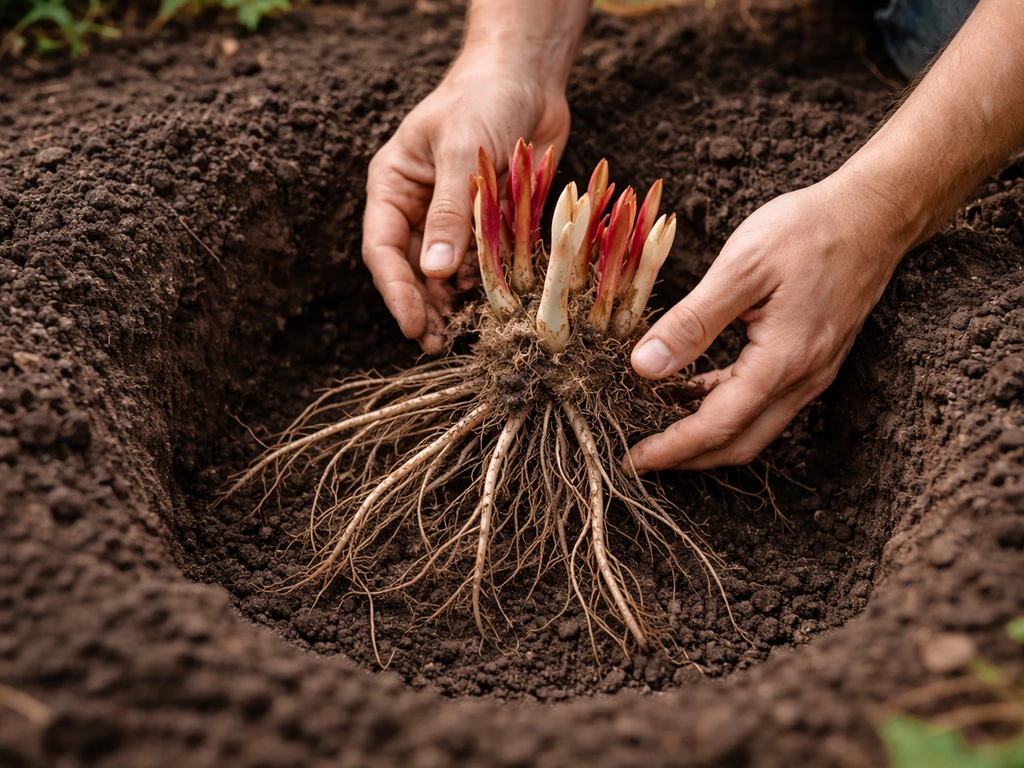
- Position the root so the eyes (the reddish-pink buds on the crown) sit no more than 1 to 1.5 inches below the soil surface in the South. This is shallower than what is recommended in northern climates. In warm zones, planting at 1 inch deep is ideal. Planting too deep is one of the most common reasons peonies never bloom.
- Backfill gently with amended soil and firm lightly to remove air pockets. Do not compact.
- Water thoroughly to settle soil around roots.
- Space plants 3 to 4 feet apart to allow airflow, which helps prevent fungal issues in humid southern summers.
- Choose divisions with at least 3 to 5 eyes when purchasing. Divisions with only 1 to 2 eyes will grow but can take 4 or more years to bloom.
Soil, watering, fertilizing, and mulching through hot summers
Soil
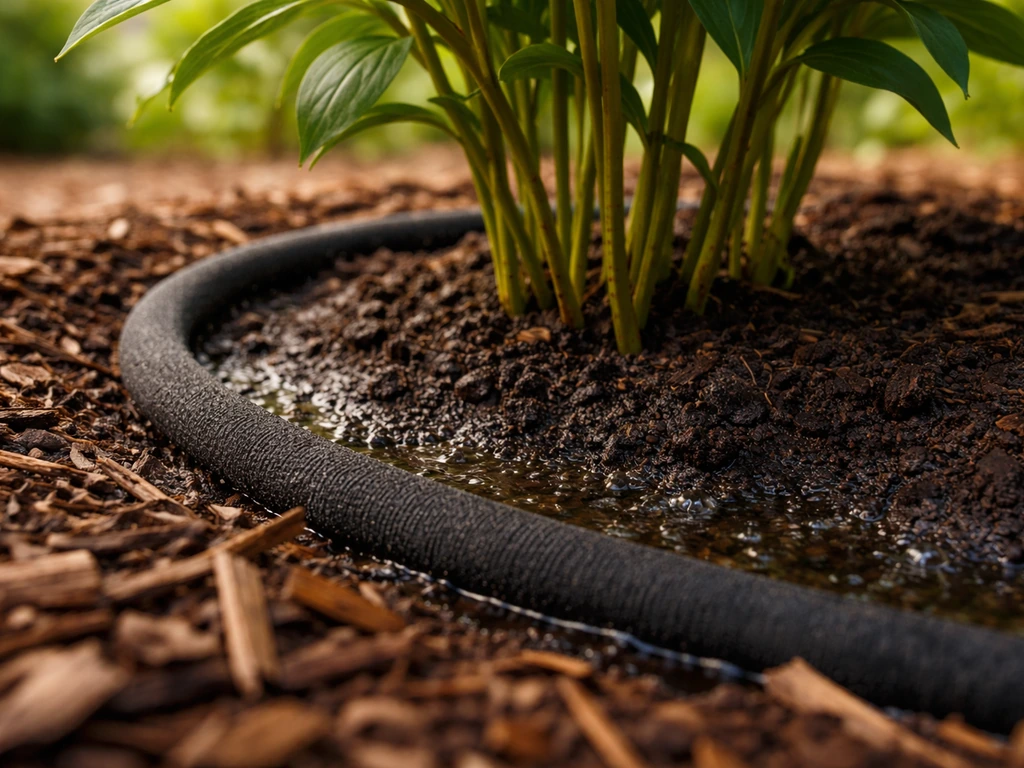
Peonies want slightly acidic to neutral soil, roughly pH 6.0 to 7.0. They absolutely cannot tolerate waterlogged conditions, and in the South's heavy summer rains, drainage is your first line of defense against crown rot. If your soil holds water for more than an hour after a heavy rain, either amend heavily or build a raised bed. Raised beds of 8 to 12 inches give you complete control over soil composition and drainage, and they are worth the effort in humid southern climates.
Watering
Established peonies are more drought-tolerant than most people expect, but in their first two years they need consistent moisture. Water deeply once or twice a week during dry spells, aiming for about an inch of water per week total. During active growth in spring, keep soil evenly moist but never soggy. Once summer heat arrives and foliage begins to look tired (normal in the South), ease off watering and let the plant enter its summer semi-dormancy naturally. Always water at the base, never overhead, to keep foliage dry and reduce botrytis risk.
Fertilizing
Feed peonies once in spring when stems are about 2 to 3 inches tall. Use a low-nitrogen complete fertilizer such as 5-10-5 or 5-10-10 at a rate of 2 to 3 pounds per 100 square feet, worked into the soil surface around the plant without getting granules directly on the crown. The high phosphorus in these formulas supports root development and bloom production. Avoid high-nitrogen fertilizers entirely since they push leafy growth at the expense of flowers, which is the last thing you need in an already-challenging blooming climate. A second light feed right after bloom can help the plant replenish energy for next year's buds.
Mulching
Mulch is one of your best tools in southern peony culture. A 2 to 3 inch layer of pine straw, shredded bark, or compost around the plant (but pulled back a few inches from the crown itself) does several things: it moderates soil temperature during summer heat swings, retains moisture between waterings, and suppresses weeds without you having to cultivate near shallow roots. In fall, a light mulch layer also provides a small amount of insulation during cold snaps. Just be careful not to pile mulch directly on top of the crown, which can cause rot and block the chilling effect you need to reach the eyes.
Seasonal care from planting to bloom
Fall (planting through dormancy)
Plant bare-root divisions in October or November. Water in well and apply a light mulch layer. Do not fertilize at planting time since fall root growth does not benefit from it and nitrogen can promote tender growth vulnerable to cold. Let the plant go dormant naturally as temperatures drop.
Winter (chilling period)
This is the most passive season but arguably the most important. Your plant is accumulating the chilling hours it needs. Do not remove mulch. Do not fertilize. If you get an unusually warm winter, there is not much you can do, but in subsequent years you can try varieties with lower chilling requirements. Some gardeners in marginal zones experiment with temporary shade cloth or reflective ground covers to keep soil temperatures lower and maximize chilling effect, with mixed results.
Spring (emergence through bloom)
When red shoots emerge, pull back mulch slightly from the crown to let stems breathe. Apply fertilizer when stems reach 2 to 3 inches. As buds develop, check whether your variety is a double-flowered type that benefits from disbudding: removing side buds along stems forces the plant's energy into one large central bloom per stem. Stake tall varieties early before stems flop under bud weight. Peonies in the South typically bloom from late March to May depending on zone, finishing earlier in zones 8 and 9 than in zone 7.
Summer (heat management and weed control)
After bloom, cut spent flowers off but leave all the foliage intact through summer. Leaves are manufacturing the energy the plant needs for next year's flowers, so cutting them back early is a real mistake. Keep weeds out by hand-pulling rather than hoeing near plants, since shallow roots are easily damaged. Check that your mulch layer is intact to moderate soil temperature. If foliage develops powdery mildew (common in humid southeastern summers), improve airflow and avoid overhead watering rather than immediately reaching for fungicide.
Fall cutback
After the first frost kills foliage, cut stems back to about 2 to 3 inches above the soil surface and remove all cut material from the area. Do not compost it, since diseased material can harbor botrytis spores. This cleanup is especially important in the South where humidity means fungal pressure stays high. Then refresh your mulch layer and start the cycle again.
Troubleshooting the most common southern peony problems
No blooms despite healthy foliage
This is the single most common complaint from southern peony growers, and it almost always comes down to one of three causes: not enough chilling hours, planting too deep, or a division with too few eyes. Check planting depth first since it is the easiest fix. If eyes are more than 1.5 inches below the surface in the South, carefully excavate and replant at the correct depth in fall. If depth is fine, the issue is likely insufficient chilling. Switch to a lower-chill variety or a tree peony. If you planted a 1 or 2-eye division, simply give it more time since it may bloom within 3 years even if it skipped the first year or two.
Crown rot and stem collapse
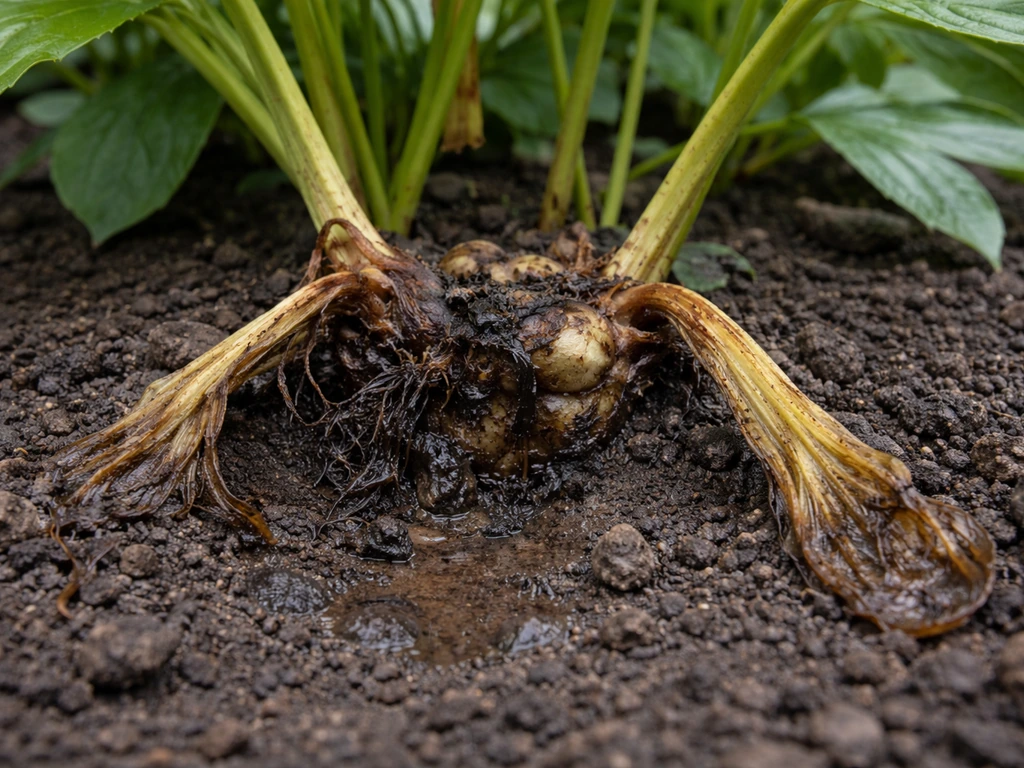
Crown rot is usually caused by poor drainage combined with heat and humidity. If stems blacken at the base or crowns turn mushy, the soil is staying too wet. Dig the plant in fall, remove any rotted tissue, dust with sulfur powder, and replant in a better-draining spot or a raised bed. Prevention is far easier than cure: always plant in well-draining soil and never let water pool around the crown.
Botrytis blight
Botrytis (gray mold) is the most common fungal disease in southern peonies and shows up as brown-black buds that never open, gray fuzzy growth on stems, and wilting of new shoots in spring. It thrives in the combination of humidity and cool-ish spring temperatures the South frequently serves up. Remove and dispose of affected parts immediately (not in compost). Improve spacing and airflow, water only at the base, and do thorough fall cleanup every year. A copper-based fungicide applied as buds emerge can prevent severe outbreaks.
Poor establishment and transplant shock
Peonies are slow to establish under the best conditions and downright stubborn when stressed by heat. If your plant looks weak and sparse in year one, that is mostly normal. Resist the urge to fertilize heavily to push growth. Keep it watered, keep it mulched, and let it settle in. Moving a peony during the growing season is almost always counterproductive. If you must move one, do it in fall only, and expect it to sulk for a full year afterward.
Ants and other pests
Ants on peony buds are harmless and actually help open the blooms by consuming the sugary sap on bud scales. They are not causing damage and do not need to be treated. More troublesome in the South are thrips, which scar petals and can spread disease. Insecticidal soap or neem oil applied to buds before they open can help if thrips are a recurring problem. Scale insects on tree peonies should be treated with horticultural oil in late winter before new growth begins.
Growing peonies in South Africa
South Africa is a genuinely exciting frontier for peonies, and growers there are having real success, particularly in the cooler highland and winter-rainfall regions. The key is understanding that South Africa's seasons are reversed from the northern hemisphere, and that climate varies dramatically across the country, from the cold Highveld plateau to the mild Western Cape to the subtropical KwaZulu-Natal coast.
Which South African regions can grow peonies
The Highveld region (Gauteng, Mpumalanga, parts of the Free State) at elevations above 1,500 meters gets genuine cold winters with frequent frost, making it by far the most suitable area for herbaceous peonies. These regions behave climatically much like zone 7 in the US South, and the variety selection and care advice for zone 7 applies reasonably well here. The Western Cape, with its Mediterranean climate, offers cool wet winters that can work for peonies in higher-elevation areas like the Cederberg and around Ceres, where commercial peony cut-flower production actually takes place. Coastal areas of KwaZulu-Natal are too warm and subtropical for most peonies, similar to trying to grow them in South Florida.
Planting timing and variety selection for South Africa
Because seasons are reversed, plant bare-root peonies in South Africa from late March through May (autumn in the southern hemisphere), which corresponds to the fall planting window recommended for the US South. This gives roots time to establish before winter dormancy and chilling. Flowering will occur in October through November (southern hemisphere spring). Choose varieties with low to moderate chilling requirements just as you would for the US South: Itoh hybrids, early-blooming herbaceous types like 'Coral Charm' and 'Paula Fay', and tree peonies for the warmer areas. South African specialty nurseries have begun importing and trialling varieties specifically for Highveld conditions, and sourcing from a local specialist familiar with your specific microclimate is worth doing.
Practical care adjustments for South African conditions
The soil prep, planting depth, and fertilizer guidance above applies directly in South Africa. One consideration unique to the Highveld is that summer brings intense afternoon thunderstorms and high humidity, which creates real botrytis and crown rot pressure similar to the southeastern US. All the same prevention strategies apply: excellent drainage, airflow, base watering only, and thorough fall cleanup. The Western Cape's dry summers are actually easier on peonies after bloom since fungal pressure drops significantly once the rainy season ends. In those regions, summer irrigation is the key challenge rather than disease management.
The bottom line for South African gardeners is the same as for those in the US South: do the homework on your specific microclimate, choose varieties matched to your actual chilling hours, plant at the right time and depth, and give plants two to three full seasons before drawing conclusions. Peonies are not fast, but the reward when a bloom finally opens in your garden is worth every bit of the patience required.
FAQ
How do I estimate whether my winters provide enough chilling hours to grow peonies in the South?
Instead of guessing from average temperatures, track your minimums for several winters. If you can reliably record nights below 40°F for a sustained period (roughly 6 to 8 weeks), you are closer to having the chilling bank most peonies need. If you mostly get mild winters with few real freezes, plan on using lower-chill Itoh varieties or tree peonies rather than trying to force traditional herbaceous types.
My peony leaves look healthy but it never blooms, what should I check first?
Start with the three most common bloom blockers: chilling, planting depth, and the number of eyes on the division. If eyes sit too deep (more than about 1.5 inches under the surface in southern conditions), buds often fail even when the plant looks fine. If depth is correct, switch varieties or plant a tree peony for more dependable flowering in marginal zones.
Can I grow peonies in the South from seed or cuttings instead of buying roots?
For southern gardeners, seed and cuttings are usually a poor fit. Peonies grown this way often take years longer to flower and are less predictable, while your main challenge in the South is meeting chilling requirements to initiate buds. Buying the right low-chill, properly labeled types (Itoh, suitable herbaceous, or tree) gives you the best chance to get blooms in a reasonable timeframe.
Should I cover peonies during cold snaps in the South?
Light protection is mainly useful for wind and severe temperature swings, not to replace missing winter chilling. Avoid deep, insulating covers that trap heat and interfere with dormancy timing. In marginal winters, focus more on correct variety choice and maintaining drainage and airflow, since chilling shortfalls are the bigger issue than brief cold events.
How much should I worry about heat in summer, especially after shoots emerge?
Heat affects bud survival and flower opening, even if dormancy was successful. Use morning sun and afternoon shade, and keep mulch pulled back a few inches from the crown so the soil does not stay excessively warm or hold moisture against the plant. If you get frequent hot afternoons, a temporary shade setup during extreme weeks can help reduce stress, but do not keep plants covered all season.
Do I need to stake peonies in the South, and when should I do it?
Often yes, especially in humid conditions where stems can get heavy and flop as blooms enlarge. Stake early, when shoots are still relatively upright and before buds add weight. This prevents stem bruising and keeps flowers from resting on mulch or soil, which can increase mold risk.
What is the best way to water peonies in southern rainstorms to prevent crown rot?
Rely on drainage first, then water at the base only. If your soil stays wet for more than about an hour after heavy rain, amend aggressively or use a raised bed so water cannot pool around the crown. Avoid overhead irrigation, since wet foliage plus humidity increases botrytis pressure.
Can I use overhead sprinklers if I only water lightly?
It is better to avoid them. Even light overhead watering keeps buds and foliage damp longer, which increases the odds of gray mold and other fungal issues in the South. If you must irrigate, use a soaker hose or drip line that targets the soil at the crown area without splashing leaves.
Is fertilizer in spring enough, or should I feed again during summer in the South?
One spring feed when stems are about 2 to 3 inches tall is usually the key, then skip heavy feeding during summer when the plant is shifting toward semi-dormancy. A light feed right after bloom can help replenish energy, but avoid high-nitrogen products that push soft growth that may not handle summer heat or upcoming cold.
What mulch should I use, and can mulch accidentally stop blooming?
Mulch helps in the South, but placement matters. Use 2 to 3 inches of pine straw, bark, or compost and keep it pulled back a few inches from the crown. Piling mulch on top of the crown can cause rot and can also interfere with the winter chilling effect needed for bud formation.
My buds turn brown and never open, does that always mean botrytis?
Brown-black buds that fail to open are a common botrytis symptom, but confirm by checking for gray fuzzy growth on stems and signs of wilting new shoots. If you see affected parts, remove and dispose immediately (do not compost), then improve airflow and switch to base watering. A copper-based spray can help prevent severe outbreaks when applied around bud emergence, following label directions.
Why did my peony die after I transplanted it, even though I did it carefully?
Timing is crucial. Moving during active growth in the South is very likely to stress peony roots and reset bud development, often to the point of failure. If relocation is unavoidable, do it in fall only and expect at least a year of poor performance, even with good planting depth and drainage.
Do ants on peony buds mean I have an infestation?
Usually no. Ants are typically attracted to sugary sap on bud scales and are not the problem themselves. Focus on thrips if you see scarred petals or recurring bud damage, since thrips can spread disease and may require targeted treatment before buds open.
How many seasons should I give a southern peony before deciding it won’t bloom?
Plan on patience. Even with correct variety and care, peonies are slow to establish, and many southern failures are actually delays caused by stress or a borderline chilling year. Give it two to three full growing seasons before concluding that the variety is a poor match for your specific microclimate.
Next Article
When Do Begonias Start to Grow? Timing, Types & Planting Calendar
When do begonias start to grow: clear planting dates, timelines by type, and quick care fixes for reliable starts.