Peonies are absolutely worth growing, but they do have opinions about how they want to be treated. Get the planting depth wrong by just an inch or two, put them in the wrong spot, or feed them too much nitrogen, and you'll end up with a gorgeous mound of foliage and zero flowers. I've been there. The good news is that once you understand what peonies actually need, they're surprisingly low-maintenance and can live in the same spot for decades. This guide walks you through everything: choosing the right type, planting correctly, caring through the seasons, cutting flowers, propagating, and diagnosing what's going wrong when they just won't perform.
How to Grow Peonies: Planting, Care, and Troubleshooting

Harriet Whitmore
24 Mar 2026
Choosing the right peony type for your garden
There are three main types of peonies you'll encounter as a home gardener, and they behave quite differently. Knowing which one you're working with changes almost every decision you make.
| Type | Growth habit | Bloom window | Best for |
|---|---|---|---|
| Herbaceous | Dies back to the ground each winter | April–May (varies by cultivar and climate) | Most home gardens, beginners, cut flowers |
| Tree (Woody) | Woody stems persist through winter | April–May, often slightly earlier | Specimen plants, warmer winters, long-term garden anchors |
| Itoh (Intersectional) | Dies back like herbaceous but has tree-peony flower form | April–May, extended bloom life | Gardeners wanting the best of both types |
Herbaceous peonies are the most beginner-friendly and the type most people picture when they think of peonies. They die back completely each fall and re-emerge in spring, which makes them easy to manage. Itoh peonies (also called intersectional peonies) are a hybrid of the two, and they're worth knowing about because they tend to have a notably long bloom life and strong disease resistance. Tree peonies are stunning but require a different planting approach and more patience, often taking two to three years to start blooming after planting.
For most home gardeners, especially beginners, I'd start with herbaceous peonies. They're widely available, bloom reliably once established, and are forgiving as long as you nail the basics. If you're curious about the specific cultural needs of Chinese peonies (Paeonia lactiflora) If you're curious about the specific cultural needs of Chinese peonies (Paeonia lactiflora) or want to dig into growing from roots or stem cuttings, those topics are covered in detail in their own dedicated guides on this site., those topics are covered in detail in their own dedicated guides on this site.
Best site, soil, and planting instructions
This is where most peony failures start. Site and planting depth are not optional details. They're the whole ballgame.
Sun, drainage, and spacing
Peonies need full sun, at least six hours of direct sunlight per day. If they're in shade, most of them will either fail to bloom entirely or produce fewer, smaller flowers. This isn't a preference, it's a firm requirement. Good drainage is equally non-negotiable. Waterlogged soil leads to root rot and all kinds of fungal problems. If your garden has heavy clay, amend the soil with compost before planting or raise the bed slightly to improve drainage.
Spacing matters more than most people expect. Give each plant about 100 cm (roughly 3 feet) of space in every direction. That might feel generous when you're planting a small bare root division, but crowded plants have poor airflow, and poor airflow is one of the main reasons botrytis (a gray mold fungal disease) becomes a problem. Wide spacing keeps foliage drier and the plants healthier.
Planting depth: the most critical detail
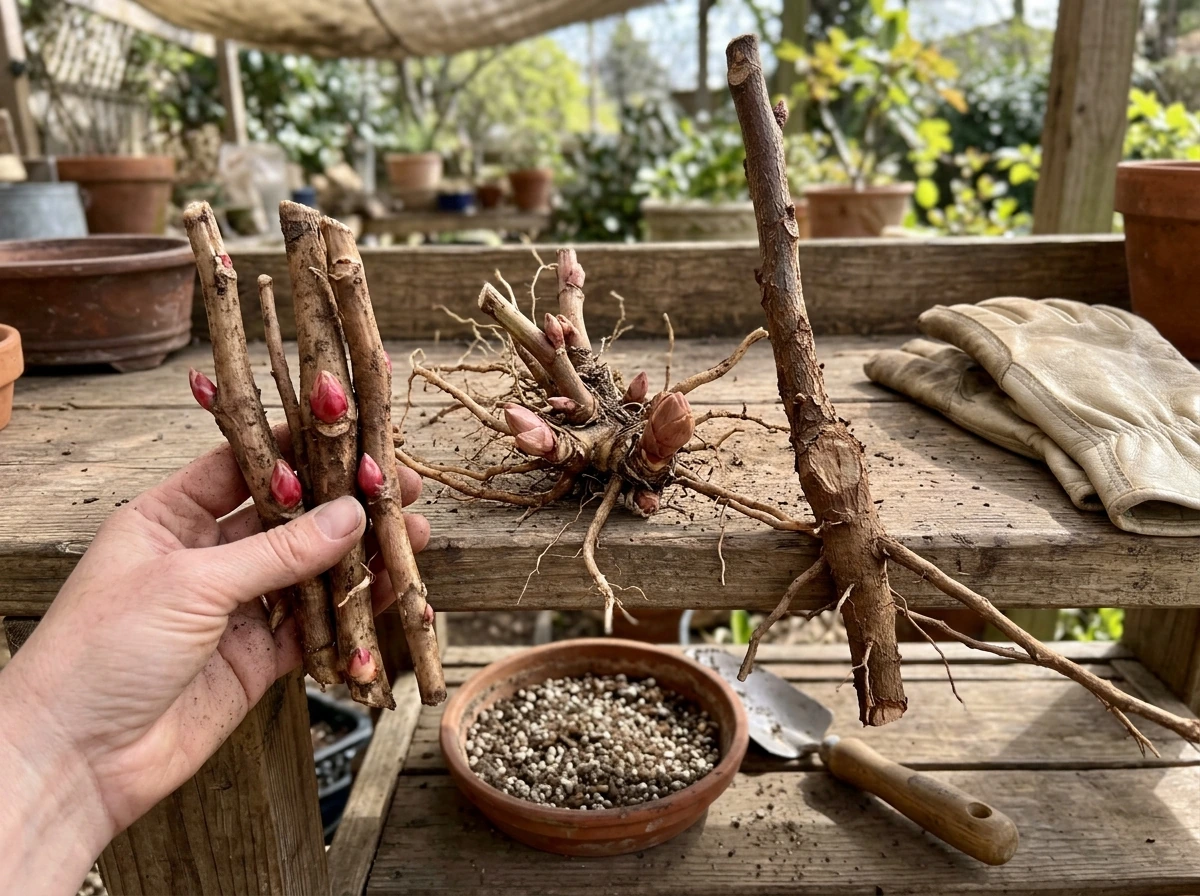
If there's one thing to memorize about growing herbaceous peonies, it's this: plant the eyes (the red or pink growth buds on the roots) no more than 1 to 2 inches below the soil surface. The Peony Society recommends covering herbaceous peonies with just 2 to 3 cm of soil above the crown. In warmer climates, you can go even shallower, closer to 1 inch. The Old Farmer's Almanac and the RHS both make the same emphatic point: planting too deeply results in lush, beautiful foliage and almost no flowers. This is by far the most common beginner mistake.
Tree peonies are the exception. Because most commercially sold tree peonies are grafted onto herbaceous rootstock, they actually need to be planted deeper, at least 4 inches below the soil surface. That depth encourages the buried stem sections to produce their own roots, which leads to better long-term survival and vigor. If you're planting a tree peony and treating it like an herbaceous one, you may end up with a plant that struggles and reverts to the rootstock.
When to plant
Fall is the ideal planting time for bare root herbaceous peonies, typically September through October in most temperate regions. This gives the roots time to settle and begin establishing before the ground freezes. Spring planting is possible but often results in slower establishment and a longer wait for first blooms. Container-grown plants can go in the ground in spring, but expect the first year to be mostly about root establishment rather than impressive flowering.
Ongoing care to grow healthy, beautiful blooms
Staking and support
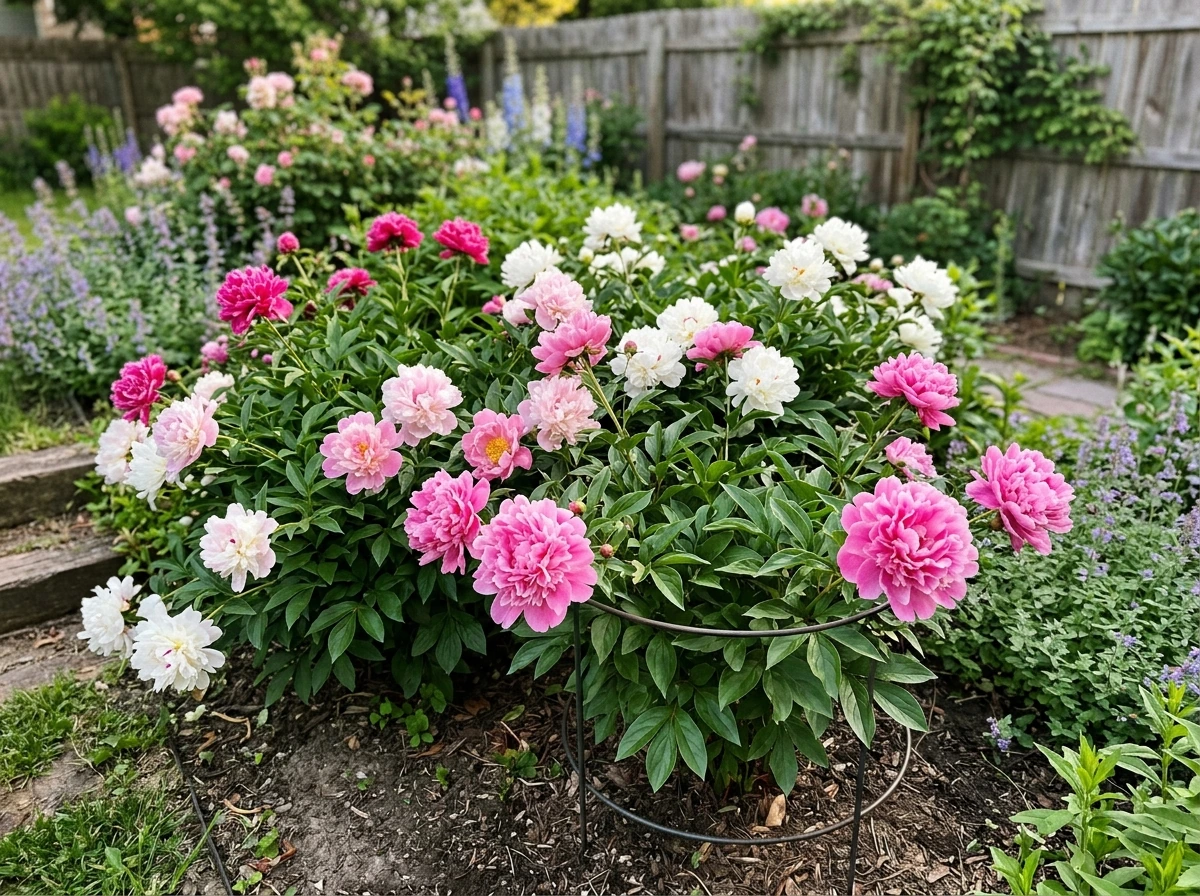
The big, full-double blooms that make peonies so desirable are also the reason the stems flop over, especially after rain. Wire peony rings or grow-through supports placed in early spring (before stems get tall) are the most effective solution. They're nearly invisible as the plant fills in and keep those heavy blooms upright without you having to do anything else. Single-flowered and semi-double varieties generally have stronger stems and need less support.
Deadheading and spent blooms
Once a peony bloom fades, you can remove it if you want a tidier look, but it's not essential for plant health. The American Peony Society notes that removal of spent blooms does not harm the plant, and deadheading is mostly about aesthetics and preventing the plant from directing energy toward seed production. What you don't want to do is remove too much foliage early in the season. The leaves are doing the photosynthesis work that fuels next year's blooms, so let them stay as long as they're green and healthy.
Fall cleanup
For herbaceous peonies, fall cleanup is genuinely important. Cut stems and leaves all the way down to the ground and remove them from the garden entirely, don't compost them if they've shown any sign of disease. This removes overwintering spores of botrytis and other fungal problems from the area. Do this after the first frost, once the foliage has died back naturally.
Mulching (with caution)
A light layer of mulch can protect crowns in zones with harsh winters, but be careful. Keep mulch away from the crown of the plant. Mulch sitting directly on the crown can trap moisture and harbor botrytis fungus, which is one of the main disease threats for peonies. If you mulch for winter protection, pull it back in early spring so the emerging eyes aren't buried deeper than they should be.
Feeding, watering, and seasonal maintenance for big growth
Watering the right way
Water the soil around the drip line of the plant, not the foliage. The American Peony Society is explicit about this: never water the leaves. Wet foliage encourages botrytis and other fungal diseases. For established plants, water deeply but infrequently. Peonies in average garden soil typically don't need a lot of supplemental irrigation unless you're going through an unusually dry spell or the plants show signs of wilting. Overwatering is more of a problem than underwatering once the plants are established.
Fertilizing: less is often more
This is where a lot of enthusiastic gardeners go wrong. Excess nitrogen is one of the most common reasons peonies produce lots of lush green growth but never bloom. High-nitrogen fertilizers push vegetative growth at the expense of flowering. If you want to fertilize, use a low-nitrogen, phosphorus-rich formula (something like a 5-10-10 or a bulb fertilizer) applied in spring as growth emerges and again lightly after blooming. In fertile garden soil, established peonies often need very little feeding at all.
Seasonal rhythm to follow
- Early spring: Pull back any winter mulch from the crown. Place support rings before stems get tall.
- Spring: Apply a low-nitrogen fertilizer lightly if needed. Water at soil level, not on leaves.
- Late spring to early summer: Enjoy blooms. Deadhead spent flowers if you want tidiness.
- Summer: Let foliage stand. It's powering next year's bloom. Water only if plants wilt.
- Fall: After first frost, cut herbaceous stems to the ground and remove all plant debris from the garden.
- Winter: Light mulch in cold climates, kept away from the crown.
Growing peonies for cut flowers
Peonies are genuinely excellent cut flowers, and herbaceous types are the best suited for this purpose. For the longest vase life, cut stems when the buds are just starting to show color and feel like a soft marshmallow when gently squeezed. This is the button or soft bud stage, well before the flowers are fully open. The American Peony Society's cut-flower guidance is clear that this timing gives the best vase life. Flowers cut when fully open won't last nearly as long in a vase.
Cut in the early morning when temperatures are cool, use clean sharp scissors or pruners, and get the stems into water immediately. You can also wrap tightly budded stems in paper and refrigerate them for several weeks if you want to time them for a specific event. When you're ready to use them, re-cut the stems and put them in fresh water in a warm room and the buds will open within a day or two.
One important consideration when cutting for the vase: don't strip the plant bare. Leave enough foliage on the plant (at least two to three leaves per stem, and ideally most of the plant's leaves) so it can still photosynthesize and build energy for next year's blooms. If you cut every stem with a long stem and all its leaves, you weaken the plant and may get fewer blooms the following season.
Propagation: what actually works and what doesn't
This section matters because there's a lot of confusion online around propagating peonies, especially from cut flowers. Let me be direct about what's realistic.
Can you grow peonies from cut flowers?
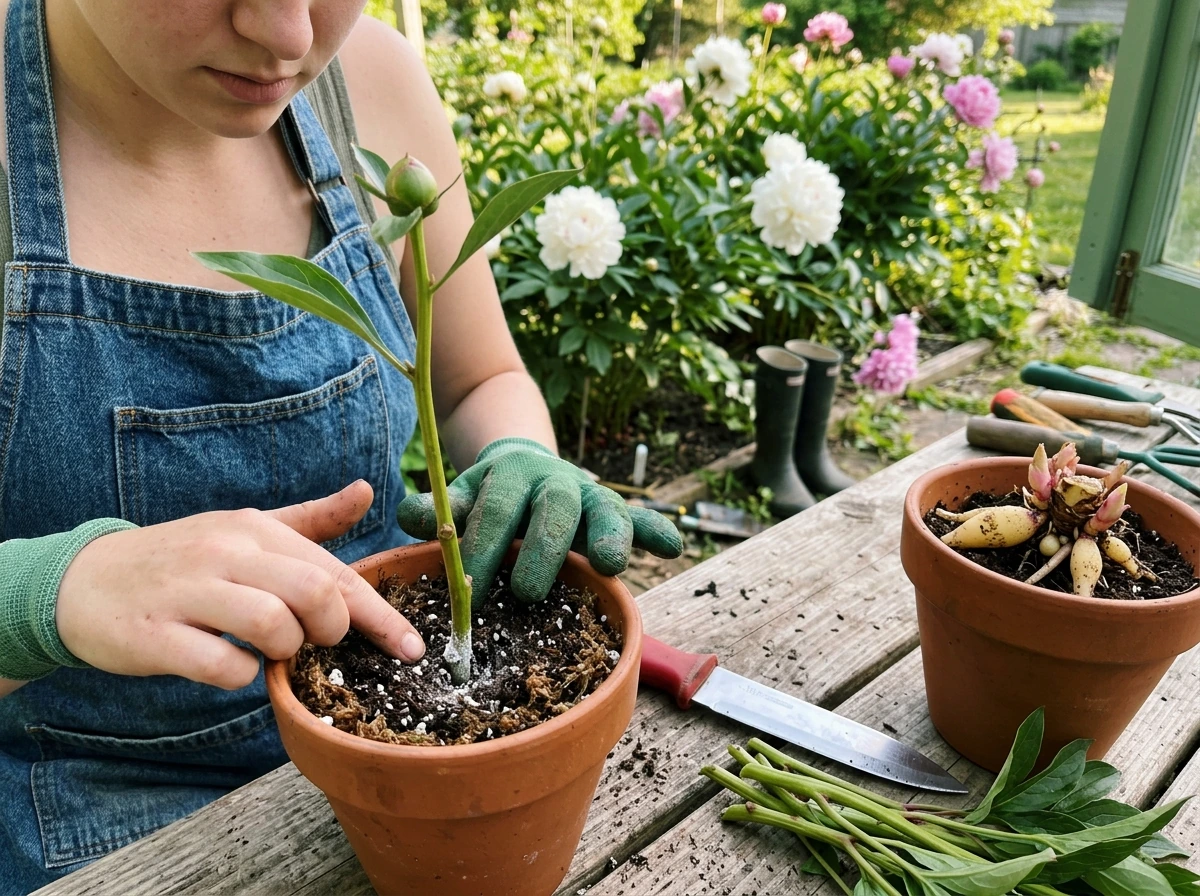
The short answer is no, not in any practical sense. A cut flower stem from a vase has no root system, no crown, and no eyes. You can't root a peony stem the way you'd root a rose cutting in water. The biology just doesn't work that way for cut stems. If you've seen people suggest putting a peony stem in soil to root it, manage your expectations: the success rate is very low and the process is slow and unreliable compared to division.
What actually works: division
Division is the practical, reliable method for propagating herbaceous peonies at home. In fall, after the foliage has died back, dig up a mature plant and use a sharp knife to cut the root clump into sections. Each division should have at least three to five eyes (the reddish growth buds) and a healthy section of root. Replant at the correct shallow depth (1 to 2 inches for the eyes), and expect the divisions to spend their first year or two establishing rather than blooming heavily.
Some varieties can technically be propagated from root cuttings, but division remains the easiest and most consistent method for home gardeners. If you want to grow peonies from roots or from stem cuttings specifically, those propagation methods each have their own nuances and are worth exploring in dedicated guides on this site. If you want step-by-step help, this guide also covers how to grow peonies from roots.
Troubleshooting: why peonies won't grow and what to do
If your peony isn't blooming or seems stuck, the cause is almost always one of a short list of problems. Here's how to diagnose and fix the most common ones.
| Problem | Likely cause | Fix |
|---|---|---|
| Lush foliage, no flowers | Eyes planted too deep | Dig and replant at 1–2 inch depth in fall |
| Lush foliage, no flowers | Too much nitrogen fertilizer | Switch to a low-nitrogen, phosphorus-rich feed or skip fertilizer |
| No flowers on young plant | Normal establishment period | Herbaceous peonies may not bloom for 1–2 years; tree peonies up to 3 years |
| Weak or no growth | Too much shade | Relocate to a spot with at least 6 hours of direct sun |
| Flowers absent or reduced after moving/dividing | Transplant stress | Be patient; divisions often skip a bloom season while re-establishing |
| Gray mold on buds or stems | Botrytis fungus | Improve airflow (spacing), remove infected material, avoid wetting foliage, clear fall debris |
| Blooms damaged or absent after mild winter | Late freeze damaging buds | Protect emerging buds with fleece in late frost-prone areas |
| Overcrowded, fewer blooms over time | Root competition | Divide in fall every 10–15 years to reinvigorate |
Planting depth is the single most fixable cause of non-blooming peonies. North Dakota State University Extension specifically lists resetting peonies to the correct depth as the recommended fix when too-deep planting is preventing flowering. If your plant has been in the ground for more than two years with strong foliage but no blooms, dig it up carefully in fall and replant it with the eyes just below the soil surface. It's a bit of work, but it often solves the problem completely.
Also worth checking: are there tree roots competing with your peonies? Root competition from nearby trees or shrubs is a real bloom-limiter that often goes unnoticed. Peonies near large trees may look fine but be starved for both light and nutrients at the root level.
Tips for pink and white peonies, and how to get bigger blooms
Pink peonies
Pink is the most common peony color and encompasses an enormous range, from pale blush to deep coral-pink. Some popular pink herbaceous varieties include 'Sarah Bernhardt' (soft pink, reliable bloomer), 'Bowl of Beauty' (pink with cream center, anemone form), and 'Coral Charm' (warm coral-pink, fades beautifully as it opens). Pink peonies tend to show color variation depending on temperature: cooler springs often produce deeper, richer pink tones while warm weather can cause fading. If you want consistent color, plant where afternoon shade offers some relief from intense heat late in the season.
White peonies
White peonies are showstoppers in the garden and in the vase, but they can show petal blemishes more easily than other colors, especially in wet conditions. Botrytis spotting on petals is more visible on white and pale varieties, so good airflow, correct spacing, and keeping water off the foliage matters even more with these. Reliable white varieties include 'Duchesse de Nemours' (fragrant, fully double white), 'Festiva Maxima' (white with crimson flecks, classic), and 'Gardenia' (creamy white, bomb-form). White peonies tend to hold their color well in partial afternoon shade without the bleaching effect that strong sun can cause on pale petals.
How to get bigger, more impressive blooms
If you want the biggest individual flowers, a technique called disbudding helps concentrate the plant's energy. When stems are developing, each main stem may produce a central bud flanked by smaller side buds. Removing the side buds early redirects all of the plant's energy to the central bud, which then grows significantly larger. This is a common practice for cut-flower growers and show gardeners. If you prefer more blooms on the plant rather than fewer enormous ones, skip disbudding and let all the buds develop.
Beyond disbudding, getting consistently big, beautiful blooms comes down to the fundamentals: full sun, correct planting depth, appropriate soil nutrition (not too much nitrogen), and consistent soil moisture during bud development. There's no shortcut more effective than simply getting those basics right year after year. Established peonies that have been in place for five or more years almost always outperform newly planted ones, so patience pays off here more than any product or technique.
If you want to go deeper on what peonies specifically require to thrive, including a full breakdown of their soil, light, and nutrient needs, the companion guide on what peonies need to grow covers those details thoroughly. Getting the right type for your climate zone and understanding those core requirements is what separates gardeners who get great peonies from those who just get great leaves.
FAQ
How long should I wait for newly planted herbaceous peonies to bloom?
If you planted bare-root herbaceous peonies at the right depth and in full sun, many start blooming in year one or two, but it can take longer if conditions were less than ideal. In practice, expect the most reliable bloom performance in years 2 to 3, especially if the soil is cold at planting or you planted in spring instead of fall.
What’s the best way to check whether my peony is planted too deep?
In early fall after growth fades, you can gently dig a few inches around the plant and check where the eyes (crown buds) sit relative to the soil surface. If they are more than about 1 to 2 inches below the surface for herbaceous peonies, or deeper than that for your local guidance, plan a fall reset instead of waiting another season.
Can I move a peony in the spring if it isn’t blooming?
You can, but spring moves often delay flowering because peonies are already committing energy to new growth. If the plant has strong foliage but no blooms, fall is typically the safer window for resetting depth and reducing transplant shock.
What should I do if my peony leaves are fine but buds never open?
This usually points to a bud-related issue such as poor airflow in a crowded planting, uneven moisture, or winter damage to buds. First check spacing and sunlight, then look for any pattern of problems in wet, shaded areas, and avoid overhead watering that keeps buds and foliage constantly wet.
Is it okay to fertilize peonies if my soil is already rich?
Often you should hold back. In fertile garden soil, established peonies may need minimal feeding because too much nitrogen is the common cause of lush foliage without flowers. If you do fertilize, use a low-nitrogen, phosphorus-forward product and apply lightly when growth emerges and, if needed, again after blooming.
How often should I water peonies during bud development?
Water deeply and infrequently, aiming moisture through the root zone, especially as buds swell. As a guardrail, avoid frequent light sprinkling that keeps the surface wet and encourages fungal problems, and prioritize watering at the drip line rather than wetting leaves or buds.
Should I remove all foliage after it dies back in fall?
For herbaceous peonies, yes, cut stems and remove plant material after the first frost, and do not compost anything showing disease. This reduces overwintering sources of botrytis and other fungal issues right where the plant will be growing next season.
Can I mulch peonies in winter without harming them?
Yes, but keep mulch off the crown. Use a light layer for protection in harsh winters, and pull it back in early spring before eyes begin emerging, so you do not accidentally bury the crown deeper than the planting-depth targets.
Do I have to deadhead peonies to get more flowers next year?
Deadheading is optional for plant health, but it can improve appearance. What matters more is keeping healthy foliage in place after bloom, because leaves drive energy production for next year’s buds. Avoid stripping leaves early, even if the spent blooms look unattractive.
Will disbudding make my peony bloom sooner or just change flower size?
Disbudding mainly changes where the plant directs its energy, typically producing fewer but larger center blooms. It does not reliably make plants bloom much earlier, so use it when your priority is showy single flowers rather than maximizing the total number of blooms.
Can I grow peonies from cut flowers or stem cuttings?
In general, no practical approach works well for vase stems because they lack a crown and eyes, and they do not naturally form a new root system. If you want new plants, division of herbaceous peonies (with multiple eyes per division) is the reliable home-gardener method.
What’s the safest support method if my peonies flop after rain?
Install support early, before stems are tall and heavy, because it is easier to prevent bending than to correct it later. Wire peony rings or suitable grow-through supports placed in early spring tend to be more effective than waiting until after buds and stems have already grown and started to topple.
Why do my white peony petals get spots more than my pink ones?
White and very pale blooms can show botrytis damage and petal spotting more visibly, especially in wet weather. Since the root issue is usually moisture and airflow, prioritize wide spacing, keep water off foliage, and ensure the plant is in full sun to dry quickly after rain or irrigation.
Next Article
How to Grow Peonies From Stem: Step-by-Step Guide
Learn how to grow peonies from stem cutting, with timing, rooting steps, care, troubleshooting, and transplant tips.