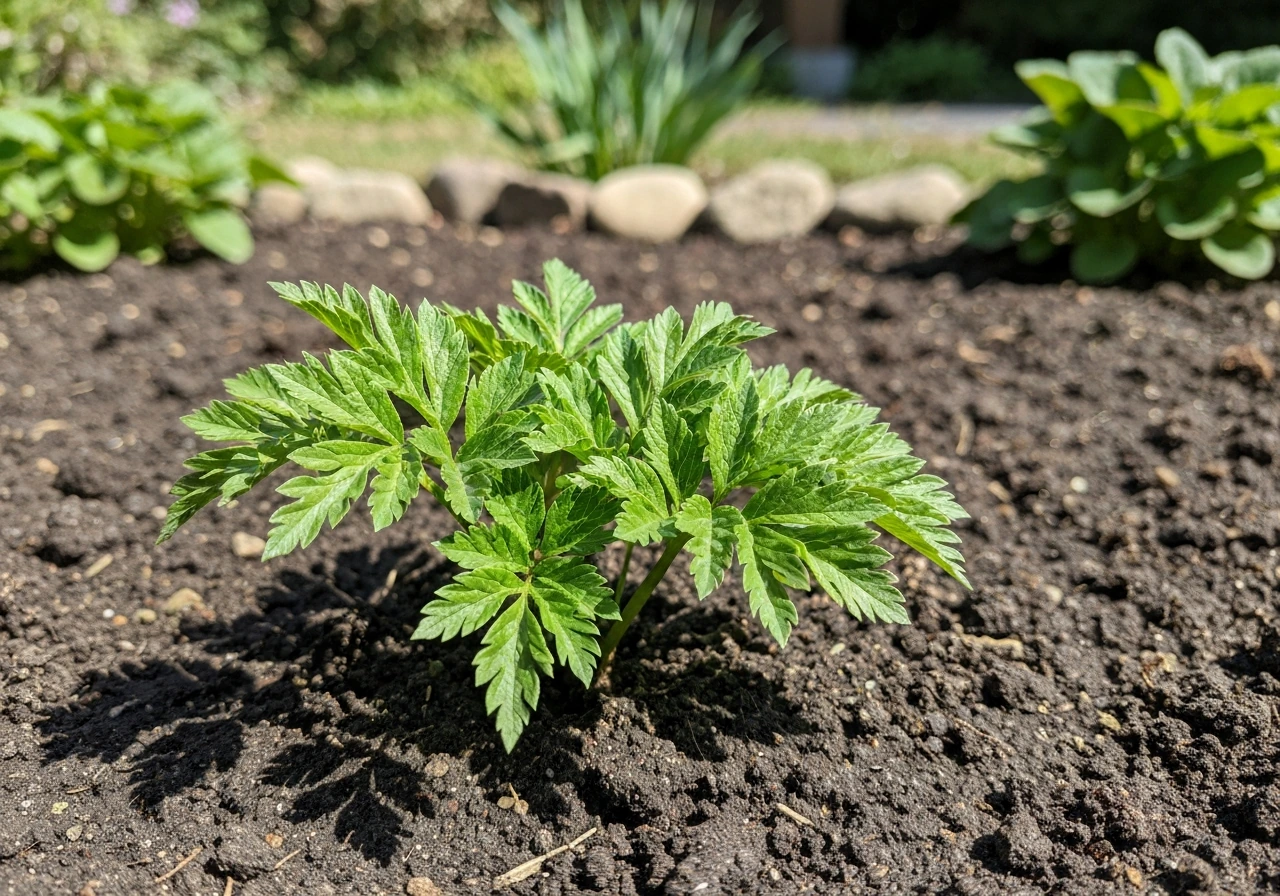
Peonies are genuinely worth the effort. Plant a healthy bare-root division at the right depth in well-drained soil, give it a couple of seasons to settle, and you will have a plant that blooms reliably for decades with remarkably little fuss. The single biggest reason people struggle is planting too deep, bury the eyes of a herbaceous peony more than about 2 inches (5 cm) below the surface and you may wait years for a single flower. Get that one detail right and most of the hard work is already done.
Peonies How to Grow Them: Complete Guide for Home Gardeners

Harriet Whitmore
16 Jul 2026
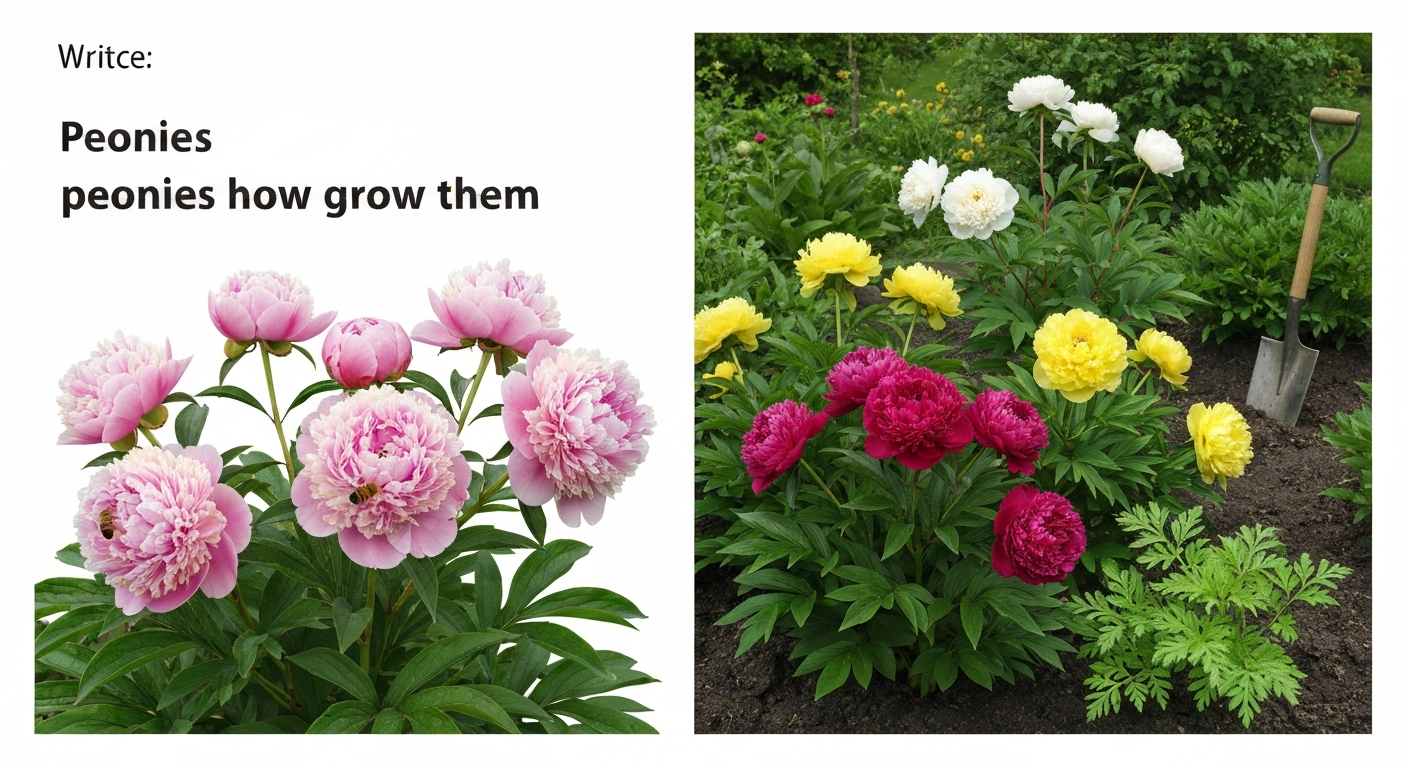
Why peonies are worth growing (and what this guide covers)
I grew my first peony from a bare-root division given to me by a neighbor who had been dividing the same clump for thirty years. That plant is now twelve years old and produces more blooms each spring than I can count. Peonies are among the longest-lived perennials you can put in a garden, a well-sited plant can outlast the gardener who planted it. They are also far less temperamental than their reputation suggests, once you understand a handful of species-specific rules.
This guide covers everything a home gardener needs: how to choose between herbaceous, tree, Itoh, and fern-leaf types; specific variety recommendations including the classic Sarah Bernhardt and the unusual fern-leaf peony; climate-specific planting windows with dedicated notes for UK growers; exact planting depths and step-by-step methods for roots, seeds, and divisions; container and raised-bed culture; seasonal care schedules; and a detailed troubleshooting section for the most common failure points.
Choosing the right peony type
Before you buy anything, it helps to know that 'peony' is not one thing. There are four main groups grown by home gardeners, and they have genuinely different requirements, mature sizes, and bloom seasons.
Herbaceous peonies
These are the classic garden peonies (Paeonia lactiflora and related hybrids) that die back completely to the ground each winter and re-emerge from fleshy storage roots each spring. They are the most widely grown, the easiest to find as bare-root divisions, and in my experience the most forgiving for beginners. Most reach 60–90 cm (about 2–3 ft) tall and bloom in late spring to early summer. They are fully hardy across most of the UK and in USDA zones 3–8.
Tree peonies
Tree peonies (Paeonia suffruticosa and hybrids) develop a permanent woody framework that persists above ground through winter. They can reach 1.5–2 m (5–6 ft) and produce spectacular, sometimes dinner-plate-sized blooms in earlier spring than herbaceous types. They are slower to establish and have a different planting depth rule from herbaceous peonies, a point I will cover in detail below. They are a bit less cold-hardy at the bud level, so wind shelter matters more.
Itoh (intersectional) peonies
Itoh or intersectional peonies are crosses between herbaceous and tree peonies. They die back like herbaceous types but have the branching habit and bloom style of tree peonies, which means many flowers per plant and good weather resistance. They are expensive compared to straight herbaceous varieties but they are vigorous, reliable, and increasingly available. Plant them at the same shallow depth as herbaceous peonies.
Fern-leaf peonies
Fern-leaf peonies (Paeonia tenuifolia) are the early birds of the genus, they bloom weeks before standard lactiflora cultivars and go summer-dormant after setting seed. Their finely dissected foliage is genuinely ornamental even before the flowers open. They are smaller, topping out around 45–60 cm, and prefer excellent drainage. If you want to explore this type in more depth, the fern peony growing guide goes into the specifics of their unique dormancy cycle and siting needs.
Recommended varieties and when to plant them
With hundreds of named cultivars available, it is easy to get lost. The varieties below represent a range of flower forms, colours, and use cases that I have found either personally reliable or consistently well-regarded by peony specialists.
| Variety | Type | Flower colour/form | Bloom time | Notes |
|---|---|---|---|---|
| Sarah Bernhardt | Herbaceous (lactiflora) | Soft pink, fully double | Late spring/early summer | Classic exhibition peony; vigorous and very fragrant; widely available as bare-root divisions |
| Karl Rosenfield | Herbaceous (lactiflora) | Deep red, fully double | Mid-late spring | Strong stems, good cut flower; reliable bloomer |
| Festiva Maxima | Herbaceous (lactiflora) | White with crimson flecks, double | Early-mid spring | Old cultivar (1851) still widely grown for its dependability |
| Bartzella | Itoh intersectional | Bright yellow, semi-double | Late spring | One of the best yellow peonies; very disease-resistant |
| Paeonia tenuifolia | Fern-leaf species | Deep crimson, single or double forms | Early spring (4–6 weeks before lactiflora) | Needs sharp drainage; summer dormant; beautiful dissected foliage |
| Paeonia suffruticosa 'Renkaku' | Tree peony | White, semi-double | Mid-spring | Elegant and reliable; needs graft-deep planting (see below) |
Sarah Bernhardt deserves special mention because it is one of the most commonly purchased peonies and one of the most commonly mismanaged. It is a tall, fragrant, fully double lactiflora cultivar that blooms in late spring and is excellent for cutting. It needs exactly the same shallow planting depth as any other herbaceous peony, I have heard from many gardeners who buried it deep 'for safety' and then wondered why it never flowered. There is a dedicated guide to growing Sarah Bernhardt peony that covers its specific quirks in greater detail.
Climate and site selection
Sun and shelter
Peonies need at least 6 hours of direct sun per day to bloom well. They will survive in partial shade but flower output drops noticeably, a common frustration I see when gardeners plant them under a tree that has grown larger since the peony went in. In very hot climates (think USDA zone 8 or parts of the US South), afternoon shade actually helps by extending bloom and reducing the browning of petals, but morning sun is still essential to dry the foliage and reduce disease pressure.
Shelter from strong winds matters more for tree peonies and tall-stemmed herbaceous doubles (Sarah Bernhardt included) than for compact types. A fence, hedge, or wall on the windward side reduces the need for staking and protects large flower heads from battering rain. Avoid frost pockets, late spring frosts are the main reason for bud death, especially in the UK. A site with good air drainage (not a low hollow) makes a real difference.
UK-specific microclimate notes
UK gardeners have the advantage that most of the country sits in RHS hardiness zones H5–H7, making the vast majority of herbaceous and tree peonies perfectly reliable without any winter protection for the roots. The bigger challenge in the UK is late frosts killing emerging buds in April and May, and the combination of cool, wet springs creating ideal conditions for Botrytis blight. In the north of England and Scotland, choosing a south- or southwest-facing aspect and avoiding exposed, high-altitude gardens will reduce frost risk significantly. In milder, wetter parts of the southwest (Cornwall, parts of Wales), sharp soil drainage is the priority, waterlogged roots over winter are more damaging than cold alone. If you are specifically focused on UK conditions, the peony growing guide for UK gardens covers regional timing and variety selection in detail.
Seasonal planting windows by climate
When you plant matters almost as much as how you plant. Peonies need cool soil to establish roots, and bare-root divisions need time to anchor themselves before they face either a hard winter or a hot, dry summer.
| Climate / Region | Best planting window (bare root) | Notes |
|---|---|---|
| UK (all regions) | October–November | Plant potted stock any time soil workable; bare root in autumn for best establishment |
| Temperate Europe (similar to UK) | October–November | Same principles as UK; avoid planting into waterlogged or frozen ground |
| US — Cold zones (USDA 3–5) | September–early October | Roots need 4–6 weeks in soil before hard freeze; do not plant too late |
| US — Temperate zones (USDA 6–7) | October–November | Similar to UK; ground stays workable longer, giving more flexibility |
| US — Warmer zones (USDA 8) | November–December | Choose early-flowering cultivars; chilling requirement may limit options; plant at the shallower end of depth range |
| Container-grown plants (all regions) | Spring or early autumn | Match pot rootball depth; avoid planting into dry summer-baked soil |
One honest warning: newly planted or transplanted peonies very commonly produce few or no flowers in the first year, and this is completely normal. A sound 3–5-eye bare-root division typically starts flowering in year 2 and reaches a fuller display by years 3–4. Patience is not optional with peonies, it is built into the plant's biology.
Soil preparation and amendments
Peonies are long-term residents. A clump can sit in the same spot for 30 or more years, which means the effort you put into soil preparation before planting pays dividends for decades. I always prepare the planting area more thoroughly for peonies than for almost any other perennial.
Loosen and prepare the bed to a depth of 45–60 cm (18–24 inches). If you are digging by hand, that means two spade depths, deeper than most people instinctively go. Work 7–10 cm (3–4 inches) of well-rotted compost or aged manure into the entire planting area to improve soil structure and encourage root penetration. On heavy clay, adding horticultural grit at this stage improves drainage significantly. On very sandy soils, extra organic matter helps water retention.
Peonies prefer a neutral to slightly acidic pH in the range of 6.0–7.0. If your soil is more acidic than this, a lime application in autumn (following a soil test) will bring it up. If you have never done a soil test, they are genuinely worth doing before planting something you intend to keep for thirty years, knowing your pH and phosphorus levels avoids expensive guesswork later.
- Target pH: 6.0–7.0 (neutral to slightly acidic)
- Loosen soil to 45–60 cm (18–24 inches) before planting
- Incorporate 7–10 cm (3–4 inches) well-rotted compost or aged manure
- Add horticultural grit on heavy clay soils to improve drainage
- Apply bone meal at planting if soil phosphorus is low — supports root development
- Avoid fresh manure, which can burn roots and encourage leafy growth at the expense of flowers
- If pH is below 6.0, apply garden lime in autumn based on soil test recommendations
Exact planting depth and positioning
This is the single most important technical detail in growing peonies and the most commonly got wrong. The rules differ by type, so read carefully.
Herbaceous and Itoh peonies
Plant so the red or pink eyes (buds) on the crown are 2.5–5 cm (1–2 inches) below the soil surface. In warm climates (USDA zone 7–8, or mild UK regions), aim for the shallower end, around 2.5 cm (1 inch). In cold climates (USDA zones 3–5, or northern UK), the slightly deeper end, around 5 cm (2 inches), gives a little extra frost protection while still allowing the cold signal the plant needs to bloom. Deeper than 5 cm and you are heading toward reliable bloom failure. I cannot overstate how many gardeners plant too deep and spend two or three frustrating years wondering what they are doing wrong.
Tree peonies (grafted)
Grafted tree peonies follow the opposite rule. Set the graft union 10–15 cm (4–6 inches) below the soil surface. This encourages the scion (the named variety on top) to develop its own roots over time, eventually becoming independent of the rootstock. If you plant a grafted tree peony shallowly, as you would a herbaceous type, the rootstock can outcompete and eventually take over the plant.
Spacing
Herbaceous peonies need room to develop, space them at least 90 cm (3 feet) apart, with 120 cm (4 feet) being better for large cultivars like Sarah Bernhardt. Tree peonies need similar spacing. Crowding reduces air circulation and increases disease pressure, particularly Botrytis.
Planting from bare roots and tubers: step by step
Bare-root peony divisions are the most common way to start peonies and the method I recommend to beginners. They are available from specialist nurseries in autumn, which is exactly the right time to plant them.
- Prepare the planting area as described above, loosening to 45–60 cm and incorporating compost.
- Soak the bare-root division in water for 2–4 hours before planting if it has dried out in transit.
- Dig a wide, shallow hole — wide enough to accommodate the roots without bending or cramping them.
- Mound up a small cone of soil in the centre of the hole and drape the roots over it, then check the eye depth: eyes should sit 2.5–5 cm (1–2 inches) below the final soil level for herbaceous types.
- Backfill with the prepared soil mix, firming gently as you go to eliminate air pockets but not compacting hard.
- Water in well, then allow the soil to settle. Top up if the crown has sunk further than intended.
- Mark the planting spot clearly — bare-root peonies show no above-ground growth for months and are very easy to accidentally dig through.
- Apply a light layer of compost as a surface mulch, keeping it away from the crown itself.
- For autumn plantings in cold climates, wait until the ground has frozen before applying a winter mulch (2–4 inches of straw or bark) to prevent frost-heave rather than to keep the soil warm.
Planting from seed: realistic expectations and how to do it
Growing peonies from seed is a project for patient, curious gardeners rather than those wanting blooms quickly. Peony seeds have what botanists call double dormancy, they need a warm period for the embryo to develop, followed by a cold stratification period before germination occurs. Experimental protocols report warm stratification of roughly 28–80 days followed by cold stratification of roughly 45–80 days, depending on the species and conditions. Even after germination, seedlings need 4–7 years before first flowering. That is not a typo.
- Collect seed fresh from the plant in late summer when the pods split and seeds are plump and dark.
- Sow immediately into moist, gritty seed compost in deep pots or trays — do not allow seeds to dry out.
- Place pots in a warm location (around 20–25°C / 68–77°F) for 6–10 weeks. This is the warm stratification phase where the embryo develops. Do not expect shoots yet.
- Move pots to a cold frame, unheated greenhouse, or refrigerator (2–4°C / 35–39°F) for a further 8–12 weeks. This is the cold stratification that breaks dormancy.
- Return to warmer conditions in late winter/early spring and watch for germination, which may be slow and uneven.
- Pot on seedlings individually once large enough to handle and grow on for their first season.
- Expect to wait 4–7 years for first flowers. Species and straight-species forms will come true from seed; named cultivar seedlings will vary.
I find seed-growing most rewarding with species peonies like Paeonia tenuifolia or wild-type forms where genetic variation is acceptable and even interesting. For named cultivars, division is always the more reliable route.
Dividing and transplanting established clumps
Division is how you propagate peonies vegetatively, rejuvenate old clumps, and share plants with others. The timing and cutting technique matter for how quickly the divisions will recover and bloom.
When to divide
Autumn is the right time, specifically after the foliage has died back completely, typically September to October in the UK and northern US. The plant has stored energy in its roots by then, and dividing in cool soil gives roots time to establish before spring growth begins. Avoid spring division if you can: the plant is putting energy into emerging shoots and division at that point causes a significant setback.
Step-by-step division
- Cut back dead foliage to ground level and mark the clump boundary clearly before digging.
- Use a fork to loosen the soil in a wide circle around the clump, working from the outside in. Peonies have deep, thick storage roots — be patient and avoid snapping them if possible.
- Lift the entire clump and move it to a clear surface where you can work comfortably.
- Wash or gently brush off soil so you can see the eyes (buds) clearly — this is critical for making good cuts.
- Using a sharp, clean knife or spade, cut the clump into divisions, each containing 3–5 healthy eyes plus a reasonable portion of stout storage roots. Single-eye divisions will grow but may take an extra year or two to bloom.
- Dust cut surfaces with garden fungicide powder or powdered sulfur to reduce disease entry.
- Replant divisions immediately at the correct depth (eyes 2.5–5 cm below surface for herbaceous) following the bare-root planting steps above.
- Water in well. Do not feed with high-nitrogen fertiliser immediately after division — let the plant focus on root establishment.
Expect the first post-division year to produce little or no bloom. A sound 3–5-eye division usually starts flowering properly in year 2 and reaches a full display by years 3–4. This is not a failure; it is how peonies work.
Container and raised-bed culture
Growing peonies in pots
Peonies can be grown in containers but they require a genuinely large pot, at minimum 45–60 cm (18–24 inches) in both diameter and depth for long-term success. How to Grow Peony in Containers, Gardening Know How recommends using a large container (minimum ~18–24 in / 45–60 cm diameter and depth) and a loam‑based potting compost for long‑term success How to Grow Peony in Containers — Gardening Know How. Anything smaller and the root system gets restricted before the plant matures, reducing bloom and making the plant vulnerable to drying out. Use a loam-based potting compost (not a peat-light multipurpose mix, which compresses and loses structure quickly), ideally mixed with 20–25% horticultural grit or perlite for drainage. Plant at the same depth rules as for in-ground: eyes 2.5–5 cm below the compost surface for herbaceous types.
The main challenge with container peonies is overwintering. The roots need to experience cold to set buds, but a pot sitting above ground exposes roots to temperatures far lower than in-ground soil. In the UK, an unheated greenhouse or cold frame keeps roots cold but not frozen, ideal. In colder US zones, sink the pot into the ground for winter or move it to an unheated garage or shed. Top-dress container plants with fresh compost each spring and feed more regularly than in-ground plants, since nutrients leach from pots quickly. For more detail on container-specific techniques, the guide on growing peonies in planters covers pot selection, compost mixes, and overwintering strategies in depth. If you wonder whether you can grow peonies in a planter, see the guide on growing peonies in planters for practical advice and step-by-step tips can you grow peonies in a planter.
Raised beds
Raised beds are actually excellent for peonies, particularly on heavy clay or waterlogged ground. They provide the improved drainage peonies need, and the deeper soil profile is easy to prepare to the recommended 45–60 cm depth. Build sides at least 30–40 cm high and fill with a blend of good-quality topsoil, compost, and grit. Avoid filling entirely with lightweight multipurpose compost, it settles dramatically over the first two seasons, which can bury the crown deeper than intended and trigger bloom failure. If you're also interested in fast-growing ornamental trees, see paulownia how to grow for planting and care tips. The guide on growing peonies in raised beds covers construction and soil mix ratios specifically.
Watering, feeding, and mulching through the year
Establishing plants (year 1)
Newly planted peonies need consistent moisture through their first growing season while roots develop. Aim for the equivalent of about 2.5 cm (1 inch) of water per week from rain or irrigation, adjusting for your soil type and summer temperatures. Water at the base of the plant rather than overhead, wet foliage in cool, damp conditions is an invitation for Botrytis blight. For more detail on foliar diseases and the recommendation to avoid frequent overhead watering in cool, wet weather, see Peony disease & symptoms, University of Minnesota Extension (Peony: leaf spots, Botrytis etc.) Peony disease & symptoms — University of Minnesota Extension (Peony: leaf spots, Botrytis etc.). Drip irrigation or a soaker hose is ideal. Water in the morning if you do use overhead irrigation, so foliage dries quickly.
Established plants (year 2 onwards)
Once established, peonies are quite drought-tolerant. In the UK climate, rainfall usually handles most of their needs and supplemental watering is only needed during extended dry spells, particularly in the weeks after flowering when the plant is still building root reserves. In drier US climates, consistent watering from bud formation through flowering makes a noticeable difference to flower quality.
Feeding
Peonies are light feeders and overfeeding, especially with high-nitrogen fertilisers like general lawn feed, produces masses of leafy growth at the expense of flowers. In spring, apply a top-dress of well-rotted compost around the plant, keeping it away from the crown. If you use a granular fertiliser, choose one with a low nitrogen and higher phosphorus and potassium ratio, such as 5-10-10 or 4-10-10. Bone meal worked in at planting or applied as a top-dress in autumn is a traditional and effective phosphorus source that supports root development. A second light feed after flowering helps the plant rebuild reserves for next year. Avoid feeding after mid-summer.
Mulching
A light mulch of 5–10 cm (2–4 inches) of bark or straw applied after the ground has frozen in autumn reduces frost-heave in cold climates. The key word is 'after', mulching too early keeps the soil warm and delays the dormancy cue. More importantly, do not pile mulch over the crown and eyes during the growing season. Progressive mulch build-up over several years is one of the sneakiest causes of bloom failure: the eyes get buried 8–10 cm deep and the plant simply stops flowering. Pull mulch away from the crown each spring.
Staking, supports, and pruning
Supports
Fully double-flowered herbaceous peonies like Sarah Bernhardt produce enormous blooms that become heavy when wet. Without support, stems flop to the ground after the first good rain. The most effective solution is a grow-through wire ring or peony hoop placed over the plant in early spring, before stems reach 20–30 cm (8–12 inches). The plant grows up through the support and it becomes invisible by flowering time. Single or semi-double flowered cultivars, and compact types, rarely need staking.
Deadheading
Remove spent flowers as they fade to prevent the plant wasting energy on seed production. Cut the flower stem back to the first set of healthy leaves, do not remove the entire stem at this point, since the leaves are still working to build root reserves through the summer.
Autumn cutback
Cut herbaceous peonies back to just above ground level in autumn after the foliage has yellowed and died back, in the UK, typically October to November. Remove all cut material from the garden rather than composting it, since Botrytis spores can overwinter in dead peony foliage. Do not cut back tree peonies in autumn; they keep their woody framework and are only lightly pruned in early spring to remove dead or crossing stems.
Encouraging strong root growth and reliable blooming
If you want to understand more about the specific techniques that drive root development, particularly for newly divided or slow-to-establish plants, the guide on how to make peony roots grow covers practical strategies in detail. Here are the core principles I rely on:
- Plant at the correct shallow depth — this is non-negotiable for herbaceous and Itoh types
- Prepare deep, well-structured soil before planting so roots can penetrate freely
- Add bone meal or a low-nitrogen, high-phosphorus fertiliser at planting to encourage root development over shoot growth
- Keep the planting area weed-free in the first two years — competition for nutrients and water directly affects root establishment
- Do not remove foliage early: let leaves die back naturally so the plant has maximum time to manufacture and store energy in the roots
- Avoid disturbing or dividing the plant unnecessarily in the first 3 years after planting
- Apply compost as a surface mulch each year but never over the crown
Troubleshooting common problems
No flowers (the most common complaint)
The vast majority of 'my peony never blooms' cases come down to one or more of these causes, in rough order of frequency:
- Planted too deep — eyes more than 5 cm (2 inches) below the surface for herbaceous types. Dig up and replant at the correct depth in autumn.
- Plant too young — newly planted bare-root divisions or newly transplanted clumps commonly produce no flowers in year 1 and limited flowers in year 2. Wait.
- Too much shade — move to a sunnier position, or remove overhanging branches.
- Mulch build-up over years — crown has been progressively buried. Pull mulch back and check eye depth.
- Late frost damage to buds — buds turn black and fail to open. Protect emerging buds with fleece in frost-prone positions.
- Excessive nitrogen feeding — plant produces lush leaves but no flowers. Switch to a low-nitrogen, higher phosphorus fertiliser.
- Overcrowding and exhaustion in a very old clump — divide in autumn and replant divisions.
Botrytis blight (gray mold)
Botrytis paeoniae is the most common disease of peonies and thrives in cool, wet, poorly ventilated conditions. Symptoms include wilting and blackening of shoots in spring, gray fuzzy mold on stems and buds, and collapsed stems at or near ground level. Prevention is more effective than cure: ensure good spacing for air circulation, water at the base rather than overhead, remove all dead foliage in autumn, and avoid wounding crowns during cultivation. If blight appears, cut out infected material immediately and dispose of it (do not compost), then apply a fungicide approved for Botrytis if the infection is severe.
Root rot and poor root growth
Waterlogged or poorly drained soil is the main cause. If you consistently lose peonies over winter, check drainage before replanting. Add grit to the planting area, or consider a raised bed. Phytophthora root rot can cause sudden wilting and collapse even in well-established plants, there is no chemical cure; remove affected material and do not replant peonies in the same spot for several years.
Pests
Peonies are relatively pest-resistant. The ants you see on buds are attracted to nectar and do not damage the plant, a persistent myth says peonies need ants to open their buds, which is not true, but ants are also harmless. Vine weevil can be a problem in container-grown plants, with larvae eating roots, use biological nematode control in late summer if you suspect an infestation. Slug damage to emerging shoots in spring is common; protect with physical barriers or slug pellets appropriate for your region.
Leaf spots and other foliar issues
Various fungal leaf spots (including Cladosporium) and measles (a bacterial or environmental condition causing reddish-brown spots on leaves and stems) can appear, particularly in wet seasons. These are unsightly but rarely fatal to established plants. Improve air circulation, remove affected leaves, and avoid overhead watering. Severe recurring infections may warrant a protective fungicide programme from early spring.
Dividing, rejuvenation, and long-term clump care
A healthy peony clump left undisturbed can bloom for 30, 50, or even 100 years. Most gardeners do not need to divide out of necessity, the main reasons to do so are propagation, to share divisions, or to manage a clump that has genuinely declined in vigour after many decades. Peonies do not need dividing every few years the way some perennials do; unnecessary division sets the plant back.
If a very old clump has become crowded and bloomless despite good care, autumn division and replanting in fresh, well-prepared soil with a handful of bone meal and well-rotted compost will usually rejuvenate it within 2–3 seasons. When you lift an old clump, the roots can be enormous and tightly tangled, a clean spade cut is often more practical than separating every root by hand. Each division needs 3–5 healthy eyes and a reasonable root portion to recover reliably.
Month-by-month care calendar
The calendar below is written primarily from a UK perspective but translates easily to temperate Northern Hemisphere climates, US gardeners in zones 5–7 will find the timing closely parallel, usually running a few weeks earlier in spring.
| Month | Key tasks |
|---|---|
| January–February | No action needed. Roots dormant underground. Check stored pot-grown plants in unheated greenhouse are not freezing solid. |
| March | First red shoots emerge. Remove winter mulch from the crown. Check eye depth — add a little soil if crowns have heaved up. |
| April | Apply a top-dress of compost around plants (not over the crown). Place grow-through supports for tall double cultivars now, before stems reach 30 cm. Watch for late frost and cover buds with fleece if needed. Check for early Botrytis on shoots. |
| May | Main bloom season begins (fern-leaf peonies first, then tree peonies, then herbaceous in late May onwards). Deadhead spent blooms. Water at the base if dry. Feed with low-nitrogen, high-phosphorus fertiliser if not already done. |
| June | Main herbaceous bloom continues into early June. Continue deadheading. After flowering, cut flower stems back to first healthy leaf. Continue watering if dry. |
| July–August | Foliage matures and seeds develop if not deadheaded. Reduce watering. No feeding after mid-summer. Fern-leaf peonies go summer dormant — do not panic. |
| September | Best month for planting bare-root divisions in colder US zones. In the UK, prepare new planting areas now for October planting. |
| October | Prime planting and dividing time in the UK. Dig and divide established clumps once foliage has died back. Plant new bare-root divisions. Order bare-root stock from specialist nurseries if not already done. |
| November | Complete planting. Cut back all herbaceous foliage to ground level and remove from the garden. Apply winter mulch after first hard frost in cold climates. |
| December | Rest period. No action needed except in container culture — check overwintering pot plants are protected from hard freezes. |
Common mistakes to avoid and a quick planting checklist
After years of growing peonies and helping other gardeners troubleshoot theirs, the same mistakes come up repeatedly. Avoiding them puts you well ahead of where most people start.
- Planting too deep — the single most common cause of no flowers in herbaceous peonies
- Expecting flowers in year 1 from a newly planted or divided root — this is rare and not a sign of failure
- Using high-nitrogen lawn fertiliser near peonies — promotes foliage, suppresses flowering
- Piling mulch over the crown each year, progressively burying the eyes
- Watering overhead in cool, damp weather, which encourages Botrytis
- Removing foliage before it dies back naturally, which starves the roots of stored energy
- Dividing too frequently — peonies do not need it and each division sets the plant back by 1–3 years
- Planting in a frost pocket where late spring frosts regularly kill buds
- Planting in full or heavy shade — 6+ hours of direct sun is genuinely necessary
Quick planting success checklist
- Chosen a site with at least 6 hours of direct sun and good air circulation
- Prepared soil to 45–60 cm depth with well-rotted compost and grit if needed
- Confirmed soil pH is between 6.0 and 7.0
- For herbaceous/Itoh types: eyes set 2.5–5 cm (1–2 inches) below the surface
- For grafted tree peonies: graft union set 10–15 cm (4–6 inches) below surface
- Spaced plants at least 90 cm (3 feet) apart
- Watered in well and marked the planting spot clearly
- Applied a light surface mulch away from the crown
- Set realistic expectations: full bloom display in years 2–4, not year 1
FAQ
What are the best peony types and varieties for home gardens (including Sarah Bernhardt and fern‑leaf forms)?
For reliable flower power choose herbaceous, tree, or intersectional (Itoh) peonies for different garden roles. Sarah Bernhardt is a classic herbaceous double with large pink blooms—excellent for borders and cutting. Fern‑leaf (fern/fern‑leaf) tree peonies have delicate, divided foliage and often fragrant blooms; they suit sheltered sites and bring a different texture. Itoh peonies combine woody stems and herbaceous blooms with strong stems and large flowers—good where staking is a concern. Select varieties rated for your climate and with disease resistance if available.
When is the right time to plant peonies in the UK and other temperate climates?
In the UK plant bare‑root peonies in autumn (October–November) so roots can establish in cool soil before winter. Potted peonies can be planted in spring or autumn; spring planting is common for container stock. In much of the US and similar climates, plant bare‑root stock in early autumn (September–mid‑October) depending on your USDA zone so roots grow before ground freezes.
How deep should I plant peony roots, tubers, grafted tree peonies, and divisions?
Herbaceous and Itoh peonies: set the eyes 1–2 in (2.5–5 cm) below soil—use ~1 in (2.5 cm) in warm zones and ~2 in (5 cm) in cold zones. Planting deeper than ~2 in is the most common reason for no flowers. Grafted tree peonies: set the graft union 4–6 in (10–15 cm) below soil so the scion can produce its own roots. For potted rootballs, plant at the same depth as they were in the pot.
How do I prepare the planting site and soil for strong root development?
Prepare a bed loosened to 18–24 in (45–60 cm). Incorporate 3–4 in (7–10 cm) well‑rotted compost or aged manure into the planting area to improve structure and drainage. Aim for neutral to slightly acidic soil (pH 6.0–7.0); lime only if a soil test indicates acidity. Ensure good drainage—peonies dislike waterlogged soil.
Step‑by‑step: how to plant bare‑root peonies and divisions?
1) Dig a hole wider than the roots and deep enough for the correct planting depth. 2) Build a small soil cone in the center; spread roots over it for bare‑root plants. 3) Position eyes at 1–2 in (2.5–5 cm) depth for herbaceous/Itoh (4–6 in/10–15 cm for grafted tree peonies). 4) Backfill with amended soil, firm lightly to eliminate air pockets, and water in thoroughly. 5) For divisions, include 3–5 healthy eyes and stout roots for quicker return to bloom; single‑eye pieces establish slowly.
How and when should I plant peony seeds, and what should I expect?
Peony seeds have morphophysiological (double) dormancy: they usually require a warm period for embryo development followed by cold stratification. Practical protocols involve weeks of warm stratification then cold for several weeks to months. Germination is slow and unpredictable; seedlings may take 4–7 years to flower. Growing from seed is best for breeding or long‑term projects, not quick results.
Next Article
How to Grow Fern Peony and Fern Leaf Peony From Seed
Step-by-step guide to grow fern peony from seed, from stratification to germination, care, and first blooms.