Yes, you can grow peonies in a planter, and they can bloom reliably year after year if you get a few key things right: a large enough pot, the right planting depth, good drainage, and a proper cold period over winter. The biggest mistakes that lead to failure are planting too deep, using a pot that's too small, and not giving the roots enough cold to trigger flowering. Nail those three, and container peonies are very doable even in a small space.
Can You Grow Peonies in a Planter? Container Guide

Harriet Whitmore
18 Jun 2026
Peonies in planters vs. in the ground: when it actually works
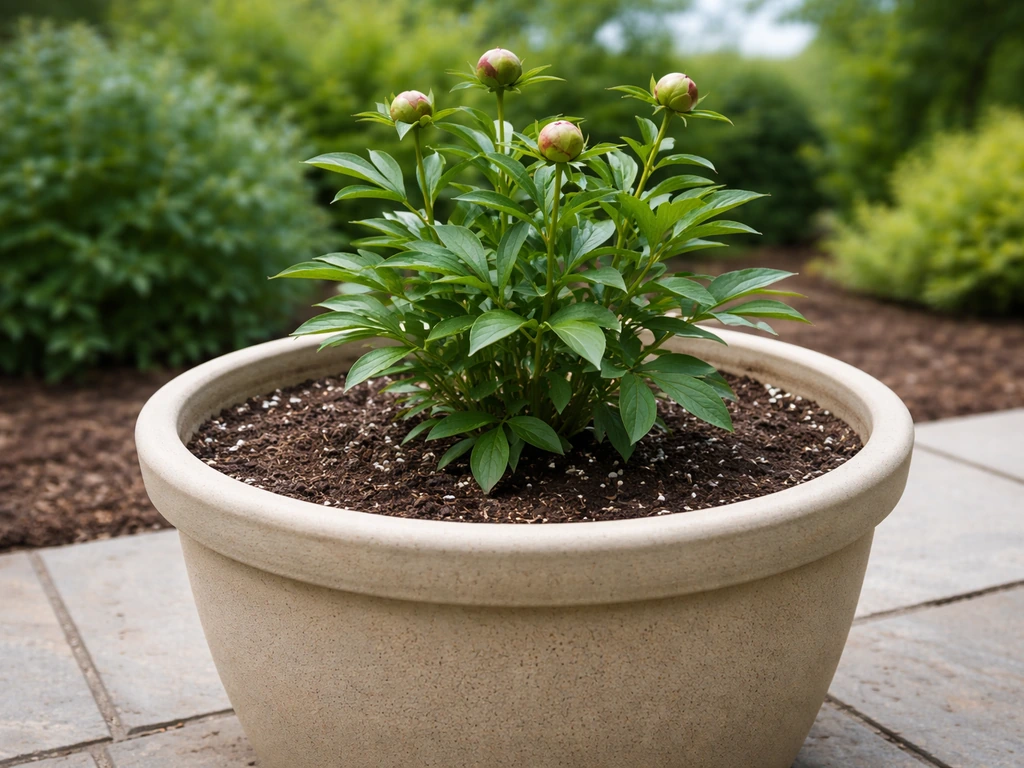
Peonies are fundamentally garden plants, and growing them in the ground in a well-prepared bed is always the easier path. But container growing absolutely works, and there are real reasons to go that route: a patio or balcony with no garden bed, poor native soil, or just wanting to move the pot around for better light. If you're weighing the two options, growing peonies in a raised bed is a great middle ground that combines the drainage benefits of containers with the thermal stability of ground planting. If you are using a raised bed, use the same principles for depth, drainage, and a cold period so the plant can vernalize and bloom can you grow peonies in a raised bed.
The conditions that make container peonies succeed are straightforward. You need a genuinely large pot with drainage holes, a soil mix that holds moisture without staying soggy, at least 6 hours of direct sun daily, and crucially, a cold winter period. Peonies require vernalization, which means a sustained period of cold temperatures to trigger shoot emergence and flowering in spring. In the ground, the soil insulates and naturally provides this. In a pot, you have to plan for it deliberately. Skip the cold, and you get foliage without flowers, or nothing at all.
The American Peony Society recommends peonies perform well in gallon-or-larger pots, and notes that quart-sized or smaller containers are simply not suitable. Container growing is harder work than in-ground, but it's not a long shot if you follow the right steps.
Best peony types and varieties for containers
Not all peonies behave the same in a pot. Herbaceous peonies (the classic garden type that dies back to the ground each fall) are the most common choice and work well in containers. Tree peonies can technically be grown in pots but they get large and woody, making them a much trickier proposition long-term. The best pick for most container gardeners is an intersectional or Itoh peony.
Itoh peonies are hybrids between herbaceous and tree peonies, and they're vigorous, compact, and well-suited to container culture. They tend to produce more flowers per plant than standard herbaceous types, and their sturdy stems don't flop over the way some classic varieties do. The RHS describes them as needing a sunny position with fertile, well-improved soil, which translates perfectly to a well-fed container setup.
Among herbaceous types, compact varieties perform better in pots than tall, lush ones. If you want a specific variety to try, Sarah Bernhardt is a classic that many gardeners grow in large containers with good results, though it can get tall and may need staking. Fern peonies (Paeonia tenuifolia) are naturally compact and a great fit for pots. Whatever variety you choose, buy from a reputable peony specialist rather than a generic garden center, since the quality and size of the root division makes a real difference in first-year performance.
Choosing the right planter setup
Pot size
Go bigger than you think you need. The minimum recommended size for a single herbaceous peony is about 5 gallons, but a better target is 10 to 15 gallons, which translates to a pot roughly 18 inches wide and 18 inches deep. Gardening Know How puts the ideal dimensions at 18 to 24 inches deep and equally wide. Peony roots are large and fleshy, and cramping them into a small pot stresses the plant and limits root development. A bigger pot also holds more thermal mass, which helps moderate temperature swings during winter.
Drainage
Drainage is non-negotiable. Peony crowns and roots rot quickly in waterlogged soil, and that rot is one of the most common reasons container peonies fail. Make sure the pot has multiple drainage holes at the bottom. Elevating the pot slightly on pot feet or bricks helps water drain freely and prevents the holes from sitting in standing water.
Soil mix
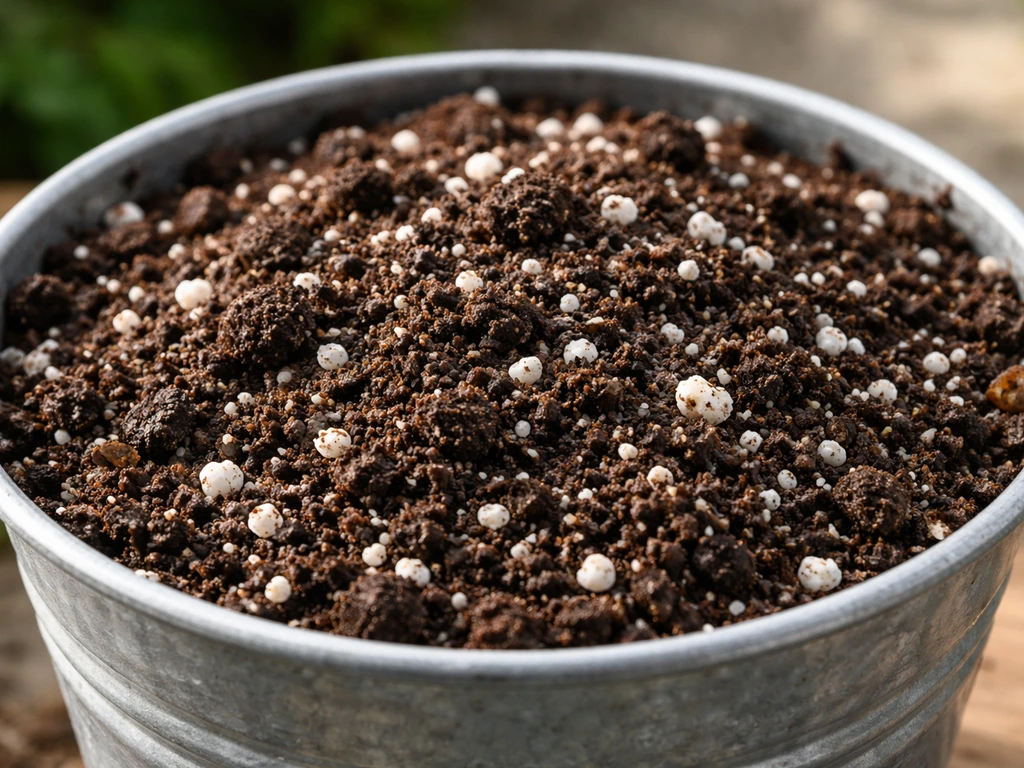
Don't use straight potting mix from a bag. A good container mix for peonies holds moisture but drains well and has enough porosity for the thick roots to develop. A reliable recipe is two parts quality potting soil, one part compost, and one part perlite. This gives you fertility, moisture retention, and the drainage and air pockets the roots need. Aim for a soil pH between 6.5 and 7.0. Virginia Tech Extension specifies a pH range of 5.5 to 7.0 for container peony production, so slightly acidic to neutral is the target. If your potting mix runs acidic, a small amount of garden lime can bring it into range.
How to plant peonies in a container
Bare-root vs. potted divisions
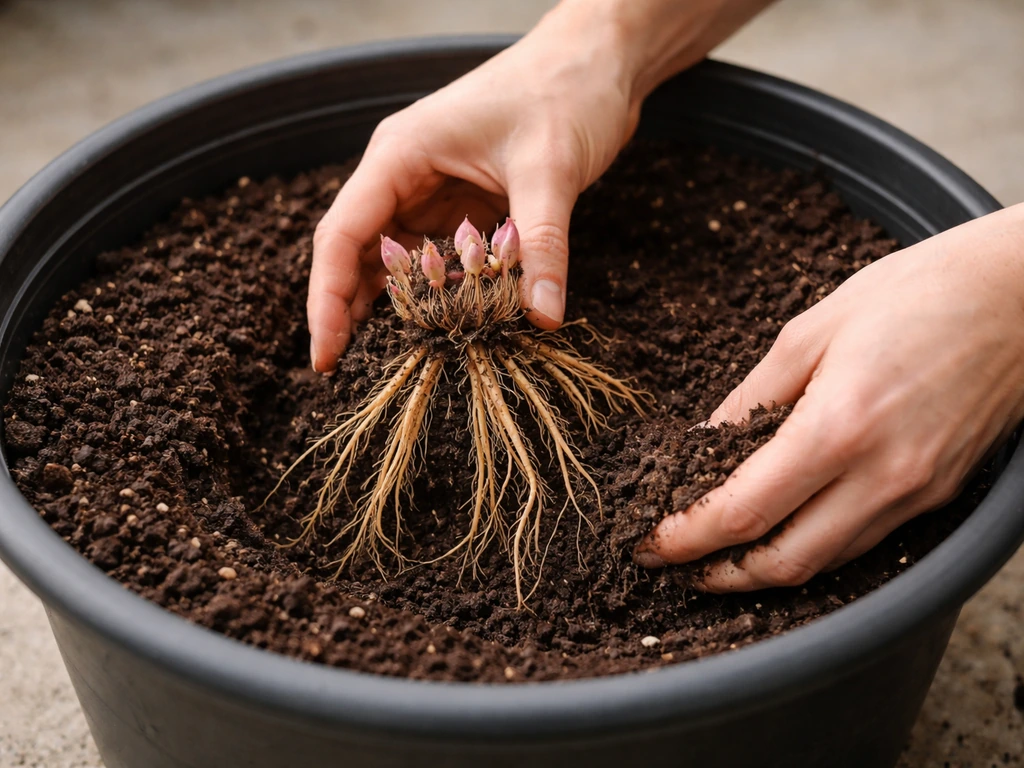
You'll typically buy peonies either as bare-root divisions (dormant roots with visible pink buds or 'eyes' in fall, or sometimes shipped in spring) or as already-potted plants from a nursery. Bare-root divisions planted in fall give the roots time to establish before winter, which sets them up for better first-year performance. Spring-planted bare-root peonies can work but are generally less reliable for blooming in the first year. The American Peony Society advises that late August through October is the best planting window, and that spring planting is not recommended for best results.
If you're buying a potted peony from a nursery, plant it so the top of the root ball sits at or just slightly below the soil surface, with only a thin layer of soil covering the crown.
Crown and eye depth: the most critical step
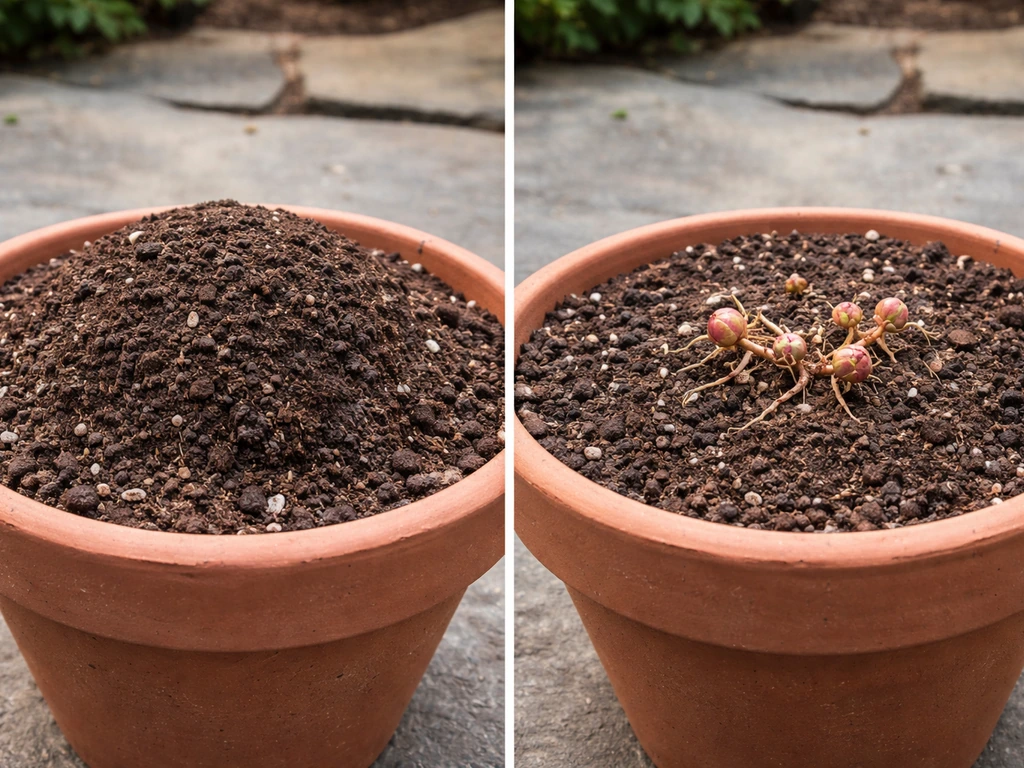
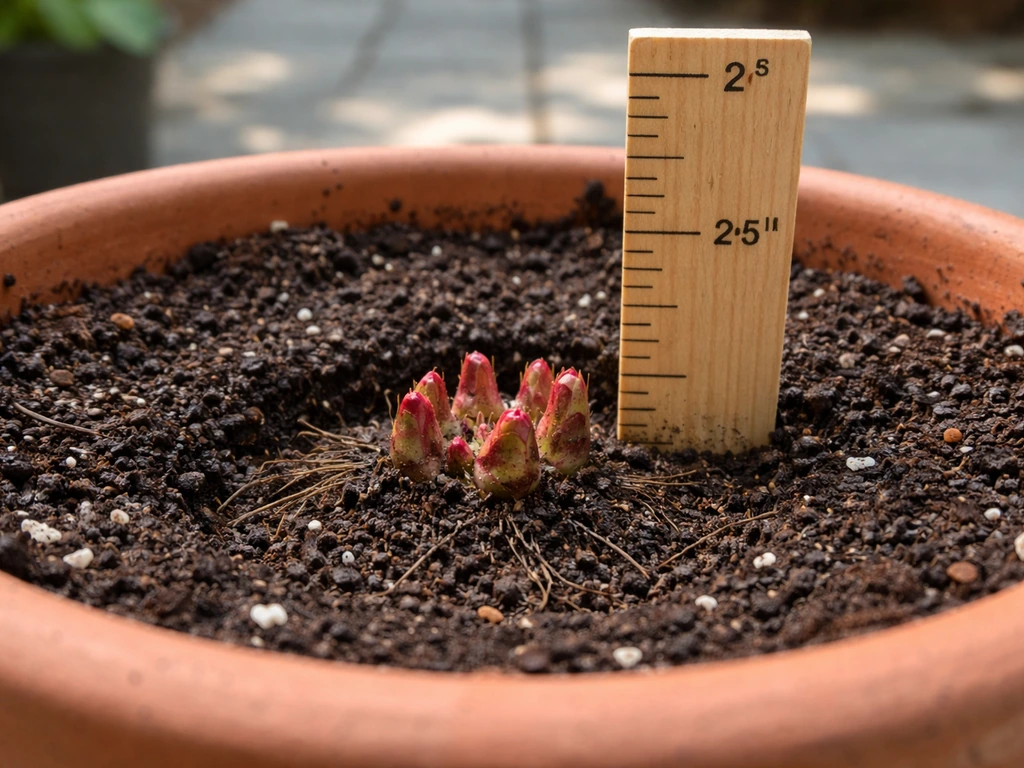
Planting depth is the single most common reason peonies don't bloom. The pink buds (called 'eyes') on the crown must be positioned just barely below the soil surface, about 1 to 2 inches deep at most. Bury them any deeper and the plant will produce lush foliage but refuse to flower. In containers, the general rule from multiple sources including Gardening Know How and K-State Extension is to keep eyes no more than 1 to 2 inches below the soil surface. When in doubt, plant shallower rather than deeper.
- Fill the pot roughly halfway with your prepared soil mix.
- Create a mounded or flat planting area in the center of the pot.
- Set the bare-root division or potted root ball in place, with the eyes pointing upward.
- Check the eye depth: the tops of the eyes should sit no more than 1 to 2 inches below where the final soil surface will be.
- Fill in around the root with soil, firming gently but without packing tightly.
- Water in thoroughly so the soil settles around the roots.
- Top up any settled soil to maintain the correct depth.
Care through the growing season
Sunlight
Peonies need at least 6 hours of direct sun per day to produce flowers. If you want more specifics, follow the full peonies how to grow them guide for container-friendly sun, soil, and winter chilling Sunlight. This is especially important in containers because the plant has a limited root zone and can't compensate for shade the way an established in-ground plant might. Pick the sunniest spot you have, whether that's a south-facing patio, deck, or balcony. If your best sun spot is also a windy one, you may need staking to prevent stems from snapping.
Watering
Containers dry out faster than garden beds, so consistent watering is important during the growing season, especially in spring when buds are forming and in summer heat. Water at the base of the plant, around the drip line, rather than overhead. The American Peony Society specifically recommends watering soil around the drip line rather than wetting the foliage, which reduces the risk of fungal disease. Iowa State Extension advises soaking the soil thoroughly to a depth of 12 to 18 inches when watering, which in a pot means watering until it drains freely from the bottom. Let the top inch or so of soil dry out slightly between waterings to avoid keeping the crown constantly wet.
Feeding
Feed in early spring when new growth reaches about 12 inches tall, using a balanced or low-nitrogen fertilizer. A 5-10-5 fertilizer (as noted by UC ANR) works well because the higher phosphorus supports root development and flower production without pushing excessive leafy growth. Apply fertilizer away from the crown rather than directly on top of it. Container plants need more frequent feeding than in-ground peonies because nutrients leach out with each watering. One or two applications per season is usually enough: once in spring and optionally again after flowering. Avoid heavy nitrogen feeding, which encourages foliage at the expense of blooms.
Staking
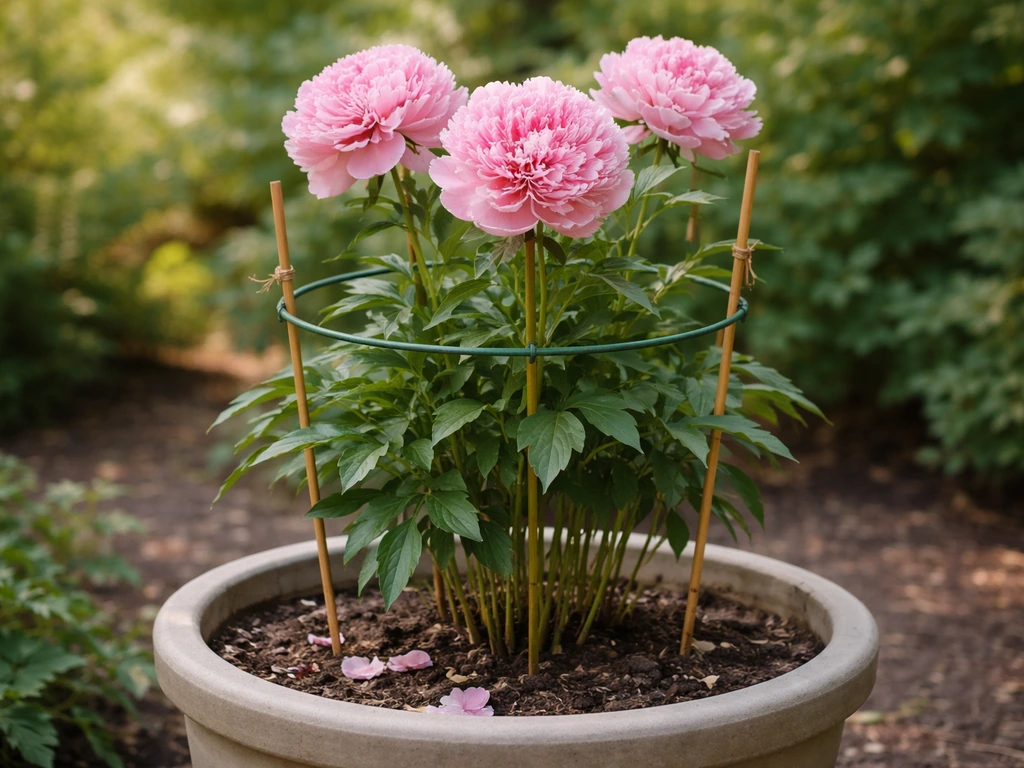
Many peony varieties, particularly those with large double flowers, need support to keep the stems from flopping once the blooms open. Place a peony ring or a few bamboo stakes with string around the plant when stems reach about 12 inches tall in spring, before the weight of the flowers becomes a problem. This is easier to do proactively than after the stems have already bent.
Seasonal timing and overwintering your potted peony
This is where container peonies require the most planning. Peonies need a cold dormant period (vernalization) to produce flowers the following spring. In the ground, this happens naturally. In a pot, you need to make sure the roots get cold enough for long enough without being exposed to extreme freeze-thaw cycles that can damage the fleshy roots.
Peonies are cold-hardy in USDA zones 3 through 8. In zones 5 through 7, leaving a large pot outdoors in a sheltered spot (against a wall, in an unheated garage or shed that stays cold but doesn't freeze solid) usually provides adequate chilling. In colder zones (3 and 4), pots need more protection from prolonged deep freezes because the roots are more exposed than they would be in the ground. Brooks Gardens notes that arctic blasts and prolonged deep freezing can be damaging for potted roots in a way that in-ground plants handle better.
Virginia Tech Extension provides specific temperature targets for controlled chilling: first, keep the plant at around 50°F for about 5 weeks to allow initial rooting, then move to around 40°F for a minimum of 3 weeks for proper vernalization. If you're growing in a region with mild winters (zone 8 or above), you may need to simulate this cold period deliberately by moving the pot into a cold storage space or unheated garage that stays in that temperature range.
Once the required cold period is complete and temperatures begin climbing in late winter or early spring, bring the pot back out to its sunny spot. Don't rush this; wait until the risk of hard frost is past in your area before placing it in full sun exposure. For those growing peonies in the ground rather than in pots, the seasonal management is simpler, and you can read more about timing and care in a UK or US context in our broader peony growing guides. If you want the most reliable results for peony how to grow uk, focus on correct winter chilling and consistent container care.
| Situation | Overwintering approach |
|---|---|
| Zones 5–7, large pot outdoors | Leave in a sheltered spot (unheated shed, against a wall). Mulch the pot with straw or wrap in burlap for extra insulation. |
| Zones 3–4, very cold winters | Move pot into an unheated but frost-protected space (cold garage or basement). Aim for 40–50°F range, not frozen solid. |
| Zone 8+, mild winters | May need to simulate chilling artificially. Move pot to a refrigerated or cold space at 40–50°F for at least 6–8 weeks total. |
| All zones: spring transition | Return pot to full sun after last hard frost risk. Begin watering as growth emerges. |
Why your peony isn't blooming (and how to fix it)
Container peonies can fail in a predictable set of ways. Here's how to diagnose and fix the most common problems.
No flowers at all (or only foliage)
The most likely cause is planting too deep. If the eyes are more than 2 inches below the soil surface, the plant will put out leaves but won't flower. The fix is to dig up the crown in fall and replant at the correct depth. The second most common cause is not enough cold during winter. If the plant didn't get adequate vernalization, it simply won't have the trigger to flower. A newly planted peony may also just need a season or two to establish before it blooms reliably, which is normal.
Crown and root rot
Soft, dark, mushy crowns or roots are a sign of rot, almost always caused by poor drainage or keeping the soil too wet. This is especially common in pots with inadequate drainage holes or heavy potting mix without enough perlite. If you catch it early, remove the affected parts with a clean knife, dust the cuts with sulfur powder or cinnamon, let them dry briefly, and repot in fresh, well-draining mix. Prevention is much easier than cure: don't overwater, and make sure water drains freely.
Botrytis blight and gray mold
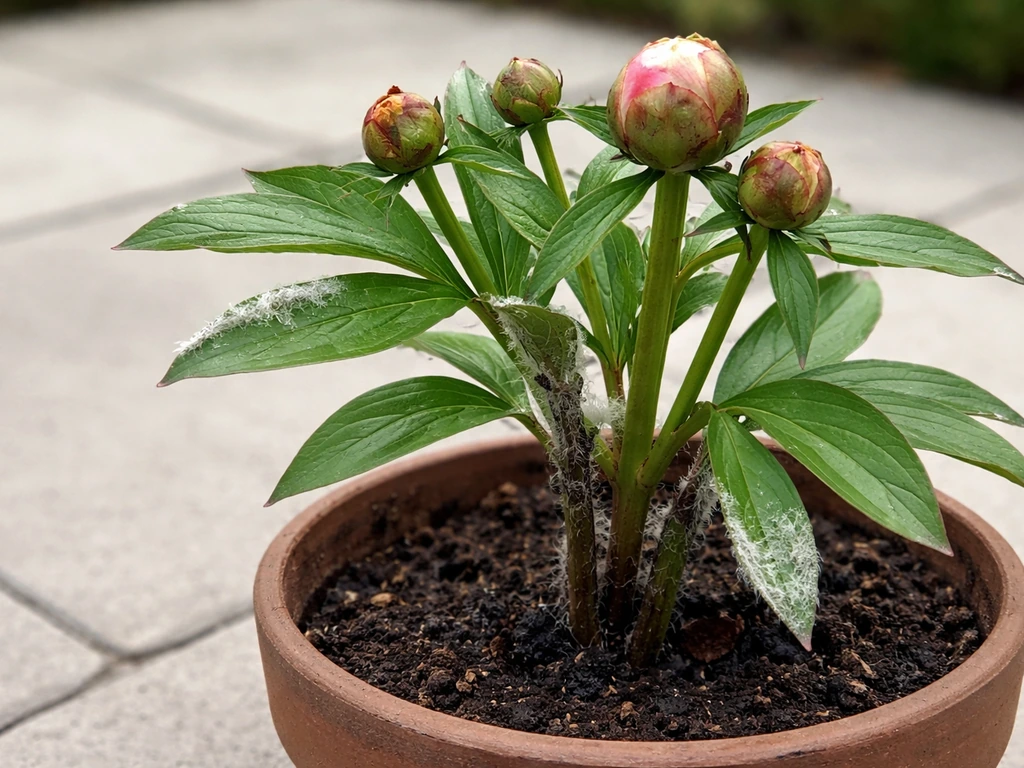
If stems turn black and mushy at the base, buds go brown and fail to open, or you see gray fuzzy growth on leaves or stems, you're dealing with Botrytis blight (gray mold), caused by the fungus Botrytis cinerea. University of Wisconsin Extension identifies this as one of the most common peony diseases, and Penn State Extension notes that sanitation alone isn't always enough to control it once established. In containers, poor airflow and overhead watering create ideal conditions for Botrytis. Remove and dispose of all affected plant material, avoid wetting the foliage, and increase air circulation around the pot. In severe cases, a fungicide labeled for Botrytis can help.
Transplant shock after repotting
Peonies dislike having their roots disturbed. If you repot or move a plant at the wrong time, you may see it sulk for a season and skip flowering. Always repot in early fall if you need to, not in spring when the plant is actively growing. After repotting, water in well and let the plant settle. Expect a possible off year but trust that it will come back.
Pests
Peonies are generally not heavily bothered by pests. The ants you see on peony buds are harmless and are attracted to the nectar, not causing damage. Occasional aphid infestations can be knocked off with a strong stream of water. Scale insects and thrips are less common but possible; check under leaves and along stems if the plant looks off. Container plants are sometimes more vulnerable to pests than in-ground plants because the root zone is warmer in summer.
Your next-steps checklist to get started today
If you're ready to try growing peonies in a container, here's a simple action plan that takes you from decision to first bloom. If you're also curious about paulownia, learn the basics of paulownia how to grow before you plant growing peonies in a container.
- Choose your variety: for containers, prioritize compact herbaceous types or Itoh intersectional peonies. Avoid very tall varieties unless you're comfortable with staking.
- Source your plant: order a bare-root division from a specialist peony nursery in late summer for fall delivery and planting (late August through October is the ideal planting window).
- Get the right pot: minimum 10 to 15 gallons, 18 inches wide and 18 inches deep, with multiple drainage holes. Larger is better.
- Mix your soil: combine two parts potting soil, one part compost, one part perlite. Check pH and aim for 6.5 to 7.0.
- Plant at the right depth: position eyes no more than 1 to 2 inches below the soil surface. When in doubt, go shallower.
- Pick your sunny spot: 6 or more hours of direct sun daily. Water at the base, never overhead.
- Plan for winter: know your USDA zone and decide where the pot will overwinter. It needs to experience several weeks at 40 to 50°F to flower the following spring.
- Feed once in early spring when shoots reach 12 inches, using a 5-10-5 or similar low-nitrogen fertilizer.
- Stake early: place supports when stems reach about 12 inches to protect the flowers.
- Be patient: first-year plants often produce limited blooms or none at all. By year two or three, a well-established container peony will reward you with a full flush of flowers.
FAQ
Can I start peonies in a planter from seed, or do I need a division or nursery plant?
For container growing, seed is not a practical starting point. Peonies grown from seed can take many years to flower and won’t reliably match the parent variety. Use bare-root divisions with visible eyes (dormant) or an established nursery plant so you can meet the cold period and planting depth needs for blooms.
How do I tell if my peony eyes are planted at the right depth in a pot after settling and watering?
After planting, the eyes should sit about 1 to 2 inches below the final soil surface. If the soil mix slumps after watering, gently check from the side or lift the edge of the mix to confirm depth. If they have sunk too deep, adjust in fall before the plant goes fully dormant, because replanting in spring often delays flowering.
Do container peonies need a potting mix replacement every year?
No, but plan on refreshing at least the top portion periodically. Container peonies are heavy feeders and nutrients leach with watering. A practical approach is to top-dress with compost in early spring and use a slow-release or supplemental fertilizer as recommended. Fully repotting is typically only necessary when the plant is root-bound or drainage problems develop.
What cold strategy works if my container is at risk of hard freezing all the way through (zone 3 or 4)?
If the pot could freeze solid for long stretches, insulate the outside of the container and consider moving it to a protected, wind-sheltered spot to reduce freeze-thaw damage. The goal is to provide the needed chilling without repeatedly exposing fleshy roots to extreme temperature swings. If you can control temperatures, the controlled 50°F then 40°F chilling approach is more reliable than relying on outdoor conditions.
Should I bring the planter into a garage during winter, or leave it outside?
It depends on your winter. If outside chilling in your area is mild but reliable, leaving the pot outdoors in a sheltered spot can work. If winters are too warm to satisfy vernalization, you will likely need a cold storage location where the temperature stays in the chilling range rather than thawing out repeatedly.
How big is “gallon-or-larger” in real pot dimensions, and what happens if I choose a smaller pot?
For most herbaceous container peonies, aim for roughly 10 to 15 gallons (about 18 to 24 inches deep and wide). Smaller pots restrict root growth and thermal stability, which can reduce flowering even if the plant survives. If you must go smaller, expect a longer period before reliable blooms and possibly more stress during winter.
What drainage setup helps the most, pot feet or gravel on the bottom?
Use pot feet or bricks to prevent the pot holes from sitting in standing water, and ensure you have multiple drainage holes. Avoid adding gravel or rocks at the bottom as a “drainage layer” because it often reduces effective soil depth and can worsen waterlogging in the root zone.
Why did my peony bloom poorly or not at all even though it got sun and I watered correctly?
The two most common causes are incorrect planting depth (eyes too deep) and insufficient cold. A third frequent issue is inadequate root development, which happens when the pot is too small or the plant is disturbed. If the eyes are right and the chilling was correct, give it one to two seasons to fully establish before judging container performance.
Is it normal if my container peony leafs out but never flowers the first year?
Yes, it can be normal. Bare-root plants planted in the fall often do better, but even then some containers need a season to build strong roots in a new pot. If you see lush foliage with no blooms, double-check depth and confirm the plant received the full chilling period.
Can I water peonies with a self-watering system or saucer underneath?
It’s risky. Self-watering bases and saucers can keep the mix too wet around the crown, increasing rot risk. If you use saucers, empty them after watering. Better control comes from watering at the base and ensuring excess drains freely from the bottom.
My buds are turning brown and not opening, what should I check first?
Start by checking for overly wet conditions and cool, humid weather patterns around the plant. In containers, Botrytis risk rises with overhead watering and poor airflow. Remove affected parts, improve air circulation around the pot, avoid wetting foliage, and keep watering focused at the drip line.
Do container peonies need staking, and when is the best time to add support?
Many varieties need support because blooms can be heavy, especially large double flowers. Place a peony ring or stake system when stems are about 12 inches tall in spring, before the flowers weigh down and bend stems. Waiting until after stems flop can make damage harder to correct.
Next Article
Paulownia How to Grow: A Step-by-Step Guide for Bloom
Step-by-step guide to grow paulownia from seed or seedlings, with site prep, care, pruning, spacing, and bloom timing.