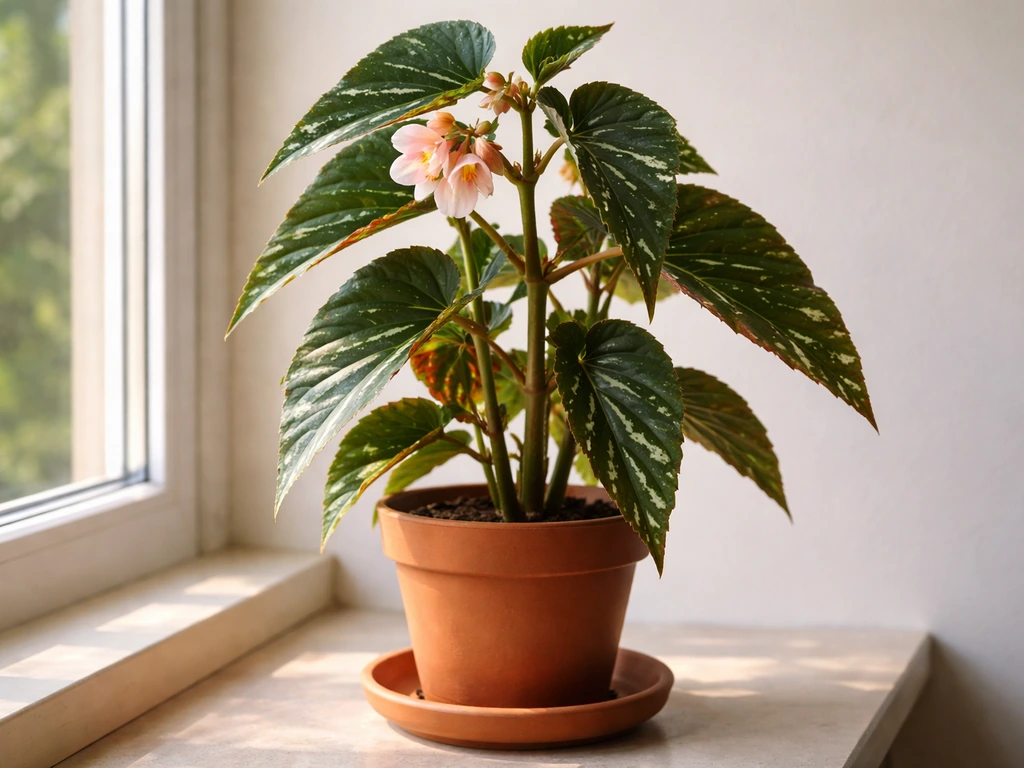
Wax begonias (Begonia × semperflorens-cultorum) are some of the most reliably floriferous bedding plants you can grow, producing non-stop flowers from late spring until frost in almost any climate. You can start them from their dust-fine seeds indoors about 12–14 weeks before your last frost date, or root stem cuttings in as little as 7–14 days. They thrive in USDA Zones 3–11 as annuals (or tender perennials in Zones 10–11), handle both sun and shade depending on variety, and reward even beginners with very little fuss once you nail a few basics around light, moisture, and soil pH.
How to Grow Wax Begonias: Seed to Bloom & Care (Zones)

Harriet Whitmore
5 Aug 2026
Why wax begonias are worth growing
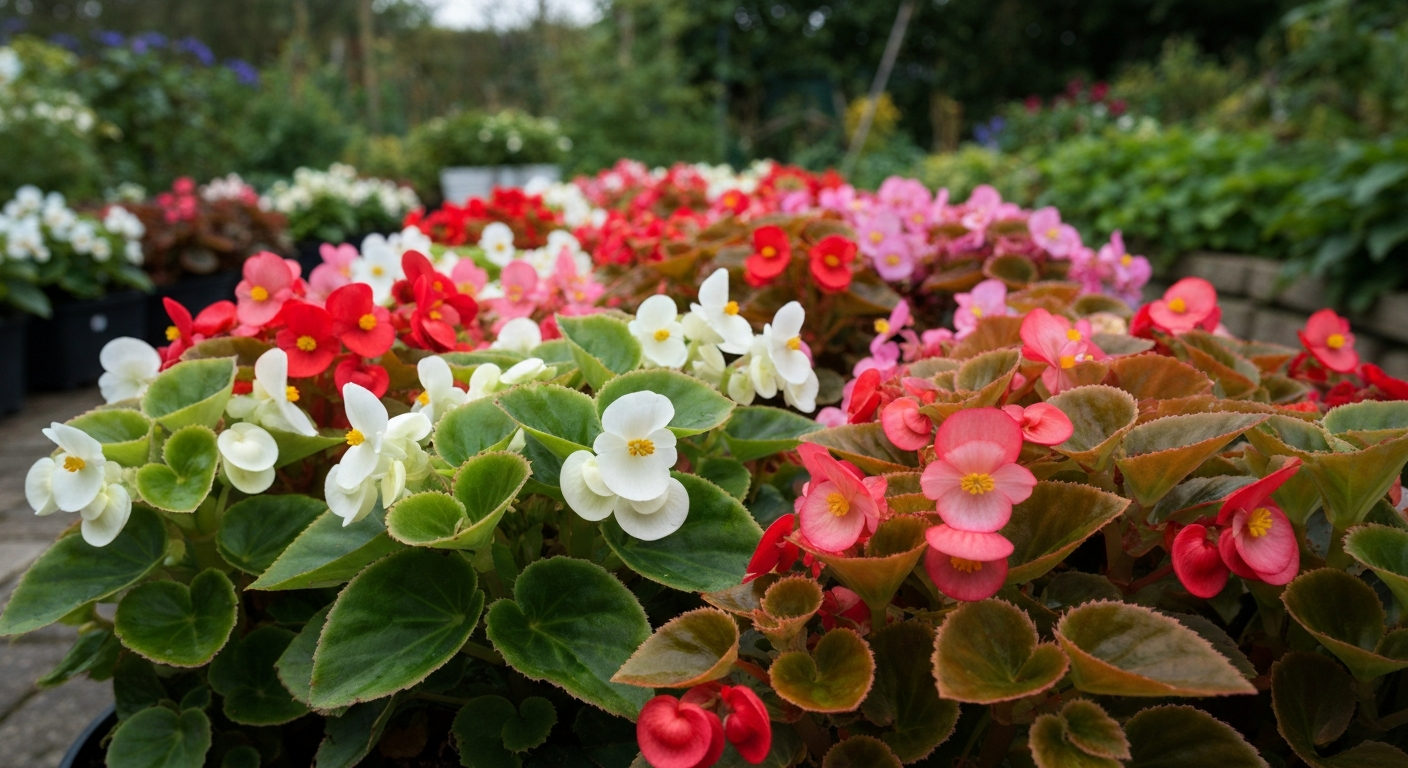
I grow a lot of flowers, and wax begonias consistently punch above their weight. They bloom from the moment you transplant them to the first hard freeze, they resist deer browsing, and they genuinely thrive in the kind of mixed light conditions that defeat a lot of other bedding plants. The flowers come in clean whites, pinks, and reds, the foliage is either glossy green or rich bronze depending on variety, and the plants stay compact enough for borders, containers, and hanging baskets alike. If you want a plant that looks good in July without constant intervention, this is it.
That said, wax begonias do have one quirky growing requirement: their seeds are among the tiniest in common cultivation, running around 70,000 seeds per gram. That microscopic size catches a lot of first-time growers off guard, and it is usually what leads to the most common failure at the seed-starting stage. Once you understand a few non-negotiable rules around light, temperature, and surface sowing, the process becomes very manageable. This guide walks through every step, from variety selection and soil mixing to hardening off and troubleshooting the problems most likely to trip you up.
Quick facts at a glance
| Attribute | Details |
|---|---|
| Botanical name | Begonia × semperflorens-cultorum |
| Plant type | Herbaceous, fibrous-rooted annual (tender perennial in Zones 10–11) |
| USDA hardiness zones | Grown as annual in Zones 3–9; perennial in Zones 10–11 |
| Mature height | 6–18 inches depending on variety; most bedding types reach 8–12 inches |
| Bloom time | Late spring through first frost (essentially continuous) |
| Light | Full sun to part shade; bronze-leaf types tolerate more sun than green-leaf types |
| Watering | Consistent moisture; allow top 1 inch of soil to dry between waterings |
| Soil pH | 5.5–6.5 (slightly acidic); soilless mixes target 5.5–6.0 |
| Seed germination temp | 70–75 °F (21–24 °C) soil temperature |
| Days to germination | 10–20 days (commercial plugs: 10–14 days) |
| Weeks from seed to transplant | 12–14 weeks indoors before last frost date |
| Propagation methods | Seed, stem cuttings, leaf cuttings, division |
Choosing the right type and variety
Most wax begonias sold for bedding fall into two broad foliage camps: green-leaf types and bronze-leaf types. The distinction matters practically, not just aesthetically. Green-leaf varieties tend to perform better in part shade to filtered sun, where their lighter foliage captures more available light. Bronze-leaf varieties carry more anthocyanin pigment, which helps them handle longer periods of direct sun without scorching. If your bed or container gets four or more hours of direct afternoon sun, lean toward a bronze-leaf selection. In shadier spots, green-leaf types will bloom more freely.
Within those two groups, some series worth considering by use case include: 'Cocktail' series (compact, 6–8 inches, bronze foliage, very sun-tolerant), 'Senator' series (taller at 10–12 inches, both leaf colors, good for bold borders), 'Varsity' series (uniform height, good disease resistance), and 'Viking XL' (extra-large flowers, strong heat tolerance for Zone 7 and warmer). For hanging baskets and trailing effects, look at pendula-type selections rather than standard bedding types. If you are already growing other begonia types, you will notice wax begonias are much more sun-tolerant than angel wing or dragon wing begonias, which prefer more consistent shade and are propagated almost exclusively from cuttings rather than seed.
Climate zone should influence your variety choice beyond just sun exposure. In Zone 9 and warmer, heat-tolerant bronze-leaf series hold up through summer much better than standard green-leaf types, which can go semi-dormant in extreme heat. In cooler northern zones (3–5), almost any variety performs well since the season is short and temperatures rarely stress the plants. Container gardeners in any zone benefit from compact varieties under 10 inches, which fill in faster and look tidier over a longer period.
Tools, supplies and soil mixes
For seed starting, you need shallow trays or high-cell-count plug trays (72-cell or 128-cell), a heat mat capable of maintaining 70–75 °F at the substrate surface, a clear humidity dome, and a light source positioned 2–3 inches above the tray. A simple spray bottle or fine-mist watering wand keeps the surface moist without displacing seeds. Because the seeds are so fine, keep a folded card or small piece of paper on hand to distribute them evenly across the tray surface.
The seed-starting mix matters more than most people realize with begonias. You want something fine-textured, sterile, well-drained, and low in fertility. A reliable home mix is equal parts fine vermiculite and peat moss (about 4 quarts of each). University of Missouri Extension recommends a fine, sterile mix such as 4 qts vermiculite + 4 qts peat moss for sowing very fine seeds (Starting Plants Indoors From Seeds (University of Missouri Extension)). The low-fertility base prevents seedling burn, and the sterile components reduce damping-off risk. If you prefer a peat-free approach, a mix of 50–70% buffered coconut coir plus 20–30% perlite works well, though coir dries faster, so check moisture more frequently. In either case, target a substrate pH of 5.5–6.0 before you sow. Most commercial seed-starting mixes fall in this range, but it is worth confirming with an inexpensive pH strip or meter if you are mixing your own.
- Shallow seed trays or 72/128-cell plug trays
- Heat mat with thermostat (target 70–75 °F substrate temp)
- Clear humidity dome or plastic wrap
- Full-spectrum grow light or bright south-facing window
- Fine-textured, sterile seed-starting mix (peat/vermiculite or coir/perlite)
- pH meter or strips (target 5.5–6.0)
- Fine-mist spray bottle or watering wand
- Folded paper card for seed distribution
- Rooting hormone gel or powder (optional, for cuttings)
- Small pots (3–4 inch) for potting up seedlings
- Balanced, water-soluble fertilizer (half-strength for seedlings)
Propagation overview: seed, stem cuttings, and leaf cuttings
Wax begonias can be propagated three ways, and the right choice depends on your timeline, your goals, and whether you are working from existing plants or starting fresh.
| Method | Best used when | Time to transplant-ready plant | Difficulty |
|---|---|---|---|
| Seed | Starting from scratch, growing large quantities, exploring varieties | 12–14 weeks from sow to transplant | Moderate (requires attention to light and temp) |
| Stem cuttings | Multiplying a named variety, overwintering a plant, fastest turnaround | 3–5 weeks from cutting to rooted transplant | Easy |
| Leaf cuttings | When only leaf material is available; used more for rex begonias than wax types | 8–16 weeks from leaf to transplantable plantlet | Moderate to slow |
| Division | Splitting established clumps in warm climates or overwintered container plants | Immediate; divisions transplant directly | Easy |
For most home gardeners, seed is the starting point in spring and stem cuttings are the tool for multiplying or overwintering a plant you want to keep. Leaf cuttings are more commonly associated with rex begonias and other rhizomatous types than with standard wax begonias, but they will produce plantlets if you are patient. Division is really only practical if you have overwintered a pot indoors and the plant has developed into a substantial clump.
Starting wax begonias from seed, step by step
When to sow
Count back 12–14 weeks from your average last frost date to find your sow date. In Zone 5 (last frost around May 15), that puts sowing in mid-February. Zone 7 gardeners with a last frost around April 15 should sow in early January. The long lead time is not because germination is slow but because wax begonias grow quite slowly as seedlings and need 10–12 weeks of indoor growing time to reach transplant size.
Preparing the tray and sowing
- Fill your seed tray or plug cells with moist (not wet) seed-starting mix. Press lightly to eliminate air pockets and level the surface.
- Water gently from below or with a fine mist until the mix is uniformly moist throughout. Do not waterlog it.
- Open the seed packet carefully. Wax begonia seeds look like fine dust. Fold a small piece of paper into a V shape and tap a pinch of seeds into it to use as a dispensing channel.
- Surface-sow the seeds by tapping them lightly across the top of the mix. Do not cover them with soil. Begonia seeds require light to germinate; even a thin layer of mix can block enough light to prevent sprouting.
- If sowing in cells, aim for 1–2 seeds per cell. In open trays, distribute seeds as evenly as possible to reduce competition.
- Mist the surface very lightly with a spray bottle to settle seeds against the mix without burying them.
- Cover the tray with its humidity dome or drape loosely with clear plastic wrap.
- Place on a heat mat set to maintain 70–75 °F at the soil surface. Set your grow light to run 14–16 hours per day, positioned 2–3 inches above the dome.
Germination conditions and timeline
Under the right conditions, the first sprouts appear in 10–14 days. You may see some as early as day 10 and others as late as day 20. Substrate temperature is the single most important variable. Below 65 °F, germination slows dramatically or stalls. At 70–75 °F with consistent light and surface moisture, the 10–14 day window is realistic. Check the surface moisture once or twice daily. The mix should feel just barely damp. If it dries out completely, germination stops; if it stays waterlogged, algae or damping-off fungus can wipe out the entire tray before seedlings even appear.
| Stage | Temperature | Light | Timeline |
|---|---|---|---|
| Sowing to germination | 70–75 °F (soil), room temp OK for air | 14–16 hrs/day light on surface (do NOT cover seeds) | 10–20 days |
| Germination to first true leaf | 65–72 °F; remove dome when 50% sprouted | Bright indirect light; 14–16 hrs grow light | 7–14 days after germination |
| First true leaf to transplant size | 60–70 °F; start bottom watering | Full intensity under grow light or bright window | 8–10 weeks |
| Hardening off before transplant | Outdoor ambient; protect below 50 °F nights | Gradual sun exposure over 7–10 days | 7–10 days before plant-out date |
What to watch for during germination
The most common failure I see at this stage is surface algae, which shows up as a green or dark film on the mix. It is almost always caused by overwatering combined with warmth. If you see algae forming, reduce misting frequency and improve airflow slightly by propping the dome. Damping-off (seedlings collapsing at the soil line) is caused by Pythium or Fusarium fungi in non-sterile media or overwatered trays. Using a sterile mix and avoiding standing water in the tray eliminates most damping-off risk.
Propagating by stem cuttings, leaf cuttings, and division
Stem cuttings
Stem cuttings are the fastest and most reliable way to multiply wax begonias from existing plants. Take a cutting 3–4 inches long with at least two sets of leaves. Cut just below a leaf node with a clean, sharp blade. Remove the lower leaves so no foliage is buried in the rooting medium. Dip the cut end in IBA rooting hormone gel or powder if you have it (optional but helpful in cooler conditions). Stick the cutting 1–2 inches deep into moist, sterile perlite or a 50:50 peat-perlite mix.
Cover with a humidity dome and maintain 65–75 °F at the medium surface. Provide bright, indirect light but not direct sun under the dome, which builds up heat and wilts cuttings. At 80–85% relative humidity inside the dome and the right temperature, you should see root initiation in 7–14 days. You can test for roots gently by tugging the cutting after 10 days. Once it resists with some firmness, it has rooted. Move it to a small pot with regular potting mix and begin treating it like a transplant.
Leaf cuttings
Leaf cuttings are used less often with wax begonias than with rex begonias, but they will work with some patience. Detach a healthy leaf with its petiole intact and lay it flat on moist sterile medium, petiole inserted at a shallow angle. Pin the leaf down lightly with a small stone or bent wire to ensure the underside stays in contact with the medium. Keep it warm (65–75 °F), humid, and in bright indirect light. Plantlets form at the base of the petiole and along scored veins, but the process takes 4–12 weeks or more before you have anything worth potting up. I find stem cuttings so much faster with wax begonias that I only use leaf cuttings when stem material is limited.
Division
If you have overwintered a wax begonia indoors in a container and it has grown into a multi-stemmed clump, you can divide it in early spring before moving it back outside. Knock the plant out of its pot, tease the root ball apart into sections each with at least two or three stems and a portion of roots, and pot each section into fresh potting mix. Water well and keep in bright indirect light for a week before exposing to full conditions. This is the quickest turnaround of any propagation method since the plant structure is already established.
Seedling care: thinning, potting up, and hardening off
Thinning and early care
Once seedlings have germinated, remove the humidity dome as soon as about half the seeds have sprouted. Leaving the dome on too long in warm conditions encourages damping-off. At this point, seedlings are tiny, but they need good airflow and consistent light. If you sowed in an open tray rather than individual cells, thin to one seedling per inch of space once they have their first true leaves. I know it feels wasteful to pull healthy seedlings, but crowded begonia seedlings develop weak stems and are much more prone to fungal issues.
Potting up
When seedlings have 2–3 sets of true leaves and fill their initial cell or space, move them into individual 3-inch pots using a general-purpose potting mix with good drainage. At this stage, switch from misting to bottom watering: set pots in a shallow tray of water and allow the mix to absorb moisture from below for 20–30 minutes, then drain. This encourages deep root development and keeps the foliage dry, which reduces fungal risk. Begin fertilizing with a balanced, water-soluble fertilizer (such as 20-20-20) at half the recommended strength once a week. Full-strength feed at this stage will burn fine seedling roots.
Hardening off before transplanting
Hardening off is the step most beginners skip, and it is the step that causes a lot of transplant shock and setbacks. Start 7–10 days before your planned outdoor planting date. On day one, move pots to a bright, sheltered outdoor spot (dappled shade, no wind) for one to three hours, then bring them back inside. Add one to two hours of outdoor time each day, and begin introducing more direct sun by days four through six. By day seven to ten, plants should be able to handle their eventual outdoor conditions for a full day. Never leave seedlings outside if overnight temperatures are forecast below 50 °F (10 °C). Wax begonias are cold-sensitive, and a near-frost night will set them back by weeks.
Planting out: beds, containers, and hanging baskets
Transplant into the garden or containers after your last frost date has passed and nights are consistently above 50 °F. In garden beds, space standard bedding types 8–12 inches apart. Closer spacing (8 inches) fills in faster for a solid mass of color; wider spacing (12 inches) suits mixed borders where plants need room to develop individually. Dig a hole just deeper than the root ball, set the plant at the same depth it grew in the pot, backfill, and water in well. If you want to attract more butterflies to the garden, see guidance on how to grow buddleia (butterfly bush).
For containers, use a well-draining potting mix rather than garden soil, which compacts in pots and restricts root oxygen. A mix containing perlite or bark fines drains well and helps prevent root rot. For hanging baskets, pendula-type wax begonias work best, and baskets dry out faster than ground-level containers, so check moisture every day in hot weather. A self-watering insert or water-retaining gel crystals mixed into the potting medium can help in very hot, dry climates.
Light, watering, and feeding through the season
Light requirements vary by foliage type. Bronze-leaf varieties handle four to six or more hours of direct sun without issue. Green-leaf types prefer part shade, especially in afternoon, and may drop flower buds or scorch in sustained direct sun in climates above Zone 7. Both types grow well in bright, indirect light or dappled shade, though they will flower less profusely than in adequate sun.
Water consistently but not excessively. Let the top inch of soil dry between waterings. Wax begonias sitting in waterlogged soil develop root rot surprisingly quickly, even in warm weather. In containers, this means checking soil moisture rather than watering on a fixed calendar schedule. In the ground, established plants in amended soil rarely need daily watering except during heat waves.
Feeding through the growing season makes a real difference. Start with a balanced fertilizer (20-20-20 or 10-10-10) at planting, then switch to a slightly higher-potassium formulation (such as 15-15-30) once plants are blooming, to support flower production without pushing excessive leafy growth. Apply at half the package rate every two weeks for container plants, and once every three to four weeks for in-ground plants in reasonably fertile soil.
Pruning, deadheading, and keeping plants tidy
One of the practical advantages of wax begonias over some other annuals is that they are technically self-cleaning. Old flowers drop on their own without leaving an unsightly mess in most conditions. That said, if plants become leggy or flower production slows in midsummer, a light trim of about one-third of the stem length refreshes growth. Use clean scissors or pruners and cut just above a leaf node. New flowering shoots emerge within two to three weeks.
In containers or hanging baskets, where plants are under more heat stress and drying stress than in-ground beds, midseason trimming is more often necessary. I do a light cutback on my basket begonias around mid-July every year, and they come back fuller and more floriferous through August and September.
Overwintering wax begonias
In Zones 10–11, wax begonias are perennial and need no special winter treatment beyond reducing water slightly during cooler months. In all other zones, they are frost-tender. If you want to save a favorite variety, dig plants before the first frost, cut them back by about half, and pot them into fresh potting mix. Move indoors to a bright window or grow light setup where temperatures stay above 55 °F. Water sparingly through winter, just enough to prevent complete drying. Fertilize lightly once a month. In March or April, take stem cuttings from the overwintered plant to generate new transplants for spring, which is often more productive than trying to transition the original plant back to full outdoor growth.
Seasonal planting timeline by zone
| USDA Zone | Last Frost (approx.) | Sow Seeds Indoors | Transplant Outdoors | Notes |
|---|---|---|---|---|
| Zone 3 | Late May | Late February | Early June | Short season; start on time to maximize bloom period |
| Zone 4 | Mid-May | Mid-February | Late May | Use heat mat; indoor temps can be cool in Feb |
| Zone 5 | Mid-May | Mid-February | Late May | Standard 12–14 week lead time applies |
| Zone 6 | Mid-April | Late January | Late April | Watch for late cold snaps; harden off carefully |
| Zone 7 | Mid-April | Early January | Mid-April | Can start cuttings from overwintered plants in March |
| Zone 8 | Mid-March | Late December/Early Jan | Late March | Bronze-leaf types preferred for summer heat |
| Zone 9 | Late February | Mid-November | Late February | Heat-tolerant series essential; summer semi-dormancy possible |
| Zones 10–11 | No frost | Year-round sowing possible | Any time | Perennial; reduce water in winter months |
Troubleshooting common problems
Pests
Wax begonias are relatively pest-resistant compared to many bedding annuals. The most common problems are fungus gnats (which thrive in wet seed-starting mix and attack seedling roots), thrips, mealybugs in indoor settings, and vine weevils on containerized plants. For fungus gnats, let the surface of the mix dry slightly between waterings and apply a Bacillus thuringiensis israelensis (Bti) drench to the soil. Yellow sticky traps catch adults. Thrips and mealybugs respond to insecticidal soap or neem oil applied directly to affected growth, repeated every five to seven days for two to three applications.
Diseases
Botrytis (gray mold) is the most frequent disease issue, particularly in humid climates or dense plantings. It shows as fuzzy gray patches on leaves and stems and spreads rapidly in still, humid air. Improve airflow by spacing plants properly (8–12 inches apart), avoid overhead watering, and remove affected tissue promptly. Powdery mildew can appear on stressed plants in late summer; improve air circulation and water at the base. Root rot from Pythium or Rhizoctonia follows overwatering or heavy, poorly drained soil. Prevention is far easier than treatment: use a well-draining mix, do not let pots sit in standing water, and avoid planting in compacted ground without amendment.
Common cultural failures and fixes
| Symptom | Likely Cause | Fix |
|---|---|---|
| Seeds fail to germinate after 3 weeks | Seeds buried or shaded; temp below 65 °F; mix dried out | Surface-sow only; maintain 70–75 °F with heat mat; mist daily |
| Seedlings collapse at soil line (damping-off) | Non-sterile mix; overwatering; poor airflow | Use sterile seed mix; remove dome promptly after germination; improve airflow |
| Leggy, pale seedlings | Insufficient light | Move under grow light 2–3 inches above tray; run 14–16 hrs/day |
| Green algae on soil surface | Overwatering under warmth | Reduce misting frequency; improve ventilation |
| Yellow leaves in established plants | Overwatering, root rot, or pH too high limiting iron/manganese uptake | Check drainage; test soil pH; target 5.5–6.5 |
| Few flowers, lots of leaves | Excess nitrogen, too much shade, or midsummer heat stress | Switch to lower-nitrogen fertilizer; trim back; ensure adequate sun for variety |
| Scorched or bleached leaves | Too much direct sun (especially green-leaf types) | Move to part shade; switch to bronze-leaf variety for sunny spots |
| Wilting despite moist soil | Root rot from overwatering | Improve drainage; reduce watering frequency; repot in fresh mix if severe |
Simple care checklist for the season
- Sow seeds 12–14 weeks before last frost; surface-sow only, no covering
- Maintain 70–75 °F soil temperature during germination with a heat mat
- Keep grow lights on 14–16 hours per day and within 2–3 inches of the tray
- Remove humidity dome once 50% of seeds have germinated
- Thin seedlings to prevent crowding; pot up into 3-inch pots at the 2–3 true leaf stage
- Switch to bottom watering once in individual pots
- Feed at half-strength weekly as seedlings; every 2–4 weeks once planted out
- Harden off over 7–10 days before transplanting; protect from temperatures below 50 °F
- Space plants 8–12 inches apart in beds; use free-draining mix in containers
- Choose bronze-leaf varieties for full sun, green-leaf for part shade
- Trim back by one-third in midsummer if plants become leggy or bloom slows
- Dig and pot favorite plants before frost if overwintering indoors
- Take stem cuttings from overwintered plants in early spring for fresh transplants
How wax begonias compare to other begonia types
If you have been exploring different begonia types, it helps to understand where wax begonias sit relative to their relatives. Angel wing begonias and dragon wing begonias are cane-type begonias that grow taller (often 18–24 inches or more), prefer shadier conditions, and are almost exclusively propagated by stem cuttings rather than seed. For detailed, step-by-step care and propagation tips on how to grow dragon wing begonias, see how to grow dragon wing begonias (f470886d-af25-447f-b1c9-a7837ac41c64). For detailed care and propagation tips, see our guide on how to grow angel wing begonias. If you’re exploring sun-loving bedding plants as alternatives or companions, see our concise guide on how to grow angelonia for care tips and variety recommendations. Butterfly begonias are a newer hybrid category with pendula-type growth suited to hanging baskets. For specific care and mounting tips for hanging types, see how to grow butterfly begonias. Wax begonias are the most compact, most sun-tolerant, and easiest to start from seed of the common begonia types, which is why they dominate bedding plant production worldwide. If you enjoy growing this species, exploring the cane-types and specialty hybrids can extend your season and add variety to your shade garden. For gardeners also interested in attracting pollinators, see how to grow a butterfly bush for tips on selecting varieties and site conditions.
FAQ
What primary botanical and cultivar identification information should be cited for a wax begonia growing guide?
Cite the common name and group (wax begonias, Begonia × semperflorens‑cultorum or related fibrous types) and note cultivar differences (double vs single, trailing vs upright). Authoritative sources: NC State Extension Gardener Plant Toolbox (Begonia – Wax Types), RHS Begonia advice, and major seed/plug producers for cultivar traits.
What exact seed‑sowing and germination data must be included and sourced?
Provide that wax begonia seeds are surface‑sown (do not cover), require light for germination, optimal substrate temperature ~70–75°F (21–24°C), and expected germination 10–20 days (commonly 10–14). Source: RHS advice, Iowa State Extension germination requirements, University of Missouri Extension on timing.
Which seed‑starting media composition, pH and sterility details are required?
Recommend a fine, sterile, well‑drained mix (example home recipe: equal parts fine vermiculite + peat or a peat‑lite mix), target media pH ~5.5–6.0, and note peat‑free alternatives (buffered coir + perlite). Sources: University of Missouri Extension seed starting, Syngenta grower media specs, NCAT on peat alternatives.
What step‑by‑step propagation methods and expected timelines should be documented?
Document: (1) Seed: surface sow, maintain warmth/light/humidity, germinate 10–20 days, transplant to pots in 4–6 weeks. (2) Stem cuttings: 1–2" cuttings into moist perlite or 50:50 peat:perlite, high humidity and 65–75°F, roots in 7–14 days. (3) Leaf cuttings: pinned leaf/vein method in sterile media, plantlets in 4–12+ weeks. Cite University Extensions (Missouri, Illinois), commercial grower guides, and propagation references.
What environmental controls and staging (light, temp, humidity) must be specified for each stage?
Seedlings: bright, indirect light; media 70–75°F for germination; maintain even moisture without waterlogging; avoid direct sun until hardened. Cuttings: high humidity (≈80–85%), bottom or bench heat to keep medium 65–75°F, bright indirect light. Source: commercial propagation guides and extension publications (Syngenta, Greenhouse Product News, Univ. of Illinois).
What hardening‑off and transplanting procedure and timing should be included, with climate caveats?
Hardening off over 7–10 days: start in bright shade 1–3 hours/day, gradually increase exposure. Transplant outdoors when night temps consistently >50°F (10°C) and frost risk passed. For containers/ hanging baskets, move gradually to target light. Source: University of Missouri Extension hardening/transplanting guidance and practical grower schedules.
Next Article
How to Grow Angel Wing Begonias Indoors and Out
Step-by-step care for angel wing begonias: light, watering, soil, feeding, pruning, propagation, and fixes for blooms an