
Yes, petunias grow extremely well in the ground. In fact, an in-ground bed is often where they thrive best, giving their roots room to spread, access to consistent moisture, and the kind of stable environment that keeps them flowering from late spring right through fall. As long as you give them full sun, well-drained soil, and a little feeding plan, you can expect a reliable, colorful display for months. If you’re wondering what to grow alongside petunias, choose plants with similar sun and drainage needs to make watering and feeding easier.
How to Grow Petunias in the Ground: Step-by-Step Guide

Harriet Whitmore
12 Jun 2026
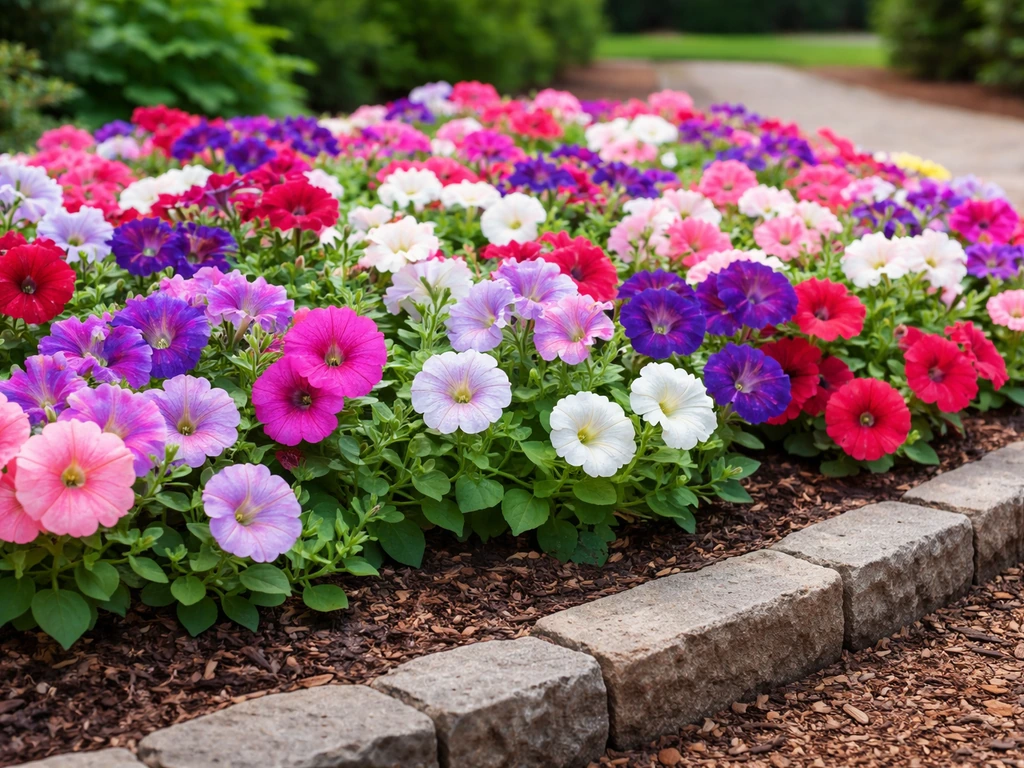
Can petunias actually grow in the ground?
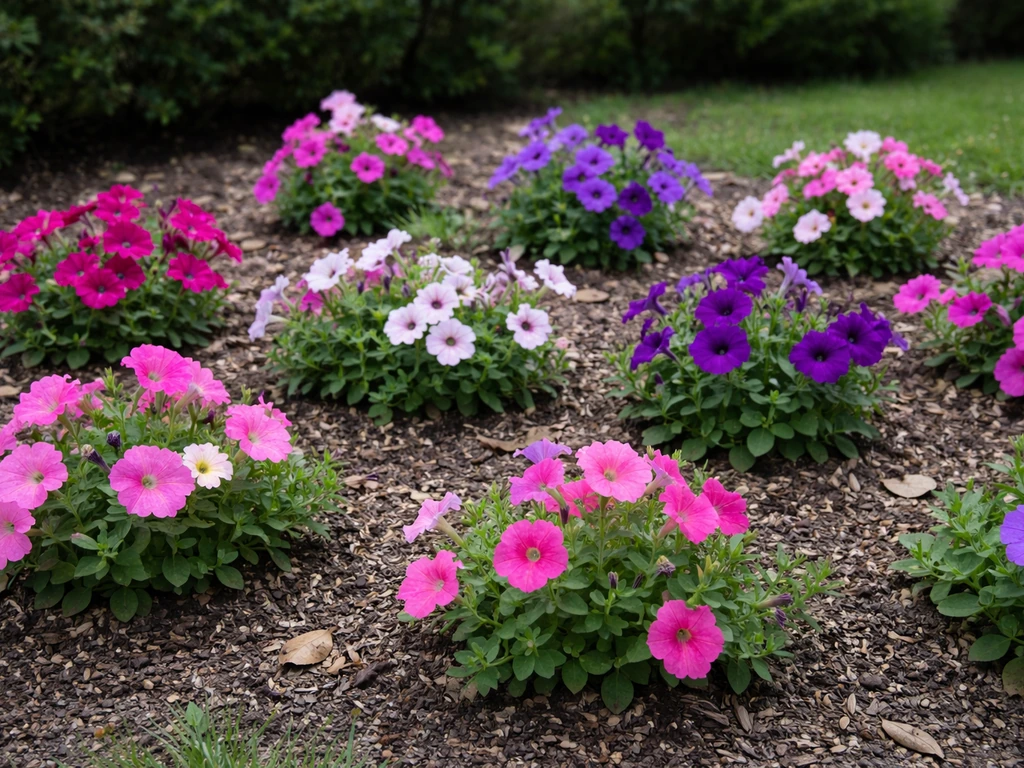
Petunias are technically low-growing perennials, but in most parts of the U.S. and the UK they're grown as annuals because they can't survive frost. That doesn't mean they're fragile. During their growing season they're surprisingly tough and adaptable. Ground planting suits them well because the soil buffers temperature swings and holds moisture more evenly than a pot or hanging basket does. The main things that make in-ground growing fail are poor drainage, too much shade, and planting too early before the last frost. Get those three things right and you're most of the way there.
One thing worth knowing before you commit: petunias do need time to establish after transplanting. A young plant that goes into the ground takes roughly 7 to 10 days just to settle in and start actively growing, and if you're starting from seed, those seeds need about 10 to 12 weeks indoors before the plants are big enough to go outside. Rushing either of those steps is the most common reason gardeners end up disappointed with a slow-blooming or leggy bed.
Choosing the right petunia type and getting timing right
Petunia varieties are grouped into a few key categories, and the one you pick changes how you space, maintain, and expect blooms. Here's a quick breakdown before you buy:
| Type | Flower size | Plant habit | Best use in beds |
|---|---|---|---|
| Grandiflora | Large (up to 5 inches) | Upright to mounding | Focal point planting, borders |
| Multiflora | Smaller but very prolific | Compact and bushy | Mass planting, edging |
| Milliflora | Miniature | Very compact | Tight borders, small beds |
| Spreading (Wave types) | Medium | Low, trailing ground cover | Wide beds, slopes, filling space |
For most home gardeners, transplants from a nursery are the easiest entry point. UMN Extension is straightforward about this: petunias are easy to grow outdoors from transplants, but starting from seed is more challenging for beginners. If you do want to grow from seed, start indoors around early March (for northern climates that's roughly 10 to 11 weeks before your last frost date). You'll need to harden the seedlings off by moving them outdoors for a couple of hours each day over the two weeks before planting out, gradually increasing exposure so they don't go into shock.
If you're buying plugs or starter plants, the timing question is simpler: wait until after your last frost date and until nighttime temperatures are consistently above about 50 to 55°F. Soil temperature matters too. Cold soil stalls root development even when air temperatures seem fine. Growing petunias from plugs is a great middle-ground option if you want a head start without the seed-starting complexity.
Soil prep and site conditions
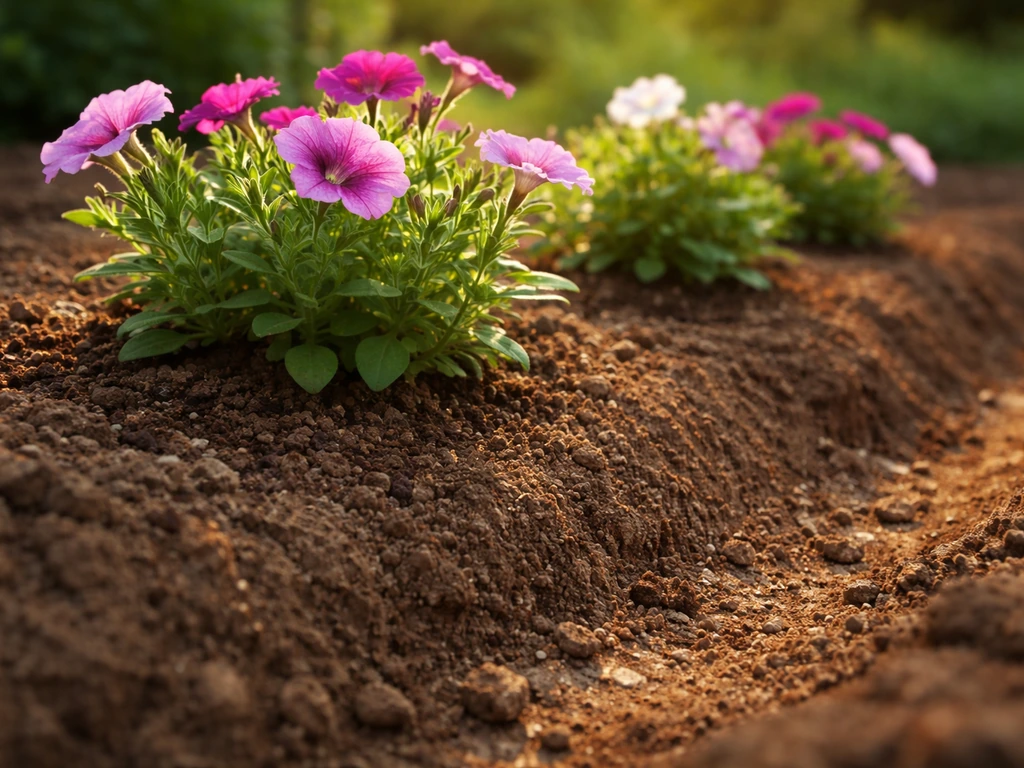
Petunias need at least 5 to 6 hours of direct sun, and they genuinely do better with a full day of it. I've tried them in partial shade and the plants get leggy, bloom less, and tend to be more susceptible to disease. If you're picking a spot, full sun is non-negotiable for the best results.
Drainage is equally critical. Petunias want moist, well-drained soil. They do not want to sit in wet or waterlogged ground, which leads to root rot and fungal problems quickly. If your soil is heavy clay, work in organic matter like compost or aged bark to open it up before planting. Sandy soils on the other end are usually fine for drainage but may need compost added to help hold some moisture and nutrients. Aim for a slightly acidic to neutral pH in the range of 6.0 to 7.0.
Before planting, loosen the soil to about 8 to 10 inches deep, work in a balanced granular fertilizer (see the feeding section below), rake smooth, and you're ready to plant.
How to plant petunias in the ground
Spacing
Spacing depends entirely on the type you're planting. Grandiflora and multiflora types planted in a sunny bed do well at around 12 inches apart. Millifloras are compact enough to go as close as 4 to 6 inches. Spreading types like Wave petunias are the outliers and need room to do their thing. Plant those at least 18 inches apart (1.5 feet), sometimes more, because they'll spread 2 to 4 feet wide. If you crowd them you just end up with a tangled mass that's harder to maintain and more prone to disease.
Planting depth
Plant at the same depth the transplant was sitting in its container. Don't bury the stem. Dig a hole just deep enough to accommodate the root ball, set the plant in, firm the soil around it, and make sure there's no air pocket underneath.
Watering after planting
Water thoroughly right after planting to settle the soil around the roots and eliminate air gaps. For most petunia types (grandiflora, multiflora, milliflora), a thorough watering once a week is usually sufficient once established, except during the hottest, driest periods. Spreading types are the exception: they grow fast and spread aggressively, and that extra growth means they need more frequent watering to keep up. Check the soil before watering rather than going on a fixed schedule. If the top inch is dry, water.
Pinching for bushier plants
For grandiflora and multiflora types, pinch the growing tip out when plants reach about 6 inches tall. It feels counterintuitive to remove healthy growth, but it encourages the plant to send out multiple flowering side shoots instead of one leggy main stem. Spreading types don't really need this, but the upright types respond well and you'll get a noticeably fuller plant.
Fertilizing and feeding your in-ground petunias
At planting time, work a balanced granular fertilizer into the soil before you put transplants in. A balanced product like 8-8-8, 10-10-10, or 12-12-12 applied at about 2 pounds per 100 square feet is a solid starting point. This gives the roots something to feed on as they establish.
Once the plants are growing, petunias are heavy feeders and benefit from a regular feeding schedule through the season. Every two to three weeks with a balanced liquid fertilizer or a slow-release granular top dressing keeps them pushing new blooms. If you notice yellowing leaves and slowed growth mid-season, that's usually a sign the plants are hungry. Don't skip feeding in July and August just because the plants look okay. Consistent nutrition is what separates a petunia bed that blooms through September from one that fizzles out in midsummer.
Keeping them blooming all season
Deadheading
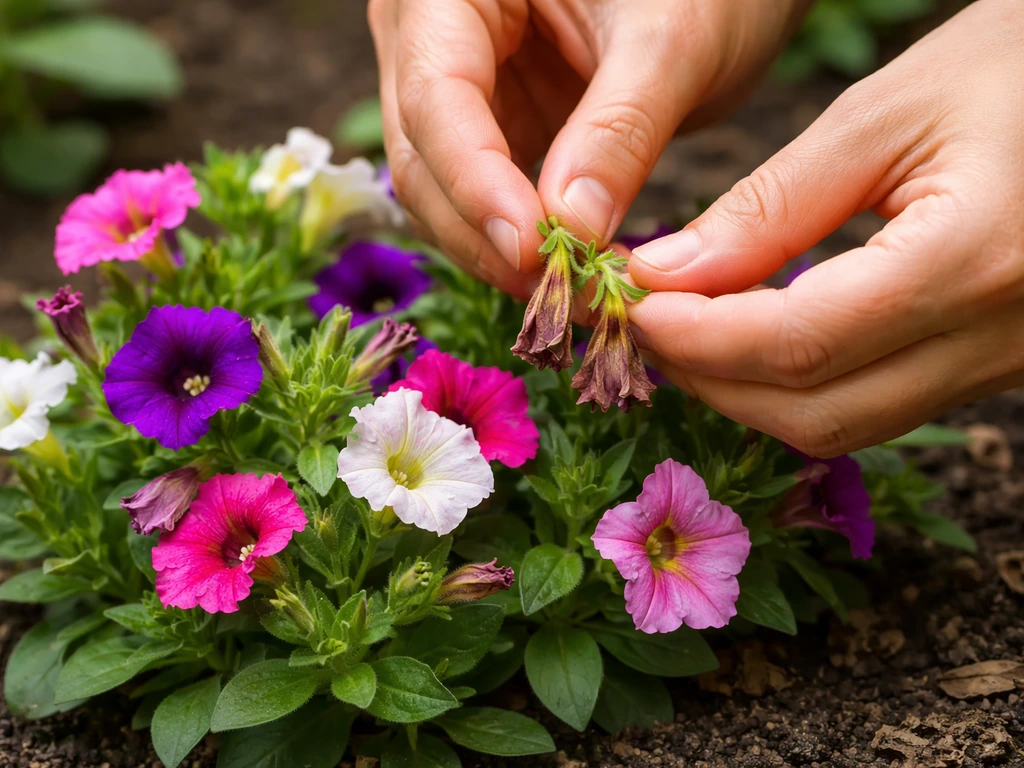
Removing spent flowers (deadheading) tells the plant to keep producing blooms rather than putting energy into seed production. For in-ground beds, deadheading the whole planting isn't always practical if you've got a large mass of plants, but doing a quick pass every week or so to snap off the most obvious spent blooms does make a difference. For individual plants or smaller borders, deadhead consistently and you'll see noticeably more continuous color. Modern Wave and spreading types have been bred to be more self-cleaning, so they need less of this, but traditional grandifloras in particular benefit from it.
Midsummer cutback
If your petunias get leggy and sparse-blooming by late July, don't panic. Cut them back by about one-third, water well, and give them a feed. They'll regenerate and push a fresh flush of flowers in a few weeks. This is one of those things that feels drastic the first time you do it but becomes a reliable part of the summer routine once you've seen it work.
Pests to watch for
The most common pest problems on in-ground petunias include:
- Aphids: look for clusters of soft-bodied insects on new growth and cast skins on leaves. A strong jet of water or insecticidal soap handles most infestations.
- Spider mites: fine webbing under leaves and a stippled, dusty appearance to foliage, especially in hot dry weather. Increase watering, improve air circulation, and use a miticide if the problem is severe.
- Broad mites and cyclamen mites: these are too small to see with the naked eye but cause distorted, curled new growth. They're harder to manage and may require a targeted miticide.
- Foliage-feeding caterpillars: irregular holes in leaves. Hand-pick or use a Bt (Bacillus thuringiensis) spray for organic control.
- Slugs and snails: ragged holes, often worse after rain or overhead watering at night. Iron phosphate bait is effective and safe around pets and wildlife.
Disease troubleshooting
Gray mold (Botrytis cinerea) is the main disease concern for in-ground petunias, especially in cool, wet conditions or where plants are crowded and airflow is poor. It appears as fuzzy gray-brown patches on flowers and foliage. Remove affected material immediately, avoid overhead watering where possible, and improve spacing if the planting is dense. Powdery mildew can also show up in late summer. Both are largely preventable by giving plants enough space and keeping foliage as dry as possible.
Seasonal timeline and climate-zone adjustments
Where you live shifts every date in this guide by weeks. Here's how to think about timing across zones:
| Climate zone / region | Start seeds indoors | Transplant outdoors | Expect first blooms |
|---|---|---|---|
| USDA Zone 9-10 (mild winters, e.g. Southern CA, Gulf Coast) | January to February | Late February to March | April to May |
| USDA Zone 7-8 (Mid-Atlantic, Pacific Northwest, Southeast) | Late January to mid-February | Late March to mid-April | May to early June |
| USDA Zone 5-6 (Midwest, New England, Mid-South) | Early to mid-March | Mid-May after last frost | June to early July |
| USDA Zone 3-4 (Northern states, upper Midwest) | Mid to late March | Late May to early June | July |
The rule of thumb: transplant after your last frost date once soil temperatures have warmed above 55°F. If you're using store-bought transplants and it's currently June (as it is right now), you're not too late in most zones. Petunias planted in mid-June in Zones 5 through 7 will still have 3 to 4 solid months of bloom time before frost.
In very hot climates (Zone 9 and warmer), petunias can actually struggle in peak midsummer heat. In those regions, treat them more like a cool-season plant: get them in the ground early in spring or try again in fall. They'll often come back stronger once temperatures drop back below about 90°F.
What to do right now based on today's date
It's June 12, 2026. If you're in Zones 5 through 8, this is actually a great time to plant nursery transplants directly into the ground. The soil is warm, frost risk is gone, and you still have plenty of season ahead. Skip starting from seed at this point and head to a garden center for healthy transplants. Look for compact plants with good green color and a few buds just opening. Avoid anything that's already heavily bloomed out in a small cell pack because those plants tend to be stressed and slow to establish. Get them in the ground this week, water them in well, give them that initial fertilizer, and you'll have flowers within a couple of weeks.
If you're growing petunias in other formats like hanging baskets or containers, the maintenance principles are similar but the watering and feeding schedules are more demanding. For specific tips on growing petunias in hanging baskets, including soil choices and watering frequency, see our guide on how to grow petunia baskets. If you want the best results in a hanging basket, focus on choosing a trailing variety and keeping the soil consistently moist with regular feeding hanging baskets.
And if you've been curious about Mexican petunias, those are a completely different plant with different needs, worth looking into separately. If you’re wondering how to grow Mexican petunias, check the specific care tips for their light, soil, and watering needs. For now, an in-ground bed of standard petunias planted today with the steps above will give you one of the most rewarding and low-frustration flowering displays you can get from a summer annual.
FAQ
How do I know if my soil drains well enough for petunias in the ground?
Do a quick soak test: dig a hole about 12 inches wide and deep, fill it with water, and see how fast it drains. Aim for it to empty within about an hour or two. If water lingers or takes all day, work in compost and consider raised beds so roots never sit in saturated soil.
Should I mulch petunias after planting in the ground?
Yes, but use mulch thoughtfully. A thin layer (about 1 to 2 inches) of shredded bark or compost helps moderate moisture, avoid splashing, and reduce weeds. Keep mulch a little away from the stems so it doesn’t stay wet against the plant, which can increase gray mold risk.
Can I use homemade compost or manure when planting petunias?
Compost is generally fine if it is well-finished (crumbly, not hot, not chunky). Avoid fresh manure near planting because it can burn tender roots and create excessive, soft growth that is more vulnerable to disease. If your soil is already rich, skip heavy amendments and rely on balanced feeding instead.
What’s the best way to water petunias so I don’t cause disease?
Water at the soil level, not overhead. Early morning watering gives foliage time to dry, which lowers the chance of gray mold and powdery mildew. If you notice the top inch staying wet or plants stay damp overnight, reduce watering frequency and check spacing.
Why are my petunias growing, but not flowering as much?
The two most common causes are not enough sun and inconsistent feeding. Make sure the bed gets at least 5 to 6 hours of direct sun, then switch to a regular every 2 to 3 week feeding routine. Also check that you did not over-fertilize with a high-nitrogen product, which can push leafy growth at the expense of blooms.
My petunias look leggy even though they get sun. What should I do?
Legginess often means they established too early, got stressed, or need a reset. If it is late July or early August and blooming slows, cut back about one-third, water deeply, then feed. For earlier in the season on upright types, pinch back when they reach about 6 inches to encourage side shoots.
When should I deadhead, and do I have to remove every spent flower?
You do not need perfection, but removing the most obvious spent blooms weekly helps keep flowering going. If you have a smaller planting, deadhead more thoroughly. If you have a large mass, focus on the densest clusters where spent blooms are most visible, and let naturally self-cleaning varieties do more of the work.
Do petunias need support like stakes or cages in the ground?
Usually no, but it depends on variety and spacing. Upright types can flop if crowded or pushed by wind. If that happens, gently stake early while stems are still flexible, and avoid tying too tightly, which can bruise stems and invite rot.
How can I tell if yellow leaves mean overwatering instead of hunger?
Yellowing can come from two different issues. If leaves yellow and soil stays wet or smells sour, it is likely too much water or poor drainage. If soil is reasonably dry between waterings and growth slows, hunger is more likely, especially mid-season, and a balanced feeding should help.
What should I do if frost threatens after I planted my petunias?
Petunias are not frost tolerant, so protect them quickly. Cover them with a breathable row cover or frost cloth overnight if temperatures are forecast to drop, remove the cover during the day to prevent overheating, and avoid plastic that traps condensation and can increase gray mold.
Can I save petunias from year to year if they are perennials where I live?
In colder areas they are commonly grown as annuals because frost kills them. If you are in a milder climate and want to try saving them, start with varieties that reliably overwinter for your region, keep them on the drier side in winter, and reduce feeding once growth slows.
Next Article
What to Grow With Petunias: Companion Flowers and Plants
Curated companion plants and flowers to grow with petunias, with spacing, container vs bed tips, and easy pairing plans.
