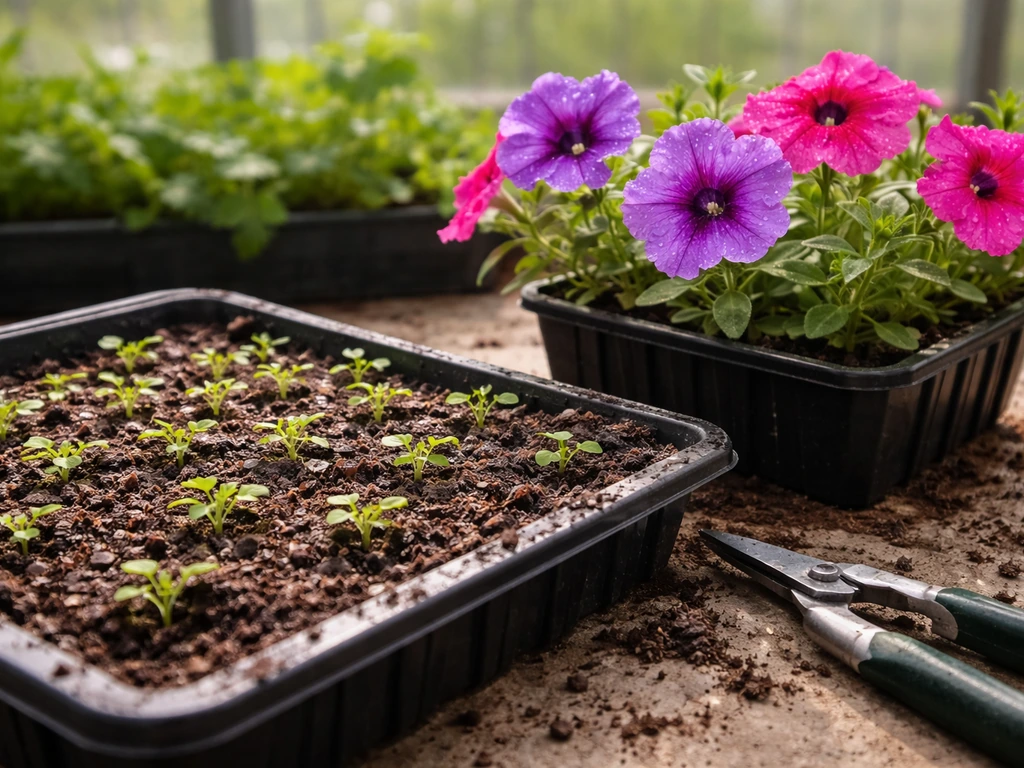
The best plants to grow with petunias are calibrachoa (million bells), sweet alyssum, verbena, lobelia, bacopa, dusty miller, and ornamental grasses or spike (dracaena). All of them share petunias' core needs: at least 5 to 6 hours of full sun, well-drained soil with a slightly acidic pH around 5.4 to 6.2, and a tolerance for regular watering without sitting in soggy roots. Pick from that list and you're unlikely to go wrong, whether you're filling a container or edging an in-ground bed.
What to Grow With Petunias: Companion Flowers and Plants

Harriet Whitmore
2 Jun 2026

The quick criteria: what a good petunia companion actually needs
Before jumping to specific plants, it helps to know what you're actually matching. Petunias are full-sun annuals that want decent drainage above almost everything else. Their roots hate sitting wet, and their flowers drop off fast in too much shade. The soil doesn't need to be especially rich, but it does need to drain. The pH sweet spot that keeps petunias (and their close relatives) looking healthy sits between 5.4 and 6.2. Drop below 5.8 for long and you may start seeing iron deficiency show up as yellowing new leaves.
So a compatible companion needs to check the same boxes: full sun tolerance, good drainage, slightly acidic soil, and the ability to handle regular watering cycles without turning the root zone into a swamp. Beyond that, you're looking at growth habit. Petunias are typically low to mid-height mounders or trailers, so pairing them with something taller as a centerpiece, or something lower and spreading as an edge, gives you contrast and fills the space naturally.
- At least 5 to 6 hours of direct sun (more is better for flowering)
- Well-drained soil or potting mix, not constantly wet
- Slightly acidic pH in the 5.4 to 6.2 range
- Tolerance for regular, even frequent, watering without waterlogging
- Growth habit that complements rather than competes with petunias for light and root space
- Avoid pairing with other solanaceous plants like tomatoes, peppers, or flowering tobacco, which can share disease problems
Best flowers to pair with petunias
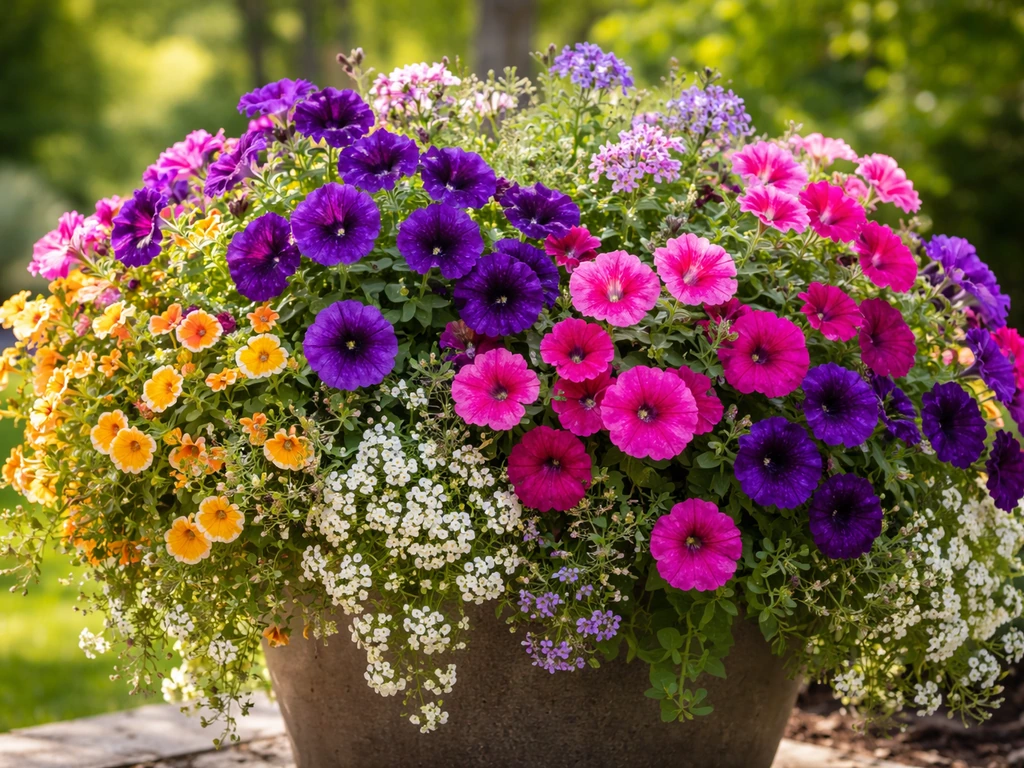
These are the flowering companions I reach for first, because they genuinely thrive under petunia conditions rather than just tolerating them.
Calibrachoa (million bells)
Calibrachoa is practically petunias' closest cousin, and the pairing works almost every time. They want the same full sun (around 6 hours minimum), the same pH range, the same well-drained soil, and they both need regular feeding because frequent watering leaches nutrients quickly. Calibrachoa grows prostrate and low, only about 3 inches tall but spreading up to 20 inches, which makes it a natural spiller over the edge of a container or a soft front edge in a border. The flower shapes are nearly identical to petunias but smaller, so the combo looks intentional rather than random. Just make sure both are getting enough light. Partial shade reduces flowering on both, and you'll notice calibrachoa sulking first.
Sweet alyssum
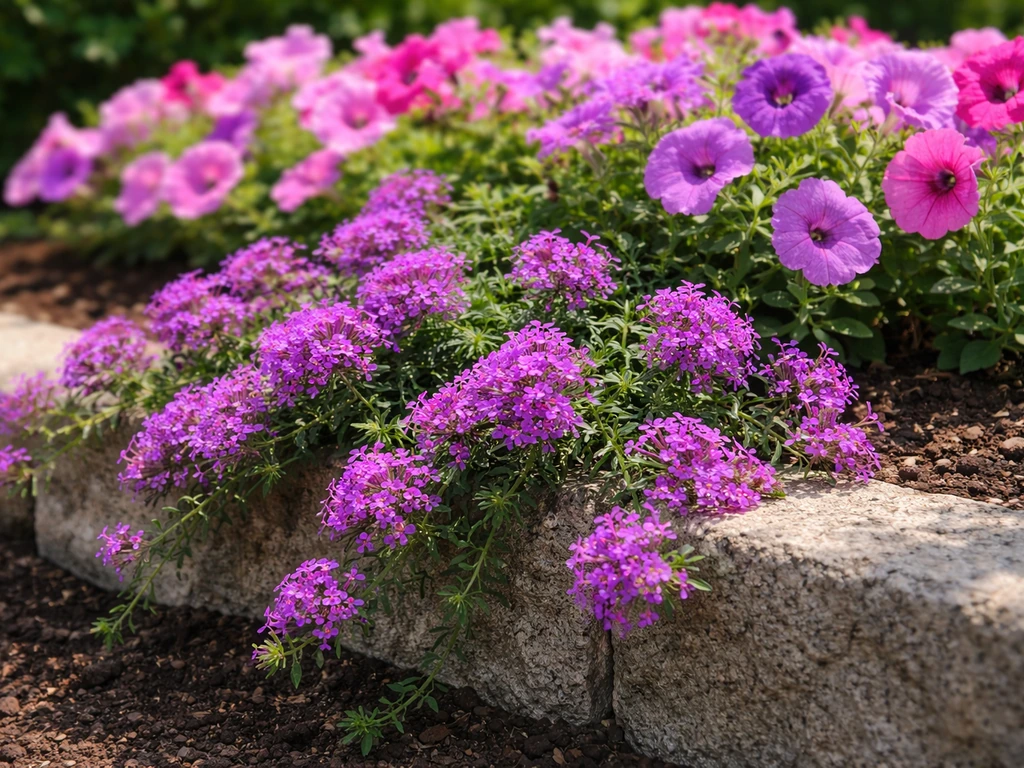
Alyssum is one of the best low-effort additions you can make to a petunia planting. It trails and mounds softly along the front of a bed or spills over a container edge with clusters of tiny white, pink, or purple flowers that smell like honey. It handles full sun well, tolerates the same slightly acidic, well-drained conditions, and fills gaps without crowding out petunia roots. The texture contrast is excellent too: petunia flowers are bold and open, while alyssum gives you a fine, frothy backdrop that makes everything look more designed.
Verbena
Trailing verbena is another natural partner. It loves full sun, drains well, and produces clusters of small flowers in purples, reds, pinks, and whites that complement petunia colors without competing with their bold presence. In containers, trailing verbena takes the spiller role confidently. In beds, it spreads laterally and fills horizontal space quickly. Verbena also attracts butterflies and pollinators, which is a bonus if you want your petunia planting doing double duty for the garden ecosystem.
Lobelia
Annual lobelia is compact and low, typically 4 to 8 inches tall, and the deep blue and violet varieties are particularly good with pink, white, or red petunias. It prefers full sun to partial shade and the same well-drained, slightly acidic soil conditions. In containers, lobelia fills edges naturally. One thing to keep in mind: lobelia can slow down in intense midsummer heat, so pairing it with petunias works especially well in spring and early fall, or in climates without brutal summers.
Bacopa
Bacopa (Sutera cordata) is a delicate trailing plant with tiny white or pale pink flowers on cascading stems. It's almost tailor-made for the spiller role in mixed containers. It tolerates the same sun and drainage requirements as petunias, stays low, and adds a soft, fine-textured contrast to petunia's bolder presence. It can get a little ragged in extreme heat, but a light trim usually revives it.
Best non-flowering plants for petunia borders and containers
Foliage plants are genuinely underrated in petunia pairings. They give you contrast, fill roles that flowering companions sometimes can't, and hold the composition together when some flowers take a break in the heat.
Dusty miller
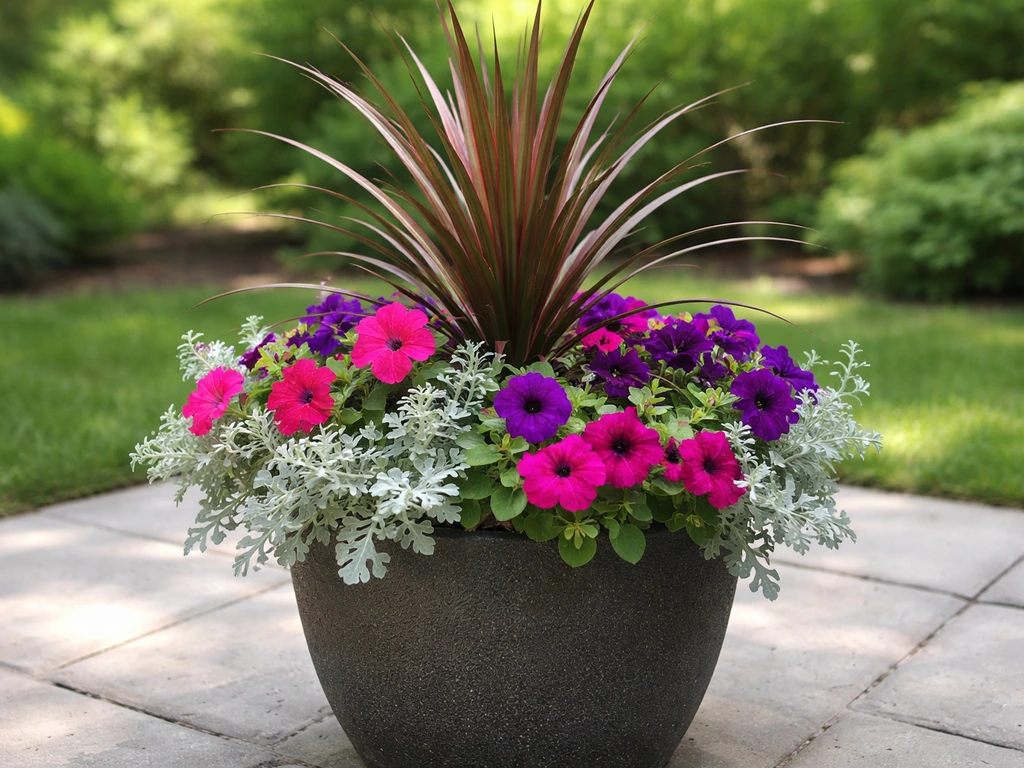
Silver-gray dusty miller is a classic pairing with petunias for good reason. The silvery, lacy foliage makes every petunia color pop, especially hot pinks, deep purples, and reds. It's drought-tolerant once established, loves full sun, and doesn't compete aggressively for moisture. As a mid-height filler in a container or a border edger in a bed, it punches well above its pay grade visually.
Ornamental spike (dracaena)
When you need a vertical element in the center of a container, the ornamental spike (typically a dracaena or cordyline) is a go-to. It takes full sun, grows steadily upward without spreading aggressively, and its upright strappy leaves create the height contrast that makes surrounding petunias look more intentional. This is the classic thriller role in a thriller-filler-spiller container setup.
Ornamental grasses and sedges
Low ornamental grasses like purple fountain grass (as a thriller in large containers) or fine-textured sedges as edging plants work well alongside petunias. They prefer good drainage, handle sun, and add movement and texture that flowering plants alone can't deliver. In in-ground borders, a clump of ornamental grass every few feet gives the planting structure through the whole season.
Creeping thyme (bonus dual-purpose option)
In in-ground beds, creeping thyme makes a surprisingly effective low groundcover companion for petunias. It handles full sun and well-drained soil, stays low, and fills gaps between plants without shading out petunia crowns. The light fragrance is pleasant, and it tolerates the slightly acidic pH range that petunias prefer. It also doesn't share the disease vulnerabilities that solanaceous neighbors can.
Container layouts vs in-ground beds: spacing and layering that actually works
Containers: the thriller-filler-spiller framework
For containers, I default to the thriller-filler-spiller approach every time. It's not just a design trick. It's a spacing guide that naturally prevents overcrowding. The thriller goes in the center or back (something tall and upright like a spike or purple fountain grass), the fillers go around it (petunias, calibrachoa, or verbena as mid-height mounders), and the spillers drape over the edge (trailing alyssum, bacopa, trailing verbena, or lobelia). If you want to adapt this spacing and layering approach to how to grow petunia baskets, focus on a similar thriller-filler-spiller setup and keep the basket from staying too wet. If you’re aiming specifically for hanging basket petunias, focus on the spiller stage first so the blooms trail over the rim while keeping airflow high. In a 10-inch container, stick to 1 to 3 plants total. In a 12 to 14-inch container, you can work with 3 to 5 plants comfortably depending on mature spread.
Petunia spacing in containers sits at about 10 to 12 inches apart, which lines up well with calibrachoa's 20-inch spread. In a mixed planting, that means one petunia and one calibrachoa can share a 12-inch container without crowding, as long as both get the light they need. Resist the urge to pack in more plants than the container can hold. Poor airflow in a dense container is one of the fastest ways to invite Botrytis blight, especially during humid stretches.
In-ground beds: borders, edging, and layering
In a border or bed, space petunias about 10 to 12 inches apart and place shorter companions like alyssum, lobelia, or creeping thyme at the front. Mid-height companions like verbena or dusty miller go behind the petunias or interspersed at the same level. Taller companions (ornamental grasses or structural plants) anchor the back of the border. The goal is a stepped silhouette from front to back so all plants get light without one shading out another. If you're growing petunias in the ground and want to know more about that setup, the spacing logic is the same whether you're adding companions or not. If you want even more guidance, this in-ground setup pairs well with a clear plan for how to grow petunias in the ground, including spacing and sun.
| Companion Plant | Role | Height / Spread | Best Use | Key Compatibility Note |
|---|---|---|---|---|
| Calibrachoa | Filler / Spiller | 3 in. tall / up to 20 in. spread | Containers, hanging baskets | Identical sun and pH needs to petunias |
| Sweet alyssum | Spiller / Edger | 3–6 in. tall / 6–12 in. spread | Containers, bed edges | Fragrant, fine texture, full sun |
| Verbena (trailing) | Spiller / Filler | 6–12 in. tall / 12–18 in. spread | Containers, in-ground beds | Attracts pollinators, same sun needs |
| Lobelia (annual) | Spiller / Edger | 4–8 in. tall / 6–9 in. spread | Containers, bed fronts | Best in spring/fall or cooler climates |
| Bacopa | Spiller | 3–6 in. tall / trailing | Containers, hanging baskets | Delicate texture, trim if heat-stressed |
| Dusty miller | Filler / Edger | 8–12 in. tall | Containers, bed borders | Drought-tolerant, no disease overlap |
| Ornamental spike (dracaena) | Thriller | 12–24 in. tall | Container centers | Upright structure, full sun |
| Creeping thyme | Groundcover / Edger | 2–4 in. tall / spreading | In-ground beds | Well-drained soil, same pH range |
Planting timeline and placement tips for right now
Since it's early June, most of North America is either past last frost or close enough that transplanting outdoors is safe. Petunias and their companions should go out after all frost risk is gone, and for most gardeners reading this right now, that window is open. If you want more precise guidance on timing, see our tips for when to grow petunias. If you're in a northern zone (Minnesota, Wisconsin, northern New England), double-check your local last frost date just to be safe, but early June is generally fine for transplanting petunias and the companions listed here. If you're starting with plug plants, focus on gentle handling, good drainage, and transplanting at the right time to set them up for steady growth how to grow petunias from plugs. If you want petunias to perform well, it helps to follow a petunias how to grow guide for sun, soil, spacing, and watering.
For placement, lead with light. Choose a spot that gets at least 6 hours of direct sun. South or west-facing exposures are typically best. If you're placing a container on a balcony or patio, make sure a nearby wall or overhang isn't cutting the light shorter than you think. Rotate containers occasionally if one side is getting more sun than the other, which happens more often than people expect.
Water everything in thoroughly after planting. A fine, gentle mist or a low-pressure watering helps settle plants into potting mix or soil without blasting them out of place. After that initial soaking, let the top inch of soil dry slightly before watering again. This benefits both petunias and every companion on this list, since none of them like constant moisture at the root zone. Plan to feed container plantings with a balanced liquid fertilizer every 7 to 14 days, especially if you're growing calibrachoa or verbena alongside petunias. Frequent watering flushes nutrients out fast, and underfed plants lose their vigor and bloom quickly.
When companion planting goes wrong: common problems and fixes
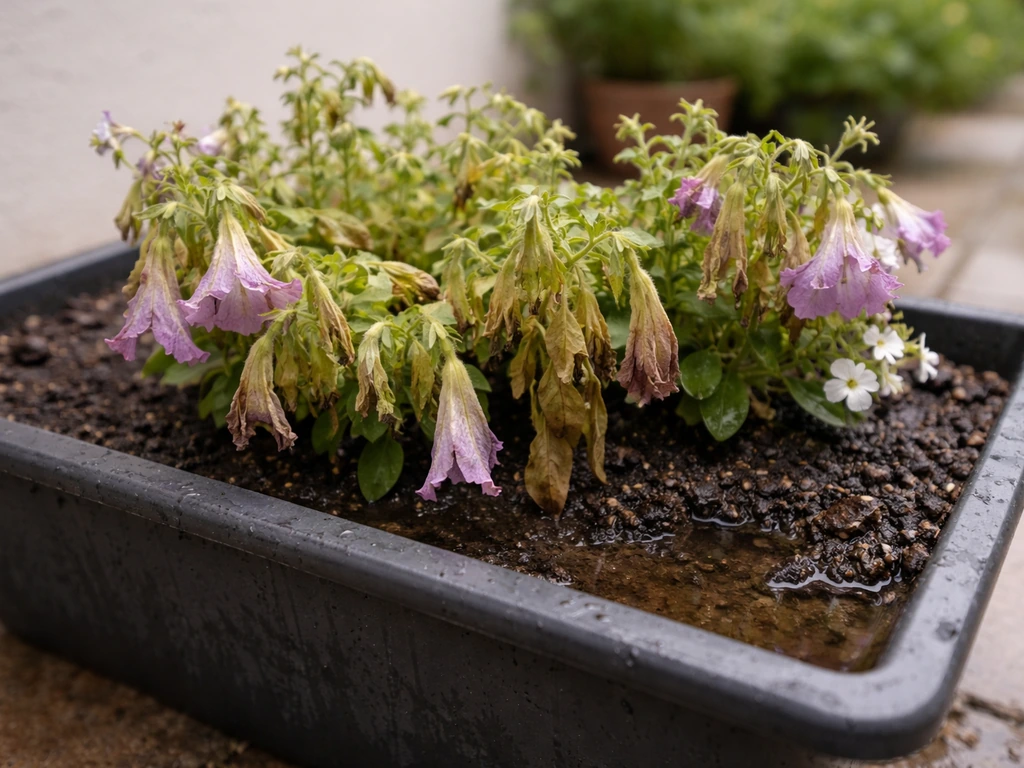
The container is too wet and plants are declining
If your petunias and companions are yellowing, wilting despite wet soil, or developing soft brown spots on stems and petals, waterlogging is the likely culprit. Check that your container has drainage holes and that they aren't blocked. If you're using a saucer, empty it after watering so roots aren't sitting in standing water. Switch to a perlite-amended potting mix if you're seeing this repeatedly. None of the companions on this list want wet feet, so a drainage fix helps everything at once.
Botrytis blight: gray mold on flowers and stems
Botrytis cinerea (gray mold) is the main disease threat in humid, cloudy, wet stretches. It shows up as water-soaked spots, then gray fuzzy mold on petals and stems. The fix is airflow and dryness: increase spacing between plants, remove affected material immediately, and avoid overhead watering that splashes foliage. This is why overpacking a container is risky. If you're seeing Botrytis repeatedly, thin out your planting and water at soil level rather than from above.
One companion is taking over and shading petunias
Verbena and calibrachoa can spread faster than expected in ideal conditions. If one plant is starting to overwhelm its neighbors, pinch it back hard. Petunias losing light will stop blooming surprisingly fast because even partial shade reduces their flower production noticeably. In beds, this can mean a verbena planted a little too close to a petunia gradually shading it out by midsummer. Leave at least 10 inches between plants when you put them in, and trim aggressively throughout the season rather than waiting until someone is completely buried.
Bloom mismatch: one plant thriving, another not flowering
If your petunias are blooming fine but a companion is not, the most common cause is either not enough sun or an undiagnosed pH issue. Lobelia, for instance, can stall in intense summer heat while petunias power through. Calibrachoa with yellow new leaves in an otherwise healthy container usually signals pH below 5. Mississippi State University Extension explains that soil acidity changes dramatically across this range, with pH 5.0 making soil much more acidic than pH 6.0 calibrachoa with yellow new leaves in an otherwise healthy container usually signals pH below 5.. 8, which blocks iron uptake even when iron is present in the soil. Test your container mix pH if you keep losing calibrachoa or petunias to mystery yellowing. Adjusting upward with lime or downward with sulfur is straightforward once you know where you're starting.
Plants look fine but aren't blooming much
If both petunias and companions have good green growth but sparse flowers, the problem is usually light or feeding. Confirm they're really getting 6 full hours of direct sun and not 6 hours of bright indirect light. If light is adequate, increase feeding frequency. In containers with regular watering, nutrients wash out fast. Switching to a bloom-focused fertilizer (higher middle number, which is phosphorus) mid-season often kicks both petunias and their companions back into heavy bloom within a week or two.
FAQ
If it rains a lot where I live, which petunia companions are safest to use?
Choose companions that keep their root zone dry-ish between waterings, then set your watering schedule by soil, not calendar (let the top inch dry). If you have a heavy rain period, use taller spacing and avoid overhead watering, since companions with dense growth are more prone to gray mold when petals stay wet.
How many companion plants can I fit in a container without risking disease?
In containers, a great rule is one “thriller” and only 1 to 3 “spillers” total, with the rest as mid-height fillers. If you exceed the container size guidance, you reduce airflow and raise Botrytis risk, especially in humid weather, even when all plants share similar sun and soil needs.
What types of plants should I avoid growing next to petunias?
Avoid combining petunias with plants that constantly need rich, consistently moist soil (for example, many water-loving bedding plants). Even if they look compatible at first, mismatched watering needs often cause stem and petal problems or stunted growth by mid-season.
Can I grow petunia companions in a north-facing or partially shaded patio?
Yes, but use the same “full sun” logic the article uses for most companions. If your balcony only gets about 4 to 5 hours of direct sun, shift toward companions that tolerate heat but still flower in brighter light, and expect reduced bloom intensity overall.
My plants are yellowing even though the soil stays damp. How do I tell if it is pH or waterlogging?
Test container mix pH if yellowing is persistent, especially with calibrachoa. If it’s below the petunia range, adjust gradually (you can’t reliably “fix” pH with fertilizer alone). Also confirm you have drainage holes and that no saucer is holding water after watering.
What should I do if verbena or calibrachoa starts overpowering my petunias?
If one plant is taking over, pinch back hard and remove about 20 to 40% of the overgrowing mass. Re-check spacing, then trim again when it pushes into the petunias’ light. For trailing plants, also reduce the number of “spillers” you install next season.
Can I fertilize too much when growing petunias with companions?
If you’re using a bloom fertilizer, apply it at a slightly lower dose than the label says and start when you first see steady bloom. Overfertilizing can produce lots of foliage with fewer flowers, and it can be tougher on containers if drainage is marginal.
Does companion-planting change when I should transplant plugs or start fertilizing?
Use petunia-focused timing: plant after frost risk is gone, then avoid fertilizing immediately after transplant. Give a few days to recover, then resume a normal feeding schedule. For plug starts, keep the mix evenly moist only until roots establish, then move toward the “dry the top inch” pattern.
Do I need to deadhead petunia companions differently than petunias?
For deadheading, focus on removing spent flower clusters only when the plant is “shedding” heavily, such as after a heat spike. Many petunia companions will look better quickly with targeted trim-backs, especially bacopa and lobelia, rather than constant pinching.
What are the first steps if I see gray mold (Botrytis) on petunias or their companions?
If Botrytis starts, remove affected petals and stems immediately, then improve airflow by loosening plant spacing and avoiding dense container crowding. Switch to watering at soil level, and reduce humidity around foliage (watering time in the morning helps).
I have a small pot. Can I still pair petunias with a spiller plant?
Yes, but plan your pot-to-pot spacing based on mature spread. In a 10-inch pot, 1 to 2 plants usually performs better than 3, because trailing companions spread outward and upward, and overcrowding reduces light and airflow.
How can I choose companions using plant tags so I do not misplace them in the container?
When buying, check the companion’s mature height and spread tag, then match it to your role in the thriller-filler-spiller design. A common mistake is treating “trailing” plants as edge-only, then placing them too far back where they shade petunias before midsummer.
Next Article
Petunias How to Grow: From Seed to First Bloom
Step-by-step petunias from seed to first bloom: timing, light, watering, fertilizing, pinching, deadheading, fixes