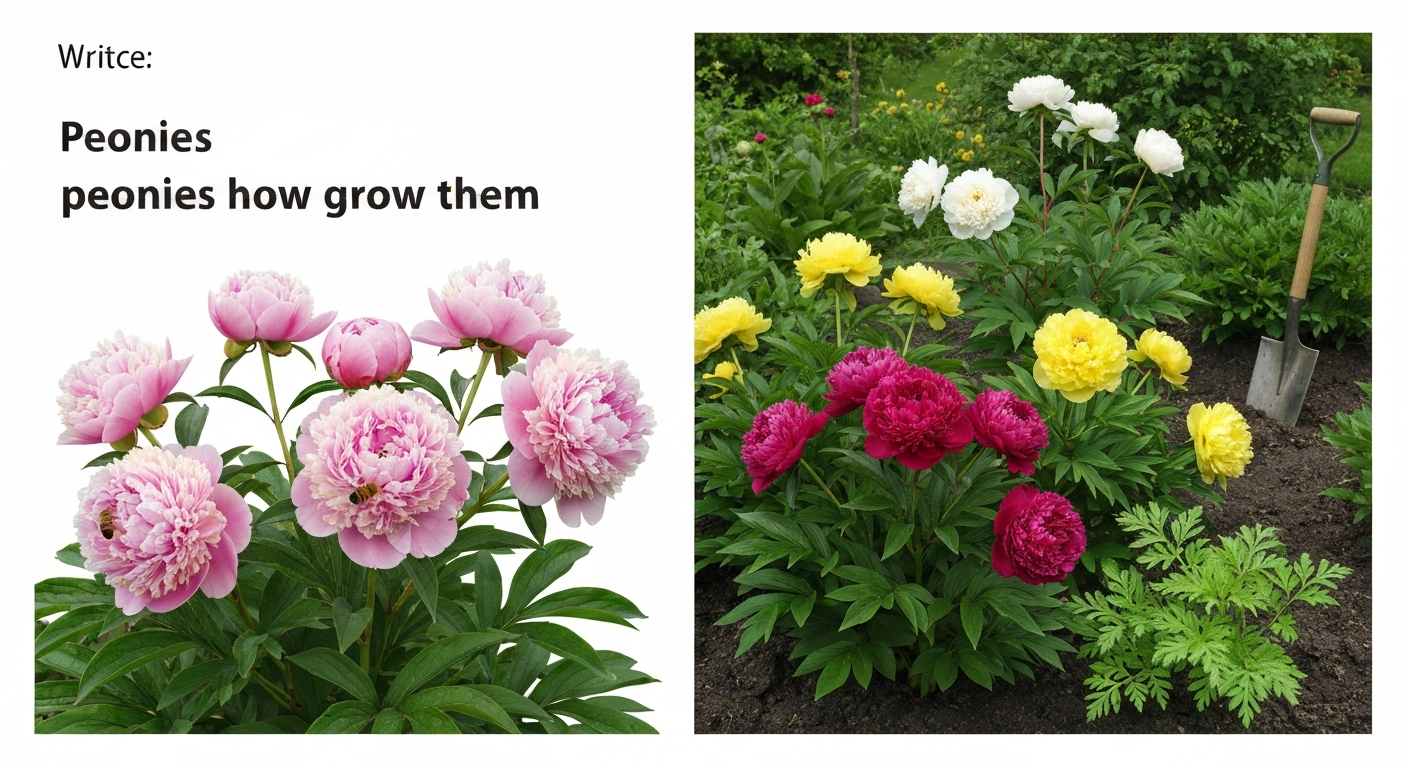
Peonies are one of the most rewarding perennials you can grow in a UK garden, but they have a reputation for being fussy that I think puts a lot of people off. The honest truth is that if you get two things right (planting depth and site choice) the rest is mostly just patience. For a complete step-by-step resource, see our guide on peonies how to grow them. Plant the eyes no deeper than 2.5 cm below the soil surface, give them a sunny, sheltered spot with decent drainage, and you will almost certainly get flowers. Get those things wrong and you could be waiting years and wondering what you did wrong.
Peony How to Grow UK: Complete Guide for Reliable Blooms

Harriet Whitmore
7 Aug 2026
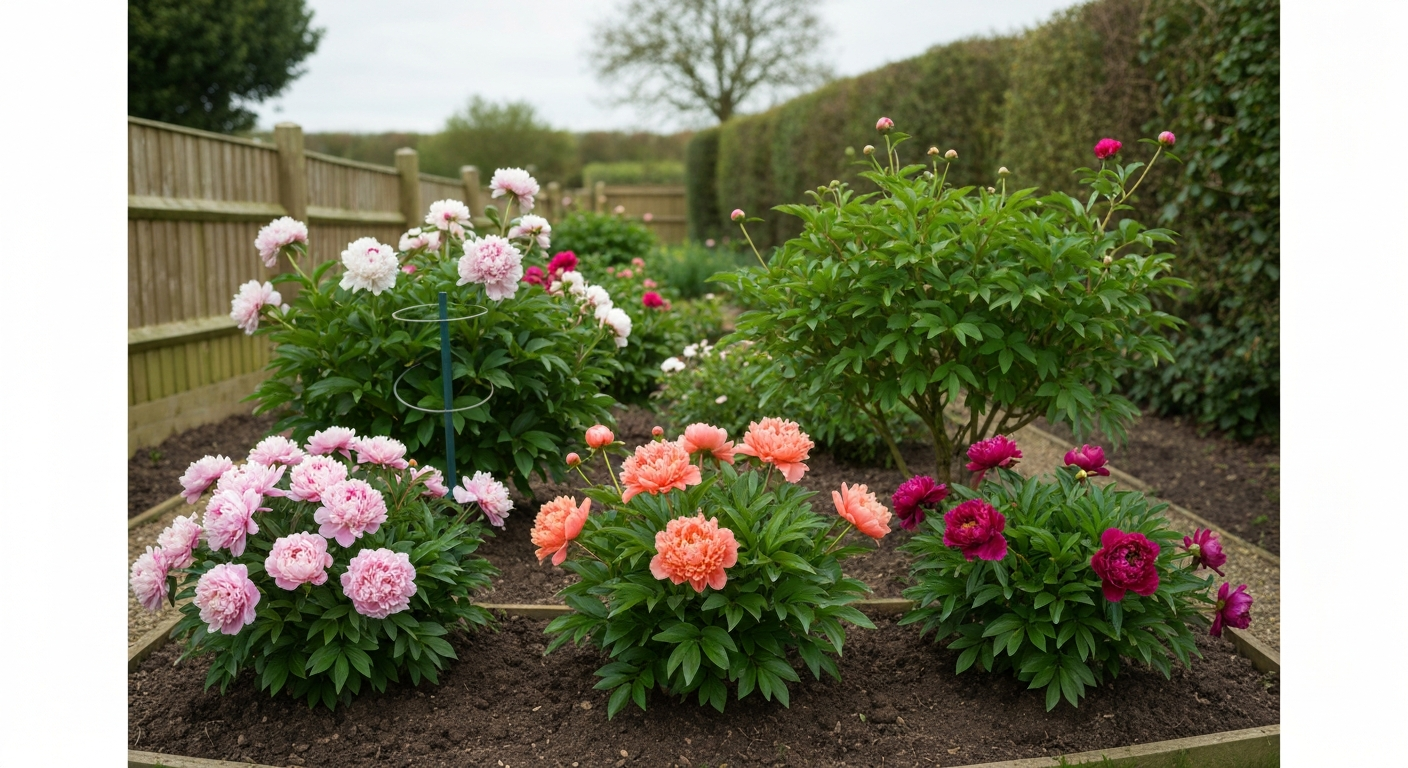
Quick-start checklist and UK planting calendar
Before anything else, here is a simple reference to lock in your timing. The two most common mistakes I see are planting at the wrong time of year and planting too deep. This checklist covers both.
- Choose your type: herbaceous, tree, Itoh/intersectional, or fern peony (see the next section)
- Pick a site with at least six hours of sun and good air circulation
- Test or estimate your soil pH (aim for 6.5 to 7.0) and improve drainage if needed
- Source bare-root crowns from a specialist nursery for late-autumn planting, or buy potted plants for late-spring planting
- Dig your hole twice as wide as the rootball and no deeper than the rootball itself
- Plant eyes (the bright red buds on bare-root crowns) no more than 2.5 cm below the soil surface
- Space plants approximately 1 m apart
- Water in thoroughly after planting and mulch around (not over) the crown
- Apply a balanced fertiliser such as Growmore at 70 g per m² each spring
- Expect flowers in year two or three; do not be alarmed if year one produces nothing
| Month | Task | Notes |
|---|---|---|
| September to November | Plant bare-root crowns and divisions | Best window for establishment before winter; applies to herbaceous and Itoh types |
| October to November | Divide established clumps | Do this every 10 to 15 years only; each division needs at least three eyes |
| November to February | Mulch around crowns | Use garden compost; keep mulch away from the crown itself to prevent rot |
| February to March | Apply Growmore or balanced fertiliser | 70 g per m² as growth buds emerge |
| March to April | Stake tall varieties before stems reach 30 cm | Use peony rings or bamboo-and-twine hoops |
| April to June | Water in dry spells during first year only | Established plants rarely need irrigation |
| May to July | Deadhead spent blooms | Prevents seed formation and keeps plants tidy |
| Late spring (May to June) | Plant potted/container-grown peonies | Plant at the same depth as in the pot |
| August to September | Sow fresh peony seed | Requires double dormancy; expect 4 to 5 years to first flower |
| October | Cut back herbaceous foliage to ground level | Tree peonies are NOT cut back; Itoh types should be cut back in autumn |
If you are in northern Scotland or at altitude, shift all outdoor tasks two to three weeks later in spring and a week or two earlier in autumn. The Met Office's regional climate data confirms that mean temperatures in Scotland can run 2 to 4°C lower than southern England during the growing season, which genuinely affects timing. The good news is that most peony cultivars are rated H6 (very hardy) by the RHS, meaning they cope with temperatures down to around -20°C, so cold winters are rarely the problem.
Which peony type to choose for your garden
There are four main types you will encounter at UK nurseries and garden centres, and they behave quite differently. Picking the right one for your conditions saves a lot of frustration later.
Herbaceous peonies
These are the classic cottage-garden peonies. They die back completely to the ground each autumn and regrow from fleshy roots each spring. They are the easiest type to find, the easiest to plant, and the most reliable bloomers once established. 'Sarah Bernhardt' is probably the best-known UK variety: it grows to about 90 cm, produces enormous rose-pink double flowers up to 20 cm across, has a strong fragrance, and carries an RHS hardiness rating of H6. It is also a good cut flower. Other reliable UK performers include 'Duchesse de Nemours' (white, fragrant), 'Karl Rosenfield' (deep crimson), and 'Coral Charm' (semi-double, coral-orange fading to cream). If you are just starting out, a named herbaceous variety is the safest first choice.
Tree peonies
Tree peonies (Paeonia suffruticosa and related hybrids) are shrubs that keep a woody framework through winter. They can eventually reach 1.5 to 2 m tall and wide, and they bloom earlier than herbaceous types, often in late April or May in southern England. They do not die back, which means they take up more permanent space. Crucially, tree peonies must NOT be cut back to the ground in autumn as you would a herbaceous peony. They are a long-term commitment but genuinely spectacular when established.
Itoh (intersectional) peonies
Itoh peonies are hybrids between herbaceous and tree peonies. They die back to the ground like herbaceous types but produce the large, exotic-looking flowers associated with tree peonies. They tend to be more disease-resistant and have sturdier stems that do not need staking. The downside is cost: Itoh peonies are significantly more expensive than herbaceous varieties, often £25 to £50 or more for a bare-root plant. If your budget allows, they are a brilliant choice, especially in gardens where staking is inconvenient.
Fern peonies
Fern peonies (mainly Paeonia tenuifolia) are a niche but beautiful option for UK gardens. They have finely cut, feathery foliage that looks unlike any other peony and produces early, deep-crimson flowers. They are naturally compact, rarely exceeding 60 cm, which makes them useful for smaller spaces. Growing fern peonies requires the same basic conditions as herbaceous types, though they appreciate excellent drainage and may struggle in heavy clay without amendment.
| Type | Approximate height | Dormancy | Flowers | Best for | Relative cost |
|---|---|---|---|---|---|
| Herbaceous | 60 to 100 cm | Full die-back in autumn | May to June | Beginners, cottage gardens, cut flowers | Low to moderate |
| Tree peony | 1 to 2 m+ | Woody framework kept year-round | April to May | Permanent structure, large borders | Moderate to high |
| Itoh (intersectional) | 60 to 90 cm | Full die-back in autumn | May to June | Low-maintenance, no staking needed | High |
| Fern peony | 30 to 60 cm | Full die-back in autumn | April to May | Small gardens, excellent drainage | Moderate |
Choosing the right site
Site choice is arguably more important than anything else you will do for your peonies. Get this right and they will forgive a lot of other mistakes.
Sunlight
Peonies produce the most flowers and the strongest stems in full sun, ideally six or more hours of direct sunlight per day. They will tolerate partial shade (three to six hours of sun), but flowering will be reduced and stems may become floppy as the plant reaches towards the light. In the north of England and Scotland, where summer sunshine hours are more limited, a south or southwest-facing position becomes even more important. Avoid planting under trees or near large shrubs that cast shade for most of the day: deep planting and shade are the two most common reasons peonies fail to flower in UK gardens.
Wind exposure
The large flowers of double-flowered herbaceous peonies act like sails in a strong wind, and stems can snap or lodge before the petals even open. A sheltered position (near a wall, fence, or established hedge) reduces this risk considerably. Avoid frost pockets: late spring frosts can blacken emerging buds, which is one cause of bud blast. If your garden is exposed, Itoh peonies with their sturdier stems are worth the extra expense.
Drainage
Peonies hate sitting in waterlogged soil, especially over winter. If your garden has heavy clay that holds water after rain, you will need to address drainage before planting (more on this in the soil preparation section). Raised beds and planters are a legitimate solution in gardens where in-ground drainage is poor, though they come with their own management requirements. Fern peonies in particular are intolerant of wet conditions at the root.
Soil preparation and amendments for strong root growth
The RHS confirms that peonies can grow in chalk, clay, loam or sand, and will tolerate acid, neutral or alkaline pH, but they genuinely thrive in deep, fertile, humus-rich, moist but well-drained soil. 'Tolerates' and 'thrives in' are two very different things, and if you can spend time improving the soil before planting, you will see the difference in root development and flowering over the years ahead.
pH and structure
Aim for a soil pH between 6.5 and 7.0. A simple pH test kit from any garden centre will tell you where you are. If your soil is very acidic (below 6.0), work in ground limestone or calcified seaweed at the rate on the packet to raise pH before planting. If it is extremely alkaline (above 7.5), acidifying it permanently is difficult; raised beds filled with good loam may be a better option in that situation.
How to prepare the planting hole
For long-term root development, dig a hole about 45 to 60 cm across and around 60 cm deep. This is considerably more work than a standard planting hole, but peonies are very long-lived plants (some clumps remain productive for 50 or more years) and investing in good soil preparation now pays dividends for decades. Break up the subsoil at the base with a fork. Backfill the lower half of the hole with a mix of good garden loam and well-rotted compost, then add a handful of bone meal or superphosphate mixed into the lower soil to encourage strong root development. Bone meal provides a slow-release source of phosphorus, which promotes root growth rather than lush leafy growth.
Improving drainage in heavy clay
In clay soils, dig the hole as above and add a 10 to 15 cm layer of horticultural grit or coarse gravel to the base before backfilling. Mix more grit through the entire backfill: a ratio of roughly one part grit to three parts soil works well. This improves drainage without completely changing the soil structure. In very heavy or waterlogged gardens, seriously consider a raised bed of at least 30 cm depth instead of in-ground planting.
Planting bare-root crowns step by step
Bare-root crowns are the most common way specialist nurseries sell peonies in the UK, and late autumn (October to November) is the ideal planting window. The plant is dormant, which means it experiences minimal transplant stress, and it has the whole winter to begin settling in before it needs to produce growth in spring. This is the planting method I prefer personally because bare-root stock from a good specialist nursery tends to be cheaper and often healthier than potted plants from a garden centre.
- Prepare the planting hole as described above (45 to 60 cm across, approximately 60 cm deep) and allow the soil to settle for a day or two if time allows
- Inspect the bare-root crown: you should see thick, fleshy storage roots and at least three bright red dormant buds (eyes); discard any crowns with soft, rotten sections
- Soak the roots in a bucket of water for one to two hours before planting to rehydrate them after storage or transit
- Build a small mound of soil in the centre of the planting hole so the crown can sit on it with the roots draped down the sides naturally without bending
- Position the crown so the eyes (the red buds) will sit no more than 2.5 cm below the final soil surface; this is the single most critical measurement in peony growing
- Check the depth by laying a cane or stick across the top of the hole: the eyes should be just 2.5 cm below this marker
- Backfill carefully around the roots with your amended soil, firming gently as you go to eliminate air pockets without compacting the soil
- Water the entire area thoroughly so the soil settles fully around the roots; give it the equivalent of a full watering can per plant
- Apply a 5 to 8 cm layer of garden compost as a mulch around the plant, keeping it at least 10 cm clear of the crown itself to prevent fungal problems
- Mark the position clearly with a label or stake: the site will appear bare all winter and you may forget it is there
If you have planted everything correctly, do not panic if you see no flowers in the first year. Many bare-root peonies put all their energy into root establishment in year one and produce only a few leaves. Year two usually brings the first flower buds, and by year three you should see the plant performing close to its full potential.
Planting tubers and purchased potted peonies
Potted peonies from garden centres and nurseries are typically sold in spring and early summer. Late spring (May to early June) is the best time to plant them, once frosts are mostly past. The method is slightly different from bare-root planting because the root system is already actively growing.
- Prepare the planting hole as above, but match the depth carefully to the pot: you are aiming to plant at exactly the same depth as the plant sits in its container
- Water the potted plant well an hour or two before planting so the compost is moist and the rootball holds together when you remove it
- Remove the plant from the pot gently, disturbing the roots as little as possible; if the plant is root-bound, gently tease out the outer roots to encourage them to grow outwards
- Place the rootball in the hole and check that the top of the rootball sits at the same level as the surrounding soil, not sunk below it
- Backfill around the rootball with your prepared soil, firming gently
- Water in thoroughly after planting; for potted peonies bought in spring and summer, regular watering during dry spells in the first season is especially important because the plant is trying to establish through the warmer, drier months
- Apply compost mulch around (not over) the crown, as with bare-root planting
One thing worth knowing about potted peonies from large garden centres: they are sometimes planted too deep in their containers during commercial production. If you notice the eyes are already more than 2.5 cm below the compost surface, it is worth teasing the plant out and replanting it slightly higher before putting it in the ground. I have done this on more than one occasion and it makes a real difference to how quickly the plant starts flowering.
Growing peonies from seed: realistic expectations
I will be honest with you here: growing peonies from seed is a long game, and the results are unpredictable if you are working with named cultivars. Peonies grown from seed will not reproduce the parent plant reliably. Seeds from named varieties like 'Sarah Bernhardt' will produce plants with variable flowers, often less impressive than the parent. That said, growing from seed is genuinely rewarding if you have the patience, and it is the only realistic way to breed new varieties or grow some of the species peonies.
Understanding double dormancy
Peony seeds have a biological mechanism called double dormancy. First, the root needs a period of warmth to develop; then the shoot needs a period of cold before it will emerge. This means the entire germination cycle spans at least two years. Rushing or skipping either stage produces nothing.
Step-by-step seed sowing
- Collect fresh seed in late summer (August to September) as soon as the seed pods split open; fresh seed germinates more reliably than stored seed
- Sow seeds immediately into pots or trays of John Innes seed compost, pushing each seed about 2.5 cm deep
- Top-dress with a thin layer of horticultural grit to improve surface drainage and prevent moss
- Place the pots outside in a cold frame or sheltered spot: the seeds need warmth first (the remainder of late summer and autumn), then cold (winter), then warmth again (following spring/summer) for root development, then another winter of cold before shoots finally emerge
- Keep the compost just moist throughout; do not let it dry out completely or become waterlogged
- Label everything clearly with the date and species/variety, because you will be tending these pots for at least 18 months before you see growth above the soil
- Once seedlings emerge (typically in the second spring after sowing), pot them on individually when they have two to three leaves
- Grow seedlings on in pots for another year before planting out in their final position
- Expect first flowers four to five years after sowing
If the wait does not appeal to you, division is a much faster route to more plants. A single established clump can be divided in late autumn to produce several new plants that will flower within two years of replanting.
Container-grown peonies: when it works and when it does not
Growing peonies in containers is absolutely possible, but it requires more active management than in-ground planting, and it is not the right approach for every situation. The main reasons to choose a container are: you have no suitable in-ground planting space, your soil drainage is genuinely impossible to improve, or you want to be able to move the plant temporarily (for example, to a more prominent position when it is flowering). If you have a garden bed with reasonable soil, in-ground planting will almost always produce healthier, longer-lived plants.
Pot size and soil mix
Choose the largest container you are willing to manage: a minimum of 45 to 50 cm diameter and at least 45 cm deep. Peonies have large, deep root systems and a small pot will restrict growth and reduce flowering significantly. Terracotta pots look beautiful but dry out quickly; glazed ceramic or large plastic containers retain moisture better, which matters when a plant is relying on you rather than deep soil reserves. Fill with a mix of John Innes No. 3 compost (around two thirds) and good-quality multi-purpose compost or well-rotted garden compost (one third), plus a handful of perlite or horticultural grit for drainage. Avoid peat-based composts, which compact over time and become hydrophobic.
Planting depth and ongoing care
The planting depth rule is the same in a container as in the ground: eyes no more than 2.5 cm below the compost surface. Place the pot in its final position before filling as containers this size become very heavy. Ensure the pot has adequate drainage holes and elevate it slightly on pot feet to prevent the base from sitting in standing water.
Container peonies need more regular watering than in-ground plants, particularly in summer. They also need feeding more frequently because nutrients leach out of containers faster. Apply a balanced fertiliser in early spring and again with a high-potassium feed (such as a tomato fertiliser) in late spring to encourage flowering. Repot every two to three years, in autumn, into a slightly larger container with fresh compost. After five or six years in a container, most peonies will benefit from being planted out in the ground if at all possible, as the root system becomes very congested.
Year-by-year care after planting
Watering
In the first year after planting, water regularly during any dry spells: a good deep soak once or twice a week is better than frequent light watering, because it encourages roots to grow downwards rather than remaining shallow. Once established (from year two onwards), peonies are deep-rooted and generally do not need routine watering except during prolonged drought. In a typical UK summer this means you may rarely need to water at all after the first season, which is one of the things that makes them such good-value perennials.
Feeding
Apply a general-purpose fertiliser such as Growmore at 70 g per m² (roughly 2 oz per square yard) in spring as the new growth buds emerge from the soil. Scatter it evenly around the plant out to the drip line and water in if rain is not forecast. Follow this with a mulch of garden compost to improve soil structure, retain moisture, and gradually feed the soil as it breaks down. Avoid high-nitrogen feeds, which promote lush leafy growth at the expense of flowers. A single spring application of balanced fertiliser is enough for most established plants.
Staking and support
Double-flowered herbaceous peonies, and especially tall varieties like 'Sarah Bernhardt', often need support to prevent stems from flopping once the heavy blooms open. Put stakes in place early, when shoots are around 20 to 30 cm tall, before the stems are too tall to correct. Peony rings (wire hoops on legs) are the neatest option: the foliage grows up through the ring and conceals it completely. Alternatively, form a square of bamboo canes with string woven across. Itoh peonies rarely need staking.
Deadheading and autumn cutback
Remove spent flowers promptly unless you specifically want seed pods. Leaving flowers on the plant diverts energy into seed production. In October, once the foliage of herbaceous peonies has died back and yellowed, cut the stems down to just above ground level and remove the debris from around the plant. Do not leave old foliage on the soil surface as it can harbour Botrytis spores. Tree peonies should not be cut back: simply remove dead or damaged wood in spring.
Winter mulching
After cutting back herbaceous plants in autumn, apply a fresh layer of garden compost around the crown to protect against hard frost and improve soil structure over winter. Keep this mulch away from the crown itself: a ring of mulch about 5 to 8 cm deep from about 10 cm out from the crown works well. In very cold parts of Scotland or exposed upland gardens, a slightly deeper mulch (up to 10 cm) gives useful insulation. Remove or rake back excess mulch in early spring to allow the soil to warm up, which helps prompt early growth.
Propagation: division, roots and timing
The best way to get more peony plants is by dividing established clumps in late autumn, when the plant is fully dormant. You do not need to divide peonies regularly: in fact, leaving them undisturbed for as long as possible produces the best flowering. But after 10 to 15 years, a clump may become very dense and flower less freely, or you may simply want more plants. Division is also the method to use if you need to move a plant to a better position.
- Lift the whole clump carefully with a fork in late October or November, working well outside the drip line to avoid spearing the roots
- Wash off excess soil so you can see the root structure and the eyes (dormant buds) clearly
- Use a sharp, clean knife to divide the crown into sections, ensuring each division has at least three healthy eyes and a good section of fleshy root
- Dust the cut surfaces with powdered sulphur or fine wood ash to reduce infection risk
- Replant each division immediately at the correct depth (eyes 2.5 cm below the soil surface) in a prepared hole
- Water in thoroughly and mulch as for new plants
Divisions with fewer than three eyes tend to take much longer to establish and flower. I have tried it with single-eye divisions out of curiosity and waited four years for the first flower, which is longer than starting from a good bare-root crown. Three eyes is genuinely the minimum worth working with.
Troubleshooting common problems
The plant never flowers
This is the most common complaint I hear from gardeners who have been waiting two or three years and seen nothing but leaves. In most cases the cause is one of two things: planting too deep, or too much shade. RHS guidance notes that deep planting (eyes buried more than about 2.5 cm) and shaded positions are common causes of poor flowering and recommends replanting shallower in autumn and allowing one to two seasons to re-establish How to grow herbaceous and intersectional peonies — RHS Growing Guide (Problems & Remedial Advice). If the eyes were buried more than about 2.5 cm below the soil surface, the plant puts all its energy into growing towards the light rather than producing flower buds. The fix is to dig the plant up in autumn and replant shallower. Expect it to take one to two growing seasons to re-establish before it flowers. If shade is the problem, either move the plant to a sunnier spot in autumn or remove whatever is casting the shadow.
Bud blast (buds form but never open)
Buds that appear in spring but turn brown and shrivel without opening can be caused by late frost damage, by Botrytis (see below), or by irregular watering during the bud development period. If it happens after a cold snap in April or May, frost is likely the cause. Protect vulnerable buds with horticultural fleece when frost is forecast in spring. If you see grey mould on the base of the affected bud, Botrytis is to blame.
Peony wilt (Botrytis paeoniae)
Peony wilt, caused by the fungus Botrytis paeoniae, is the most serious disease affecting UK peonies. Affected stems suddenly wilt and collapse, often with visible grey, fluffy mould at the base. It is most common in cool, damp springs with poor air circulation. Remove affected stems immediately and dispose of them in the bin (not the compost heap). Cut back to healthy tissue below the infected area. Improve air circulation around the plant if possible, avoid overhead watering, and do not leave dead foliage around the plant in autumn. There is no chemical treatment approved for garden use in the UK, so prevention through good hygiene and airflow is the main approach.
Peony blotch (leaf spotting)
Septoria paeoniae causes irregular purple-brown spots on leaves, usually appearing mid-summer. It looks alarming but is generally less serious than peony wilt and rarely affects the overall health or flowering of the plant. Remove heavily affected leaves, improve air circulation, and avoid wetting the foliage when watering. Cut all foliage right back to ground level in autumn and dispose of it cleanly to reduce overwintering spore levels.
Ants on buds
This is one of the most-asked questions I get about peonies and the answer is almost always reassuring: ants on peony buds are completely harmless. They are attracted to a sweet, sticky substance that peonies produce on their buds and have no negative effect on the plant or the flowers. You do not need to do anything about them. Some people find them a nuisance when cutting flowers for the house, in which case simply dunk the cut stems in a bucket of water for a few minutes before bringing them indoors.
Poor root development and slow establishment
If a plant looks weak and does not seem to be growing after two full seasons, the likely causes are poor drainage (roots rotting in waterlogged soil), planting at the wrong time of year, or a bare-root division that had too few eyes. Check drainage first by digging alongside the plant and seeing whether the soil stays wet. If it does, either improve drainage around the plant or consider moving it to a raised bed. When replanting, always ensure there are at least three good eyes on the crown and that you are planting at the correct shallow depth.
Cultivar recommendations for UK gardens
Here is a shortlist of reliably performing varieties matched to different garden situations in the UK. All carry an RHS hardiness rating of H5 or H6 and are widely available from UK nurseries.
| Variety | Type | Flower | Height | Best for | Notes |
|---|---|---|---|---|---|
| Sarah Bernhardt | Herbaceous | Rose-pink double, strongly fragrant | ~90 cm | Beginners, cut flowers, fragrance gardens | RHS H6; excellent for most UK regions |
| Duchesse de Nemours | Herbaceous | White double, fragrant | ~80 cm | White borders, cottage gardens | Early season; highly reliable |
| Karl Rosenfield | Herbaceous | Deep crimson double | ~90 cm | Bold colour, cutting | Mid-season; very good vigour |
| Coral Charm | Herbaceous | Coral-orange semi-double, fades to cream | ~85 cm | Unusual colour, modern gardens | RHS AGM; strong stems |
| Bowl of Beauty | Herbaceous | Rose-pink with cream petaloids | ~90 cm | Traditional borders, beginners | AGM; reliable and widely available |
| Paeonia tenuifolia (fern peony) | Herbaceous/species | Deep crimson single, early | ~50 cm | Small gardens, excellent drainage | Feathery foliage; early bloomer |
| Itoh 'Bartzella' | Itoh (intersectional) | Large yellow semi-double | ~75 cm | Unique colour, no staking needed | Expensive; superb disease resistance |
| Paeonia suffruticosa 'Renkaku' | Tree peony | White semi-double | ~1.5 m | Large borders, structural planting | Very early season; shelter from frost |
If you want to go deeper on any of these, there is detailed guidance specifically on growing 'Sarah Bernhardt' as well as on the distinctive requirements of the fern peony elsewhere on this site. For gardeners who want to expand their collection into containers or raised beds, there is also focused guidance on growing peonies in planters and in raised beds, both of which cover the specific management decisions those situations require. For a step-by-step answer, see can you grow peonies in a planter. Encouraging strong root development from the start is covered in more detail in a dedicated guide on how to make peony roots grow, which is worth reading before you plant if you have previously struggled with slow establishment. For another relevant comparison, see how to make peony roots grow. There is also a concise guide on paulownia how to grow for those considering fast-growing ornamental trees and looking for planting and care advice.
FAQ
What primary UK‑authoritative sources should be used to produce an evidence‑based how‑to guide for growing peonies in UK gardens?
Use Royal Horticultural Society (RHS) resources as the core UK authority for planting windows, depth, spacing, feeding, watering, propagation and disease control; Met Office climate maps/HadUK‑Grid for regional seasonality and rainfall/temperature baselines; Plant Heritage / national collection holders (e.g., Primrose Hall Peonies) and reputable UK specialist nurseries for cultivar performance, provenance and commercial timing; and UK/European product guidance (Growmore/general fertiliser manufacturers) for safe, local application rates. Complement with high‑quality extension literature (e.g., Cornell Cooperative Extension) for detailed planting hole, root development and establishment best practice where UK sources are brief.
Which specific facts from RHS must be included and cited in the guide?
RHS facts to cite: recommended planting windows (potted plants in late spring; bare‑root in late autumn); planting depth — eyes/buds no more than 2.5 cm below soil surface; spacing ~1 m apart; first‑year watering and long‑term deep‑rooted drought tolerance; annual spring feeding (example Growmore at ~70 g/m²) and mulching; division timing (late autumn) and minimum buds per division (≥3); seed double‑dormancy and multi‑year juvenile phase; main pests/diseases (Botrytis peony wilt, Septoria blotch) and that ants on buds are harmless. Cite RHS growing guide and individual plant pages (e.g., ‘Sarah Bernhardt’).
How should UK regional climate data be used when creating planting calendars and season‑specific advice?
Use Met Office/UK climate maps (HadUK‑Grid) to map regional averages for last/first frosts, monthly rainfall and sunshine. Translate that into regionally adjusted planting windows (e.g., colder Scottish zones: later spring planting and later last frosts; wetter NW: consider raised beds and improved drainage) and drought risk (SE England may need summer watering in establishment). Provide a simple table or checklist keyed to common UK regions (South East, Midlands, North, Scotland) with decision points for watering, mulching and winter protection.
What site, soil and sun requirements must be stated and what UK evidence supports them?
State: sheltered sunny position (full sun or light afternoon shade), deep fertile humus‑rich moist but well‑drained soil, tolerant of clay, loam, sand and a wide pH range (acid to alkaline). Support these with RHS cultivation notes and cultivar pages. Give practical tests (drainage test, pH strip) and remedies for poor sites (incorporate organic matter, gypsum for heavy clay, raised bed depths and drainage solutions).
What precise planting instructions are required for bare‑root crowns, tubers and seeds for UK gardeners?
Bare‑root: plant in late autumn; ensure buds/eyes sit ≤2.5 cm below soil; dig hole twice width of rootball; firm soil and water in. Potted/tubers: plant in late spring/after frost risk; plant at same level as pot soil, not deeper; water well. Seeds: sow in John Innes seed compost ~2.5 cm deep, provide gritty top, expose to cold frame/outdoors; expect two cold periods and 3–5 years to first flowering. Cite RHS for depth/timing and Cornell for deeper hole/loam mix recommendations where relevant.
When should gardeners choose containers or raised beds, and what are the limits?
Choose containers/raised beds when soil drainage is poor, site is temporary, or for small patios. Limits: containers should be large (min 40–50 cm diameter, 40–60 cm deep), use fertile loam/compost mix, ensure winter protection (insulate/overwinter rootball) and accept reduced long‑term vigour and smaller flowers; peonies generally perform best in-ground and dislike frequent repotting. Raised beds should be ≥45–60 cm deep to allow root development and constructed with good drainage. Source: RHS cultivation guidance and Cornell recommendations for hole/depth.
Next Article
Peonies How to Grow Them: Complete Guide for Home Gardeners
Peonies: expert step-by-step guide to choose, plant, feed, stake and troubleshoot for reliable blooms.