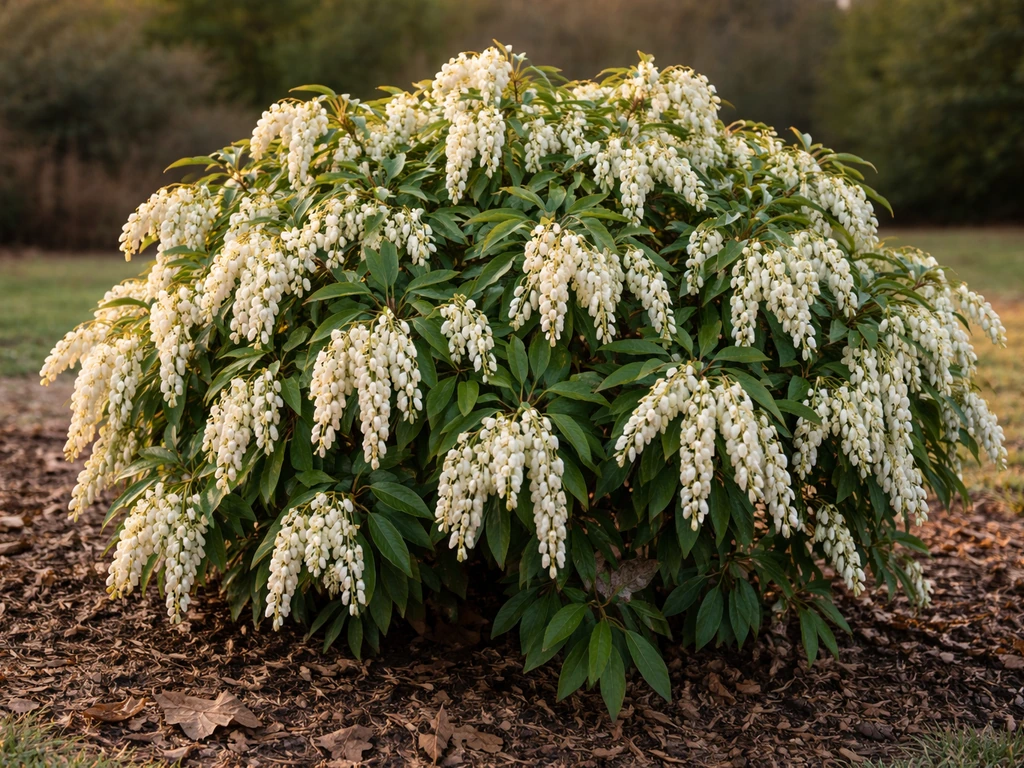
Pieris japonica (Japanese pieris) grows best in moist, well-drained, acidic soil with a pH between 4.5 and 6.0, partial shade, and protection from cold winds. Plant it in spring or early fall, keep the root flare at or just above soil level, mulch generously, and feed once a year with an acid-lover fertilizer after flowering. Do all of that consistently, and you will get those gorgeous drooping flower clusters every March and April without much fuss. If you want a complete guide, you can also follow our step-by-step advice on how to grow primulas.
How to Grow Pieris japonica Step-by-Step Care Guide

Harriet Whitmore
9 Jul 2026
What Pieris japonica actually needs to bloom
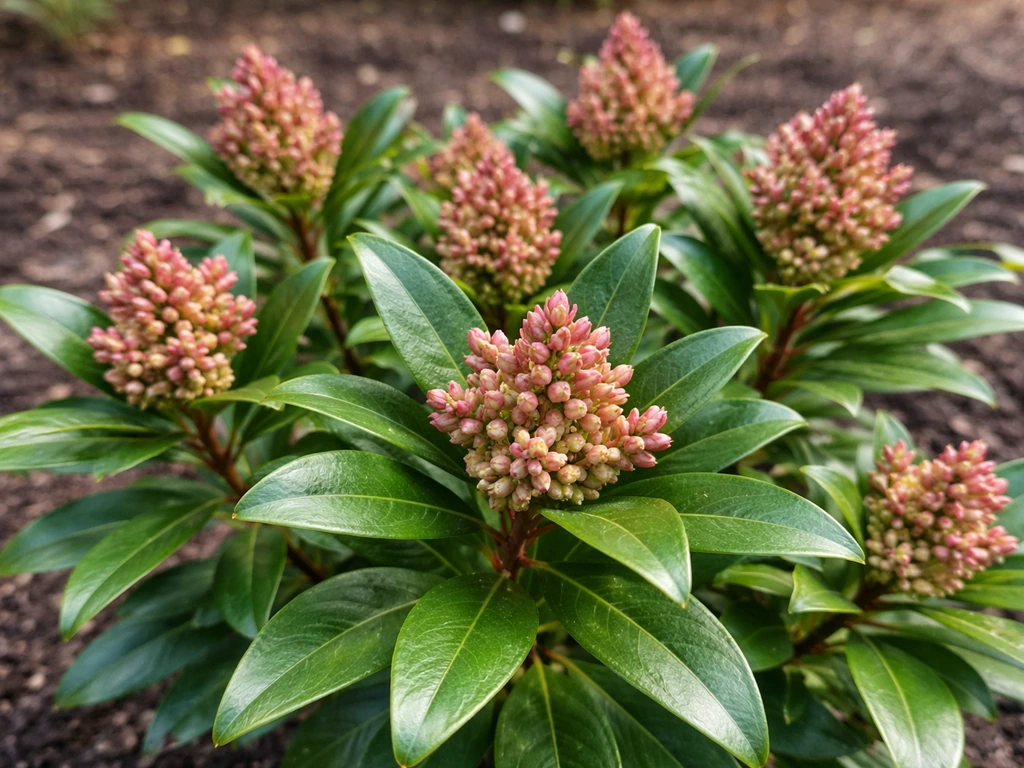
Pieris japonica is an evergreen shrub that forms its flower buds in late summer, usually July through August, for the following spring. That single fact shapes almost every decision you will make about feeding, pruning, and protecting the plant. If something stresses the plant during midsummer, whether that is drought, root rot, lace bug damage, or soil that is too alkaline, it simply will not set enough buds for next year's display. The flowers you see in March and April were decided months earlier.
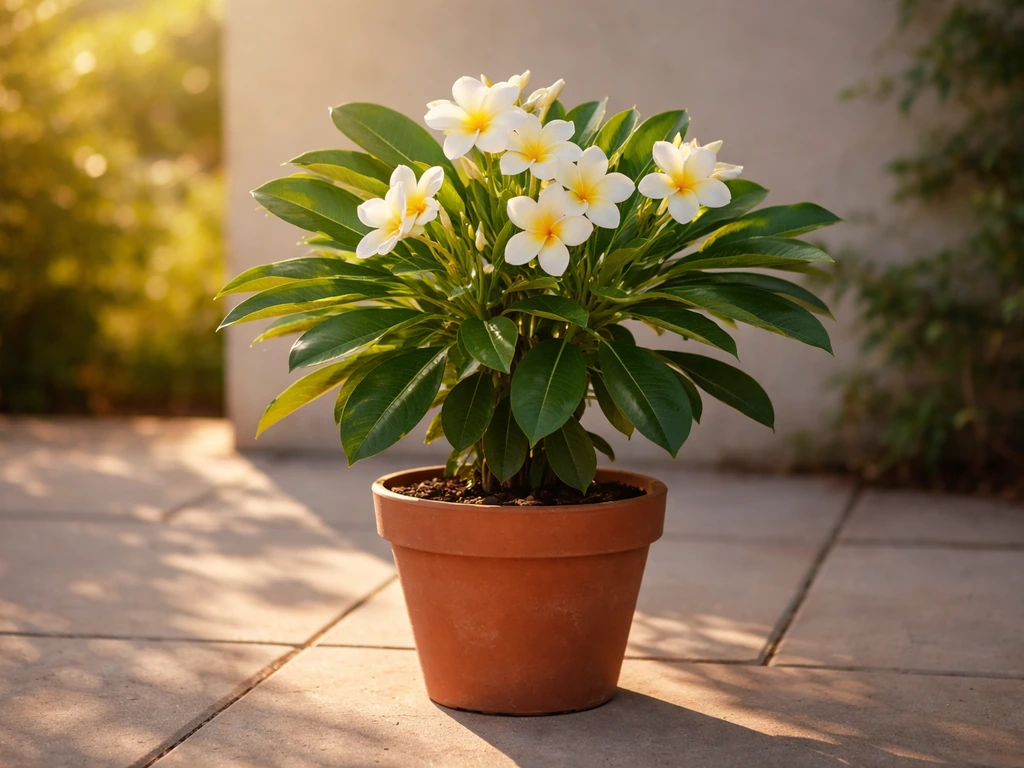
In terms of hardiness, Pieris japonica is reliable from USDA zones 4b through 8a or 8b, which covers a large chunk of the US. It is cold-hardy enough for northern gardens but struggles in the deep south where summers are brutal. The plant is slow to establish, often looking a little sulky in its first season, so do not panic if early growth seems minimal. Give it the right conditions and it rewards you with years of near-zero-maintenance flowering. If you’re also trying to grow Plumeria pudica, the key is to match its light, watering, and temperature needs to keep it healthy how to grow plumeria pudica.
Choosing the right variety and site
Picking a cultivar that fits your space and style
Variety selection matters a lot with Pieris because sizes and ornamental features vary widely. A few cultivars I keep coming back to include 'Little Heath', a compact dwarf form that stays small enough for tight spots or containers; 'Mountain Fire', which has vivid red new growth and classic white flowers (the new foliage alone is worth growing it for); and 'Valley Valentine', which produces maroon buds that open to deep rose-pink flowers against glossy dark-green foliage. If you want something beyond the standard white-flowered type, 'Valley Valentine' is a reliable standout. For a large specimen shrub, standard Pieris japonica can reach 9 to 12 feet, so if space is limited, check the mature size before you buy.
Sun, shade, and wind: getting the site right
Pieris performs best in partial shade, especially in zones 6 and 7 where summer heat and winter sun can both damage the foliage. Full sun is tolerable in cooler, cloudier climates, but in warmer or more exposed positions it leads to leaf scorch and winter desiccation. Think of it like other acid-loving woodland shrubs: dappled light under deciduous trees, or the east or north side of a building, tends to hit the sweet spot. If you are growing pincushion protea alongside Pieris, use a similarly well-drained, acidic approach and protect it from harsh wind and hot, dry spells how to grow pincushion protea. The one non-negotiable is wind protection. Cold, drying winds in winter strip moisture from the evergreen leaves faster than the roots can replace it, which causes browning and can damage the flower buds that are already formed. A sheltered spot beside a fence, wall, or taller shrubs makes a real difference.
How much space to allow
Standard forms ultimately reach 6 to 12 feet tall and 6 to 8 feet wide, but growth is slow enough that they rarely feel crowded in the first several years. Compact cultivars like 'Little Heath' top out at around 3 feet. Give full-size plants at least 5 to 6 feet of clearance from paths, walls, and neighboring shrubs. Crowding reduces air circulation and makes the plant more vulnerable to fungal problems.
Planting guide: when and how to plant
Best timing by season and climate
Spring planting, once the soil is workable and frost risk has passed, gives the roots a full growing season to establish before winter. Early fall planting works well too, particularly in zones 6 through 8, because cooler temperatures reduce transplant stress and the plant has several weeks to root in before the ground freezes. Avoid planting in midsummer heat or in late fall when the soil is cooling rapidly. In zone 4b or 5, I would stick to spring planting to maximize establishment time before the first hard freeze.
In-ground planting, step by step
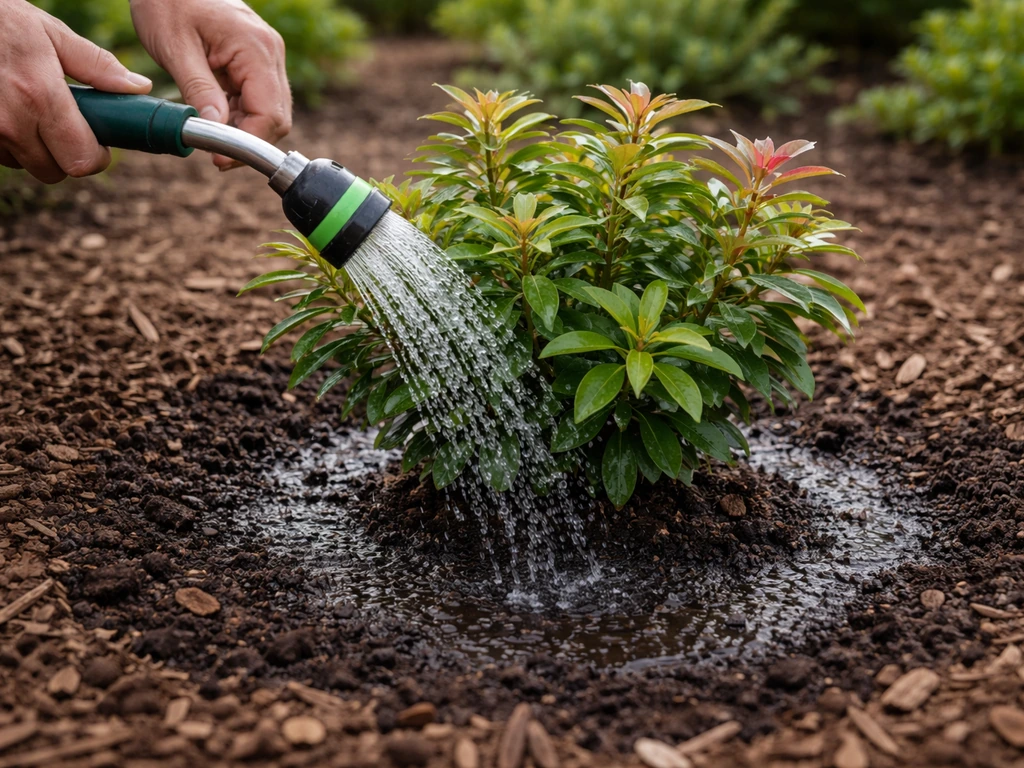
- Dig a hole two to three times wider than the root ball but no deeper than the root ball itself.
- Check that the root flare (where the trunk meets the roots) will sit at or very slightly above the surrounding soil. Planting too deep is one of the main causes of Phytophthora root rot in Pieris.
- Amend the backfill soil with a generous amount of composted pine bark, peat, or other acidic organic matter, especially if your native soil is heavy clay or has a borderline pH.
- Set the plant in the hole, backfill halfway, water thoroughly to settle the soil, then finish backfilling.
- Water again after planting, then apply a 2 to 3 inch layer of organic mulch around the plant, keeping it a few inches away from the stem.
- Water every few days for the first two to four weeks unless rainfall does the job for you.
Growing Pieris in containers
Container growing works well for compact cultivars and for gardeners whose garden soil is too alkaline to correct easily. Use a lime-free ericaceous compost (the kind sold for rhododendrons and azaleas), choose a pot with excellent drainage, and size up gradually rather than jumping straight to a huge container. A large volume of poorly draining potting mix around a small root system stays wet too long and invites root rot. Feed with a liquid ericaceous fertilizer through the growing season rather than a single slow-release granular, since nutrients leach out of containers faster. In cold zones, move containers to a sheltered spot or unheated garage in winter to protect both the roots and the formed flower buds.
Soil, watering, and feeding
Getting the soil right
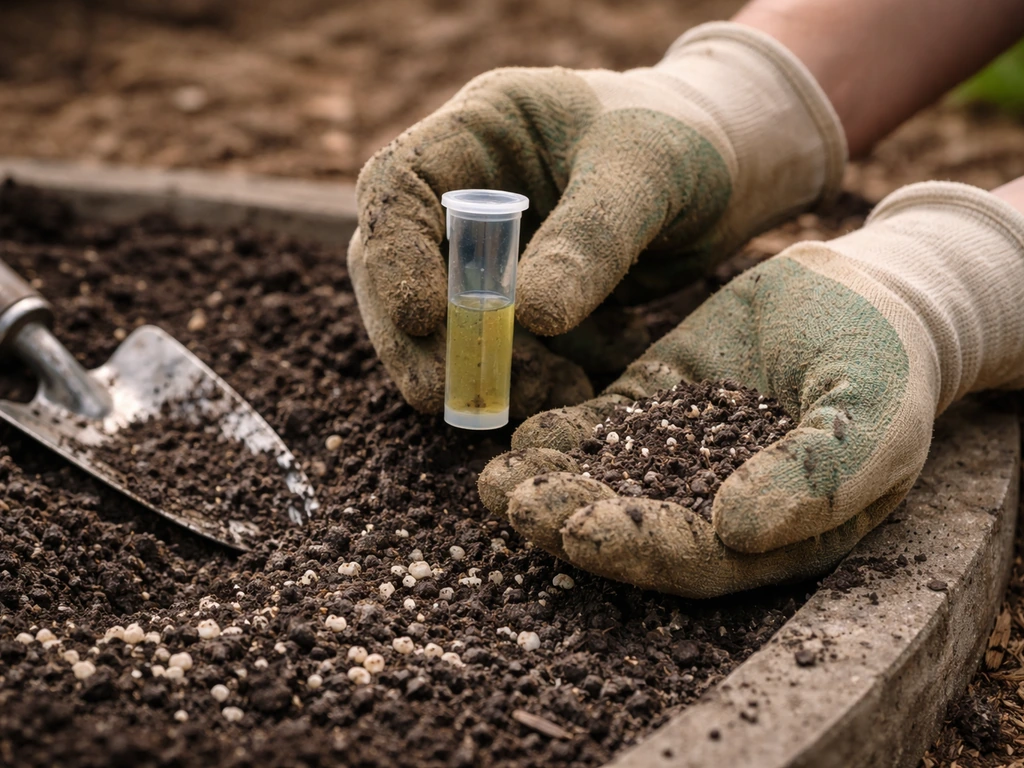
Pieris is non-negotiable about soil chemistry. It needs a pH between roughly 4.5 and 6.0. Above about 6.5 to 7.0, iron and manganese become chemically locked up in the soil and unavailable to the plant, which leads directly to the yellowing between leaf veins (interveinal chlorosis) that many gardeners mistake for a disease. If your soil is naturally neutral or alkaline, amend it heavily with sulfur, composted pine bark, or acidic peat before planting. Have your soil tested first if you are unsure, because it is far easier to adjust pH before planting than after. On chalky or limestone-heavy soils, a container with ericaceous compost is genuinely the better option.
Watering schedule
Pieris likes consistent moisture but absolutely will not tolerate waterlogged roots. Think moist but never soggy. During the first growing season, water deeply once or twice a week in dry spells. Established plants are reasonably drought-tolerant but will show stress (and skip bud formation) if they dry out significantly during midsummer, which is exactly when next year's buds are developing. In very hot summers, keep an eye on the soil moisture from July through August in particular. At the other extreme, if water sits around the roots after rain, improve drainage with grit or by raising the planting area.
Feeding without causing problems
Feed once a year in spring, right after flowering finishes, with a granular fertilizer formulated for acid-loving plants such as rhododendrons and azaleas. This timing supports strong new growth without pushing soft late-season growth that gets damaged by early frosts. Do not over-fertilize, and avoid general-purpose or high-nitrogen feeds that can raise soil pH over time or push lush leafy growth at the expense of buds. If you see interveinal yellowing despite the right pH, a chelated iron supplement applied as a drench or foliar spray will correct the deficiency faster than waiting for a slow-release fertilizer to kick in.
Mulch, winter care, and your seasonal maintenance calendar
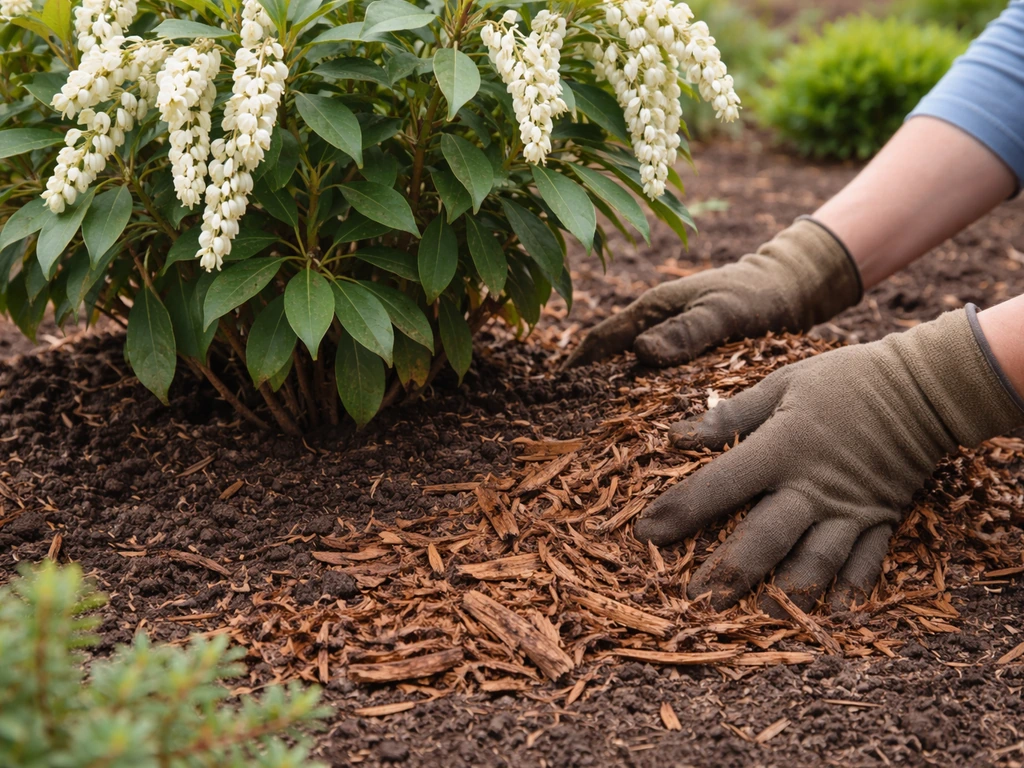
A 2 to 3 inch layer of shredded bark or composted pine needles around the root zone is one of the best things you can do for Pieris. It conserves soil moisture through summer (protecting those critical late-summer buds), moderates soil temperature in winter, slowly acidifies the soil as it breaks down, and keeps competitive weeds off the roots. Top it up in autumn before the first frosts. Keep the mulch pulled back from the stem to avoid creating a damp environment that promotes crown rot.
In exposed locations or zones 4 and 5, burlap wind screens or temporary shade cloth on the windward side dramatically reduce winter leaf scorch and bud damage. The RHS notes that Pieris japonica should be protected from cold, drying winds to prevent winter leaf scorch and bud damage wind protection from cold, drying winds. Do not wrap the whole plant in plastic, which traps moisture and heat. If a late frost threatens after flower buds have begun to swell in late winter, a fleece cover overnight can save the display.
| Season | What to do |
|---|---|
| Early spring (before flowering) | Check for winter damage, remove dead or broken stems, hold off pruning until after bloom |
| Spring (after flowering) | Apply acid-lover fertilizer, prune lightly if shaping is needed, refresh mulch layer |
| Early summer | Monitor for lace bug on leaf undersides, water during dry spells |
| Midsummer (July to August) | Maintain consistent moisture, this is bud-set time, do not prune or stress the plant |
| Late summer to early fall | Reduce watering slightly as growth slows, avoid late feeding |
| Autumn | Top up mulch around root zone, install wind protection in exposed sites if needed |
| Winter | Admire the formed buds, check wind protection, water in dry spells if ground is not frozen |
Pruning and shaping for flowers and new growth
Timing is everything with Pieris pruning, and getting it wrong is the most common reason gardeners lose a season of flowers. Prune only immediately after flowering in spring, before the plant sets next year's buds in midsummer. Pruning in late summer, fall, or winter removes the already-formed buds and you will have bare stems where flowers should be. Light deadheading of spent flower clusters is fine anytime, but any structural shaping or reduction should happen in that narrow window between the end of bloom and the end of June.
Pieris does not need much pruning. It is naturally tidy, and heavy cutting back tends to produce a flush of vigorous but shapeless growth. A light thinning of crossing or inward-facing branches, plus shortening any stems that have outgrown their space, is all most plants need. If you have a neglected or overgrown specimen, you can do a more significant renovation prune over two or three years rather than cutting back hard all at once.
Troubleshooting the most common problems
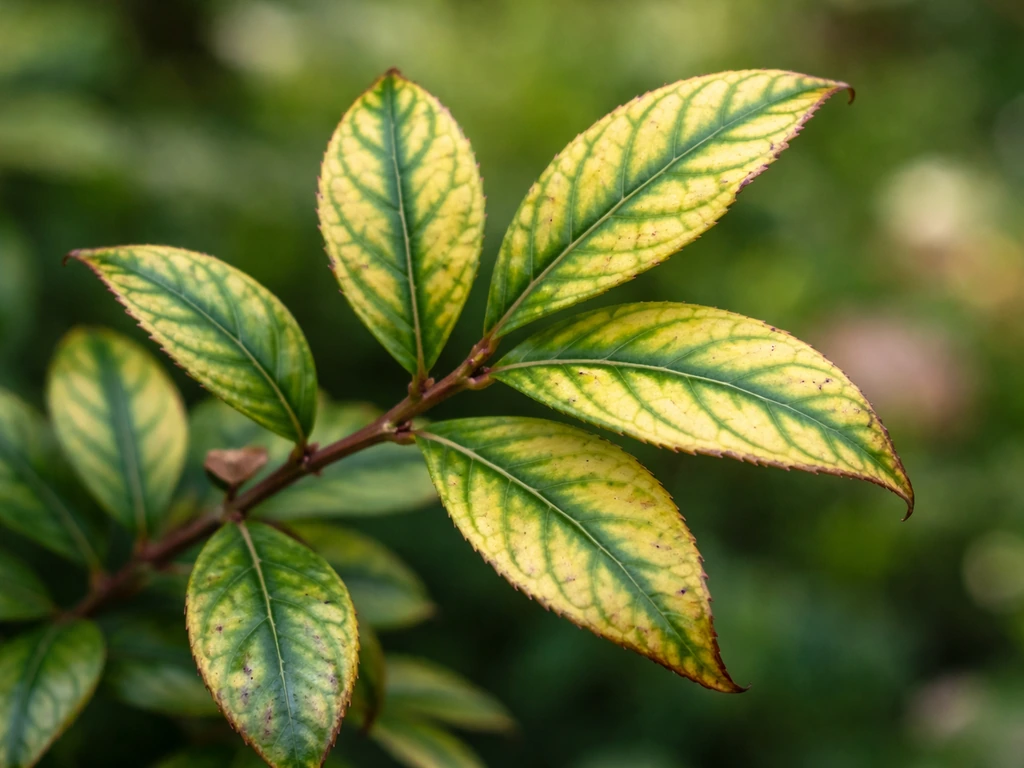
Brown leaves and leaf scorch
Browning on Pieris is almost always caused by one of three things: wind scorch, winter sun desiccation, or drought stress. Wind increases water loss from evergreen leaves faster than the roots can replenish it, especially when the ground is frozen. The result is brown leaf margins or tips, often on the side of the plant facing the prevailing wind. The fix is wind protection (a burlap screen, a nearby fence, or a taller planting on the windward side) and mulching to protect the root zone. If browning happens in summer, check soil moisture first and water deeply.
Yellow leaves between green veins (chlorosis)
Interveinal chlorosis, where the tissue between the leaf veins turns pale yellow or even bleached white while the veins themselves stay green, is a classic sign of iron deficiency caused by soil that is too alkaline. Test your soil pH. If it is above 6.5, work sulfur into the root zone and follow up with chelated iron applied as a soil drench or foliar spray for a faster correction. Keep in mind that simply adding iron without addressing the pH is a short-term fix: in alkaline soil, added iron quickly becomes unavailable again.
Poor flowering or no flowers at all
If your Pieris is healthy but flowering poorly, the most likely culprit is pruning at the wrong time. Late summer, fall, or winter pruning removes the buds that were set in July and August. The second most common cause is plant stress during midsummer bud-set: drought, waterlogging, or severe lace bug damage during July and August will all reduce next year's flower display. If you are also wondering how to grow polyanthus, focus on choosing the right light and keeping consistent watering so buds do not stall. A newly planted Pieris may also simply need a couple of seasons to settle before flowering heavily, which is normal.
Wilting, dieback, or a plant that just looks like it is giving up
Sudden wilting, branch dieback, or a plant that progressively declines despite good care points strongly to Phytophthora root or crown rot. This water mold thrives when the soil around the root zone stays wet for extended periods, and it is especially damaging in spring and during hot, stressed periods in summer. It is a difficult disease to reverse once established. Prevention is far more effective: plant with the root flare above soil level, avoid overwatering, improve drainage before planting, and never pile mulch directly against the stem. If Phytophthora is confirmed, affected plants usually cannot be saved, but you can prevent spread by removing the plant and not replanting a susceptible species in the same spot without improving drainage first.
Pests, diseases, and when to act
Pieris lace bug
Lace bug (Stephanitis takeyai) is by far the most common insect pest on Pieris japonica, and stressed plants in too much sun or too little water are especially vulnerable. The bugs feed on the underside of leaves, draining the chlorophyll and leaving a characteristic stippled, bleached, or bronzed appearance on the upper leaf surface. Flip a leaf over and you will see tiny, pale insects plus dark varnish-like frass spots. Eggs overwinter inside leaf veins, and the first generation hatches in spring. Catch infestations early, before populations build. Contact insecticide sprays must be aimed at the underside of leaves to hit the insects directly, since they will not work if they only coat the top surface. Repeated applications per product directions are usually needed. Systemic treatments can be more thorough for severe infestations. Most importantly, reduce plant stress: a well-watered, well-sited Pieris is far less attractive to lace bugs.
Phytophthora root and crown rot
Already covered in the troubleshooting section above, Phytophthora deserves a second mention here because it is both common and lethal. Pieris is genuinely prone to it, and early symptoms (slightly off-color foliage, sluggish growth, wilting on warm days) are easy to miss or misattribute until the plant is seriously declining. If you suspect it, examine the base of the plant and the root ball: infected roots are typically dark brown and mushy rather than white and firm. There is no reliable chemical cure once a plant is badly infected, so the emphasis has to be entirely on prevention through drainage and correct planting depth.
Leaf spot diseases
Fungal leaf spots, including Alternaria leaf spot, can appear during wet seasons or when air circulation around the plant is poor. They typically show as brown or tan spots, sometimes with darker margins, scattered across the foliage. Improving air circulation by thinning dense growth and avoiding overhead watering usually keeps leaf spot manageable without chemical intervention. Badly affected leaves can be removed and disposed of (not composted). Persistent or spreading outbreaks may warrant a copper-based fungicide applied as per label directions.
If you are growing other acid-loving flowering shrubs alongside your Pieris, many of the same principles apply: good drainage, correct pH, and wind protection all matter for primulas, polyanthus, and other woodland flowering plants that share similar soil preferences. Pieris is one of the most rewarding evergreen shrubs you can grow once the basics are in place, and the combination of vivid new spring growth with cascading flower clusters makes it genuinely hard to beat in a partially shaded garden bed. If you are also wondering how to grow agapanthus, the biggest takeaways are matching the light and drainage it needs and staying consistent with watering.
FAQ
How can I tell if my Pieris soil is acidic enough before planting?
Use a soil test kit or send a sample to a lab and check pH at planting depth, not just the surface. For Pieris, you want roughly 4.5 to 6.0, and if your reading is above 6.5, plan on correcting the pH before you focus on fertilizers.
What’s the correct planting depth for Pieris, and what happens if it’s too deep?
Plant so the root flare sits at or slightly above the surrounding soil. If it ends up buried, the crown stays damp and is more likely to develop Phytophthora root or crown rot.
Can I grow Pieris japonica in full sun, and what signs mean it’s getting too much light?
Full sun can work in cooler climates, but in warmer areas it often causes leaf scorch and winter desiccation. Watch for browning at leaf tips or margins, especially on the sides exposed to prevailing sun and wind.
Do I need to fertilize multiple times, or is once enough?
In most gardens, a single spring feeding after flowering finishes is enough. Avoid frequent high-nitrogen feeding, because it can encourage soft growth that is easily damaged and can gradually worsen soil conditions over time.
When should I apply mulch, and how thick is too thick?
Top with a 2 to 3 inch layer of shredded bark or pine needles, and pull it back from the stem to prevent a constantly wet crown. If mulch is heaped against the base or kept too thick, it increases the risk of crown rot.
If I miss pruning in spring, will my Pieris still flower next year?
If you prune after buds are set, you can lose next spring’s display because buds form in late summer. If you missed the window, focus on light thinning after bloom in a later year and do not try to “make up” by heavy cutting.
Can I deadhead Pieris, and does it affect bud formation?
You can remove spent flower clusters, since light deadheading won’t remove the next season’s buds. Save any structural pruning for the narrow period right after bloom, before midsummer bud set begins.
Why does my Pieris stop flowering even though it looks healthy?
The most common cause is mid-summer stress during bud formation, such as drought, waterlogged soil, or heavy lace bug feeding in July and August. Make sure watering stays consistent then, and check the underside of leaves for lace bugs if buds seem to stall.
What’s the difference between iron deficiency and general leaf yellowing on Pieris?
Interveinal chlorosis is the giveaway, the tissue between veins turns pale yellow or bleached while the veins stay greener. If that pattern is present, test soil pH because iron supplements alone will not stay effective in alkaline conditions.
My Pieris leaves are turning brown, should I water more or less?
Decide based on timing and location of browning. Brown leaf margins on the wind-exposed side during winter often point to desiccation from cold wind, while browning in summer often indicates drought stress. If the soil stays wet after rain, prioritize drainage rather than adding more water.
How can I prevent Phytophthora root or crown rot?
Prevent it by planting with the root flare above soil level, avoiding waterlogged soil, and improving drainage before planting if you have heavy clay. Also keep mulch away from the stem so the crown does not stay damp for long periods.
Is there a way to control lace bugs without harming the plant?
Start with stress reduction (right light, consistent moisture, and wind protection). If you spray, target the underside of leaves because lace bugs hide there, and plan on repeat applications according to the product label for best results.
Can I grow Pieris in a container long-term, and how do I keep the pot acidic?
Yes, but you must use a lime-free ericaceous compost and excellent drainage. Because nutrients leach faster in containers, use an acid-loving liquid feed during the growing season rather than relying on one application, and protect containers from freezing-drying winds in winter.
How far apart should I space multiple Pieris plants?
Give full-size shrubs enough room, typically about 5 to 6 feet from paths, walls, and neighboring plants, to preserve airflow and reduce fungal pressure. Compact cultivars can be closer, but still avoid planting so densely that leaves stay wet after rain.
Next Article
How to Grow Plumeria Pudica From Seed or Cuttings
Step-by-step guide to grow Plumeria pudica from seed or cuttings, with potting, care, fixes for rot and poor blooms.