
You can absolutely grow poinsettias in Australia, and with the right setup they will rebloom reliably every year. The key is understanding two things: poinsettias are short-day plants, meaning they need long periods of darkness to trigger their colour, and they absolutely hate cold snaps and waterlogged roots. Get those two things right and the rest is surprisingly straightforward, whether you are growing them in a pot on a sunny Brisbane balcony or nursing one through a Melbourne winter indoors. If you are asking how to grow poinsettia in the Philippines, many of the same basics apply, especially using a container so you can manage light, warmth, and drainage as the climate changes growing them in a pot.
How to Grow Poinsettia in Australia: Step-by-Step Guide

Harriet Whitmore
5 Jun 2026
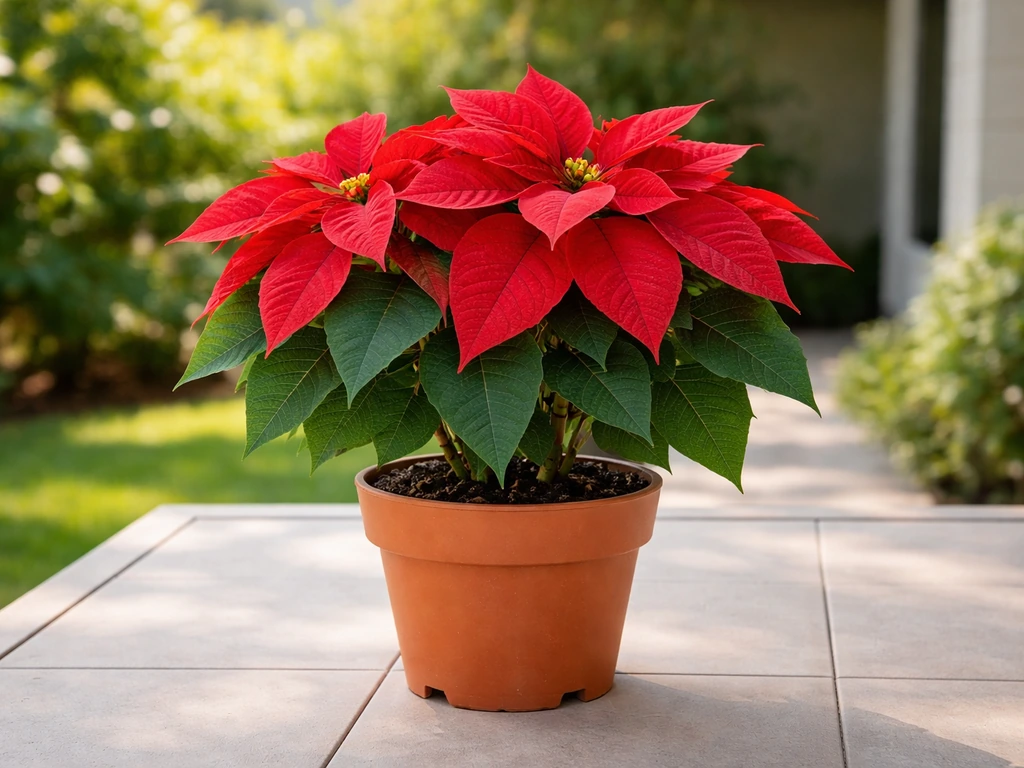
Poinsettia basics for Australian growers
Poinsettias (Euphorbia pulcherrima) are native to Mexico, which tells you a lot about what they want: warmth, good drainage, and bright light. In their natural form they grow as shrubs or small trees up to several metres tall, but most of what you will find at Australian nurseries and garden centres are compact cultivars bred for home use. Dwarf types stay in the 1 to 2 metre range and are far more practical for pots or garden beds.
In terms of variety choice, 'Prima Red' is a popular option with an intensely red bract colour, compact habit, and multiple flower heads per plant. It tends to flower early, which is handy if you want colour before Christmas. 'Freedom' red and 'Pink Peppermint' are other named dwarf cultivars that perform well in warmer Australian zones. If you want something different, 'Lemon Drop' has a dwarf habit and soft lemon-coloured bracts, while cream, blush pink, and white-bracted types are increasingly available at major nurseries. The bracts (the coloured 'petals' most people think of as flowers) are actually modified leaves. The true flowers are the small yellow-green clusters in the centre.
Climate zone matters a lot here. Once you pick your climate zone, you can follow the right timing and care steps for how to grow poinsettias in Florida Climate zone matters a lot here. . In Queensland, the Northern Territory, and coastal Western Australia, poinsettias can live outdoors year-round as shrubs and will often rebloom naturally in autumn as day length shortens.
Pyrostegia venusta is a different kind of climber than poinsettia, but the same idea applies: get the right light, temperature range, and drainage for your conditions poinsettias can live outdoors year-round. In Sydney and coastal NSW they are borderline outdoor plants, doing well in sheltered spots but needing some protection in winter. In Melbourne, Adelaide, and Tasmania, they are best treated as indoor or conservatory plants for most of the year, moved outside only in the warmest months.
One thing worth knowing: the Christmas-flowering plants you see in shops have been artificially forced under controlled light conditions to bloom in Australian summer, which is actually their off-season for natural flowering.
When to start and plant (a zone-by-zone timeline)
Timing your poinsettia year around Australian seasons makes everything simpler. The natural bloom period for a correctly managed poinsettia is autumn to early winter, roughly April to July in Australia, which aligns with shorter days. The Christmas bloom you see in shops is commercially forced and does not reflect how a home-grown plant will behave without intervention.
| Zone / Region | Best time to move outdoors | Start darkness treatment | Expect colour by |
|---|---|---|---|
| Tropical / Subtropical (QLD, NT, coastal WA) | Year-round outdoors possible | Late February to early March | May to June |
| Temperate coastal (Sydney, Perth suburbs) | After last frost, late September | Early to mid March | May to June |
| Cool temperate (Melbourne, Adelaide, ACT) | November to March only | Early March (keep indoors) | June to July |
| Cold / elevated (Tas, inland VIC, tablelands) | December to February only | Early March (indoors only) | June to July |
If you are starting from a cutting or a new nursery plant in a 100mm pot, aim to have it potted into its final container by October or November so it has the full warm season to bulk up before you begin the darkness treatment in late February or March. If you are keeping a plant from the previous year, prune it back in late January or early February (more on that below), let it push new growth through summer, then start the darkness routine.
Soil, pots, and getting the growing setup right
Container growing (the most reliable approach for most Australians)
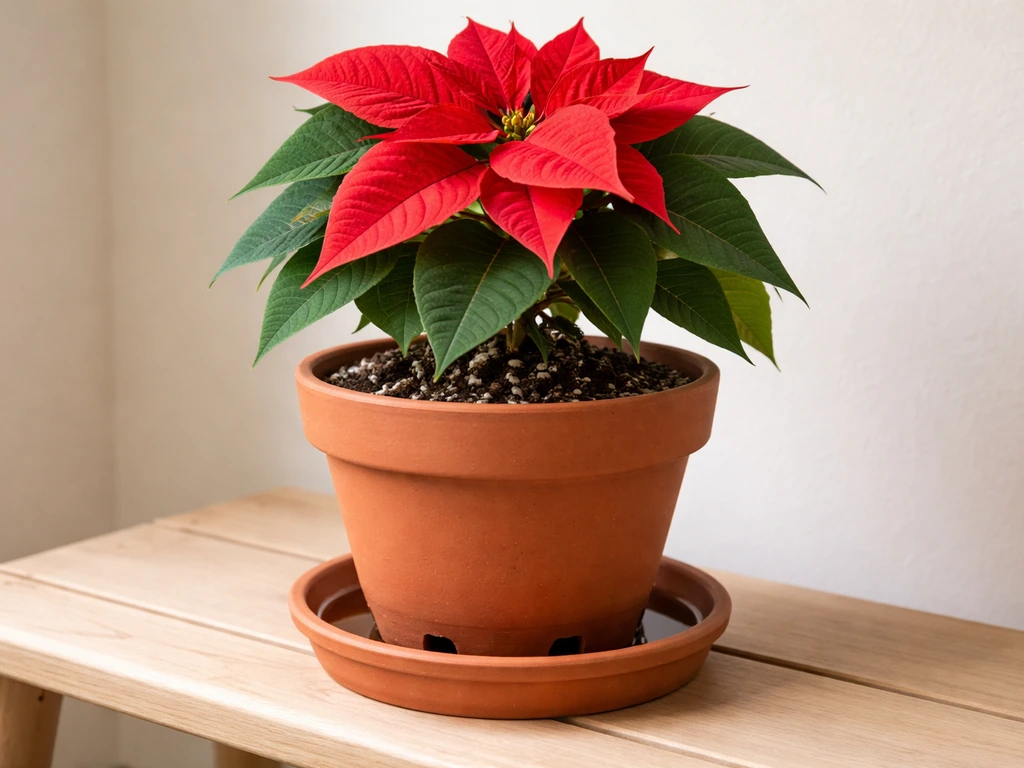
Containers are my preferred approach for poinsettias in Australia because you can control drainage, move the plant for the darkness treatment, and bring it inside before cold nights hit. Choose a pot that fits the root ball comfortably with about 5 centimetres of clearance on each side. A 20 to 25 cm pot (roughly 8 to 10 inches) works well for a single plant, which is the standard grown in commercial production for good reason. Avoid going dramatically oversized as excess soil around the roots stays wet too long and invites root rot.
Use a premium quality potting mix with good drainage, ideally one labelled for flowering plants or general purpose with added perlite or coarse sand. Do not use plain garden soil in a pot as it compacts and drains poorly. Make sure the pot has at least one large drainage hole. I also sit my poinsettia pots on pot feet or a saucer with pebbles so the base is never sitting in standing water, especially during summer rain.
Growing in the ground
In tropical and subtropical areas, poinsettias planted in the ground will eventually become large, woody shrubs and rebloom each autumn with minimal intervention. Wait until all frost risk has passed before planting out, and choose a spot with excellent natural drainage. Gardening Know How similarly advises planting poinsettias outdoors only after all chance of frost has passed [wait until all frost risk has passed before planting out](https://www. gardeningknowhow.
com/ornamental/flowers/poinsettia/outdoor-poinsettia-plants. htm). This is especially important if you are wondering how to grow poinsettias in the ground in cooler areas where frost is the biggest challenge. In clay-heavy soils, raise the planting area or amend heavily with organic matter and grit.
For gardeners in cooler zones, in-ground growing is risky as even one bad frost can kill the plant to the ground. If you are in a cool region and want to grow poinsettias in the ground outdoors, treat them as annuals or be prepared to heavily mulch and protect them.
Light, temperature, water, and feeding
Light
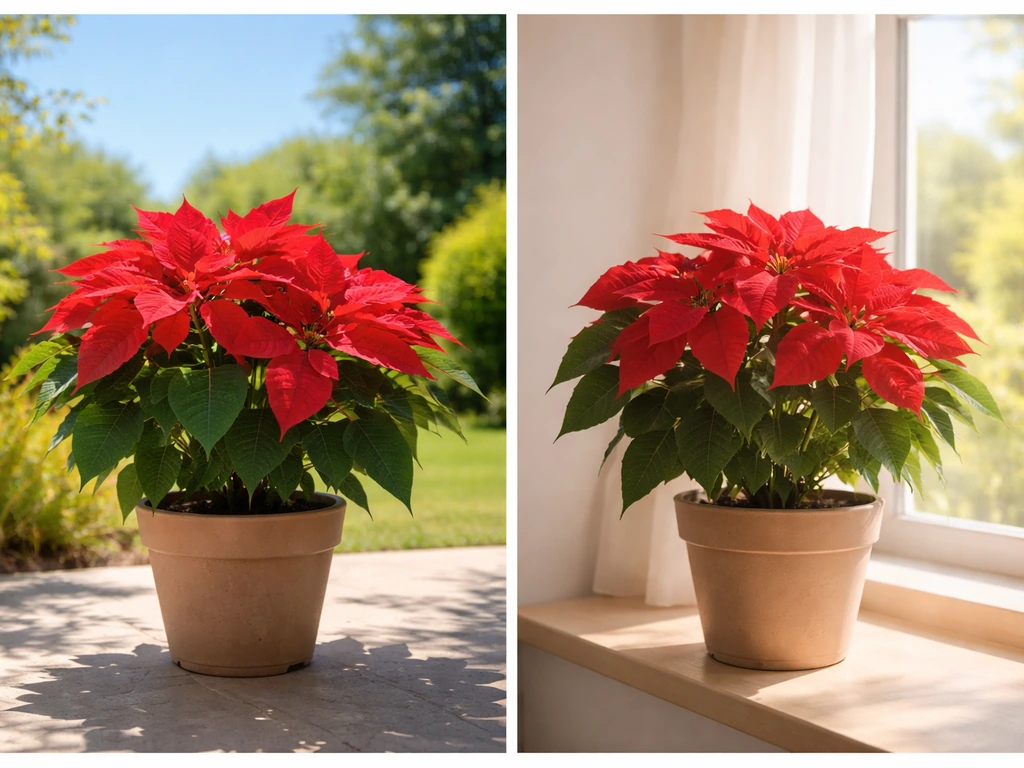
Poinsettias want at least 6 hours of direct sun per day during the growing phase (spring through summer). Outdoors, a north or east-facing position works well. Indoors, a bright windowsill that gets direct morning sun is your best bet. Low light produces weak, leggy plants that will not colour up well later. This is one of the most common failures I see: people keep their poinsettia in a dim corner and then wonder why it looks stretched and sad.
Temperature
Poinsettias grow best between 15 and 30 degrees Celsius. They genuinely struggle below 10 degrees, and anything approaching frost will kill the foliage and can kill the whole plant. In summer, protect them from prolonged exposure to temperatures above 35 degrees as heat stress causes leaf drop. Good air circulation helps in humid subtropical areas where fungal issues can creep in.
Watering
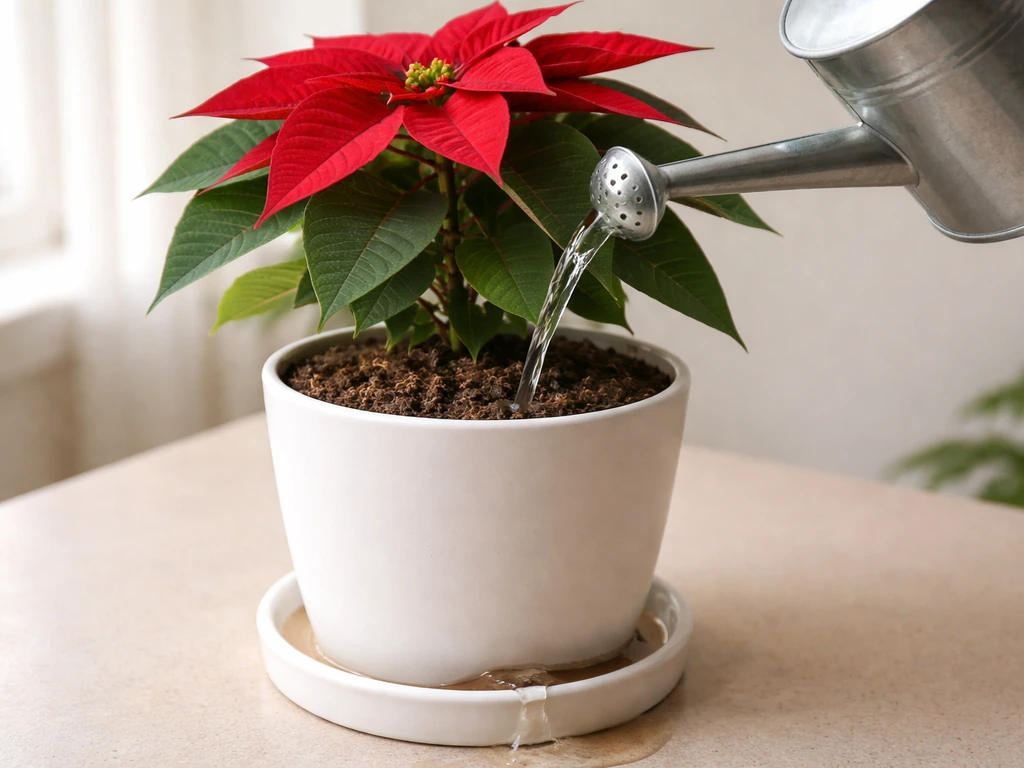
The single most common way people kill poinsettias is overwatering. Water thoroughly when the top 2 to 3 centimetres of potting mix feel dry, then let excess water drain freely. In summer, pot-grown plants may need watering every few days or even daily in very hot and dry conditions. Smaller pots dry out particularly fast, so check them regularly. Never let the pot sit in a saucer of water for more than an hour. In winter or during cooler, overcast stretches, you can easily go 10 to 14 days between waterings. Yellowing lower leaves are often the first sign of overwatering, though they can also indicate the opposite, so always check the soil before reacting.
Feeding
Feed actively growing plants every two weeks from spring through to late summer using a balanced liquid fertiliser (something like a 20-20-20 formulation or a general flowering plant fertiliser). Once you start the darkness treatment to trigger reblooming, switch to a low-nitrogen fertiliser or stop feeding altogether. Too much nitrogen during bract development pushes leafy green growth at the expense of colour. Resume regular feeding once the bracts have fully developed and the plant is in its display phase.
How to get your poinsettia to rebloom (the darkness treatment explained)
This is the part most home gardeners skip, and it is exactly why their plants never colour up again after the first Christmas. To get a poinsettia to bloom again after Christmas, you need the darkness treatment explained earlier, with uninterrupted long nights for about 8 to 10 weeks darkness treatment to trigger reblooming.
Poinsettias are photoperiod-sensitive: they only produce their coloured bracts when they receive 14 to 15 consecutive hours of complete, uninterrupted darkness each night for a period of roughly 8 to 10 weeks. Follow the darkness routine in late February through early May to trigger the bracts and learn how do you grow a poinsettia again after Christmas Poinsettias are photoperiod-sensitive.
Even a small amount of light during the dark period (a streetlight through the curtain, a lamp turned on briefly) can reset the process and prevent colouring.
Step-by-step darkness routine for Australian timing
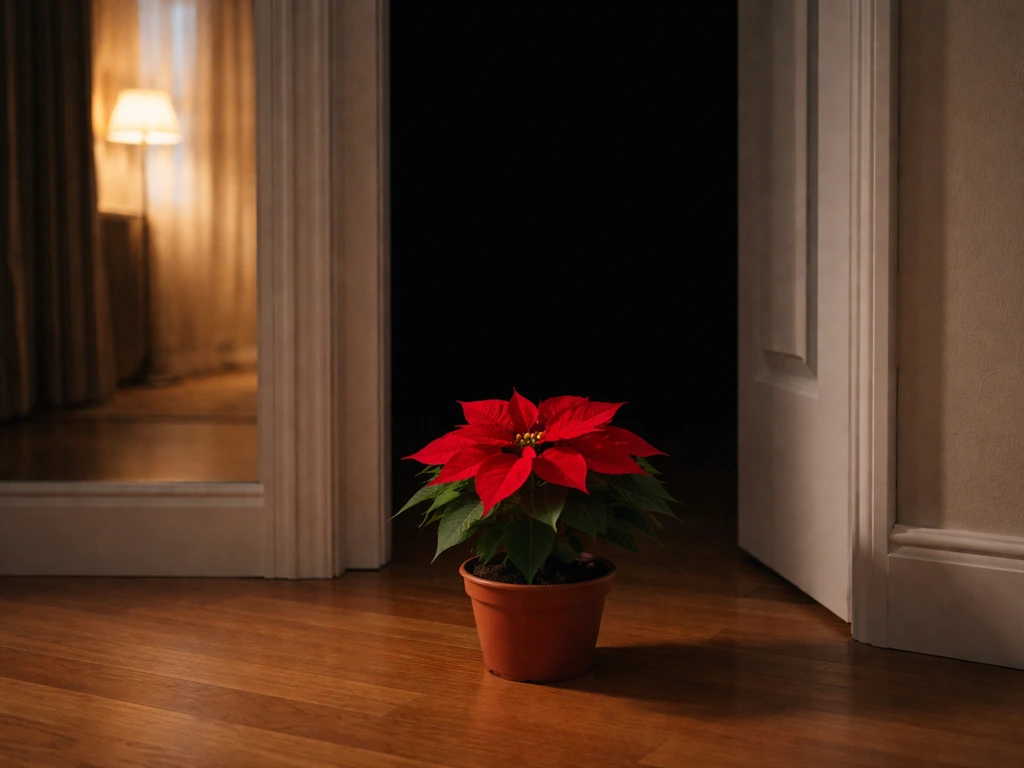
- Start in late February or early March (as natural day length approaches 12 hours in most of Australia).
- Each evening around 5 pm, move the plant into a completely dark space: a cupboard, a box, a blacked-out room, or cover it with a black cloth or opaque bag. Commercial growers use heavy black cloth over greenhouse benches for exactly this purpose.
- Leave it in complete darkness for 14 to 15 hours. Bring it back out to bright light each morning around 7 to 8 am.
- Repeat every single day without breaks for 8 to 10 weeks.
- Continue regular watering and light feeding during this period but do not skip the darkness routine even for one or two nights.
- After 8 to 10 weeks (by May or June), you should see the bracts beginning to colour up. Once about half the bracts have turned, you can stop the darkness treatment and let the plant live in its normal spot.
The exact window that works best for Australian conditions is late February through to late April or early May. This aligns with naturally shortening days, which means the plant gets some assistance from real day length and you do not have to be quite as precise. Texas A&M AgriLife Extension also notes that forcing plants in black clothing to create darkness helps start the short days around mid-September through October 10, depending on temperature temperature affecting timing. If you start in early March, expect colour by May to June, which is actually a better display period than a forced Christmas bloom anyway.
Pinching for better branching
Pinching simply means removing the growing tip of each stem to encourage the plant to branch and produce more bract-bearing shoots. Do this in late spring or early summer, after pruning and before the heat of January. Pinch each stem back to a node, leaving three to four leaves on each branch. A well-pinched plant going into the darkness treatment will produce a much fuller, more colourful display than a plant left to grow a single leggy stem.
Troubleshooting the most common problems
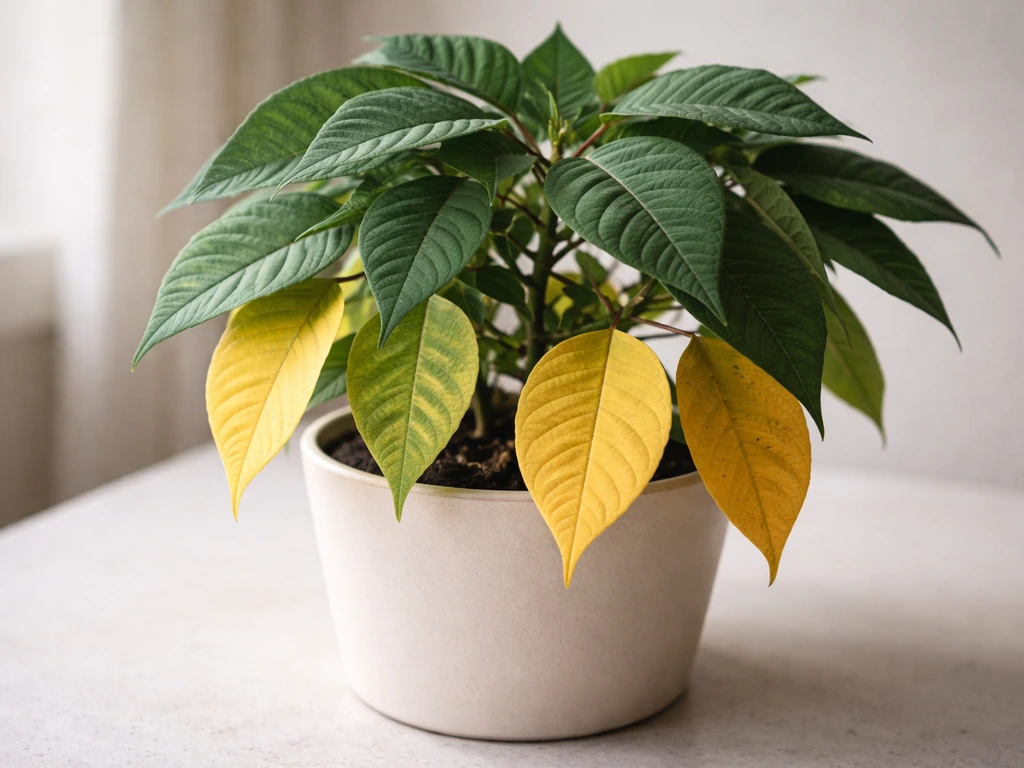
Yellowing leaves
Yellow leaves are the most common complaint and can mean several different things. If lower leaves are yellowing and dropping while the plant is in active growth, overwatering is the most likely culprit. Check the root ball: if it smells bad or roots look brown and mushy, you have Pythium root rot, which is caused by poor drainage and excess moisture, especially in warm conditions. Remove the plant from the pot, trim off dead roots, let the root ball air dry briefly, and repot into fresh, well-draining mix. Hold off watering for a few days. If yellowing is happening all over the plant in cooler months, the issue is more likely cold stress or insufficient light.
Leggy, stretched growth
Long, weak stems with small leaves and wide gaps between nodes mean the plant is not getting enough light. Move it to a brighter position immediately and pinch back the leggy stems to encourage compact regrowth. Once established in better light, the new growth will be noticeably sturdier.
Failure to colour up
If your plant is not developing colour after weeks of effort, there are usually only a few explanations. Light interruption during the dark period is the most common: even brief exposure to artificial light at night can disrupt the process. Check your dark space carefully and use a truly opaque cover. Temperature above 21 degrees at night during the dark period can also interfere with bract development, so if you are in a hot climate, try to find the coolest dark space available.
Leaf drop (not yellowing, just dropping)
Sudden leaf drop without yellowing is almost always a stress response, most often caused by cold drafts, a sudden change in environment, or underwatering. If you have recently moved the plant, give it a week to adjust. Make sure it is away from air conditioning vents and cold windowsills in winter.
Mealybugs
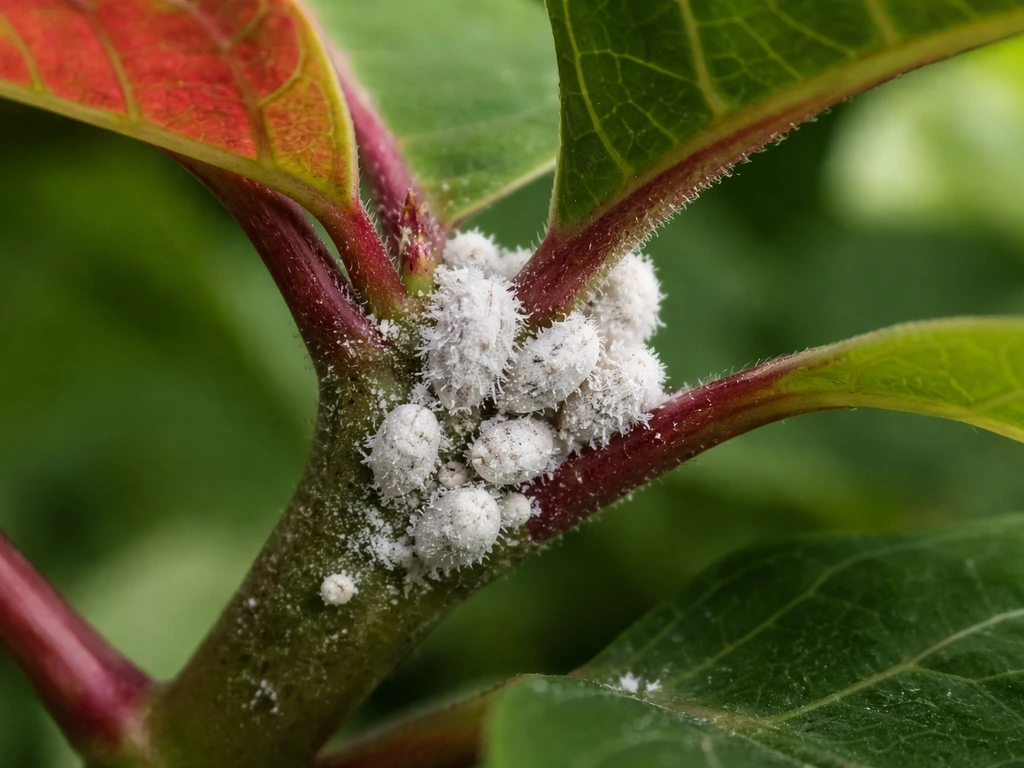
Mealybugs are probably the most irritating pest on indoor poinsettias. They look like small white cottony blobs, usually hiding in leaf axils and along stems. Treat with a cotton swab dipped in rubbing alcohol for spot treatments, or spray the whole plant with an appropriate horticultural oil or insecticide registered for mealybug control. Repeat every 5 to 7 days for at least three treatments to catch newly hatched individuals. Warm, humid conditions encourage them, so good air circulation helps as prevention.
Whitefly (especially in Queensland and WA)
Silverleaf whitefly is a significant outdoor pest in Queensland and Western Australia and is sometimes called the poinsettia whitefly. It causes yellowing, leaf distortion, and sticky honeydew residue. Yellow sticky traps help monitor numbers. For serious infestations, use a registered insecticide and target the undersides of leaves where nymphs feed. Remove heavily infested leaves to reduce the population before spraying.
Aphids
Aphids cluster on new growth and can cause distorted leaves and sticky residue. A strong spray of water can knock most of them off. For persistent infestations, insecticidal soap or neem oil works well. Check new growth weekly during spring as that is when populations build fastest.
Ongoing care: pruning, propagation, and safe handling
Pruning after flowering
Once the bracts fade and drop (usually late winter), cut the plant back hard. Trim each stem back to about 10 to 15 centimetres from the base, leaving a few nodes on each branch. This sounds brutal but it is the right thing to do: it forces strong new growth from low on the plant and prevents it becoming a leggy, bare-stemmed mess over years. I do this in late January or early February in Australian timing, then give the plant a slow-release fertiliser and move it to its brightest position to push fresh growth through the warm season before the darkness treatment begins again in March.
Propagation
Poinsettias root readily from stem cuttings, which is a great way to increase your stock or share plants. Take cuttings of 10 to 15 centimetres in late spring or early summer, choosing stems with at least three to four nodes and no flower buds. Allow the cut end to dry and the milky sap to stop flowing for 30 to 60 minutes, then dip in rooting hormone powder and insert into moist propagating mix. Keep warm (around 22 to 25 degrees) and in bright indirect light. Roots should form within 3 to 5 weeks. Once rooted, pot into individual containers and care for them as established plants.
Safe handling
The milky white latex sap that oozes from cut poinsettia stems and leaves is a skin and eye irritant for some people. It is not as toxic as sometimes claimed, but it can cause skin rashes in sensitive individuals and stomach upset if ingested in quantity. Wear gloves when pruning or taking cuttings, and keep the plant out of reach of young children and pets, especially cats and dogs who may chew the leaves. Wash your hands and any tools thoroughly after handling the sap.
When to move indoors or outdoors
Move your poinsettia indoors whenever overnight temperatures are forecast below 10 degrees. For Melbourne and Adelaide gardeners, this typically means bringing it in around April and keeping it inside until October or November. For Sydney gardeners, light frost protection through June to August is usually enough. In subtropical and tropical zones, the plant can stay outdoors permanently but appreciates some shelter from heavy summer downpours that can waterlog containers quickly.
If you want to grow your poinsettias in a more controlled environment throughout the year, a greenhouse setup gives you the most precision over temperature and light management. If you are starting with plugs, the process is similar, but you will still need the right potting mix, drainage, and darkness timing to get reliable colour how to grow poinsettias from plugs.
A greenhouse makes it easier to maintain stable temperature and light while you follow the darkness treatment for reliable reblooming a greenhouse setup gives you the most precision over temperature and light management.
Your practical action checklist
- Choose a compact or dwarf cultivar suited to your space ('Prima Red', 'Freedom', 'Lemon Drop', or similar).
- Plant into a well-draining premium potting mix in a pot with drainage holes, or plant in-ground only in frost-free, well-drained positions.
- Position in at least 6 hours of direct sun per day during the growing season (spring through summer).
- Water when the top 2 to 3 cm of mix is dry; never let the pot sit in water.
- Feed every two weeks with a balanced liquid fertiliser from spring until late summer.
- Pinch growing tips in late spring or early summer for better branching.
- Begin the 14 to 15-hour nightly darkness routine from late February or early March.
- Maintain darkness treatment consistently for 8 to 10 weeks without interruption.
- Expect colour to develop by May to June for most Australian zones.
- After flowering fades, prune hard in late January or early February and repeat the cycle.
- Watch for mealybugs, whitefly, and aphids; treat promptly and repeat applications every 5 to 7 days.
- Bring indoors whenever temperatures are forecast below 10 degrees.
- Wear gloves when pruning or taking cuttings to avoid contact with the milky sap.
FAQ
How can I keep a poinsettia in Australia without it getting interrupted during the 8 to 10 week darkness treatment?
Yes, but you need a truly lightproof setup for the dark phase. Avoid putting the pot near windows with streetlight glow, and do not rely on “shade cloth.” Use a dedicated opaque box or cupboard that fully seals around the plant, and keep pets away so it is not moved or exposed accidentally during the 14 to 15 hour dark window.
My poinsettia has dark hours, but the bracts are not forming well. What else could be wrong?
If you see tall, leafy growth but no or poor bract colour, temperature is a common hidden cause. During the dark phase, aim for cool nights under about 21 C. If your dark spot is too warm, bracts can delay or fade even when the timing is perfect, so monitor the night temperature where the plant sits.
When should I pinch versus do the hard prune in the Australian cycle?
Hard pruning and pinching are different. Pinching shapes the plant before the darkness treatment, while the harder cutback happens after bracts fade (late winter). If you pinch again in mid or late winter, you can remove developing shoots and reduce the eventual number of bract-bearing stems.
What’s the quickest way to get rid of mealybugs on a poinsettia indoors?
Mealybugs often survive because people miss leaf axils and undersides. For spot control, isolate the plant, inspect every node, and dab directly on visible clusters. For whole-plant treatment, repeat on a 5 to 7 day rhythm for at least three rounds, and wipe off honeydew residue because it can attract secondary pests.
Do I need to use special water, or can I use tap water when growing poinsettias in Australia?
Plain tap water is usually fine, but the real issue is water quality related to salts building up. If your plant has repeated yellowing plus crusty deposits on the rim, flush the pot with plenty of water occasionally and then resume normal watering, and avoid letting fertiliser accumulate to high strength.
Can I put my poinsettia outside in spring and then again in autumn for better colour?
Move outside only when days are reliably warm and nights are above 10 C. In climates like Sydney coastal areas, even a few chilly nights can trigger leaf drop and set the plant back. Harden it gradually over a week, starting with morning sun and sheltered positioning, then increase exposure.
What fertiliser mistakes prevent poinsettias from colouring up again after Christmas?
Fertiliser timing matters. Stop or switch to low nitrogen before you start the darkness routine, and avoid “high bloom” fertilisers that are still nitrogen heavy. If bracts develop leafy growth instead of colour, the problem is often feeding too close to the darkness start or continuing normal feeding too long.
How do I prevent root rot when poinsettias are outdoors in wet periods in Australia?
If you are growing in a pot outdoors, the most practical approach is to keep it slightly elevated (pot feet) and water based on soil dryness, not the weather calendar. During heavy rain seasons, check drainage daily, because waterlogged mix can cause root rot even when you did not “overwater” manually.
What should I do in late summer if my plant is leggy before the darkness treatment?
If your plant still looks weak in late summer after late pruning, take a close look at light exposure before attempting the dark routine. You want strong, green new growth with a compact habit. If it is leggy from low light, pinching and moving to brighter sun or a strong window should happen early enough so the plant can regrow before February or March.
Will a shop-bought Christmas poinsettia reliably rebloom the same year in Australia?
Yes, but plan for different outcomes depending on the starting plant. Store-bought “Christmas” poinsettias are often forced for bloom and may have depleted energy, so expect the first rebloom to take longer unless you cut back, regrow strongly through warm months, and then run a proper darkness schedule.
Next Article
How to Grow Poinsettias in Florida: Step-by-Step Guide
Learn how to grow poinsettias in Florida with step-by-step indoor or outdoor care, timing, fixes for leaf drop and pests
