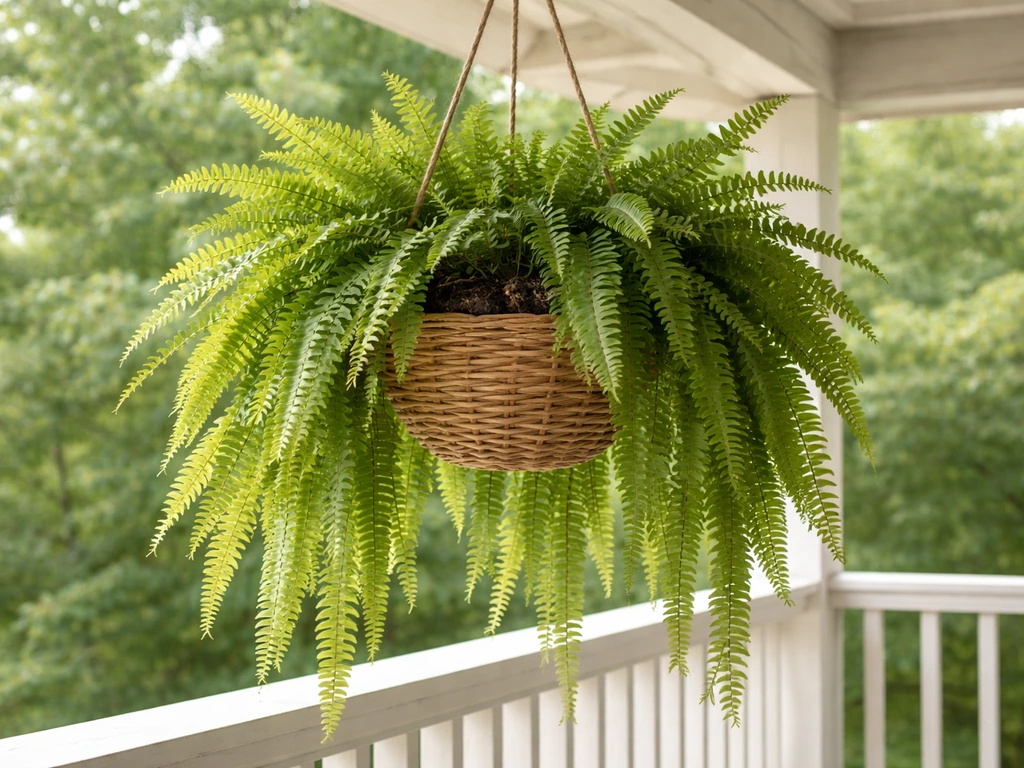
Boston fern (Nephrolepis exaltata 'Bostoniensis') is genuinely one of the best plants you can put in a hanging basket. Its long, arching fronds cascade beautifully over the sides, it thrives in the indirect light that most porches and patios offer, and it rewards consistent care with thick, lush growth. The catch is that hanging baskets dry out faster than pots on the ground, and Boston ferns are not forgiving about drying out.
How to Grow Ferns in Hanging Baskets, Including Boston Ferns

Harriet Whitmore
25 Jun 2026
Get the potting mix, watering routine, and humidity situation right from the start, and you'll have a showstopper all season long. If you want more color in the same type of setup, the techniques for how to grow fuchsia in hanging baskets can help you choose the right conditions and care routine.
Picking the right fern for a hanging basket
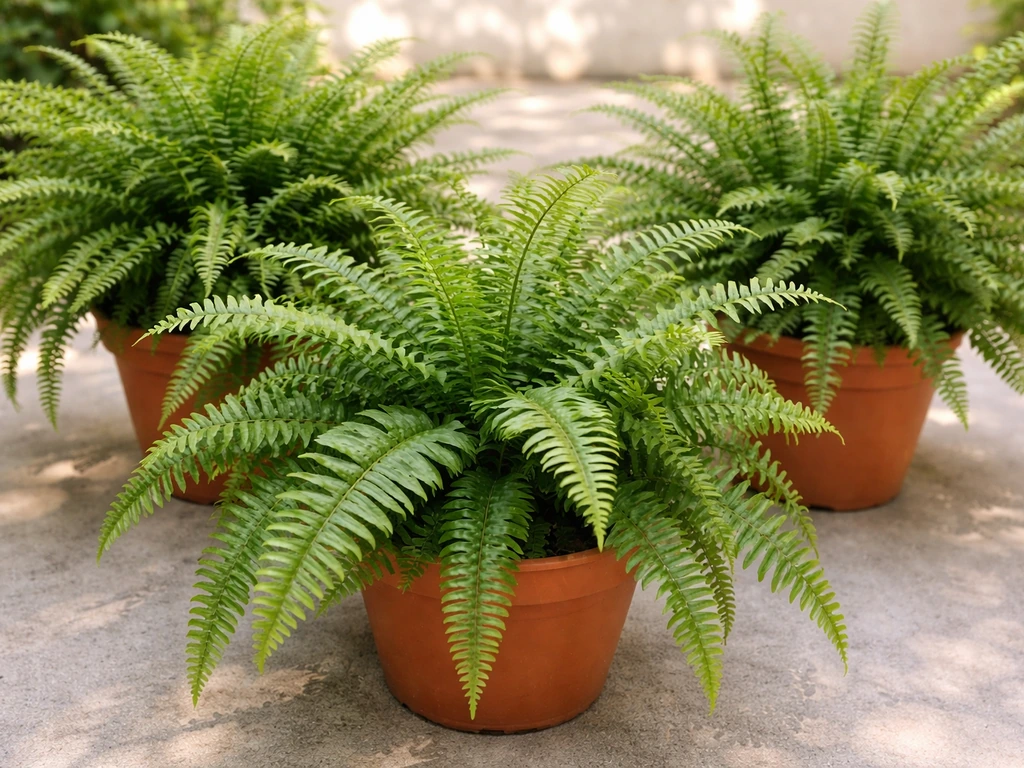
Not every fern works well in a hanging basket, but Boston fern absolutely does. The reason is the cultivar's growth habit: 'Bostoniensis' produces gracefully arching fronds that drape and cascade downward, which is exactly the look you want spilling out of a suspended basket. Compare that to the straight species (Nephrolepis exaltata), which tends to grow more upright and stiff. The arching habit isn't just cosmetic either. Those outward-drooping fronds, which can easily reach 15 to 18 inches long on a healthy plant, naturally expose themselves to the humidity and air circulation around the basket rather than bunching up and trapping moisture.
Other ferns worth considering for baskets include Kimberly Queen fern (Nephrolepis obliterata), which is a bit more tolerant of dry air, and maidenhair fern for a delicate look, though maidenhair needs very careful humidity management. For most gardeners starting out, Boston fern is the go-to. It's widely available, forgiving enough to learn on, and commercially, it's already sold in hanging baskets for a reason.
Choosing the right basket size, potting mix, and container
Basket size and material
Commercial Boston ferns are typically grown and sold in 8-, 10-, or 12-inch plastic hanging baskets, and those sizes work well for home use too. A 10- or 12-inch basket is ideal for most retail transplants because it gives the root system room to spread without holding so much excess soil that the mix stays wet too long between waterings. Plastic baskets retain moisture better than wire baskets lined with coco coir, which is actually an advantage for a water-hungry plant like Boston fern. Wire baskets look gorgeous, but they dry out very fast, so if you go that route, plan on watering almost daily in warm weather.
One technique worth trying is double potting: place your planted pot inside a slightly larger container that's been lined with moist sphagnum moss. The moss layer acts as a humidity buffer around the root zone and slows moisture loss from the sides. It's a simple trick, but it makes a real difference on hot, breezy days when a single-layer basket would dry out in hours.
Potting mix that actually works
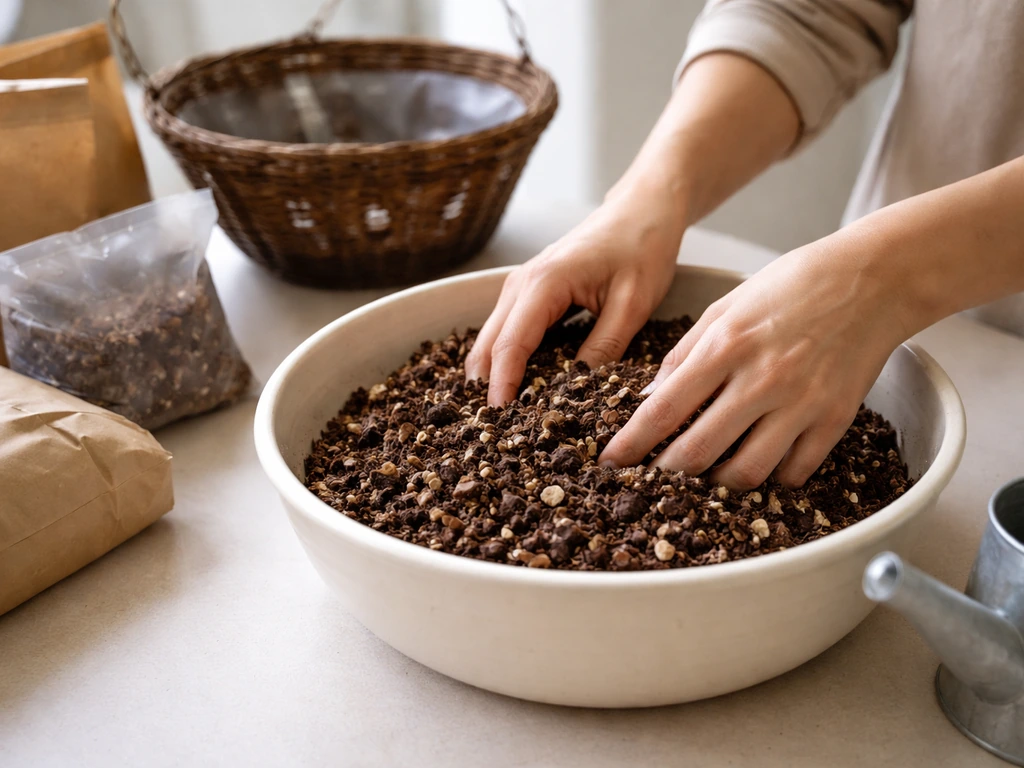
Standard bagged potting soil is usually too dense for ferns in hanging baskets. What you want is a mix that holds moisture evenly but also drains well and stays aerated around the roots. The formula used in quality commercial Boston fern production is 50% peat, 25% perlite, and 25% vermiculite by volume. Peat gives you water retention, perlite opens up the mix so air reaches the roots, and vermiculite holds some moisture while improving drainage.
You can also work well with a simple 1:1 peat-to-perlite blend or peat combined with fine pine bark if that's what you have available. When it comes to portulaca, the key is giving it full sun, a well-draining mix, and watering only when the soil is mostly dry. Avoid anything marketed as heavy or moisture-control formulas meant for drought-tolerant plants, those will stay soggy rather than evenly moist.
Drainage holes are non-negotiable. If your basket doesn't have them, add them. Waterlogged roots lead quickly to Pythium root rot, which shows up as gray, yellowed, and wilted fronds that look a lot like underwatering but won't respond to more water. In fact, adding more water at that point makes things worse.
Light, temperature, and humidity: what Boston ferns actually need
Boston ferns want bright, indirect light. A covered porch that gets morning sun and afternoon shade is close to perfect. Direct afternoon sun scorches the fronds quickly, and deep shade causes the plant to thin out and lose its density. Indoors, a spot near a north- or east-facing window works well. South- or west-facing windows are fine if the basket is set back enough that direct sun doesn't hit the fronds.
Temperature-wise, keep Boston ferns between 60 and 75°F (15 to 24°C) for best results. They struggle below 55°F, so if you're in a climate where nights cool down in early fall, plan to bring the basket indoors before temperatures consistently drop into the 50s. Indoors in winter, keep the fern away from heating vents and cold drafts. Both dry heated air and cold air from windows hit the fronds hard.
Humidity is where most people run into trouble. Boston fern wants 50% relative humidity or higher. Outdoors in summer this usually isn't a problem, but indoors, especially in winter when the heat runs constantly, indoor humidity can drop to 20 to 30%, which causes the frond tips and edges to brown and crisp even when your watering schedule looks perfect. Running a humidifier near the plant or grouping it with other plants helps. Misting is often recommended but is only marginally effective. If you're overwintering a basket indoors, a pebble tray with water placed beneath the basket does more consistent work than daily misting.
Planting setup and early care
Getting the fern into the basket
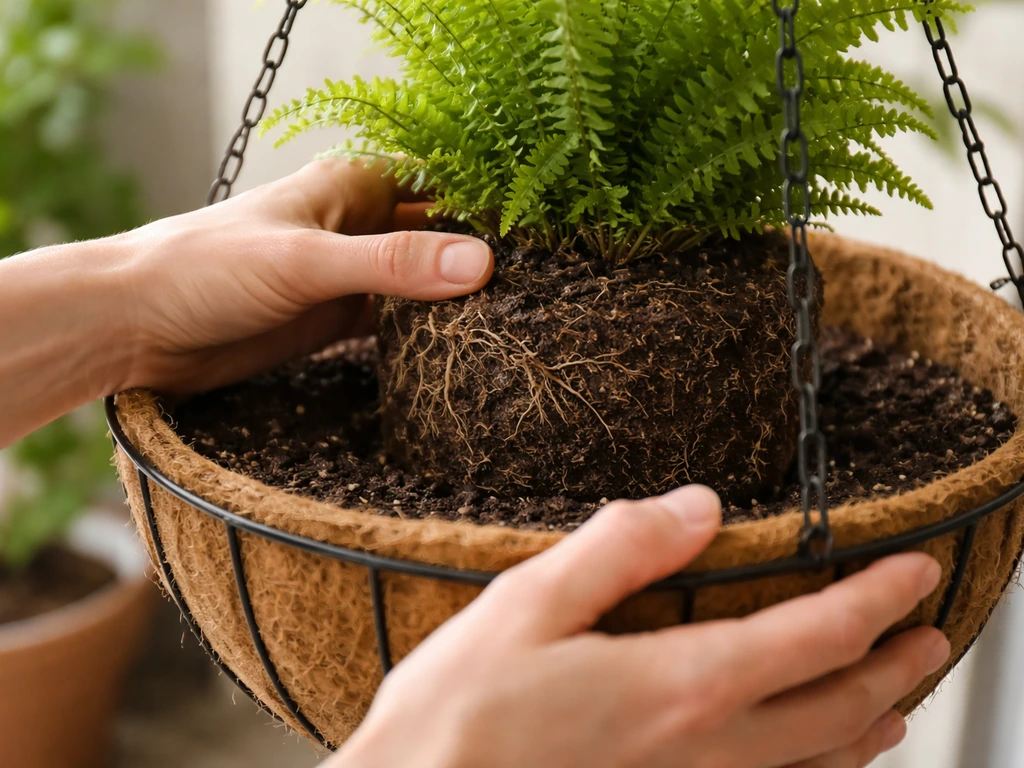
When potting a Boston fern into a new hanging basket, fill the bottom of the basket with your prepared mix, then set the root ball so the top of the root ball sits roughly 1 inch (2.5 cm) below the rim of the basket. That inch of clearance prevents water from running straight off the surface before it can soak in. Backfill around the sides with more mix, firm it gently, and water thoroughly until water drains freely from the bottom. The mix should settle a bit after that first watering, and you may need to top it off.
Watering in the first few weeks
The goal right from the start is to keep the potting mix evenly moist but never saturated. If you want to grow new Guinea impatiens in containers or hanging baskets, give them bright, indirect light and keep the soil consistently moist but well-drained how to grow new guinea impatiens.
For a hanging basket outdoors in warm weather, that often means watering every day or every other day depending on your climate, basket size, and how much direct sun and wind the spot gets. The simplest check: push your finger about an inch into the mix. If it feels dry at that depth, water thoroughly. If it still feels moist, skip that day.
Avoid the habit of giving small amounts of water frequently. Shallow watering encourages shallow roots and never fully saturates the mix, which can leave dry pockets in the center of the root ball. Water until it flows freely from the drainage holes, then stop.
When and how to start feeding
Hold off on fertilizing for the first two to four weeks after planting to let the roots settle. After that, feed with a balanced liquid fertilizer such as a 20-20-20 or 20-10-20 formula diluted to half the label's recommended strength, applied every four to six weeks during spring and summer. Half strength is important here: ferns are sensitive to fertilizer burn, and full-strength applications can cause frond tip browning that looks just like the humidity-related crisping, making it hard to diagnose the actual cause. Stop feeding in fall when growth slows, and don't fertilize at all during winter dormancy.
Ongoing maintenance and troubleshooting
Keeping the fronds healthy week to week
Once your Boston fern is established, maintenance settles into a rhythm. Water consistently to keep the mix evenly moist, feed lightly during the growing season, and check humidity if you're growing indoors. If you want impatiens instead of ferns, focus on consistent watering, bright light, and a fast-draining mix to keep the hanging basket flowering how to grow impatiens in hanging baskets. Trim any brown or dead fronds at the base with clean scissors to keep the basket looking tidy and to encourage new growth from the center. Avoid trimming healthy green fronds; ferns grow from the crown outward, and unnecessary trimming can stress the plant.
Yellowing fronds: what's actually going on
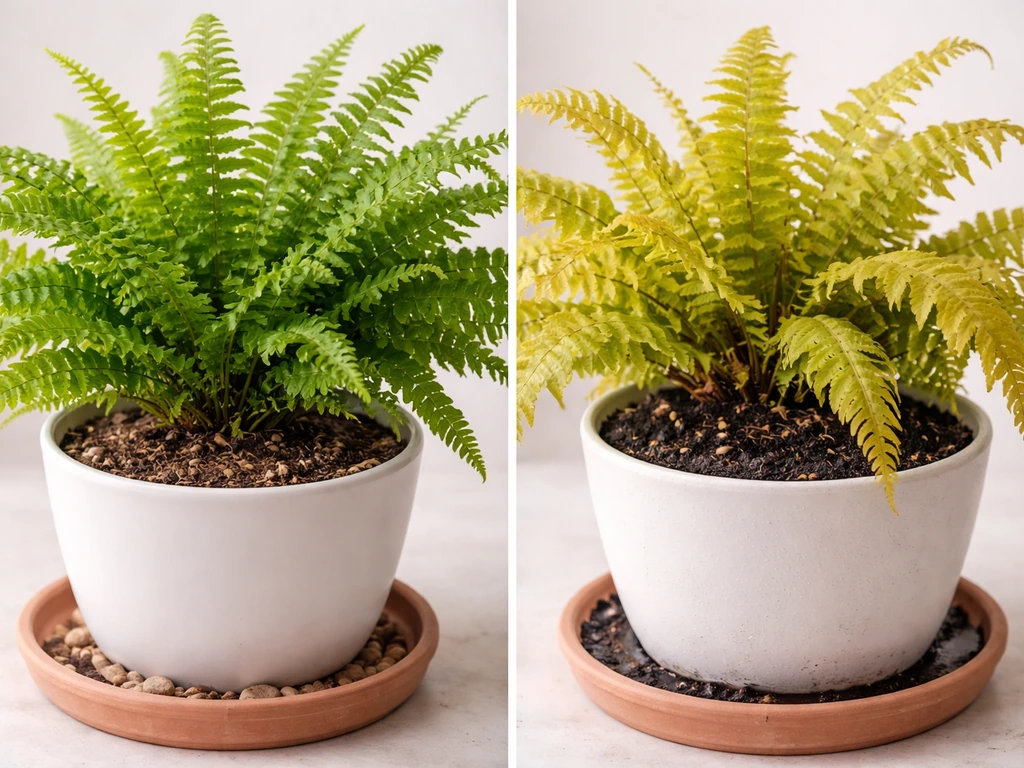
Yellowing is the most common complaint with hanging ferns, and it has several different causes that require different fixes. Here's how to tell them apart:
| Symptom | Likely Cause | Fix |
|---|---|---|
| Yellowing + limp, soggy soil | Overwatering or root rot (Pythium) | Let mix dry slightly, check drainage holes, reduce watering frequency |
| Yellowing + dry, pulling-away-from-pot soil | Underwatering | Water thoroughly and consistently; check soil daily in hot weather |
| Brown tips and edges on otherwise green fronds | Low humidity or dry air | Add humidifier, pebble tray, or move away from heating vents |
| Overall yellowing, thin sparse growth | Too little light | Move to brighter indirect light; avoid deep shade |
| Brown tips + pale new growth | Fertilizer burn or too much fertilizer | Flush the mix with water; switch to half-strength feeding |
| Yellow fronds with tiny webs or visible insects | Spider mites or other pests | Treat with insecticidal soap or horticultural oil |
Dealing with pests
Boston ferns in hanging baskets can attract spider mites, mealybugs, and scale insects. Spider mites are the most common and love dry conditions, another reason why maintaining humidity matters. You'll notice fine webbing on the fronds and a dusty, stippled look to the foliage. Treat with insecticidal soap or horticultural oil, applied in the evening so the product doesn't dry too quickly and actually makes contact with the insects.
You may need two or three applications spaced about a week apart to break the life cycle. For mealybugs and scale, the same insecticidal soap approach works, but make sure to cover the undersides of fronds where these pests hide. Always check the product label before applying to ferns, since some pesticides can damage fern fronds.
The UGA IPM handbook includes fern-specific cautions, including safety and label-compliance guidance not to apply certain pesticides to Boston fern fern-specific cautions about applying pesticides to Boston fern.
Seasonal care: summer vs. winter
Summer outdoors
Summer is Boston fern's happy season outdoors. Warm temperatures, natural humidity, and indirect light on a shaded porch create near-ideal conditions. Your main jobs are consistent watering (daily in hot, dry weather), monthly feeding, and making sure the basket is sheltered from wind, which accelerates moisture loss and can batter the fronds. Watch for pests more closely in warm months as populations build faster.
Transitioning indoors for fall and winter
Bring the basket inside before nighttime temperatures drop consistently below 55°F. Before you do, inspect the fronds and soil carefully for pests: you don't want to bring spider mites or scale into your home. A light shower with the garden hose and a close look at the undersides of fronds is worth the extra five minutes.
Indoors in winter, Boston ferns often struggle because of the combination of low light and low humidity. Place the basket near your brightest window, ideally one that gets several hours of indirect light daily. If the fronds start to thin out, elongate, and drop their tiny leaflets (called pinnae), that's a sign the plant isn't getting enough light. A grow light on a timer can solve this easily. Reduce watering frequency in winter since the plant grows more slowly and the mix dries out less quickly without summer heat and airflow. Continue checking the soil before watering and never let the mix go bone dry, but you may find you're only watering every three to five days rather than daily.
Refreshing and repotting the basket
Boston ferns typically need repotting every two to three years when they've filled the basket and roots start circling the bottom or poking through drainage holes. Spring is the best time to do this. Move up one basket size (for example, from a 10-inch to a 12-inch), use fresh potting mix in your preferred ratio, and set the crown at the same depth as before with about 1 inch of clearance below the rim.
Even if the plant doesn't need a larger basket, refreshing the potting mix every one to two years helps because peat breaks down over time, the mix becomes more compacted, and drainage suffers. At refresh time, you can also divide a crowded plant by gently separating the root mass into two sections, each with healthy fronds attached, and potting them up separately.
Make it thrive: placement, airflow, drainage, and growth habits
A few practical details make the difference between a fern that just survives and one that genuinely thrives. On placement: hang the basket where it gets good indirect light but is protected from strong wind. Constant breeze increases evaporation from both the soil and the fronds, and it's one of the hidden reasons outdoor hanging ferns crisp up even when they're being watered regularly. A covered porch that faces east or north is often the sweet spot.
On airflow: some air circulation is actually beneficial, preventing fungal issues and keeping conditions from getting stagnant. The problem is excess airflow, especially dry, hot wind. Hanging baskets inherently have more exposure to air movement than ground pots, so factor that into your watering frequency.
On drainage: check your basket's drainage holes every time you repot or refresh. Holes can get clogged with roots over time, which turns a well-draining setup into a waterlogged one. Clear them out if needed. If you're using saucers under indoor hanging baskets to catch drips, empty them after watering so the fern isn't sitting in standing water. Gardening Know How notes that Boston fern likes slightly moist soil, but soggy, waterlogged conditions can lead to rot and fungal diseases, so water thoroughly while preventing standing water.
One last thing worth knowing about Boston fern's growth habit: the plant produces runners (called stolons) that grow outward from the crown, and over time these help fill in the basket and create that full, lush appearance. Don't mistake these for weeds or stray roots. Let them be, and they'll develop into healthy new fronds that make the basket look spectacular.
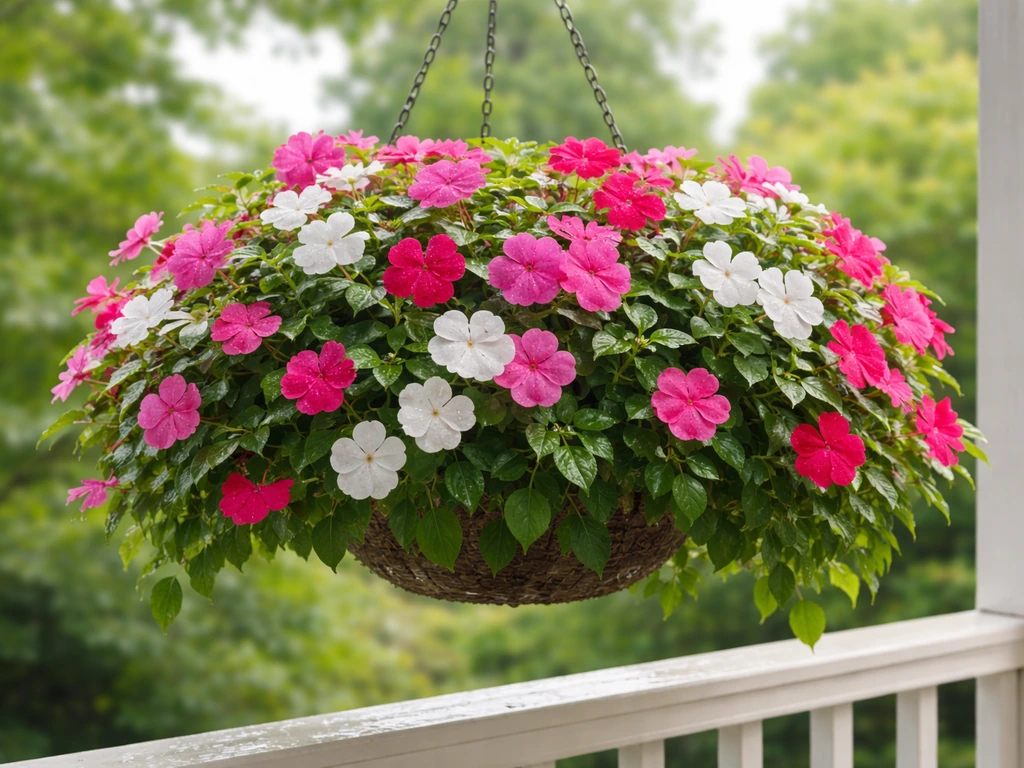
If you enjoy growing other lush, shade-tolerant plants in hanging baskets, fuchsia and impatiens are natural companions to explore, as they share similar preferences for indirect light and consistent moisture and make excellent neighbors in a covered porch setup. If you want the same reliable hanging-basket look with color, you can follow these tips for how to grow impatiens alongside shade-loving ferns fuchsia and impatiens.
FAQ
My hanging fern’s fronds are yellowing. How do I tell if it’s overwatering, underwatering, or light stress?
If the fern is already turning yellow, check moisture and light before changing anything. Water the basket thoroughly only when the mix feels dry about 1 inch down, then ensure water runs freely from the drainage holes. If the fronds are yellow but the mix is constantly wet or the basket sits in a saucer, you likely have poor drainage or standing water (root rot risk), not a simple watering problem.
Can I move a Boston fern outdoors in spring, and when should I do it?
Yes, but only for a short window and with the right humidity. If you do it outdoors, wait until nighttime stays above about 55°F and use a bright, indirect spot, not hot afternoon sun. Avoid moving it abruptly from indoors winter conditions, do a gradual increase in light over 7 to 10 days while monitoring soil moisture closely.
What’s the best way to keep a hanging fern humid indoors in winter if misting doesn’t seem to help?
Misting alone usually will not stop browning in winter because the humidity rise is brief. For best results indoors, use a humidifier near the plant (not blasting directly onto fronds), and consider a pebble tray under the basket. Also keep the basket away from heating vents and cold window drafts, since those air currents dry fronds faster than low humidity readings suggest.
My Boston fern is producing runners (stolons). Should I trim them or leave them alone?
Don’t remove runner stolons just because they look like “spreading roots.” If they’re soft and green and emerging from the crown area, they are part of the natural fill-in process. Only remove things that are clearly dead, brown, or detached, and avoid cutting into the crown because it can slow regrowth and cause patchy frond production.
How can I prevent the center of the basket from drying out even when I water regularly?
In a hanging basket, shallow watering is a common mistake. Aim to water deeply enough that water drains from the bottom, then stop. If you struggle to keep the center of the mix from drying, use a double potting setup (plant pot inside a larger container lined with moist sphagnum) or increase basket size, because both reduce fast side-to-center moisture loss.
Do fern hanging baskets need plastic, or can I use wire or coco-lined baskets successfully?
You can, but you need to match the fern’s root depth and moisture needs. A coco-lined wire basket dries faster, so either choose a larger size, plan on more frequent deep waterings, or switch to a moisture-retaining plastic basket. If you use a saucer indoors, empty it after watering so the fern is not sitting in runoff.
What potting mix should I use, and what are the signs I bought the wrong type?
Use potting mix that stays evenly moist and aerated, avoid mixes labeled for drought tolerance. If you want an easy target without measuring, choose a high-moisture blend that includes components for drainage (perlite and or vermiculite), not heavy garden soil or dense bagged “topsoil.” If the mix feels hydrophobic and repels water, fully re-wet it, but consider refreshing the mix because fern roots need consistent wetting.
How do I know whether brown tips are from fertilizer burn or low humidity (or both)?
If you’re seeing brown tips, first separate dryness from fertilizer burn. Fertilizer issues often appear after feeding and can look like crisping at the tips across many fronds, while underwatering usually comes with a mix that dries quickly and may show fronds losing lushness. The safest immediate step is to stop fertilizing and resume watering based on the finger test, then reassess after new fronds appear.
Can I grow ferns outdoors year-round in a hanging basket, or do I need to bring them in?
Only if you can control moisture and protect the plant. Ferns can go outside in containers in summer, but you must provide bright, indirect light, shield from strong wind, and be ready for daily (sometimes twice-daily in extreme heat) deep watering. If you can’t check often, use a double-pot/humidity-buffer approach or choose a larger basket to slow drying.
When should I repot or divide my hanging fern, and how do I avoid transplant shock?
Yes, but timing and method matter. Repot in spring, move up only one basket size, and set the crown at the same depth as before. If you divide a crowded plant, make sure each section has healthy fronds attached, and use fresh mix so the new sections establish quickly. After repotting, water thoroughly and keep light bright but indirect for the first couple of weeks.
Next Article
How to Grow Impatiens in Hanging Baskets From Now to Bloom
Step-by-step guide on growing impatiens in hanging baskets, from choosing plants to troubleshooting and keeping blooms a