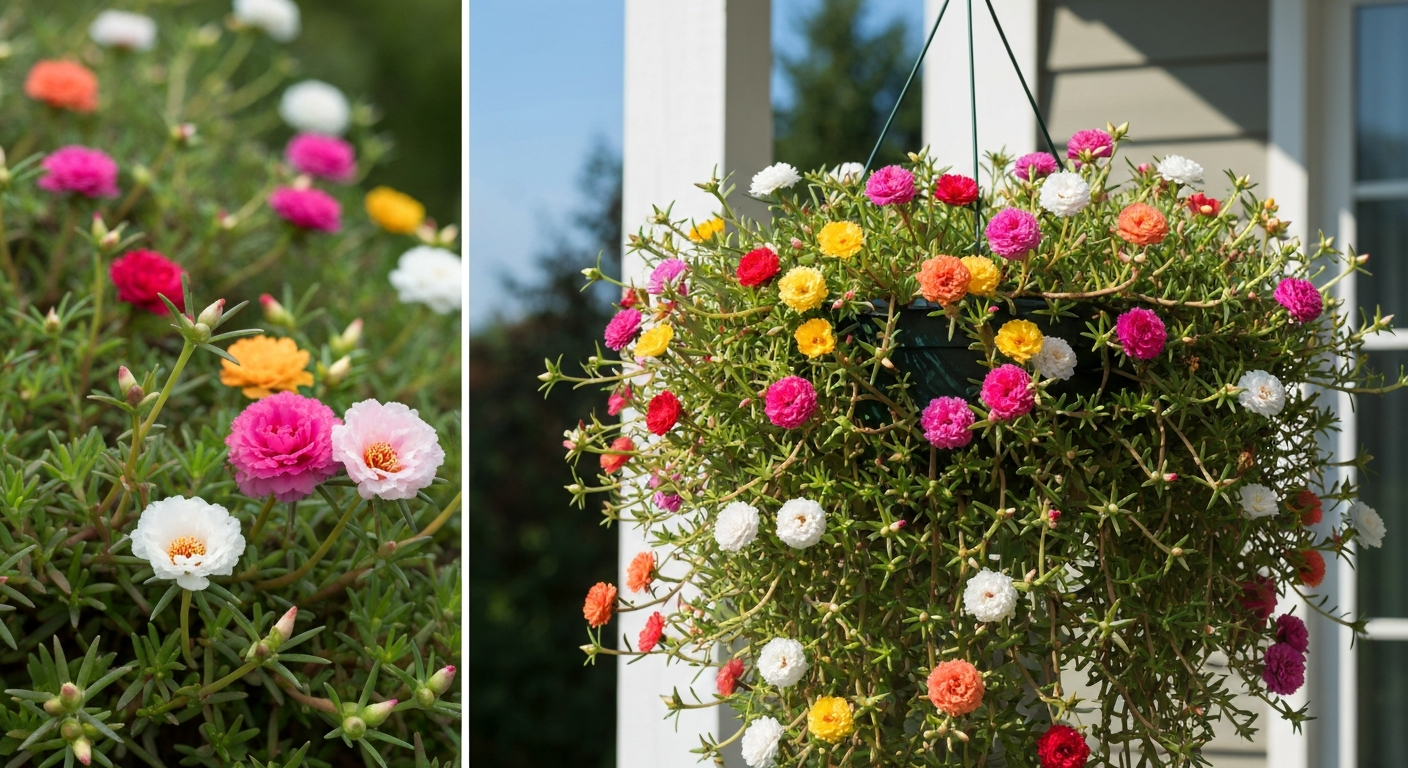
Yes, portulaca grows beautifully in hanging baskets. University of Florida IFAS Extension lists Portulaca grandiflora (moss rose) as suitable for containers and hanging baskets and notes it performs well in hot, dry, well‑drained conditions Portulaca grandiflora (moss rose) is suitable for containers and hanging baskets. It is one of the most reliable basket plants you can choose for a hot, sunny spot. The trailing varieties cascade over the rim within weeks of planting, the flowers are nearly nonstop all summer, and the plant genuinely thrives on neglect once it is established. The only real way to fail with portulaca in a basket is to put it in shade or keep the soil too wet.
How to Grow Portulaca in Hanging Baskets: Complete Guide

Harriet Whitmore
28 Jul 2026
Who this guide is for and what portulaca actually needs
This guide is for anyone from a first-time basket gardener to a seasoned grower who wants species-specific, zone-aware instructions rather than generic potting advice. If you have killed portulaca before, it was almost certainly a drainage or light problem, and this guide will help you fix both. If you are new to hanging baskets altogether, you may also find it useful to compare portulaca to shade-loving alternatives like impatiens, fuchsia, and ferns before you commit to a plant, since portulaca is a full-sun specialist and will not perform in the same conditions those plants need. For specific care of shade-loving varieties, see our guide on how to grow impatiens.
| Care factor | What portulaca needs | Quick note |
|---|---|---|
| Light | Full sun, 6+ hours direct | Non-negotiable; fewer hours = fewer flowers |
| Water | Infrequent; let mix dry between waterings | More plants die from overwatering than drought |
| Soil/mix | Fast-draining, lean, slightly acidic (pH 5.5–6.2) | Avoid heavy or moisture-retentive mixes |
| Temperature | Warm; above 60°F nights to thrive | Loves heat; a true warm-season annual |
| Fertilizer | Light; balanced slow-release or diluted liquid | Excess nitrogen reduces flowering |
| Basket size | 10–12 inch minimum for 3 plants | Larger baskets dry out more slowly |
| Season | Plant out after last frost when soil is warm | Zone-dependent; see timing section below |
Trailing vs. upright: which portulaca types actually work in baskets
Not all portulaca behaves the same way in a hanging basket, and variety selection matters more than most people realize. The species most commonly grown ornamentally is Portulaca grandiflora (moss rose), though you will also see Portulaca umbraticola used in some modern hybrid series. USDA PLANTS Database (searchable species records) lists Portulaca grandiflora, Portulaca umbraticola, and Portulaca oleracea among cultivated/wild Portulaca species and identifies P. grandiflora as the common 'moss rose' used ornamentally. Within those species, commercial breeders have developed both trailing and more upright-mounding types. For hanging baskets, you want trailing or semi-trailing forms that spill over the rim and fill the basket with color from the sides as well as the top.
Recommended trailing and basket-specific cultivars
- Happy Trails series: explicitly bred for hanging baskets, strong trailing habit, wide color range including bicolors, good heat tolerance
- PAZZAZ series (Danziger): semi-trailing to trailing, developed for container and basket production, known for heavy flower cover and vigorous spread
- PortoGrande series: trailing habit, large semi-double flowers, good for 10–12 inch baskets
- Sundial series: more mounding than trailing but works well in shallow baskets or combination plantings where you want a fuller center
- Colorblast series: upright-mounding habit, better suited to mixed containers or patio pots than pure hanging baskets
| Cultivar/series | Habit | Best use | Flower form |
|---|---|---|---|
| Happy Trails | Trailing | Solo hanging basket | Single to semi-double |
| PAZZAZ | Semi-trailing | Solo basket or mixed container | Double |
| PortoGrande | Trailing | Solo hanging basket | Large semi-double |
| Sundial | Mounding | Combination basket or patio pot | Double |
| Colorblast | Upright-mounding | Mixed containers, borders | Double |
My personal recommendation for a first hanging basket is Happy Trails or PAZZAZ. Both are easy to source as transplants at garden centers in late spring, they trail quickly, and they do not require any pinching or training to look full. If you only find generic seed packets labeled 'Portulaca grandiflora mixed,' those will also work in a basket, but the trailing habit can vary more plant to plant.
How portulaca compares to shade-loving hanging basket plants
Portulaca occupies a completely different niche than most popular hanging basket plants, and understanding that upfront saves a lot of frustration. Plants like impatiens, New Guinea impatiens, fuchsia, and ferns all prefer partial to full shade and consistent moisture. For specific care instructions, see our guide on how to grow New Guinea impatiens. Portulaca is the opposite: it demands full sun and dries out between waterings. For detailed instructions on planting and caring for impatiens in hanging baskets, see how to grow impatiens in hanging baskets. This makes it the right choice for south-facing or west-facing spots where shade lovers would struggle and scorch.
| Plant | Light | Water needs | Heat tolerance | Best for |
|---|---|---|---|---|
| Portulaca | Full sun (6+ hrs) | Low; dry between waterings | Excellent | Hot, sunny, dry spots |
| Impatiens | Part to full shade | High; consistent moisture | Poor | Shaded porches, north-facing spots |
| New Guinea impatiens | Part shade to filtered sun | Moderate-high | Moderate | Bright indirect light |
| Fuchsia | Part shade | High; keep evenly moist | Poor | Cool, shaded spots |
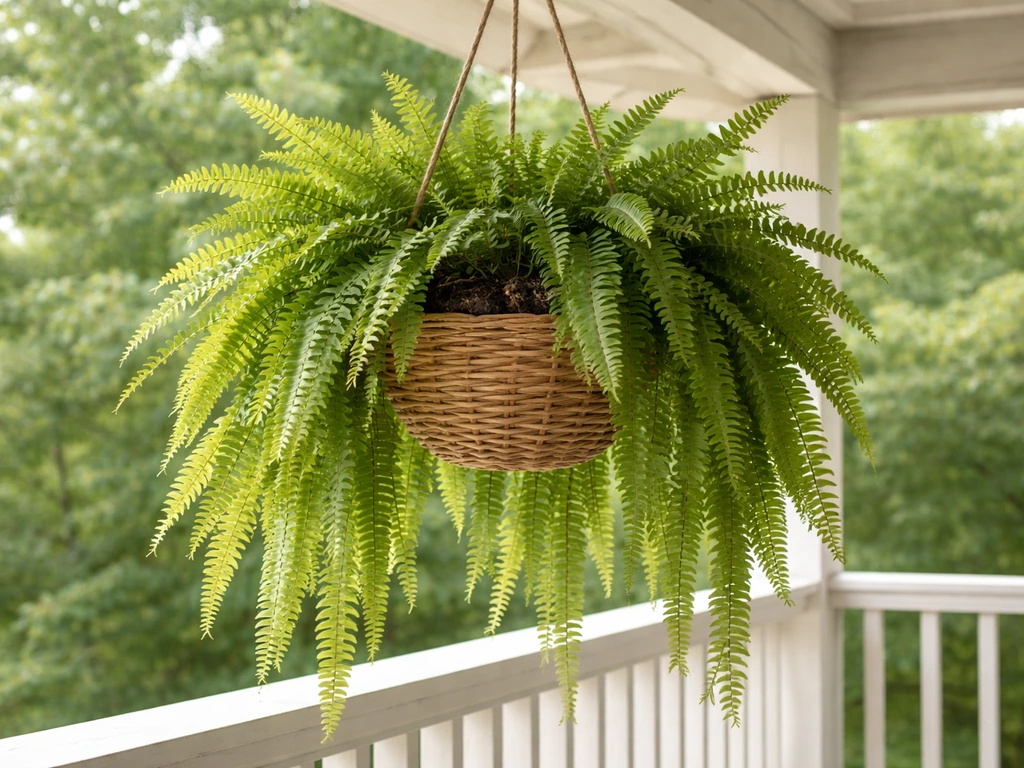
| Ferns | Shade to deep shade | High; humidity preferred | Poor | Very shaded, humid locations |
If you have a shaded porch, portulaca is the wrong plant and impatiens or fuchsia will give you far better results. For detailed, shade-friendly instructions, see how to grow fuchsia in hanging baskets. If you have a blazing south-facing wall where impatiens burn within days, portulaca is your answer. I have grown all of these in baskets at different spots around the same property, and picking the right plant for the right light exposure is the single biggest success factor.
Choosing the right container and getting drainage right
Portulaca's biggest enemy in a container is waterlogged roots. Getting your container and drainage setup correct before you add a single scoop of soil is the most important structural decision you will make.
Container type and size
A 10 to 12 inch hanging basket is the standard working size for portulaca, comfortably holding 3 plants. Larger baskets (14 to 16 inch) can hold 4 to 5 plants and dry out more slowly, which is useful in very hot climates where a smaller basket can dry out too fast even for portulaca. Both plastic and coir-lined wire baskets work, but they behave differently. Plastic baskets retain moisture longer, which means you need to be more careful not to overwater. Coir and moss-lined wire baskets dry out faster, which actually suits portulaca well, but they may need more frequent watering during extreme heat.
Drainage rules that actually matter
- Use a basket with multiple drainage holes, not just one central hole. Water should flow freely from the base within seconds of watering.
- Do not add a layer of gravel at the bottom. Extension research consistently shows gravel actually raises the water table inside the container and can worsen drainage. It does not help.
- If drainage holes are large enough to let potting mix fall through, cover them with a piece of fine mesh or a coffee filter before filling. This keeps the mix in while letting water out.
- Avoid baskets with built-in water reservoirs for portulaca. Those are designed for thirsty plants, not drought-tolerant ones.
- If you are using a decorative outer basket or cachepot with no drainage, remove the inner pot to drain it after every watering rather than letting it sit in collected water.
The right soil mix and how to pot it up
Standard potting mixes sold for flowering annuals are often too moisture-retentive for portulaca in a basket. The ideal mix is lean, fast-draining, and slightly acidic. Commercial growers producing portulaca crops target a pH of 5.8 to 6.2, which you can roughly achieve by using a peat- or coir-based soilless mix as your starting point rather than garden soil or a heavy all-purpose compost.
Recommended potting mix recipe
| Ingredient | Proportion | Purpose |
|---|---|---|
| Coir (coconut fiber) or peat moss | 40% | Base structure, slight acidity, moisture retention without waterlogging |
| Perlite | 30% | Drainage, aeration, prevents compaction |
| Mature compost or worm castings | 25% | Slow-release nutrients without excess nitrogen |
| Coarse horticultural sand (optional) | 5% | Extra drainage in very humid climates |
If you prefer to buy a premade mix, choose a cactus and succulent potting mix or amend a standard peat-lite potting mix by mixing in roughly one part perlite to two parts mix. That extra perlite makes a real difference and is the simplest upgrade you can make if you are not mixing from scratch.
Step-by-step potting instructions
- Lay out your hanging basket and check that all drainage holes are clear. Cover any large holes with mesh or a coffee filter cut to size.
- If using a coir-lined wire basket, dampen the liner and press it firmly to the inside of the frame before adding mix.
- Mix your potting ingredients in a bucket or wheelbarrow until evenly combined. The mix should feel light and crumble apart rather than clump together when squeezed.
- Fill the basket to about two-thirds full with the potting mix, pressing gently to eliminate large air pockets but not packing it tightly.
- If you are adding a slow-release granular fertilizer, sprinkle it in at the manufacturer's recommended rate and blend it into the top few inches of mix at this stage.
- Create a planting hole or holes for your plants or seeds (see sections below for specifics).
- After planting, water the basket thoroughly until water runs freely from the drainage holes. This settles the mix around roots and also confirms your drainage is working.
- Hang the basket in its final location immediately. Moving a freshly watered basket is awkward and the sooner the plant is in its actual light conditions, the better.
Planting from seed: step-by-step with timing by USDA zone
Portulaca seed is tiny, about the size of a grain of sand, and it needs light to germinate. That means you sow it on the surface and press it gently into the mix rather than covering it. Germination happens in 3 to 5 days at temperatures between 71 and 79°F (22 to 26°C). Below 65°F, germination slows significantly or stalls. This is why starting seed indoors 4 to 6 weeks before your last frost date is the standard approach in most zones.
Seed sowing step by step
- Fill a small seed tray or cell tray with the same lean, well-draining mix described above, moistened but not wet.
- Sprinkle portulaca seed thinly and evenly over the surface. Because the seed is so fine, mixing it with a small amount of dry sand first helps distribute it more evenly.
- Press the seed lightly onto the surface with a flat piece of cardboard or the back of a spoon. Do not cover with mix.
- Place the tray under a bright grow light or in a south-facing window. Cover loosely with clear plastic wrap to maintain humidity until germination, then remove the cover.
- Keep the soil surface lightly moist using a spray bottle. Avoid heavy watering that could dislodge or bury the seed.
- Germination should occur in 3 to 5 days at 71 to 79°F. If you have a seedling heat mat, use it to maintain consistent warmth.
- Once seedlings have their second set of true leaves (about 2 to 3 weeks after germination), thin or transplant to give each plant adequate space.
- Harden off seedlings outdoors for 7 to 10 days before transplanting into the final basket, gradually increasing their exposure to direct sun.
Seed starting and direct-sow timing by USDA zone
| USDA Zone | Last frost (approx.) | Start seed indoors | Transplant to basket / direct sow outdoors | Notes |
|---|---|---|---|---|
| Zones 3–4 | Mid-May to late May | Early to mid-April | Late May to early June | Short season; starting indoors is strongly recommended |
| Zone 5 | Mid-April to early May | Early to mid-March | Mid-May | Indoor start gives a longer bloom season |
| Zone 6 | Mid-April | Early to mid-March | Late April to early May | Can direct sow when soil hits 75°F |
| Zone 7 | Late March to early April | Late February to early March | Mid-April | Warm-up is early; watch for late cold snaps |
| Zone 8 | Mid-March | Early February | Late March to early April | Long season; multiple sowings possible |
| Zones 9–10 | Jan–Feb or frost-free | January or direct sow in spring | February to March | Can grow nearly year-round in frost-free areas |
| Zone 11+ | Frost-free | Direct sow in early spring or fall | Year-round | Avoid peak summer heat in very hot climates |
For direct seeding into the basket itself, wait until your outdoor soil temperature is consistently around 75°F (24°C) and all frost risk has passed. Sow 4 to 6 seeds per eventual plant position, then thin to 1 seedling per position once they are established. Direct seeding into a basket works best in Zones 7 and warmer, where the season is long enough to let seedlings reach blooming size before heat peaks.
Spacing for seed-grown plants in baskets
Once seedlings are ready for their final basket, aim for 3 plants in a 10 to 12 inch basket, spaced roughly 4 inches apart at the planting stage. They will fill in quickly. In a 14 to 16 inch basket, you can plant 4 to 5 seedlings at the same spacing. Portulaca is forgiving about exact spacing because it spreads, but crowding plants too tightly in the early stages can trap moisture and invite rot.
Planting transplants: timing, spacing, and zone-by-zone tips
Buying transplants from a garden center is the fastest route to a full, flowering basket, and for most gardeners in Zones 5 and colder it is honestly the more reliable approach. Garden center portulaca typically becomes available in late April through June depending on your region. Look for compact plants that have not yet stretched or become leggy in their cell packs, and check the label for trailing versus mounding habit if you want the cascading look.
Transplant planting step by step
- Prepare your basket with the potting mix as described in the potting section above. Water the mix once and let it drain before planting.
- Gently remove each transplant from its cell pack by squeezing the bottom of the cell. Try not to break the root ball.
- If the root ball is tightly coiled or pot-bound, gently loosen the outer roots with your fingers before planting. This encourages roots to grow outward into the new mix.
- Set transplants at the same depth they were growing in their cells. Do not bury the stem; portulaca stems can rot if buried too deep in moist conditions.
- In a 10 to 12 inch basket, plant 3 transplants, positioning them evenly spaced around the basket rather than all in the center. This helps trailing types reach the rim quickly.
- Fill in around the transplants with potting mix, pressing gently to eliminate air pockets, and leave about half an inch of space below the basket rim to make watering easier.
- Water thoroughly to settle the mix, confirm drainage is working, then hang in full sun immediately.
Transplant timing by zone and seasonality tips
| USDA Zone | Safe transplant window | Ideal timing for peak summer bloom | Seasonality tips |
|---|---|---|---|
| Zones 3–4 | Early to mid-June | Plant early June for July–Sept bloom | Buy transplants locally or grow from seed indoors; season is short |
| Zone 5 | Mid-May to late May | Plant mid-May for June–Sept bloom | Watch for late frosts; harden off transplants carefully |
| Zone 6 | Late April to mid-May | Plant late April for June–Oct bloom | Can find transplants at garden centers by late April |
| Zone 7 | Mid-April | Plant mid-April for May–Oct bloom | Long season; replace in August if plants decline in heat |
| Zone 8 | Late March to early April | Plant late March for May–Nov bloom | Two planting cycles possible; early spring and late summer |
| Zones 9–10 | Late February to March | Plant late Feb for spring-through-fall bloom | In hottest months, plants may go semi-dormant; recover in fall |
| Zone 11+ | Year-round with timing | Avoid planting during extreme summer heat peaks | Spring and fall plantings outperform midsummer ones |
A seasonality tip that I have found genuinely useful: in Zones 8 and warmer, portulaca transplanted in late summer (August or September) can give you a beautiful second flush of blooms going into fall when spring baskets have started looking tired. The plant puts on new growth quickly in the slightly cooler air of early fall while still having enough warmth to flower freely.
Light, watering, and feeding once your basket is growing
Light
Portulaca needs a minimum of 6 hours of direct sun per day to flower reliably, and 8 hours is better. This is non-negotiable. Flower production drops noticeably at 5 hours and becomes sparse at 4 or fewer. The flowers also have a habit of closing on cloudy days or in the late afternoon, which surprises some gardeners who then think something is wrong. Nothing is wrong. On a bright sunny day the basket should be covered in open blooms from mid-morning to late afternoon.
Watering
The single most common mistake with portulaca in containers is overwatering. Because it is a succulent annual, it stores water in its fleshy leaves and stems and can tolerate dry periods that would stress other plants. In a hanging basket, let the top inch of the potting mix dry out completely before watering again. In extreme heat (above 95°F), you may need to water every day or two because small baskets dry out fast. But in mild weather, every 3 to 4 days is often sufficient. Stick your finger into the mix, and if it still feels moist an inch down, wait. Waterlogged conditions in portulaca containers lead to Pythium and Rhizoctonia root rot, which kill plants quickly and cannot be reversed once established.
Feeding
Portulaca is not a heavy feeder and too much nitrogen drives leafy growth at the expense of flowers. A single application of balanced slow-release granular fertilizer (such as a 14-14-14 formulation) worked into the top of the potting mix at planting time is enough to carry most baskets for 8 to 10 weeks. After that, a diluted liquid balanced fertilizer every 2 to 3 weeks is sufficient. If your plants are lush and green but flowering poorly, ease off the nitrogen. If plants are pale and the foliage looks yellow-green, a light feeding will help.
Pruning and keeping your basket blooming all season
Modern portulaca varieties are largely self-cleaning, meaning spent flowers drop on their own without leaving behind dead heads that need removing. However, if your basket starts to look leggy or stretched out mid-season, cutting the trailing stems back by about one-third will encourage a flush of new branching and fresh blooms within a couple of weeks. Do not be shy about this, the plant bounces back quickly. For older or non-self-cleaning varieties, a light trim every 4 to 5 weeks helps maintain a tidy, full shape.
To maximize continuous flowering, keep the basket in full sun, avoid overwatering, and do not let the plant set seed. If you see seedpods forming (small papery capsules at spent flower sites), snapping them off redirects the plant's energy back into new flower production. In practice, with modern trailing varieties this rarely requires much intervention.
Troubleshooting common problems
Leggy growth and few flowers
Leggy stems with sparse blooms almost always mean insufficient light. Move the basket to a sunnier location. If the basket cannot be relocated, portulaca is simply the wrong plant for that spot. Also check that you are not over-fertilizing with nitrogen, which promotes stem growth over flowers. Trim leggy stems back by a third to encourage branching and move the basket to the brightest available position.
Root rot and stem collapse
If stems at the soil line turn brown, soft, or mushy, you are looking at root or stem rot caused by overwatering or poorly draining mix. At early stages, you can try removing affected stems, reducing watering frequency immediately, and repotting into fresh dry mix if the damage is localized. In most cases, though, once Pythium or Rhizoctonia are established in a container, the plant declines rapidly and it is better to discard it, clean the basket thoroughly, and start fresh with correct drainage and a drier watering schedule.
Poor germination from seed
If seed fails to germinate in 5 to 7 days, temperature is almost always the cause. Check that your germination environment is genuinely at 71 to 79°F. Also verify that seed was not buried; even a thin layer of mix over portulaca seed can block germination. Old seed (more than 2 to 3 years) also loses viability quickly, so use fresh seed each season.
Pests
Portulaca is relatively pest-resistant compared to many flowering annuals. The most common issues are aphids on tender new growth and occasional mealybugs. Both can be treated with a strong stream of water to dislodge them, or with insecticidal soap applied in the morning. Avoid spraying during peak heat of the day. Spider mites can appear in very hot, dry weather; increasing humidity around the basket slightly (not at the soil level) can deter them. Thrips occasionally damage flower petals, leaving streaked or distorted blooms. A neem oil spray at the first sign of damage is an effective organic control.
Propagation and overwintering
Propagating from cuttings
Portulaca roots easily from stem cuttings taken in summer. Cut a 3 to 4 inch stem tip, remove the lower leaves, and let the cut end callous over for an hour or two (this is the succulent nature of the plant working in your favor). Then press the cutting into barely moist perlite or a lean potting mix. Place it in bright indirect light rather than full sun until roots develop, which usually takes 1 to 2 weeks. This is an inexpensive way to multiply a variety you love or to start new baskets mid-season.
Overwintering options
Portulaca is a frost-tender annual in most of the US. In Zones 3 through 9, it will not survive a hard freeze outdoors. In Zones 10 and 11, it may persist through mild winters. If you want to save a favorite plant, take cuttings in late summer and root them indoors in a sunny south-facing window. Overwinter the rooted cuttings as small potted plants at 55 to 65°F with minimal watering and bring them back outside once temperatures reliably stay above 60°F the following spring. It takes a little attention but it does work, and it means you do not have to buy that specific variety again next year.
Seasonal care at a glance
| Season | Key task | Watch for |
|---|---|---|
| Late winter (indoors) | Start seed 4–6 weeks before last frost; maintain 71–79°F for germination | Poor germination from cold temps or covered seed |
| Spring (planting out) | Harden off transplants; plant after last frost when nights stay above 60°F | Cold snaps; sluggish growth in cool temps |
| Early summer | Hang basket in full sun; begin light feeding after 4–6 weeks | Overwatering; check soil moisture before every watering |
| Midsummer | Trim leggy stems by one-third if needed; monitor watering frequency in heat | Root rot; spider mites; aphids in heat stress |
| Late summer | Second planting possible in Zones 8+; deadhead if variety is not self-cleaning | Leggy decline; consider a mid-season cutback |
| Fall | Enjoy second bloom flush in warm zones; take cuttings to overwinter favorites | First frost dates; bring cuttings indoors before frost |
| Winter (indoors) | Overwinter rooted cuttings in sunny window with minimal water | Overwatering dormant cuttings; cold drafts |
FAQ
Can portulaca (moss rose/purslane) be reliably grown in hanging baskets?
Yes. Portulaca (primarily Portulaca grandiflora and trailing cultivars) is well suited to hanging baskets — it’s sun‑loving, drought‑tolerant, and many varieties have a trailing habit that cascades over basket edges. The main risk is overwatering/poor drainage; use a lean, fast‑draining mix and water sparingly to avoid rot.
Which portulaca varieties are best for hanging baskets (trailing vs upright) and how do they compare to shade‑loving hanging plants?
Recommended types: - Trailing/semi‑trailing: ‘Happy Trails’, PAZZAZ™ series, ‘PortoGrande’ — strong cascade, best for baskets. - Mounding/upright: classic moss rose (Portulaca grandiflora) can be more compact and mound in small baskets. Comparison to shade‑loving hanging plants: - Portulaca needs full sun (6–8+ hours) and tolerates heat/dry conditions. - Shade plants (impatiens, fuchsia, many ferns) need moist, cooler, shadier spots and more frequent watering. Don’t mix portulaca with shade‑loving species unless you can provide a micro‑environment that meets both plants’ light/water needs.
What container size, materials, and drainage features are best for portulaca hanging baskets?
Container guidance: - Size: 10–12" standard baskets for single‑variety displays; 12–14" or larger for fuller trailing displays. - Material: plastic, lightweight resin, or wire lined with coir/moss are fine — liners are okay but don’t substitute for drainage. - Drainage: MUST have adequate drainage holes or a design that allows free drainage. Do not add an impermeable gravel layer; if holes are very large, use landscape fabric/mesh to retain media while drainage occurs.
Exact soil/potting mix and step‑by‑step potting procedure for hanging baskets
Potting mix (lean, free‑draining home recipe): - 40% coarse coconut coir or sphagnum peat - 30% coarse perlite or pumice - 20% well‑finished compost or composted bark - 10% coarse pine bark fines or small grit Optional: a small handful of slow‑release 14‑14‑14 fertilizer per 12" basket OR 1/4 tsp soluble balanced fertilizer per quart when watering (see feeding schedule). pH target: 5.5–6.2. Potting steps: 1) Clean basket and ensure drainage. 2) Line if desired with coir; pre‑moisten mix. 3) Fill basket to ~2" below rim with mix. 4) If planting transplants, dig holes sized for root balls. 5) Place plants at final spacing (see spacing) and firm media around roots. 6) Water lightly to settle (do not soak); allow to drain and check moisture before next watering.
How to plant portulaca from seed in hanging baskets (step‑by‑step)
Seeding steps: 1) Use a shallow tray or the basket itself. Sow timing: start indoors 4–6 weeks before last frost for cooler zones or direct‑sow after soil warms (see USDA timing). 2) Use a fine, well‑draining seed mix. Scatter seed on the surface — DO NOT COVER (very small seed requires light). 3) Press seed gently into the surface and mist to keep surface moist. 4) Maintain 70–79°F (21–26°C) for best germination; expect 3–10 days. 5) When true leaves appear, harden off seedlings 7–10 days and transplant into basket when sturdy, root‑bound plug is ~1–2" and night temps are safe. 6) Space seedlings per basket spacing guidance.
How to plant portulaca transplants in hanging baskets (step‑by‑step)
Transplant steps: 1) Select healthy, well‑rooted liners (not root‑bound). 2) Fill basket with prepared mix, leaving ~2" space to rim. 3) Arrange plants: 1–3 plants for 10–12" basket (trailing types often 1–2 will fill; mounding types 3–5). 4) Create holes, set root ball so crown is level with media surface, backfill and firm gently. 5) Water lightly to settle; place in bright sun after 1–2 days of acclimation. 6) Stake or reposition if needed so trailing stems can drape.
Next Article
How to Grow Ferns in Hanging Baskets, Including Boston Ferns
Step-by-step how to grow Boston ferns in hanging baskets, with mix, drainage, light, watering, feeding, and fixes for pe