Impatiens are one of the best flowers you can grow in a hanging basket, but they need the right setup to stay full and blooming all season. The short version: pick the right type for your light conditions, use a moisture-retentive but well-draining mix, water consistently (often daily in summer), feed every week or two with a balanced liquid fertilizer, and pinch them back early so they bush out instead of going leggy. Get those basics right and you'll have baskets dripping with color from late spring through fall frost. If you want another easy, heat-tolerant option for your hanging setup, you can also learn how to grow portulaca in hanging baskets.
How to Grow Impatiens in Hanging Baskets From Now to Bloom

Harriet Whitmore
4 Jun 2026
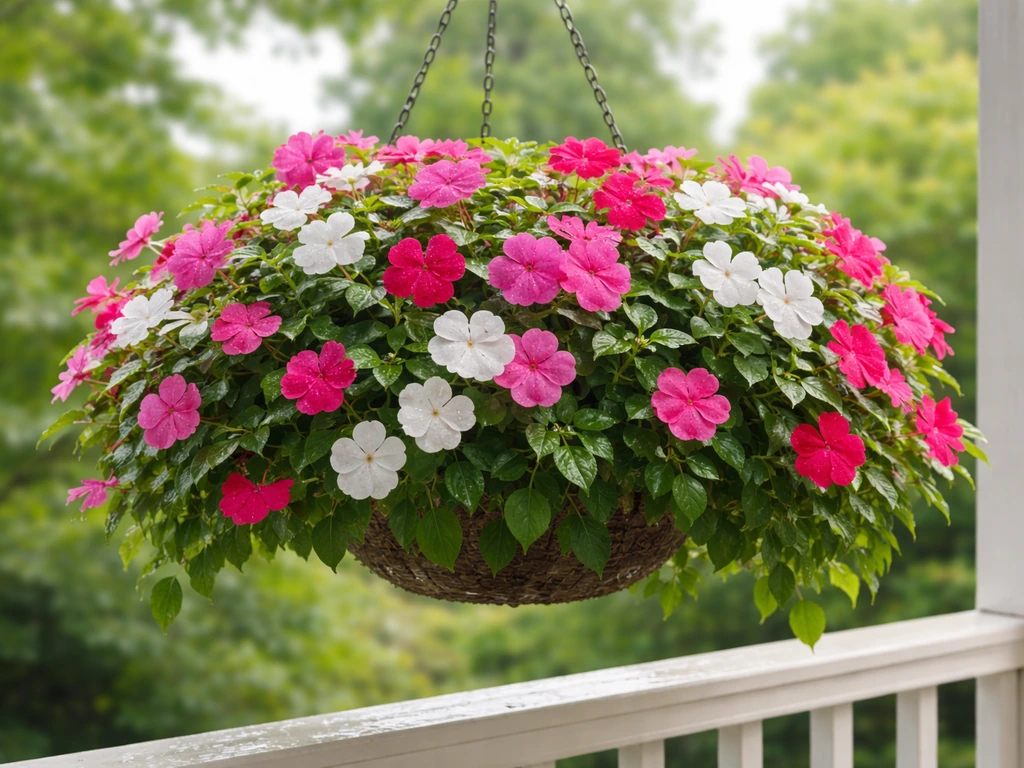
Best impatiens for hanging baskets

Not all impatiens behave the same way in a basket, and the biggest mistake I see is matching the wrong type to the wrong light. Here's how the main types break down.
Standard impatiens (Impatiens walleriana)
These are the classic busy Lizzies most people picture. They thrive in partial to full shade, which makes them perfect for covered porches, north-facing spots, or any location that gets filtered light. They're compact, naturally mounding, and their trailing habit fills out a basket beautifully. The trade-off is that they're highly susceptible to impatiens downy mildew, caused by the oomycete Plasmopara obducens. If downy mildew has been a problem in your area, choose resistant varieties or switch types entirely.
New Guinea impatiens (Impatiens hawkeri)

New Guinea impatiens handle more sun than standard types, doing well in partial shade to bright indirect light and even tolerating a few hours of morning sun. Their flowers are larger and the foliage is often variegated or deep bronze, which makes them visually striking in a basket. Crucially, they are not affected by the downy mildew that devastates Impatiens walleriana, so if you've had disease problems before, New Guineas are a smart pivot.
SunPatiens®
SunPatiens are a hybrid series bred specifically for full sun to part shade conditions. They're vigorous, heat-tolerant, and grow much larger than standard types, so you'll want a bigger basket (at least 14 to 16 inches). They're the right pick if your hanging spot gets 4 or more hours of direct sun per day. One note from the consumer growing guides: water them early or late in the day when the plant isn't under heat stress, since wet foliage in direct midday sun can cause burn.
| Type | Best Light | Downy Mildew Risk | Basket Size | Best For |
|---|---|---|---|---|
| Standard (I. walleriana) | Part to full shade | High | 10–12 inch | Shady porches, covered spots |
| New Guinea (I. hawkeri) | Part shade to bright indirect | None | 12–14 inch | Brighter spots, disease-prone areas |
| SunPatiens® | Full sun to part shade | None | 14–16 inch | Sunny decks, south-facing hangers |
When to plant and where to hang your basket
Impatiens are cold-sensitive. Don't put them outside until nighttime temperatures are reliably above 50°F and all frost risk is past. In most of the US that means late May, though gardeners in zones 9 and 10 can plant earlier, closer to mid-March or April. If you're buying pre-planted baskets from a garden center in early spring, keep them indoors or in a frost-free greenhouse until conditions are safe.
Placement matters a lot. Standard impatiens do best where they get bright, indirect light or a couple of hours of gentle morning sun followed by shade. A covered porch or the east side of the house is ideal. New Guineas and SunPatiens can take a spot with more direct light, but all impatiens struggle with harsh afternoon sun in zones 7 and above during peak summer. If your basket is frying by July, move it a few feet to get afternoon shade and watch it bounce back.
Choosing the right basket and potting mix
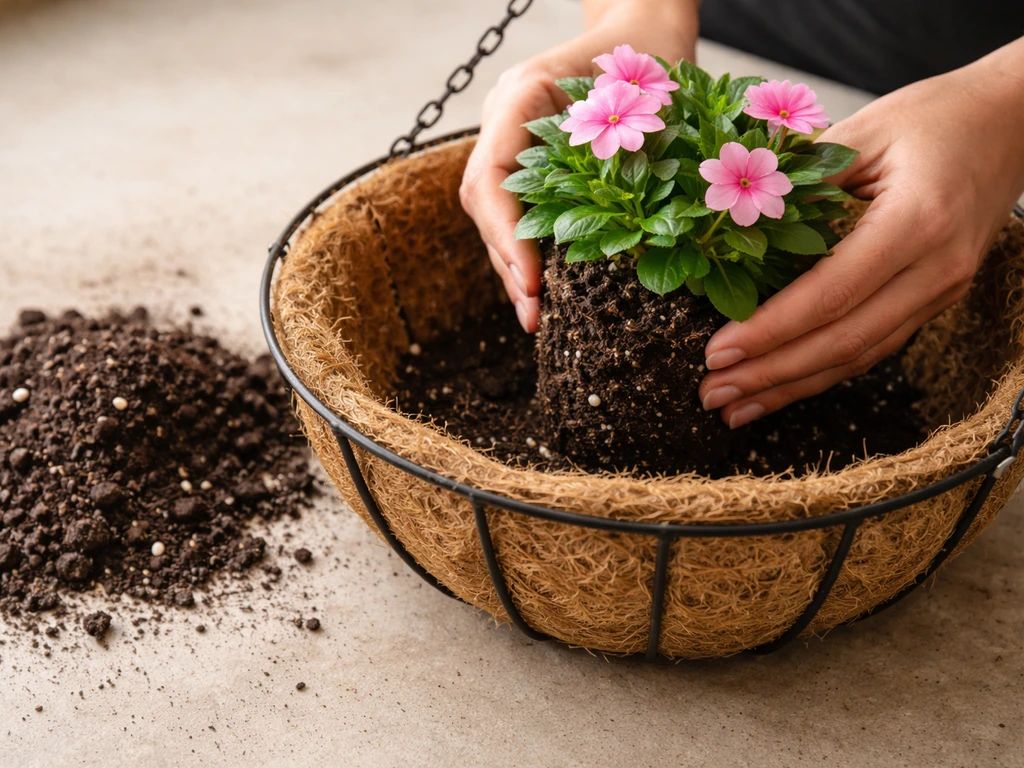
Basket size directly affects how often you need to water and how well the plant roots. I recommend at least a 12-inch basket for standard impatiens and 14 to 16 inches for New Guineas or SunPatiens. Larger baskets hold more moisture and give roots room to establish, which means more blooms and less daily stress on you.
Coco coir-lined wire baskets look gorgeous and have good airflow, but they dry out faster. Plastic or resin baskets with built-in saucers or water reservoirs help maintain consistent moisture, which impatiens love. If you go with a wire basket, line it with coco coir or moss, then add a piece of plastic sheeting with drainage holes punched in the bottom half to slow moisture loss.
For the potting mix, skip heavy garden soil entirely. Use a high-quality peat or coco-based container mix that's designed to hold moisture but still drains freely. I often mix in about 20% perlite to improve drainage further, because root rot from sitting water is a real problem with impatiens. The University of Massachusetts research on Phytophthora root rot specifically names excess moisture as the primary driver, so drainage isn't optional. Avoid mixes with heavy bark chips that take too long to break down and can create air pockets around roots.
Planting setup: seeds vs. starts, and first-week care
Starting from seed
Growing impatiens from seed is very doable but requires a 10 to 12 week head start before your last frost date, so you'd typically be starting seeds indoors in late January or February for a late May basket. The key details: surface-sow the seeds (do not cover them, as they need light to germinate), and maintain the starting medium at 70 to 75°F. At that temperature, germination usually happens in 14 to 21 days. A heat mat under the tray is really helpful here. Once seedlings have two sets of true leaves, transplant them to individual small pots before moving to the basket.
Starting from nursery transplants
For most home gardeners, buying six-packs or 4-inch pots from a nursery is the smarter route. You skip the 10-week germination period and get a basket blooming much faster. When planting up a 12-inch basket, use three to five transplants depending on their size, spacing them evenly around the basket. Plant at the same depth they were growing in their nursery pot. Firm the mix around the roots gently, water thoroughly, and let any excess drain out.
The first week after planting
The first week is all about helping the plant settle without stressing it. Keep the basket in a sheltered, bright but not intensely sunny spot for three to five days before moving it to its permanent location. Water whenever the top inch of mix feels dry. Don't fertilize yet, because the roots aren't established enough to handle a nutrient push. After about a week, once you see some new growth, you can begin your regular care routine.
Watering: how often and how much
Impatiens genuinely need a lot of water. In a hanging basket, especially during summer heat, daily watering is normal and sometimes even twice daily during a heat wave. The rule I use: stick your finger an inch into the mix. If it feels dry or just barely damp, water thoroughly until it drains freely from the bottom. Never let impatiens sit in standing water, but also never let them completely dry out. They'll wilt fast when dry and can drop buds if the stress is repeated.
Water at the base of the plant rather than overhead when possible. Consistently wet foliage encourages fungal leaf spots and downy mildew. If you're using a watering can or hose, aim at the soil and try to water in the morning so any splash on leaves dries quickly. For SunPatiens in full sun locations, avoid watering in the hottest part of the day to reduce the risk of leaf scorch.
If daily watering is a problem for your schedule, adding water-retaining granules (like polymer crystals) to your potting mix before planting can extend the time between watering by a day or so. A self-watering basket or one with a built-in reservoir helps too, especially for vacations.
Feeding for non-stop blooms
Impatiens in baskets are heavy feeders because you're watering so frequently, which flushes nutrients out of the mix quickly. Start feeding about two weeks after planting once plants are actively growing. A balanced liquid fertilizer (like 10-10-10 or 20-20-20) applied every one to two weeks works well for most of the season. Alternatively, you can use a slow-release granular fertilizer worked into the top of the mix at planting, then supplement with a liquid feed mid-season.
One caution: don't overdo nitrogen. Excess nitrogen pushes lush leafy growth at the expense of flowers, and research from UMass Amherst flags that excess nitrogen also encourages Phytophthora root rot. If your plant looks great but has few flowers, dial back the nitrogen and try a bloom-booster formula (lower first number, higher third number like 5-10-10) for a few weeks.
In late summer, around August, you can reduce feeding slightly as the plant's natural growth rate slows a bit. Keep feeding through September in warmer zones if you want continued bloom before frost.
Pinching, deadheading, and stopping leggy growth
Here's something I've found makes a huge difference: pinch your impatiens early and often. About two to three weeks after planting, pinch or snip the growing tips back by about a third. This signals the plant to branch out sideways rather than growing tall and bare-stemmed. The result is a much fuller, bushier basket that's covered in blooms instead of a few tall stems with flowers only at the top.
Most modern impatiens varieties are described as self-cleaning, meaning spent flowers drop on their own without needing to be deadheaded. That's largely true, but if you notice old flowers clinging to the plant or if blooming slows down mid-season, a light deadheading pass and a trim-back of any leggy stems will refresh the plant within a week or two.
If your basket gets leggy by midsummer (which can happen in hot climates), don't be afraid to cut it back by up to half. Water well, give it a dose of balanced liquid fertilizer, move it to a slightly cooler spot if possible, and it will usually bounce back with fresh growth and new blooms within two to three weeks. This is one of the things I genuinely love about impatiens: they're forgiving.
Troubleshooting: drooping, poor blooms, pests, and disease
Wilting and drooping
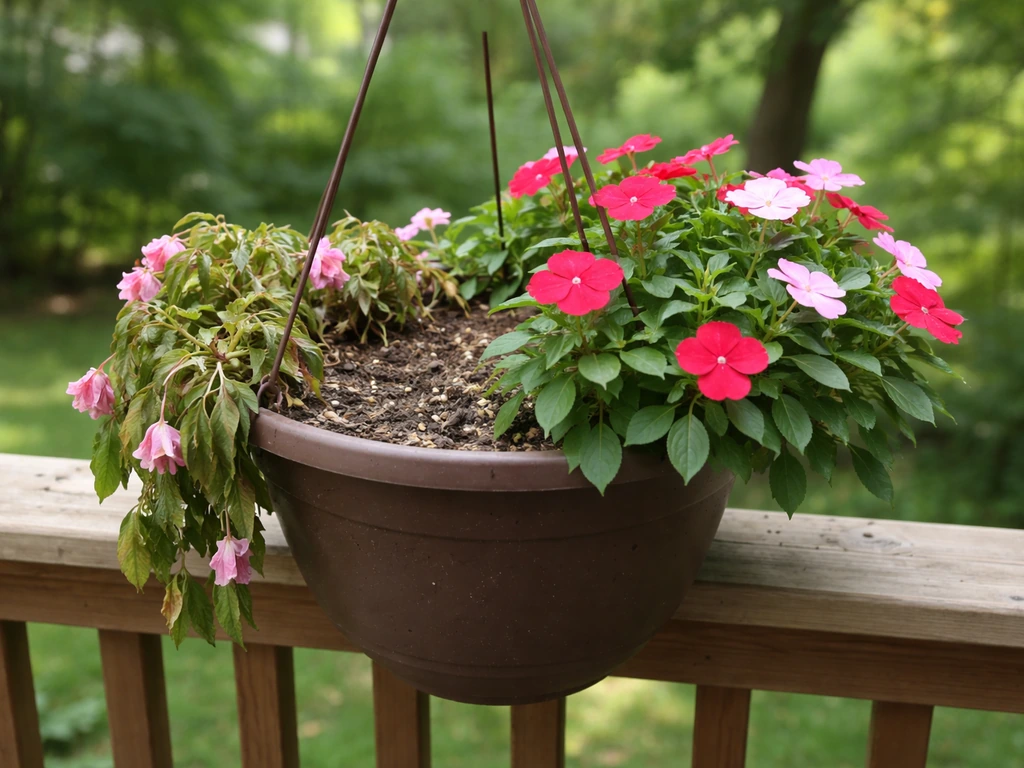
Wilting is almost always one of two things: underwatering or overwatering. If the mix is bone dry, water immediately and the plant should recover within an hour or two. If the mix is wet and the plant is still drooping, you likely have root rot from overwatering or poor drainage. In that case, let the mix dry out partially, check that the drainage holes aren't blocked, and hold off on watering for a day or two. Impatiens can also wilt temporarily in extreme afternoon heat even when properly watered. If they perk back up in the evening, the soil moisture was fine and you just need to move the basket to a shadier afternoon spot.
Poor or no blooms
If the foliage looks great but flowers are sparse, the usual culprits are too much nitrogen fertilizer, not enough light (for New Guineas and SunPatiens especially), or the plant being too young and still establishing. Switch to a bloom-focused fertilizer, check the light conditions, and give it a gentle pinch to encourage branching. Flower drop can also happen with sudden temperature swings, so if you've had a cold snap or a heat wave, give the plant a week to adjust before making any other changes.
Downy mildew
Downy mildew is the most serious disease threat for standard Impatiens walleriana. Symptoms include yellowing or stunted leaves, white fuzzy growth on leaf undersides, and eventually complete defoliation. It's caused by Plasmopara obducens and spreads rapidly in cool, humid conditions. There's no cure once it's established. If you see it, remove and bag infected plants immediately to stop the spread. Do not compost them. For future baskets in affected gardens, switch to New Guinea impatiens or SunPatiens, which are not affected by this disease.
Fungal leaf spots
Brown or tan spots on leaves are usually fungal, encouraged by wet foliage and poor air circulation. The fix is cultural: water at the base, not overhead, give plants enough spacing so air can move around them, and remove spotted leaves promptly. Clemson Extension recommends these same cultural controls as the first line of defense. A basic copper-based fungicide can help if the problem is persistent, but improving airflow and watering habits usually resolves it.
Common pests: aphids, spider mites, and whiteflies
Aphids cluster on new growth and can be knocked off with a strong jet of water. For a bigger infestation, insecticidal soap or neem oil spray (applied in the evening, not in full sun) works well. Spider mites show up in hot, dry conditions and leave a fine webbing on leaves. Increase humidity around the plant, keep it well-watered, and treat with neem oil or a miticide if needed. Whiteflies are tiny white insects that fly up in a cloud when the basket is disturbed. Sticky yellow traps catch adults, and insecticidal soap handles the nymphs on leaf undersides. For all three pests, treat in the early morning or evening to avoid burning foliage.
Root rot
Root rot (usually Phytophthora or Pythium) is almost always caused by overwatering combined with poor drainage. Affected plants collapse suddenly or decline slowly with yellowing lower leaves and mushy stems at the base. Prevention is everything here: use a well-draining mix, don't overwater, and avoid excess nitrogen fertilizer, which research confirms creates conditions these pathogens love. Once root rot is advanced, the plant is usually unsalvageable. Remove it, discard the potting mix, and sterilize the basket before reusing it.
Adjusting for your climate and microclimate
Gardeners in cooler climates (zones 3 to 5) often have an easier time with standard impatiens because the temperatures stay comfortable for longer. You may only need to water every other day, and legginess from heat stress is rarely a problem. In hot climates (zones 8 to 10), afternoon shade is non-negotiable for standard types, watering needs to be daily or more, and midsummer cutbacks are often necessary to keep the plant going. In these warmer zones, New Guineas and SunPatiens planted in the right light tend to perform more reliably than standard impatiens, which can really struggle in sustained 90°F-plus heat.
Microclimates matter too. A basket hanging under a covered porch gets significantly less rain than one hanging in the open, so you'll need to compensate with extra watering. A basket on a south-facing wall reflects extra heat and light, which can crisp standard impatiens fast. Pay attention to how your specific spot behaves in the first couple of weeks and adjust accordingly. Gardening this way, by observation rather than strict rule-following, is how you end up with really spectacular baskets by July.
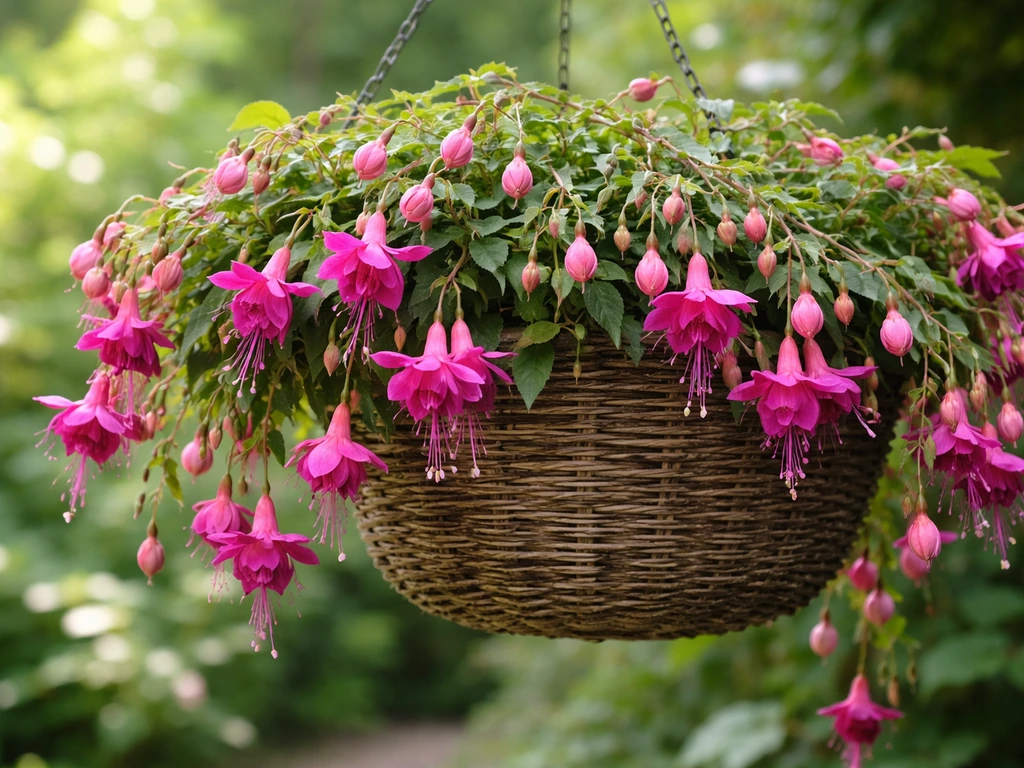
If you enjoy mixing flowers in a hanging basket, impatiens pair well with trailing plants like bacopa or sweet potato vine, and they make a nice complement to ferns or fuchsia in shadier configurations. For a similar look in shade, you can also learn how to grow fuchsia in hanging baskets and choose varieties that suit your light levels. To get the best results, learn how to grow ferns in hanging baskets by choosing the right fern type and keeping the roots evenly moist. The key is matching all the plants in the basket to the same light and moisture needs, which impatiens make fairly easy given how adaptable they are across different shade levels.
FAQ
Can I use Miracle-Gro-style potting soil or should I only use peat or coco mixes?
A regular all-purpose potting soil is often too heavy and can compact in a hanging basket. For impatiens, choose a container mix marketed for hanging baskets or containers, and confirm it drains freely. If you are unsure, do a simple test: fill the basket, water thoroughly, and see if it drains within a few minutes without staying soggy for long.
How many plants should I put in a hanging basket if I want it to spill over quickly?
Use fewer plants if you want faster spread through trailing growth, and use more if you want a dense, bloom-heavy look from day one. As a starting point, follow the article guidance (about 3 to 5 transplants in a 12-inch basket depending on size), then adjust next time based on how fast they fill in. If your basket looks sparse by week 3, add plants only if the roots have not been damaged yet.
What if my impatiens keep dropping buds even though the leaves look okay?
Bud drop is frequently triggered by sudden shifts, especially temperature swings (cool nights, a heat wave), inconsistent watering, or fertilizer changes. Keep watering based on the finger test, avoid fertilizing during stressful weather, and move the basket to stable shade when afternoons get extreme. If bud drop started right after a storm, allow a week for recovery before changing anything else.
Should I mist impatiens to prevent wilting or spider mites?
Avoid relying on misting as a watering substitute, especially in humid conditions, because wet foliage can worsen fungal leaf spots. For mites, misting is only a short-term help and can create uneven moisture. Better options are consistent deep watering, good air movement, and targeted treatments like insecticidal soap or neem oil applied in the evening.
How do I handle a basket that dries out too fast, even with daily watering?
First check the basket type and lining. Wire and coco coir-lined baskets can dry quickly, so consider switching to a plastic or resin basket with a reservoir, or line the basket more effectively while still allowing drainage. You can also add water-retaining granules to the mix, but do not skip drainage, and do not overfill with too much granule because it can retain water unevenly in small root zones.
Is it better to water once deeply or a little every few hours?
Aim for deep, thorough watering until it drains, then wait until the top inch dries. Small frequent waterings can leave the lower roots too wet, increasing root rot risk, while still not fully hydrating the plant during heat. In extreme heat, you may need two cycles in one day, but each cycle should be a full soak, not a splash.
What should I do if the basket is getting afternoon sun burn?
Move the basket to obtain afternoon shade, especially for standard impatiens. If the damage has already happened, do not aggressively prune off everything, instead cut leggy tips lightly and resume regular feeding. The goal is to stop new scorch, then let the plant refocus on fresh growth.
Can I grow impatiens in a hanging basket indoors on a porch or near a window?
Yes, as long as temperatures stay above the cold-sensitive threshold and light matches the type. Choose bright indirect light or a few hours of gentle morning sun indoors for standard types, and ensure there is drainage and airflow to prevent fungal problems. If your indoor spot is dim, New Guineas or SunPatiens will generally perform better, but they still need enough light to flower well.
Do impatiens need deadheading if they are self-cleaning?
They often do not require routine deadheading, but a light pass helps when the basket slows down mid-season or you notice old flowers stuck on stems. Focus on removing spent clusters and trimming any clearly leggy stems, then resume your normal fertilizer schedule. Avoid heavy pruning right after feeding, give the plant a few days to settle.
How can I tell early if I’m causing root rot?
Watch for changes that persist, not just temporary wilt. Early warning signs include consistently soggy mix, yellowing lower leaves while the top seems wet, and a slight foul or sour smell from the mix. If you suspect it, stop watering for a short period, confirm drainage holes are open, and check that the mix drains quickly.
What’s the safest way to fertilize without causing too much leafy growth?
Use a balanced liquid fertilizer at the recommended interval, and prefer lower-nitrogen bloom-focused blends if you see lush foliage with few flowers. If you are already watering daily, be consistent rather than heavy. A good approach is to feed on schedule for a few weeks, then adjust based on bloom response rather than increasing nitrogen quickly.
When should I prune a leggy impatiens basket, and will it survive the cut?
You can cut back up to about half when it gets leggy, usually mid-summer in hot regions. Water well and switch to a balanced or bloom-leaning feed, then provide slightly cooler conditions if possible. In most cases it regrows within a couple of weeks, but avoid drastic pruning right after transplanting (give it at least a week to establish).
Should I bring my hanging impatiens inside in fall instead of restarting next year?
Sometimes you can overwinter as a houseplant, but impatiens do not tolerate cold well and indoor conditions may not match their light needs. If you try, move them before nighttime temperatures consistently drop below the mid-50s Fahrenheit range, reduce watering slightly, and keep them in a bright window. Expect slower growth and fewer blooms until light levels improve.
Next Article
How to Grow Fuchsia in Hanging Baskets: A Step-by-Step Guide
Step-by-step fuchsia hanging basket guide: picking types, planting, care, pruning, pests, and winter protection for bloo