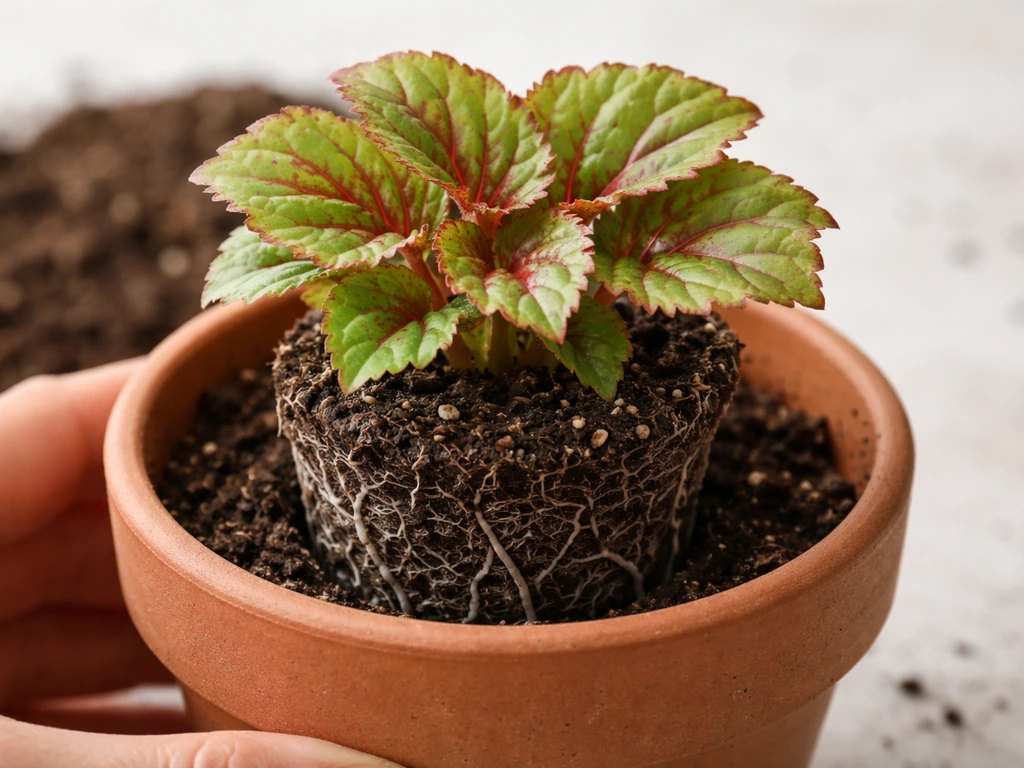
Trailing begonias are genuinely rewarding plants once you understand what they actually need: a loose, well-draining mix, bright indirect light, consistent but careful watering, and a pinch or two early in the season to kick off that lush cascading habit. Get those four things right and you will have plants dripping with flowers from early summer right through to the first frost.
How to Grow Trailing Begonias Step-by-Step for Blooms

Harriet Whitmore
9 Jun 2026
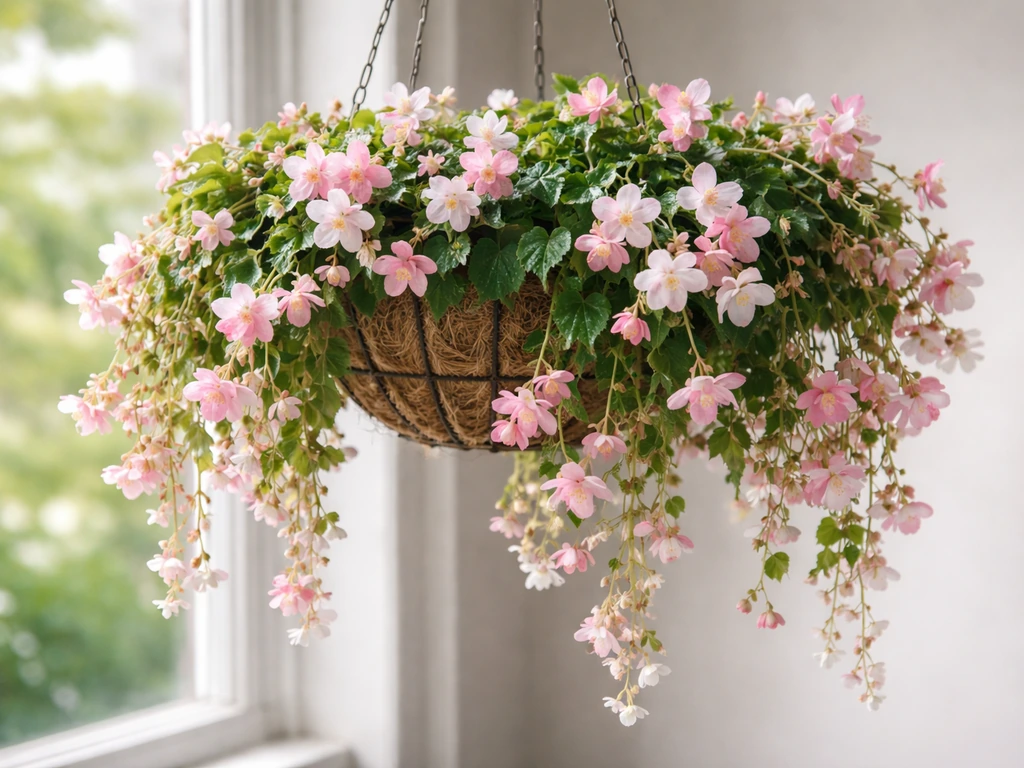
Choosing the right trailing begonia variety
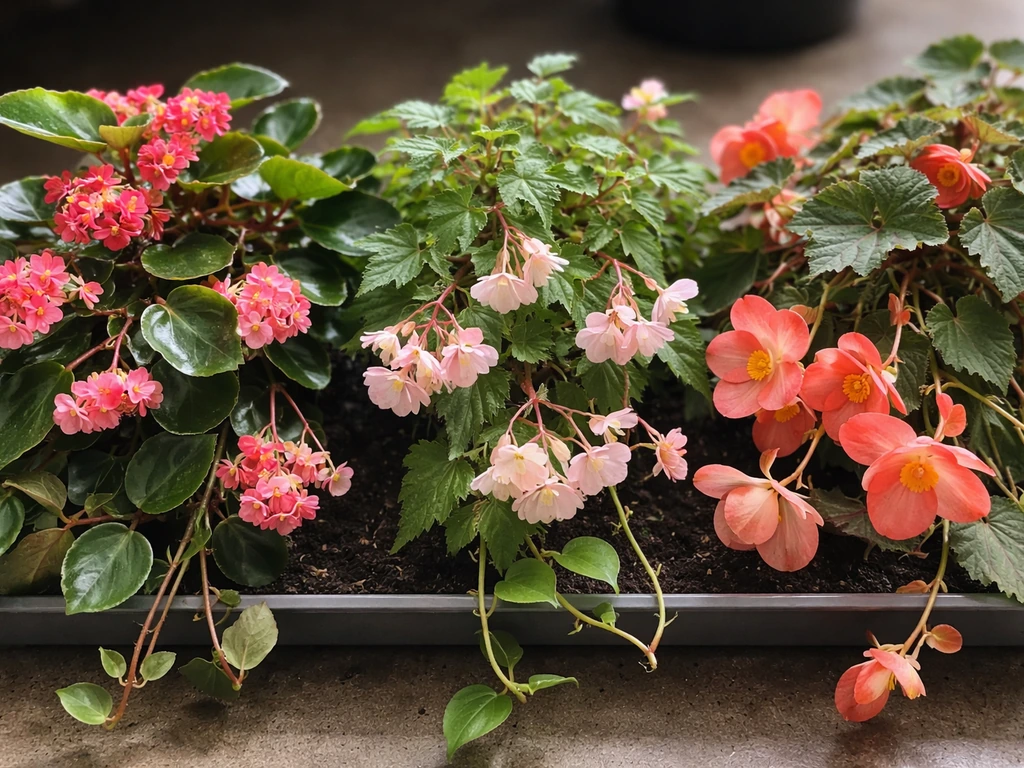
Not all trailing begonias behave the same way, and picking the right type for your situation makes everything easier. There are two main groups worth knowing about.
Tuberous trailing begonias (sometimes sold as pendula or cascade types) are the classic choice for hanging baskets and window boxes. They produce large, showy flowers in a wide colour range and are grown from tubers each spring. They go fully dormant in winter, which means you can dig them up and store them, making them a genuinely reusable investment. Popular named series include 'Illumination' and 'Cascade,' both bred specifically for the pendulous, overhanging growth habit.
Trailing-scandent begonias are a different beast entirely. These are foliage-forward plants with smaller flowers, stems that naturally want to scramble and drape, and a much more relaxed, almost wild look. They are evergreen and do not go dormant, which makes them excellent long-term houseplants. If you are comparing options and want something closer to a bedding begonia with a trailing habit, the tuberous pendula types are almost certainly what you are after.
When buying, look at the label carefully. Words like 'pendula,' 'cascade,' or 'trailing' on a tuberous begonia label signal the right genetics. Upright tuberous varieties will not give you that over-the-edge drape no matter how you position them, so it is worth paying attention at the point of purchase.
Starting plants: seed vs cuttings and rooting basics
Most home gardeners start with either purchased tubers, rooted plug plants, or cuttings from an existing plant. If you are starting from plugs, treat them like young plants: pot them into a light, free-draining mix and keep them warm and consistently moist until they settle in grow begonias from plugs. Growing trailing begonias from seed is possible but genuinely slow and fiddly, so I tend to recommend it only if you want a specific variety you cannot find as a tuber or plug.
Starting from seed
Begonia seeds are tiny, almost dust-like, which means you sow them on the surface of a moist mix without covering them at all. Maintain the soil at a constant 70°F (21°C) and expect germination in around 10 days. Drop below that temperature and you might be waiting up to three weeks. Use a humidity dome or plastic wrap over the tray to keep moisture consistent, and provide bright indirect light from day one. Seedlings are fragile for the first few weeks, so handle them as little as possible.
Starting from cuttings
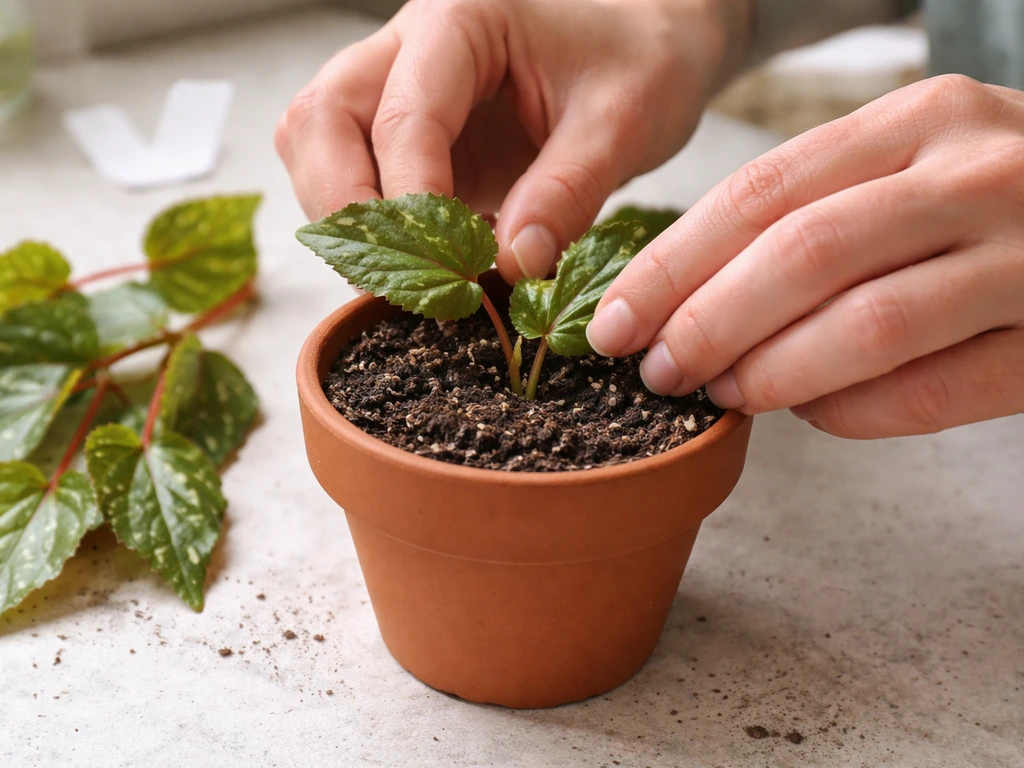
Cuttings are my preferred route for trailing-scandent types and for multiplying a favourite tuberous variety you already own. Take tip cuttings of 3 to 4 inches, removing the lower leaves to expose a clean node. These root readily in coarse sand, perlite, or any open, free-draining rooting mix. Humidity helps the cutting stay turgid while roots develop, but be careful: stagnant, overly humid air also invites fungal spores, so a little airflow matters too. A clear plastic bag loosely draped over the pot (not sealed tight) often works well. Expect roots in two to four weeks.
Starting from tubers
For tuberous trailing begonias, most people start tubers indoors in late winter or early spring, around 8 to 10 weeks before the last expected frost. Place tubers hollow-side up, barely covered with moist mix, in a warm spot (around 65 to 70°F). Once stems reach 6 to 8 inches long, you can remove the earliest flower buds and growing tips to push energy into root and stem development rather than early flowering. It feels counterintuitive, but the plant rewards you later with a much stronger performance.
Potting mix, containers, and planting setup

Trailing begonias have fine, delicate roots that suffocate in dense, waterlogged compost. Many standard all-purpose potting mixes are too heavy for them, which is one of the most common reasons beginners run into problems. You want something that holds just enough moisture while draining freely.
A good mix combines a quality peat or coco-coir base with added perlite and a little vermiculite. Something like two parts coco-coir to one part perlite to one part vermiculite works well in practice. The mix should feel light in your hand and should never compact into a dense block. Slightly acidic pH (around 5.5 to 6.5) suits begonias well.
For containers, drainage holes are non-negotiable. Hanging baskets lined with coco fibre and planted all around the sides and top give the most spectacular trailing display, but a deep window box or a wide pot elevated on a stand works just as well. Trailing varieties need room to spill, so position containers at height from the start rather than moving them once the stems begin to cascade. Space individual plants roughly 10 to 12 inches apart if you are planting multiple plants in the same container.
Light, temperature, and where to grow (indoors vs outdoors)
Trailing begonias love bright light but dislike harsh direct sun, especially during the hottest part of the day. Outdoors, a spot with morning sun and dappled afternoon shade is ideal. If you are aiming for healthy outdoor growth, keep begonias in morning sun with dappled afternoon shade and shelter them from the harshest midday heat. They genuinely thrive in shadier positions where many other flowering plants give up, which makes them invaluable for north-facing patios or spots under tree canopy.
Temperature is the other key factor. Tuberous trailing begonias are frost-sensitive and should not go outside until the soil temperature has reached at least 60°F and all risk of frost has passed. Harden plants off over about two weeks before moving them outside permanently: start with an hour or two of outdoor shade, gradually increasing exposure. Indoors, keep them away from cold draughts and heating vents alike.
For indoor growing, a bright windowsill with no direct midday sun works well. South- or east-facing windows in the northern hemisphere are typically the best spots. Tuberous begonias are long-day plants, meaning they bloom when daylight hours exceed the night period, so if you are overwintering indoors or starting early, supplemental grow lights for 14 to 16 hours a day can help trigger and sustain blooming.
| Condition | Outdoor (summer) | Indoor (year-round) |
|---|---|---|
| Best light | Morning sun, afternoon shade | Bright indirect, east/south window |
| Temperature range | 60–80°F (15–27°C) | 60–75°F (15–24°C) |
| Humidity | Natural (moderate) | Moderate; avoid dry heating air |
| Risk period | Frost (spring/autumn) | Low light in winter |
| Bloom trigger | Natural long days | Supplemental lighting if needed |
Watering, feeding, and encouraging continuous blooms
Getting the watering right

Watering is where most people go wrong with begonias, in both directions. The soil should never be allowed to dry out completely, but it should also never sit sopping wet. The American Begonia Society also emphasizes that tuberous begonias will not do well in overwatering conditions, so moisture management is critical for tuber health. A good rule of thumb: water when the top inch of the mix feels dry to the touch, then water thoroughly until it drains freely from the bottom. Empty saucers after about 30 minutes so the roots are not sitting in standing water.
Hanging baskets dry out much faster than pots sitting on a surface, especially in warm or windy weather. During a hot July you may need to water daily. In cooler, overcast periods, every two to three days may be enough. Adjust to conditions rather than sticking to a rigid schedule, and always check the mix before you water.
Feeding for flowers
Feed only when the plant is actively growing. A diluted balanced fertilizer (something close to a 10-10-10 formulation) applied at about a quarter of the recommended strength at every watering, or at half strength every other watering, works better than occasional heavy doses. Once plants are established and you want to push flowering, switch to a lower-nitrogen, higher-phosphorus bloom formula. High nitrogen encourages lush leafy growth at the expense of flowers, which is the last thing you want mid-summer. Stop feeding entirely in autumn when growth slows.
Pruning, pinching, and managing trailing and leggy growth
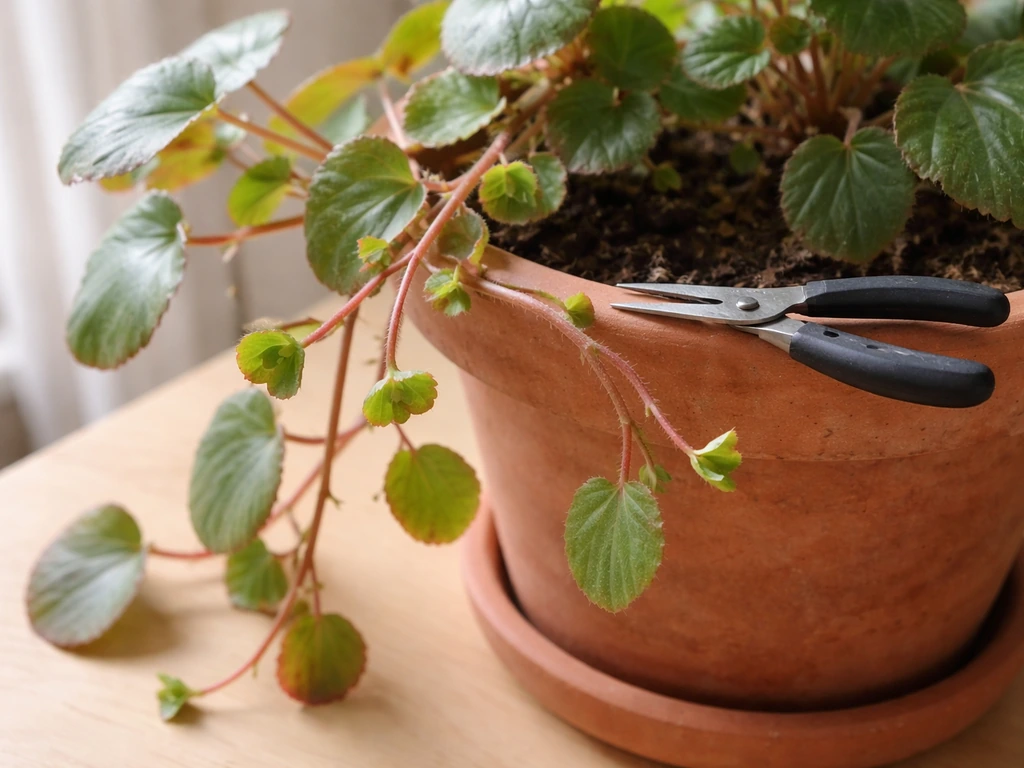
Pinching is the single most effective thing you can do early in the season to get full, trailing plants instead of sparse, bare-stemmed ones. When each stem is around 3 to 4 inches long, pinch out the very tip (the growing point where the next leaf would emerge). This forces the plant to branch, and more stems mean more trails and more flowers.
Do your main pinching before flowering begins, ideally in late spring. Pinching once plants are already blooming means sacrificing flowers, which feels wasteful even though the long-term result is better. I usually do one or two rounds of pinching in the weeks after transplanting, then leave the plants to their own devices through summer.
If plants become leggy mid-season (long, bare stems with flowers only at the tips), cut those stems back by about a third. This is also a great moment to take tip cuttings and root them for new plants. Trailing-scandent begonias in particular respond very well to regular trimming and will produce fresh, leafy growth quickly after a cut. For tuberous types, mid-season pruning is less common but useful if the plant has become one-sided or untidy.
Troubleshooting pests and common plant problems
Yellow leaves and leaf drop
Yellow leaves are usually a watering signal. Overwatering causes lower leaves to yellow and drop, and the mix may smell musty. Underwatering causes leaves to yellow and crisp at the edges before dropping. Check your mix and adjust. Sudden temperature changes or cold draughts can also cause rapid leaf drop even when watering is correct.
Root rot and stem rot
Root rot is the most serious problem and is almost always caused by waterlogged soil. Symptoms include wilting despite wet soil, mushy stems at the base, and black or brown soggy roots when you tip the plant out. If caught early, remove all rotted material with clean scissors, dust with a little sulphur powder, and repot into fresh, dry mix. Prevention is much easier than cure: start with a well-draining mix and never let containers sit in water.
Powdery mildew and botrytis
Powdery mildew shows up as fuzzy white patches on leaves and flowers, usually when there is high humidity combined with poor airflow. Botrytis (grey mould) appears as brown, water-soaked spots, often on lower leaves where plants are crowded together. Both are fungal issues. Improve air circulation, remove affected leaves immediately, and avoid wetting the foliage when watering. Space plants properly from the start (about 10 to 12 inches) so air can move between them.
Aphids, mealybugs, and spider mites
Aphids cluster on new growth and flower buds, leaving a sticky residue. A strong spray of water knocks most of them off, and insecticidal soap spray handles persistent infestations. Mealybugs look like white cottony fluff in leaf joints and stem crevices; dab individual colonies with a cotton swab dipped in rubbing alcohol, or use neem oil spray. Spider mites thrive in hot, dry conditions and cause fine stippling and thin webbing on leaves. Raise humidity, improve airflow, and treat with insecticidal soap or a miticide if numbers are high. Check plants regularly, especially the undersides of leaves, because catching these pests early is always easier than dealing with a full infestation.
Poor flowering
If your trailing begonia is growing well but not flowering, the most common culprits are too much nitrogen in the feed (switch to a bloom formula), insufficient light (move to a brighter spot), or being moved outside too late in the season. Tuberous begonias also need long days to flower, so if you are growing indoors in a dim spot through summer, supplemental lighting can make a real difference.
Seasonal care and reliable next steps
Since it is June right now, you are right in the prime growing window. If your trailing begonias are already outside and established, focus on consistent watering (daily in warm weather for baskets), switching to a bloom-boosting feed, and deadheading spent flowers to keep the display going. If you are specifically growing cane begonias, keep the same loose, well-draining mix and bright light, but focus on their cane-like stems and steady, gentle watering as they establish. Deadheading and switching to a bloom-boosting feed are key steps when learning how to grow bedding begonias for nonstop color. If you have not moved them outside yet, do so now provided overnight temperatures are reliably above 50°F.
Through summer, keep an eye on pests and give plants a light trim if any stems are getting bare or one-sided. As you head into early autumn, begin to wind down feeding and reduce watering slightly once growth slows. Before the first frost, bring tuberous begonias inside, allow the foliage to die back naturally, then lift the tubers, dry them off for a week, and store them in a cool, dark spot at 40 to 50°F in barely moist peat or paper bags until spring.
Trailing-scandent types do not go dormant, so they can come indoors as houseplants and be kept growing through winter in a bright spot, with watering and feeding reduced to match their slower growth rate.
If you want to expand into related growing styles, many of the same principles here apply directly to growing begonias in hanging baskets as a dedicated format, or to understanding cascading begonias which share a very similar growth habit. If you specifically want cascading begonias, the next step is to choose the right variety and match your light, watering, and pinching schedule to encourage that dramatic spill over the edges understanding cascading begonias.
If you want the easiest checklist for success, follow this guidance on how to grow begonias in hanging baskets step by step. If you want step-by-step guidance on how to grow begonias successfully, follow the same basics on light, potting mix, watering, and feeding, then tailor them to your specific type.
The big picture stays the same: free-draining mix, bright indirect light, careful watering, and a pinch at the right moment in spring are what separate a spectacular display from a disappointing one.
- Check watering now: baskets may need daily water in June heat.
- Switch to a low-nitrogen, bloom-boosting fertilizer if plants are leafy but not flowering.
- Pinch any stems that are still short enough to benefit from branching.
- Position baskets where they get morning sun and afternoon shade.
- Mark your calendar to bring plants in before the first autumn frost (check your local average date).
- Take tip cuttings from your best plants in late summer to root new plants for next year.
FAQ
How can I tell if my trailing begonia is tuberous or trailing-scandent without confusing labels?
Look for two clues: tuberous types usually come as tubers each spring and are marked with pendula or cascade, they will die back and can be stored over winter. Trailing-scandent types are sold as rooted plants, keep leafy growth year-round, and should not be lifted or stored
My hanging basket keeps wilting even though I water, what should I check first?
Check the potting mix for drainage and compaction, if it is staying wet more than a day it can trigger root suffocation and rot. Also inspect the drainage holes for blockages, then empty any saucers after about 30 minutes so roots are not sitting in pooled water
Should I water from the top or bottom for trailing begonias?
Top watering is usually best because you can control how much water you apply, then water thoroughly until excess drains. Bottom watering can work for some setups, but it is easier to accidentally under-water or leave salts concentrated, which becomes more likely in baskets
What’s the safest way to deadhead trailing begonias so I do not damage the growth habit?
Remove spent blooms and any flowers that are clearly finishing, but do not cut back long stems during peak bloom unless you are doing a mid-season prune. Use clean scissors and avoid tearing the stem where new shoots and buds are forming
Do trailing begonias need a bigger pot, or should I keep them slightly snug?
For best blooming, use a container that fits the root system without excess space. Too much extra mix increases the chance of staying wet, especially in cooler weather, so “bigger” is not always “better” if drainage is marginal
Why are my leaves yellowing but the soil does not feel soaked?
Yellowing can come from both sides of the watering range, check the top inch first. If it feels dry, you are underwatering, if it feels moist and the mix smells musty, you are likely overwatering. Also consider cold drafts or abrupt temperature shifts, those can cause leaf drop even when watering seems correct
My begonia is producing lots of leaves but very few flowers, what should I change first?
Start with fertilizer and light. Switch from a higher-nitrogen feed to a lower-nitrogen, higher-phosphorus bloom formula, then move the plant to brighter indirect light. If you are growing indoors, make sure you are not shortening daylight hours too much
Can I move my trailing begonias outdoors gradually, and how much exposure is safe?
Yes, harden them off over roughly two weeks. Begin with a shaded outdoor spot for short periods, then increase time and add morning sun gradually. Avoid hot midday exposure early, and bring them in if nights drop near the frost risk
What humidity and airflow do I need to prevent powdery mildew and botrytis?
Aim for airflow between plants, do not crowd them in baskets. When watering, avoid wetting flowers and leaves. If you see early spots, remove affected tissue immediately so spores do not spread further
Can I propagate trailing begonias in winter indoors?
You can, especially for trailing-scandent types using tip cuttings, but you may need a warm, bright spot and consistent moisture. Expect slower rooting in low light, and use airflow because winter humidity can stay high around cuttings
When should I stop feeding my trailing begonias in summer to avoid problems?
Do not keep feeding once active growth slows, typically in autumn. If you continue heavy feeding into cooler weather, you can encourage weak growth and more pest or disease pressure. Use reduced feeding and let the plant transition naturally
How do I prevent root rot when repotting a struggling plant?
Repot into fresh dry, free-draining mix, and do not reuse old soggy compost. If roots are mushy, remove them with clean scissors. After repotting, wait slightly longer before the next heavy watering so any damaged roots can recover
Can I grow trailing begonias from seed successfully at home?
Yes, but plan for a long timeline and very controlled conditions. Keep the surface moist without covering the tiny seeds, maintain around 70°F (21°C), and provide bright light from day one. Expect fragile seedlings for the first few weeks, handle gently to avoid breakage
Why do my flowers fall off suddenly?
Flower drop often follows stress like cold draughts, sudden temperature changes, or letting the mix swing too dry. Also inspect for pests on buds and new growth, and adjust light and watering to steady conditions rather than changing multiple factors at once
Next Article
How to Grow Begonias From Plugs: Step-by-Step Care
Step-by-step guide to grow begonia plug transplants: planting depth, timing, watering, feeding, and fixes for wilting an