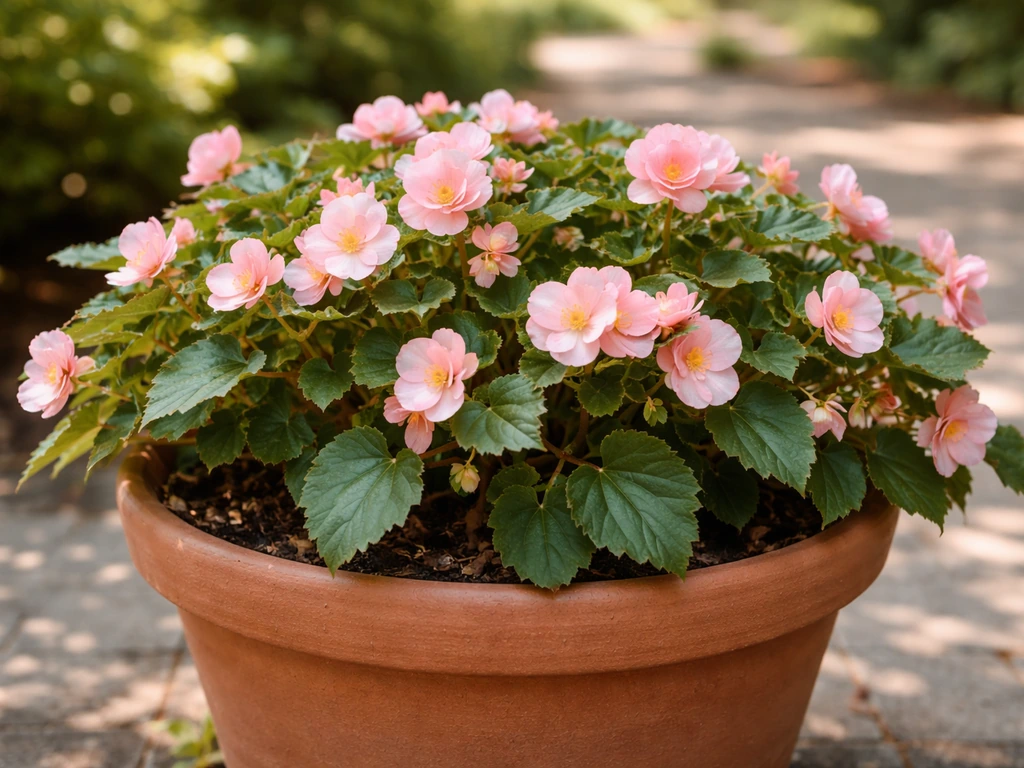
Bedding begonias are one of the most reliably rewarding flowers you can grow in a bed or container. Plant them after your last frost, give them filtered light or morning sun, keep the soil evenly moist but never waterlogged, and feed them monthly with a bloom-boosting fertilizer. Rieger begonias are grown like other fibrous-rooted wax-type bedding begonias, so you can follow the same general planting, light, and watering guidance how to grow Rieger begonias.
How to Grow Bedding Begonias: Complete Step-by-Step Guide

Harriet Whitmore
3 Jun 2026
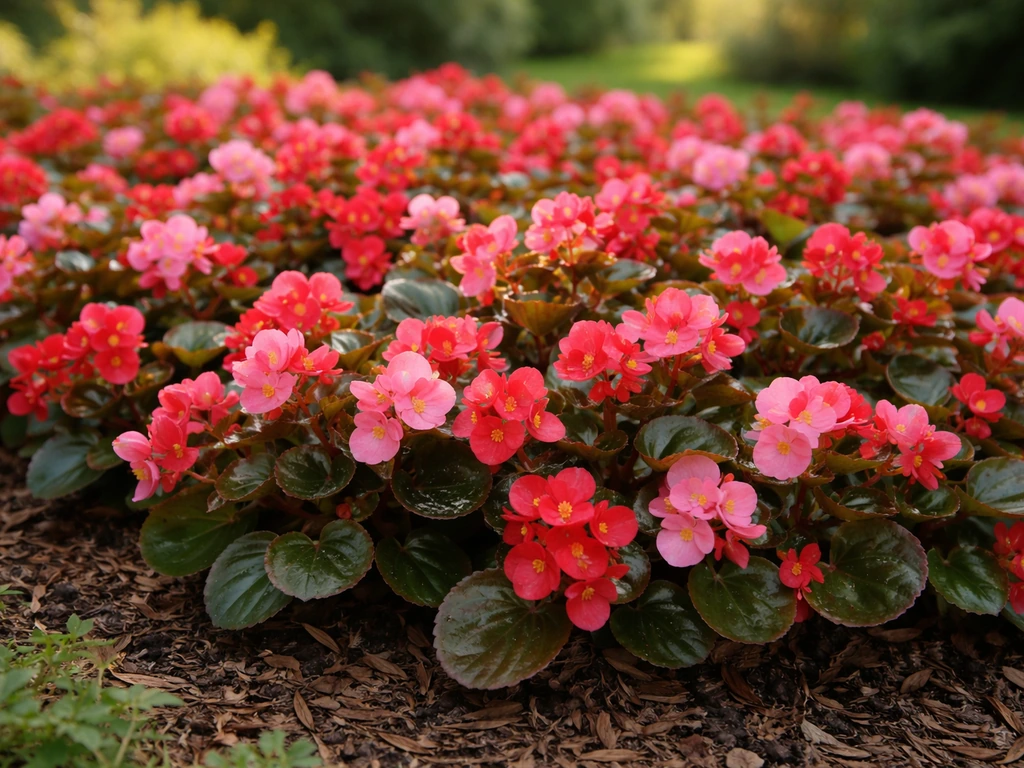
If you’re wondering how to grow begonias outdoors, start by planting wax begonias after the last frost and giving them bright, filtered light with consistently moist, well-drained soil. Do those four things consistently and you will have flowers from early summer right through the first autumn frost with almost no deadheading required.
Know what you're actually growing: bedding begonia types
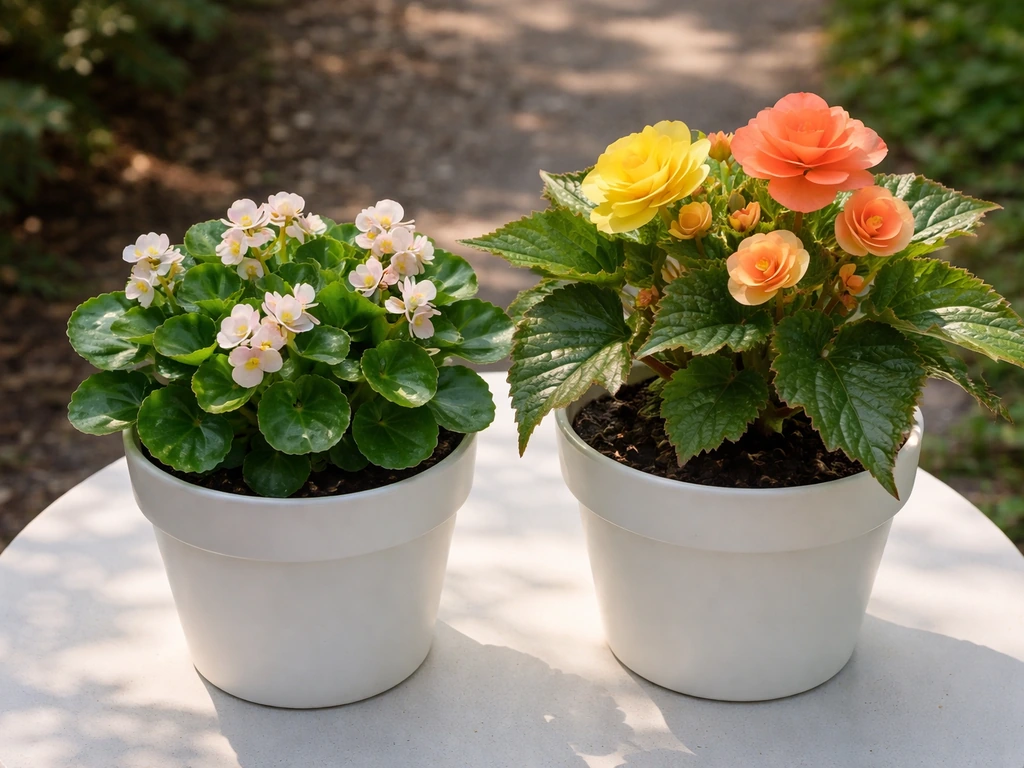
The term 'bedding begonia' almost always means wax begonia, technically from the semperflorens-cultorum group. The American Begonia Society notes that 'semperflorens' (meaning ever-blooming) is really a group name rather than a true species, covering compact, fibrous-rooted plants that have been bred specifically for outdoor bedding use. These are the ones you see filling garden-center trays every spring: tidy mounds of glossy green or bronze-tinted leaves covered in small single or double flowers in pink, red, white, or bicolor.
Tuberous begonias are a separate group entirely. They produce much larger, showier flowers but need cooler summers, more careful watering, and a dormancy period in winter. Their culture is genuinely different, so if you have tuberous types, a lot of the advice in this guide still applies but their germination setup, light tolerance, and end-of-season storage diverge significantly. This guide focuses on fibrous-rooted wax begonias, since they are what most people mean when they search for bedding begonias.
Within the wax begonia group, variety choice matters for practical reasons. Green-leaved varieties generally tolerate more shade and are a safer pick for dim spots under trees. Bronze or dark-leaved varieties handle more sun and tend to be slightly more heat-tolerant, which makes them a better choice if your bed gets afternoon sun. Compact varieties (typically 6 to 8 inches tall) work well as dense edging, while taller selections (up to 12 to 15 inches) fill space faster in large beds. If hanging baskets or window boxes are your goal, look for trailing or cascading begonia varieties bred specifically for that purpose, as standard bedding types tend to sit upright rather than spill.
Light, temperature, and where to actually put them
Wax begonias perform best in partial shade to dappled light. UMN Extension is pretty clear that they prefer shade over direct sun, and in my experience that is especially true in hotter climates where intense afternoon sun bleaches the flowers and scorches the leaves. That said, Purdue's ornamental annual guide lists their light tolerance as full sun to part shade, and bronze-leaved varieties in particular can handle a half-day of direct sun without falling apart. The sweet spot for most bedding begonias is bright indirect light or morning sun with afternoon shade.
Temperature is the other critical factor. Begonias are frost-tender and genuinely dislike cold soil. Do not rush them into the ground just because daytime temperatures are warm. Wait until nighttime temperatures are reliably above 50°F and soil temperature is at least 60°F. Below that, plants stall, growth turns yellow, and you have not actually gained anything by planting early. In most of the northern US, that means late May to early June. In the South and along the Pacific coast, you can often plant in early to mid-April.
For placement, beds on the east or north side of a building are often ideal. Spots under deciduous trees work well once the canopy leafs out. Avoid the strip along a south-facing wall or anywhere that gets reflected heat from pavement through the afternoon. In containers, you have more flexibility because you can move them, but keep in mind that dark-colored pots absorb heat and can stress roots in summer.
Soil, containers, and getting plants in the ground
Soil and media
Illinois Extension says it plainly: wax begonias need moist, well-drained soil. That combination is the goal. Roots should never sit in standing water, but the soil should not dry out completely between waterings either. In beds, work in compost before planting to improve drainage in heavy clay or water retention in sandy soil. A slightly acidic pH in the range of 4.5 to 5.5 suits begonias well. In containers, use a quality peat- or coir-based potting mix rather than garden soil, which compacts in pots and restricts drainage.
Container choices
Any container with drainage holes works. Terracotta pots dry out faster, which can be a plus if you tend to overwater, but they need more frequent checking in hot weather. Plastic and glazed ceramic hold moisture longer, which is useful in warm climates. For window boxes or hanging baskets, a lightweight potting mix with some water-retaining gel mixed in reduces the frequency of watering without creating waterlogged conditions. For a hanging basket, keep the same moisture rules but use a lightweight potting mix so the roots do not overheat or dry out too quickly how to grow begonias in hanging baskets.
Planting steps
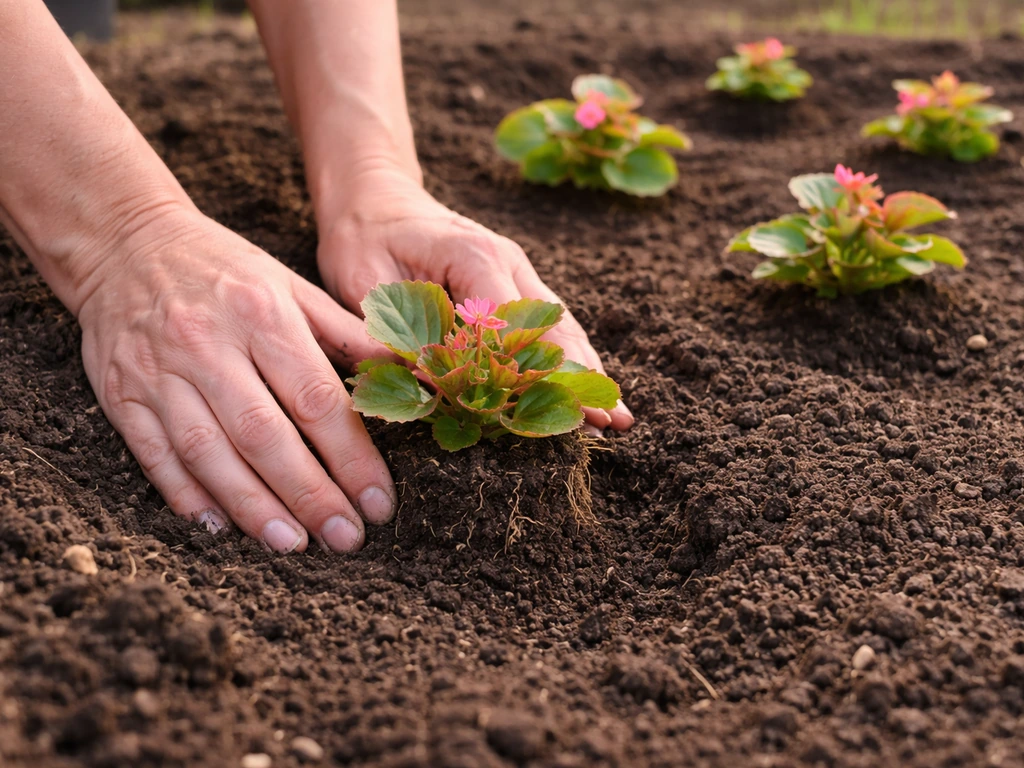
- Prepare the bed by loosening soil to about 8 inches deep and mixing in 2 to 3 inches of compost.
- Space transplants about 12 inches apart in beds. Closer spacing looks lush initially but restricts airflow and invites fungal disease.
- Plant at the same depth they were growing in the nursery pot. Burying the crown encourages rot.
- Water in thoroughly right after planting, then allow the top inch of soil to approach dryness before watering again.
- For containers, fill to within an inch of the rim, plant at crown level, and water until it drains freely from the bottom.
Watering and feeding from planting through peak bloom
The most consistent advice from multiple extension sources is to water at the base of the plant, not overhead. Wet foliage is an invitation for powdery mildew and botrytis (gray mold), both of which are common begonia problems. Use a watering can with a long spout, a drip system, or a soaker hose for beds. For containers, water until it drains from the bottom, then wait until the top inch of soil feels dry before watering again. In hot weather that might mean daily watering for pots; in a cool shaded bed it might be every two to three days.
Feeding should start about two to three weeks after planting, once the plants have settled in and begun putting out new growth. UMN Extension recommends fertilizing monthly with a fertilizer higher in phosphorus than nitrogen. Phosphorus supports root development and flower production, while high nitrogen pushes leafy green growth at the expense of blooms. Look for a bloom-booster or tomato fertilizer (the NPK ratio on the label will show a higher middle number, like 5-10-5 or 10-30-20). Dissolve it in water and apply at the base of the plant.
If plants are grown more for foliage (like the striking bronze-leaved varieties in a shaded spot), a balanced fertilizer works fine. But if flowers are the goal, stick with the higher-phosphorus formula through summer.
Starting from seed vs buying transplants
Buying transplants (the practical starting point)
For most gardeners, buying transplants from a garden center is the right call. Bedding begonia seed is genuinely tricky: the seeds are almost invisibly small, germination is slow, and seedlings need about 12 to 16 weeks of indoor growing time before they are ready to go outside. If you have not already started seeds indoors by late February or early March, transplants are your best path to a good season. Look for compact, bushy plants with deep green or bronze leaves and a few flowers already open. Avoid anything leggy, yellowed, or root-bound with roots circling out of the drainage holes.
Starting from seed indoors
If you want to start from seed, begin 12 to 16 weeks before your last frost date. Use sterile seed-starting mix, not garden soil, to prevent damping-off disease. Begonia seeds are surface-sown: scatter them on the surface of moistened mix and do not cover them, because they need light to germinate. Mist gently, then cover the tray with a clear plastic dome or plastic wrap to hold humidity.
Maintain soil temperature at 70°F for best results. UMN Extension notes that at a steady 70°F, germination typically takes about ten days, but cooler soil can push that out to three weeks. Use a seedling heat mat under the tray if your indoor space runs cool. Once seeds germinate, remove the plastic cover after one to two days, then move the tray under grow lights. UMN Extension is specific here: seedlings need 14 hours of light per day to develop properly. Thin to about 2 inches apart once seedlings have their first true leaves, and start feeding with a diluted balanced fertilizer every two weeks once the second set of leaves appears.
Hardening off before transplanting

Whether you started from seed or bought transplants, harden off plants before putting them in the garden. Set them outside in a sheltered, shaded spot for one to two hours on the first day, then gradually increase outdoor time over seven to ten days. Skipping this step causes sunscald and transplant shock that can set plants back by weeks.
Seasonal care timeline for continuous flowering
| Period | Key Tasks |
|---|---|
| Late winter (Jan–Feb) | Start seeds indoors under lights at 70°F; use sterile seed-starting mix |
| Early spring (Mar–Apr) | Pot up seedlings; maintain 14 hours of light daily; begin diluted feeding |
| Late spring (May) | Harden off transplants; prepare beds; wait for soil temps above 60°F |
| Early summer (Jun) | Transplant outdoors; water in well; begin monthly bloom-booster feeding |
| Midsummer (Jul–Aug) | Water at base regularly; feed monthly; remove dead flowers and leaves; watch for pests |
| Late summer (Aug–Sep) | Continue feeding; check for botrytis and mildew as nights cool; maintain airflow |
| Early autumn (Sep–Oct) | Dig and pot plants you want to overwinter before first frost; let beds finish naturally |
Wax begonias are essentially self-cleaning, meaning they shed spent flowers on their own and rarely need deadheading the way petunias or marigolds do. That said, removing yellowed or dead leaves at the base of the plant improves airflow and reduces disease risk. Keep the soil surface around plants tidy by removing fallen leaves and debris, which can harbor fungal spores.
Troubleshooting: what's actually going wrong
Leggy, stretched growth
Leggy plants with long stems and widely spaced leaves are almost always a light problem. Either the plants are not getting enough light or, in seed-starting, the grow lights are too far from the seedlings. Move outdoor plants to a brighter spot (more morning sun, less dense shade) and pinch back the longest stems by about a third to encourage bushier regrowth. For seedlings under grow lights, lower the lights to within 2 to 3 inches of the foliage.
Yellow leaves

Yellowing is one of those symptoms that can mean several different things, so you need to look at the whole picture. Yellow leaves on lower stems with soggy soil almost certainly means overwatering or poor drainage. Illinois Extension links weak, declining begonias directly to excessively wet roots. Let the soil dry out more between waterings and check that drainage holes are not blocked. If soil is fine but new growth is pale and yellow, the problem is more likely a nutrient deficiency, often nitrogen or iron, and a feeding with a balanced fertilizer usually fixes it quickly. Yellow leaves with no obvious pattern and healthy soil can also be a sign of spider mite damage, especially in hot, dry conditions.
Few or no blooms
If plants are leafy and healthy-looking but not flowering, the two most common culprits are too much nitrogen (which pushes foliage at the expense of flowers) and too little light. Switch to a higher-phosphorus bloom-booster fertilizer and try moving the plant to a brighter spot. Begonias also temporarily stop blooming when they are heat-stressed (in climates with very hot summers), but they typically resume flowering once temperatures drop in late summer.
Powdery mildew
Powdery mildew shows up as a white, dusty coating on leaves and is common in humid conditions with poor airflow. The best defense is prevention: water at the base only, space plants at least 12 inches apart, and avoid handling wet plants. UMN Extension recommends choosing resistant varieties where available when mildew is a recurring issue in your garden. For infected plants, remove affected leaves and improve airflow around the plant. Severe cases may need a fungicide labeled for powdery mildew.
Botrytis (gray mold)
Botrytis causes brown, water-soaked spots on leaves and flowers that quickly develop a fuzzy gray coating. It thrives in cool, wet, crowded conditions. The American Begonia Society lists it as a key disease threat. Remove infected plant parts immediately and dispose of them away from the garden (do not compost infected material). Improve spacing and airflow and avoid overhead watering. UMN Extension notes that allowing plants to dry out after rain or watering is one of the most effective prevention strategies.
Root rot
Pythium root rot and rhizoctonia crown rot are listed by both the American Begonia Society and Penn State Extension as serious begonia diseases. Affected plants wilt despite moist soil, stems near the soil line turn soft and brown, and roots are dark and mushy rather than white and firm. The cause is almost always waterlogged soil combined with poor-quality or non-sterile growing media. Prevention through good drainage and pasteurized potting mix is far more effective than treatment. Badly affected plants are usually not worth trying to save.
Pests: mites, mealybugs, and others
The American Begonia Society lists spider mites, mealybugs, scale, whiteflies, nematodes, and slugs as potential pests. Spider mites are most common in hot, dry conditions and cause stippled, bronze-looking foliage. Knock them back with a strong spray of water at the base of leaves, or use insecticidal soap. Mealybugs cluster in leaf joints and look like cottony white masses; dab them with rubbing alcohol or use insecticidal soap.
Slugs shred leaves and are active at night. Reduce slug habitat by clearing debris from around plants and use iron phosphate bait if populations are high. Cornell extension notes that fungus gnats can spread damping-off pathogens in seed-starting setups, so address them early by letting the surface of your seed-starting media dry slightly between mistings.
Poor germination or seedling failure
If seeds do not germinate, the most likely reasons are temperature too low (below 65°F), seeds buried instead of surface-sown, or media that dried out before germination was complete. Keep a heat mat under the tray and check moisture daily. If seedlings germinate then collapse at soil level (damping-off), the problem is a fungal pathogen in non-sterile media combined with poor airflow and too much moisture. Always use fresh, sterile seed-starting mix and do not reuse trays without disinfecting them.
End-of-season care and what to do next
In most climates, bedding begonias grown as annuals are left to finish with the first frost and then composted. That is completely fine and is what most gardeners do. But if you have a particularly nice plant you want to keep, you can dig it before the first frost, pot it into a container with fresh potting mix, cut it back by about half, and bring it inside to a bright windowsill. It will survive winter as a houseplant and can go back outside the following spring after hardening off. Do not expect it to look spectacular indoors, but it will survive.
You can also take cuttings in late summer, root them in water or moist perlite, and overwinter the rooted cuttings as small plants under grow lights. This is a good way to carry a color you love into the next season without buying new transplants. If you grow tuberous begonias rather than wax types, the overwintering process is different: you need to lift, dry, and store the tubers in a cool, dry location over winter rather than keeping them growing.
Bedding begonia care checklist
- Choose the right variety: green-leaved for shade, bronze-leaved for more sun; trailing types for baskets and window boxes
- Plant after soil reaches 60°F and nighttime temperatures are reliably above 50°F
- Space transplants 12 inches apart in beds for good airflow
- Site in partial shade or morning sun, avoiding harsh afternoon sun in hot climates
- Use well-drained, slightly acidic soil (pH 4.5 to 5.5); use sterile potting mix in containers
- Water at the base of the plant only, never overhead, to reduce fungal disease
- Let the top inch of soil approach dryness between waterings; never let roots sit in standing water
- Feed monthly with a higher-phosphorus bloom-booster fertilizer from early summer onward
- Remove dead or yellow leaves regularly; keep soil surface clear of debris
- Watch for mites, mealybugs, botrytis, and powdery mildew; address early
- Dig or take cuttings before first frost if you want to carry plants into next season
Bedding begonias genuinely reward a little attention to the basics. Get the light and watering right, feed consistently, and you will have color in your beds and containers from early summer to frost without a lot of fuss. If you are wondering how do i grow begonias, start by getting the light and watering right, then feed consistently for reliable color Bedding begonias.
If you have caught the begonia bug and want to go further, there is a whole world of more specialized types worth exploring: trailing and cascading varieties for dramatic hanging baskets, begonias grown from plugs for faster coverage, and the showier tuberous types for cooler-summer climates. Begonias grown from plugs are an easy option when you want faster coverage than starting from seed.
But for reliable, no-drama color season after season, it is hard to beat a well-grown bed of wax begonias.
FAQ
Can I overwinter bedding begonias indoors like I would with other annuals?
Yes, but keep them in a bright, filtered spot and reduce feeding to about once every 6 to 8 weeks. Water only when the top inch of mix dries, and rotate the pot weekly to prevent leggy growth, since indoor light is usually weaker than outdoors.
How can I tell when it is truly warm enough to plant bedding begonias outside?
Begonias are sensitive to cold and wet, so use a soil thermometer and wait until the root zone is at least 60°F (not just the air). If you plant early, you may see yellowing and stalling that does not correct itself until conditions warm.
Why do my bedding begonias die faster in containers than in the ground?
In hanging baskets and window boxes, dark plastic and glazed pots can trap heat and keep roots damp. Check moisture by feel 1 inch down daily during hot weather, and empty any saucers so water is not sitting against the bottom.
My bedding begonias have buds, but they drop before opening. What should I change?
If they are dropping buds or flowers, the most common causes are heat stress, inconsistent watering, or low light. Try moving to morning sun with afternoon shade, water at the base, and avoid letting pots dry out fully between waterings.
What spacing should I use to prevent fungal problems like powdery mildew?
For outdoors, aim for spacing that allows airflow and leaf drying after rain. A practical rule is to keep plants far enough apart that leaves do not knit into a solid mass (the article suggests 12 inches in the mildew section), and avoid overhead irrigation.
My begonias look healthy but colors are washed out, and they are not flowering much. How do I troubleshoot?
If the leaves look pale and growth slows, look first at fertilizing and soil conditions. Wax begonias usually respond best to a bloom-leaning fertilizer when you want flowers, and if you have very alkaline soil, a slightly acidic potting mix or amended bed can help prevent nutrient lockout.
Can I pinch or prune bedding begonias to make them bushier, and when is the best time?
Yes, but avoid treating begonias as cut-and-come-again perennials. After pinching, leave time for new growth, and only do light pruning once plants are actively growing (typically after they establish post-planting) to avoid setting them back.
What is the easiest way to keep a favorite bedding begonia through winter?
If you want to save a bedding begonia for next year, the best results come from taking action before the first frost and starting with a healthy plant. Cut back by about half, repot into fresh mix, and expect it to look less vibrant indoors due to lower light.
Next Article
How to Grow Begonias Outdoors: Step-by-Step Guide
Step-by-step how to grow begonias outdoors: pick the right type, site, planting timing, tubers or cuttings, care and fix