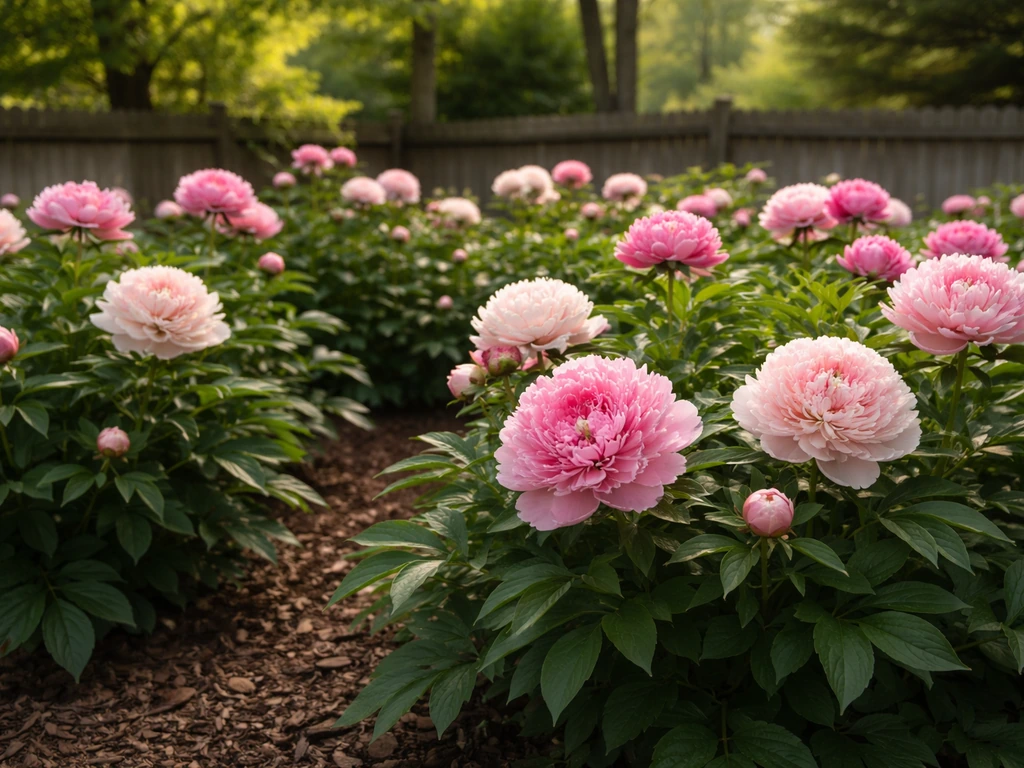
Peonies grow beautifully in Oregon across most of the state, from the cool, wet coast to the cold winters of the high desert east of the Cascades. The key is matching the right peony type and variety to your specific region, planting bare-root divisions at exactly the right depth in fall, and getting your soil drainage sorted before the roots go in. Get those three things right and you will very likely have blooms by the second or third spring, and decades of flowers after that.
How to Grow Peonies in Oregon: Regional Guide & Care Steps

Harriet Whitmore
12 Jul 2026
Oregon's climate zones and what they mean for peonies
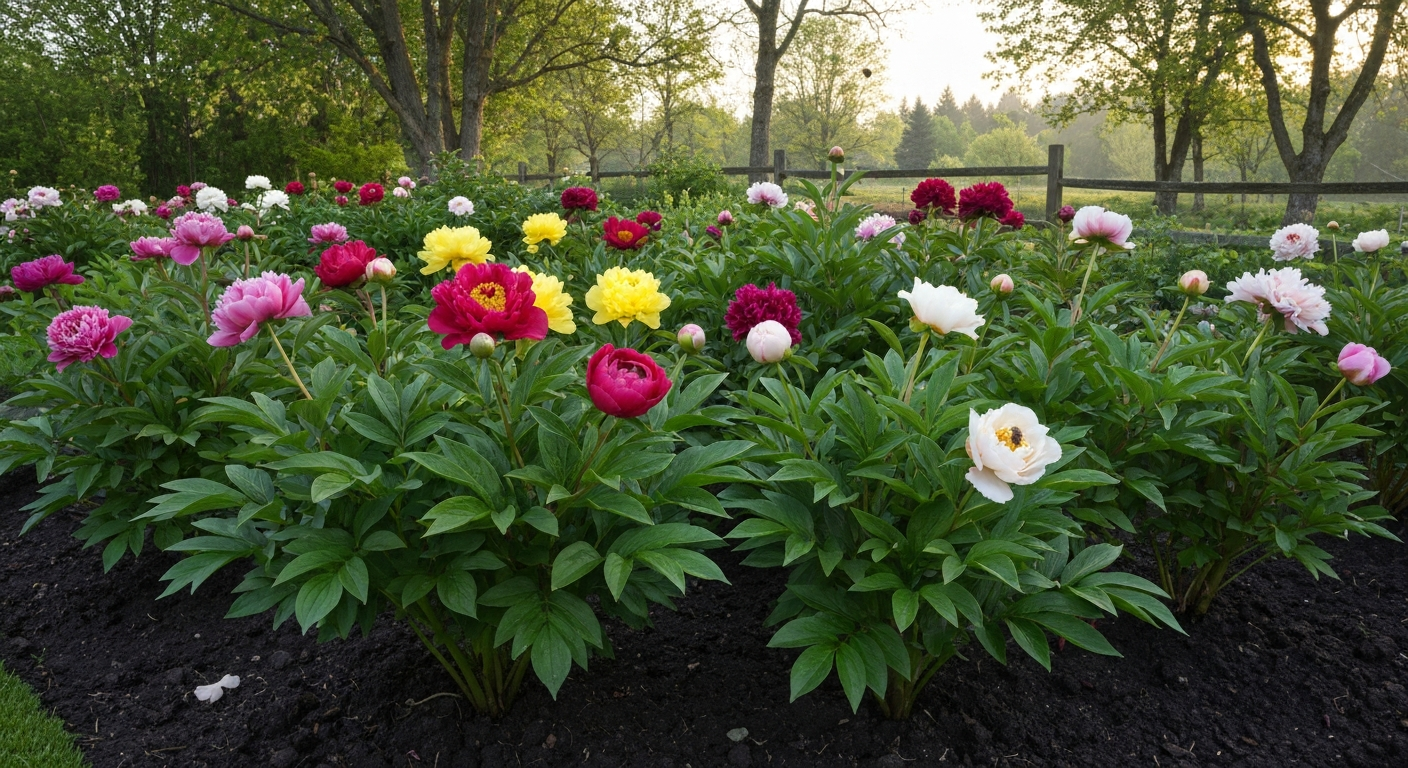
Oregon spans USDA hardiness zones 4 through 9, which is a remarkably wide range for one state. The 2023 USDA Plant Hardiness Zone Map, built using high-resolution PRISM climate datasets from Oregon State University, shows just how much variation exists even within a single county. Eastern Oregon's high desert can drop to zone 4 or 5 in winter, the Willamette Valley sits comfortably in zones 7–8, and parts of the southern coast edge into zone 9. That matters for peonies because they rely on winter cold to set buds. A reliable chill period is non-negotiable: without it, plants produce leafy growth but few or no flowers. Most herbaceous peonies are comfortably hardy to zone 3, thrive through zones 5–7, and start to show reduced blooming above roughly zone 8 where winters stay too mild. This guide walks through everything from choosing a type and variety to planting depth, soil amendments, drainage fixes, seasonal care, and troubleshooting, all tailored to Oregon's coastal, Willamette Valley, and eastern regions.
Which peony type suits your Oregon garden
There are three main types worth knowing about, and they behave quite differently in Oregon's varied conditions. Understanding the differences saves a lot of frustration.
Herbaceous peonies
These are the classic garden peonies (Paeonia lactiflora and hybrids) that die back completely to the ground each winter. They are the most forgiving type for Oregon beginners, reliably cold-hardy through zone 4, widely available as bare-root divisions, and the most floriferous once established. They are my first recommendation for anyone starting out in the Willamette Valley or eastern Oregon.
Tree peonies
Tree peonies (Paeonia suffruticosa and related species) have woody stems that persist year-round and can eventually reach 4–6 feet tall. They bloom earlier in spring than herbaceous types, tolerate more shade (though they still prefer sun), and their large flowers are genuinely stunning. The trade-off is that they are slower to establish, more expensive, require careful planting of the graft union, and can be damaged by hard late frosts that catch the early buds. They do particularly well in the sheltered microclimates of the northern Willamette Valley.
Intersectional (Itoh) peonies
Itoh peonies are hybrids between herbaceous and tree peonies. They die back to the ground like herbaceous types but produce the large, exotic flower forms of tree peonies. They are more disease-resistant, bloom over a longer period, and are generally more adaptable to the wet springs of western Oregon. The downside is price, good Itoh divisions cost significantly more than standard herbaceous varieties. They are absolutely worth it if botrytis has been a repeated problem in your garden.
| Type | Hardy to zone | Bloom timing | Dies back in winter | Best for Oregon region | Relative cost |
|---|---|---|---|---|---|
| Herbaceous | 3–8 | Late spring (May–Jun) | Yes, fully | All regions, especially eastern OR and Willamette Valley | Low–moderate |
| Tree | 4–9 | Early–mid spring (Apr–May) | No, woody stems persist | Sheltered Willamette Valley, mild coastal areas | Moderate–high |
| Intersectional (Itoh) | 4–9 | Late spring into early summer | Yes, fully | Wet western Oregon, any region with botrytis pressure | High |
Recommended varieties for Oregon's three main regions
Variety selection matters more than many gardeners realize. A peony that thrives in a sheltered Portland backyard may struggle on the windswept coast or in the cold, dry high desert near Burns. Here are reliable picks for each region based on their documented cold hardiness, disease resistance, and chilling requirements.
Coastal Oregon (zones 8–9)
The coast presents the hardest conditions for peonies in Oregon. Winters are mild (which limits chill accumulation), springs are cool and persistently wet (which drives botrytis), and salt-laden wind is a real factor near the beach. Focus on Itoh hybrids and early-chilling herbaceous varieties. 'Bartzella' (Itoh, yellow) and 'Hillary' (Itoh, coral-pink) are both more tolerant of mild winters and wet conditions. Among herbaceous types, 'Kansas' (bright red, very vigorous) and 'Festiva Maxima' (white with crimson flecks, old reliable) have shown consistent performance even where chill hours are marginal. Avoid planting within direct salt-spray range, even 200 feet of buffer from the ocean makes a meaningful difference.
Willamette Valley (zones 7–8)
This is Oregon's sweet spot for peonies. Winters are cold enough for reliable bud set, summers are warm and relatively dry during bloom time, and the long growing season allows good foliage development. Almost any herbaceous or Itoh variety will perform well here. Standout performers include 'Sarah Bernhardt' (soft pink, exceptional fragrance), 'Karl Rosenfield' (deep crimson, bomb-type double), 'Coral Charm' (semi-double coral that fades beautifully, and one of the best cut-flower types), and 'Garden Treasure' (Itoh, yellow with red flares). For tree peonies, the Willamette Valley's mild but cold-enough winters are ideal, 'Hana Kisoi', 'High Noon', and the Daphnis hybrids all do well in sheltered spots.
Eastern Oregon (zones 4–6)
Cold, dry winters and hot summers define eastern Oregon. The good news is that peonies love cold winters, you will rarely have a chilling problem east of the Cascades. The challenge is desiccating wind, alkaline soils (more on that shortly), and late hard freezes that can damage early emerging shoots. Choose cold-hardy, wind-tolerant herbaceous varieties: 'Elsa Sass' (white double, exceptional cold hardiness), 'Prairie Moon' (creamy single, extremely vigorous), 'Krinkled White' (single white, excellent heat tolerance), and 'Do Tell' (anemone-form pink, compact habit well-suited to windy sites). Add a layer of straw mulch over winter crowns in zone 4 areas until plants are fully established.
Site selection and microclimate considerations
Peonies are long-term investments, a well-sited plant can bloom for 50 years or more without being moved. Spend the time getting the location right before you plant. For gardeners in different climates, see our guide on how to grow peonies in Oklahoma for region-specific planting and care tips. Use local frost‑date maps and climate normals (Frost/Freeze climatology, NOAA / National Weather Service) to determine the typical last spring and first fall frost for your planting site blank" rel="noopener noreferrer">Frost/Freeze climatology — NOAA / National Weather Service.
- Sun: full sun (at least 6 hours of direct sun daily) produces the most flowers and the strongest stems. In the hot interior valleys and eastern Oregon, afternoon shade from a structure or deciduous tree reduces heat stress and extends bloom duration without sacrificing flowering.
- Wind: persistent wind desiccates buds and snaps stems at bloom time. On the coast and in eastern Oregon's open country, a windbreak hedge or fence on the prevailing wind side (usually the southwest on the coast, the northwest or east in the high desert) makes a major difference. Keep windbreaks far enough away — at least 4–5 feet — to avoid root competition.
- Frost pockets: avoid low spots in the garden where cold air collects on still nights. These areas have the latest spring frosts and earliest fall frosts — which can damage emerging peony shoots in April and cut the season short in September. A gentle slope or elevated bed drains cold air away naturally.
- Salt exposure: on the coast, choose sites at least 150–200 feet from the ocean or use a solid barrier (fence, building, dense hedge) between the planting and direct salt wind. Salt spray causes leaf scorch and bud death that is often mistaken for disease.
- Tree root competition: avoid planting within the drip zone of established trees. Tree roots compete aggressively for water and nutrients, and many trees (particularly conifers common in western Oregon) create dense root mats that exclude other plants.
Soil assessment: pH, texture, and drainage
Do not skip soil testing. I know it sounds like extra work before the fun part, but it genuinely changes what you do next, and it saves money on amendments you may not need. OSU Extension notes that western Oregon soils tend to be acidic while eastern soils are often alkaline, so test soil pH before planting and adjust as indicated for peonies (most garden perennials do best slightly acidic to near‑neutral pH). Peonies prefer a slightly acidic to near-neutral soil pH of roughly 6.0 to 7.0. Outside that range, nutrient uptake suffers and plants become prone to deficiency symptoms even when nutrients are present in the soil.
In western Oregon (coast and Willamette Valley), high annual rainfall leaches calcium and magnesium and drives soil pH down, sometimes below 5.5. Most Willamette Valley soils are naturally acidic and benefit from lime to raise pH toward the 6.5 target. Eastern Oregon soils trend the opposite way, they are often alkaline (pH 7.5 or higher) due to lower rainfall and carbonate parent materials. Sulfur or acidifying fertilizers may be needed to bring pH down, though this is harder to achieve in highly buffered alkaline soils.
OSU Extension runs a soil testing lab that accepts home garden samples and provides lime or amendment recommendations specific to your results, this is a far better starting point than guessing from a generic chart. Collect a composite sample from 6–8 spots across the planting area, at a depth of 6–8 inches, mix them together, and send roughly a cup of material. Beyond pH, the test tells you organic matter levels, phosphorus, potassium, and often calcium and magnesium, all relevant to peony performance.
For texture and drainage, you can do a quick assessment yourself. Grab a handful of moist soil and squeeze it. If it forms a tight, slick ribbon that holds its shape for more than an inch or two, you have significant clay, which drains slowly and can rot peony roots. If it crumbles immediately, you likely have sandy or loamy soil that drains well. A simple jar test (soil plus water shaken and left to settle overnight) gives a rough read of the sand/silt/clay proportions.
Soil preparation and amendments
Whether you are working with the heavy Jory clay of the Willamette Valley, the volcanic soils of the Cascades foothills, or the alkaline sandy loam of eastern Oregon, the core preparation process is the same: loosen the soil deeply, add organic matter, and correct pH based on your test results.
- Dig the planting area to at least 18 inches deep, ideally 24 inches. Peonies develop large, fleshy roots over time and compaction below the surface stunts them significantly.
- Incorporate 3–4 inches of well-aged compost worked through the full depth of the loosened soil. Compost improves drainage in clay soils, increases water retention in sandy soils, and feeds soil biology.
- Adjust pH based on soil test results. For acidic western Oregon soils (pH below 6.0), work dolomitic lime into the bed at the rate recommended by your soil test — commonly 5–10 lb per 100 sq ft for soils in the 5.5–6.0 range, but your test results will give a more precise figure. For alkaline eastern Oregon soils (pH above 7.0), elemental sulfur at 1–2 lb per 100 sq ft can help nudge pH down, though results are slow and repeated applications over multiple seasons are usually needed.
- In heavy clay soils, add a 2-inch layer of coarse horticultural grit or sharp sand (not fine beach sand) worked through the full soil depth. This physically opens the soil structure and improves drainage. Do not add sand alone without organic matter — sand plus clay without organic material can actually worsen drainage.
- In very clay-heavy soils with compaction issues, consider adding gypsum (calcium sulfate) at 2–3 lb per 100 sq ft. Gypsum helps break up clay structure without significantly altering pH — useful when you are near the right pH already and just need better tilth.
- Do not add high-nitrogen fertilizer at planting. Peonies do not need it and excess nitrogen encourages leafy growth at the expense of flowers.
Fixing poor drainage before it kills your roots
I have lost peonies to waterlogged soil, and it is a miserable way to watch an expensive plant decline. Peony roots sit in the ground all winter when Oregon rain is at its heaviest, and they will rot in standing water or saturated soil. If water pools on your site after heavy rain and stays for more than an hour or two, fix drainage before planting.
Raised beds
The simplest fix for problem drainage is elevating the planting area. Build the bed 8–12 inches above the surrounding grade using rot-resistant wood, stone, or concrete block edging, and fill it with a well-draining mix of approximately 50% native soil (if not too heavy), 30% compost, and 20% coarse grit or perlite. For severely waterlogged sites with heavy clay subsoil, go higher, up to 18 inches, and lay a permeable landscape fabric barrier beneath the bed to prevent clay from wicking up into your mix over time.
French drains
When standing water is caused by a high water table or water flowing in from an upslope area, a French drain is the right solution. Dig a trench 12–18 inches deep at a slight slope (at least 1% grade, ideally more) leading water away from the peony bed toward a suitable outlet, a lower area of the yard, a storm drain, or a gravel sump. Line the trench with landscape fabric, fill the bottom with gravel, lay a perforated pipe (4-inch diameter is standard for home use), cover with more gravel, fold the fabric over the top, and backfill. OSU Extension recommends this approach for sites where runoff and a high water table are the core problem rather than just soil texture.
Amendment recipe for a well-draining peony bed
If you are building a new bed from scratch in a problem-drainage area, this mix works well in Oregon conditions: per cubic yard of bed volume, blend approximately 0.5 cubic yards of native topsoil (if not pure clay), 0.3 cubic yards of aged compost, 0.15 cubic yards of coarse horticultural grit or 3/8-inch washed gravel, and 0.05 cubic yards of perlite. Adjust lime or sulfur into this mix based on your pH test before planting.
Planting timing and depth by Oregon region
Fall is the ideal time to plant peonies in Oregon, specifically September through October for most of the state. Planting in fall gives bare-root divisions 6–10 weeks of mild soil temperatures to establish new root growth before the ground cools significantly, without the stress of summer heat. Spring planting is possible (usually March–April when the soil is workable), but spring-planted peonies typically bloom a year later than fall-planted ones, and they require more attentive watering through their first summer.
| Region | USDA zones | Fall planting window | Spring planting window | Expected first bloom |
|---|---|---|---|---|
| Coastal Oregon | 8–9 | Late Sept – early Nov | Feb – early Apr | 2nd–3rd spring after planting |
| Willamette Valley | 7–8 | Mid Sept – late Oct | Mid Mar – mid Apr | 2nd spring after fall planting |
| Southern OR / Rogue Valley | 7–8 | Mid Sept – late Oct | Mid Mar – Apr | 2nd spring after fall planting |
| Cascade foothills / mid-elevation | 5–7 | Early–mid Sept | Late Mar – Apr (after last frost) | 2nd–3rd spring after fall planting |
| Eastern Oregon high desert | 4–6 | Late Aug – mid Sept | Late Apr – May (after last frost) | 2nd–3rd spring after fall planting |
Planting depth is the single biggest cause of peony failure I see among new gardeners. For herbaceous peonies, the buds (called eyes, small reddish growth points on the crown) must be placed no more than 1–2 inches below the final soil surface. That is genuinely shallow. If you plant eyes 4 or 5 inches down the way you might plant a tulip bulb, the plant will grow lush foliage for years but produce few or no flowers. Measure carefully, firm the soil gently over the root, and recheck the depth. In cold zone 4–5 areas of eastern Oregon, planting at 2 inches (rather than 1 inch) gives a little extra frost protection for the first winter.
Tree peonies are the exception. Grafted tree peonies should be planted with the graft union (the point where the scion meets the rootstock) approximately 4–5 inches below the soil surface. This encourages the scion to produce its own roots over time, which makes the plant more vigorous and less dependent on the rootstock.
Step-by-step planting process
- Dig a hole wide enough to spread the roots without bending them — typically 18–24 inches across and 18 inches deep.
- Build a firm cone of prepared soil in the center of the hole at the correct height so that when the division sits on top of it, the eyes are at the 1–2 inch depth mark.
- Set the root division on the cone, spread the fleshy roots down the sides, and confirm eye depth before backfilling.
- Backfill with amended soil in layers, firming gently with your hands (not your feet) to avoid compacting around the roots.
- Water thoroughly to settle the soil — expect it to sink slightly, and add more soil to bring eyes back to the correct depth if needed.
- For fall-planted divisions in eastern Oregon zones 4–5, apply a 3–4 inch layer of straw or shredded leaf mulch over the crown after the ground cools (not before — you want the cold to reach the roots). Remove the mulch in spring as shoots emerge.
- Space herbaceous peonies 3–4 feet apart center to center. Itoh peonies can be placed slightly closer at 2.5–3 feet. Tree peonies need 4–5 feet of space.
Watering through Oregon's seasons
Oregon's rainfall pattern does a lot of the work for you, the wet season aligns almost perfectly with peony dormancy and root establishment. In western Oregon, newly planted fall divisions typically need little or no supplemental irrigation until late spring. In eastern Oregon, winter precipitation is lower and irrigation during dry spells in spring can help newly establishing plants.
The critical watering period is late spring through early summer, when Oregon's dry season begins and peonies are actively growing toward bloom. Give established plants a deep watering (enough to wet the root zone to 12 inches) once every 7–10 days during dry stretches. Avoid overhead watering, which wets foliage and promotes botrytis in the Pacific Northwest's cool, humid conditions. Drip irrigation or soaker hoses at soil level are much better choices. After bloom, reduce watering gradually, peonies do tolerate summer drought once established, and dry conditions during dormancy actually help prevent root rot in heavy soils.
Fertilizing: timing and amounts that actually work
Peonies are not heavy feeders, and over-fertilizing with nitrogen is a common mistake that produces impressive foliage and almost no flowers. A low-nitrogen, higher phosphorus and potassium formula, the classic example is 5-10-10, is the right choice. OSU Extension guidance recommends applying it in early spring when shoots reach 2–3 inches tall. At that point, apply approximately 1/4 to 1/2 cup of 5-10-10 granules around each plant in a ring, kept a few inches away from the crown so granules do not contact the emerging shoots. Alternatively, apply 2–3 lb per 100 square feet across the bed. Water it in well.
A second, lighter application at the same rate can be made after bloom finishes (typically mid-June to mid-July in the Willamette Valley) to support foliage maturation and root energy storage for next year's buds. Do not fertilize after August, late-season nitrogen pushes soft new growth that is more vulnerable to botrytis and frost damage. In the first year after planting, skip fertilizer entirely or apply half the normal rate; new divisions do not have the root system to use it efficiently.
Staking: how and when to support the stems
Heavy double-flowered peonies, particularly bomb-type doubles like 'Karl Rosenfield' or 'Sarah Bernhardt', will flop after rain if not supported. The best staking system is a wire peony ring (also called a grow-through support or hoop support) placed over the plant in early spring before stems reach 12 inches. The plant grows up through the grid and supports itself naturally. Put the supports in too late and you end up tying individual stems awkwardly, which looks messy and can damage soft growth. In windy coastal and eastern Oregon sites, stake earlier and use a more robust three-post ring rather than a single-leg hoop.
Blooms, cutting, and disbudding
Most herbaceous peonies in the Willamette Valley bloom from mid-May through June, with earlier types (single and Japanese-form varieties) opening in mid-May and fully double types like 'Sarah Bernhardt' typically peaking in late May to early June. Eastern Oregon blooms run 1–3 weeks later depending on elevation. Coastal Oregon blooms can be slightly earlier than the Willamette Valley due to milder late-winter temperatures but are often less spectacular due to marginal chilling.
For cut flowers, harvest stems when buds show color but have not opened, the 'marshmallow' stage, where the bud feels soft and squishy but petals are still enclosed. Cut in early morning with a sharp, clean knife, leaving at least two sets of leaves on the stem to support the plant. Stems cut at this stage and wrapped in newspaper can be stored in the refrigerator for up to 3 weeks, a useful trick if you want to time flowers for an event or extend your cutting season.
Disbudding, removing the smaller side buds on each stem and leaving only the terminal (top) bud, produces larger individual flowers. This is worth doing for cut-flower stems or showstopper display blooms. For general garden enjoyment, leave the side buds and get a longer season of smaller blooms per stem.
Disease prevention in Oregon's wet climate
Botrytis blight (gray mold, caused by Botrytis paeoniae and related species) is the most common and damaging disease issue for Oregon peony growers. It thrives in exactly the conditions western Oregon delivers every spring: cool temperatures, high humidity, and wet foliage. Infected stems collapse at the base, buds turn brown and fail to open, and a gray fuzzy mold appears in severe cases. The frustrating part is that it often hits right as plants are about to bloom.
The best control is cultural, not chemical. OSU Extension is consistent on this point: fall cleanup is your primary defense. After the first hard frost kills back the foliage, cut every herbaceous and Itoh peony stem to the ground and remove all plant debris from the bed. Do not compost infected material, bag it and discard it. The gray mold fungus overwinters in plant debris and soil, and removing it in fall breaks the cycle. In spring, if you see the first signs of infected shoot tips, snap them off immediately and dispose of them, do not let infected material fall into the crown.
- Space plants 3–4 feet apart to allow air movement through the crowns — crowded plants dry out more slowly and have far higher botrytis rates.
- Water at the base, not overhead, especially during the cool, humid spring weeks leading up to bloom.
- Avoid working in the garden when foliage is wet — you can spread fungal spores on your hands, tools, and clothing.
- If cultural controls are not enough in a particularly wet spring, fungicides labeled for botrytis (such as products containing thiophanate-methyl or chlorothalonil, following current Oregon label requirements) can be applied as shoots emerge and before buds form. Always read the label and follow Oregon pesticide requirements.
- Itoh peonies show notably better resistance to botrytis than herbaceous types — worth considering if you have had repeated serious outbreaks in a wet, shaded site.
Other disease and pest issues in Oregon
Powdery mildew occasionally appears on foliage in late summer, particularly in the warmer, drier conditions of the Rogue Valley and eastern Oregon. Good air circulation and avoiding water stress reduce incidence. Phytophthora crown rot is less common than botrytis but far more lethal, it causes the entire crown to collapse and is almost always linked to waterlogged soil. The fix is drainage, not fungicide. Peony leaf blotch (Cladosporium paeoniae) produces purple-red or reddish-brown spots on leaves in late summer; it is generally cosmetic and controlled by fall cleanup. Slugs and aphids are the most common insect pests in western Oregon. Slugs target emerging shoots in early spring and can be managed with iron phosphate bait (safe around pets and wildlife). Aphids cluster on new growth and flower buds, a strong stream of water knocks most of them off, and established populations rarely require intervention.
Seasonal care calendar for Oregon peonies
| Month | Western Oregon tasks | Eastern Oregon tasks |
|---|---|---|
| February–March | Watch for emerging shoots; apply peony ring supports early; remove any remaining mulch | Keep mulch in place until hard frosts pass; monitor for late freeze forecasts |
| April | Apply fertilizer (5-10-10) when shoots reach 2–3 in.; begin drip irrigation if spring is dry; disbud if desired | Apply fertilizer after last frost risk passes; ensure supports are in place |
| May | Monitor for botrytis; remove infected shoots immediately; prepare for bloom | Monitor for late frosts damaging buds; water if dry spells occur |
| June | Peak bloom for most varieties; harvest cut stems in marshmallow stage; water if dry | Bloom season; water regularly during dry spells; apply second fertilizer after bloom |
| July | Second (optional) fertilizer application; reduce irrigation; allow foliage to mature | Maintain irrigation in dry conditions; foliage matures and stores energy |
| August | Minimal care; do not fertilize; occasional deep watering in drought | Reduce irrigation; prepare for early frosts in zone 4–5 areas |
| September–October | Plant new bare-root divisions; prepare soil; begin fall cleanup as frost arrives | Plant new divisions early Sept; apply winter mulch over crowns in zone 4–5 |
| November | Cut back stems to ground after frost; remove all debris; no mulch needed in most western OR zones | Complete cutback and cleanup; mulch with straw if in zone 4–5 after ground cools |
| December–January | Dormant; no action needed except checking drainage after heavy rain | Dormant; check that mulch has not been displaced by wind or animals |
Propagating peonies: division, root cuttings, and seeds
Division (the main method)
Dividing established herbaceous or Itoh peonies is the most reliable propagation method and produces flowering-sized divisions in 2–3 years. The best time to divide in Oregon is early fall, late August through September, while the soil is still workable and roots can establish before winter. Dig the entire clump carefully with a fork, lifting from outside the crown to minimize root damage. Wash soil off with a hose so you can see the crown structure clearly. Using a sharp, clean knife, cut the crown into sections, each with 3–5 healthy eyes (reddish buds) and a good portion of fleshy root. Fewer eyes per division means longer wait to bloom; 3 eyes is the practical minimum for a reasonable-sized division. Dust cut surfaces with sulfur powder or allow them to air dry for an hour before replanting to reduce rot risk. Replant at the correct 1–2 inch depth as described earlier.
Root cuttings
Root cuttings are a less common method but useful if you want more plants from a single clump without fully dividing it. In fall, expose part of the root system without lifting the whole plant, cut pencil-thick root sections 3–4 inches long, and replant them horizontally at 2–3 inches deep in a nursery bed or deep pot. Keep them in a cool (not freezing) location over winter. Shoots may emerge the following spring, but expect plants to take an additional year or two longer to reach blooming size compared to eye-bearing crown divisions.
Growing from seed
Growing peonies from seed is a years-long project and not a practical route for most home gardeners, expect 4–7 years from sowing to first bloom, and seedlings will not be identical to the parent plant. That said, it is genuinely interesting for enthusiasts who want to try breeding. Collect ripe seed pods in late summer before they fully open, clean the seeds, and sow them immediately outdoors in a cold frame or sheltered bed in fall. Seeds require a warm period followed by cold stratification and typically germinate the following spring, sometimes the spring after that. Keep records of parent plants if you want to evaluate the results.
Troubleshooting: why Oregon peonies fail to bloom
Failure to bloom is the complaint I hear most often from new peony growers. In my experience, it is almost always one of a handful of fixable causes, rarely a sign that your site is wrong for peonies. For gardeners in contrasting climates, see how to grow peonies in Ohio for tips on managing colder winters and different soil conditions.
| Problem | Most likely cause | Fix |
|---|---|---|
| No flowers after 3+ years | Eyes planted too deep (more than 2 in. below surface) | Carefully expose and re-set the crown at correct 1–2 in. depth in fall |
| Buds form but turn brown before opening | Botrytis blight, frost damage, or thrips | Improve air circulation, improve fall cleanup, check for late frost dates |
| Lush foliage but no buds at all | Too much nitrogen, insufficient sun, or too-deep planting | Switch to low-N fertilizer (5-10-10), confirm 6+ hours of sun, check depth |
| Fewer blooms than previous years | Root overcrowding (common after 8–10 years), drought stress, or shade from nearby growing trees | Divide the clump, improve irrigation, evaluate shade sources |
| Stems collapse at base in spring | Botrytis blight or Phytophthora root rot | Botrytis: improve drainage and cleanup. Phytophthora: fix drainage urgently |
| Reduced blooming in coastal zone 9 sites | Insufficient winter chilling | Choose Itoh types with lower chilling requirements; avoid exposed coastal planting |
| Plant dies in winter (eastern OR) | Crown depth too shallow in zone 4–5, or waterlogging | Mulch crowns after soil cools; fix drainage before replanting |
Adapting when your site is outside the typical range
If your site is hotter than a typical Willamette Valley garden, as in parts of the Rogue Valley or inland eastern Oregon valleys where summer temperatures regularly exceed 100°F, prioritize afternoon shade, mulch to keep root zones cool, and choose heat-tolerant single or Japanese-form varieties rather than heavy doubles. If your site is colder than zone 5 (high-elevation eastern Oregon or the Cascades), treat peonies like you would in Michigan or similar cold-winter states: mulch crowns every fall until well established, choose herbaceous varieties rated to zone 3–4, and accept that bloom season will be shorter but the flowers will be spectacular. Gardeners in similarly cold climates, like those growing peonies in Michigan or Canada, often find that reliable cold winters actually produce some of the best peony flowering of any region, the deep chill sets buds consistently year after year. For gardeners in very cold regions, see our guide on how to grow peonies in Alaska for region-specific tips on mulching, variety choice, and timing.
If you are in a mild coastal zone 8–9 microclimate and getting inconsistent flowering, the comparison with growers in truly warm climates (such as Alabama or parts of the Gulf South) is useful: in those regions, selecting varieties with lower chilling requirements is essential. For advice tailored to milder Southern Hemisphere conditions, see our guide on how to grow peonies in Australia. Oregon's coast is far cooler than the deep South, but the principle still applies, lean toward Itoh hybrids and early-chilling herbaceous types, and if you can, plant on a north-facing slope where winter temperatures stay lower longer.
What to expect in year one, two, and beyond
Peonies are genuinely a long game, and I think it helps to go in with honest expectations. A fall-planted bare-root division with 3–5 eyes will likely produce 1–3 small flowers in its second spring (the first spring after planting). Do not dead-head these early flowers, let them develop naturally, and remove them before seed set so the plant's energy goes to root development. By the third spring, a well-sited, properly planted peony should be close to full performance. By year five to seven, a well-established clump of a good variety in a Willamette Valley garden will produce 15–30 stems per season. After 10 years, a neglected but healthy plant can be a remarkable sight. The only routine maintenance it likely needs at that point is dividing, if flowering starts to decline on a mature clump, it usually means the crown has become congested and the outer sections are competing with the older center. Dig, divide, and replant in fall, and the whole process starts again.
FAQ
What peony types and specific varieties are best for Oregon (coastal, Willamette Valley, eastern) and USDA zones 4–9?
For Oregon home gardens choose herbaceous peonies (Paeonia lactiflora) and Itoh/intersectional hybrids for reliable blooms; add tree peonies where winter protection and higher planting depth are followed. Proven varieties for Oregon: - Coastal/Willamette (cool, wet winters): 'Sarah Bernhardt', 'Festiva Maxima', 'Duchesse de Nemours', 'Shirley Temple' — these tolerate cool, moist springs and set buds reliably. - Itoh/Intersectional (good disease resistance, later foliage): 'Bartzella', 'Julia Rose', 'Cora Louise' — excellent in Valley and many coastal sites. - Eastern Oregon (drier, hotter summers, colder winters): 'Karl Rosenfield' (robust and hardy), 'Bartzella' (heat tolerant), and several tree peonies if protection from spring frost is possible. Note: tree peonies (woody) require different planting depth and care—follow nursery instructions for graft unions.
When is the best time to plant peonies in Oregon and how deep should I plant them?
Best time: fall (late summer–early fall; typically September–October for most of Oregon) so roots establish before winter. Spring planting is possible but often delays bloom a year. Planting depth for herbaceous peony divisions: place eyes/buds 1–2 inches (2.5–5 cm) below the final soil surface. Planting deeper is the most common cause of poor flowering. For grafted/tree peonies follow nursery guidance—many recommend covering the graft union by ~4–5 inches (10–12 cm).
How should I prepare soil and correct drainage or pH issues in different Oregon regions?
Test soil first (OSU Soil Lab recommended). Coastal/Willamette soils tend to be more acidic and higher organic matter; eastern Oregon soils are often more alkaline and lower organic matter. For all sites: - Aim for slightly acidic to neutral pH (about 6.5–7.0). Use soil test recommendations before applying lime or sulfur. - Improve drainage if soil is heavy clay or waterlogged: plant on raised beds/mounds (8–12+ inches), use amended planting mix (2 parts topsoil:1 part compost:1 part sharp sand or grit), or install subsurface/French drains for chronic saturation. - Incorporate 2–4 inches of well‑rotted compost into the planting area to improve texture and biology, but avoid deep planting of the crown.
How far apart should I space peonies and how does spacing affect disease risk?
Space herbaceous peonies about 3–4 feet (0.9–1.2 m) apart (center-to-center) to allow good air circulation and reduce humidity around crowns — this lowers botrytis/gray mold risk. Itoh varieties are a bit more compact (about 2–2.5 ft). Avoid crowding and plant in locations with morning sun and airflow.
What is a practical seasonal care calendar for coastal, Willamette Valley, and eastern Oregon?
General calendar (adjust by zone and local frost dates): - Fall (Sept–Nov): Plant bare-root divisions; test soil; add compost; mulch after first frost (2–3 inches) but keep crown uncovered. Remove old foliage to reduce disease. - Winter (Dec–Feb): Peonies are dormant. Minimal care; protect fresh plantings from heaving in colder eastern sites with light mulch. - Early spring (as shoots reach 2–3 inches): Apply a low‑N fertilizer (example 5‑10‑10 at recommended rate or ~1/4–1/2 cup per plant as a guideline), start staking or support rings for tall varieties. - Late spring (bloom): Deadhead spent flowers to encourage tidy plants; monitor for botrytis and remove infected buds. - Summer (post-bloom): Reduce watering as plants enter summer dormancy; after foliage yellows in fall, cut herbaceous peonies to the ground and remove debris. Region notes: - Coastal/Willamette: watch for botrytis in cool, wet springs — improve airflow and sanitize foliage. - Eastern Oregon: provide extra summer water during hot, dry months and protect from late spring freezes; expect larger diurnal swings and ensure good drainage.
How much and when should I water peonies in Oregon?
Peonies prefer consistent moisture while establishing and during bud/flower development, but dislike wet crowns. Water newly planted divisions regularly (about 1 inch/week equivalent depending on rainfall) through fall and spring. Established plants generally need supplemental irrigation in dry summers (especially eastern Oregon) — apply deep, infrequent watering (e.g., every 7–14 days depending on heat and soil) to maintain root moisture. Reduce watering after foliage senesces. Avoid overhead watering in cool, wet springs where possible to limit fungal disease.
Next Article
How to Grow Peonies in Canada: Step-by-Step Guide
Canada-specific step guide for growing peonies: choose cultivars, plant right, avoid rot and winter kill, and fix no-blo