Michigan is genuinely one of the best states in the country for growing peonies. Most of the state sits in USDA Hardiness Zones 4–6, which lines up perfectly with what herbaceous peonies love most: cold winters that satisfy their chill requirement, warm summers that push out big blooms, and enough seasonal contrast to keep them happy for decades. If you're growing peonies in Alaska, you'll also want to match that cold requirement with the right planting depth and a sunny site that protects buds from harsh wind peonies love cold winters. If your peonies aren't performing, the problem is almost never the climate. It's almost always planting depth, too much shade, or too much nitrogen. Fix those three things and you'll have armloads of flowers every spring.
How to Grow Peonies in Michigan: Planting to Blooms

Which peony types actually thrive in Michigan
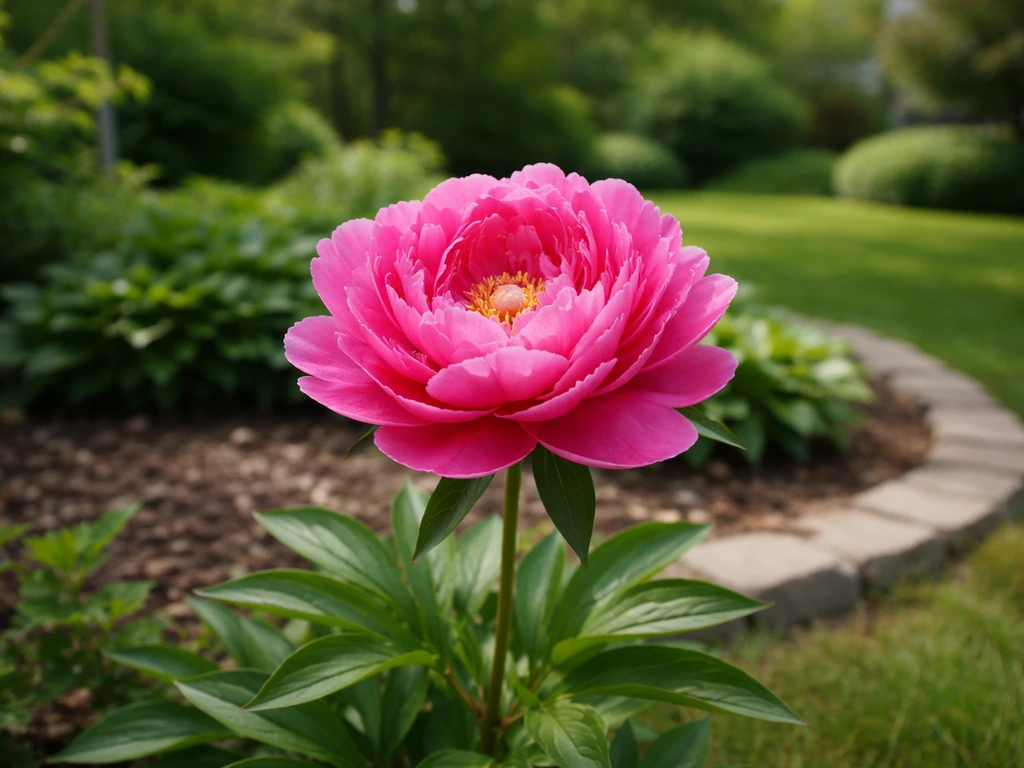
You have three main options, and all of them can work in Michigan. The differences come down to bloom time, cold tolerance, and how much effort you want to put in each year.
Herbaceous peonies
These are the classic cut-flower peonies with big, bowl-shaped blooms that die back to the ground every fall and re-emerge in spring. They're rated for Zones 3–7, which means they handle Michigan winters without breaking a sweat. Herbaceous peonies are the easiest to plant, the most reliable bloomers once established, and by far the best starting point if you're new to peonies. Varieties like 'Sarah Bernhardt' (soft pink, late blooming), 'Karl Rosenfield' (deep red, midseason), and 'Festiva Maxima' (white with crimson flecks, early) all perform consistently across Michigan.
Tree peonies
Tree peonies are woody shrubs that don't die back in winter. They produce enormous, tissue-paper-thin flowers in colors you just can't get from herbaceous types, including true yellows, corals, and deep purples. Most are cold-hardy to Zone 4 or 5, which works for most of Michigan, but they need a sheltered spot away from harsh north winds and late spring frosts that can damage emerging buds. Tree peonies sold as grafted plants need deep planting (at least 4 inches of soil over the graft union) so the top can re-grow from its own roots if a bad winter kills the above-ground stems.
Itoh (intersectional) peonies
Itohs are hybrids between herbaceous and tree peonies. They die back to the ground like herbaceous types but produce tree-peony-style flowers, including clear yellows and bicolors that herbaceous varieties can't match. They're hardy to Zone 4, handle Michigan winters well, and tend to have better disease resistance than either parent type. The tradeoff is price: Itoh divisions are expensive, and they spread slowly. If you've been growing herbaceous peonies for a few years and want something more interesting, an Itoh is a great next step.
| Type | Cold hardiness | Dies back in winter? | Bloom character | Best for |
|---|---|---|---|---|
| Herbaceous | Zones 3–7 | Yes | Large, full, fragrant | Beginners, reliable blooms, cut flowers |
| Tree peony | Zones 4–5 (most) | No (woody stems) | Huge, exotic, wide color range | Sheltered spots, experienced gardeners |
| Itoh/Intersectional | Zone 4 | Yes | Tree-peony style on herbaceous habit | Intermediate growers wanting yellows/bicolors |
When and how to plant peonies in Michigan
The best planting window
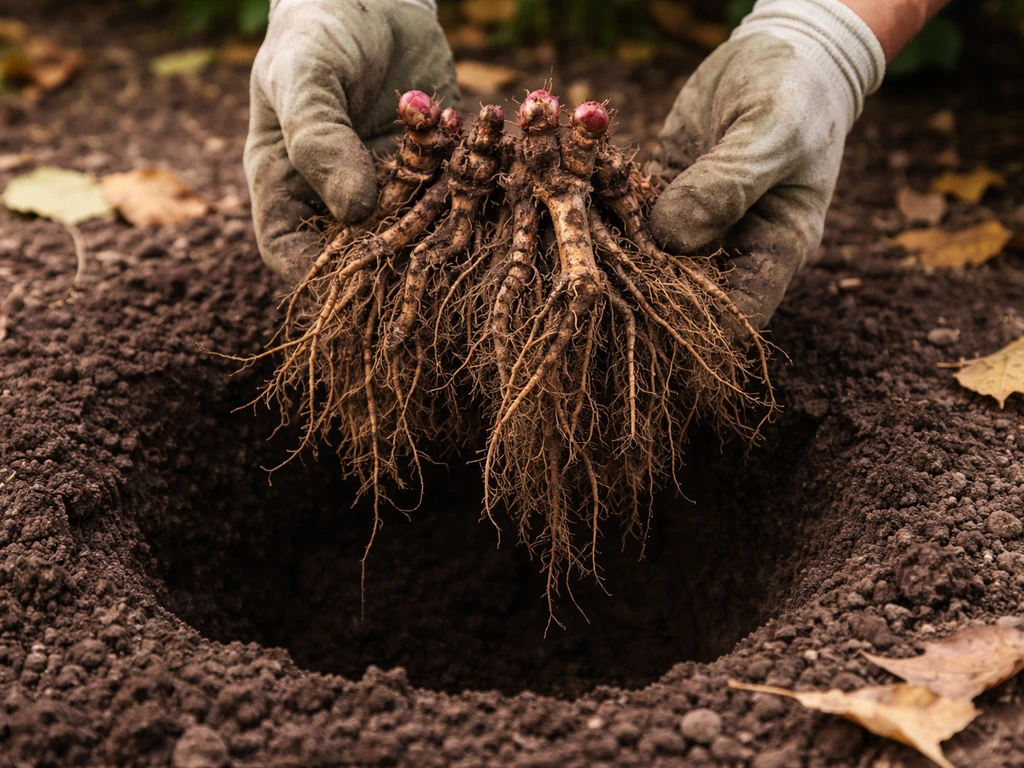
Fall is the right time to plant peonies in Michigan, and more specifically, September through October is the sweet spot. October is ideal for bare-root stock because plants are fully dormant, which makes them less sensitive to transplant stress, and the roots have time to establish before the ground freezes. Peonies actually do the majority of their root development in fall, so planting then gives them a head start that pays off in spring. You can technically plant through fall as long as the soil stays unfrozen, but earlier is better. Avoid spring planting if you can. Spring-planted peonies usually don't bloom their first year and can struggle to settle in before summer heat arrives.
Step-by-step planting
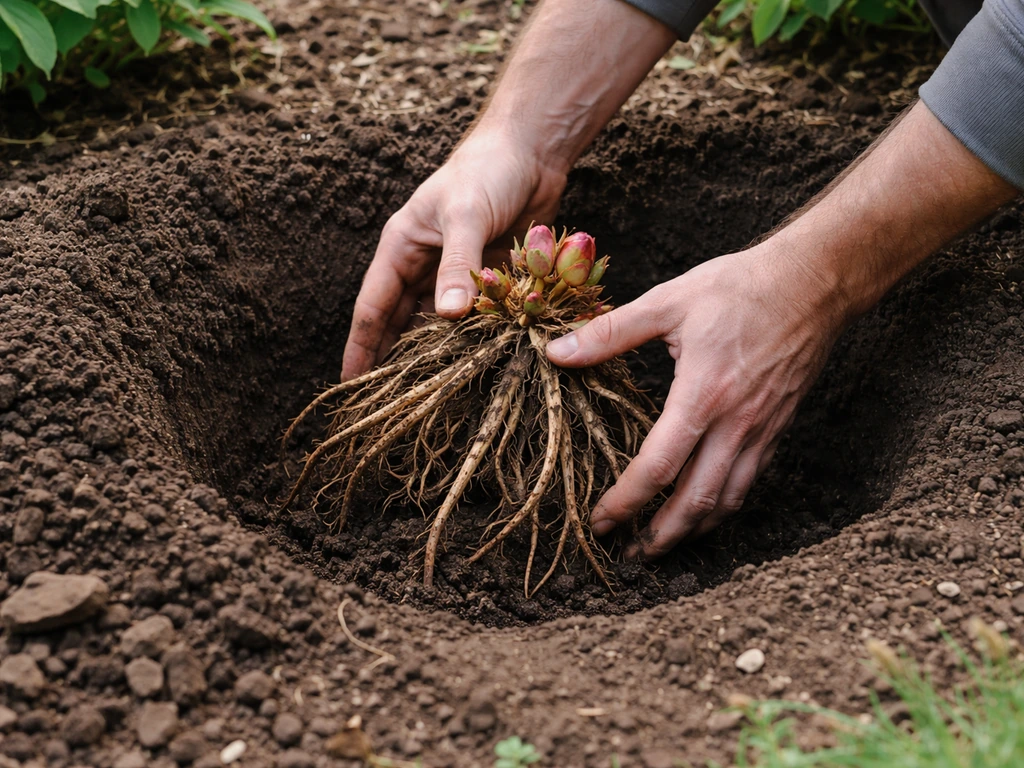
- Choose a site with at least 6 hours of direct sun per day and good air circulation. Avoid spots under or near large trees, which create shade and root competition.
- Dig a hole about 12–18 inches deep and 18–24 inches wide. Loosen the soil at the bottom so roots can penetrate easily.
- Mix in a generous amount of compost or aged organic matter to improve both drainage and nutrient availability. Michigan's heavy clay soils especially benefit from this step.
- Build a small mound of amended soil in the center of the hole to set the root/crown on top of.
- Position the bare-root division with the 'eyes' (the reddish, budded growth points) facing upward. For herbaceous peonies, those eyes should sit exactly 1–2 inches below the final soil surface. This is the most critical measurement in the entire process.
- For Itoh peonies, plant slightly deeper, around 2 inches below the surface. For grafted tree peonies, plant so the graft union is at least 4 inches below the soil surface.
- Backfill with amended soil, firm it gently around the roots, and water thoroughly to settle out any air pockets.
- During the first winter, you can mound a bit of extra soil over a newly planted herbaceous or Itoh crown for added protection, then level it off in spring.
Soil, sunlight, spacing, and watering
Peonies aren't fussy, but they do have firm preferences. Give them what they want upfront and you'll almost never have to worry about them again.
Soil
Peonies need well-drained soil above almost everything else. Sitting in waterlogged ground, especially through Michigan's wet springs, invites crown rot and botrytis. If your yard has heavy clay (common in southern Michigan), raise the planting area slightly or work in several inches of compost to open up the structure. A slightly acidic to neutral pH, around 6.0–7.0, suits them well. Get a basic soil test through your local Michigan State University Extension office if you're unsure what you're working with.
Sunlight
Full sun is non-negotiable for reliable blooms. If you're planning your peonies for Alabama, prioritize full sun and plan for the heat and humidity to help them bloom reliably how to grow peonies in alabama. Aim for a minimum of 6 hours of direct sun daily, and more is better. Peonies can survive in partial shade but they will produce fewer flowers, become more susceptible to fungal disease, and develop leggy, weak stems. Planting in the shade is one of the top two reasons peonies in Michigan never bloom. Don't plant them under a tree canopy or near a fence that blocks morning sun.
Spacing
Space herbaceous and Itoh peonies 3–4 feet apart. It looks sparse the first year, but peonies grow into large clumps and need that airflow to stay healthy. Crowding peonies together creates humid microclimates that encourage botrytis and other fungal problems. Tree peonies are slower-growing but can eventually reach 4–5 feet wide, so give them similar spacing.
Watering
Water newly planted peonies well at planting, then water regularly through the first fall to help roots establish. Once established (after the first or second year), peonies are relatively drought-tolerant and Michigan's natural rainfall usually handles most of their needs. During dry stretches in spring when buds are forming, water deeply once or twice a week rather than shallow sprinkles. Avoid wetting the foliage if you can, especially in the evening, as moisture on leaves encourages botrytis.
Winter in Michigan: cold hardiness and protection
Here's the good news: established herbaceous and Itoh peonies don't need much winter protection in Michigan. They're bred for cold. In fact, they need a period of cold temperatures to bloom properly, so don't worry about mild winters being too warm. What they don't love is repeated freeze-thaw cycles that heave the roots up out of the ground.
For the first winter after planting, mulch newly planted crowns with 2–3 inches of wood chips or bark mulch after the soil has frozen, usually late November or December depending on your part of Michigan. This isn't about keeping roots warm. It's about keeping the soil temperature stable so it doesn't thaw and refreeze repeatedly. Remove the mulch in early spring before growth begins. If you leave mulch over the crown into spring, you risk smothering emerging shoots and creating the damp conditions that botrytis loves.
Established peonies (3+ years in the ground) rarely need winter mulching in Zones 5–6. In Zone 4 areas of northern Michigan, a light layer of mulch after freeze-up is a reasonable precaution, especially for Itoh peonies in their first couple of years.
Tree peonies need a bit more care. Their woody stems are the source of next year's blooms, so protecting them matters. A cylinder of hardware cloth or burlap wrapped loosely around the shrub after hard frost can shield stems from desiccating winter winds. Avoid heavy mulching around the base, which can cause crown rot.
Getting your peonies to actually bloom
This is where most Michigan gardeners get frustrated, and honestly, the fixes are almost always the same few things.
Age and establishment time
Peonies are slow starters. A newly planted bare-root division may produce no blooms in year one and only a few the second year. By year three, most herbaceous peonies hit their stride and start putting on a real show. Itoh peonies can take a similar amount of time. Tree peonies are even slower. This is completely normal, not a sign that something's wrong. The plant is building its root system before committing energy to flowers. Be patient.
Planting depth
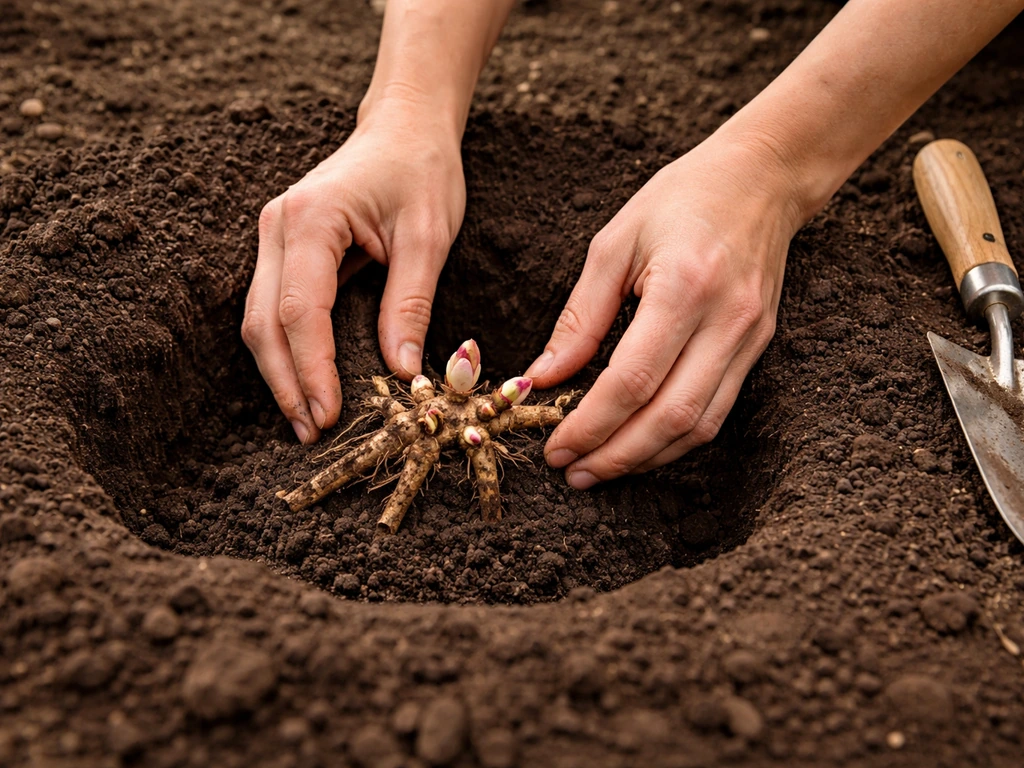
Too deep is the single most common reason established peonies won't bloom in Michigan. If the eyes of an herbaceous peony are buried more than 2 inches below the soil surface, the plant puts all its energy into vegetative growth and refuses to flower. If you have a healthy-looking peony with lots of foliage but zero blooms, dig it up carefully in fall and replant it at the correct depth: 1–2 inches below the surface for herbaceous, approximately 2 inches below for Itoh. For herbaceous peonies, APS recommends planting the peony eyes 1, 2 inches below the soil surface, and for Itoh (intersectional) peonies planting about 2 inches deeper than for herbaceous types plant it at the correct depth.
Sunlight
If the planting depth is right and there are still no blooms, look at the light situation. A tree that was small when you planted the peony five years ago may now be casting shade during key morning or afternoon hours. Move the peony to a sunnier spot in fall.
Fertilizer
Peonies don't need heavy feeding, and too much nitrogen is actively counterproductive. High nitrogen drives lush leafy growth at the expense of flowers. If you've been adding a lawn fertilizer or a high-nitrogen all-purpose feed near your peonies, stop. Instead, apply a low-nitrogen, phosphorus-forward fertilizer (something like a 5-10-5 or 5-10-10 formulation) lightly in early spring when shoots emerge, and again after blooming wraps up to support root development. That's it. Don't overdo it.
Other common bloom mistakes
- Pruning at the wrong time: cutting stems back in summer or early fall removes the energy storage the plant needs to fuel next year's buds
- Moving the plant too often: peonies hate being disturbed and can skip a year or two of blooms after being divided or transplanted
- Buying divisions with too few eyes: a division needs at least 3–5 eyes to have enough stored energy to bloom reliably in its first few years
- Root competition from nearby shrubs or trees pulling nutrients and water away from the peony
Ongoing seasonal care
Mulching
Keep 1–2 inches of organic mulch around established peonies through the growing season to conserve moisture and suppress weeds. Keep mulch pulled back a few inches from the crown itself so air can circulate at ground level. In fall, after the first hard freeze, you can add a bit more mulch for winter protection if you're in a colder part of Michigan, but remove it come spring before shoots start pushing through the soil.
Weed control
Hand-pull weeds close to the crown rather than hoeing, which can nick the shallow root system. Mulch does most of the weed suppression work. Peonies are long-lived perennials and will eventually outcompete many weeds once they're fully established and spreading.
Pruning and deadheading
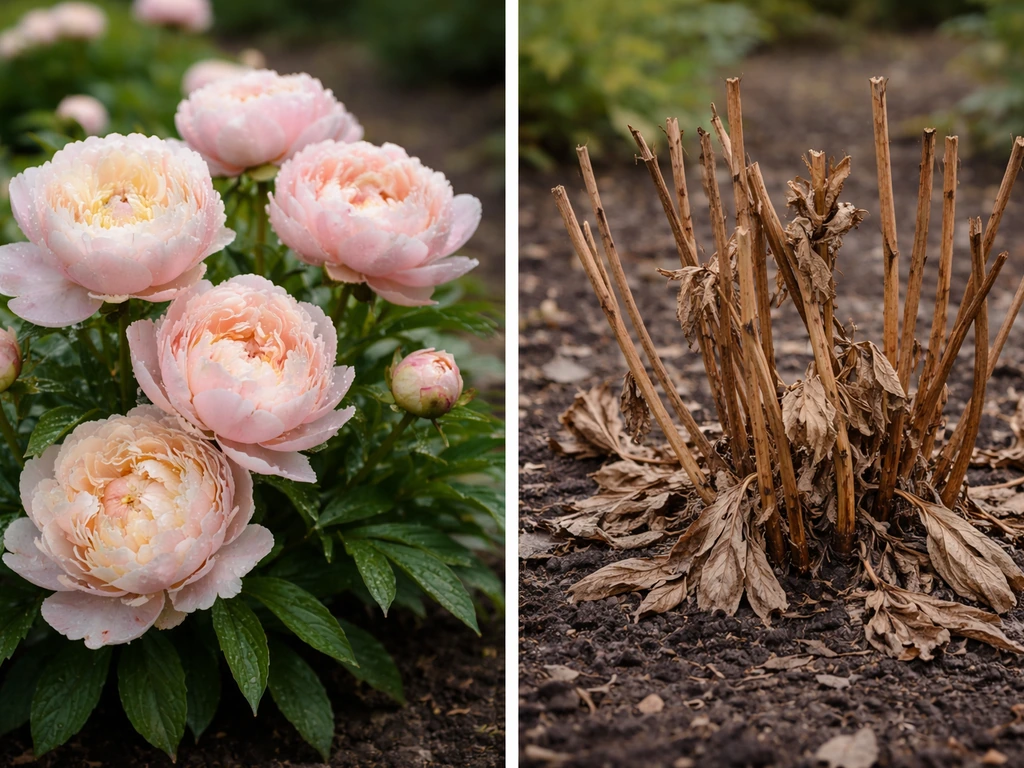
Deadhead spent blooms promptly after flowering to keep the plant tidy and prevent seed formation, which pulls energy away from root development. For herbaceous and Itoh peonies, cut stems all the way to the ground in fall after the first hard frost. Don't leave old stems in the garden. Cut them off, collect the debris, and dispose of it away from the bed. Leaving foliage in place is a common way to carry fungal diseases like botrytis from one season to the next. For tree peonies, do not cut the woody stems back in fall. Remove only dead or damaged wood in early spring before new growth expands.
Troubleshooting common Michigan peony problems
No blooms on an established plant
Work through this checklist: Is it planted too deep? Is it getting full sun? Has it been in the ground at least 3 years? Are you over-fertilizing with nitrogen? Is it overcrowded by other plants? In the vast majority of Michigan cases, one of these is the culprit. The fix is usually digging and replanting at the correct depth in a sunnier spot.
Botrytis (gray mold)
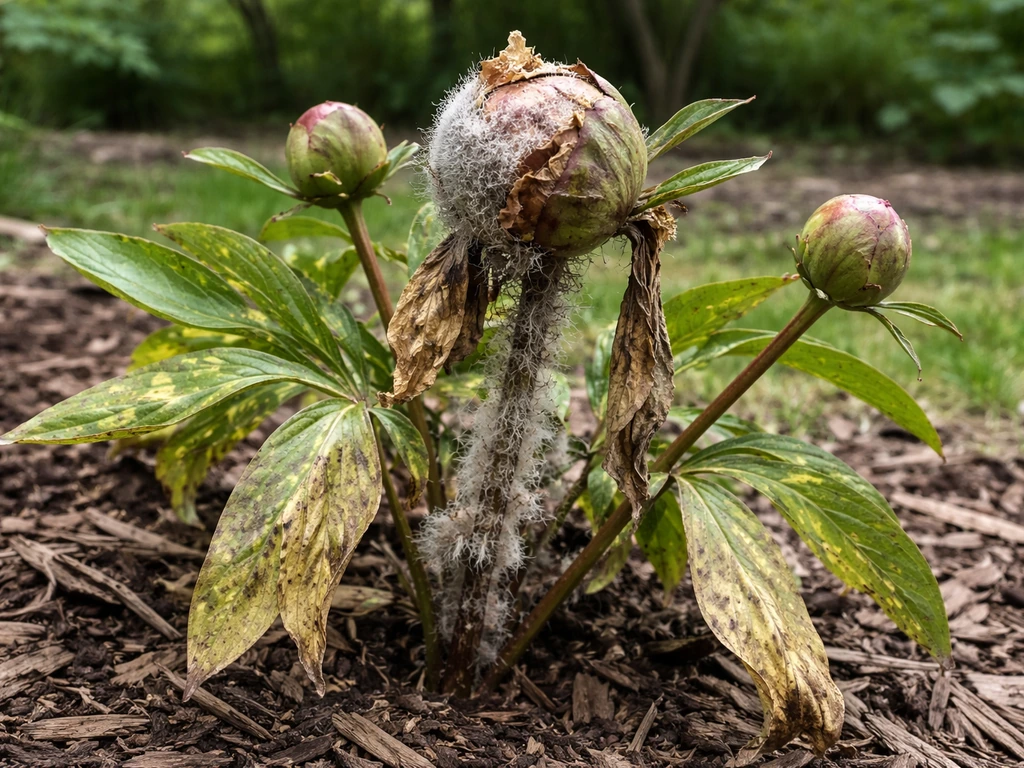
Botrytis is the most common peony disease in Michigan, and cool, wet spring weather makes it worse. Symptoms include dark, water-soaked stems that collapse at the base, buds that turn black and fail to open, and gray fuzzy mold on affected tissue. In severe cases the crown itself can become soft and rot. Prevention is far more effective than treatment: plant in full sun with good air circulation, avoid wetting foliage, remove all stem and leaf debris from the garden in fall, and don't mulch too close to the crown. If you catch it early, cut out affected stems well below the damaged tissue, dispose of the debris (not compost), and improve drainage if the spot stays wet.
Phytophthora blight
Phytophthora causes a crown and root rot that looks similar to severe botrytis. The crown and roots turn dark and mushy. It thrives in wet, poorly drained soils, which is a real risk in clay-heavy Michigan gardens. Improve drainage, avoid overwatering, and never plant peonies in low spots where water pools after rain. There's no effective chemical cure once a plant is heavily infected, so prevention through site selection and soil preparation is everything.
Peony leaf blotch (red spot)
Also called measles or red spot, this fungal disease shows up as purplish-brown spots on the upper leaf surfaces, with chocolate-brown coloring on the undersides. Spots can expand and merge into large blotches by late summer. It looks alarming but rarely kills established plants. Good fall cleanup, removing all infected foliage and debris, breaks the disease cycle effectively. Avoid overhead watering and improve air circulation by not overcrowding plants.
Powdery mildew
White, powdery coating on leaves typically appears in late summer when nights get cooler and there are swings between humid and dry conditions. It's unsightly but not usually serious for established plants. Improve airflow, avoid wetting leaves in the evening, and clean up foliage in fall.
Ants on buds
Ants on peony buds are not a problem. They're attracted to the sugary nectar the buds produce and don't harm the plant or the blooms. You don't need to treat for them.
Sluggish or stunted growth
If a peony is producing very little growth season after season, check the soil drainage first. Wet roots are a silent killer. Also check whether nearby trees have grown into the root zone. Finally, if the plant is very old (20-plus years) and hasn't been divided, it may simply be an exhausted clump that needs to be dug and divided to reinvigorate it.
Propagating peonies and long-term care in Michigan
Dividing to propagate
Division is the standard way to propagate both herbaceous and Itoh peonies. Wait until a plant is at least 3 years old before dividing it. The best window for division in Michigan is early to mid-fall, September through October, following the same timing logic as initial planting. Dig the entire clump, shake off excess soil, and use a clean sharp knife to cut the crown into sections, each with 3–5 eyes and a good portion of roots attached. Divisions with fewer than 3 eyes often take much longer to bloom.
Plants in the 3–5 year range tend to yield the most usable divisions per clump. Once peonies get past 5–6 years old, the root mass becomes dense and matted, which makes clean cuts harder to get. That doesn't mean older plants can't be divided, just that you need a sturdy knife or even a pruning saw and the divisions may be less uniform. Itoh peonies follow a similar division cycle, typically 3–4 years between productive divisions from a well-grown plant.
Long-term maintenance
A well-sited peony in Michigan can outlive the gardener who planted it, easily producing blooms for 50 years or more with minimal intervention. The main long-term tasks are: fall cleanup (removing all stems and debris), a light spring fertilization, deadheading after bloom, and dividing the clump every 10–15 years if it starts producing fewer flowers or looks overcrowded. There's no need to replant, move, or fuss with a peony that's performing well. Leave it alone and it will reward you every spring.
Your Michigan peony action plan for this season
If you're reading this in spring or early summer and your peonies just bloomed (or didn't), here's what to do right now and through the rest of the season: If you are comparing how to grow peonies in oklahoma, the same big principles like planting depth, full sun, and avoiding excess nitrogen still matter, just adjust for your local conditions.
- Deadhead spent blooms now, cutting back to a healthy leaf. Leave the foliage intact through summer to feed the roots.
- If you have peonies that didn't bloom and have ruled out age as the cause, mark the spot and plan to dig and replant them at the correct depth (1–2 inches for herbaceous) this September or October.
- Check for botrytis or leaf blotch symptoms now and improve air circulation by pulling mulch away from the crown.
- Stop any high-nitrogen fertilizer programs near your peonies immediately.
- In fall (September to October), plant any new bare-root peonies and divide any clumps that are 3–5 years old and ready to propagate.
- After the first hard freeze in late November or December, mulch newly planted crowns with 2–3 inches of wood chips or bark mulch, then remove the mulch in early spring before growth begins.
- Cut herbaceous and Itoh stems to the ground in late fall after frost and remove all debris from the bed.
Michigan is peony country. Get the depth right, give them full sun, keep up with fall cleanup, and you'll have one of the most reliable and rewarding perennials in your garden. If you want a step-by-step plan, this guide on how to grow peonies in Canada walks through the process from planting to winter care Get the depth right. Gardeners dealing with similar climates in Ohio and Indiana face nearly identical conditions and the same planting principles apply across all of them. Gardeners dealing with similar climates in Ohio can use the same peony planting principles for strong, reliable blooms. For Oregon gardeners, the same basics apply, but you'll want to focus on local chill, sun exposure, and winter protection matched to your region. The difference in Michigan is that your long, cold winters are actually an asset with peonies, not a limitation. If you're planting or troubleshooting peonies in Australia, look up local guidance on climate and planting timing, since that changes the approach how to grow peonies australia.
FAQ
How deep should I plant peonies if I’m using a container-grown plant instead of bare root?
Use the final soil level in your garden, not the pot. For herbaceous peonies, the key is keeping the eyes about 1 to 2 inches below the finished surface. If you see the eyes too high, top-dress carefully in fall. If they are too deep, you may need a fall dig and replant, because stretching the plant deeper over time can permanently reduce flowering.
What if my peony was planted correctly but still hasn’t bloomed after 3 years?
Recheck sunlight first, then overcrowding and nitrogen. A peony can look healthy in partial shade but fail to set flowers, especially if morning sun is blocked by a growing tree or nearby hedge. Also confirm you are not feeding with lawn fertilizer or compost-only top-dress that includes lots of nitrogen.
Should I fertilize peonies the first spring after planting?
Avoid feeding in the first spring unless the plant is established and showing active growth. If you fertilize too early, you can push leafy growth without blooms. When you do fertilize, use a low-nitrogen, phosphorus-forward product lightly at shoot emergence, then stop after bloom.
Do peonies need deadheading every week to rebloom?
Deadheading is mainly for energy management, it does not usually trigger additional blooms on the same season. Cut or remove faded flowers promptly to prevent seed pods, and then rely on proper fall cleanup and next spring’s light, depth, and nitrogen control for reliable flowering.
Can I grow peonies in a raised bed or topsoil over clay in southern Michigan?
Yes, but prioritize drainage. If the bed is filled with real, well-structured soil and drains well, peonies can thrive even over clay. If water pools on the surface after rain, fix drainage or raise the crown zone further, because crown rot risk stays high even when peonies are planted at the right depth.
What’s the best way to check peony planting depth without destroying the plant?
After the first hard frost or in early fall dormancy, carefully probe at the soil surface near the crown and look for the eyes’ position relative to the surface. If you must adjust depth, move in fall and replant promptly. Avoid repeatedly disturbing roots during the growing season.
Do ants on peony buds mean something is wrong?
No. Ants are typically just feeding on bud nectar and they do not harm the flowers. Focus your attention on real bud problems like buds turning black and failing to open, which points more toward botrytis or other moisture-related issues.
Why do my peony leaves look normal but buds turn black and won’t open?
That pattern often indicates botrytis in cool, wet spring conditions. Increase airflow by removing debris, keep mulch pulled back from the crown, and avoid overhead watering. If you catch it early, remove affected buds or stems below the damaged tissue and dispose of them away from the bed.
Is it better to mulch peonies in winter in Zone 4 northern Michigan?
Yes for newly planted crowns, but only for soil-temperature stability. Apply 2 to 3 inches of mulch after the soil is frozen, late November to December depending on your location. Do not leave mulch over the crown into spring, because damp conditions can encourage botrytis and can smother emerging shoots.
How do I water peonies during spring without encouraging disease?
Water at the base with deep soakings rather than frequent sprinkling. During dry stretches when buds are forming, aim for one or two deep waterings per week. Try to keep foliage dry, and avoid watering late in the day so leaves do not stay wet overnight.
Should I divide peonies every year if I want more plants?
No. Divide only after the clump is mature, typically at least 3 years old, and then repeat on a longer cycle such as every 10 to 15 years unless the plant is overcrowded or producing fewer flowers. Frequent dividing weakens flowering because the plant needs time to rebuild root mass.
What happens if I transplant or move a peony in spring?
Spring moves are higher risk because the plant is already committing energy to new growth. You may get little to no bloom for a season, and stressed roots may struggle during summer heat. If you must move it, do it in fall when plants are dormant and re-establish before freeze-up.
When Do Begonias Start to Grow? Timing, Types & Planting Calendar
When do begonias start to grow: clear planting dates, timelines by type, and quick care fixes for reliable starts.