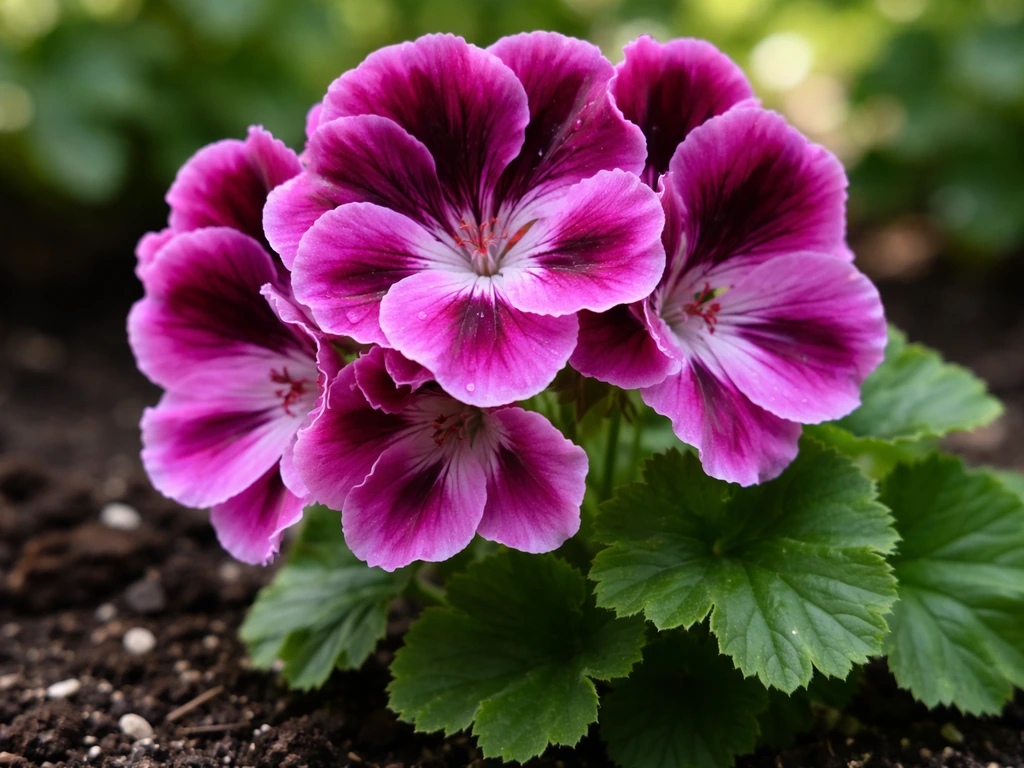
Perennial geraniums are genuinely one of the easiest flowering perennials you can grow, but only if you start with the right type and give them the basics they actually need: decent drainage, a reasonable amount of sun, and a hard cutback once or twice a season to keep the blooms coming. Get those three things right and you'll have a plant that fills a gap in your border for months, comes back every year, and essentially takes care of itself.
How to Grow Perennial Geraniums From Planting to Blooms

Harriet Whitmore
2 Jul 2026
Perennial geraniums vs. the other kind (and which types to actually grow)
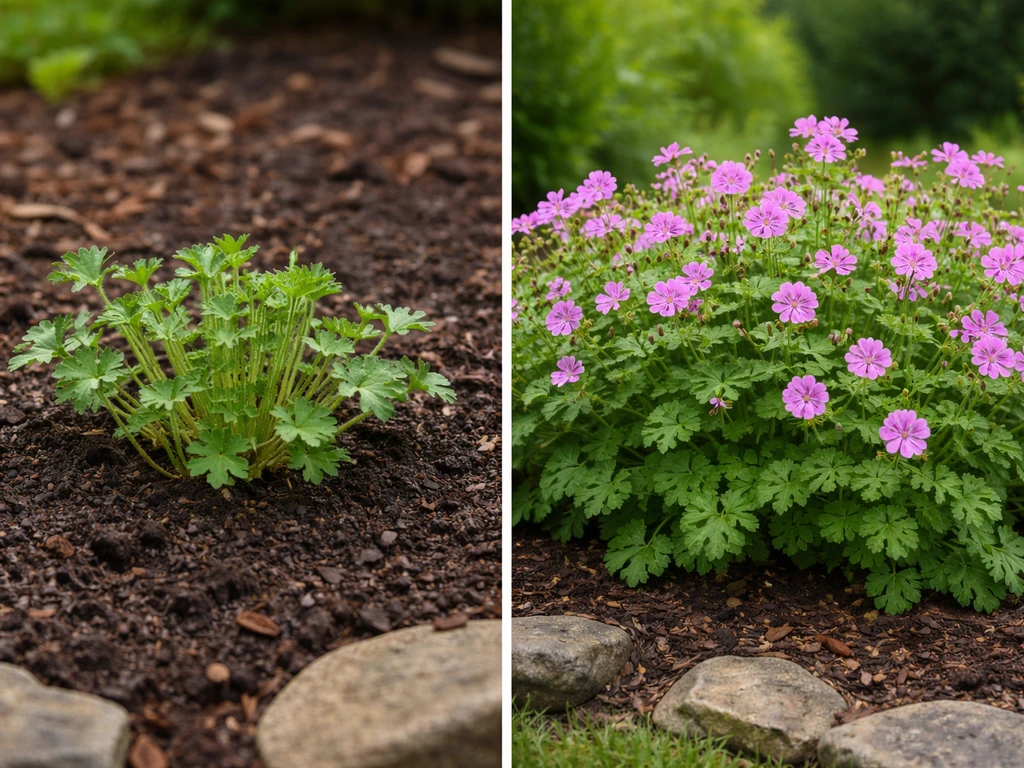
The first thing worth clearing up: when most gardeners say 'geranium,' they often mean the tender bedding plant with big round blooms sold in hanging baskets every spring. That's actually a Pelargonium, a different genus altogether, and it won't survive winter outdoors in most climates. True perennial geraniums belong to the genus Geranium, commonly called cranesbill, and they're hardy border plants that come back reliably every year. They have smaller, more delicate flowers, a sprawling to mounding growth habit, and they handle cold winters with no fuss.
The variety you'll see recommended most often, and for good reason, is 'Rozanne' (sold under the cultivar name 'Gerwat'). It's hardy in USDA Zones 4 or 5 through 8 or 9 depending on the source, grows about 12 to 24 inches tall with a similar spread, and blooms from early summer right through to frost. That's an exceptionally long season for a perennial. Other strong choices include Geranium sanguineum (bloody cranesbill), which is more compact and works well in rockeries or borders, and Geranium pratense varieties, which give you larger flowers on taller plants in early summer. For shade or partial shade spots, Geranium macrorrhizum is nearly indestructible and smells pleasantly aromatic when you brush against the foliage.
| Variety | Height/Spread | Hardiness Zones | Best For |
|---|---|---|---|
| Geranium 'Rozanne' | 12–24 in / 12–24 in | Zones 4–9 | Long-season borders, ground cover |
| Geranium sanguineum | 10–15 in / 12–18 in | Zones 3–8 | Rockeries, front of border, containers |
| Geranium pratense | 18–24 in / 18–24 in | Zones 4–8 | Cottage gardens, taller border spots |
| Geranium macrorrhizum | 12–18 in / 18–24 in | Zones 3–8 | Shade, dry spots, ground cover |
If you're in Texas or another hot-summer climate zone, choosing the right variety matters even more. Geranium sanguineum tends to handle heat better than Rozanne, which prefers cooler summers and can go semi-dormant in intense heat. If you want to grow geraniums in Texas, start by picking a variety that stays productive through hot summers handles heat better than Rozanne. Worth checking your specific USDA zone before you buy.
Picking the right spot: sun, soil, drainage, and spacing
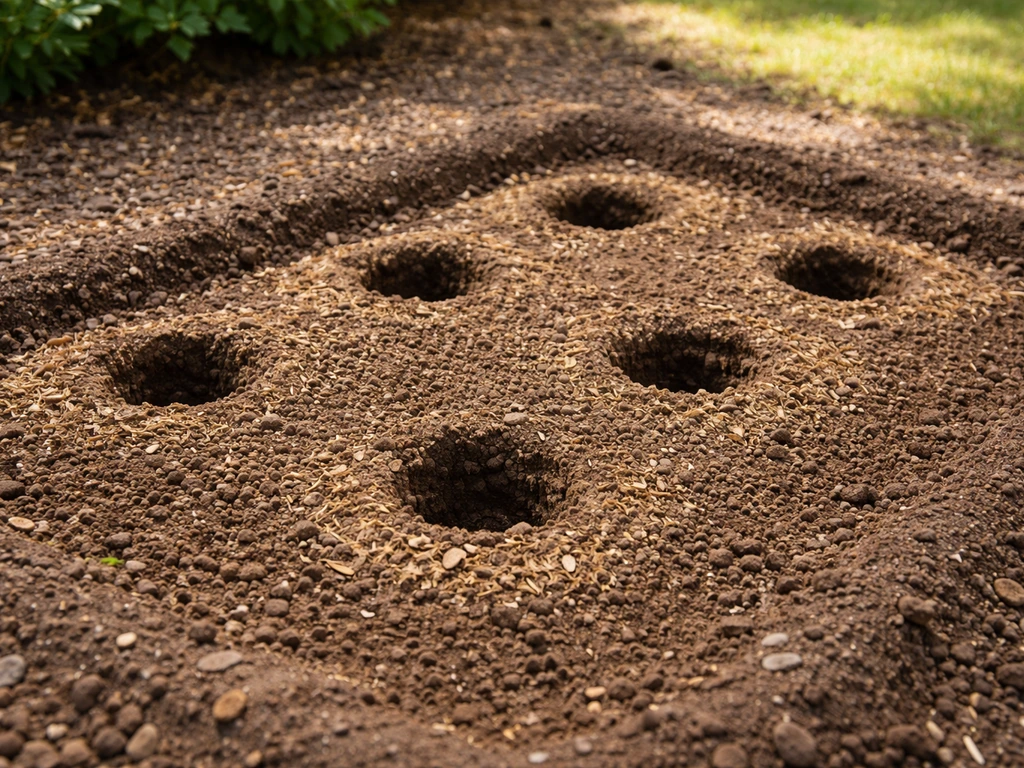
Most hardy geraniums are happy in full sun to partial shade. Full sun generally means more flowers; partial shade (around four to six hours of direct light) is perfectly acceptable and sometimes preferred in warmer zones where afternoon sun scorches the leaves. G. macrorrhizum can handle quite deep shade, making it useful where other flowering perennials struggle.
Soil is where most failures happen. Hardy geraniums need moist but well-drained soil, ideally with a slightly acidic to neutral pH somewhere between 6.0 and 6.5. What they absolutely cannot handle is waterlogged ground. Roots sitting in saturated soil develop crown rot fast, and once crown rot sets in, the plant is almost impossible to rescue. If your garden has heavy clay, work in compost, leaf mold, or horticultural grit before planting, or consider a raised bed or sloped site. Moderately fertile soil is ideal: rich enough to fuel consistent flowering, but not so overfed that you get all leaves and no blooms. If you want the full step-by-step details, including timing, container options, and common issues, see our guide on how to grow periwinkle plant.
Spacing depends on the variety, but for most mid-sized cranesbills like Rozanne, planting about 18 inches apart gives each plant room to fill out without immediately crowding its neighbors. These plants spread readily, so a little breathing room now prevents a management headache later.
How to plant perennial geraniums: seeds, divisions, or nursery plants
You have three realistic routes to a new plant: starting from seed, buying nursery stock, or dividing an established clump. If you want geraniums that grow quickly, learning how to grow geraniums from plugs is a great next step after you’ve picked your planting route. Each has its place depending on your timeline, budget, and how much patience you have.
Growing from seed
Growing from seed is the slowest option, but it works well for species like G. pratense and G. sanguineum. The catch is that many cranesbill seeds need cold stratification before they'll germinate, meaning they need a period of cold, moist conditions to break dormancy. You can either sow outdoors in autumn and let winter do the work naturally, or refrigerate the seeds in damp paper towel for about 4 to 6 weeks before a spring sowing. Thompson & Morgan notes that seeds sown in autumn often germinate the following late spring, which is worth knowing so you're not wondering if something went wrong. Note that named cultivars like 'Rozanne' are sterile or don't come true from seed, so you'll need a different route for those.
Nursery plants
For most gardeners, buying a nursery plant is the easiest and most reliable option, especially for named varieties. Spring is the ideal time to plant out: the soil is warming, root establishment happens quickly, and you'll likely get flowers in the same season. Plant so the crown (where the stems meet the roots) sits level with the soil surface, not buried below it. Burying the crown is a surprisingly common mistake and it sets you up for crown rot, which Illinois Extension specifically flags as a key risk. Water in well after planting.
Dividing established clumps
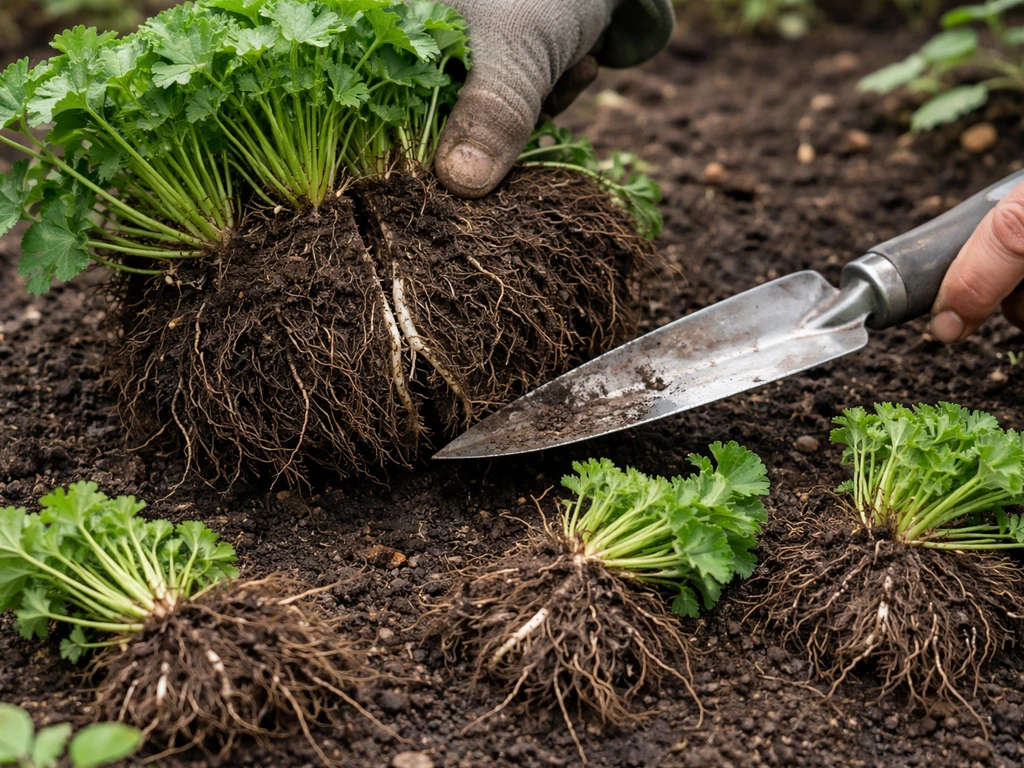
Dividing is the best way to multiply plants you already have, and it also reinvigorates clumps that have started flowering less or looking sparse in the middle. Iowa State University Extension lists hardy geraniums as suitable for division in spring or late summer and fall. Spring division, done as soon as you see the growing tips emerging, is generally the lower-risk option for beginners since the plant has a full growing season to re-establish. Each division should include at least two healthy growing points to give it a fighting chance. Just be cautious about dividing Rozanne too soon after you've planted it: it needs at least one full growing season to build a proper root system before it handles the stress of being split.
Watering and feeding: what steady flowering actually needs
Once established, hardy geraniums are reasonably drought-tolerant, but during the first growing season they need consistent moisture. Aim for roughly 1 to 2 inches of water per week, adjusting downward if you get significant rainfall. A practical rule for new plants: if the top inch of soil feels dry, water. A GardenWorld guide on Rozanne suggests about 5 liters per plant weekly during dry spells in the first year, which gives you a ballpark if you're hand-watering. Container-grown plants dry out faster and usually need watering every couple of days in warm weather.
Feeding is light-touch territory. Hardy geraniums don't need heavy fertilizing, and too much nitrogen pushes leafy growth at the expense of flowers. A balanced, slow-release granular fertilizer worked into the soil in spring is usually enough for a full season. If you want to add a liquid feed during the growing season, use it sparingly, maybe monthly, with a balanced or slightly lower-nitrogen formula. Avoid the impulse to keep feeding after midsummer: you want the plant to start winding down naturally as autumn approaches rather than pushing soft new growth that won't harden before winter.
Seasonal care calendar
Spring: getting growth underway
As soon as you see new growth emerging, clear away any dead stems or leaves left from the previous year. This is also the time to apply your balanced slow-release fertilizer and, if needed, divide overcrowded clumps. Spring is also the best planting window if you're putting in new nursery plants. Mulching around (but not over) the crown helps retain moisture as temperatures rise.
Summer: managing the bloom peak
Most hardy geraniums hit their flowering peak in early to midsummer. Keep up with watering during dry spells and deadhead regularly by removing spent flower heads to encourage continued blooming. Once the main flush finishes, usually in June or July for many varieties, consider a hard cutback. The RHS calls this the 'Hampton hack': cutting the whole plant back to near ground level after the main flush of flowers, which prompts a fresh flush of new foliage and, often, another round of blooms in late summer or early autumn. It looks drastic but works reliably. 'Rozanne' and other long-blooming types may not need quite as severe a cutback since they keep going on their own, but trimming back any particularly lanky or tangled stems still helps. For Martha Washington geraniums specifically, the key is learning how to water, pinch, and provide bright light so they stay compact and keep flowering Rozanne.
Fall: cleanup and decision time
In autumn, let the plants wind down naturally. In mild climates (Zones 7 and above), many hardy geraniums remain semi-evergreen and the foliage can be left in place. In colder zones, the foliage will die back after frost. You can do a light cleanup now by removing dead stems, or leave them for a little extra insulation and cut everything back in late winter or early spring before new growth emerges. Either approach works. This is also a reasonable time to plant out new bare-root or pot-grown plants, especially in milder climates where they'll have time to establish before hard freezes arrive.
Winter: protection where needed
Established hardy geraniums in their rated zones don't need much winter protection. In Zone 4 or 5, a light mulch of straw or shredded bark over the crown after the ground freezes helps buffer against freeze-thaw cycles, which can heave roots out of the soil. Remove the mulch in early spring before growth starts to avoid trapping moisture around the crown. In Zone 9 or at the edge of hardiness, plant in a sheltered spot with good drainage, since waterlogged winter soil is far more damaging than cold air temperature alone.
Pruning, deadheading, and keeping spread under control
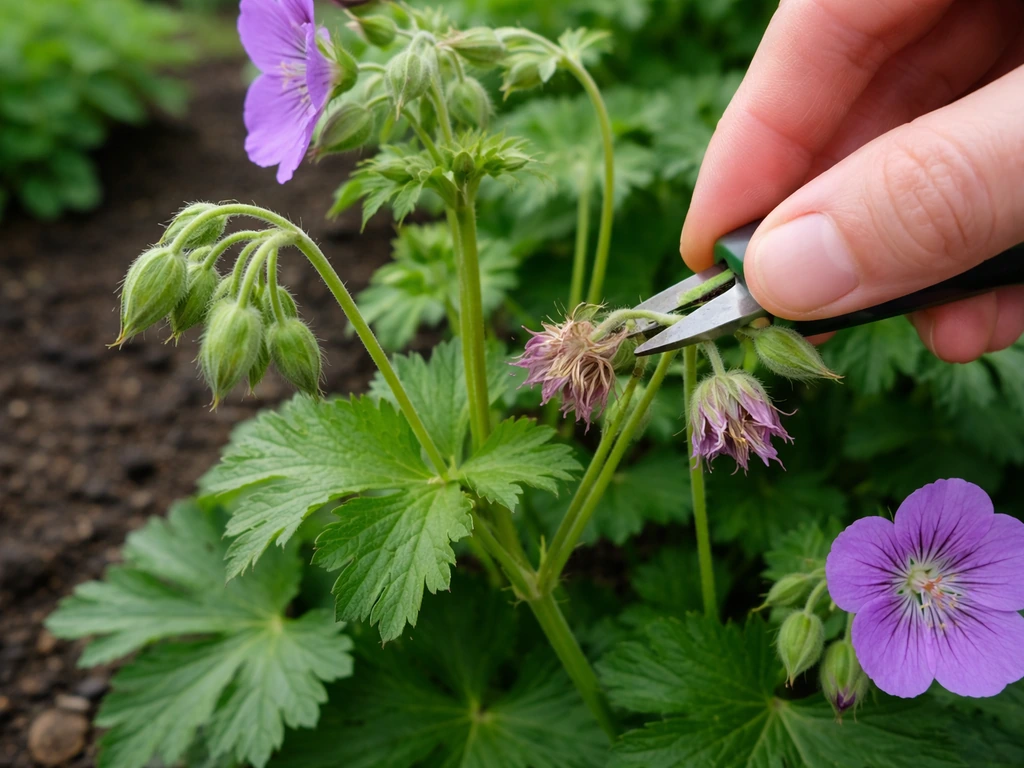
Deadheading, removing individual spent flowers at the base of their stalk, keeps the display tidy and signals the plant to keep producing buds. For most cranesbills, this is worth doing every week or two during the bloom season. For a more thorough reset, the hard midsummer cutback to about 6 to 7 inches (or right down to a few inches of basal growth) is far more effective than picking off individual flowers: it removes aging foliage, lets light and air back into the crown, and generally produces a much stronger second flush.
Managing spread is the other pruning job worth staying on top of. Varieties like Rozanne can sprawl significantly, sometimes flopping over neighboring plants. The Missouri Botanical Garden notes you can remove or trim back side stems at any time to control how far the plant reaches. It's not aggressive in the way a running ground cover can be, but it will claim space if you give it room. An annual division every three to four years also helps keep the clump from becoming hollow in the middle and spreading at the edges unchecked.
Troubleshooting: fixing the most common problems
Poor or no flowering
If your plant produces plenty of foliage but few flowers, too much shade is usually the first thing to check. Most hardy geraniums need at least four to six hours of sun for a reliable bloom. Overfertilizing with nitrogen-heavy feeds is the second common cause: it pushes leafy growth at the expense of flowers. Scale back feeding to a light, balanced application once in spring. If the clump is very old and dense, dividing it in spring can also reinvigorate flowering dramatically.
Leggy, sprawling growth
Leggy or weak stems that flop over usually come down to one of two things: not enough sun, or not enough pruning. Moving plants to a sunnier location and committing to the midsummer cutback usually sorts this out in a single season. Some varieties, like Rozanne, are naturally sprawling and grow best when allowed to tumble forward over a border edge or through lower neighbors rather than being expected to stand upright.
Powdery mildew
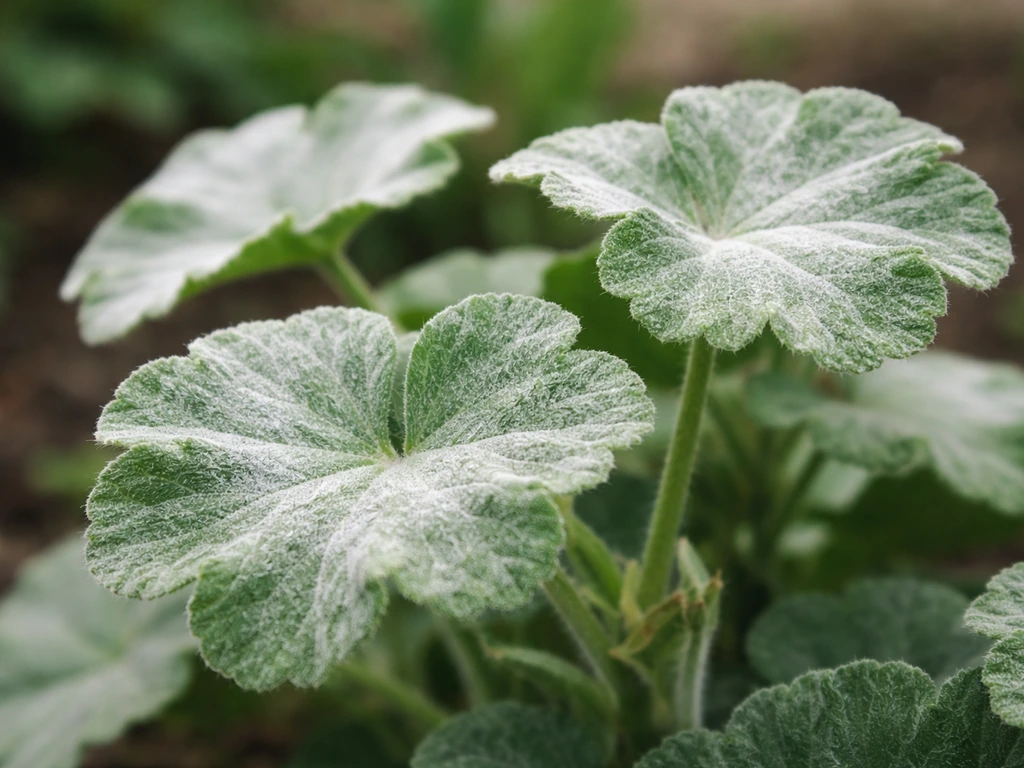
A white powdery coating on the leaves in summer is powdery mildew, typically triggered by humid conditions, poor airflow, or overhead watering in the evening. The fix is mostly cultural: thin congested plants to improve air circulation, water at the base in the morning, and don't crowd plants too close together. A hard cutback often clears badly mildewed growth and allows fresh, clean foliage to come through. Some varieties, including older G. pratense types, are more prone to it than others.
Botrytis (gray mold) and crown rot
Gray mold (Botrytis) shows as fluffy gray fungal growth on stems or leaves, typically during cool, wet periods. Remove affected material immediately, improve drainage, and increase spacing for better airflow. Crown rot is more serious and almost always traces back to poorly drained soil, planting too deep, or mulching directly over the crown. If you find soft, discolored tissue at the base of the plant, the damage is usually irreversible. Prevention through good drainage and correct planting depth is far easier than trying to rescue a rotting crown.
Slugs and snails
Young foliage in spring is particularly attractive to slugs, which leave characteristic irregular holes and slime trails. Hand-picking at night is effective if time-consuming. Beer traps (shallow containers filled with beer set at soil level) attract and drown slugs reliably. Removing decaying plant material from around the base of plants reduces hiding spots. If slug pressure is high, you may also need to thin the canopy a little to reduce the moist microclimate slugs prefer.
Spread getting out of bounds
Some gardeners find that Rozanne in particular spreads further than expected, occasionally swamping smaller neighboring plants. Regular edging of the clump, removing outward-spreading stems during the season, and division every few years keeps this in check without harming the plant. It's a vigorous grower, which is most of what makes it so good, but it does reward a bit of attention to where it's reaching.
If you're also growing other low-maintenance perennials nearby, it's worth thinking about spacing and spread when you plan your planting. Hardy geraniums mix well with a wide range of border companions, and because they tend to flower over a long arc from early summer into autumn, they fill a gap that shorter-flowering perennials leave behind. If you want more general guidance, use the steps in this guide on how to grow perennials to plan, plant, and care for them successfully.
FAQ
How do I tell if I bought the right plant when the label just says “geranium” at the store?
Look for “hardy geranium” or the genus name Geranium (cranesbill). Pelargonium labels often show large, round bedding-style blooms and usually do not include a hardiness zone that allows outdoor winter survival in your area.
My perennial geranium flowered well in the first year, then slowed down. What should I check first?
Start with light and crown health. If flowering drops, confirm the plant is getting at least 4 to 6 hours of sun, check that the crown is not buried, and make sure the soil drains well, since saturated roots often reduce flowering before the plant fully declines.
Can I grow perennial geraniums in containers, and what changes should I make?
Yes, but expect more frequent watering because container mix dries faster. Use a pot with excellent drainage, keep the crown at soil level (not under mix), and water based on surface dryness rather than a fixed schedule, since summer heat can require watering every few days.
What’s the best time to transplant or move established perennial geraniums?
Spring is usually the lowest-risk window because plants can re-establish during the growing season. If you must move them later, do it in early fall while temperatures are still mild, and keep moisture consistent for a few weeks, especially in well-drained but fast-drying soils.
Do perennial geraniums need to be deadheaded, or is pruning enough?
You can use either approach, but deadheading helps maintain a tidy look and ongoing blooms. For a bigger reset, a midsummer hard cutback near the ground is typically more effective than only removing spent flower heads, because it rejuvenates foliage and improves airflow in the crown.
How far down should I cut during the “Hampton hack” cutback?
After the main flush, cut back to near ground level. For practical safety, you can leave a few inches of basal growth, especially on newer plants that have not fully established, since it reduces the risk of accidentally cutting into weak regrowth.
Why are my plants growing a lot of leaves but not many flowers?
The two most common causes are too much shade and too much nitrogen. Aim for at least 4 to 6 hours of direct light, and switch to a light, balanced spring feed rather than repeated high-nitrogen fertilizing during summer.
What should I do if the plant looks fine above ground but the crown seems unhealthy?
Check the base and drainage immediately. If you notice softness or discoloration at the crown, it is usually beyond rescue. In that case, remove the plant and improve drainage or replant at correct depth, because crown rot can start quickly in consistently wet conditions.
How do I prevent powdery mildew on perennial geraniums?
Improve airflow and watering method. Thin congested growth, water at the base in the morning, avoid evening overhead watering, and leave enough spacing for the clump to dry after rain or irrigation. A hard cutback can help clear badly affected foliage.
Do slugs only attack in spring, and how do I confirm it’s slug damage?
Slugs often target tender young foliage in spring and may continue when conditions are damp. Irregular holes with slime trails are a strong clue. Hand-pick at night, use beer traps at soil level, and clean up decaying debris around the crown to reduce hiding spots.
How often should I divide perennial geraniums to keep them flowering well?
If the center becomes sparse, flowering weakens, or the plant gets crowded, divide. Many gardeners divide every 3 to 4 years, and spring division is generally lower-risk because plants have a full growing season to rebuild roots.
Will seeds from a named cultivar like Rozanne produce the same plant?
Usually no. Named cultivars are often sterile or do not come true from seed, so if you want the same long-blooming type, buy nursery plants or use divisions or plugs rather than relying on saved seed.
My seedlings germinated very late after cold treatment. Is that normal?
Yes, timing can be stretched. Some hardy geranium seeds sowed in autumn may germinate the following late spring, so it can look like nothing happened during the first winter to the next early season. Keep the soil lightly moist and be patient.
How much water do new perennial geraniums need, and when can I cut back?
In the first growing season, keep moisture consistent, roughly 1 to 2 inches per week depending on rainfall. Once plants are established, they tolerate some drought, but avoid letting them stay bone-dry through heat waves, particularly in containers.
My perennial geranium flops. Is that always a pruning problem?
Not always. Flopping often comes from insufficient sun or naturally trailing habits. First ensure adequate light, then follow the midsummer cutback plan to reset lanky growth. If the variety sprawls, allow it to cascade over the edge instead of forcing it upright.
Next Article
How to Grow Martha Washington Geraniums From Seed to Bloom
Learn how to grow Martha Washington geraniums from seed with exact light, soil, watering, fertilizing, and troubleshooti