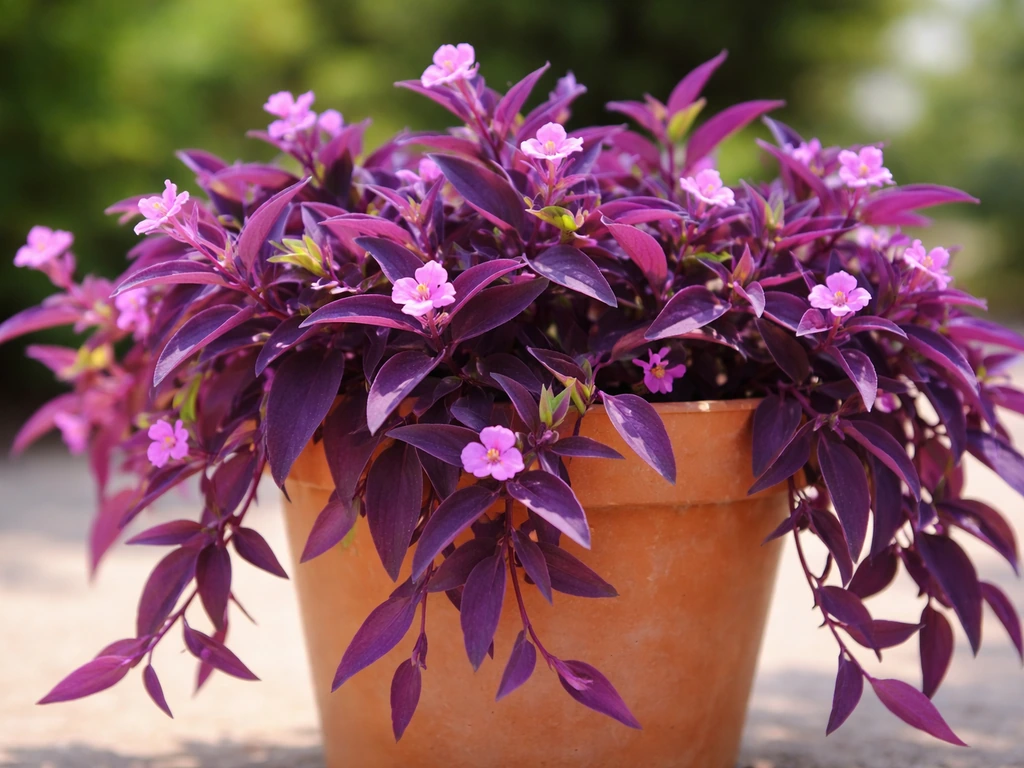
Purple Queen is a common name for Tradescantia pallida, a striking ornamental plant with deep purple-violet foliage and small pink to lavender flowers that bloom from late spring through midsummer. Here is the honest thing you need to know before you start: Purple Queen is almost never grown from seed, because viable commercial seed is essentially unavailable. The plant is propagated by cuttings, which root easily in water or soil within a couple of weeks.
How to Grow Purple Queen: Seed to Bloom Guide

Harriet Whitmore
13 Jun 2026
So if you found seed packets labeled 'Purple Queen,' double-check what species they actually contain, as the name is also attached to unrelated plants like Bougainvillea 'Purple Queen' and Roscoea cautleyoides 'Purple Queen. ' If your goal is Tradescantia pallida specifically, skip the seed hunt and grab a cutting or a nursery transplant. The rest of this guide will walk you through everything from setup to reliable blooms.
What Purple Queen actually is (and where to watch out for name confusion)
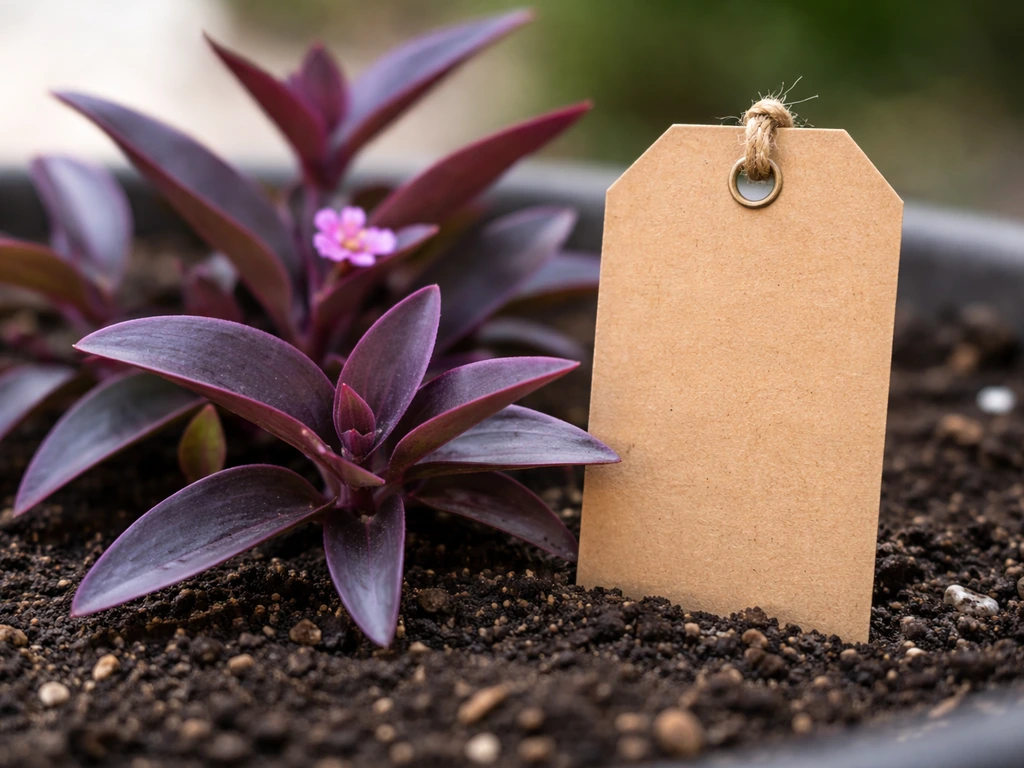
Tradescantia pallida goes by several names in the trade: Purple Queen, Purple Heart, and Purple Spiderwort are all applied to the same plant depending on the retailer or region. The species has also been sold under the old synonym Setcreasea pallida or Setcreasea purpurea, so you may see those names on older nursery labels or seed packets. Proven Winners sells it as 'Purple Queen,' and University of North Florida, NC State Extension, and UF/IFAS all identify it under this common name as well, so you can trust it when it appears on reputable plant tags.
The confusion comes in because 'Purple Queen' also appears as a cultivar name on Bougainvillea (a woody tropical vine) and on Roscoea cautleyoides (a shade-loving alpine relative of ginger). Neither of those plants shares growing conditions with Tradescantia pallida, so misidentifying your plant early can send you down completely the wrong cultivation path. When in doubt, look at the foliage: Tradescantia pallida has narrow, fleshy, intensely purple leaves that trail or spread outward, nothing like the papery bracts of a Bougainvillea or the orchid-like flowers of a Roscoea.
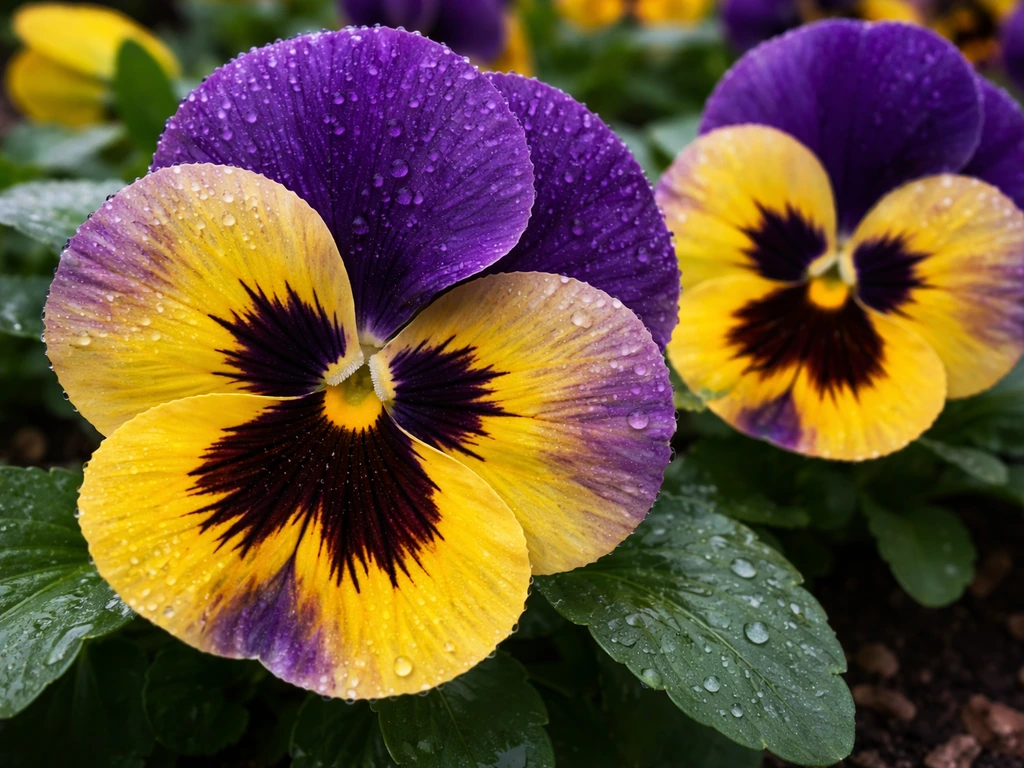
Tradescantia pallida is native to northeast Mexico and thrives in warm climates. If you are also wondering where to grow pansies, the key is choosing cool-weather conditions and a site with the right amount of sun for consistent blooms native to northeast Mexico. It is winter hardy only in USDA Zones 10 and 11, meaning it survives outdoors year-round only in the warmest parts of the United States (think coastal Southern California, South Florida, and Hawaii). Everywhere else, it is treated as an annual outdoors, brought inside before frost, or grown as a houseplant with outdoor summer placement.
Getting cuttings started: timing, containers, soil, and light
Because seed is not a practical option for Tradescantia pallida, your starting point is either a cutting from an existing plant or a nursery transplant. If you are taking cuttings, snip a stem 4 to 6 inches long just below a node (the point where a leaf meets the stem). Remove the lower leaves and either place the cutting in a glass of water on a bright windowsill until roots appear (usually within 10 to 14 days) or stick it directly into moist, well-draining potting mix. Rooting hormone is optional but can speed things up.
Timing matters most in cooler zones. If you plan to move plants outside for summer, start cuttings indoors 6 to 8 weeks before your last expected frost date. In most of the continental US, that puts indoor starts somewhere between late February and early April, depending on your zone. Nursery transplants are usually available in late spring when temperatures are consistently above 50°F at night.
For containers, use a lightweight mix with good drainage, something like a standard potting mix combined with about 20 to 25 percent perlite. Avoid heavy garden soil in pots because it retains too much moisture and can lead to root rot. Use pots with drainage holes, always. Early on, keep young plants in a bright indoor spot with at least 4 to 6 hours of indirect light. A south or west-facing window works well. If natural light is limited, a basic grow light 6 to 8 inches above the cuttings for 14 to 16 hours a day will prevent the pale, stretched growth that signals inadequate light.
Moving outside: when and how to transplant
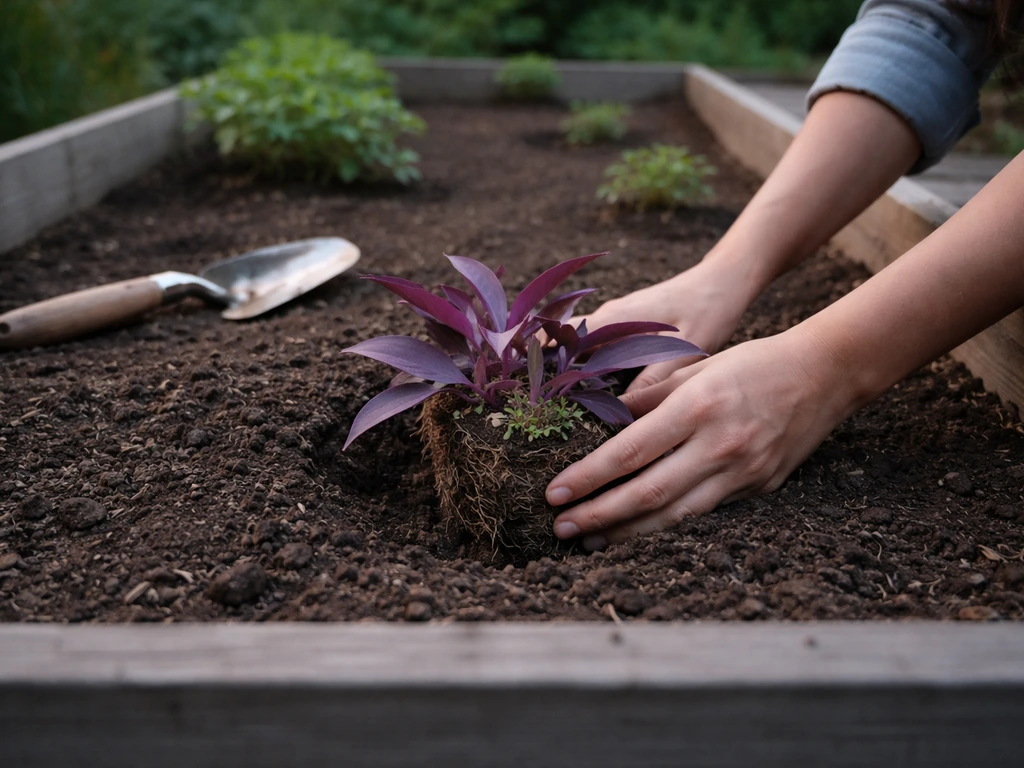
Purple Queen is cold-sensitive. Do not move plants outside until nighttime temperatures are reliably above 50°F and all frost risk has passed. Hardening off is worth the extra few days: set plants outdoors in a sheltered, partly shaded spot for 1 to 2 hours on the first day, then gradually increase outdoor exposure over 7 to 10 days. This reduces transplant shock by letting the plant adjust to outdoor light intensity, wind, and temperature swings before you commit it to a permanent spot.
For ground planting, space plants 12 to 18 inches apart. Tradescantia pallida spreads outward and can fill in a bed nicely, so generous spacing upfront prevents crowding later. Dig a hole about the same depth as the root ball and twice as wide. Mix in some compost if your soil is lean. For containers, a 6 to 10 inch pot works well for a single plant, but a 12-inch pot gives more room for the trailing habit to develop.
After planting, water in well and keep the soil consistently moist but not soggy for the first two weeks. This helps establish roots without stressing the plant. Avoid overhead watering if you can, since wet foliage can invite fungal issues.
Sun, water, fertilizer, and temperature: the daily care routine
Full sun gives you the deepest, most vivid purple foliage and encourages blooming. Partial shade is tolerable and sometimes preferable in very hot climates where afternoon sun can scorch leaves, but plants in shade will trend greener and bloom less reliably. Aim for at least 4 to 6 hours of direct sun for best results. If your Purple Queen looks more green than purple, more light is almost always the fix.
[Water when the top inch of soil feels dry. ](https://www. monrovia. com/purple-heart.
html) In full sun or hot weather, that might mean watering every 2 to 3 days for container plants and every 4 to 5 days for in-ground plants once established. Tradescantia pallida is drought tolerant once its root system is established, but it will look limp and dull during extended dry spells. The real danger is overwatering: roots sitting in soggy soil rot quickly, and poorly drained soil is one of the most common reasons plants decline.
If you are growing in containers, dump out any water that collects in saucers. If you are looking for a different game-specific approach, check how to grow purple mums in Animal Crossing for the best timing and daily care.
Fertilizing needs are modest. A balanced, slow-release granular fertilizer (10-10-10 or similar) worked into the soil at planting is a solid foundation. During the growing season, a liquid balanced fertilizer at half strength every 4 to 6 weeks keeps plants vigorous without pushing excessive soft growth. Avoid high-nitrogen fertilizers, which encourage lush green leaves at the expense of the purple color and flower production.
Temperature is a hard limit. Tradescantia pallida does not tolerate frost. Even a light frost will damage or kill stems back to the roots. In Zones 10 to 11, plants are perennial and will die back in an unusual cold snap but often regrow from the roots. In Zones 7 to 9, some gardeners have had plants survive mild winters with heavy mulching, but it is risky. In cooler zones, plan to bring container plants indoors before temperatures drop below 40°F.
Growing timeline: what to expect week by week
| Timeframe | What's Happening | What to Do |
|---|---|---|
| Week 1–2 (after taking cuttings) | Roots beginning to form in water or moist medium | Keep in bright indirect light, maintain moisture, do not disturb |
| Week 3–4 | Roots 1–2 inches long, new leaf growth starting | Pot up rooted cuttings into well-draining mix, begin light fertilizing |
| Week 5–8 (indoors) | Plant filling out, stems extending, foliage deepening in color | Gradually increase light exposure, begin hardening off if outdoor temps allow |
| After transplant outdoors (Week 8–10) | Plant settling in, may look slightly stressed for 1–2 weeks | Keep consistently moist, protect from harsh afternoon sun for first week |
| Week 10–14 (established outdoors) | Vigorous growth, deep purple color intensifying in sun | Resume normal watering schedule, apply slow-release fertilizer if not already done |
| Late spring to midsummer (June–August) | Small pink to lavender flowers appear at stem tips | Deadhead spent flowers to encourage more blooms, watch for pests |
| Late summer onward | Blooming slows, growth continues | Trim leggy stems, prepare overwintering plan if in Zone 9 or colder |
Under good conditions, a rooted cutting placed outside in late spring will give you flowers within 6 to 10 weeks. Nursery transplants placed in full sun can bloom within 3 to 4 weeks of planting. The bloom window for Purple Queen runs roughly from late May through August, with the most concentrated flowering in June and July.
Troubleshooting: when things go wrong
Cuttings not rooting
If cuttings are not rooting after two weeks, the most common causes are too little light, stems that are too old or woody, or rot from sitting in stagnant water. Use younger, green stem tips rather than older woody sections. Change the water every 2 to 3 days to prevent bacterial buildup. If rooting in soil, make sure the medium is moist but not soggy.
Seedlings damping off (if you are starting other flowering species alongside)
If you are starting other flowers like pansies from seed alongside your Purple Queen cuttings, watch for damping off, a fungal problem where seedlings suddenly collapse at the soil line. If you are also starting pansies and want the seasonal setup, see the guidance on pansy swiss giant how to grow as a related option for timing and light.
Pansies are also best started or transplanted when nights are cool but frost risk has passed, typically in early spring or fall depending on your zone when to grow pansies. It is caused by pathogens in unsterile soil or by overwatering that keeps the medium perpetually wet. Use sterile, fresh seed-starting mix every season, avoid reusing old trays without sanitizing them, and water from below rather than overhead.
Cornell and UC IPM both point to sanitation and moisture management as the core prevention strategies.
Transplant shock
If a plant wilts or drops a few leaves after transplanting, that is normal for the first 3 to 7 days. Keep it well watered and shade it from intense afternoon sun for the first week. Avoid fertilizing until you see new growth, which signals roots are re-establishing.
Foliage turning green instead of purple
Green foliage is almost always a light problem. Move the plant to a sunnier location. Plants in deep shade will produce chlorophyll-dominant green growth because the purple anthocyanin pigments are most concentrated in response to UV and direct sunlight. This is one of the most reliable indicators of whether your plant is getting enough sun.
Root rot and wilting despite watering
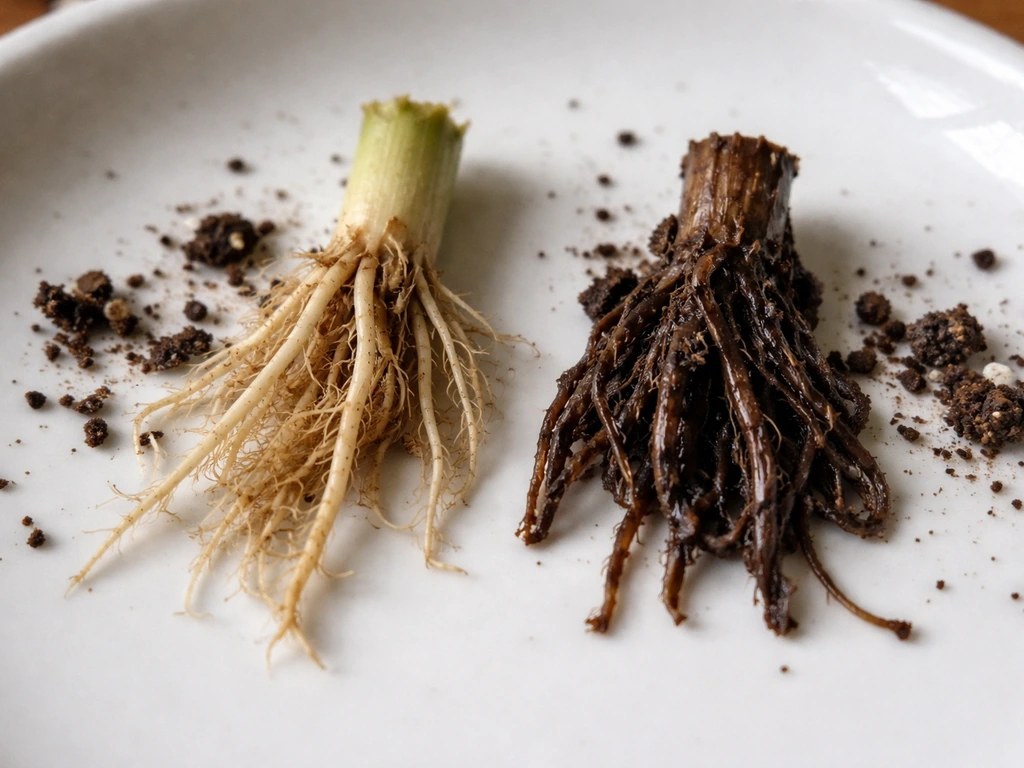
If a plant wilts even though the soil is wet, suspect root rot from poor drainage. Check the roots: healthy roots are white to tan and firm, while rotted roots are brown, mushy, and may smell bad. If caught early, trim off the rotted sections, let the roots dry slightly, and repot in fresh well-draining mix. Improve drainage or move the plant to a raised bed or container with better drainage going forward.
Pests
Purple Queen is generally pest-resistant, but slugs and caterpillars can damage young outdoor shoots, particularly in spring when growth is tender. Indoors, aphids and scale insects occasionally show up. Aphids are easy to control with a strong spray of water or insecticidal soap. Scale requires repeated treatment with horticultural oil or neem oil, applied every 7 to 10 days until cleared. Check the undersides of leaves regularly so you catch infestations early.
Won't bloom
The most likely reasons Purple Queen will not bloom: not enough sun, too much nitrogen fertilizer, or the plant is too young or recently transplanted and still establishing. Move it to a sunnier spot, switch to a low-nitrogen fertilizer (or skip fertilizing for a cycle), and give it time. Bloom typically kicks in 6 to 10 weeks after a plant is established outdoors in full sun. Plants indoors rarely bloom reliably without supplemental light.
Keeping it going: bloom season care and what to do at the end of the season
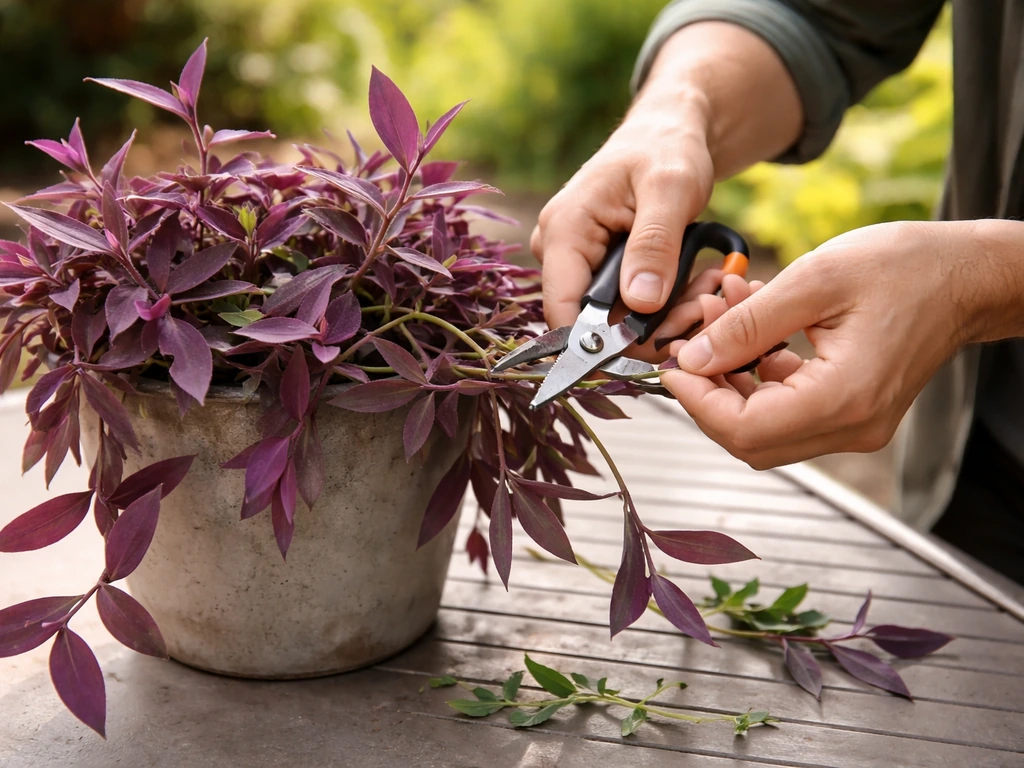
During the bloom season (June through August), trim back any leggy or overly long stems to keep the plant compact and bushy. Purple Queen has a natural trailing habit, which is beautiful in hanging baskets and at the edge of containers, but in garden beds it can sprawl and get unruly. A light haircut by about one-third of the stem length encourages branching and more flower production. You do not need to deadhead the tiny flowers individually since they are small and drop on their own, but cutting back scraggly stems achieves the same result.
As temperatures drop in fall, start thinking about your overwintering strategy. In Zones 10 to 11, cut the plant back to a few inches after the first signs of cold stress, mulch heavily around the base, and it should regrow in spring. In Zones 7 to 9, heavy mulching after a hard cut-back gives you a fighting chance in mild winters, but it is not guaranteed. In Zone 6 and colder, bring container plants indoors before the first frost. Place them in a bright window, reduce watering significantly (water just enough to keep the soil from completely drying out), and hold off on fertilizing until spring growth resumes.
To set up your next growing cycle, take cuttings from healthy stems in late summer before you bring plants indoors. Root them as described above and you will have fresh, vigorous starts ready for next season without having to buy new plants. Tradescantia pallida roots so easily from cuttings that you can share extras with other gardeners once you have a plant you love.
If you enjoy growing other flowering plants from seed, the same care and attentiveness you develop for Purple Queen transfers well to other ornamentals like pansies, where timing and light management are equally important to a good result. If you are wondering how to grow blue pansies in Animal Crossing, the same idea of matching the right light and timing helps you plan your garden.
If your question is specifically about making pansies grow bigger, focus on variety choice, consistent moisture, and enough sun to drive strong, compact growth how to make pansies grow bigger. If you are also wondering how to grow purple pansies in ACNH, the key is matching the island’s seasonal timing with the right growing conditions.
If you are learning how to grow a pansy, use that same focus on timing, consistent moisture, and enough light to keep seedlings sturdy pansies from seed. Pansies are a different plant than Purple Queen, but you can still use the same ideas about light and timing to support strong growth how to grow a pansy.
FAQ
Can I really grow Tradescantia pallida from seed if I find “Purple Queen” packets online?
Usually no. Viable commercial seed is rare, and many packets are mislabeled because “Purple Queen” is used for unrelated plants. If you must try, verify the Latin name on the packet (Tradescantia pallida) and expect a low success rate compared with cuttings.
What cutting size and stem age works best for rooting?
Use fresh, green stem tips 4 to 6 inches long, cut just below a node, and remove lower leaves so they do not sit in water or touch wet soil. Very woody sections root slowly or fail, even if conditions are otherwise perfect.
Should I root Purple Queen in water or directly in potting mix?
Both work, but water rooting is easier to monitor and restart if something goes wrong. If you root in water, transplant once you see active roots, because long water-grown roots can suffer when moved to soil. If you root in mix, keep moisture consistent but not soggy, using a draining pot and airy medium.
How do I tell if my Purple Queen is getting too little or too much water?
Too little water looks like limp, dull leaves, while too much often leads to wilting even though the soil feels wet, plus yellowing and a foul or soft root smell. The quickest check is the roots, healthy ones are firm and tan to white, rot is brown, mushy, and smelly.
My Purple Queen is turning greener. Does that mean it is dying?
Not necessarily. Green foliage is most often a light issue, the purple color depends on strong sun. Move it to a sunnier spot gradually over several days to avoid stress from sudden full sun.
How much sun is “enough” for purple foliage and blooms?
Aim for at least 4 to 6 hours of direct sun. More light generally deepens purple and supports flowering, but in very hot areas some afternoon shade can prevent leaf scorch, especially for container plants.
Why is my plant not blooming even though it is growing?
Common causes are insufficient sun, too much nitrogen fertilizer, or the plant being too young or recently transplanted. If you recently fertilized heavily, pause feeding for one cycle, then watch for blooms about 6 to 10 weeks after it is established outdoors in full sun.
What fertilizer schedule prevents green growth and helps it bloom?
Use a balanced slow-release fertilizer at planting, then apply a diluted balanced liquid every 4 to 6 weeks during active growth. Avoid high-nitrogen formulations, if you see rapid soft, green new growth at the expense of purple and flowers, switch to lower nitrogen or stop feeding temporarily.
Do I need to deadhead Purple Queen flowers?
No. The tiny flowers are not worth individually deadheading. For better flowering and a fuller shape, trim back leggy stems by about one-third during the bloom season, which encourages branching and more flower sites.
How do I keep Purple Queen from becoming leggy or sprawl-y?
In beds, it will trail and spread, so plan to prune. Regular light tip cutbacks or stem haircuts about once during the bloom period (and again if it gets unruly) keep it compact, and longer trailing stems can be redirected over container edges or trellises.
Is it safe to grow Purple Queen indoors year-round?
Yes for foliage, but blooms are less reliable indoors unless you provide bright conditions. Expect to use a grow light if your window is not strong, and keep it away from cold drafts near windows in winter.
What is the best way to harden off Purple Queen before outdoor planting?
Start with 1 to 2 hours in a sheltered, partly shaded location on day one, then gradually increase time and sunlight over 7 to 10 days. Do not expose it immediately to intense midday sun or windy spots, that is when transplant shock and leaf drop are most likely.
Why are my seedlings collapsing, and does that affect Purple Queen too?
The damping off issue described for other seed starting (sudden collapse at the soil line) is usually a seedling problem tied to sterile mix and persistent moisture, it is not a common adult Purple Queen issue. If you are starting pansies or other seeds in the same area, sanitize trays, use fresh mix, and avoid overhead watering.
How should I overwinter Purple Queen in colder regions (Zones 7 to 9)?
Your safest move is to treat it as not fully reliable outdoors. In Zones 7 to 9, heavy mulching after a hard cut-back can work in mild winters, but bring container plants indoors when temperatures drop and frost risk increases. In the coldest months, keep it bright and reduce watering so the soil does not stay wet.
When should I take cuttings for next year?
Late summer is ideal so the cuttings can root and grow enough before you bring plants indoors. If you wait too late, you may end up with weak roots and less robust regrowth in early spring.
What pests should I watch for, and how quickly should I act?
Outdoors, check young shoots for slugs and caterpillars, and indoors inspect leaf undersides for aphids and scale. Catching infestations early matters because scale often requires repeated treatments every 7 to 10 days until new growth is clear.
Next Article
How to Make Pansies Grow Bigger and Faster
Step-by-step tips to grow larger, faster pansies: varieties, light, soil feeding, watering, deadheading, and fixes.